
In this guide
Solar panels reduce a household's dependence on a supplier, but they do not remove it. A domestic array generates electricity that can be used in the building, cutting the amount bought from the grid, and any surplus can be sent back to the grid in return for a payment known as the Smart Export Guarantee1. What the panels cannot do on their own is store anything: without a battery, a household typically uses only 30 to 50% of what it generates, and adding storage can lift that to 80% or more2.
The economics push in the same direction. Rates for selling electricity to the grid are much lower than tariffs for using electricity from the grid, so using solar electricity yourself is much more cost-effective than exporting it3. Independence, in practice, is measured by self-consumption: the share of generation that never leaves the property.
What self-sufficiency means for a household
Self-sufficiency is not a single state. It is a scale, and a household sits somewhere on it depending on how much of its own generation it uses, how much storage it has, and what it does when the sun is not shining.
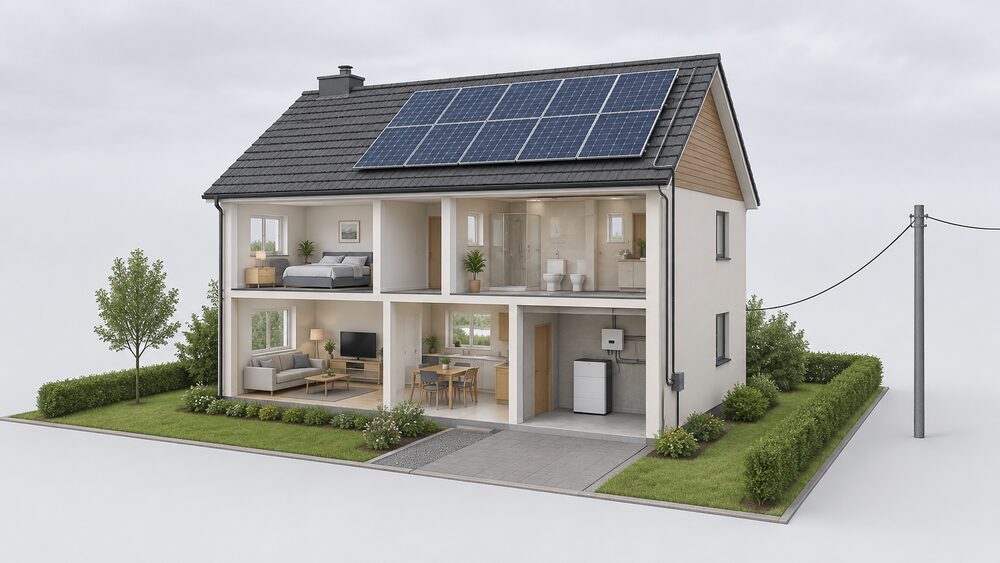
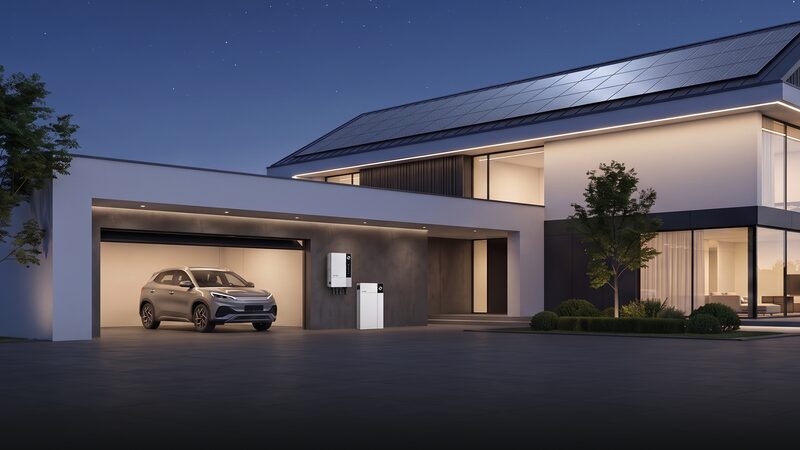
At the simplest level, solar panels capture the sun's energy and convert it into electricity that can be used in the home, or sent back to the grid for a payment1. The cells convert sunlight into electricity, which can be used to run household appliances7. That is the whole of the generation side, and it is genuinely free at the point of use: the electricity generated from the sun is completely free and is 100% renewable1. Panels do not require full sunlight, just light, so they produce something even under cloud1.
What remains is the demand side. A household's electricity use is continuous, while solar generation is intermittent and seasonal. Every unit generated and used on site is a unit not bought from a supplier, and every unit exported earns a much lower rate than the import tariff3. The gap between those two rates is the financial engine of self-consumption, and it is also the reason a battery changes the arithmetic so sharply.
There is a second, harder limit. A grid-tied solar system is designed to work with the grid, not instead of it. When the grid fails, an ordinary inverter stops exporting and stops running, so the lights go out even on a sunny afternoon. Full independence from the grid is a different design problem, covered by off-grid solar and by the question of whether solar panels work in a power cut. For most homes, the realistic goal is a large reduction in imported electricity, not the removal of the connection.
How much of your own solar electricity you actually use
The single most useful number in this subject is the self-consumption percentage, and it varies more than most households expect. Without a battery, a household might only use 30 to 50% of what it generates; adding a battery that can jump to 80% or more2. The range across the whole population of UK homes is wide, because it depends on when people are at home, how much electricity they use, and how big the array is relative to that demand.
The industry methodology for estimating the figure is MGD 003, Solar PV Self-Consumption, published at Issue 2.0 in April 2022 and supported by the Durham Energy Institute at Durham University and the National Energy Foundation8. It works by archetype: occupancy pattern and annual electricity consumption are matched to a modelled table, and the self-consumption figure is read from it. Two examples of the scope of those tables show how finely the model is drawn: one covers a household out during the day using 2,000 to 2,499 kWh a year, another covers a household in half the day using 3,000 to 3,499 kWh a year8.
The historical benchmark is instructive. Under the Feed-in Tariff, it was assumed that a domestic property with PV installed would, on average, self-consume 50% of the solar PV electricity generated8. That assumption was made for a scheme that paid for generation regardless of where it went, and it is not a safe planning figure for a household today, where the value sits in avoiding imports.
Where an installer uses the methodology, the customer statement is fixed wording:
"The solar PV self-consumption has been calculated in accordance with MGD 003: Solar PV Self-Consumption. The self-consumption is valid before the impact of power diverters, electric space and water heating and electric vehicle charging are considered."
That last clause matters. The estimate describes the house as it is, before any device is added to soak up surplus. A diverter sending excess to a hot water cylinder, an immersion heater, or an EV charger will change the real figure, usually upwards, but the MGD 003 number does not include them.

Why a battery changes the answer: DC-coupled and AC-coupled storage
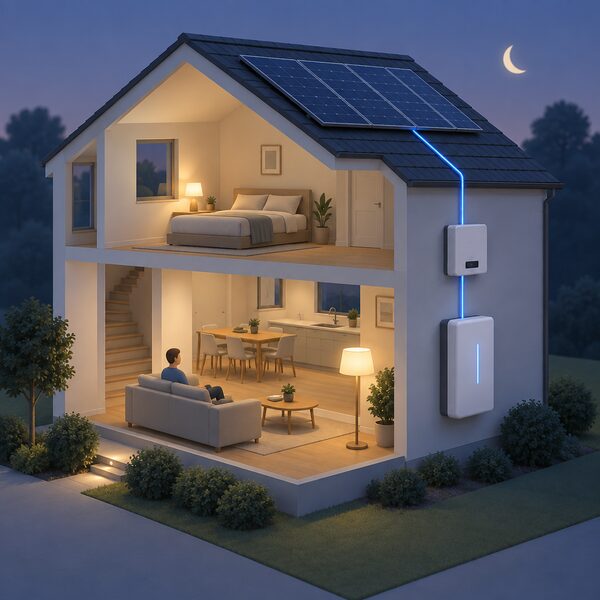
A battery converts timing. Solar generation peaks in the middle of the day; household demand peaks in the morning and evening. Storage moves one to the other, and that is why the self-consumption figure moves from 30 to 50% to 80% or more2.
There are two ways to connect the battery, and the choice is mostly about whether solar already exists. A DC-coupled system connects the battery to the array on the direct-current side, before the inverter. It uses fewer components, so it is easier for new solar homeowners to start out, but extension cables are needed to connect solar panels to the storage unit because they are normally installed in different places, and long connection leads lose energy in transmission9. An AC-coupled system connects on the alternating-current side, after the inverter, and is capable of making bi-directional power conversion from DC to AC and from AC to DC9. It features multiple energy conversions, so overall efficiency is a bit lower than DC-coupled, but the difference is minimal and would not impact the household in practice9.
For a household that already has panels, the AC route is the usual one, and battery storage can be added to existing solar panels to maximise the benefits of the system10. The trade-off is a small efficiency loss against a much simpler retrofit. For a new installation, DC coupling keeps the component count down.
The independence gain is real but bounded. A battery shifts consumption within a day and, with enough capacity, across a dull patch. It does not generate. In a UK winter, a battery charged on a short, low-output day will not carry a household through to the next one, and the grid remains the supplier of last resort. The relevant pages are adding battery storage to a solar system and hybrid inverters, which combine solar and battery conversion in one unit.
Permitted development rules for solar equipment: height, area and boundary limits
Most domestic solar goes ahead without a planning application. Homes can often have solar panels without requiring planning permission from the council, covered by permitted development so long as certain conditions apply11. Installing solar panels and equipment on residential buildings and land may be permitted development with no need to apply12. The permitted development rights allow the installation of most solar panels, subject to meeting the requirements set out in local guidance13.
For roof and wall-mounted equipment on a house or block of flats, the conditions are specific. The solar panel must be no higher than the roof, excluding any chimney, and the panels must not protrude by more than 200mm beyond the wall or roof14. On a flat roof, the highest part of the solar PV equipment cannot be more than 600mm higher than the highest part of the roof, again excluding the chimney15. Panels cannot be installed above the highest part of the roof12.
Stand-alone, ground-mounted equipment has its own set. Standalone solar panels are permitted development provided they comply with the conditions16. No part of the installation should be higher than 4 metres, and the size of the array should be no more than 9 square metres, or 3 metres wide by 3 metres deep12. Only the first stand-alone solar installation will be permitted development12. Where the panel is within 5 metres of the boundary of the property, it cannot be more than 2 metres in height16. Under the rules that followed 27 August 2026, a stand-alone installation on a house is limited to 1 metre in height when within 5 metres of the boundary and situated on land forward of the principal elevation, and 2 metres when installed within 5 metres of the boundary in other cases5.
| Equipment | Limit | Source |
|---|---|---|
| Roof or wall mounted, house or flats | No higher than the roof, excluding chimney; no more than 200mm protrusion | 14 |
| Flat roof | No more than 600mm above the highest part of the roof | 15 |
| Stand-alone, height | No part higher than 4 metres | 12 |
| Stand-alone, area | No more than 9 square metres, or 3m by 3m | 12 |
| Stand-alone, boundary | 2 metres maximum within 5 metres of the boundary | 16 |
| Stand-alone, count | Only the first installation is permitted development | 12 |
There are important limits and conditions to permitted development rights which must be met to benefit from them17, and stand-alone equipment should be sited, so far as is practicable, to minimise its effect on the amenity of the area5. When no longer needed, equipment should be removed as soon as reasonably practicable5. A 12-month transitional period added with the 2026 changes runs until 27 August 2027, during which either the old or the new rules may be followed18.
Where the rules tighten: conservation areas, World Heritage Sites, listed buildings and flats
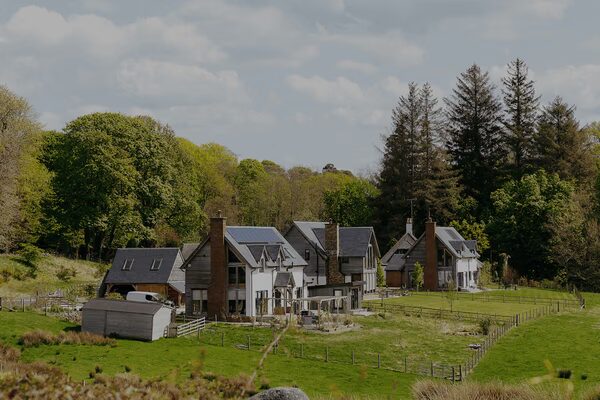
The permitted development route narrows sharply in designated places. There are exceptions for listed buildings and homes in conservation areas3, and in some cases, such as in conservation areas and on listed buildings, planning permission may be required19.
For a property in a conservation area or a World Heritage Site, panels must not be fitted to a wall, balcony or roof enclosure which fronts a highway under the rules following 27 August 202618. Under the earlier rules, the restriction was on a wall which fronts a highway18. Planning consent is required when panels are fitted on the principal or side elevation walls and are visible from the highway16. For a block of flats in a World Heritage Site, no part of the solar installation should be nearer to any highway bounding the block than the part of the block nearest to that highway5.
Listed buildings are a separate consent regime. Solar panels on listed buildings will need planning permission and listed building consent11. They can sometimes be installed on a listed building, depending on the building and how the installation would affect its character20. Stand-alone panels need permission if they would be installed within the curtilage of a listed building, meaning within the garden or grounds21, and panels should not be installed within the boundary of a listed building or a scheduled monument5. The panels must not be installed on a building that is within the grounds of a listed building or on a site designated as a scheduled monument22.
Where a property is in a conservation area or is a statutory listed building, the local guidance points to the solar panel advice on the Historic England website17. In a conservation area, stand-alone equipment closer to the highway than the nearest part of the house requires the developer to apply to the local planning authority for prior approval, and in that position the height limit is 2 metres5. The dedicated pages are solar panels in a conservation area and listed building consent for solar panels.
How far the UK's solar build-out has come, and where it is heading
Domestic solar is no longer a niche. At the start of 2026, domestic solar comprised 30% of UK solar capacity, and 84% of total UK solar installations4. The household sector is the largest single source of installations by count, even though it is a minority of capacity by megawatt, because domestic arrays are small.
The direction of travel is set out in official projections. The 2030 estimate assumes up to 47 GW of installed solar PV capacity is deployed by 203023, and the Climate Change Committee's pathway has solar capacity increasing to 82 GW by 204024. Those are national figures, not household ones, and they describe a grid that will be supplied by a much larger solar fleet than today.
The most significant change for households is the arrival of plug-in solar. Plug-in solar panels became legal across Great Britain on 27 August 202625, and the government stated that it would make plug-in solar available for the first time in Britain so that families can buy a low-cost panel straight from a supermarket and set it up on a balcony or in a garden26. That lowers the entry point to generating at home, though a plug-in panel is a far smaller contribution to independence than a roof array. The relevant pages are plug-in solar kits and balcony solar.
For a household, the build-out matters in two ways. A larger national fleet means more solar on the system at the times when a home's own array is also generating, which affects the value of export. It also means the supply chain, the installer base and the standards regime are all larger than they were, which is what makes a domestic installation routine rather than pioneering.
Where solar alone falls short of independence
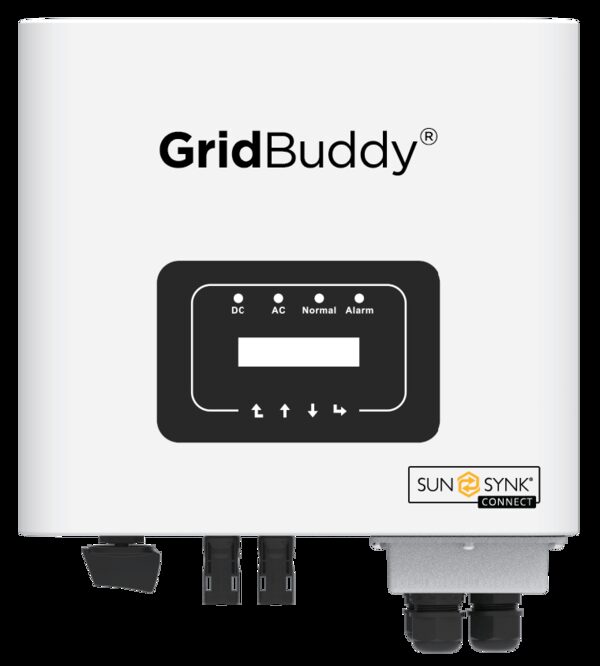
The limits are structural, and they do not go away with a bigger array.
- The grid is still the supplier at night and in winter. A grid-tied inverter works with the grid, and a battery shifts consumption rather than creating generation.
- Ordinary inverters shut down in a power cut. A grid-tied system cannot run the house during an outage, so a household that wants resilience needs equipment designed for it.
- Roof space is finite. A household needs sufficient space for the array it wants27, and shading, orientation and pitch all reduce what a given roof can deliver.
- Self-consumption is capped by demand. A household that uses little electricity cannot absorb much generation, however large the array.
- Export pays less than import costs. Rates for selling electricity to the grid are much lower than tariffs for using electricity from the grid3, so surplus generation is worth less than avoided consumption.
- Designated buildings and areas face extra consent. Listed buildings need planning permission and listed building consent11, and conservation areas restrict wall-mounted panels fronting a highway18.
The practical position is that solar moves a household a long way down the scale towards independence, and a battery moves it further, but the connection to a supplier remains for the hours and seasons the array cannot cover. A household that wants to go further needs a system designed for it from the outset, which is the subject of off-grid solar. For the wider picture of how a system is put together, the solar PV guide covers panels, inverters and export payments.
Sources27 cited
- Solar panels, Oxfordshire County Council
- Solar panels, Uswitch
- Solar panels, London Borough of Hammersmith and Fulham
- POST note 771: Solar PV, Parliamentary Office of Science and Technology, 2026
- Planning permission: stand-alone solar equipment, Planning Portal
- Are solar panels worth it?, Uswitch, 16 September 2026
- Research briefing CBP-8090, House of Commons Library
- MGD 003: Solar PV Self-Consumption, Issue 2.0, MCS Certified, April 2022
- DC-coupled vs AC-coupled vs hybrid solar battery storage, Hoymiles, 23 September 2025
- Switch Together Birmingham, Birmingham City Council, 27 January 2026
- Solar panels and planning permission, Cornwall Council
- Solar panels guidance, Islington Council
- Installing solar panels at your home, Brighton and Hove City Council
- Solar panels, City of York Council
- Building regulations approval for underfloor heating, Planning Portal
- Guidance on retrofitting homes: solar panels, Lambeth Council
- Planning permission for solar panels, Welsh Government
- Planning permission: solar equipment mounted on a house or a block of flats, Planning Portal
- Solar Together Norfolk, South Norfolk and Broadland District Council
- FAQs for listed building owners and occupiers, Exeter City Council
- Solar panels, Wirral Council
- What is permitted development, Wandsworth Council
- Job estimates for solar PV by 2030: methodology note, Department for Energy Security and Net Zero
- The Seventh Carbon Budget, Climate Change Committee
- First regional solar breakdown as installations hit record highs, Department for Energy Security and Net Zero, 27 August 2026
- Heating oil support, Hansard, 16 March 2026
- Solar photovoltaic (PV) panels, London Borough of Bromley
 Suppliers and IndependenceCan you really cut your energy bills by making your own power, and how much of your supplier do you still need?
 The Full Solar Panels GuideHow much do solar panels cost, and what could they save you each year?
 Charging and Energy IndependenceCharging an electric car at home can cut your fuel costs, but how much does it really free you from the grid?
 Data and Energy IndependenceHow many UK homes actually make their own power, and is that number really growing?
 Energy Bills and IndependenceSolar panels can cut the part of your bill that goes up with every unit you use, but you still pay a daily standing charge just for being connected to the grid.
 Self-ConsumptionHow much of the electricity from your own solar panels do you actually use, and how much goes to the grid?