In this guide
Almost every crystalline silicon panel now quoted for a UK roof is built on one of two cell architectures. The older is PERC, a p-type cell that dominated the market for a decade. The newer is TOPCon, short for tunnel oxide passivated contact, an n-type cell that adds an ultra-thin passivation layer to the back of the cell to reflect unused photons back into it rather than losing them1. Panels using it are sold under names such as SunPower Performance, which combines TOPCon solar cells with a shingled-cell design2.
The practical consequence is measurable rather than dramatic. Commercial TOPCon modules routinely achieve around 22 to 23 per cent efficiency, with advanced cell designs pushing towards 24 to 25 per cent at cell level3. TOPCon cells convert a greater percentage of sunlight into power, so a TOPCon panel can generate more power in the same amount of space4. They also maintain more of their power output when the sun is beating down, and show lower power degradation in the first year and across a thirty year service life than PERC panels1. Maker figures put maximum annual degradation for TOPCon at 0.35 to 0.55 per cent, with 98 to 99 per cent of rated output warranted at the end of year one6.
None of that changes what solar does or does not do for a household. A photovoltaic array turns daylight into electricity on site and cuts the volume bought from a supplier; it does not, on its own, disconnect a home. Cell architecture is a question of how many kilowatt hours a fixed roof area yields over twenty-five to thirty years, which is the estimated lifespan of new panels7, and how confidently that yield can be predicted at year twenty.
What TOPCon is and how the cell works
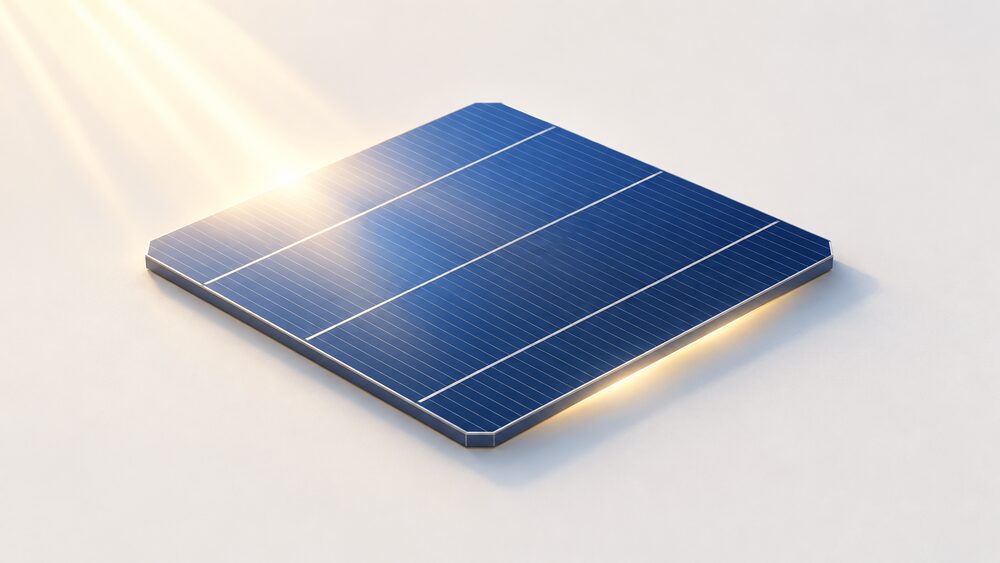
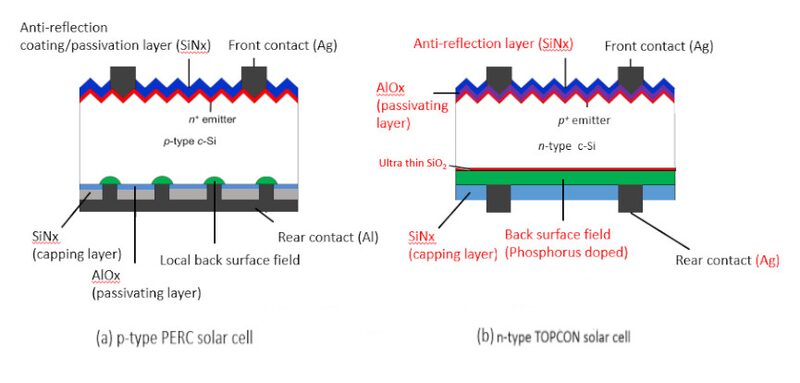
A photovoltaic cell captures the sun's energy and converts it into electricity. The architecture determines how much of the incoming light survives the trip through the silicon as usable current. TOPCon's distinguishing feature is an ultra-thin passivation layer on the back of the cell, which reflects unused photons back into the cell instead of allowing them to be absorbed or lost at the rear contact4. Fewer losses at the rear surface means a greater percentage of sunlight is converted into power5.
The second half of the description is the wafer. TOPCon cells are n-type, which datasheets state plainly: Trina modules are listed as Mono N-type (TOPCON), and a TCL Solar 500W module is described as N-type TOPCon half-cut8. PERC, by contrast, is a p-type architecture. The dopant carried by the wafer governs how the cell ages and how tolerant it is of certain degradation mechanisms, which is why the n-type label appears so prominently in current marketing.
Cell architecture is routinely combined with a separate cell-layout choice. SunPower Performance panels use one-third cut TOPCon shingled-cell technology, in which cells are cut into thirds and overlapped2. Maxeon Performance 7 panels use the same construction10. The TCL Solar S Class combines N-type TOPCon cells with a shingled cell layout11. Others pair TOPCon with multi-busbar interconnection, as in the Spectra Bifacial framed range, which uses new MBB TOPCon solar cells described as improving both appearance and efficiency12. Layout and architecture are independent variables: reading a datasheet means separating the cell chemistry from the way those cells are wired and cut. Our guide to reading a solar panel datasheet covers the rest of the specification sheet.
Efficiency: 22 to 23 per cent modules from 24 to 25 per cent cells
Cell efficiency and module efficiency are different numbers, and the gap between them is real. Commercial TOPCon modules routinely reach around 22 to 23 per cent, while advanced cell designs push towards 24 to 25 per cent3. Another manufacturer account states TOPCon cell efficiencies can go beyond 25 per cent1. The module figure is always lower because a module includes frame, gaps between cells, glass and interconnection, none of which generate.
Against the wider market, this is the top band of mainstream silicon. Monocrystalline panels as a class typically achieve 18 to 23 per cent, while amorphous thin film panels sit at 7 to 12 per cent13. One installer account of the 2025 market puts the most advanced panels at 23 to 24 per cent14. Specific modules illustrate the spread: a SolarEdge 440W module is listed at 22.53 per cent8, SunPower Performance panels are quoted at up to 22.8 per cent10, and the SORA 500, described as powered by TOPCon technology, is claimed to reach up to 25 per cent15.
That last figure is a maker claim on a portable product and sits above the range independent and technology-level sources give for commercial modules. Where a datasheet quotes an efficiency above 23 per cent for a standard rooftop module, it is worth checking whether the number refers to the cell or the finished panel.
| Technology | Efficiency quoted | Source type |
|---|---|---|
| Amorphous thin film | 7 to 12% module13 | maker guidance |
| Monocrystalline, general | 18 to 23% module13 | maker guidance |
| TOPCon, commercial modules | ~22 to 23%3 | maker guidance |
| TOPCon, advanced cells | 24 to 25%3; beyond 25%1 | maker guidance |
| Most advanced panels, 2025 market | 23 to 24%14 | maker guidance |
For a household, efficiency matters only through roof area. A higher-efficiency panel converts more sunlight into electricity from the same physical space4, which counts on a small or awkward roof and counts for very little on a large clear one. If area is not the binding constraint, a cheaper, lower-efficiency module fitted in greater number produces the same result. How much roof area a system needs is the question that decides whether efficiency is worth paying for.
Why TOPCon holds its output in heat and low light
A photovoltaic panel performs optimally at 25 degrees Celsius and loses output above it16. The temperature coefficient on a datasheet states that loss per degree. A high-quality panel is described as having a coefficient of minus 0.3 per cent per degree Celsius or better14. Back-contact designs go further: SunPower back-contact panels are quoted as low as minus 0.26 per cent per degree16.
The scale of the effect is often overstated. Even at close to boiling point, power output would only be around 20 per cent lower, all other things being equal17. In a UK summer the losses are real but modest, and they matter most on dark roofs with restricted airflow behind the modules. TOPCon's claimed advantage is that the cells maintain more of their power output when the sun is beating down5.
Low light is the other half of the claim, and the more relevant one for British weather. Solar panels work during daylight, even when it is cloudy or overcast, because they use light, not heat, to generate energy18. Rooftop panels even work on cloudy days19, and good generation can still be achieved under overcast skies. TOPCon modules are described by manufacturers as having higher efficiency in low light conditions1, with an edge at dawn, dusk and on cloudy days4. These are maker statements; independent UK field comparisons of TOPCon against PERC in low light are not published in the material reviewed here, so the direction of the claim is better supported than its size.
Bifaciality is the third heat-and-light property. TOPCon panels are quoted with a bifacial factor of up to 85 per cent, meaning the rear face contributes up to 85 per cent as much as the front under the same illumination1. Rear-side gain only materialises where light reaches the back of the panel, which rules out most conventional pitched roof mountings, where the module sits close to a dark surface. On ground mounts, flat roofs with reflective membranes and open canopies, the back face sees enough diffuse and reflected light to add output, and that gain rises in bright, cool conditions rather than in heat. Bifacial and glass-glass modules covers where that applies.
Slower degradation across a 25 to 30 year life
Every silicon panel loses output with age. Across the market, a solar panel typically degrades at between 0.5 and 3 per cent a year depending on type and conditions, which means that after twenty-five years many panels will have degraded by anything between 12.5 and 75 per cent20. A well-maintained panel at 0.5 per cent a year would still be operating at 87.5 per cent of full capacity after twenty-five years20. Modern panels generally are designed for something in the region of 0.25 to 0.8 per cent a year, depending on quality and technology21.
TOPCon sits at the better end. Maker warranty documentation gives maximum annual degradation of 0.35 to 0.55 per cent and a minimum warranted output in year one of 98 to 99 per cent6. The first year matters disproportionately because initial light-induced losses are front-loaded; TOPCon modules are stated to have lower power degradation in the first year and across a thirty year service life than PERC panels1.
Lifespan estimates converge. The parliamentary science briefing puts the estimated lifespan of new solar panels at 25 to 30 years, varying with environment7. Independent consumer guidance gives about 25 years before significant degradation20, 25 years or more22, and around 30 years with regular upkeep23. Those last two sources differ on where the upper bound sits and neither is decisive. High-quality panels are described as retaining more than 80 per cent of initial performance at 25 years13. TOPCon marketing works to the same 25 to 30 year window4.
Slow degradation is what makes a solar array a durable piece of household infrastructure rather than a consumable, and that is the independence argument for paying attention to cell technology. Warranties, degradation and lifespan sets out how the two documents interact.
Warranties: 12 to 25 years product, 25 to 30 years performance
TOPCon panels are typically sold with product coverage of 12 to 25 years and performance coverage of 25 to 30 years, and service coverage is rarely included6. That matches independent accounts of the market, where most panels come with a product warranty ranging from around 12 to 25 years24. A separate consumer body states solar panels usually come with a 25-year performance warranty and a five to ten-year product warranty25, a shorter product term than the maker figures, so the two accounts disagree on where the floor sits.
The two documents cover different things. The product warranty covers materials, workmanship and manufacturing defects21. The performance warranty guarantees a minimum power output over the period, typically 25 to 30 years14. A panel that produces less than warranted is a performance claim; a delaminated backsheet is a product claim.
| Cover | TOPCon panels, maker figures | Market range, independent |
|---|---|---|
| Product | 12 to 25 years6 | 12 to 25 years24; five to 10 years25 |
| Performance | 25 to 30 years6 | 25-year guarantee typical25 |
| Year-one minimum output | 98 to 99%6 | not stated |
| Service cover | rarely included6 | not stated |
Premium back-contact ranges are warranted more generously than the TOPCon norm: SunPower Performance panels carry a 30-year warranty covering Power, Product and Service2. Well-known manufacturers offering 25 to 30 year terms are said to be demonstrating confidence in longevity20. That inference has a limit: a warranty is a promise from a company, and its worth over a 30-year horizon depends on that company still trading. Every warranty term on this page is a dependence on a manufacturer, not a property of the silicon.
TOPCon against PERC: what the newer technology costs and returns
TOPCon carries a higher upfront cost than PERC, and its makers argue it is the smarter long-term financial choice because superior efficiency generates more energy over a 25 to 30 year lifespan, leading to greater savings and a faster return4. That is a manufacturer's framing of its own product, and no independent UK comparison of TOPCon and PERC payback appears in the published guidance.
The payback figures that do exist are for rooftop solar generally, and they vary widely by source:
- 10 to 12 years, English local authority guidance26
- 8 to 12 years depending on maintenance, and 5 to 10 years elsewhere on the same Scottish page27
- 7 to 10 years22
- about 10 to 12 years, with the shortest case put at as little as nine years28
- 10 to 13 years for a typical UK rooftop system18
The spread reflects different assumptions about system cost, electricity price and self-consumption, not different technologies. Cell architecture moves that number only through generation, and only where roof area limits the system. Where it does not, a larger PERC array at lower cost per watt may reach break-even on the same schedule. VAT position also bears on cost: eligible installations are currently zero-rated, with the rate scheduled to move to 5 per cent from 1 April 2027. Savings and payback periods and what solar panels cost cover the economics in full.
N-type, heterojunction and back-contact: where TOPCon sits
TOPCon is one of several n-type architectures competing to replace p-type PERC. Heterojunction cells and back-contact designs are the others in serious production. The distinction that matters at datasheet level is the wafer type: PERC is p-type, while TOPCon, heterojunction and most back-contact designs are built on n-type silicon. Modules state it explicitly, for instance TOPCON N-type on a Trina 490W module8.
Back-contact architecture moves the electrical contacts to the rear of the cell entirely, removing front-side shading from busbars. It is the design behind panels quoted with the lowest temperature coefficients, as low as minus 0.26 per cent per degree Celsius16. AIKO's material compares a 475W TOPCon panel against a 475W ABC panel, its back-contact product, at identical rated output29: at the same wattage, the differences lie in temperature behaviour, low-light response and shade tolerance rather than headline power. A dedicated page compares n-type and p-type cells in more detail, and types of solar panel sold in the UK sets out the wider market.
Thin film sits outside the silicon debate entirely, at 7 to 12 per cent module efficiency13. It is concentrated in one supplier at utility scale: First Solar is estimated to hold 95 per cent of the market for thin film cadmium telluride panels7. For a UK domestic roof, the practical choice is between p-type PERC and one of the n-type families.
Panels using TOPCon on the UK market
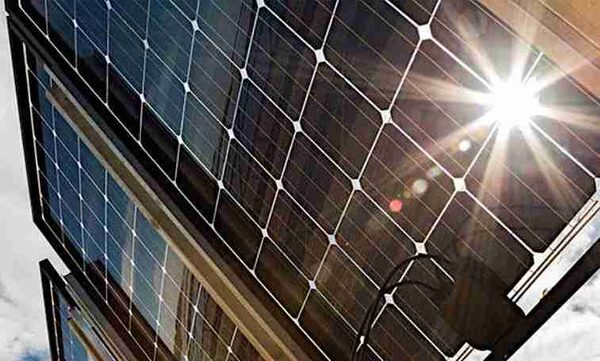
TOPCon now appears across the range, from bifacial dual-glass modules for roofs and ground mounts to foldable portable panels.
| Product | Cell technology | Rated output | Other stated figures |
|---|---|---|---|
| SunPower Performance | One-third cut TOPCon shingled-cell2 | Up to 515W10 | Up to 22.8% efficiency; PVEL Reliability Scorecard Top Performer10 |
| Maxeon Performance 7 | One-third cut TOPCon shingled-cell30 | not stated | 30-year warranty on Performance range2 |
| TCL Solar T-Class bifacial full black | N-type TOPCon half-cut9 | 500W, range 455 to 500W9 | 2.0mm + 2.0mm heat-strengthened glass; 2,400Pa maximum wind load; 1,500V DC maximum system voltage; Stäubli MC4-EVO2A connector9 |
| Trina Vertex modules | Mono N-type TOPCon8 | 450W and 490W variants8 | listed by an independent reviewer8 |
| Tongwei Solar 500W bifacial dual glass | TOPCon31 | 500W31 | n-type bifacial, black frame31 |
| Spectra Bifacial, framed range | New MBB TOPCon cells12 | not stated | cells stated to improve appearance and efficiency12 |
| SORA 500 | TOPCon cells15 | not stated | up to 25% efficiency claimed15 |
| Jackery SolarSaga | TOPCon monocrystalline, bifacial32 | not stated | portable panel32 |
| Jackery SolarSaga 40 Air | Bifacial with advanced TOPCon cells33 | not stated | foldable structure33 |
A 475W class has emerged as a common comparison point, with AIKO setting a 475W TOPCon panel against a 475W back-contact panel29. Product pages for SunPower and Maxeon, Trina, Astronergy and AIKO Neostar carry the full ranges. Prices are installer-quoted and no published domestic price list is available here.
What Tier 1 means, and what it does not
Tier 1 is a BloombergNEF classification. It appears constantly in solar sales material, and it is worth being precise about what it measures. It is a bankability ranking: an assessment of whether large lenders have financed projects using a manufacturer's modules. It is not a test of efficiency, durability or warranty quality, and no UK regulator issues it.
In practice the claim is usually self-declared. TCL Solar, for example, is presented by the company as a BloombergNEF Tier 1 PV module manufacturer11. That is a manufacturer's statement about itself. A householder comparing panels gains more from the figures on the datasheet, the degradation curve, the temperature coefficient and the warranty terms, than from a tier label.
Where third-party assessment does exist it is named directly: SunPower Performance panels are described as a PVEL Reliability Scorecard Top Performer10. That is a specific independent testing programme rather than a financing category. Solar panel standards and testing sets out the IEC certifications that every module sold must hold.
Where cell technology matters on a real roof, and where it does not
Solar panels are suitable across the UK19. Rooftop mounting is by far the most common option for domestic installations, with ground mounting the alternative34. The ideal is a large, un-shaded, predominantly south-facing roof space35, and panels can be installed on flat roofs as well as pitched, where they are normally tilted up to maximise production and spaced to avoid shading one another36.
Cell technology cannot fix the constraints that actually determine whether an installation works:
- Shade. If a roof is heavily shaded, solar panels may not be the most suitable option at all37. No cell architecture overcomes a chimney.
- Orientation. Panels on north-facing roofs are not recommended, because the sunlight will not make it worthwhile19.
- Roof condition and space. The roof must be in good condition and have sufficient space37.
- Structure. The adequacy of the existing roof to carry the load from the panels must be checked and proven38.
- Building regulations. Installing a solar panel on a roof will normally bring building regulations into play in England and in Wales39, Building Regulations permission applies in Brighton and Hove's guidance for England41, and approval is likely to be needed for panels added to a home in Wales38.
Where cell technology does earn its premium is on a constrained roof. TOPCon converts more sunlight into electricity from the same physical space4, so where the limit is square metres rather than budget, the higher-efficiency module puts more kilowatt hours behind the same rafters. Manufacturers position TOPCon for exactly that case: maximising power output and long-term value, limited installation space, and the most advanced technology available4.
The independence question runs the other way. Better cells reduce the volume of imported electricity a home buys and slow the rate at which that reduction fades. They do not change the fact that an inverter must be present, that a grid connection is normally still required, that export income depends on a supplier's tariff, or that a thirty year warranty is a claim against a company. Roof orientation, pitch and shading, building regulations and roof loading and solar and household energy independence each carry the detail, and the solar PV guide sets the whole system in context.
Sources41 cited
- TOPCon N-type technology, Alternergy, 2026-09-17
- SunPower Performance solar panel, SunPower, 2026-09-17
- Back contact technology and HPBC 2.0 in partial shade, LONGi, 2025-10-06
- PERC vs TOPCon solar panels, Astronergy, 2025-08-09
- What is TOPCon technology, Astronergy, 2025-04
- SunPower warranty comparison, SunPower, 2026-09-17
- Solar photovoltaics research briefing, UK Parliament POST, 2026-06-25
- Trina Solar panels review, Which?, 2026-08-12
- TCL Solar 500W T-Class N-type TOPCon bifacial panel, Alternergy, 2026-09-19
- SunPower solar panels range, SunPower, 2026-09-17
- Advantages of shingled solar panels, Alternergy, 2026-04-15
- Spectra bifacial solar panels, Marlec, 2026-07-08
- How much electricity does solar power produce, Jackery, 2026-07-10
- Best solar panels 2025, Spirit Energy, 2025-02
- Solar panels including the SORA 500, Bluetti UK, 2026-09-19
- Solar panel efficiency and energy savings, SunPower, 2026-07-28
- Fact check: solar power works best in the summer, Solar Energy UK, 2023-06-13
- Solar panel myths debunked, Which?, 2026-06-09
- Solar panel installation, Energy Saving Trust, 2026-09-07
- How long do solar panels last, Uswitch, 2026-07-13
- How long do solar panels last, Jackery, 2026-06-30
- Are solar panels worth it, Uswitch, 2026-09-16
- Solar panel cleaning and maintenance, Energy Saving Trust, 2026-08-25
- Could solar panels save you £500 a year, Which?, 2026-06-17
- Buying a house with solar panels, Energy Saving Trust, 2026-08-13
- Solar panels, Hammersmith and Fulham Council, 2026-09-17
- Solar panels, Home Energy Scotland, 2026-09-20
- Solar power facts, Energy Saving Trust, 2026-08-13
- 475W TOPCon vs 475W ABC, AIKO Solar, 2026
- Performance 7 solar panels, Maxeon, 2026-09-17
- Tongwei Solar 500W n-type bifacial dual glass panel, Alternergy, 2026-09-19
- SolarSaga 200W solar panel, Jackery, 2026-09-19
- SolarSaga 40 Air foldable solar panel, Jackery, 2026-04-29
- Solar panel installation, maintenance and repair, NICEIC, 2026-09-17
- Advice for consumers, RECC, 2026-09-17
- Solar panels advice, Energy Saving Trust, 2026-08-27
- Solar photovoltaic (PV) panels, Bromley Council, 2026-09-17
- Building regulations: energy efficiency and extensions, Welsh Government, 2026-09-17
- Building regulations for solar panels, Planning Portal, 2026-09-17
- Building regulations: solar panels, Welsh Government, 2026-09-17
- Installing solar panels on your home, Brighton and Hove City Council, 2026-09-17
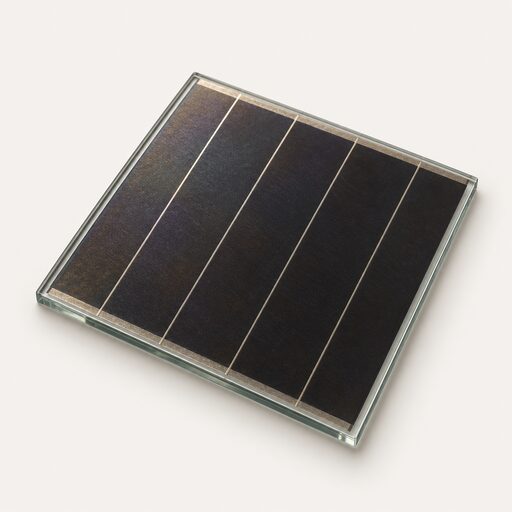 Perovskite Solar CellsPerovskite solar panels are a newer kind of panel that could be cheaper and more efficient than the ones sold today.
 Warranties and DegradationHow long do solar panels actually last, and what do the warranties really cover?
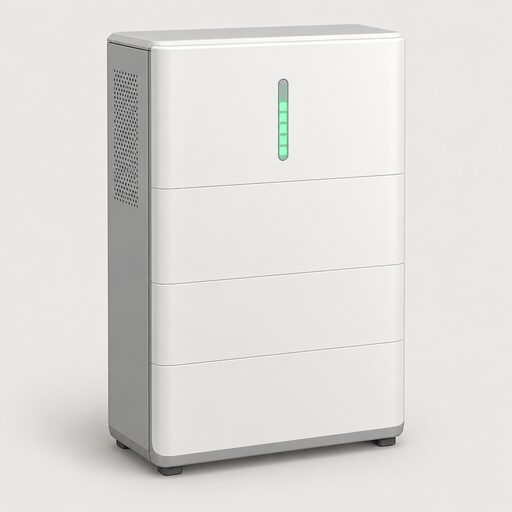 AC-Coupled vs DC-CoupledCan you add a battery to your existing solar panels without swapping the inverter, and does one kind waste more of your solar power than the other?
 Cooling with Solar PanelsCan solar panels run an air conditioner, and will they cover the whole bill?
 Panel TypesWhich solar panels are best for a UK home, and how much do they cost?
 Tier 1 and Bankability RatingsDoes a Tier 1 badge mean better panels, or just a bigger company?