
In this guide
```
Perovskite solar cells are photovoltaic cells built from a family of crystal structures, most commonly lead halide compounds, laid down as a thin film rather than sliced from a silicon ingot. They are an emerging thin film material with low production costs, and they reach higher efficiency than any other single material thin film technology, but they have shorter lifetimes than silicon and carry concerns around lead toxicity. Lead-free perovskites developed so far are less efficient than the lead halide versions1.
The efficiency numbers are the reason the material attracts attention. A perovskite cell has reached 27% in laboratory conditions and 21% at module size. Layered on top of a silicon cell to form a tandem, the laboratory record rises to 35%, with a record module efficiency of 31%, and industrial size silicon-perovskite tandem modules currently reaching 31.1%1. For comparison, polycrystalline silicon modules of the sort sold in the UK reach up to 21% module efficiency, and those are being phased out in favour of monocrystalline2.
None of this is yet a product a household can buy. Perovskite panels are not yet proven in real-world environments and are not commercially available2, and local authority retrofit guidance lists them simply as not yet on the market3. UK homes are fitted with crystalline silicon, sold through installers rather than direct to consumers4. What perovskite offers a household today is a reason to understand what may change, not a purchase decision.
What a perovskite solar cell is: the chemistry behind the name
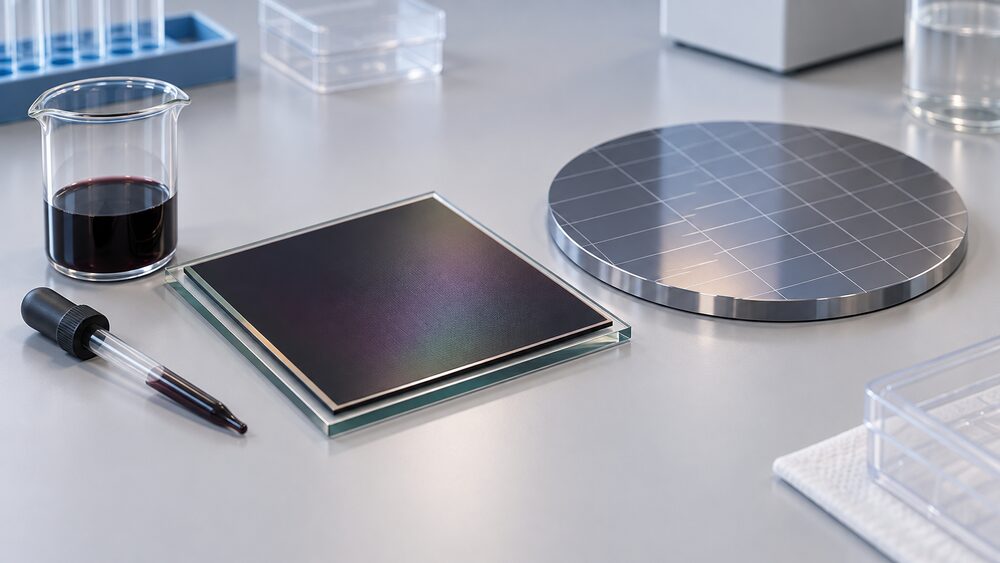
Perovskite names a crystal structure, not a single mined mineral. The photovoltaic versions are commonly lead halide1. That matters because the structure can be formed from solution or vapour into very thin layers, rather than grown as a large crystal and sawn into wafers.
A conventional solar photovoltaic system is composed of solar cells made from thin layers of semiconducting material on a glass or metal base5, and in the panels sold today that semiconductor is usually silicon6. Monocrystalline panels take their efficiency from the single-crystal silicon that makes up the photovoltaic cells, while polycrystalline panels are made by melting small silicon crystals together rather than using a single larger fragment, a method that results in lower energy efficiency and a shorter lifespan7.
Perovskite sits in a different family, alongside two other emerging thin film approaches. Dye-sensitised solar cells consist of a photoactive dye absorbed onto a semiconductor, offering low-cost fabrication and flexibility but limited lifetime and manufacturing scalability, with low outdoor performance and more potential in building-integrated photovoltaics, portable electronics and particularly indoor use. Organic solar cells are carbon-based semiconductors, lightweight with low-cost manufacturing, with lower efficiencies and shorter lifetimes than silicon, and can be made semi-transparent and flexible for uses such as windows, greenhouses or curved surfaces1.
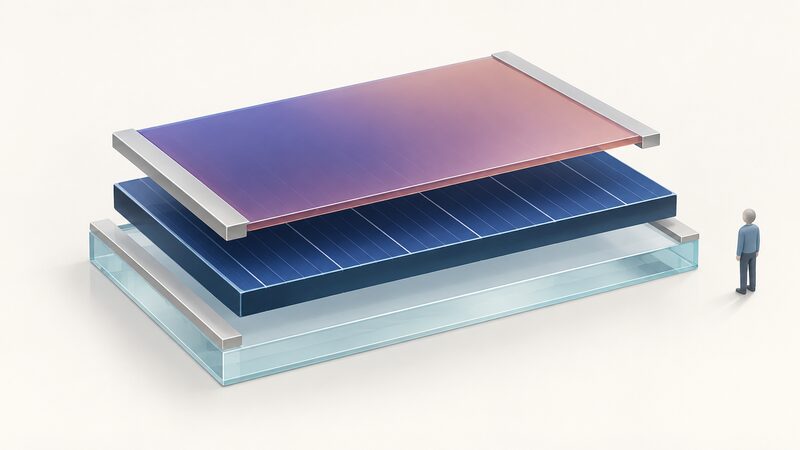
Perovskite's distinctive role is as a partner layer. Common tandem pairings are silicon/perovskite, perovskite/organic, perovskite/perovskite and chalcogenide/silicon, and triple-junction cells use three different material layers1. Silicon is not the only cost in a module: electrical contacts are usually made of silver, which is less abundant and made up 17% of the per watt price of solar modules as of October 20251.
How the cell captures light, and what "absorbs more" actually means
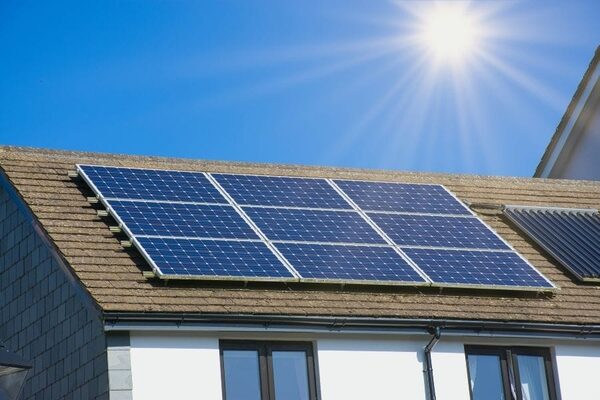
Solar photovoltaic panels capture energy from the sun and turn it into electricity for a home to use8. They work best in direct sunlight but generate from daylight generally, absorbing energy from the light spectrum visible to us and wavelengths that can pass through clouds9. That last point is why solar works at all in British weather.
A single semiconductor layer can only convert part of the spectrum well. Research on coatings notes that most photovoltaic panels absorb up to 70% of the solar energy available10. Stacking materials with different absorption characteristics is the direct answer to that limit, and it is what a tandem does: the perovskite film takes the part of the spectrum silicon handles poorly, and silicon takes the rest. The measured result is the efficiency ladder above, from 21% for polycrystalline silicon modules2 to 31.1% for industrial size tandem modules1.
No published figure supports a fixed claim that a perovskite panel absorbs a set percentage more energy than a standard one, and efficiency is the honest comparison. Higher efficiency matters for households mainly through power density. A sample of products from four larger industry players showed a power density range of only 193 to 212 watt peak per square metre, and a 320 watt peak panel generates 14% more energy per square metre of space than a 280 watt peak module11. On a roof of fixed area, a higher efficiency cell is simply more kilowatt hours from the same rafters.
There is one setting where perovskites already lead clearly. Dye-sensitised, perovskite and organic indoor photovoltaics have all demonstrated indoor efficiencies above 35%1, which points at sensors and small devices rather than roofs.
Lifespan: the problem holding perovskites back
Durability, not efficiency, is the barrier. Perovskites have shorter lifetimes than silicon1, and that single sentence explains why a 35% laboratory record has not turned into a roof product.
The incumbent sets a hard benchmark. The estimated life of a photovoltaic cell is around 25 years, according to Northern Ireland building control guidance12. The output of crystalline silicon panels decreases very slowly over time13. On average a solar panel degrades at a rate of between 0.5% and 3% a year depending on the type of panel14, so after a decade of ownership panels might produce slightly less power than when new15. A household buying silicon is buying a predictable, slow decline over decades.
| Property | Crystalline silicon | Perovskite thin film |
|---|---|---|
| Module efficiency in production | up to 21% (polycrystalline)2 | 21% record at module size1 |
| Laboratory cell record | not stated | 27%1 |
| Lifetime | estimated cell life around 25 years12; output decreases very slowly13 | shorter lifetimes than silicon1 |
| Flexibility | needs to be thicker for sufficient light absorption, so not a good choice for flexible panels1 | thin film, suited to flexible formats1 |
| Production cost | established supply, abundant global supply of panels16 | low production costs1 |
| Material concerns | silver contacts, 17% of per watt module price1 | lead toxicity; lead-free versions less efficient1 |
Testing is the second half of the lifespan problem. Existing International Electrotechnical Commission standards for silicon photovoltaic cells are not well suited to next generation solar technologies such as silicon-perovskite tandem cells17. A household cannot compare a warranty or a degradation curve until there is an agreed test that produces those numbers for the new chemistry. Until then, any claimed perovskite lifetime is a manufacturer's projection rather than a certified figure, and the standards and certification route is as much a gate as the science.
Perovskite against silicon: what the efficiency race looks like

The race has two tracks. On the first, perovskite alone is trying to beat silicon on its own terms, and it has not: 27% in the laboratory and 21% at module size1 puts a perovskite module level with a polycrystalline silicon module at up to 21%2, with none of silicon's durability record.
On the second track, perovskite is not competing with silicon at all but improving it. The most common tandem consists of silicon and perovskite, with current industrial size modules reaching 31.1% efficiency, a laboratory record of 35% and a record module efficiency of 31%1. That is a decisive gap over anything silicon achieves alone, and it is why the tandem route, covered in detail on tandem perovskite-silicon panels, is where commercial effort has concentrated.
Perovskite's other advantage is format. Silicon photovoltaic materials need to be thicker for sufficient light absorption, meaning silicon is not a good choice for flexible solar panels1. Thin films are not constrained in the same way, which opens roofs that cannot take the weight of glass modules, curved surfaces and building-integrated glazing.
Early British work illustrates how far the numbers have moved and how format costs performance. Perovskite thin film cells from Oxford PV were reported at 17% efficiency in laboratory conditions for opaque cells, while for a 50% transparent glass insulated glazing unit a module efficiency of 5% was assumed18. Semi-transparency buys a window, not a power station.
Caution is also warranted on how any of these figures reach a buyer. Which? does not name individual best buys because in the UK solar panels are sold via installers rather than direct to consumers4, so household-facing comparison of a new cell chemistry will lag its laboratory results by years. The page on reading energy product claims sets out how to place a record efficiency on the readiness scale.
Where perovskites are being made commercially
Manufacture has started, outside the UK. There are manufacturing facilities in the United States and Germany building Oxford PV's perovskite and tandem photovoltaics on a commercial scale1. Oxford PV and Power Roll are two examples of UK-based companies working in perovskite-tandem and flexible photovoltaics respectively1, and Oxford PV is covered separately.
Power Roll's first commercial factory is planned to produce 6 million square metres of solar film annually17. Solar film is a different product from a glass module: it targets surfaces a rigid panel cannot use.
"There are manufacturing facilities in the US and Germany, building Oxford PV's perovskite and tandem PV on a commercial scale"
The competitive backdrop is unforgiving. Government describes an abundant global supply of solar panels16, and the scale of conventional manufacture is long established: 11.3 gigawatt peak of solar photovoltaics was deployed in China in 201318. A new chemistry has to beat a commodity, not a niche.
The UK's end-of-life infrastructure is also thin. The UK has a handful of solar panel disposal companies beginning to recycle using crushing techniques17. For a lead-containing thin film, disposal is not a detail, and the recycling route for tandem modules is not yet a settled matter in published guidance.
Perovskite panels in the UK: not yet available for homes
For a UK household in 2026 the position is simple. Perovskite panels are yet to be proven in real-world environments and are not commercially available2; retrofit guidance lists them as not yet on the market, in the same way it lists concentrated photovoltaic panels as not available to households3. Polycrystalline panels, meanwhile, are being phased out in the UK and few installers still offer them2.
There is no funding shortcut either. There are no dedicated government grants for solar panels in the UK at the moment, though that might change as details of the Warm Homes Plan emerge19. An installed domestic system today is around 3.5 kilowatt peak by one official estimate8 and around 4.5 kilowatt peak by the Energy Saving Trust's20, both of them silicon. Under 5% of the UK's 29 million homes have solar panels at all21.
The picture does not differ much between the nations on this point, because the constraint is product availability rather than policy. Where differences do exist they tend to be in deployment support and in statistics coverage: official solar photovoltaic job estimates cover Great Britain, that is England, Scotland and Wales, and do not apply to Northern Ireland22. The Northern Ireland guidance giving an estimated cell life of around 25 years dates from 201012, older than the other figures here. Regional detail is set out for England, Scotland, Wales and Northern Ireland.
Commercial rooftops may see the technology before homes do. Commercial and industrial installations account for 5 to 20 per cent of UK solar photovoltaic deployment, compared with more than half in many other European countries, particularly Germany18. Permitted development rights for non-domestic roof-mounted solar in England were raised to 1 megawatt, from 45 kilowatts, with the consequent rights introduced on 15 April 201518.
What perovskites would mean for household energy independence
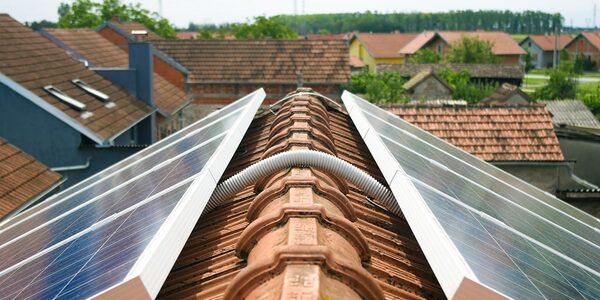
The independence case for solar is not new and does not depend on the cell chemistry. Solar photovoltaic systems use the sun's free energy to provide electricity23. They let a household generate its own electricity instead of relying on the grid24, can help reduce energy bills25 and can improve an Energy Performance Certificate25. More homegrown energy means greater energy independence26, and solar is held to be able and obliged to support the UK's transition to a net zero economy27. The Energy Saving Trust is cited as estimating that solar cells can provide 40% of a home's energy, especially when used alongside a solar battery28.
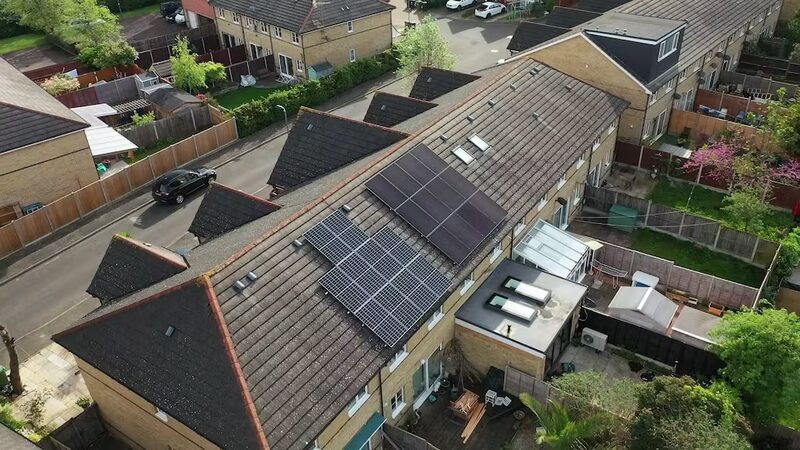
What a higher efficiency cell changes is the ceiling on a constrained roof. Because power density across mainstream products varies only from 193 to 212 watt peak per square metre11, the limit on most homes is area, not appetite. A tandem module at 31.1%1 would put more generation on the same rafters, and a flexible film would open surfaces that cannot carry glass1. For a small terrace, a shaded roof or a structure with a low load rating, that is the difference between a token array and a useful one.
The dependencies do not disappear. A perovskite array is still a grid-connected generator that draws from the grid at night rather than replacing it24, and it is still sold and fitted through an installer channel rather than bought direct4. Add the specific dependencies of an emerging product: a manufacturer whose warranty is only as good as the company, a testing regime that does not yet fit the chemistry17, a lead-bearing module with a thin domestic recycling base17, and no published lifetime a household can plan around1. Those risks are common to early adoption and are set out in what emerging energy technology costs early adopters and in energy technology company failures.
The reasonable reading is that perovskite is a materials advance with a commercial manufacturing foothold abroad and a laboratory lead of 35%1, held back from British roofs by lifetime and standards rather than by physics. Wider context on where it sits among other near-market systems is on the emerging home energy technology pillar, and the direct comparison on perovskite vs silicon solar panels.
Sources28 cited
- Next generation solar technologies, Parliamentary Office of Science and Technology, 2026-06-25
- Are solar panels worth it?, Which?, 2026-05-15
- Clifton local listed building consent order guidance, Bristol City Council, 2025-02
- How we test solar panels, Which?, 2026-08-12
- ECO4 new measures and products guidance, Ofgem, 2026-03-26
- Solar power, Electricity North West, 2026-09-19
- Solar panel installation, maintenance and repair, NICEIC, 2026-09-17
- Solar panels, Hammersmith and Fulham Council, 2026-09-17
- Solar power facts, Energy Saving Trust, 2026-08-13
- Coating to increase the efficiency of photovoltaic cells, UK Green Building Council, 2024-05
- Why are solar PV panels getting bigger?, Solar Energy UK, 2021-06-08
- Conservation of fuel and power guidance, Building Control Northern Ireland, 2010-08
- Solar photovoltaic information, Centre for Alternative Technology, 2026-03-10
- How long do solar panels last?, Uswitch, 2026-07-13
- Most common solar panel problems, Which?, 2026-09-20
- Solar carparks and EV charging call for evidence, Department for Energy Security and Net Zero, 2025-05
- UK Solar Roadmap, Department for Energy Security and Net Zero, 2025-06
- UK Solar PV Strategy Part 2, UK Government, 2014-04
- Solar panel installation, Energy Saving Trust, 2026-09-07
- Solar panels advice, Energy Saving Trust, 2026-08-27
- Solar Wizard calculator, Centre for Sustainable Energy, 2026-05-06
- Job estimates for solar PV by 2030: methodology note, UK Government, 2025-06-23
- Generating your own energy: solar electricity, Welsh Government, 2026-09-17
- Solar PV technology, Flexi-Orb, 2025-04-22
- How do solar panels work?, Smart Energy GB, 2026-03-16
- Solar Energy Scotland manifesto, Solar Energy UK, 2026-09-17
- Everything under the sun: the facts about solar energy, Solar Energy UK, 2026-09-17
- Make your home more energy efficient, Confused.com, 2026-07-06
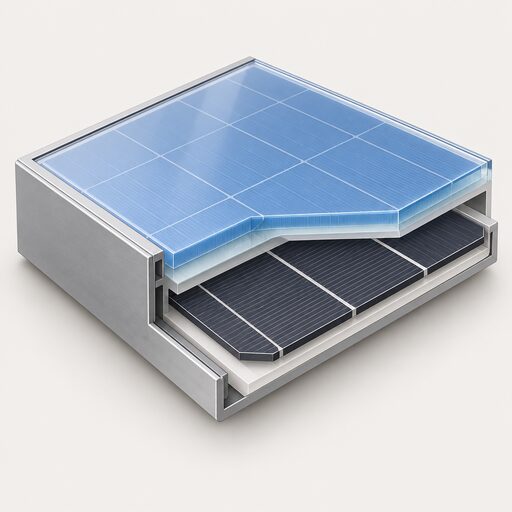 Tandem Perovskite-Silicon PanelsTandem solar panels layer a new material over ordinary silicon so they catch more of the sun's light and make more electricity from the same roof space.
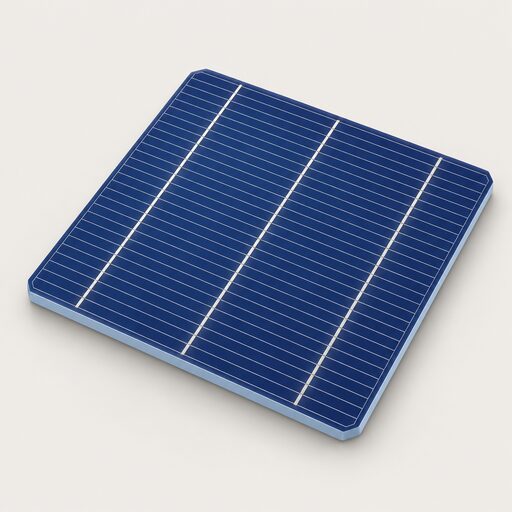 Solar Cell TechnologyBuying solar panels means choosing between cell types that work in different ways.
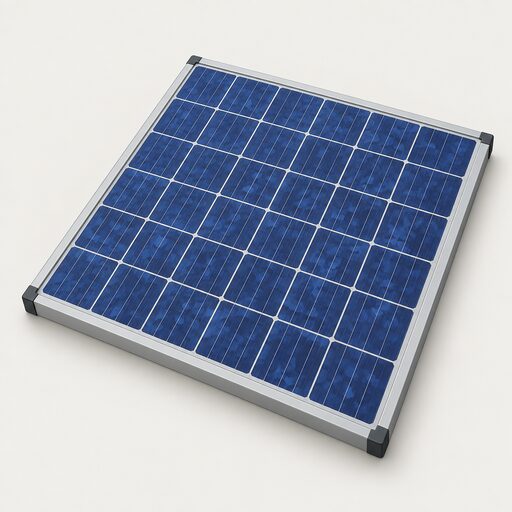 Panel TypesWhich solar panels are best for a UK home, and how much do they cost?
 Warranties and DegradationHow long do solar panels actually last, and what do the warranties really cover?
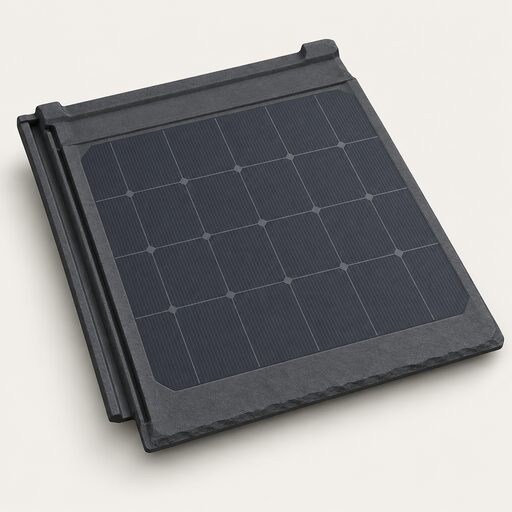 Roof-Integrated SolarSolar tiles replace your roof covering instead of sitting on top of it, so the finished roof looks like a roof.
 Standards and TestingWhat do the certificates on a solar panel datasheet actually prove, and which ones should you look for in the UK?