In this guide
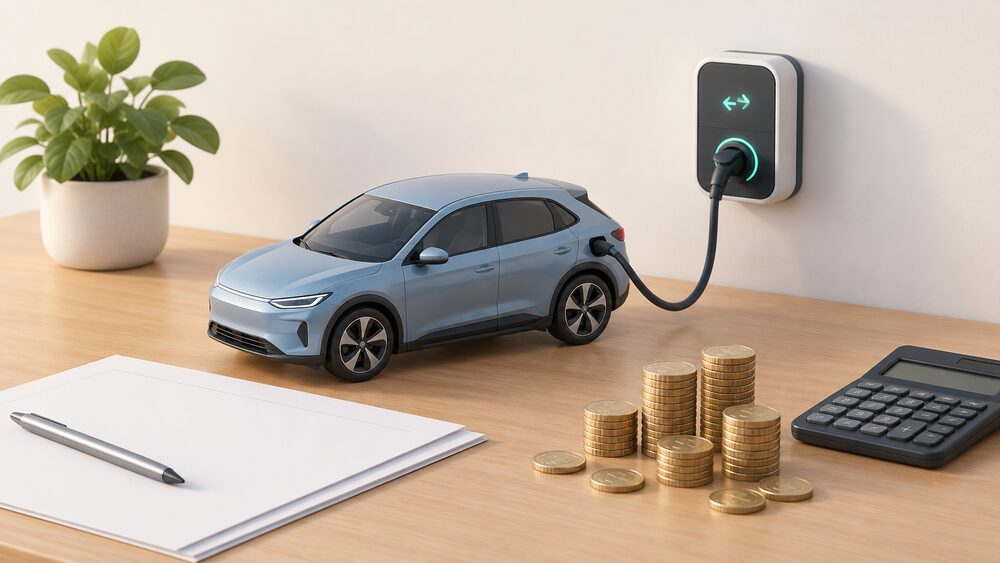
Vehicle-to-grid (V2G) earnings are payments for exporting energy that is already stored in an electric car's battery, not simply savings from charging at the wrong time. The technology allows energy stored in the vehicle's battery to be exported to the grid during periods of high demand1, and the money arrives through one of three routes: a time-of-use import tariff that makes charging cheap, an export tariff that pays for what leaves the battery, or a grid services contract that pays for capacity and response.
The headline figures from UK trials are wide, and the width is the story. Customers in the UK's largest domestic trial were able to earn as much as £725 a year without needing to do anything except keep their car plugged in2. Cenex modelling of the same trial data put V2G at around £410 per year when compared with unmanaged charging3. A later Cenex estimate for average UK revenue generation from V2G is £150 to £200 per year4. All three are defensible; they describe different cars, different connection habits and different tariff structures.
What a household actually receives depends less on the car than on the tariff behind it. V2G is still not widely available, with eligibility requirements such as having a compatible car, charger and smart meter5, and the incremental hardware cost has historically been the largest single obstacle to the earnings being worth having.
What V2G earnings actually are: money for exporting stored energy
A V2G chargepoint provides bi-directional flows of energy and data between a plug-in electric vehicle and the grid, enabling EV batteries to charge, store and discharge electricity when prompted9. That is a different proposition from a smart charger, which only decides when to draw power. The earnings come from the discharge half of the cycle, and they are paid in one of two ways: through the difference between a cheap import price and a higher export or wholesale price, or through a payment for making capacity available to the system.
The scale of the system-level prize explains why trials were funded at all. Research has shown V2G has the potential to save £3.5bn per year in areas such as grid infrastructure reinforcement, storage and generation10. If 50% of the UK's EVs were V2G enabled, this would open up 22 TWh of flexible EV discharging capacity per year and could provide around 16GW of daily flexible capacity to the grid2. Those are national figures, not household ones, but they are the reason the tariff structures exist.
For an individual home, the earnings are modest and conditional. The trial that produced the £725 figure also made over three million 'free' miles available to customers who exported energy back to the grid during peak times2, which is a useful way to think about the value: it offsets motoring and household electricity rather than arriving as a cheque. The distinction matters for how a household judges whether the arrangement is worth the hardware.
"vehicle to grid (V2G) charging, which allows energy stored in the vehicle's battery to be exported to the grid during periods of high demand"
Project Sciurus: what the UK's largest domestic V2G trial paid participants

Project Sciurus was the largest domestic V2G trial in the UK, and its numbers are the most quoted in the field. It installed 320 V2G units in real homes across the UK11, with 330 V2G devices reported installed across the project10. The original ambition was larger: developing, building and installing 1,000 domestic Vehicle-to-Grid (V2G) units7. The gap between the target and the delivered figure is itself informative about how slowly domestic V2G scaled.
The trial ran through 2020, and findings were drawn from 300 domestic V2G units in that year6. It was part of the Vehicle-to-Grid competition, funded by the Department for Business, Energy and Industrial Strategy and the Office for Zero Emission Vehicles, in partnership with Innovate UK, part of UK Research and Innovation7. The separate Vehicle to Grid Britain consortium was funded by the Office for Low Emission Vehicles and BEIS, in partnership with Innovate UK8, and its members included Nissan, Energy Systems Catapult, Cenex, Moixa, Western Power Distribution, National Grid ESO and Element Energy12.
On payment, the trial produced a clear split between one-way and two-way operation. Customers could earn as much as £725 a year when V2G chargers provided grid services, compared with £120 when using one-way smart charging13. Cenex has delivered more than 12 public V2G projects13, and the trial's participant research found that use of the V2G technology during the trial alleviated most of the participants' concerns11.
Earnings in practice: £230 to £725 a year depending on how the car is used
The range of published V2G earnings figures is not noise; each number rests on a stated assumption, and reading them side by side shows which assumptions do the work.
| Figure | Basis | Source |
|---|---|---|
| £725 a year | Trial customers, V2G chargers providing grid services | 13 |
| £513 a year | Including Firm Frequency Response provision from V2G | 7 |
| £436 a year | V2G chargepoints where EVs are connected 75% or more of the time, against unidirectional smart charging | 14 |
| £410 a year | Cenex modelling of Sciurus trial data, against unmanaged charging | 3 |
| £340 a year | Simulated annual revenue from V2G using tariff optimisation | 7 |
| £300 to £400 a year | A single V2G unit optimised against spot market wholesale electricity prices | 9 |
| £150 to £200 a year | Average UK revenue generation from V2G | 4 |
Two further figures sit alongside these. The incremental value of V2G above smart charging was put at £220 per year, and including Dynamic Containment the maximum annual revenue reached £725, an increase of £64/kW7. Against a smart charger, the incremental revenue of V2G was reported as between £180 and £605 per year9.
The assumptions behind the spread are connection time, battery size and whether grid services are stacked on top. Cenex found that a 7kW V2G charger could be capable of achieving annual revenues of around £436 above smart charging in a high plug-in rate archetype, where 75% of the time the car is connected8. In the same modelling, a stacked case for customers with solar and high plug-in rates in a constrained area produced £278 net annual revenue per battery electric vehicle8. Battery size changes the answer too: the trial data was modelled separately for 40 kWh and 30 kWh vehicles, with different optimised returns for each7.
Cenex reported both an average annual revenue including Firm Frequency Response of £513 and an additional £173 captured by adding FFR7. Both are given here as published.
Smart charging vs V2G: how much of the value comes from exporting at all

The most useful question about V2G earnings is how much of the money requires export at all. Cenex's modelling gives two answers that pull in opposite directions, and both are published.
If grid services to the system operator and distribution network operator are excluded, then smart charging is able to capture 80% of the value of V2G8. Once grid services are included, smart charging is only able to capture 40% of the revenue that V2G can8. The same source elsewhere gives 80% for low plug-in scenarios, or 24% for high plug-in cases, and separately 40% for low plug-in scenarios, or merely 10% for high plug-in cases8.
The revenue streams that make up the difference are a short list of low and high voltage distribution use-of-system charge avoidance, distribution transformer utilisation, imbalance management, Firm Frequency Response in dynamic and static forms, STOR Flexible, and energy price arbitrage8. Almost all of the grid services revenue in the high plug-in rate scenario, £414 a year, comes from Firm Frequency Response8.
For a household, this means the value of V2G over smart charging is concentrated in services that depend on a supplier or aggregator being able to bid the car's capacity into a market. Where that route is unavailable, the earnings collapse towards the smart charging case, and the hardware premium is harder to justify.
The tariffs behind the earnings: Intelligent Octopus Go and its 7p off-peak rate
The import tariff sets the floor under V2G economics, because the cheaper the off-peak rate, the wider the margin on anything exported later. Intelligent Octopus Go is Octopus Energy's most popular smart tariff15, and its off-peak rate is 7p per kWh between 11:30 PM and 5:30 AM16. Octopus Go, the older product, offers off-peak rates as low as £0.07/kWh from 23:30 to 05:30, against peak rates of around 28.69p/kWh17, and a separate listing gives Octopus Go an off-peak rate of 8.5p between 12.30 AM and 5:30 AM16.
The service model is the trade. Propositions vary from service models that promise lower pricing in exchange for handing over control, like Intelligent Octopus Go18. With Intelligent Octopus Go, the supplier charges your car up at times when energy is at its cheapest to save you as much as possible19, and there are some vehicles that won't work with the tariff19.
The consequences of linking a charger to the tariff are specific. Your Indra schedules will be disabled, because Octopus controls charging20. Indra can no longer show per-charge or summary costs in the app20. Boost or bump charging is billed at the standard energy rate per kWh and does not qualify for the low Intelligent Octopus Go rate20. Solar integration, charger locking and fleet expense features remain available in the Indra app20, and Egg-branded Smart PRO chargers can also be linked in this way20.
Octopus Agile: half-hourly wholesale prices, from below zero to over 60p/kWh
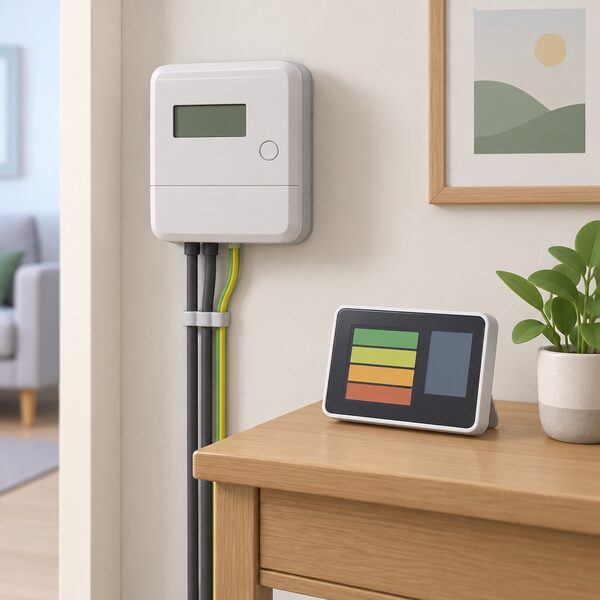
Agile is the tariff that most closely tracks the wholesale market, and it is the structure V2G economics are usually modelled against. Octopus has capped unit rates on its Agile tariff at 100p/kWh to protect customers from the biggest shocks21. The export counterpart, Outgoing Octopus Agile, paid an average of 9.09p per kWh as of April 2026, based on real-time energy pricing varying every half hour, to Octopus Energy customers with solar panels22.
The wholesale context explains why half-hourly pricing matters. The wholesale price of contracts for difference is £50/MWh (5p/kWh) and dropping, in comparison with the £200/MWh of the main market23. A tariff that follows the main market exposes a household to that spread, in both directions.
Cenex's modelling of the Sciurus data assumed tariff optimisation against spot market wholesale prices, and produced around £300 to £400 per year for a single V2G unit9. The same modelling warned that upcoming changes to the structure of charges in domestic tariffs will reduce the annual revenue possible from V2G tariff optimisation by around 50%7. That is a material caveat: a tariff structure that looks generous today may not survive a change in how network charges are levied.
Export arrangements: Outgoing Octopus and how selling power is handled separately
Export is handled separately from import, and the rates are lower than most households expect. Octopus Energy's Smart Export Guarantee rate was 4.1p per kWh as of April 2026, open to anyone22. Outgoing Octopus is a fixed export tariff with no fixed end date, paying 12p per kWh on a monthly payment cycle24. Outgoing Octopus Agile pays the variable 9.09p average instead22.
The Smart Export Guarantee is the statutory backdrop. Ofgem's Year 5 report recorded £7.73 million (13.6%) paid through untied tariffs25. Homes with solar panels can earn around 12p/kWh selling electricity back to the grid26, which is the same order as the fixed Outgoing Octopus rate.
For V2G, the export arrangement is where the money is realised, but it is not the same as a grid services contract. A household exporting from a car battery under a standard export tariff is paid the export rate; a household whose car capacity is aggregated into a frequency response market is paid for availability and response, which is where the £513 and £725 figures come from. The two routes are not interchangeable, and the higher figures depend on the second.
Octopus Energy Limited holds encompassing licences alongside Octopus Energy Operations Limited, Octopus Energy Operations 2 Limited and Octopus Energy Trading Limited27. Co-op Energy's plans are managed by fellow British supplier Octopus on its behalf28.
The hardware problem: why V2G charger cost still holds earnings back
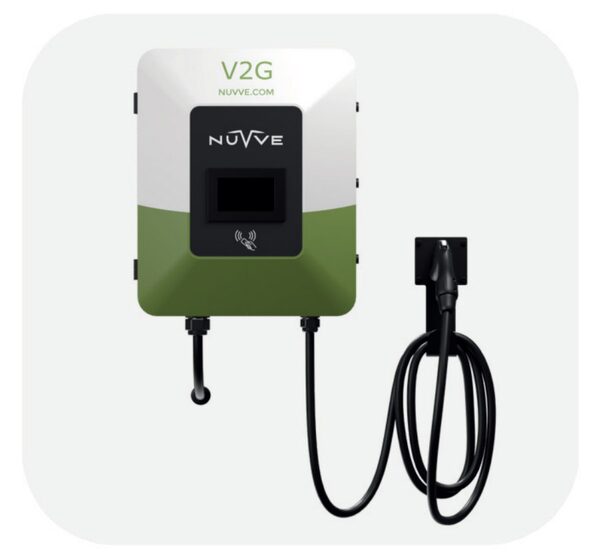
The earnings figures only become interesting once set against the cost of the equipment that produces them, and that comparison is unfavourable at current prices. By the end of the Sciurus trial, the V2G hardware and installation cost was around £3,700 higher than a smart (monodirectional) charge point2. Cenex estimated the premium for a V2G charger above a smart charger at around £4,0003, and reported the incremental hardware cost at the end of the trial as around £3,7007. The Indra unit was retailing to end users at approximately £5k including installation3, and typical single-phase V2G units cost £4-6k3.
Payback is the test that follows. At the current incremental V2G hardware cost, the payback period was modelled at more than 30 years7. If the incremental capital cost of V2G hardware can be reduced to around £1,000, then the payback period for V2G could come down, and at £1,000 without the tariff charge changes the modelled payback was five years, or two years with a DC unit7. Cenex predicts V2G charger cost to fall to £1000 by 20304, and predicted V2G hardware prices to fall below £3,000 to £5,000 by 20254.
Demand at the lower price point was thin. Only 20% of respondents were likely or highly likely to purchase the V2G hardware at the lowest price point tested of £3,000 to £3,5007. Based on analysis from V2G trials, the V2G premium would need to be less than £2,000 for the technology to be acceptable to the mass market29.
What V2G means for household energy independence
V2G changes the direction of a household's relationship with the grid, but only partly. The car becomes a store that can be discharged when the system is tight, and the household is paid for that. The national case is well documented: V2G could help to save £200m of cumulative distribution network investment by 203012, V2G could defer network upgrades of £5bn, or £180 per household4, and V2G operation could generate a net saving of between £40M-90M/annum, depending on limits to V2G energy throughput8. V2G could save an additional £40-90M annually in GB by 203012.
What remains is dependence. The household still relies on a supplier to run the tariff, an aggregator or supplier to bid the car's capacity into grid services markets, a charger manufacturer for the equipment and its software, and the distribution network for the connection. The earnings are not a route to self-sufficiency; they are a route to being paid for flexibility the household already owns. The £180 per household figure is a system-level deferral benefit, not a payment.
The timeline matters for anyone weighing it. Vehicle-to-grid technology was assessed as only likely to achieve commercial readiness and mass rollout in the UK between 2030 and 203530. The trial funding that produced the current evidence came from public bodies: the UK pilot was supported by funding from the Office for Low Emission Vehicles (OLEV, now OZEV) and the Department for Business, Energy and Industrial Strategy (BEIS)2. Until commercial readiness arrives, the earnings figures should be read as trial results and modelled outcomes rather than as a tariff a household can sign up to today.
Sources30 cited
- Five electric vehicle innovations to watch in 2022, Energy Saving Trust
- Case study: UK electric vehicle to grid (V2G) charging, Ofgem, 2021-07-06
- Commercial viability of V2G, Cenex, 2021-01
- More than money: finding the true power of V2G, Cenex, 2026-09-17
- Vehicle-to-grid charging, Uswitch, 2025-07-02
- World's largest domestic vehicle-to-grid trial reveals customers could recover the majority of their household energy costs, Cenex, 2021-06-03
- Project Sciurus trial insights report, Cenex, 2021-05
- V2GB: Vehicle to Grid Britain, Cenex, 2026-09-17
- Changing perceptions: the importance of V2G, Cenex, 2021-06-29
- Case study: UK hydrogen heated homes future, Ofgem, 2021-07-29
- Project Sciurus, Cenex, 2022-12-15
- V2G Britain, Cenex
- 4 pioneering V2G projects, Cenex, 2023-03-22
- New research finds V2G charging delivers greater value than standard electric vehicle smart charging, Cenex, 2019-05-14
- UK first trial shows shifting EV charging can help manage renewable energy, UK Power Networks, 2024-06-24
- Best tariffs for EV and heat pump, Uswitch, 2025-07-02
- Electric car charging guide, Carwow, 2025-07-16
- Making home energy management work for consumers, Energy Systems Catapult, 2026-02-12
- Octopus Energy tariffs, Uswitch, 2025-10-09
- Intelligent Octopus Go, Indra, 2026-09-17
- Time of use tariffs explained, Which?, 2026-04-23
- Smart Export Guarantee rates: the best and worst SEG tariffs for solar panel owners, Which?, 2026-04
- What next for energy bills?, End Fuel Poverty Coalition, 2025-07-10
- Smart Export Guarantee, Solar Energy UK, 2026-05-12
- Smart Export Guarantee Annual Report Year 5, Ofgem, 2025-12
- Here comes the sums: Britain's homes with solar panels reap £40 million during the heatwave, Uswitch, 2026-06-28
- FiT licensee contact details, Ofgem, 2026-09-17
- Which energy suppliers are British?, Uswitch, 2026-06-26
- An introduction to vehicle-to-grid charging for electric vehicles, Cenex, 2022-08
- V2G: mitigating future winter blackouts, Cenex, 2022-12-14
 V2G and V2H ChargingCan your electric car earn money by sending power back to your home or the grid?
 The Full Tariffs GuideWhich energy tariff suits how you live, and will switching really save you money?
 Fixed and Variable TariffsCompares capped standard variable tariffs with fixed deals, including exit fees, contract end and rollover.
 Prepayment and Pay As You GoHow prepayment and pay as you go energy tariffs work in the UK: meter types, top-ups, emergency credit, debt repayment through the meter, price cap treatment and how households move to a credit meter.
 Dual Fuel TariffsExplains what a dual fuel tariff is, how discounts and single billing work, and where separate gas and electricity contracts remain available.
 EV Tariffs and Home ChargingHow EV-specific import tariffs and charging bolt-ons work, including supplier-controlled charging where the energy company decides when the car draws power, which charge points each scheme supports, and what a household needs in place.