
In this guide
Solid-state batteries are still in development and cannot yet be bought in the UK, for a car or for a home. No UK body, regulator or independent adviser cited on this page gives a confirmed on-sale date, a verified energy density or a tested safety figure for a solid-state cell sold to households. Announced production dates exist in manufacturers' press material, but none has been independently confirmed for UK buyers, and this page does not repeat them as fact. What can be measured is the technology solid-state is meant to replace: most current electric vehicles use lithium ion or lithium polymer batteries, chosen for the high energy density they achieve1. UK legislation defines a lithium-ion battery as one with an organic solvent electrolyte, which is a liquid2.
That existing technology is already better than many drivers assume. Manufacturers warrant EV batteries for at least eight years or 100,000 miles3, and Energy Saving Trust expects them to last 10 to 20 years4. Charging slows significantly after about 80% to protect the battery5, and home charging can cost 7p per kWh on a suitable tariff6. The benchmark any solid-state product must beat is therefore a mature one.
For a household thinking about independence, the practical question is less "when will solid-state arrive?" and more "what can the batteries on sale now do for my home?". The sections below set out what is known about solid-state, then what current EV and home batteries achieve on life, range, charging cost and solar storage.
What a solid-state battery is: the electrolyte is solid, not liquid
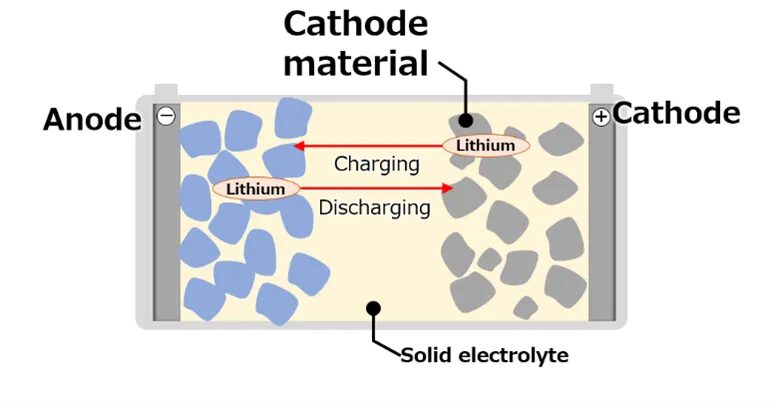
Every rechargeable battery works in the same broad way. HMRC's guidance describes electrical storage batteries as ones that store energy as chemical energy, which is converted back to electrical energy when the battery is discharged7. Inside the cell, two electrodes are separated by an electrolyte, the material that carries charge between them. The name "solid-state" refers to that electrolyte.
The legal definition of today's battery makes the contrast clear. The Lithium-ion Battery Safety Bill defines a lithium-ion battery as:
"a secondary (rechargeable) battery with an organic solvent electrolyte"
The same definition says the electrodes use a compound in which lithium is stored2. A solid-state battery replaces that organic solvent electrolyte with a solid one. A "semi-solid" battery sits between the two, using an electrolyte that is neither a free-flowing liquid nor a fully solid layer. The marketing term "semi-solid-state" is used by some makers; no UK standard defines it, and no official or independent UK source on this page sets out which products use it or how they perform.
For home use, the legal category matters more than the chemistry. The UK's VAT relief covers an electrical storage battery intended solely for storing energy converted from electricity supplied to the home or generated by a microgeneration system8. That wording is about purpose, not chemistry, so a solid-state home battery would fall within the same description as a lithium-ion one if it were sold for that use. The general definition of battery storage is the same whatever the chemistry: a system that stores electricity, usually from renewable sources, for later use9.
HMRC guidance states that batteries installed as part of a qualifying energy-saving installation will be reduced rated after the temporary zero rate ends on 31 March 20277. Any solid-state home battery arriving after that date would, on current guidance, be sold at the reduced rate rather than zero.
Why solid-state promises more: density, charging speed and safety

The three claims made for solid-state batteries are higher energy density (more storage in the same space or weight), faster charging and better safety, because a solid electrolyte is not a flammable liquid. These are claims. No official or independent UK body cited here has published tested figures for a solid-state product against those three measures, and none are given on this page.
Chemistry has improved in steps before, and each step has been measured. Lead-acid batteries, the older technology, store less energy than newer types and typically provide around 700 to 1,000 charging cycles10. The same source states that a lithium-ion battery, with around 4,000 charging cycles, can typically last 10 years or more10. Current EVs use lithium ion or lithium polymer precisely because of the high energy density they achieve1. A solid-state battery has to beat that measured lithium-ion record, not the lead-acid one.
The safety case matters because lithium-ion safety is already a live policy issue in the UK. The Lithium-ion Battery Safety Bill would require the Secretary of State, within 12 months of the Act passing, to make regulations on safety standards for micromobility conversion kits and charging systems2. The Bill also defines a stand-alone Battery Energy Storage System as a grid-scale system consisting wholly or partly of lithium-ion batteries2. Safety rules are being written around lithium-ion because it is what is installed. If solid-state reaches homes, its safety claims will need to be tested against the same framework.
Energy density has limits of its own at grid scale. NESO notes that the electricity batteries can deliver is much more limited than pumped storage11. A denser cell would change how much fits in a garage or a car floor; it would not by itself turn a home battery into seasonal storage.
For reading these claims when they appear in adverts, the page on technology readiness levels and energy product claims explains how to tell a laboratory result from a product.
Where the technology stands today: in development, not yet on sale
Solid-state batteries sit in the same position as several other home energy technologies: talked about widely, not available to buy. Official statistics use plain wording for this. The DESNZ Public Attitudes Tracker describes hydrogen-ready boilers with the words "This technology is not yet available", and hydrogen boilers as "not currently available in the UK"12. No equivalent official statement or availability date for solid-state home or car batteries appears in UK government sources on this page.
Even conventional home batteries still have frameworks under construction. The Electrical Storage Association reports that an evidence-based framework for the safe deployment of plug-in battery energy storage systems in UK homes is under development13. That is for a lithium-ion product type already in shops. A new chemistry would follow later again.
Official forecasts for small-scale storage have never depended on solid-state arriving. A government document on small-scale generation cited National Grid's Future Energy Scenarios 2017, which forecast 1.5GW of small battery storage (domestic and commercial) by 2040, around a third of total battery storage deployment capacity14. That projection was built on the batteries of the time.
Other chemistries are closer to homes than solid-state. Sodium-ion home batteries and second-life EV batteries are covered on their own pages, and the wider picture is on the emerging home energy technology guide.
EV batteries already last 10 to 20 years
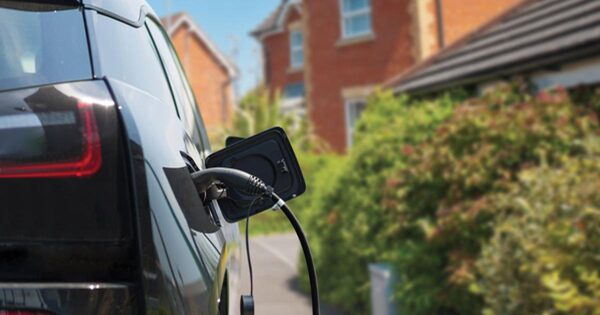
The strongest argument for not waiting is how well current batteries already perform. Energy Saving Trust states that EV batteries are expected to last 10 to 20 years4, and that they don't usually need replacing because they can last for hundreds of thousands of miles15.
Independent evidence supports that. A Zemo Partnership report found:
"the lifespans of battery-powered electric vehicles now match those of traditional cars and vans with petrol and diesel e"
Degradation, the gradual loss of capacity with use, is usually modelled in cycles. Cenex's Vehicle-to-Grid Britain work assumed a battery lasting 2,000 full cycles17. The Plymouth Energy Community figure for home lithium-ion batteries is around 4,000 cycles and 10 years or more10. The two figures differ because they describe different uses and assumptions: one is a modelling assumption for a car battery also used for grid services, the other a typical figure for stationary home storage.
Battery failures in practice are not always the traction battery. Energy Systems Catapult reported that in its Living Lab trials, EVs needed battery replacements because a charging service glitch sent excessive status queries, draining the cars' 12-volt batteries beyond recovery18.
Replacement is possible. Energy Saving Trust states that EV batteries can usually be replaced, but that it is complicated and often expensive to do15. No published price for replacing a car's traction battery is given here; costs are set by each manufacturer or repairer.
Range and the trade-offs in battery size: 230 to 450 miles
Range is where denser batteries would be felt first, and current ranges show how far lithium-ion has already come. The figures below come from independent and industry bodies at different dates, which explains why they differ.
| Measure | Figure | Date |
|---|---|---|
| Typical range, many EVs | around 300 miles per charge19 | September 2024 |
| Average battery range | more than 230 miles20 | May 2023 |
| Maximum range, some variants on sale | in excess of 450 miles21 | May 2024 |
| Larger passenger cars | over 250 miles1 | May 2021 |
The spread reflects both time and the car. Larger passenger cars can fit larger battery packs, which is how they reach over 250 miles1. The average figure of more than 230 miles is an SMMT figure across models20, while the 450-mile figure applies only to some variants21. Range on the day also depends on the battery's state of charge15.
Bigger batteries bring trade-offs in weight, cost and charging time, but they also matter for home energy. Cenex's Project Sciurus trial found that EVs with battery sizes of 40 kWh or above captured more revenue through vehicle-to-grid tariff optimisation than smaller ones22. A larger battery gives more spare capacity to use for the home or the grid after the day's driving. If solid-state cells do deliver more capacity in the same space, that spare capacity is where a household would see the gain.
Which? notes that EV battery warranties usually last eight years and that there is no evidence yet this is the ultimate lifespan of a battery23. For most drivers, range and life are already set by the car they choose, not by waiting for a new chemistry.
Charging at home: from 7p per kWh, and the slowdown after 80%
Speeds by charger type
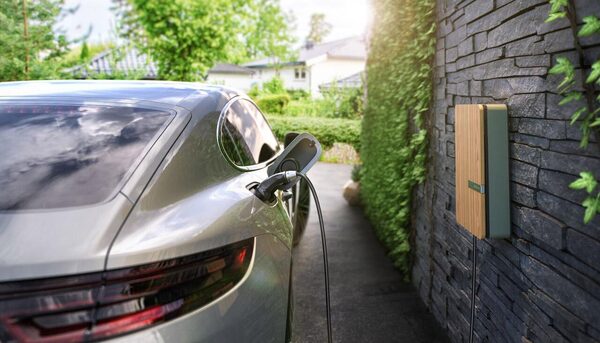
How long a charge takes depends on the charger's power. NICEIC states that home chargers are usually around 7kW24. Which? reports that charging from a three-pin plug at home would take around 30 hours to charge the same battery to 80%25.
| Charger type | Typical time | Source |
|---|---|---|
| Three-pin plug at home | around 30 hours (to 80%) | Which?25 |
| Low-power chargers | six to 18 hours to 80% | Zapmap26 |
| Fast chargers | four to eight hours | SMMT27 |
| Slow charger, car already partly charged | around four hours to full | ENWL28 |
| Rapid and ultra-rapid | 80% in 30 to 60 minutes | ENWL28 |
| Rapid or ultra-rapid, 20% to 80% | around 40 minutes | Which?23 |
Why charging slows after 80%
Charging speed is not constant. Carwow states that charging slows significantly after about 80% to protect the battery and prolong its lifespan, and that 20% to 80% should take between 30 and 90 minutes5. Zapmap notes the rate also slows at low states of charge, for example below 10%29, and that in some cases it can take as long to go from 80% to 100% as from 20% to 80%26. SMMT describes rapid chargers as safeguarding battery life by slowing once the battery reaches 80 percent27. This curve is a feature of lithium-ion; faster charging is one of the claims made for solid-state, but no tested UK figure exists for it.
What home charging costs
Which? reports that home charging can cost 7p per kWh, while public chargers can cost more than ten times that6. Uswitch put the average cost of a home charge at £13 in October 2024, based on a typical 54 kWh battery and the average domestic rate30. For a 50kWh battery on a standard tariff, two published figures disagree: approximately £174 and £8.
Zapmap states that charging at home or at work overnight, when electricity is cheap, reduces overall fuel costs by more than 70%31. Consumer Scotland's analysis of Zapmap running cost profiles for 2025 found that 80% home charging with 20% rapid public charging gave a £450 saving against a petrol or diesel car, while a mix of 50% home, 25% slow public and 25% rapid charging cost £1,100 a year over 10,000 miles32.
The charger itself is a cost. Which? states that a home EV charger typically costs £500 to £1,200 to buy and install (February 2026)33. A separate trade guide gives £800 to £1,500 for the electrical work alone, excluding the charger unit (July 2026)34. The figures cover different things, and prices are installer-quoted.
UK law requires new home charge points to have smart charging capability34. Government guidance gives 30 June 2022 as the start date for the general requirements of the Electric Vehicles (Smart Charge Points) Regulations 202135, while official guidance also gives 30 December 2022, applying to the security requirements. The two dates are not reconciled, so the precise start date for each set of requirements is uncertain.
Charging habits that protect a battery
Energy Saving Trust lists three habits that help extend EV battery life: only using rapid charging when needed, not fully charging the battery, and not letting it get too low on charge15. Uswitch gives a rule of thumb of avoiding letting the battery reach the 20% mark36. Zapmap states that the ideal temperature for charging is around 25 degrees Celsius29.
- Rapid charging only when needed15
- Not charging to full as routine15
- Not letting the charge fall too low, with 20% given as a rule of thumb36
- Charging near 25 degrees Celsius where possible29
These habits fit around the charging curve described above. Energy Saving Trust also suggests charging overnight so each day starts with a full battery, planning journeys around the charge needed, and using chargepoint finder apps along a route15. The first of those sits alongside its advice not to fully charge; the two reflect different priorities, convenience on one side and battery life on the other.
Warranty and expected life: eight years and 100,000 miles
Battery warranties for cars are consistent across UK sources. SMMT states manufacturers warrant EV batteries for at least eight years or 100,000 miles3. Uswitch gives eight years or around 100,000 miles36, and a separate Uswitch guide gives around eight years or around 100,000 miles37. Which? says there is no evidence that eight years is the ultimate lifespan of a battery23.
Home storage batteries have their own expected lives, and the independent advice bodies in England, Scotland and elsewhere give slightly different ranges:
| Adviser | Typical home battery lifespan |
|---|---|
| Energy Saving Trust (England page) | about 10 to 12 years38 |
| Home Energy Scotland | 10 to 15 years39 |
| Centre for Sustainable Energy | 8 to 12 years40 |
| Plymouth Energy Community (lithium-ion) | 10 years or more10 |
The ranges overlap and reflect different assumptions about use; none is a guarantee. A warranty is a promise by a company, and its value depends on that company still trading when a claim arises. The page on energy technology company failures covers what happens when it is not. A first-generation solid-state product would carry that risk more heavily, because there would be no track record of long-term claims to judge it by.
Could an EV battery store your solar power?
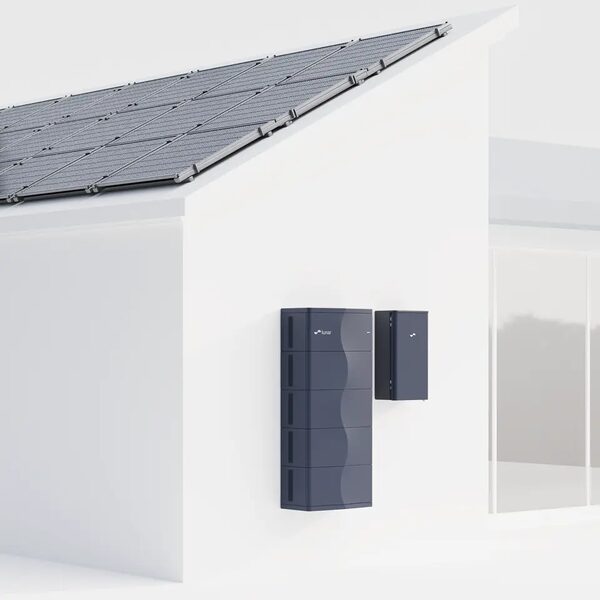
A car battery can take solar power, and in principle it can give power back. The Centre for Research into Energy Demand Solutions states:
"Use of electric vehicle batteries in principle offers a very large potential to contribute to home energy storage and el"
Charging the car from panels is straightforward. The Consumer Protection Association states that solar panels can charge an electric car, though a household is unlikely to rely entirely on solar power year-round in the UK, especially in winter42. It adds that a home battery captures surplus solar energy for later use, including overnight EV charging, whereas without one unused solar electricity is wasted or exported, often at a relatively low rate42. Warmer Homes makes the same point: with solar panels alone, leftover energy cannot be stored for later43.
Sending power back from the car to the home is the harder part. Vehicle-to-grid technology enables EV batteries to charge, store and discharge electricity when required44, but it needs a bidirectional charger and a compatible car. The pages on bidirectional charging, vehicle-to-home and vehicle-to-load and V2G battery degradation and warranties cover this in detail, and vehicle-to-grid or a home battery compares the two routes.
A fixed home battery is the established option. With solar panels alone, leftover energy cannot be stored for later, whereas a battery stores the energy a household has not used. Instead of exporting surplus electricity at a lower SEG rate, a battery allows it to be stored and used later, increasing self-consumption and reducing reliance on the grid. The parliamentary POST note reports Solar Energy UK's suggestion that rooftop solar with a battery could enable 80% of a household's annual electricity to be low carbon45. Uswitch notes that a solar battery stores power for use outside daylight hours, with the grid still available as well46.
What solid-state could mean for home energy independence
Solar Energy Scotland puts the case simply: more homegrown energy means greater energy independence47. Batteries are how a household keeps the energy it makes. If solid-state batteries deliver on density and safety, the gains for a home would be more storage in the same space, possibly in a car that also serves the house, and a lower fire risk. None of that is available to buy today.
What independence batteries give, and what they do not, is the same whatever the chemistry:
- More self-use: a battery stores daytime solar for the evening9, cutting grid imports.
- Continued grid dependence: solar is unlikely to cover a UK home year-round, especially in winter42, so the grid and a supplier remain.
- Manufacturer dependence: warranties run eight years for cars3 and roughly 8 to 15 years for home units by the advisers' estimates, and depend on the company.
- Software dependence: smart charging is a legal requirement34, and trial evidence shows software faults can damage car batteries18.
- Regulatory change: UK product safety rules for batteries are still being written. OPSS and BSI are developing a Publicly Available Specification for battery systems in e-bikes, e-scooters and conversion kits48. Separately, the European Union will require a compliant Battery Passport for specified EV, industrial and light transport batteries placed on the EU market from 18 February 2027; that is an EU rule, and no UK equivalent date is set out here.
The honest position for a household is that solid-state is a promise with no confirmed UK date, while lithium-ion car and home batteries are measured, warranted and available. The page on emerging technology and household energy independence sets solid-state alongside the other technologies in development, and what emerging energy technology costs early adopters covers the price of being first.
Sources48 cited
- An introduction to battery electric vehicles, Cenex, May 2021
- [Lithium-ion Battery Safety Bill [HL]](https://bills-api.parliament.uk/api/v1/Publications/56005/Documents/4984/Download), UK Parliament, 29 July 2024
- EVs: the facts, SMMT, 22 September 2025
- Electric vehicles: debunking myths, Energy Saving Trust, 22 September 2025
- Electric car charging guide, Carwow, 16 July 2025
- How much does it cost to charge an electric car, Which?, 27 April 2026
- VAT energy-saving materials: VENSAV3061, HMRC
- The Value Added Tax (Installation of Energy-Saving Materials) Order 2024, legislation.gov.uk, 10 January 2024
- Energy glossary, Low Carbon Hub, 5 August 2026
- Everything you need to know about battery storage, Plymouth Energy Community, 20 September 2026
- How does storage help us balance the grid, NESO
- DESNZ Public Attitudes Tracker: heat and energy use in the home, winter 2025, DESNZ, 12 March 2026
- Plug-in battery, Electrical Storage Association, 27 August 2026
- The future for small-scale low-carbon generation, UK Government
- Electric vehicle battery basics, Energy Saving Trust, 16 September 2025
- Battery electric vehicles now match ICE counterparts for longevity, Zemo Partnership, 27 January 2025
- V2GB: Vehicle to Grid Britain, Cenex
- Making home energy management work for consumers, Energy Systems Catapult, 12 February 2026
- Top tips for new EV drivers on World EV Day, NAPIT, 9 September 2024
- Electrified vehicles spark choice at SMMT Test Day, SMMT, 26 May 2023
- Brits enjoy best ever EV choice, SMMT, 23 May 2024
- Project Sciurus trial insights report, Cenex, May 2021
- Should I buy an electric car, Which?, 16 April 2026
- Electric vehicle charger installation and maintenance, NICEIC, August 2025
- How to use electric car charging points, Which?, 20 May 2026
- Guide to EV charging, Zapmap, 4 September 2026
- Electric vehicle charging, SMMT, 25 June 2025
- Electric vehicles for home: charging, Electricity North West, 19 September 2026
- How long does it take to charge an electric car, Zapmap, 15 April 2026
- EV charging statistics, Uswitch, October 2024
- EV basics, Zapmap, 14 May 2024
- Supercharging the EV transition, Consumer Scotland, 2025
- Electric car charging at home, Which?, 25 February 2026
- Section 722 EV charging complete guide, Elec-Mate, 2 July 2026
- Guide to the Electric Vehicles (Smart Charge Points) Regulations 2021, Office for Product Safety and Standards
- Electric cars and energy bills, Uswitch, 27 April 2026
- What is the lifetime cost of an electric vehicle, Uswitch, 26 November 2024
- Battery storage, Energy Saving Trust, 19 August 2026
- Battery storage, Home Energy Scotland, 20 September 2026
- Battery storage, Centre for Sustainable Energy, October 2025
- Demand flexibility, CREDS, 2026
- Can solar panels charge electric cars, Consumer Protection Association, 15 April 2026
- Solar panels, Warmer Homes, 20 September 2026
- Vehicle-to-grid, Cenex, 9 December 2022
- POSTnote 771, Parliamentary Office of Science and Technology, 25 June 2026
- Do solar panels work in winter, Uswitch, 15 September 2026
- Solar Energy Scotland manifesto, Solar Energy UK, 17 September 2026
- The UK's new product safety framework, UK Government, 31 March 2026
 Cycle Life and DegradationHow long will a home battery actually last, and what decides that?
 Lead-Acid, AGM and Gel BatteriesAre lead-acid batteries still worth using for solar or an off-grid home?
 The Full Home Batteries GuideA home battery stores cheap or solar power for later, but will it really cut your bills enough to be worth it?
 Second-Life EV BatteriesUsed electric car batteries can store solar power at home, but can you actually buy one in the UK?
 Sodium-Ion Home BatteriesSodium-ion cells are being offered for home storage in the UK, but almost all published performance data still comes from makers.
 Home Battery WarrantiesHow long does a home battery warranty really last, and what does it actually promise?