In this guide
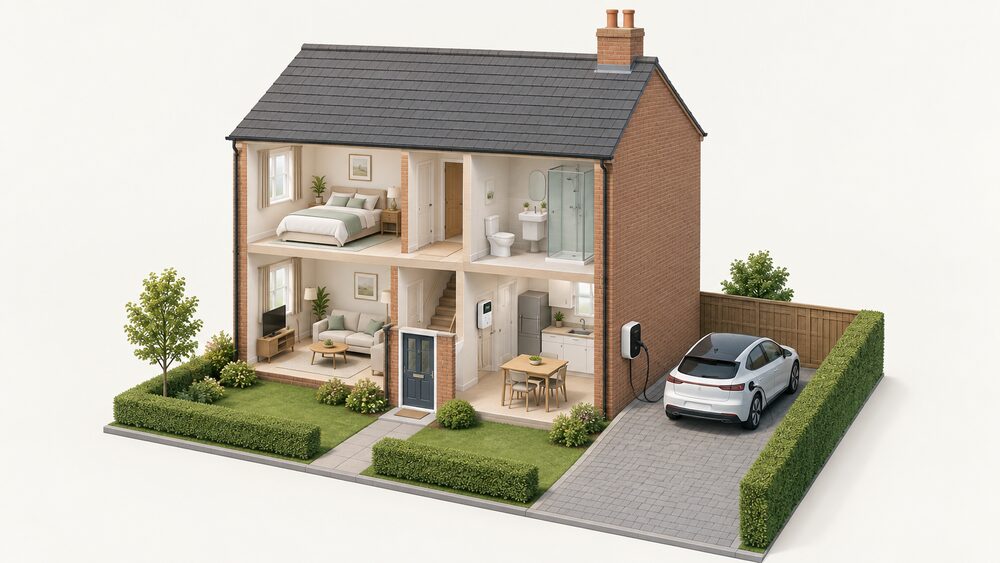
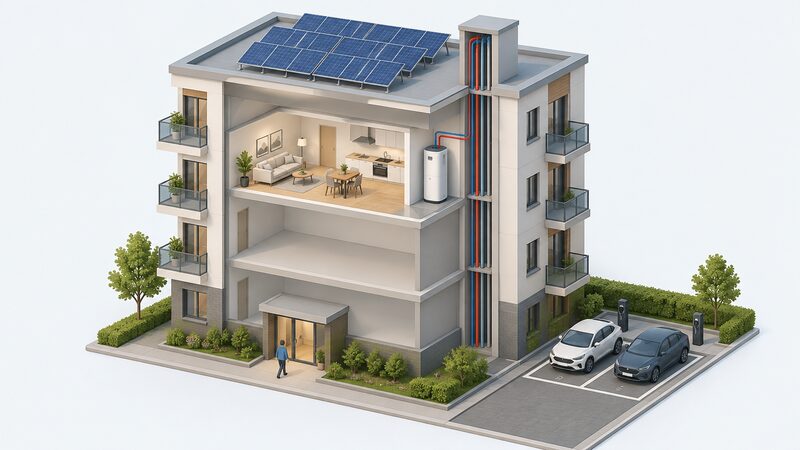
The property decides the technology, not the other way round. A flat with no cylinder cupboard and no parking bay cannot host a vehicle-to-grid setup however cheap the charger becomes, and a terrace with no off-street space cannot either. What a home can actually adopt turns on three constraints: whether there is a place to put equipment, whether there is a grid connection able to carry it, and whether the building is new enough to have been designed for it.
Vehicle-to-grid is the clearest example. It allows an electric vehicle charger to not only charge a vehicle, but also take energy from the vehicle, and it needs a smart meter, a compatible V2G charger and a car that supports the technology1. Where those three exist, the household gains a second energy store and an export route. Where they do not, no amount of tariff design helps.
The financial case is real but modest at household level. Cenex puts average UK revenue generation from V2G at £150 to £200 per year, with an annual depreciation saving of £2303. The larger sums sit with the network: V2G could defer network upgrades of £5bn, or £180 per household3. For a home already combining an EV, a heat pump, solar panels and a time-of-use tariff, the Climate Change Committee models around £1,200 a year in savings today, rising to around £1,900 for some rural homes4.
What emerging energy technology means for a household
The working definition is narrow. Renewable energy technologies help a household meet its own energy requirements and reduce the home's carbon dioxide emissions, and the familiar examples, solar panels, wind turbines and biomass heaters, are becoming increasingly popular7. Emerging technology is the layer above that: products that do the same job but are not yet at mass deployment, or that change what a home can do with the energy it already has.
Building regulation has been pulling these products into new homes for years. The Energy Performance of Buildings Directive named photovoltaics, micro-wind turbines, combined heat and power, community heating and heat pumps as low or zero carbon technologies for new buildings9. In England, new dwellings must meet target fabric efficiency rates alongside target CO2 emission rates and target primary energy rates, and on-site renewable electricity generation systems must be designed to enable generated electricity to be available for the use of residents of the dwellings10. That last requirement matters for flats: a shared roof array feeding the building's residents is a different proposition from a private array on a semi-detached roof.
The evidence base is thinner than the marketing suggests. The energy efficiency characteristics of new dwellings dataset is published as Official Statistics In Development, which is a statement about its maturity rather than its accuracy12. The Energy Efficiency of Housing in England and Wales release covers energy efficiency, carbon dioxide emissions and central heating main fuel type for new and existing homes by property type, tenure, and property age13. Property type is the variable that decides most of what follows.
Vehicle-to-grid in plain terms: your EV as a two-way battery
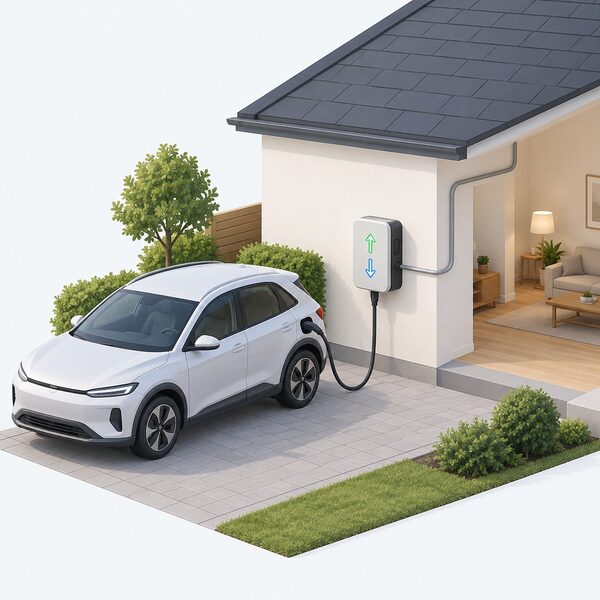
Vehicle-to-grid technology allows an electric vehicle charger to not only charge a vehicle, but also take energy from the vehicle1. Bidirectional charging, the general term, lets an EV either draw or supply power to your home or the grid14. The car stops being a load and becomes a store with wheels.
The system value is straightforward. Having electric vehicles as battery storage will allow us to better manage the UK's energy, and V2G could be one of the best ways of storing excess renewable energy1. The scale is the point: if 50% of 2030 EVs were V2G enabled, they could provide around 16GW of daily flexible capacity to the grid and open up 22 TWh of flexible EV discharging capacity per year15. That is a national figure, not a household one, but it explains why the grid and the regulator have an interest in making household participation work.
For the individual home, the practical effect is that the car can absorb cheap or surplus electricity and release it when the price or the grid needs it. The household keeps the car's primary function, and the battery earns in its idle hours. What the household does not get is independence from the grid: V2G is a trading relationship with the network, not a severing of it. The car still charges from the grid, and the export only happens because the grid accepts it.
"Vehicle-to-grid technology (V2G) allows an electric vehicle (EV) charger to not only charge a vehicle, but also take energy from the vehicle"
What V2G needs: a bi-directional chargepoint and a compatible car
Three items, all required. To use V2G, you need a smart meter, a compatible V2G charger and a car that supports the technology2. The chargepoint itself requires a bi-directional chargepoint and for the car to be V2G compatible16. Remove any one and the system does not function.
The charger is not a standard unit with extra software. A V2G chargepoint must be installed and commissioned in accordance with ENA's EREC G98 or G99 depending on the capacity, which places it in the same regulatory family as any other small generator connected to the distribution network16. That is a grid-connection process, and it is why installation is not a like-for-like swap. Smart V2G chargers such as the Wallbox Quasar 1 and Indra V2G units enable bidirectional energy flow, allowing the EV to both charge and discharge to the grid2.
| Requirement | What it means in practice |
|---|---|
| Smart meter | Metering that records import and export separately2 |
| Bidirectional chargepoint | Charges the car and takes energy back out; installed to EREC G98 or G992 |
| V2G-compatible car | The vehicle must support the technology; not all EVs do2 |
| Grid connection | Commissioning under G98 or G99 depending on capacity16 |
Availability remains the binding constraint. V2G is still not widely available, with eligibility requirements such as having a compatible car, charger and smart meter2. Trials often require specific EV models, compatible chargers and may involve a selection process, with application handled through online registration, eligibility verification and coordination with installers and energy suppliers2. A household can meet every technical condition and still wait for a scheme to open.
What V2G equipment costs today and where prices are heading
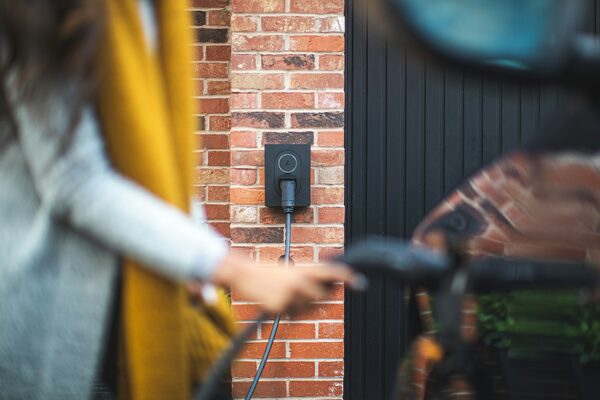
The cost picture is a trial figure and a forecast, and they should not be confused. By the end of the Ofgem case-study trial, the V2G hardware and installation cost was around £3,700 higher than a smart (monodirectional) charge point5. That is the measured premium from a real installation programme, and it is the honest starting point.
The forecasts are more optimistic. Cenex predicts V2G hardware prices to fall below £3,000 to £5,000 by 2025, and predicts V2G charger cost to fall to £1,000 by 20303. Those are projections from an independent body, not observed prices, and the 2025 projection sits against a trial premium of around £3,700 recorded in 20215. Where the two disagree, the measured figure is the one a household can plan against today.
The direction of travel matters for which homes can adopt. A premium of several thousand pounds is easier to justify where the car is already present and the household has a driveway, a smart meter and a supplier scheme to join. It is very hard to justify where the equipment would have to be shared or where no chargepoint can be sited at all.
Earnings and savings: what a V2G household can realistically make
Cenex gives the clearest household numbers: average UK revenue generation from V2G estimated at £150 to £200 per year, and an annual depreciation saving of £2303. Those are separate benefits, one an income and one a cost avoided, and together they are a few hundred pounds a year rather than a transformative sum.
The wider context is where the larger savings sit. Drivers who can charge at home could save up to £750 a year compared with a petrol car17. A typical household could save around £1,200 a year today by combining an EV, a heat pump, solar panels and a time-of-use tariff, rising to around £1,900 for some rural homes4. V2G is one component of that stack, not the whole of it, and the household-level revenue figure is the smallest of the numbers involved.
The network-level case explains why the payments exist at all. Research has shown V2G has the potential to save £3.5bn per year in areas such as grid infrastructure reinforcement, storage and generation5. V2G could defer network upgrades of £5bn, or £180 per household, and reduced renewable curtailment could amount to a saving of 6 MtCO₂e per year3. Households are being paid a share of a system saving, which is why the per-household figure is modest relative to the total.
| Measure | Figure | Who states it |
|---|---|---|
| Average UK V2G revenue | £150 to £200 per year | Cenex3 |
| Annual depreciation saving | £230 | Cenex3 |
| Home charging saving vs petrol car | up to £750 per year | SMMT17 |
| Combined EV, heat pump, solar, time-of-use tariff | around £1,200 per year today | Climate Change Committee4 |
| Same combination, some rural homes | around £1,900 per year | Climate Change Committee4 |
| System saving from V2G | £3.5bn per year | Ofgem case study5 |
Battery health: whether exporting power wears your EV out
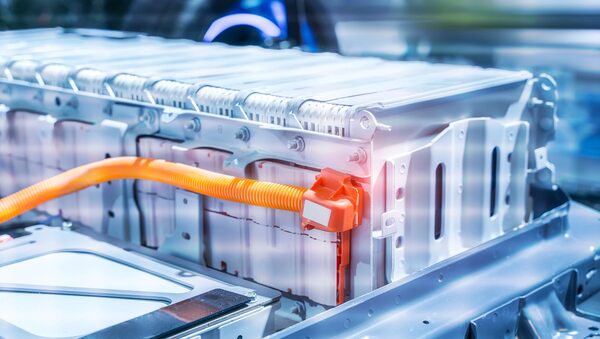
The intuitive worry is that cycling a car battery for grid services shortens its life. The evidence points the other way, with a caveat about who is doing the managing. Capacity fade can be reduced by 9.1% over a year through battery management, and this could extend useable battery life by 10%3. Those are modelled outcomes from managed operation, not a guarantee for any individual vehicle.
The mechanism is that a battery held at a high state of charge for long periods degrades faster than one that is cycled within a managed window. Grid services give the battery a reason to move, and the management software decides how. That is why the result depends on the scheme rather than on V2G as a concept: an uncontrolled discharge pattern would not produce the same outcome.
The warranty is the document that decides the household's exposure. Vehicle warranties set their own terms on bidirectional use, and those terms vary by maker and model. A household weighing V2G should read the vehicle's own warranty conditions before signing up to a scheme, because the battery-life evidence and the warranty cover are separate questions.
Flats and houses: which homes can actually use V2G
This is where property type rules technology in or out. V2G needs a chargepoint connected to a car, and a car needs a place to stand. A flat without an allocated bay has nowhere to site the equipment, and a terrace with no off-street parking has the same problem. Shared or on-street charging does not deliver V2G, because the bidirectional unit must be tied to the vehicle and to the metering of the supply.
Newer buildings are better placed. Building rules have pursued a policy goal to enable the installation of Electric Vehicle charge points and ducting infrastructure for parking spaces in new residential and non-residential buildings18. In Scotland, the Building Standards Technical Handbook covers charge point provision to new dwellings, provision to domestic buildings undergoing major renovation works, mixed development, location, specification, enabling infrastructure and information on installation and operation19. A flat in a block built to those standards may have ducting and a bay even where the household did not ask for it.
The material change of use route has its own condition. The Part 9B regulation 44E requirements apply to dwellings resulting from a material change of use where charge points can be accommodated within the incoming electrical supply without upgrading it20. That is a real limit: a conversion with a weak incoming supply may be exempt precisely because the connection cannot carry the load.
For flats specifically, the Scottish tenements work sets out a phased path in which, at phase 2, all individual flats could be required to meet both new energy efficiency standards and use a zero direct emissions heating system21. That is a proposal rather than settled law, and it shows the direction: flats are being designed for electrified services, which is the precondition for any vehicle or battery technology to follow.

What V2G does for the grid, and why that pays households back
V2G demonstrator projects tested the commercial, technical, and operational viability of V2G technology and how it can benefit both the electricity grid, as well as consumers1. That dual framing is the whole design: the household is paid because the network gains something it would otherwise have to build.
The gains are specific. V2G could defer network upgrades of £5bn, or £180 per household, and reduced renewable curtailment could amount to a saving of 6 MtCO₂e per year3. Research has shown V2G has the potential to save £3.5bn per year in areas such as grid infrastructure reinforcement, storage and generation5. At national scale, if 50% of 2030 EVs were V2G enabled, they could provide around 16GW of daily flexible capacity and 22 TWh of flexible EV discharging capacity per year15.
The independence question is worth stating plainly. V2G does not make a home self-sufficient. It makes the home a participant in the electricity system, buying when power is cheap and abundant and selling when it is scarce. The dependence that remains is on the grid, on a supplier running a scheme, on a chargepoint manufacturer, and on the car maker's software and warranty. A household that wants to reduce dependence rather than trade within the system is looking at a different set of products, and the emerging home energy technology pillar sets out the wider field.
UK availability: pilots, providers and how to get access
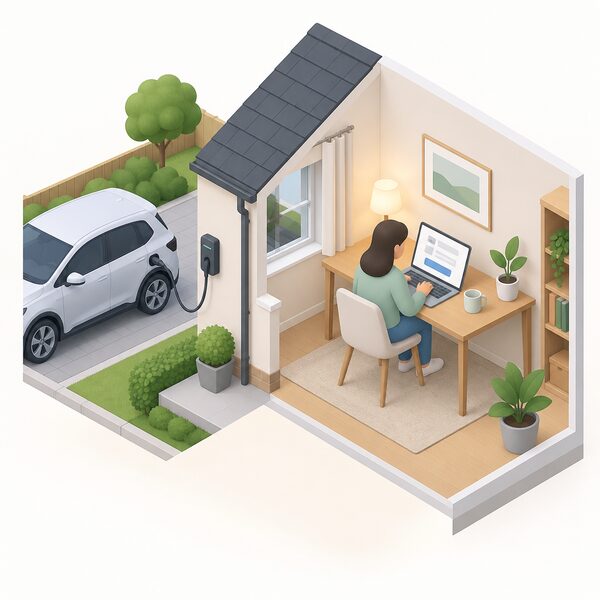
Access runs through trials and partnerships rather than a standing product. Several suppliers, including Octopus Energy, offer V2G schemes in the UK as part of trials and partnerships with companies including UK Power Network, Nissan and Indra Renewable Technologies2. Application to trials typically involves online registration, eligibility verification and coordination with installers and energy suppliers, and trials may require specific EV models and compatible chargers and may involve a selection process2.
The pattern is not unique to V2G. Public funding for home energy work has generally been delivered through schemes with defined eligibility and limited windows. The Home Upgrade Grant provides funding for local authorities to improve the energy performance and heating systems of off gas grid homes in England22. The Green Homes Grant Local Authority Delivery and Home Upgrade Grant statistics monitor the installation of energy efficiency measures in domestic properties through those schemes23. The February 2025 release of those statistics covers England24, and the March 2025 release continues the same series23.
Scotland runs a different structure. The Home Energy Scotland Grant and Loan Scheme provides grants and loans to all domestic owner-occupiers in Scotland to install clean heat and energy efficiency measures25. Wales has funded retrofit through the Optimised Retrofit Programme, with projects covering environmental sensors, fabric upgrades, battery, low energy lighting and heat pump in Bridgend and Rhondda Cynon Taff26. Northern Ireland's building regulation work sits under its own Part F consultation27. Where a household sits in the UK therefore changes which scheme, if any, is open to it.
Other V2X variants: vehicle-to-home, vehicle-to-building and vehicle-to-load
V2X is the umbrella. V2X allows for electric vehicles to operate bidirectionally, charging from the electricity grid but also discharging to the grid, building or home as needed28. The variants differ only in where the power goes.
Vehicle-to-home keeps the power inside the dwelling. Vehicle-to-building serves a shared supply, which is the version that matters for blocks of flats and for public buildings. For public buildings, pilots such as Rural Energy Resilience V2X have tested the use of V2X for community warm spaces28. Vehicle-to-load is the smallest scale, powering equipment directly rather than a fixed installation.
The backup function is the most consequential difference. When a building or home also has the functionality to operate independently from the grid, known as islanding, V2X can enable the vehicle to act as a backup power source in a power cut28. That is a genuine resilience benefit, and it depends on islanding capability in the building's own installation, not on the car alone. A household without that capability gets the trading benefit and not the backup.
The distinction between the variants is set out in more detail in vehicle-to-home and vehicle-to-load and in bidirectional charging explained. For a household choosing between them, the deciding question is whether the supply can be islanded and whether the car and charger support the specific mode.
New builds, off gas grid homes and the limits of retrofit
New build is the easiest case. New UK homes will be built without fossil fuel heating from 20256, and bioenergy heating systems can be installed in all new homes and buildings and continue to be used in existing buildings being converted and captured by the standard29. New dwellings must meet target fabric efficiency rates, target CO2 emission rates and target primary energy rates, and permitted compliance measures include fabric energy efficiency, efficient building services and systems, and low and zero carbon technologies including renewable energy generation10. A new home is designed around these services, which is why it can host them.
Off gas grid homes are the harder case and the one where the funding is targeted. The Home Upgrade Grant exists specifically for off gas grid homes in England22. Heat pump deployment statistics for the second quarter of 2025 record 265 Home Upgrade Grant installations in that quarter30. That is a small number against the stock of off gas grid properties, and it shows how far the delivery has to travel.
Retrofit limits are structural rather than financial. A tenement flat cannot add a cylinder cupboard it does not have, and a mid-terrace cannot create a parking bay. The technologies that suit these homes are the ones that fit the space available: a heat battery in place of a cylinder, a shared array on a communal roof, a connection to a district or communal heating scheme. The technologies that do not are the ones needing a dedicated external footprint, and V2G is currently in that group.

Where the constraints bite hardest
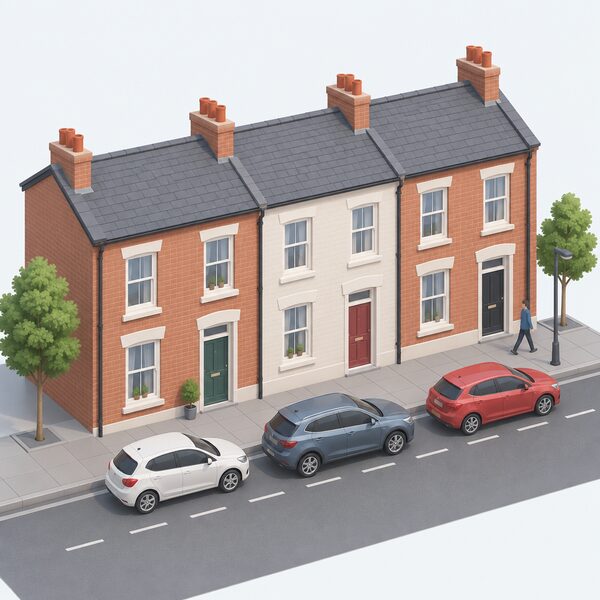
Some limits are not solvable by spending more. They are worth stating as limits rather than as obstacles to be worked around.
- No parking, no V2G. A flat or terrace without a dedicated bay cannot site a bidirectional chargepoint, and shared charging does not substitute2.
- Incoming supply capacity. Charge point requirements for dwellings created by material change of use apply only where charge points can be accommodated within the incoming electrical supply without upgrading it20.
- Grid connection process. A V2G chargepoint must be commissioned under EREC G98 or G99 depending on capacity, which is a step a standard chargepoint does not require16.
- Scheme availability, not just hardware. V2G is still not widely available, and trials may involve a selection process2.
- Warranty terms sit with the vehicle maker. Battery-life findings from managed operation do not determine what a given warranty covers3.
- Cost premium. The measured trial premium was around £3,700 above a smart monodirectional charge point, against a predicted £1,000 charger cost by 20305.
The pattern across all of it is that property type and grid connection decide eligibility, and the technology only decides the return. A household with a driveway, a smart meter, a compatible car and an open scheme is well placed. A household without the first of those is not in the market at all, whatever the forecasts say about prices.
Sources30 cited
- Vehicle-to-Grid best practice guide, Energy Saving Trust, 2026-05-05
- Vehicle-to-grid charging guide, Uswitch, 2025-07-02
- More than money: finding the true power of V2G, Cenex, 2026-09-17
- Faster electrification would cut UK household bills, say climate advisers, Climate Change Committee, 2026-06-24
- Case study: UK electric vehicle to grid (V2G) charging, Ofgem, 2021-07-06
- CCC welcomes government commitments to new low carbon homes and green gas, Climate Change Committee, 2019-03-13
- Sustainability and planning: home energy generation, Planning Portal, 2026
- Home energy generation, Planning Portal, 2026
- Energy Performance of Buildings Directive 2002/91/EC, legislation.gov.uk, 2008
- Approved Document L, Volume 1: consultation version, Welsh Government, 2025-08
- Approved Document L, Volume 1: Dwellings, GOV.UK, 2026
- Energy efficiency characteristics of new dwellings, GOV.UK, 2026-02-04
- Energy efficiency of housing in England and Wales: 2025, Office for National Statistics, 2025-10-28
- Battery storage, Energy Saving Trust, 2026-08-19
- Case study: UK hydrogen heated homes of the future, Ofgem, 2021-07-29
- Register energy devices in homes or small businesses: guidance for device owners and installation contractors, GOV.UK, 2021-03-31
- EVs: the facts, SMMT, 2025-09-22
- Scottish building regulations: proposed changes to energy standards, page 7, Scottish Government, 2021-07-23
- Building Standards Technical Handbook, Domestic (April 2026), Scottish Government, 2026-03
- The Building Regulations 2010 (Amendment) Regulations 2021, legislation.gov.uk, 2021-12-13
- Tenements short life working group: energy efficiency and zero emissions heating final report, Scottish Government, 2023-11-28
- Home Upgrade Grant: Phase 2, GOV.UK, 2022-09-29
- Green Homes Grant Local Authority Delivery and Home Upgrade Grant release, March 2025, GOV.UK, 2025-03-27
- Green Homes Grant Local Authority Delivery and Home Upgrade Grant release, February 2025, GOV.UK, 2025-02-27
- Heat in buildings progress report 2024, Scottish Government, 2024-10-10
- Optimised Retrofit Programme 3 funded projects, Welsh Government, 2023-04-26
- Part F consultation, Northern Ireland Department of Finance, 2026-09-17
- Well-adapted energy system, Climate Change Committee, 2026-09-19
- New build heat standard factsheet, Scottish Government, 2025-01-01
- Heat pump deployment quarterly statistics, United Kingdom 2025 Q2, GOV.UK, 2025
 Batteries by Home TypeLooks at how house type, occupancy pattern, electrical supply and available space change what storage can achieve, from flats and terraces to rural and off-grid properties.
 Microgeneration by Home TypeA stream running through your land, a windy exposed spot, or a gas boiler that runs almost all day: each points to a different technology.
 Tech and Energy IndependenceAssesses which technologies in development would genuinely increase a household's control over its own energy, and which deepen dependence on suppliers, networks or cloud services.
 The Full Your Type of Home GuideLiving in a flat, an old listed house or somewhere off the gas grid changes what energy help you can get and what you are allowed to install.
 Choosing Heating by Home TypeWhat heating can you actually have in a flat, a park home, a listed building or a new build?
 Which Tariffs Your Meter AllowsHow meter type decides which energy tariffs a household can access, from single-rate and two-rate meters to smart, prepay and restricted configurations, and the constraints faced by flats, rented homes and homes without a working smart connection.