
In this guide
The meter on the wall decides most of what a household can buy. A single-rate credit meter opens the standard fixed, variable and tracker tariffs. A two-rate meter, such as Economy 7 or Economy 10, restricts the household to tariffs built around a peak and off-peak split. A prepayment meter adds its own set of products. A smart meter in full working order is the key that unlocks the widest range, including time-of-use tariffs that charge different rates at different hours.
The dividing line is not the supplier but the meter. Ofgem states that a capped tariff depends on how you pay, where you live and what type of meter you have1. The same logic runs through the commercial market: certain tariffs are only available to smart meter customers, including some of the cheapest tariffs on the market2. A household without a smart meter is, in the regulator's own words, excluding itself from cheaper tariffs which are only available if you have a smart meter3.
What follows is what each meter type allows, what it blocks, and what a household in a flat, a rented home or a property with a communal meter box can expect. The pattern is consistent: the more the meter can record and transmit, the more tariffs the supplier can offer.
What your meter type decides about tariff choice
The meter is the physical limit on the tariff. A supplier prices a tariff around what the meter can measure and when it can measure it. A single-rate meter records one running total, so it can only support a tariff with one unit rate. A two-rate meter records peak and off-peak separately, so it can support a tariff with two rates but not a tariff that needs half-hourly data. A smart meter records and transmits consumption in intervals, which is what a time-of-use product needs.
Ofgem sets this out in its price cap guidance: the capped tariff depends on how you pay, whether by direct debit or standard credit, where you live, and what type of meter you have1. The meter is one of three variables the regulator names, alongside payment method and region. That is why two identical homes on the same street can face different capped rates.
The meter type also shapes how costs are spread across the customer base. In its 2025 decision on price cap operating costs and debt allowances, Ofgem decided to allocate costs equally between electricity meter types and also between tariff types10. That decision matters for households on less common meter configurations, because it prevents the costs of one meter type being loaded onto another.
For a household, the practical consequence is that tariff shopping starts with the meter, not the supplier. Before comparing products, it is worth establishing whether the meter is single-rate, two-rate, prepay or smart, and whether it is operating in smart mode. A meter that has lost its smart connection behaves like a traditional meter for tariff purposes, even though it was installed as a smart one.
Smart meters: the key to flexible and dual-rate tariffs
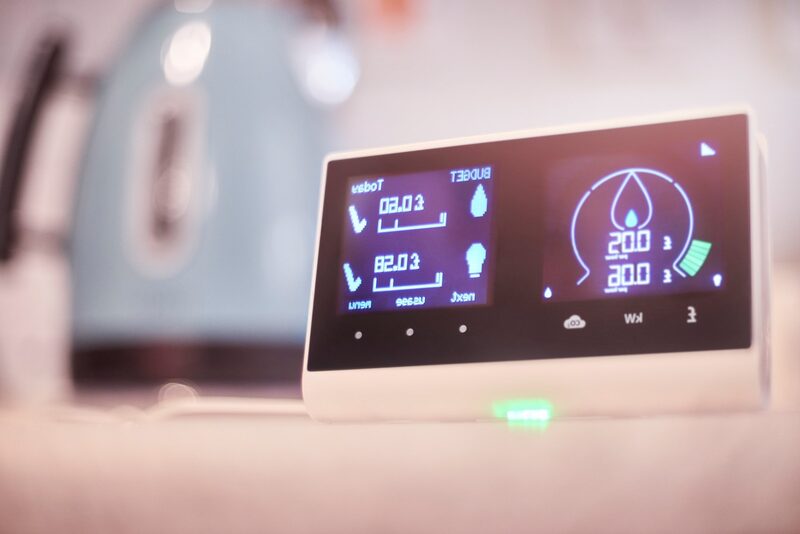
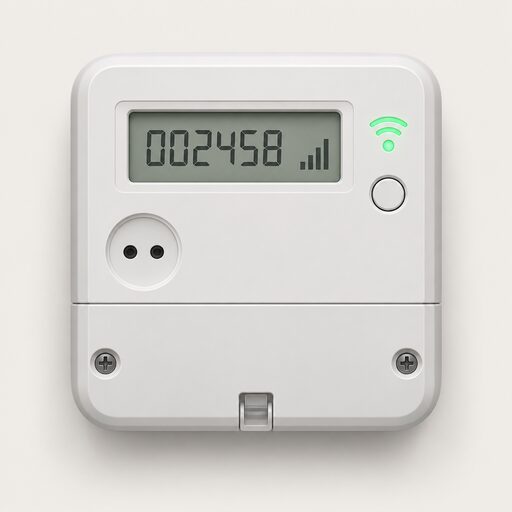
A smart meter automatically sends electricity and gas meter readings to the supplier11. That single function is what makes the wider tariff range possible: a supplier can bill a time-of-use product only if it can see when the energy was used, not just how much.
Ofgem's guidance is explicit that smart meter customers can access more flexible tariffs, including dual-rate tariffs12. All smart meters can support tariffs which charge different prices at different times throughout the day and night, including Economy 7, and Economy 10 meters are also available6. The regulator also confirms that there are certain tariffs only available to smart meter customers, including some of the cheapest tariffs on the market2.
The tariff benefit is not automatic. Smart meter data is used to bill for the energy used, to offer new products and services such as new tariffs if permission has been given, and to help make the energy system more efficient by recording demand more accurately12. The permission point matters: a household can decline the marketing use of its data while still receiving the billing benefit.
For energy independence, the smart meter is the enabling device rather than the source of supply. It does not generate anything and it does not reduce dependence on the grid or on a supplier. What it does is make the household's consumption visible and tradeable, which is the precondition for tariffs that pay for shifting load or for exporting power. Households with solar panels should note that energy tariffs are being offered that pay for exporting renewable energy to the smart energy system, obtainable by getting a smart meter installed13.
Economy 7 meters: only compatible with Economy 7 tariffs
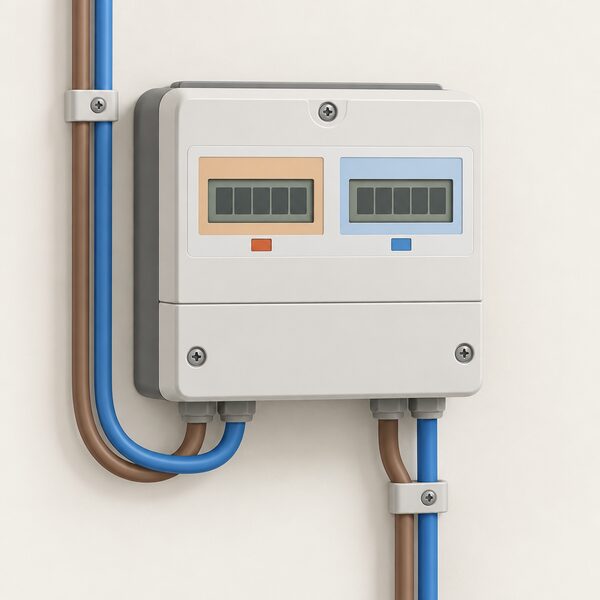
A two-rate meter records consumption in two registers, one for the peak period and one for the off-peak period. The tariff it supports must match that structure, which is why an Economy 7 meter is paired with an Economy 7 tariff and an Economy 10 meter with an Economy 10 tariff. A single-rate tariff cannot be billed correctly on a two-rate meter without the supplier effectively ignoring one register.
Households on these meters are not excluded from the smart rollout. Ofgem confirms that you can get a smart meter if you are on an Economy 7 or Economy 10 tariff14. A smart meter can replicate the two-register function and add interval data on top, which is why the migration path from a traditional two-rate meter runs through a smart installation.
The cost of the meter type shows up in the price cap. For electricity-only customers on Economy 7 meters paying by standard credit, the cap is £84 higher than for those on Economy 7 meters paying by Direct Debit5. That figure is the gap between payment methods within the same meter type, and it illustrates how finely the cap is segmented.
The wider risk for these households is the switching signal. Many two-rate meters rely on the Radio Teleswitch Service to change registers at the right time. Where that service ends, the meter needs either a replacement or a smart meter that can hold the schedule itself. Households on restricted and legacy two-rate arrangements should treat the meter, not the tariff, as the thing to resolve first. The Economy 7 tariffs page covers rates and night hours, and Economy 10 and other restricted meter tariffs covers the less common configurations.
Time-of-use tariffs: what a smart meter unlocks
Time-of-use tariffs charge different rates during different time windows, using the smart meter to log electricity use15. They are the product category that most clearly depends on the meter: without interval data, a supplier cannot know which hours the household used.
The benefit is access to cheaper rates during off-peak hours and incentives for energy usage on high-supply days16. That is the mechanism: the household is paid, in effect, to move consumption to hours when electricity is plentiful or cheap. The same principle appears in the energy efficiency schemes, where a measure can be combined with a time-of-use tariff and will be used with a functioning electricity smart meter17. The word functioning is doing real work there, because a smart meter that has lost its connection cannot support the tariff.
Who benefits is not uniform. Research commissioned by Ofgem found that the types of customers that benefit from time-of-use tariffs will depend on their current usage as well as how they respond and the types of time-of-use tariffs on offer18. That is a finding about variation, not a promise: a household with a high evening load and no ability to shift it may gain little, while one that can move a car charge or a washing cycle into the cheap window may gain more.
For independence, time-of-use tariffs are the clearest example of the meter converting a household from a passive consumer into a participant. The household still depends on the grid for every unit it uses, and on the supplier for the tariff itself. What changes is that the timing of use acquires a price, and a household with a battery or a flexible load can act on it. The time-of-use electricity tariffs page sets out the structures, and shifting electricity use to cheap rates covers the practical side.
Prepay meters and the tariffs available to you
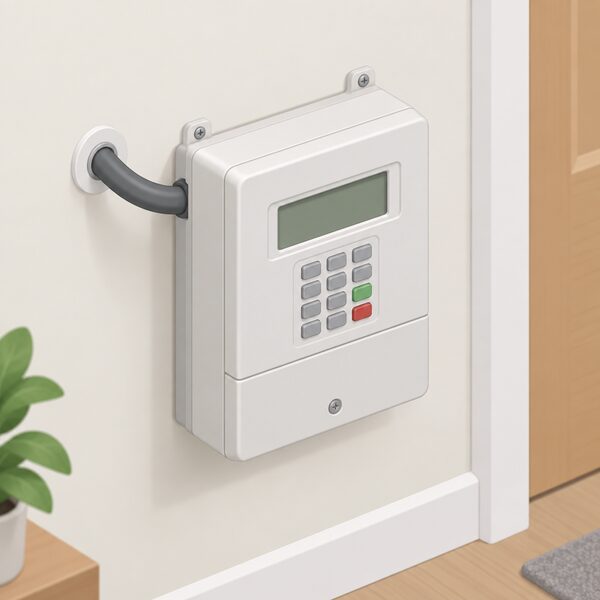
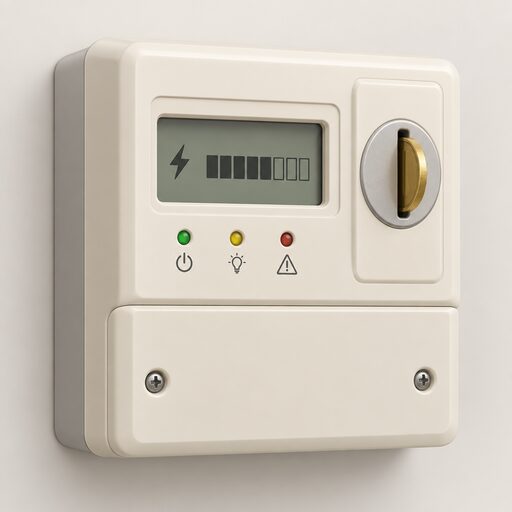
A prepayment meter lets a household pay for electricity or gas in advance rather than after it has been used19. The meter type carries its own tariff set, and its own protections.
Prepayment customers were the first to receive a price cap. Tariff caps for customers on prepayment meters were introduced in April 2017, followed by caps for vulnerable customers7. That history matters because it established the principle that the meter type, not just the payment behaviour, is a legitimate basis for a distinct capped tariff.
Prepayment is not a barrier to the smart rollout. Ofgem states that whether you are on a pre-payment plan or renting, you can benefit from a smart meter16. In prepayment mode, a smart meter allows credit to be added automatically or without having to visit a shop12. That removes one of the practical frictions of prepay, and it is a genuine independence gain at the household level: the top-up trip disappears.
The tariff range on prepay remains narrower than on credit in practice, because some time-of-use and export products are built for credit customers. The prepayment and pay as you go energy tariffs page covers the products, and Ofgem's own guidance on getting help with your prepayment meter covers the support available19.
What happens to your tariff access when you switch supplier
Switching is a right, not a privilege of meter type. If you pay a supplier directly for the electricity or gas you use at home, you can choose to switch to a different supplier or tariff at any time20. The same applies in rented property: if you have to pay your energy bills, you can choose to switch your supplier or tariff at any time20.
The meter can complicate the switch. Ofgem advises that you can switch suppliers if you have a smart meter, but the new supplier might not offer all the smart meter services such as remote meter readings, and the meter may need replacing21. Older SMETS1 meters could temporarily go dumb and lose their ability to send automatic meter readings after a supplier switch22. Where that happens, the household falls back to manual readings and, in effect, to the tariff range of a non-smart meter until the connection is restored.
There is a further dependency worth naming. Except by switching, you do not control the tariff your energy supplier sets, though you can change how much energy you use23. The meter determines which tariffs are available; the supplier determines which of those it offers; and the household's only direct lever is the choice between them.
If a supplier fails, the meter does not change but the tariff does. Ofgem's guidance on supplier failure notes that a meter may not work in smart mode when the household moves to the new supplier, and readings may need to be taken manually and submitted instead24. The tariff rules and consumer protections page covers what suppliers must offer, and what happens if your energy supplier goes out of business covers the process24.
How to check what tariffs your current meter allows
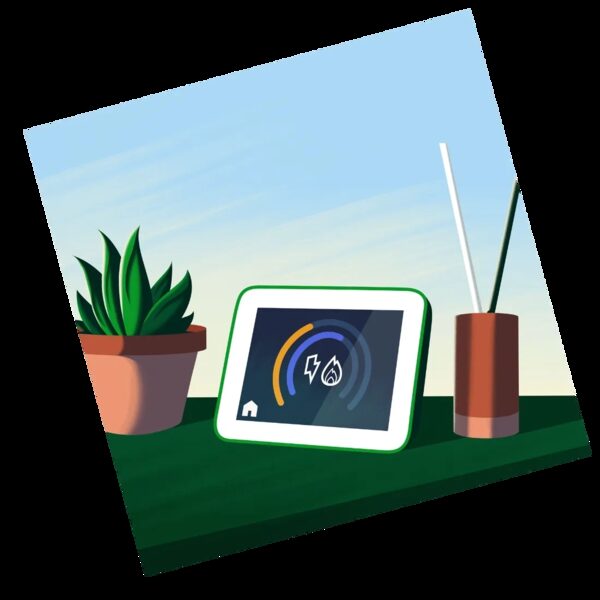
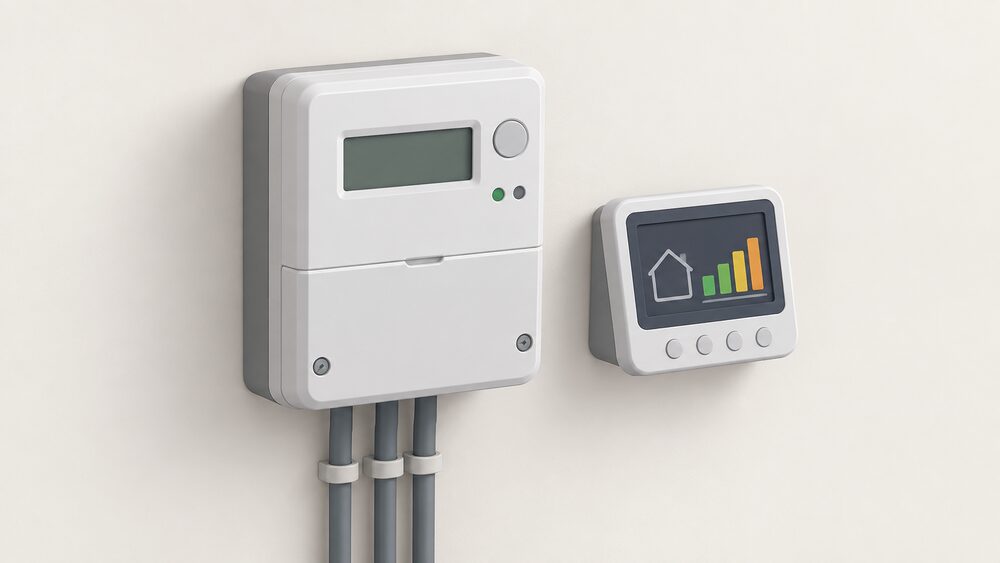
The check starts with the meter itself. A smart meter can be identified by its communications module and, usually, by the in-home display supplied with it. Older SMETS1 installations may have gone dumb after a supplier switch, which is why the meter's appearance is not a reliable guide to whether it is operating in smart mode22.
The second step is the supplier. Ofgem's guidance confirms that smart meter data is used to offer new products and services, for example new tariffs, if permission has been given for this to happen11. A household that has declined data permission may find that some tariff offers do not reach it, even though the meter could support them.
The third step is the tariff structure the meter can bill. A single-rate meter supports single-rate products. A two-rate meter supports peak and off-peak products. A smart meter in working order supports all of these plus time-of-use. A prepayment meter supports the prepay versions of the products its technology allows.
| Meter type | Tariff structures it can bill | Smart meter available |
|---|---|---|
| Single-rate credit | Single-rate fixed, variable, tracker | Yes14 |
| Two-rate (Economy 7 or 10) | Peak and off-peak products | Yes14 |
| Prepayment | Prepay versions of the above | Yes16 |
| Smart, working | Single-rate, dual-rate and time-of-use | Already installed12 |
| Smart, gone dumb | Falls back to manual readings | Replacement may be needed22 |
Where the meter is outside the property, such as a flat with a communal meter box, that is not a barrier: you can apply for a smart meter if you are renting, are a prepay customer, or if the meter is located outside your property26. The tariffs for flats and rented homes question is largely one of who pays the bill, which the next section covers.
Getting a smart meter fitted: cost, eligibility and how to apply
Installation is free to the household. Your energy supplier installs a smart meter at no extra cost4. There is no published price for a smart meter because the cost sits within the supplier's obligations rather than being charged to the customer.
Eligibility is broad. Where a household pays for its energy, whether it owns or rents the home, a smart meter can be booked where it is expected to work in the property27. That covers private renters whose bills are in their name or who prepay, after checking the tenancy agreement and letting the landlord know6. Tenants who pay the bills are entitled to ask for a smart meter, and Ofgem recommends telling the landlord before getting one13. If the landlord pays the energy bills, it is their decision whether or not to install a smart meter4. Where the bill payer is the landlord, the bill payer makes the decision, so a tenant who pays the bills can request one4.
The application route is through the supplier. Contact your supplier to get a smart meter for free12. Suppliers are required to offer smart meters to all households and small businesses by the end of 20302.
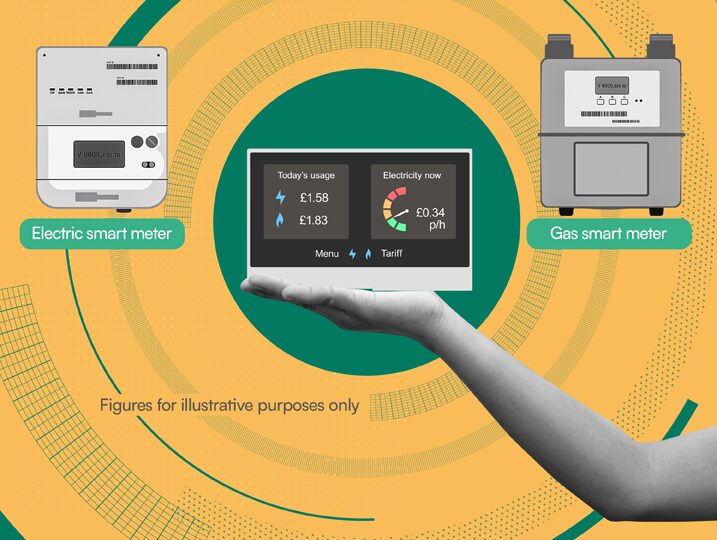
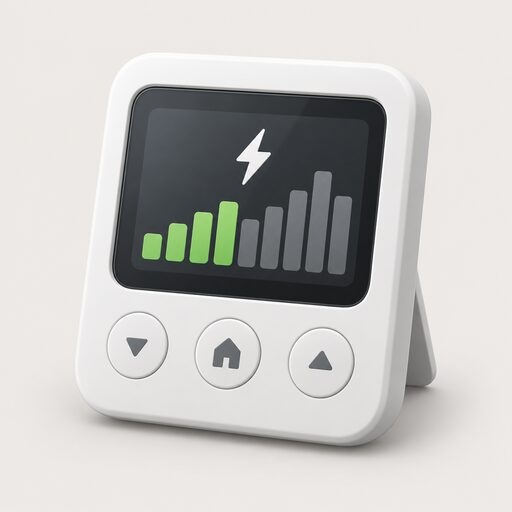
The in-home display comes with the installation. With every smart meter installation, the customer is provided with an in-home display28. It shows how much gas and electricity is being used in kilowatt hours and its cost in as near to real time as possible28. It has two modes depending on how you pay: in credit mode it shows daily use and cost, and in prepay mode it shows the available balance for each fuel and how close you are to the next top-up23. Both modes allow budgets to be set, and many models allow alerts when close to limits or on sudden increases in consumption and spending23. If a fault is reported within 12 months of installation and is not due to customer failure to keep the in-home display in good working order, the supplier must repair or replace it free of charge6.
Where the meter leaves a household dependent
The meter decides the tariff menu, but it does not remove the underlying dependencies. Every household on these tariffs still draws its electricity and gas from the grid, buys it through a supplier, and depends on that supplier's systems to bill correctly. A smart meter adds a further dependency on a communications network and on the supplier's willingness to offer the products the meter can support.
The limits are worth stating plainly. A smart meter may stop recording the energy you use, or may no longer send readings to your supplier11. Where that happens, the household can still take manual readings25. A meter that has gone dumb after a switch may need replacing before the full tariff range returns21. And a household that refuses a smart meter keeps its existing meter and its existing tariff range, which is a legitimate choice with a known cost.
For energy independence, the honest position is that the meter is a gatekeeper rather than a source of autonomy. It determines whether a household can buy a tariff that pays for shifting load, exporting power or charging overnight. It does not determine whether the household can generate its own power, store it or go off the grid. Those are separate questions, covered in tariffs and household energy independence.
Sources28 cited
- Energy price caps explained, Ofgem, 2020
- Research briefing on smart meters, House of Commons Library, 2023
- Protection for energy customers ahead of RTS switch-off, Scottish Government, 2025
- Help me decide, Smart Energy GB, 2026
- Summary of changes to energy price cap, 1 October to 31 December 2025, Ofgem, 2025
- Smart meters, Energy Ombudsman, 2026
- Research briefing on prepayment meter tariff caps, House of Commons Library, 2026
- Energy price caps information leaflet, Ofgem, 2018
- Price caps explained, easy read, Ofgem, 2020
- Energy price cap operating cost and debt allowances decision, Ofgem, 2025
- Getting a smart meter, Ofgem, 2026
- Get help with your smart meter, Ofgem, 2026
- Myth busting smart meter problems, Smart Energy GB, 2026
- Can I get a smart meter, Smart Energy GB, 2026
- Five top tips to cut your energy bills, Welsh Government, 2026
- Smart meters, Welsh Government, 2026
- ECO4 new measures and products guidance, Ofgem, 2026
- Investigating potential impacts of time of use tariffs, Ofgem, 2014
- Get help with your prepayment meter, Ofgem, 2026
- Switch your home energy supplier, Ofgem, 2026
- Problems with services, Isle of Anglesey County Council, 2025
- How do you know if you have a smart meter, Smart DCC, 2026
- How do smart meters save energy, Smart DCC, 2026
- What happens if your energy supplier goes out of business, Ofgem, 2026
- Smart meter performance, Ofgem, 2026
- How to get a smart meter, Smart DCC, 2026
- Smart meters: your rights and expectations, GOV.UK, 2025
- Does a smart meter need Wi-Fi, Smart DCC, 2026
 Batteries and Smart TariffsA home battery can earn its keep if your electricity prices change through the day.
 Monitoring in Flats and RentalsCan you get a smart meter in a rented flat, and who decides?
 Prepayment and Pay As You GoHow prepayment and pay as you go energy tariffs work in the UK: meter types, top-ups, emergency credit, debt repayment through the meter, price cap treatment and how households move to a credit meter.
 Meters and Time-of-Use TariffsDo you need a smart meter for a time-of-use tariff, and does it have to send readings every half an hour?
 The Full Smart Meters GuideDo smart meters really save you money, and how do you use one to cut your bills?
 Energy Independence for RentersHow far a renter or flat dweller can cut reliance on grid supply without owning the building: smart meters and prepay, portable heating and its safety limits, Economy 7 timing, and the planning rules that govern a heat pump on a block of flats.