In this guide
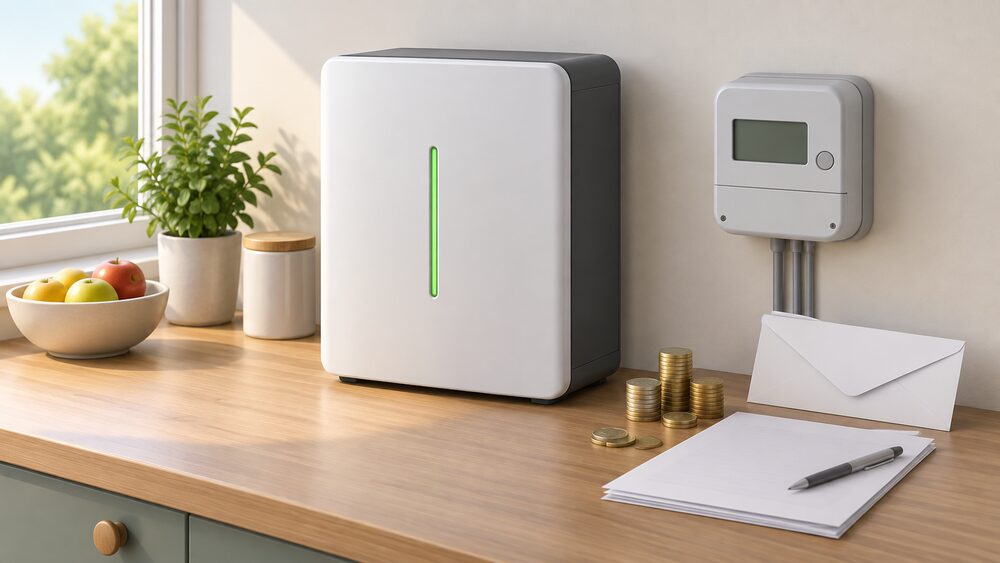
A home battery can be paid for electricity it sends to the grid, but only through the same route as any other small generator: a metered export tariff, almost always a Smart Export Guarantee (SEG) tariff from a licensed supplier. An export tariff is the rate paid to households or businesses for the electricity they export back to the grid1. The SEG enables small-scale generators to receive payments from electricity suppliers for electricity they export back to the National Grid, providing certain criteria are met2.
The critical qualification is that the SEG pays for exports from eligible generation, and a battery is not on that list. The eligible technologies are solar photovoltaic, wind, micro combined heat and power, hydro and anaerobic digestion3. A battery-only home therefore has no eligible generating technology behind its exports, and the scheme has nothing to pay for. What a battery does is shift when exports happen, and whether they happen at all.
That shift is the whole story of battery export. A battery stores surplus generation that would otherwise have gone to the grid, so metered exports fall and payments based on them fall with them. Independent guidance notes that having a storage battery reduces exports and payments, and that a storage battery may render a household ineligible for some SEG tariffs4. The compensation is that stored electricity is used at home, or sold at a better time, rather than sold cheaply the moment it is made.
What exporting from a home battery means, and how the money arrives
Exporting from a battery means sending stored electricity back through the meter to the local network, where it is bought by a licensed supplier under a published export tariff. The mechanism is the same as for solar: payments are exclusively an export tariff, based solely on how much electricity is exported back to the grid, as recorded by the smart meter9. There is no separate battery payment, no capacity payment and no payment for merely owning storage.
The price paid for exporting is almost always less than the price to buy electricity from the grid10. That gap is the reason a battery is usually operated to avoid exporting at the wrong moment rather than to maximise export volume. A battery can also be set to charge when electricity is cheap and to discharge when electricity is expensive11, which is a trading strategy against the import price rather than an export strategy.
For a home with solar and storage, surplus solar electricity can be sold back to the energy supplier through a SEG tariff when the battery is full12. The battery fills first, household demand is met second, and only what remains goes to the grid. That ordering is what makes battery export payments smaller than solar-only export payments on a like-for-like system.
"an export tariff is the rate paid to households or businesses for the electricity they export back to the grid"
The practical consequence for independence is mixed. A battery reduces reliance on the grid for evening electricity and reduces exposure to peak import prices, but the export side of the arrangement still depends on a licensed supplier, a meter reading regime and a tariff that the supplier can change. The household owns the storage; it does not own the market it sells into.
The Smart Export Guarantee: the scheme behind battery export payments
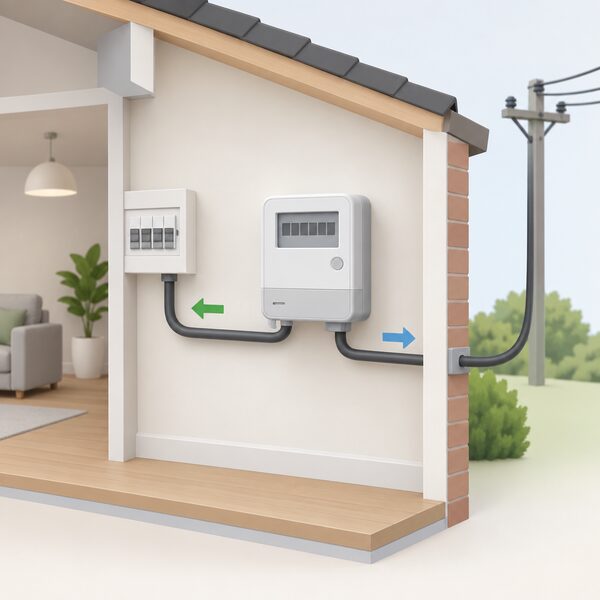
The SEG launched on 1 January 2020 and requires licensed electricity suppliers to offer export tariffs to anaerobic digestion, hydro, onshore wind, solar photovoltaic and micro-combined heat and power13. It is governed by the Smart Export Guarantee Order 2019 and Conditions 57 and 58 of the Standard Conditions of the Electricity Supply Licence14. Its purpose is to ensure small-scale generators are paid for the renewable electricity they export to the national grid15.
The scheme is deliberately loose on price. SEG licensees determine the rate, contract length and other terms which SEG generators will receive3. Suppliers can set their own SEG tariff rates, provided they offer more than £0 per unit of metered exported power7. There are no set SEG rates; the only requirement is that the tariff must always be greater than zero13. Under the SEG, it is up to the energy suppliers to decide how much to pay as an exporter16.
That produces a wide spread. The average tariff rate offered during SEG Year 5 was 10.8p/kWh, a further 30% increase from SEG Year 45. Independent guidance puts the average export rate at around 12p/kWh6. Individual published rates sit far below both: one fixed SEG tariff at 1.0p per kWh, OVO's at 4.0p per kWh on a 12 month fixed term, and Octopus's at 4.1p per kWh with no fixed end date17. SEG rates are often less than what is paid for electricity, so shopping around matters18.
| Scheme feature | Position |
|---|---|
| Launch | 1 January 202013 |
| Eligible technologies | Solar PV, wind, micro-CHP, hydro, anaerobic digestion3 |
| Rate set by | The supplier, not the regulator3 |
| Minimum rate | More than £0 per unit exported7 |
| Average rate, Year 5 | 10.8p/kWh5 |
| Metering | Half-hourly capable export or smart meter19 |
For a battery household the scheme's structure matters more than its headline rate. Because payment follows metered export, and a battery suppresses metered export, the scheme rewards solar-plus-battery homes less on the export line than it rewards solar-only homes, while rewarding them more on the self-consumption line. The Smart Export Guarantee is the same scheme either way; only the volumes differ.
Eligibility: smart meters, export MPANs and metering that measures exports
Three things have to be in place before a battery or solar export can be paid for: an eligible generating technology, a meter that records exports at half-hourly intervals, and an export MPAN.
On metering, all installations which are eligible for the Feed-in Tariff scheme are also eligible for the SEG, provided they are fitted with an export or smart meter capable of taking measurements at half-hourly intervals19. Generators must have a smart meter to monitor exports20. A registered smart meter that records exported electricity is needed even where the household is not signing up to a smart tariff13. Exported power must be metered, with a meter capable of reporting exports on a half hourly basis7.
On the export MPAN, an eligible installation must have an export MPAN to manage exported electricity volumes to the SEG licensee21. Export MPANs export excess electricity back to the network and are mostly used with solar panel installations22. The application to the network operator asks for a brief description of what the MPAN will supply and details of the control equipment22. The SEG eligibility and requirements page covers the MCS and G98/G99 side of this in more detail.
The independence point here is blunt: a battery can be installed and operated with no export arrangement at all, and many are. Adding export payments means adding a meter, an MPAN and a supplier relationship. That is more grid dependence, not less, in exchange for a revenue stream.
Battery with solar, or battery alone: which setup earns what
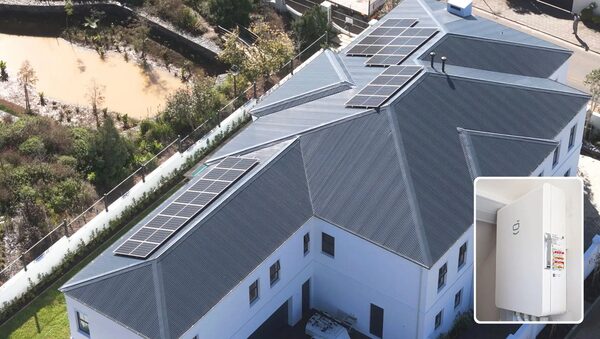
The two setups are treated very differently, and the difference is not about the battery's quality.
A solar-plus-battery home has an eligible technology and can hold a SEG tariff. Independent guidance for that combination points to a dedicated solar or battery tariff, or a good SEG tariff matched with a dynamic import tariff or an Economy 7 tariff11. Where a heat pump is also present, the same guidance suggests a good SEG tariff for exported electricity and then either a dynamic tariff or a heat pump tariff for import, from the same company11. Solar-only homes are pointed to the best SEG rate export tariff11.
A battery-only home has no eligible technology. Independent guidance for battery-only operation points to either a dynamic tariff or Economy 711, with the battery set to charge when electricity is cheap and discharge when it is expensive11. With a battery and no solar panels, charging stops when the battery is full and the battery discharges when the next cheap tariff period ends, automatically12. There is no export payment in that description, because there is nothing the SEG recognises as generation.
| Setup | Eligible for SEG export payments | Independent guidance points to |
|---|---|---|
| Solar only | Yes | Best SEG rate export tariff11 |
| Solar plus battery | Yes | Dedicated solar/battery tariff, or SEG plus dynamic or Economy 7 import11 |
| Battery only | No eligible generation | Dynamic tariff or Economy 711 |
| Heat pump plus battery | Yes, via the generation | SEG for export plus dynamic or heat pump import tariff11 |
Some suppliers offer export arrangements outside the scheme. 100Green offers export tariffs for solar panel users, but these are not covered by the Smart Export Guarantee9. Octopus offers some of the highest export tariff rates, and a household does not have to buy its solar solutions to qualify18. The import tariffs designed for solar and battery homes page covers the import side of these pairings.
Export tariffs compared: flat SEG rates against time-of-use tariffs
A flat SEG tariff pays a set rate per kWh of electricity exported over the length of the contract13. That is simple and predictable, and it is the only structure the scheme requires. A time-of-use export tariff instead offers different rates at different times of day, both for buying electricity and for selling it back to the grid11. The second structure is what makes a battery useful on the export side, because the battery can hold electricity until the export price is high.
The published spread is wide enough that the choice matters more than the battery's capacity. A fixed SEG tariff at 1.0p per kWh, OVO's 12 month fixed at 4.0p per kWh and Octopus's 4.1p per kWh with no fixed end date sit well below the 10.8p/kWh average tariff rate offered during SEG Year 517. Independent guidance puts the average export rate at around 12p/kWh6. A household comparing offers is comparing a rate that can be more than ten times another rate for the same exported unit.
Two structural points sit behind those numbers. First, SEG rates are often less than what is paid for electricity, so shopping around is worthwhile18. Second, the supplier decides the rate, the contract length and the other terms3, which means the terms can differ on far more than price: contract length, notice, whether storage is accepted, and whether the tariff is fixed or variable.
Feed-in Tariff recipients have an extra option. A FiT generator can discard the FiT export rate and replace it with a SEG tariff while retaining the main generation tariff portion of the FiT payment9. Once switched to a SEG tariff, the household cannot switch back to FiT export payments, although the generation tariff remains unaffected9. The Feed-in Tariff export payments page sets out the closed scheme in full.
Intelligent Octopus Flux: rates, automation and availability
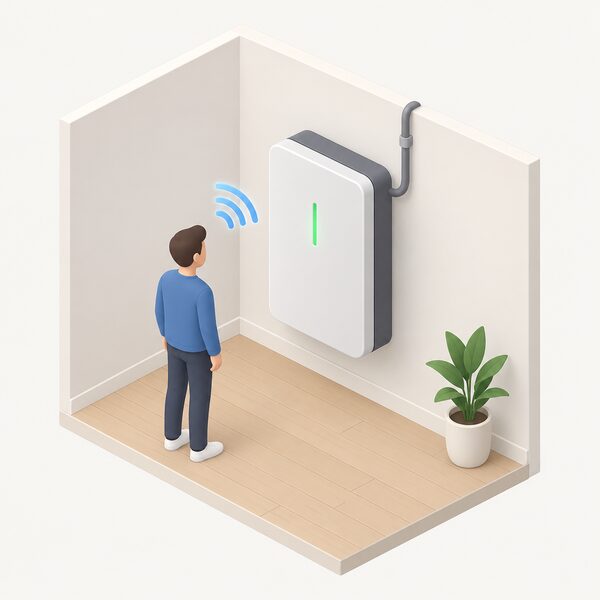
Intelligent Octopus Flux is the clearest example of a tariff built around battery export rather than around solar export. It is a two-rate tariff with matching import and export prices, automated battery management charging when power is cheapest and exporting between 4pm and 7pm17. The published export rate is 23p per kWh for Octopus customers who have solar panels and a battery17.
Eligibility is about the import tariff and the equipment, not the installer. The tariff was available to customers on the Intelligent Flux import tariff, who had solar PV and battery storage but also allowed Octopus to control their battery exports5. Octopus Flux, the standard version, includes battery storage and requires the import tariff17.
That availability note is the practical lesson about automated export tariffs. They are commercial products priced against wholesale conditions, and they can be withdrawn or paused. A household that has arranged its battery around one of them is exposed to that decision, however well the tariff pays when it runs. The smart charging and supplier-controlled tariffs page covers the wider category.
The independence trade-off is explicit in the eligibility rule: the customer allows the supplier to control the battery's exports. That is a real transfer of operational control in exchange for a rate well above the SEG average. A household that wants to keep manual control is choosing a SEG tariff plus a separate import tariff instead, and accepting the lower export rate that comes with it.
How a battery-only export strategy works: charge cheap, discharge at peak
A battery-only household cannot earn SEG export payments, so its strategy is built on the import price rather than the export price. The method is to set the battery to charge up when electricity is cheap, and to discharge when electricity is expensive11. Independent guidance for battery-only homes points to either a dynamic tariff or Economy 711. With a battery and no solar panels, charging stops when the battery is full and the battery discharges when the next cheap tariff period ends, automatically12.
The economics depend entirely on the gap between the cheap rate and the rate avoided. A time-of-use tariff offers different rates at different times of day, both for buying electricity and for selling it back to the grid11, so the same battery can in principle buy low and either consume or sell high. The time-of-use tariffs and Economy 7 pages cover the import structures that make this work.
Three limits apply. First, round-trip losses mean a battery returns less electricity than it takes in, so the price gap has to be wide enough to cover them. Second, the cheap window is set by the supplier, not the household, and can move. Third, a battery-only home that later adds solar becomes eligible for SEG payments on the solar generation, which changes the whole calculation. The home battery with a time-of-use tariff page deals with the import-side case in more detail.
What a battery costs, and how long export earnings take to repay it

The clearest published payback figure in the material is for a battery used against a time-of-use tariff: if the battery costs £4,600 then the payback period is 9 years6. That example is built on import-price arbitrage, not on export payments, and it is the figure a household should hold on to when a sales conversation turns to export income.
Export earnings alone are a weak payback route for a battery, for a structural reason. A battery suppresses the metered exports that SEG payments are calculated on, so the export line shrinks precisely because the battery exists. Independent guidance notes that exports and therefore payments reduce if there is a storage battery, and that a storage battery may render a household ineligible for some SEG tariffs4. The revenue that justifies the battery is avoided import cost, not export income.
VAT treatment affects the capital cost and has a deadline attached. For batteries added to an existing solar PV system, VAT is 0%, having been 20% until February 20244. Separately, qualifying standalone battery installations in UK homes revert to 5% VAT from 1 April 2027 under current rules8. The distinction between a battery added to existing solar and a standalone battery therefore matters both to the price paid and to the date by which it is installed.
| Cost item | Figure | Basis |
|---|---|---|
| Example battery capital cost | £4,600 | Time-of-use example6 |
| Example payback period | 9 years | Time-of-use example6 |
| VAT, battery added to existing solar PV | 0% | 20% until February 20244 |
| VAT, qualifying standalone battery | 5% from 1 April 2027 | Current rules8 |
Where a battery is installed alongside solar in a single supply, the VAT treatment follows the installation as a whole: the battery is included in the single supply of the installation of solar panels when the installation is carried out at the same time, the customer perceives that it is receiving a single supply and the battery is a better means of enjoying the principal supply of solar panels8. That is a test about how the supply is structured, not simply about what is bolted to the wall.
Owning an exporting battery: control, limits and practical trade-offs
The limits of battery export are not defects; they are the terms of the arrangement, and they are worth stating plainly.
- A battery is not an eligible generator. The SEG pays for exports from solar PV, wind, micro-CHP, hydro and anaerobic digestion3. Storage changes when exports happen, not whether they qualify.
- Exporting reduces export income. Metered exports fall when a battery stores surplus generation, and payments follow metered exports4.
- Some SEG tariffs exclude storage. Having a storage battery may render a household ineligible for some SEG tariffs4.
- Automated tariffs take control. Intelligent Octopus Flux required customers to allow Octopus to control their battery exports5.
- Automated tariffs can be paused. Intelligent Octopus Flux was temporarily unavailable from 16 September 2026 because energy prices were particularly volatile17.
- Switching is not neutral. A household can in theory move supplier without moving its SEG tariff, but may find itself moved to a less generous export rate by the old supplier9.
- Exit fees can still bite. 57% net of consumers said they could identify that exit fees may still apply to a fixed contract even when moving to another deal with the same supplier23.
The FiT experience shows what happens to export volumes when households install storage and metering changes. Total export payments decreased since last year, in large part due to a 65.6% decrease in metered export payments made under the scheme24. In a later year, while the amount of electricity exported slightly increased by 2.9%, export payments fell by £2.3 million (2.9%)25. The value of net export payments is calculated to account for the difference between the export tariff paid by a licensee and the value of that electricity to the licensee24.
For a household, the honest summary is that a battery buys independence from peak import prices and from the timing of grid supply, and it buys a degree of independence from a single supplier's export rate by allowing electricity to be held rather than dumped. What it does not buy is independence from the grid, from a licensed supplier, from a meter and MPAN arrangement, or from the supplier's commercial decisions about which tariffs to run and when. The tariffs and household energy independence page sets that balance out across the whole tariff landscape.
Sources25 cited
- Solar photovoltaic (PV), MCS Certified, 2026
- Smart Export Guarantee (SEG), Ofgem, 2026
- Smart Export Guarantee: guidance for generators, Ofgem, 2026
- Solar panel battery storage, Which?, 2026
- Smart Export Guarantee Annual Report Year 5, Ofgem, December 2025
- Battery storage advice, Centre for Sustainable Energy, 2025
- The future for small-scale low carbon generation, Department for Business, Energy and Industrial Strategy, 2019
- VAT energy saving materials and grant funded heating supplies, HM Revenue and Customs, 2026
- Can I switch energy supplier if I have solar panels?, Uswitch, 2026
- Making the most of your solar PV panels, Centre for Sustainable Energy, 2026
- Tariffs for renewable technology, Energy Saving Trust, 2026
- Battery storage, Energy Saving Trust, 2026
- Smart Export Guarantee, Energy Saving Trust, 2026
- Smart Export Guarantee: guidance for electricity suppliers, Ofgem, 2026
- Find funding, Home Energy Scotland, 2026
- Could you generate your own energy, Energy Saving Trust, 2024
- Smart Export Guarantee rates: the best and worst SEG tariffs, Which?, 2026
- Solar panel costs, Which?, 2026
- Smart Export Guarantee guidance for generators, Ofgem, 2026
- Smart Export Guarantee, Parliamentary Office of Science and Technology, 2026
- Draft licence conditions, Department for Business, Energy and Industrial Strategy, 2019
- MPAN only, UK Power Networks, 2026
- Understanding consumers' energy tariff choices, Ofgem, July 2025
- Feed-in Tariffs Annual Report Scheme Year 13, Ofgem, December 2023
- Feed-in Tariffs Annual Report Scheme Year 14, Ofgem, December 2024
 Solar and Battery Import TariffsWhat does a special import tariff actually get you when you have solar panels or a home battery?
 V2G and V2H ChargingCan your electric car earn money by sending power back to your home or the grid?
 Grid Connection Rules for V2GCan your charger send power back to the grid?
 Charging and Energy IndependenceCharging an electric car at home can cut your fuel costs, but how much does it really free you from the grid?
 Batteries and Smart TariffsA home battery can earn its keep if your electricity prices change through the day.
 Bidirectional Charging ExplainedCan your electric car actually earn you money by sending power back to the grid?