

In this guide
The Octopus Cosy 6 is an air source heat pump built by Octopus Energy, described as the company's first heat pump built entirely in-house and aimed at a typical three-bed UK home1. It is sold as one part of a package rather than as a standalone box: the Cosy 6 heat pump, a Cosy Hub home controls system, Cosy Pods room sensors and a bespoke smart tariff, alongside the company's installation service1.
That packaging is the point of the product. A household buying a Cosy 6 is not choosing a heat pump in isolation and then finding an installer, a controls brand and an electricity tariff separately. It is choosing one supplier for the unit, the controls, the fitting and the electricity that runs it. That is a genuine simplification, and it is also a concentration of dependence: the running cost case rests on a tariff from the same company that made and fitted the machine.
The published material does not give a manufacturer list price for the Cosy 6, so costs are quoted after a survey rather than read off a page. What follows sets out the range, the specifications that are published, what the package contains, which homes it suits, how it behaves day to day, and where the limits sit.
The Cosy range: Cosy 6, Cosy 9 and Cosy 12
The range is named by output. The Cosy 6 is the smallest and the one the launch material describes, sized for a typical three-bed UK home1. The Cosy 9 and Cosy 12 extend the same approach to larger properties, following the convention that a heat pump's number reflects its nominal capacity in kilowatts.
That naming convention is worth understanding because it is not the same as a boiler's. Boiler outputs are usually quoted generously, sized to cover the worst winter morning plus hot water, and then modulated down for the rest of the year. Heat pumps are sized to the actual heat loss of the building, because oversizing one costs money twice: once at purchase and again in cycling losses and poorer efficiency. Independent guidance on heat output makes the same point about matching a unit to the room or the dwelling it serves5.
The published material does not give a full specification table for the Cosy 9 or the Cosy 12, and where output figures for those models appear they are not consistent between documents. The Cosy 9 is given as 8.1 kW in one place and 8.7 kW in another, and the Cosy 12 as 11.2 kW and 10 kW. Those pairs disagree and the disagreement is unresolved, so neither should be treated as settled. The same applies to the Cosy 6 itself, quoted at 5.6 kW in one document and 5.2 kW in another.
| Model | Published output figures | Status |
|---|---|---|
| Cosy 6 | 5.6 kW and 5.2 kW | Documents disagree, unresolved |
| Cosy 9 | 8.1 kW and 8.7 kW | Documents disagree, unresolved |
| Cosy 12 | 11.2 kW and 10 kW | Documents disagree, unresolved |
For a household, the practical consequence is that the model number is a rough guide to the size of home, not a specification. The survey decides.
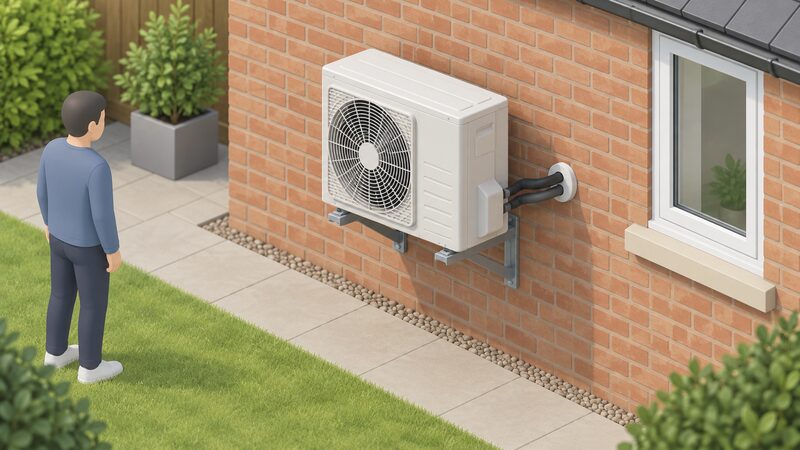
Cosy 6 specifications: 5.6 kW output in a UK-built package
The headline figure for the Cosy 6 is 5.6 kW of heat output, with a second published figure of 5.2 kW for the same model. The two do not agree and no ruling settles which applies, so a householder reading a specification sheet should expect either number and ask which test basis it comes from.
For context on what a 6 kW class of heat pump means, comparable units in the same bracket are listed at 6 kW, and one pellet appliance is described as having an output of up to 6 kW6. A 6 kW heat pump is a mid-sized domestic unit, not a small one: it covers the heat loss of a well-insulated three-bedroom house and domestic hot water for a household of ordinary size.
What the published material does not give for the Cosy 6 is a seasonal performance figure, a refrigerant type, an operating temperature range or a sound power rating. Those are the numbers that decide how a heat pump performs in February, and they are the ones to ask for. Comparable units from other makers publish operating ranges down to minus 25 degrees C, seasonal performance factors and ErP ratings up to A+++8. Where a maker does not publish an equivalent figure, the absence is itself information.
What the Cosy 6 package includes: heat pump, cylinder, controls and Cosy Pods
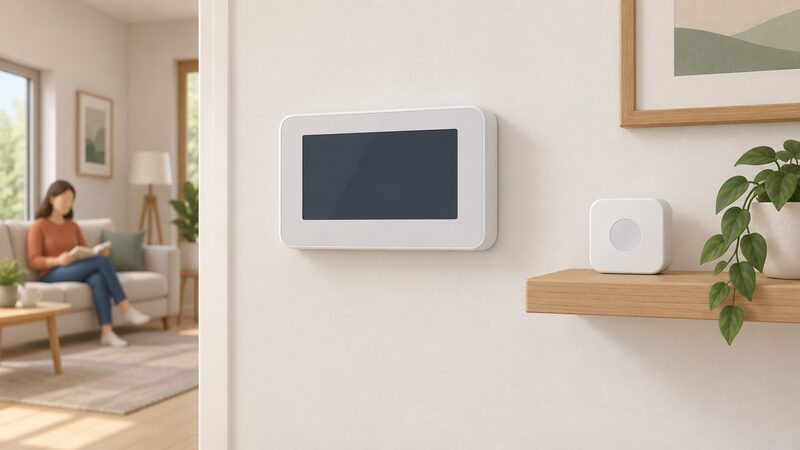
The Cosy 6 is sold as a system, and the components are named: the heat pump itself, the Cosy Hub home controls system, Cosy Pods room sensors, a bespoke smart tariff and the company's installation service1. That is a fuller package than a bare appliance, and it maps onto what a heating system actually needs.
- Heat pump: the outdoor air source unit1
- Cosy Hub: the central home controls system1
- Cosy Pods: room sensors for room-by-room control1
- Smart tariff: a bespoke electricity tariff for the heat pump1
- Installation: the company's own fitting service1
A full set of heating controls conventionally means a programmer, thermostatic radiator valves and a room thermostat9. The Cosy Hub and Cosy Pods are the modern equivalent: a central controller plus room-by-room sensors that let the system heat the rooms in use rather than the whole house evenly. Many heat pump designs also integrate the hot water cylinder with the unit, which removes the need for a separate cylinder10. Whether the Cosy 6 package includes a cylinder in every installation is not stated in the published material, but a heat pump supplying domestic hot water needs a cylinder, because unlike a combi it does not heat water instantaneously.
The tariff is the component that is easy to overlook. It is not an accessory; it is part of the product's running cost case, and it is supplied by the same company that made the heat pump. That is the central trade in the Cosy proposition: fewer suppliers to deal with, and a running cost that depends on one of them.
Which homes the Cosy 6 fits, and what it replaces
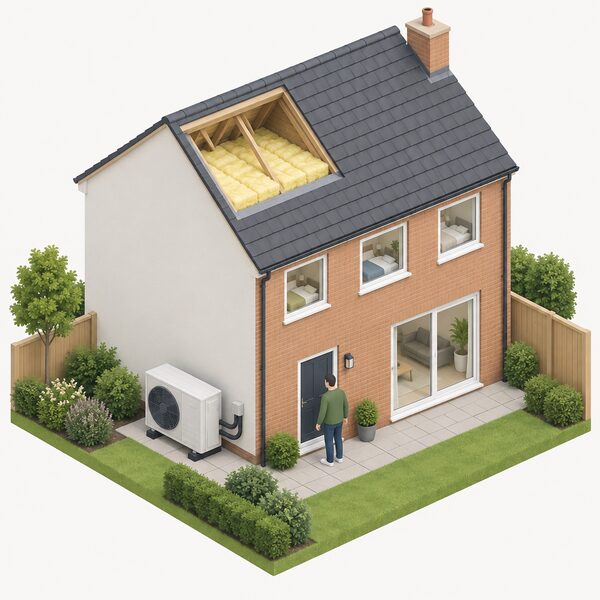
The Cosy 6 is aimed at a typical three-bed UK home1. That is a broad category covering everything from a 1930s semi to a modern new build, and the difference between them matters more than the label. A three-bed house with cavity wall insulation, loft insulation and double glazing has a far lower heat loss than the same footprint with solid walls and single glazing, and heat loss is what sizes a heat pump.
On replacement, the evidence is that a heat pump can take over from a boiler, and that the economics are best where the boiler being replaced is old and inefficient. Independent guidance notes that savings are especially likely when an older, G-rated gas boiler is replaced by a well-designed heat pump11. The same logic applies to oil, where the fuel is more expensive per unit of heat and there is no gas network connection to fall back on.
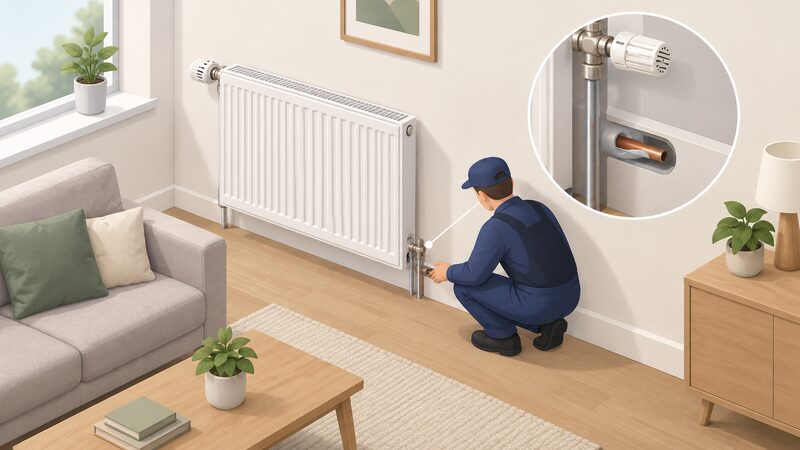
Radiators are the common worry. Hybrid heat pump guidance states that the technology is suitable for the UK housing stock and can potentially be fitted with existing high temperature radiators, although replacing some radiators may be preferable in some cases12. A well-designed heat pump installation often keeps most of the existing emitters and changes the ones in the coldest rooms.
Where a home has microbore pipework, typically 6 to 12mm, that can be a problem. Independent assessment notes that a microbore system may need a high-temperature heat pump, which is less cost-effective to run, or the pipework may need replacing4. That is a real cost and a real disruption, and it is one of the few cases where the fabric of the house rather than the appliance decides the outcome.
Running costs: pairing with the Cosy tariff
Running cost is where the Cosy proposition is strongest and where it is most conditional. On a standard flat-rate tariff, most heat pumps cost the same or even more to run than an efficient gas boiler3. Paired with a suitable time-of-use tariff, the position changes: independent analysis finds that lower running costs over time compared with a gas boiler are achievable13.
The Cosy tariff is named in that comparison work. For a typical UK household with both an electric vehicle and a heat pump, a heat pump-focused tariff such as Octopus Cosy is modelled at £850 a year for heat and £550 a year for EV charging, a total of £1,4002. Those are modelled annual figures for a household with both loads, not a quote for a specific home.
| Figure | Value | Basis |
|---|---|---|
| Heat, heat pump tariff | £850 a year | Modelled, household with EV and heat pump2 |
| EV charging, same tariff | £550 a year | Modelled, household with EV and heat pump2 |
| Combined | £1,400 a year | Modelled, household with EV and heat pump2 |
| Indicative heat pump tariff range | 6.9 to 11.5p per kWh | Indicative14 |
| Heat from a heat pump | 5.5p per kWh of delivered heat | Official consultation example15 |
Independent assessment of the same question reaches a similar conclusion: when combined with a suitable time-of-use tariff, air source heat pumps should cost no more to run than a gas boiler and, in the right home, can be considerably cheaper4.
The condition underneath all of it is the tariff. A time-of-use tariff rewards a household that can shift demand into cheap hours, and a heat pump with a cylinder and smart controls can do that: heat the water and warm the fabric of the house overnight, then coast through the expensive evening peak. Without that tariff, the same machine on a flat rate gives up most of its running cost advantage.
Hush Mode and backup: how the unit behaves day to day

An air source heat pump sits outside the home and runs hardest in cold weather, which is exactly when windows are shut and neighbourhood noise is low. Quiet operation is therefore a specification, not a nicety, and it is one that independent certification schemes test for. Quiet Mark lists heat pumps from several manufacturers, including NIBE, Samsung, SolaX and InstaGen models8.
Hush Mode is the Cosy unit's quiet setting, intended to reduce noise at the times it would be noticed, typically overnight. The published material does not give a decibel figure for the Cosy 6 or state the hours Hush Mode covers, so the setting should be treated as a feature to confirm at survey rather than a measured performance claim.
Backup behaviour matters for the same reason. A heat pump has no flame and no flue, so it does not carry the same failure modes as a boiler, but it does depend on electricity, on a compressor and on controls. In a well-insulated home with a cylinder of hot water, a short interruption is not immediately noticeable; in a poorly insulated one, it is. That is the same dependence a gas boiler has on gas and electricity, with the fuel swapped.
The wider point for independence is that a heat pump moves a household off a delivered fuel and onto electricity. That removes the gas or oil supply from the equation and leaves the electricity supply, which can increasingly be met from a home's own generation. Heat pumps pair naturally with solar and storage for that reason, and the combination is where the independence case is strongest.
Installation, piping compatibility and the Cosy Heat Pump Care Plan
Installation is where the Cosy package does most of its work, and where the conditions sit. The company's route covers the survey, the design, the fitting and the controls as one job, which removes the coordination problem that catches households buying an appliance and an installer separately.
The wider policy direction is towards exactly that kind of packaged delivery. The Heat Pump Ready Programme is intended to reduce the lifetime costs of domestic heat pumps and to help bring down costs and installation time21. Retrofit programmes in the same mould have funded a free home assessment and a Whole House Plan for households starting the process, and have covered project management costs typically up to £750 for participants installing a heat pump23. Those are scheme-specific figures from a pilot, not a national entitlement, but they show the shape of the support: assessment first, then a plan, then installation.
On pipework, the constraint described above applies. Microbore of 6 to 12mm can be a problem and may need replacing, or may push the design towards a high-temperature unit that is less cost-effective to run4. Radiators may stay, with some replacement preferable in some cases12. Planning permission is usually not required for a domestic air source heat pump in Scotland where the unit complies with MCS Planning Standards or equivalent standards24, and permitted development rules for related equipment differ across the UK nations25.
The Cosy Heat Pump Care Plan is the servicing and support route attached to the installation. It applies to heat pumps supplied and fitted through that route rather than to any heat pump in any home, so a household with a unit installed by another company would look to that installer or to a manufacturer plan instead. Service plans generally are compared in our guide to manufacturer service and maintenance plans, and the wider question of what a maker's support covers is set out under manufacturer support and spare parts.
For a household weighing independence, the position is this. A Cosy 6 moves heating off gas or oil and onto electricity, and the package removes the coordination burden of buying a heat pump piecemeal. What remains is a dependence on the electricity grid and on a supplier, a running cost case that rests on a time-of-use tariff from the same company, and a service relationship with that company for the life of the unit. Households comparing the Cosy 6 with an independent installer route can read Octopus Cosy 6 vs Aira heat pumps, and the wider field is covered under heat pump manufacturers supplying UK homes.
Sources26 cited
- Octopus launches its new heat pump Cosy 6, Flexi Orb, 14 September 2023
- Best tariffs for EV and heat pump, Uswitch, 2 July 2025
- Renewable technologies: what really cuts energy bills, Energy Saving Trust, 12 August 2026
- I'm a sustainability expert, here's why I'm not getting a heat pump, Which?, 12 February 2026
- Heat output explained, HETAS, 2026
- 12kW heat pump with intelligent control, HHIC, 17 September 2026
- Spotlight on island pellet stoves, HETAS, 6 November 2025
- NIBE S2060-6 heat pump, Quiet Mark, 17 September 2026
- Energy efficiency advice, Cadent Gas, 20 September 2026
- Solar assisted heat pumps, Energy Saving Trust, 13 June 2025
- Is now a good time to get a heat pump, Energy Saving Trust, 12 December 2025
- Domestic hybrid heat pumps, UK Government, November 2016
- Clean tech combo could help households beat rising energy bills, Energy Saving Trust, 15 July 2026
- Renewable Heat Incentive proposals for a domestic scheme, CIBSE
- Building regulations discussion document and pre-consultation, Northern Ireland Department of Finance, 2023
- Samsung EHS Mono HT heat pump, Quiet Mark, 17 September 2026
- InstaGen IG6-MP1-A1 heat pump, Quiet Mark, 17 September 2026
- SolaX Alture ALT06-SF0 6kW air to water heat pump, Quiet Mark, 17 September 2026
- NIBE F2050-6 heat pump, Quiet Mark, 17 September 2026
- Samsung EHS Mono HT AE120BXYDGG three phase heat pump, Quiet Mark, 17 September 2026
- Information about the Heat Pump Ready Programme, GOV.UK, 11 May 2026
- Heat Pump Ready Programme Stream 2 Wave 2 projects, GOV.UK, 28 May 2026
- Deddington and Duns Tew Heat Pump Trial, Low Carbon Hub, 19 December 2025
- Circular 1/2024: householder permitted development rights, Scottish Government, May 2024
- Scottish Government review of permitted development rights, phase 3, Scottish Government, 31 May 2023
- Approved Document L, volume 1, consultation version, Welsh Government, August 2025
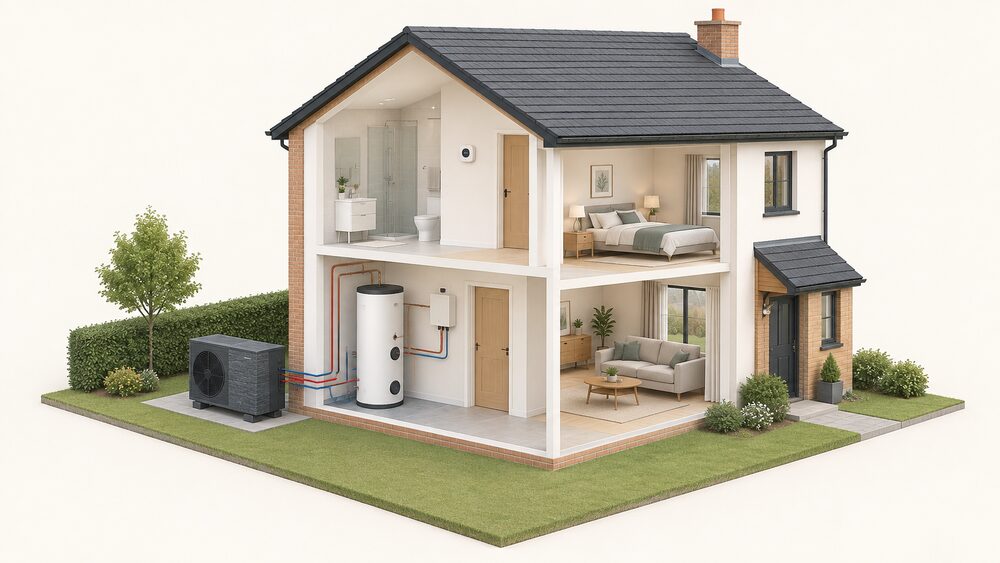 Octopus Energy heat pumps and the Cosy rangeOctopus Energy designs, makes and installs its own heat pumps in the UK, sold as the Cosy 6, Cosy 9 and Cosy 12 with a matching smart tariff, controls and an eight-year warranty on its own-brand units.
 Octopus Energy TariffsWondering what Octopus actually offers, and whether any of it suits your home?
 Octopus EnergyOctopus Energy is the largest electricity supplier in Great Britain and the second largest for gas.
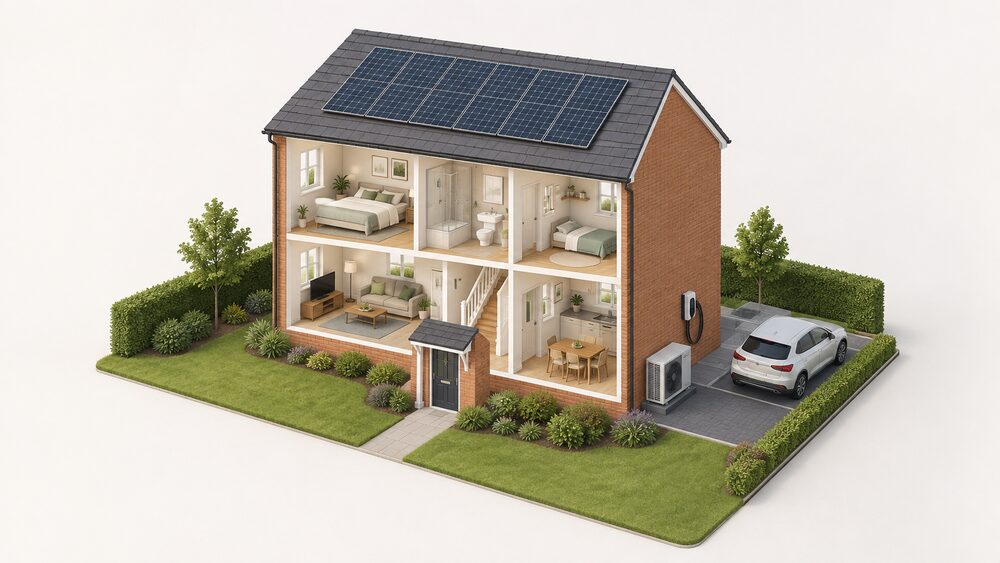 Octopus Energy Installation ServicesOctopus Energy Services installs heat pumps, solar panels and home EV chargepoints, backed by the Electroverse public charging network and smart tariffs.
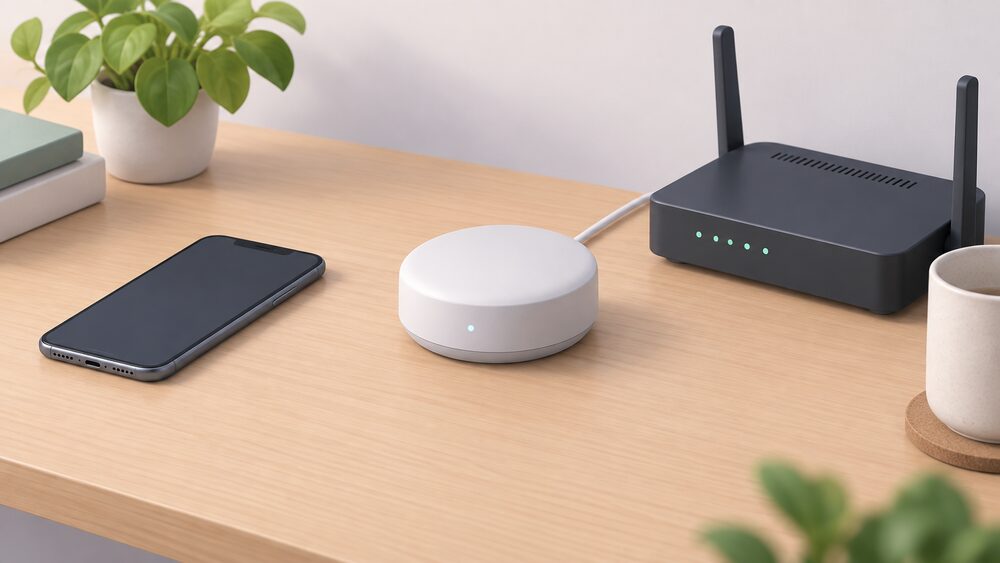 Octopus Home MiniThe Octopus Home Mini is a wi-fi device that pulls smart meter data into the Octopus app and online account every 5 to 15 seconds, giving near real-time electricity and gas visibility to Octopus customers.