
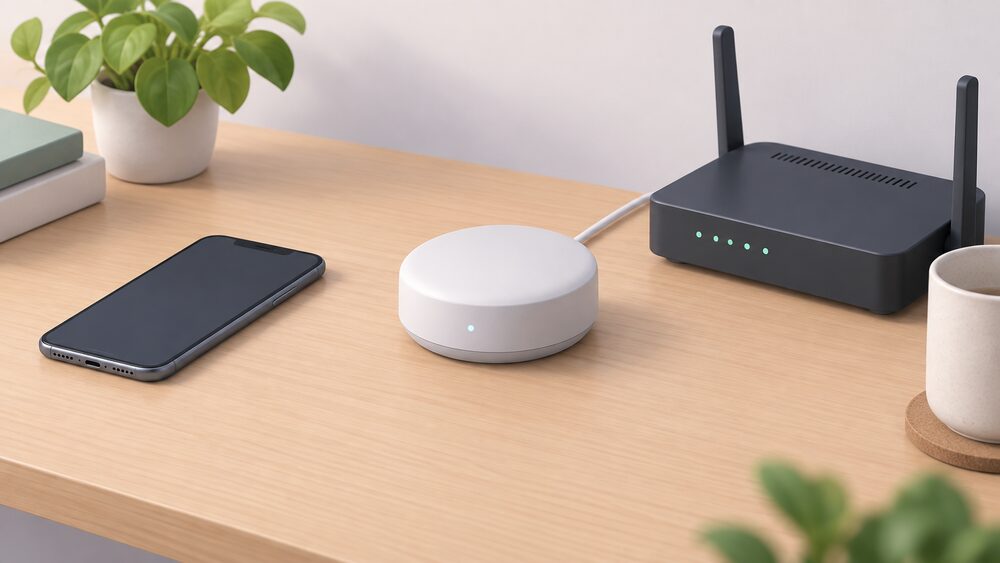
In this guide
The Octopus Home Mini is a small wi-fi device that takes the data already flowing from a smart meter and pushes it into the Octopus Energy app and online account, refreshing every 5 to 15 seconds1. It is not a screen and not a meter: it is a bridge between the meter and the account, and it only works for households supplied by Octopus Energy.
That refresh rate is the headline. A standard in-home display updates electricity every 10 seconds and gas every half an hour2. The Home Mini's 5 to 15 second cycle applies to the app and online account rather than to a separate screen, which is why it is often described as a monitor rather than a display1.
The device is not openly on sale. Independent guidance recorded in January 2026 that there was a waiting list to get a Home Mini1. Availability is therefore controlled by the supplier, not by the household, and the practical question for most people is not what it costs but when they will be offered one.
What the Home Mini is and what it does
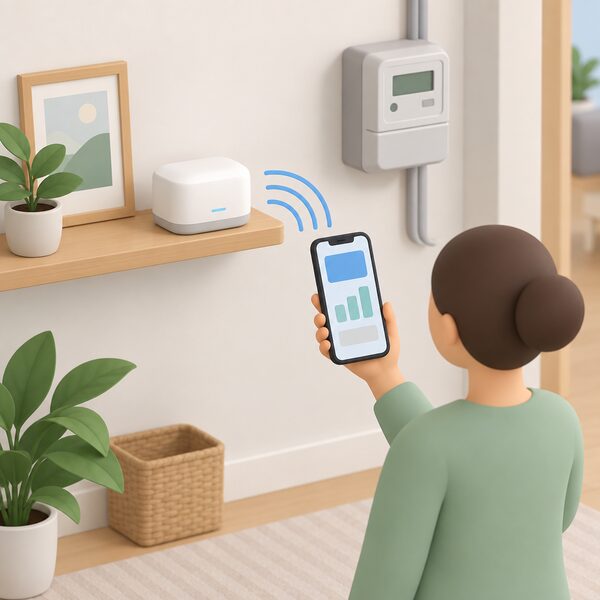
The Home Mini is a consumer access device in all but name. It sits between the smart meter and the Octopus account and relays consumption and cost information to the app and the online account, using wi-fi to transmit that data in a few seconds1. It has no display of its own, so everything a household sees is on a phone, tablet or browser.
That places it in a different category from the in-home display that comes with a smart meter. An in-home display is a small portable screen that shows energy use in pounds and pence in near real time, and it connects wirelessly to the gas and electricity smart meters4. It is offered along with the smart meter, and it cannot record information: it only displays what the meter sends5. The Home Mini does the opposite, holding no screen and pushing data outward to a service.
The wider market for this kind of device is small but established. Wi-fi smart meter monitors are offered by Octopus Energy, Ovo and Utilita2. Other devices in the same family connect wirelessly to the home's smart meter, including the Gateway Connect and the ivie Bud7. What distinguishes the Home Mini is not the hardware category but the refresh rate and the fact that it feeds a supplier's own app.
For a household, the practical effect is that consumption becomes visible at the pace of the meter rather than at the pace of a monthly bill. That is the whole function: no control, no switching, no automation, just a faster and more granular view of what the home is using.
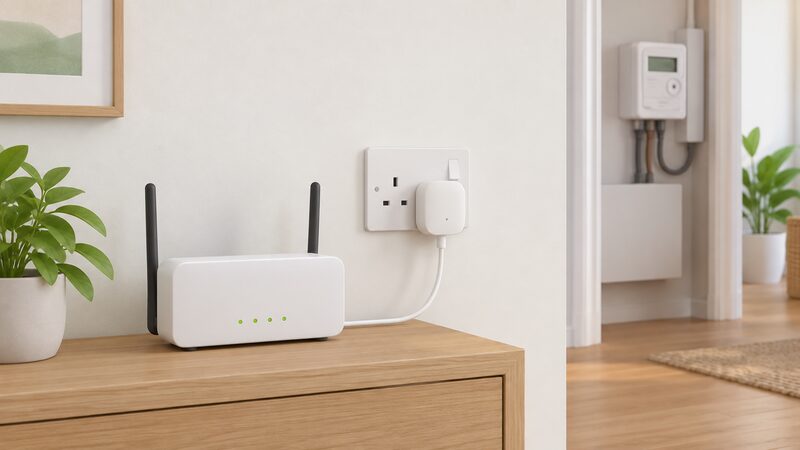
How it connects: wi-fi link to your smart meter
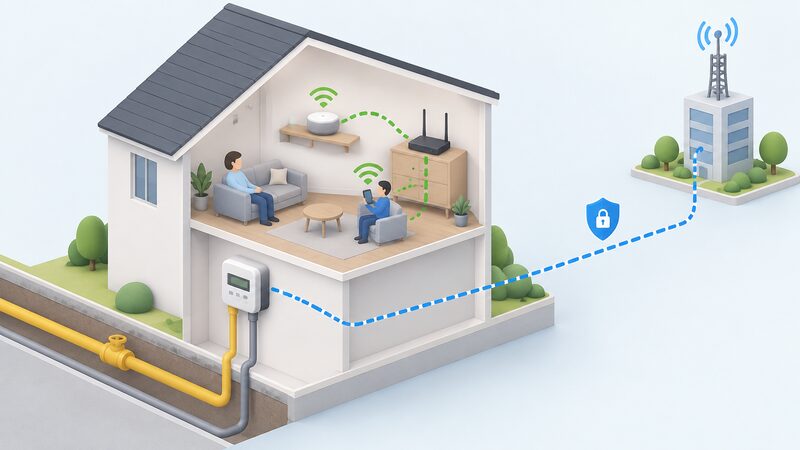
The connection chain has two distinct links, and confusing them is the most common misunderstanding about the device.
The first link is the smart meter's own. Smart meters send readings over a secure smart data network that is solely for smart meters and does not use the internet or home wi-fi9. The meter is connected to the mains electricity supply and the gas pipe going into the home, and it automatically sends usage data to the supplier over that secure network10. Nothing about the Home Mini changes this.
The second link is the Home Mini's. It uses wi-fi to transmit usage and costs to the app and online account in a few seconds1. So the device depends on the home broadband connection, while the meter does not. A weak wi-fi signal where the device sits will affect how reliably data reaches the app, even though the meter itself keeps sending readings to Octopus regardless.
This matters for troubleshooting. If the app stops updating but the bill is still accurate, the fault is in the wi-fi link or the device, not in the meter. If the meter itself stops sending, that is a different problem with a different route: suppliers have obligations here, and the Energy Ombudsman provides an independent service, separate to Ofgem, for problems with an energy supplier, an energy broker, a network operator or a heat network supplier12.
Update frequency: new data every 5 to 15 seconds
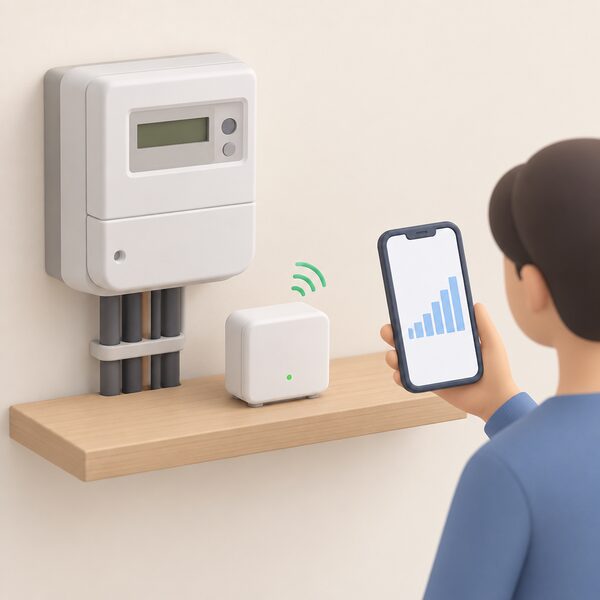
The Home Mini updates the data in the app and online account every 5 to 15 seconds1. That is the figure that separates it from the display supplied with the meter.
| Device | Electricity refresh | Gas refresh |
|---|---|---|
| Octopus Home Mini (app and online account) | 5 to 15 seconds1 | 5 to 15 seconds1 |
| Standard in-home display | every 10 seconds2 | every half an hour2 |
The comparison is not quite like for like, because one is a screen and the other is a data feed, but the underlying meter data is the same. In-home displays update in near real time for electricity and every half hour for gas10. The Home Mini's faster cycle is a function of how it pulls and presents data rather than of the meter reading faster.
What the speed is actually for: catching a single appliance. A kettle, an immersion heater or a tumble dryer shows up as a step change within seconds rather than being averaged away. That is the difference between seeing a monthly total and seeing a behaviour.
The limit is equally clear. Gas data still depends on the meter's own reporting, and the Home Mini cannot make gas visible faster than the meter supplies it. Households on prepayment should also note that the app view is not the same as the meter's own balance display: an in-home display in prepay mode shows the available balance for each fuel and how close the next top-up is13.
What the Home Mini shows in your app and online account
The Home Mini feeds consumption and cost data into the Octopus app and online account1. That is the whole output: usage, cost, and the history that builds up from it.
For context on what a fuller display can carry, an in-home display shows energy consumption in pounds and pence and meter readings, and for prepay customers how much credit is left, when credit is running low and any debt on the account6. In prepay mode it shows the available balance for each fuel and how close the next top-up is13. A prepay in-home display can also show remaining balance, emergency credit, any outstanding debt, current energy costs, electricity and gas usage and historical consumption data9.
One limitation applies to the whole category. An in-home display shows how much energy is being bought from the supplier, not everything generated, and may in future also reflect self-generated energy such as from solar panels9. A household with solar therefore sees import, not generation, unless a separate system monitor is in place. That is a real gap for anyone trying to judge self-consumption.
The Home Mini inherits the same boundary. It is a view of what the meter records, which is what the home draws from the grid. It is not a circuit-level monitor and it cannot separate one appliance from another on its own.
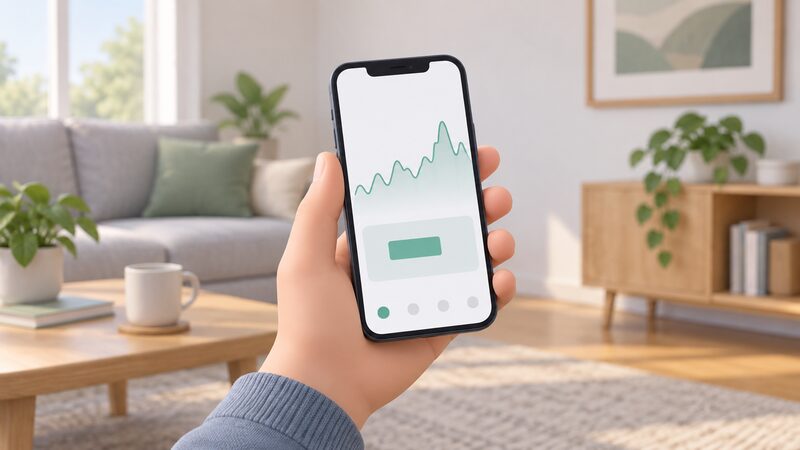
Why the Home Mini matters for household energy independence
The honest answer is that it improves visibility and changes nothing about supply. A Home Mini does not generate a unit of electricity, does not store anything, and does not reduce dependence on the grid or on Octopus Energy. What it does is make consumption legible at a resolution that supports decisions.
That has value where a household is trying to size or justify something else. Understanding how energy efficient a home is and what changes could help reduce energy use is the starting point for any retrofit decision, and a home energy saving tool exists for exactly that purpose14. Near real-time data is the raw material for that judgement: it shows the base load, the peaks and the shape of the day.
The dependence it adds is worth stating plainly. The Home Mini needs home broadband, an Octopus supply account, and the Octopus app and servers. Local visibility at the meter continues without any of that, but the Home Mini's specific function stops. That is a cloud dependence, not a metering one.
For households pursuing genuine independence, the device sits at the diagnostic end of the ladder rather than the supply end. Micro hydro, for example, suits houses with no mains connection but with access to a micro hydro site, where a good system can generate a steady, more reliable electricity supply than other renewable technologies at a lower cost15. A Home Mini tells a household what it uses; it does not change where that comes from.
Availability: why there is a waiting list
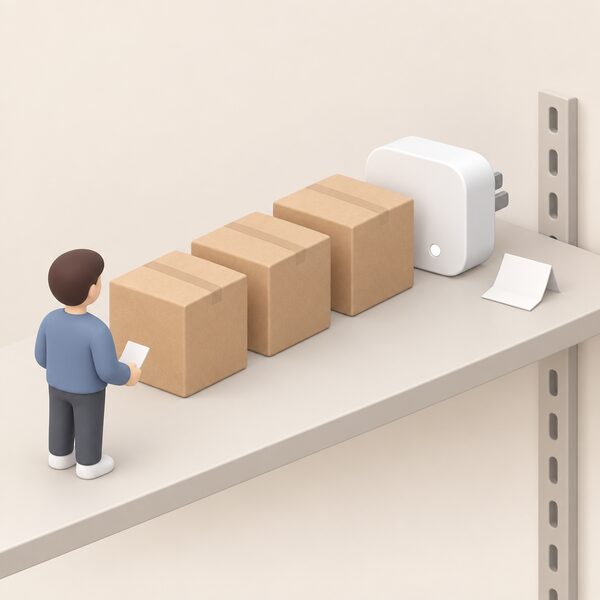
There is a waiting list to get a Home Mini, recorded as of January 20261. The device is distributed by Octopus Energy to its own customers rather than sold through retail, so supply is the constraint rather than price.
Waiting lists of this shape are common in UK energy support schemes, and the mechanics are instructive. Under the Warm Homes: Local Grant, once a local authority's queue is full, any further applications from that area are placed on a waiting list, and if space becomes available applications are invited from the waiting list in the order they were received16. Being in the queue does not guarantee funding, and applications must meet the scheme eligibility16. The Park Homes Warm Home Discount Scheme works on a comparable basis: funding is limited and eligible applications are considered on a first come, first served basis17.
The parallel is not exact, because the Home Mini is a device rather than a grant, but the pattern is the same: limited stock, a queue, and no guarantee of timing. Households should treat any invitation as the point at which availability is confirmed, not before.
How the Home Mini fits with Octopus smart tariffs and flexibility trials
The Home Mini is a monitoring device, not a control device, so it does not itself shift any load. What it does is make the household's own pattern visible, which is the precondition for using a time-of-use tariff well.
Octopus runs a family of smart tariffs that depend on exactly this kind of visibility. Smart EV tariffs work via an app which customers can download18. Several charge points integrate with Octopus and OVO's smart tariffs, including the Ohme Home Pro, which is one of the only chargers that can integrate with both19. The Simpson & Partners Home Series V3 is smart tariff compatible with Octopus Intelligent Go, the Indra Smart LUX is compatible with OVO and Octopus Intelligent Go, and the Wallbox Pulsar Max can make the most of the Intelligent tariff from Octopus although it is not yet compatible with OVO's equivalent19.
A smart meter is the entry condition for most of this. Households need a smart meter to sign up to most, if not all, EV tariffs, because suppliers need to be certain about when charging happens18. The Home Mini sits downstream of that requirement: it is a way of watching what the tariff is doing, not a way of qualifying for it.
The wider flexibility picture is where monitoring feeds into something larger. Octopus's Cosy heat pump system is powered by the company's technology platform Kraken, which the company describes as working seamlessly across the ecosystem20. The Octopus Power Pack enables EVs to charge during off-peak hours and discharge excess energy back to the grid when demand is high, applied for through the Octopus Energy website21. None of these require a Home Mini, but all of them reward a household that knows its own consumption shape.
Where the Home Mini falls short
Three limits are worth setting out before a household builds expectations around the device.
It is supplier-locked. The Home Mini feeds the Octopus app and online account, so it is only useful while the home is supplied by Octopus Energy1. Switching supplier ends its function. Households with other suppliers have separate routes: several suppliers, including E, E.ON Next, Good Energy, Octopus Energy, OVO Energy, Scottish Power, Utilita Energy and Utility Warehouse, will help with in-home displays older than a year4.
It depends on wi-fi and on the manufacturer's service. The device uses wi-fi to transmit data to the app and online account1, so a weak signal degrades the experience even though the meter keeps working. This is the same class of dependence seen elsewhere in home energy devices: the Ohme Home Pro, for instance, relies on 4G data networks for connection19. Cloud-linked monitoring carries a service dependency that a screen on a shelf does not.
It shows import, not generation. An in-home display shows how much energy is being bought from the supplier, not everything generated, and may in future also reflect self-generated energy such as from solar panels9. A household with solar and a battery that wants to see self-consumption needs a system-level monitor rather than a meter feed.
Sources23 cited
- How to use your smart meter data, Which?, 2026
- How to choose the best energy company, Which?, 2026
- Does a smart meter need wi-fi?, Smart DCC, 2026
- Fixing problems with your smart meter's in-home display, Citizens Advice, 2026
- Data access and privacy, Smart Energy GB, 2026
- Understanding smart meters, National Energy Action, 2026
- ivie Bud vs Gateway Connect, ivie, 2026
- How to save energy this winter, ivie, 2026
- Smart Energy GB FAQs, Smart Energy GB, 2025
- What is a smart meter?, Smart Energy GB, 2026
- Smart meters, Welsh Government, 2026
- Complain about your energy supplier or network operator, Ofgem, 2026
- How do smart meters save energy?, Smart DCC, 2026
- Energy bills help, Scope, 2026
- Hydro electricity, Planning Portal, 2026
- Warmer Homes, Greater London Authority, 2026
- Park Homes Warm Home Discount Scheme, House of Commons Library, 2026
- Octopus EV energy tariffs, Uswitch, 2025
- Home electric vehicle chargers, Carwow, 2026
- Octopus launches its new heat pump Cosy 6, Flexi-Orb, 2023
- Vehicle-to-grid charging, Uswitch, 2025
- Smart meters, Energy Ombudsman, 2026
- Smart meters: your rights and expectations, GOV.UK, 2025
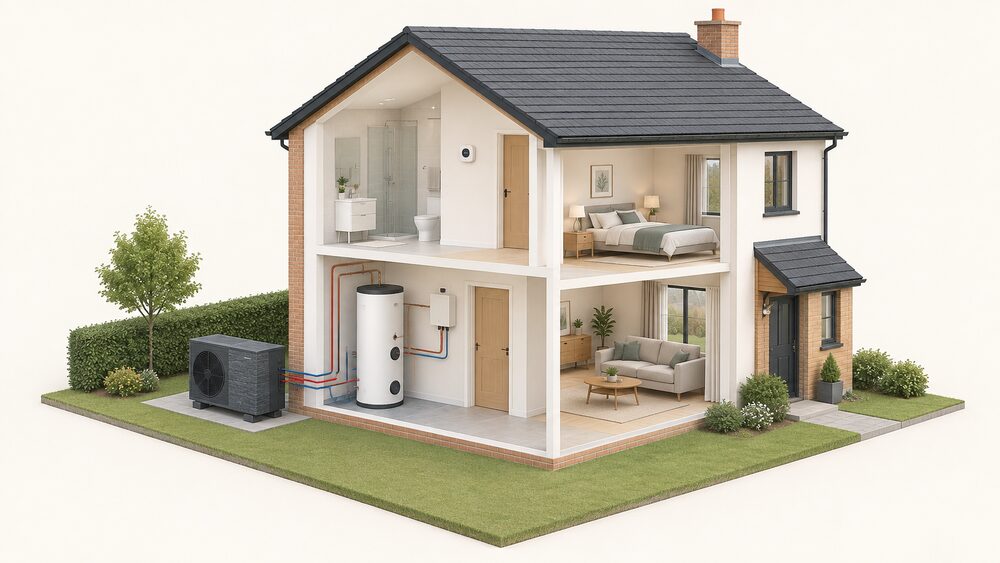 Octopus Energy heat pumps and the Cosy rangeOctopus Energy designs, makes and installs its own heat pumps in the UK, sold as the Cosy 6, Cosy 9 and Cosy 12 with a matching smart tariff, controls and an eight-year warranty on its own-brand units.
 Octopus Energy TariffsWondering what Octopus actually offers, and whether any of it suits your home?
 Octopus EnergyOctopus Energy is the largest electricity supplier in Great Britain and the second largest for gas.
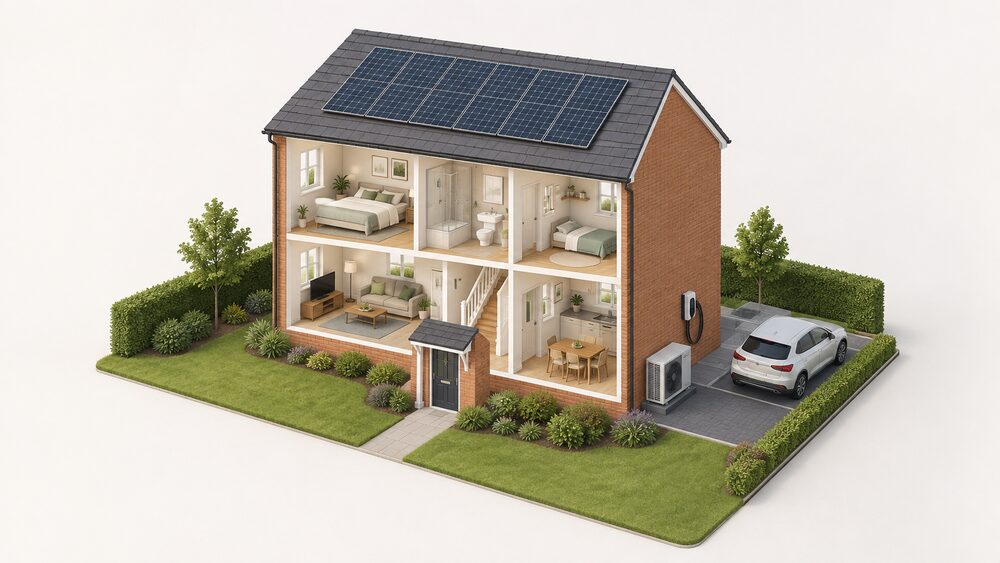 Octopus Energy Installation ServicesOctopus Energy Services installs heat pumps, solar panels and home EV chargepoints, backed by the Electroverse public charging network and smart tariffs.
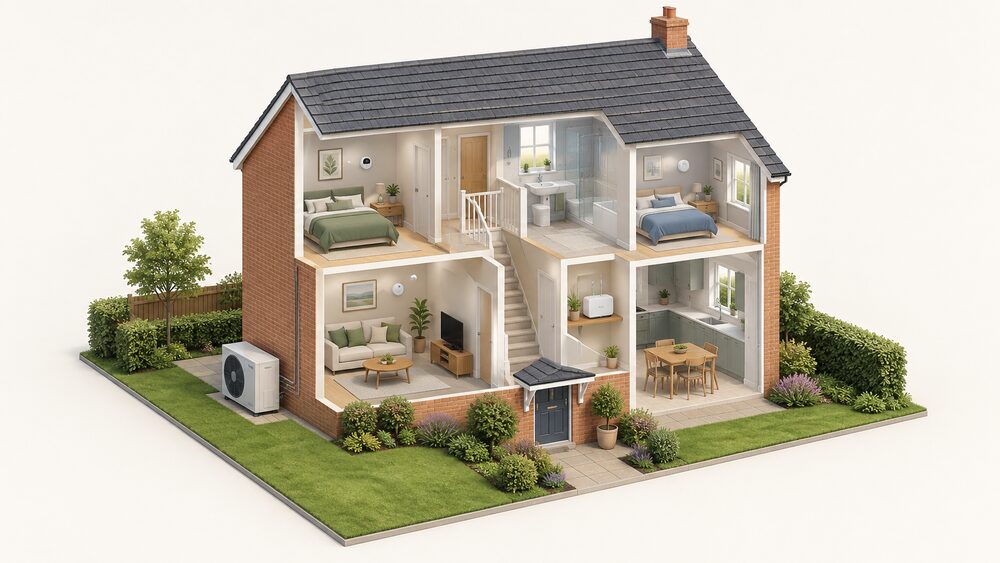 Octopus Cosy heat pumpsThe Octopus Cosy range explained: Cosy 6 output, what the package includes, which homes it suits, running costs on the Cosy tariff, Hush Mode and the Care Plan.