
In this guide
Base load is the electricity a home draws continuously, whether or not anything is switched on. It is the router, the pump, the charger left in the socket, the adapter that never sleeps. It runs at three in the morning, in an empty house, in August. Nothing on a normal bill separates it out, which is why it is so often missed, and why it matters so much to anyone thinking about generating their own power.
The reason it matters is arithmetic. A base load of a few hundred watts, running every hour of every day, adds up to a large share of a household's annual consumption, and it is the part of demand that no amount of daytime solar can cover. The average home uses between 8kWh and 10kWh of electricity per day1, and a constant draw sits underneath all of it. An independent system has to be sized for that floor, and a battery has to carry it through the night.
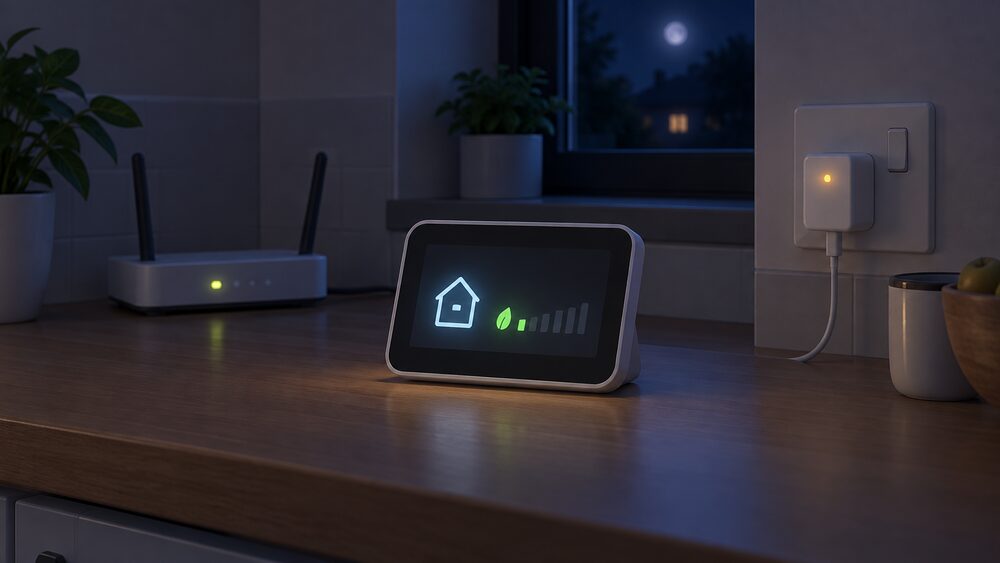
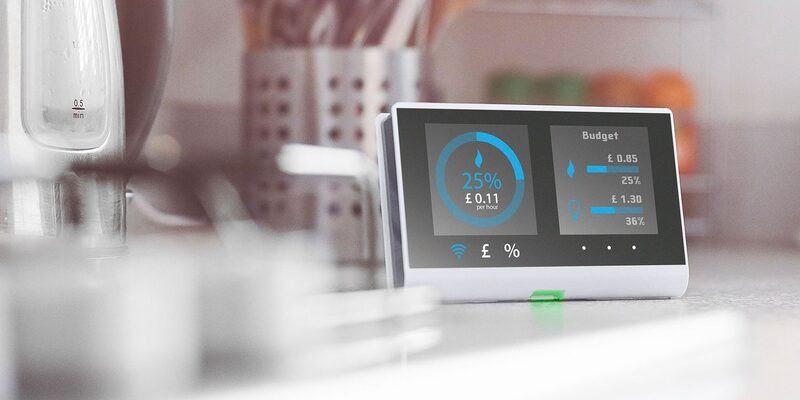
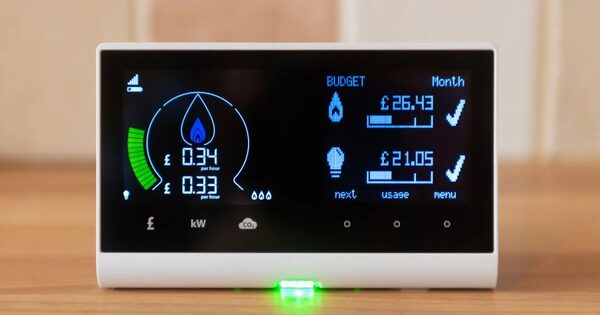
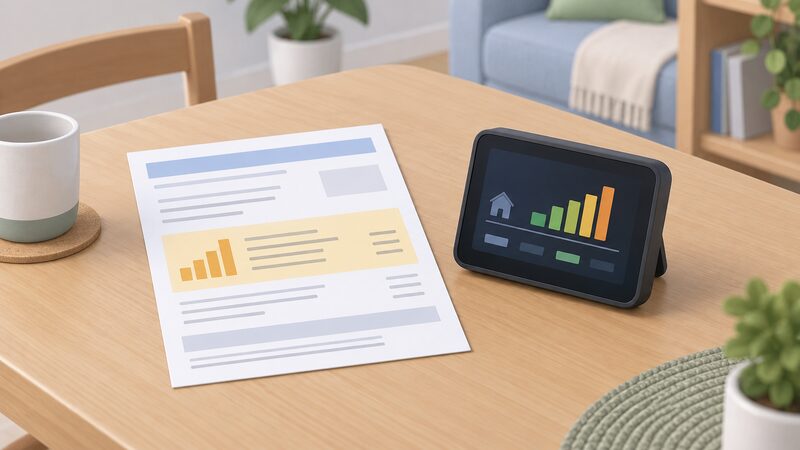
A smart meter's in-home display is the simplest way to see it. The display shows how much energy you are using during the day, and the meter sends readings to your supplier automatically, so the information exists whether or not you go looking for it. What follows is how to read the base load, what typically causes it, and what it means for a home trying to stand on its own.
What base load is: the always-on draw your home never switches off
Base load is the part of a household's electricity use that does not respond to anyone being at home, awake, or cold. It is continuous, it is invisible on a monthly bill, and it is the first thing to understand before sizing any independent system, because it is the demand that must be met at every hour of the year, including the hours when nothing else is running.
The official statistics frame the scale of household electricity in general. The National Energy Efficiency Data Framework covers homes with a recorded annual electricity consumption in the range of 100 to 25,000 kWh, a span that runs from a very light user to a large, all-electric property3. The figure used for bill values is 2,700 kWh of electricity for a medium-consumption household, alongside 11,500 kWh of gas2. Those are totals, not base loads, but they set the context: a continuous draw of a few hundred watts is a meaningful slice of a 2,700 kWh year.
What none of these datasets does is isolate the always-on component. That has to be found in the home, from the meter. The in-home display shows how much energy you are using during the day, and the same screen overnight shows the floor1.
For a household aiming at independence, the base load is the hard floor of demand. Generation and storage are sized against it, and it is the one load that cannot be shifted to a sunny hour or a cheap tariff window. Cutting it reduces the size of everything downstream: fewer panels, a smaller battery, less reliance on the grid at night. That is why the order of investigation starts here rather than with generation.
Typical magnitude: a constant draw of a few hundred watts, even at night
A base load of a few hundred watts is ordinary, and it is worth being precise about what that means over a year. The average home uses between 8kWh and 10kWh of electricity per day1, and a medium-consumption household is billed on 2,700kWh of electricity a year2. A constant draw of a few hundred watts is a standing slice of both figures, present whether or not anyone is at home. The difference between a well-managed base load and a neglected one is the difference between a small battery and a large one.
The official consumption range of 100 to 25,000 kWh a year across homes shows how widely households vary3. Some of that spread is heating and hot water, some is the size of the property, and some is the accumulation of always-on devices. A home at the bottom of that range has almost no base load to speak of; a home at the top has a great deal, and it is usually not one large item but dozens of small ones.
| Figure | Value | What it covers |
|---|---|---|
| Daily electricity use, average home | 8 to 10 kWh1 | All uses, not just the always-on draw |
| Annual electricity, medium-consumption household | 2,700 kWh2 | The figure used for bill values |
| Annual gas, medium-consumption household | 11,500 kWh2 | Heating and hot water |
| Annual electricity range across homes | 100 to 25,000 kWh3 | Light user to large all-electric property |
For an independent system, the base load is what the battery must cover every night of the year. A constant draw of a few hundred watts, running from, say, 6pm to 8am, has to come from somewhere: stored solar, a cheap overnight tariff, or the grid. In winter, when generation is low, that overnight demand is the part most likely to be met by import. The winter gap is largely a base load problem.
It is also worth noting that electricity consumption is less affected by the weather than gas, which is why the official statistics do not weather-correct it3. Base load is steady by nature. That steadiness is what makes it predictable, and predictability is what makes it worth measuring before anything is bought.
What causes it: routers, pumps, chargers and adapters that never sleep
The causes are mundane and cumulative. A router runs all night. A central heating pump runs whenever the system calls for heat, and some run continuously. Phone chargers, laptop adapters, smart speakers, set-top boxes, doorbells, alarm panels and broadband equipment all draw a little, all the time. None of them is large; together they are the floor of the household's demand.
The usual list, roughly in order of size:
- Heating pumps and controls, which run whenever the system calls for heat and are the largest and least obvious item.
- Broadband and entertainment equipment, on permanently by design: router, set-top boxes, smart speakers.
- Chargers and adapters, which draw in many cases even with nothing attached.
- Standby lights and small always-on devices, tiny individually and numerous collectively.
Charging behaviour is part of it, and there is a safety dimension as well as an energy one. Official fire service guidance is explicit: do not charge devices overnight when anyone is asleep, and do not leave them on charge when you have left the home7. That advice is about lithium-ion battery risk, but it also points at a category of load that runs unattended for hours.
Not every household can flatten its load, and the reasons are not lifestyle choices. People with children, shift workers, and households with medical devices may need to consume electricity at peak times8. A home with a medical device running overnight has a base load that cannot be moved, and any plan for independence has to treat it as fixed demand rather than waste.
The practical point is that base load is rarely one culprit. It is a list, and the list is discovered by switching things off and watching the display. Each item is small. The total is what sets the size of the system.
Finding your base load with a smart meter's in-home display
The in-home display is the tool for this, and it is the reason a smart meter is useful to a household even though it saves nothing by itself. The display shows how much energy you are using during the day, and the same reading at two in the morning, with the house quiet, is the base load1. Welsh Government guidance describes the display as helping households monitor and manage consumption efficiently9.
The method is simple and needs no equipment beyond what is already installed:
- Take a reading at a moment when nothing is running: late at night, or before anyone is up.
- Note the figure.
- Switch off a circuit or unplug a group of devices and take another reading.
- The difference is what that group draws. Repeat across the house and the base load resolves into its parts.
The meter records energy use automatically in half-hour periods, so the pattern is there in the data as well as on the screen6. Readings reach the supplier automatically, and the household does not need to submit meter readings itself5. That matters for this exercise because it means the overnight data exists whether or not anyone is watching. A household that wants to see its own base load over weeks rather than minutes can ask its supplier for the half-hourly data, or read it from the display each morning.
For a home planning independence, the in-home display is the cheapest audit available. It costs nothing to install, it shows the load in real time, and it turns a vague sense that "something is always on" into a number that can be sized against. The self-consumption calculation starts from the same figure: how much of the home's demand can its own generation meet, and how much runs when generation is zero.
How readings reach your supplier: the DCC network, with no Wi-Fi needed
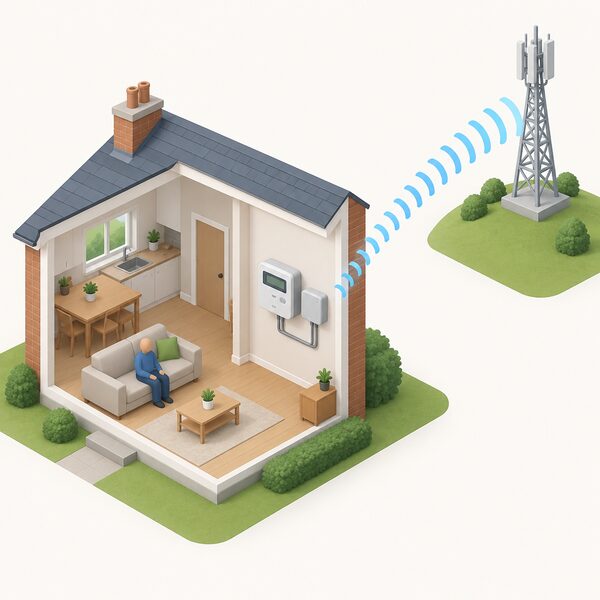
A smart meter does not use the home's broadband. It does not need, or connect to, the public internet or your home Wi-Fi6. Readings are transmitted automatically to the in-home display and to the energy supplier using the DCC's smart energy network, a separate communications system built for metering6. That is a meaningful point for a household running its own generation and storage: the meter keeps reporting whether or not the router is on.
The network is operated by the Data Communications Company, and energy suppliers liaise with it to resolve some communications issues11. The DCC does not store consumer data and can only decrypt and access data with consent12. It can only access energy consumption data with explicit permission12. The network is also being extended: 4G cellular communication hubs are being installed and connected nationwide to offer a further way to reach it6.
The 3G switch-off, which retired older mobile technology, was assessed as having no customer impact and minimal overall service impact, because the DCC network is a relatively low data network13. That is the technical reason smart metering survived a mobile network change that affected other connected devices. For a household, the practical upshot is that the meter's connection is not dependent on the home's own connectivity, and not dependent on the household remembering to do anything.
Where the connection does fail, the consequences are visible. A meter that loses connection with the supplier, loses connection after a change of supplier, or was installed without being connected to the national communication system will not operate in smart mode14. Not all first-generation meters connect to the central wireless network, called the Data Communication Company (DCC)12. That is the reason older installations behave differently from newer ones.
A smart meter won't save money by itself: how to actually cut the base load
The clearest statement of what a smart meter does and does not do comes from the network itself: it ensures you only pay for the energy you have used, not the approximate costs of an estimated bill4. That is a billing improvement, not a saving. The same source is blunt about the limits: except by switching, you do not control the tariff your energy supplier sets, but you can change how much energy you use4.
Cutting the base load is therefore a household action, informed by the meter. The order that follows from the causes is: find the floor, then work down the list. Heating pumps and controls, because they are the largest and often run when nobody is thinking about them. Broadband and entertainment equipment, which is on permanently by design. Chargers and adapters, which can be unplugged when not in use. Standby lights, which are small individually and numerous collectively.
The information to do this comes from the display and from the supplier's data. A smart meter can help a household find ways to save money using up-to-date information on its energy use1. The data it provides puts households in control of their energy usage, so they can take energy-saving steps15. That is the mechanism: measurement, then action. The meter does not act.
For independence, the payoff is direct. Every watt removed from the base load is a watt the battery does not have to carry, a watt the panels do not have to replace, and a watt not imported at night. A home that cuts its continuous draw from 300 watts to 150 watts halves the hardest part of its demand to serve. That is a bigger change to system sizing than most generation upgrades.
Tariffs that reward a flatter load: dual-rate and time-of-use deals
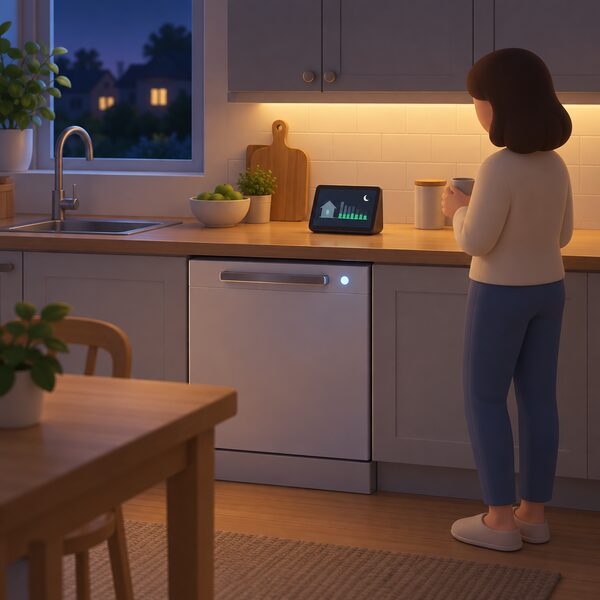
A smart meter gives access to more flexible tariffs, including dual-rate tariffs1. Time-of-use tariffs encourage use of energy outside peak times, with lower energy costs as a result16. For a household with a base load, this is the one lever that turns an unavoidable continuous draw into a cheaper one, by moving whatever can be moved into the low-price window and leaving the rest.
The distinction matters. A base load that cannot be shifted, such as a medical device or a router, still has to be served, but it can be served at the price of the hour it runs in. A base load that can be shifted, such as a dishwasher or a washing machine, becomes a flexible load and stops being part of the floor. The best apps for cheap electricity exist to show when those windows fall.
Not every household can take advantage of this. People with children, shift workers, and households with medical devices may need to consume electricity at peak times8. A time-of-use tariff that rewards avoidance of peak hours is worth less to a household that cannot avoid them. That is a fairness point as much as a technical one, and it is why the base load has to be understood before a tariff is chosen.
For a home with its own generation and storage, the tariff and the base load interact. A battery can be charged in a cheap window and discharged through the expensive hours, covering the base load without drawing from the grid at peak price. The home battery versus hot water tank comparison turns on exactly this: which store is better at carrying a steady overnight load. The smaller the base load, the less storage is needed to do it.
Where a smart meter falls short: lost connections, estimated bills and smart mode after switching
Smart meters fail in specific, documented ways, and a household relying on one for its own energy data should know them. A meter may stop recording the energy you use, or may no longer send readings to your supplier10. It may not operate in smart mode because it has lost connection with the supplier, lost connection after a change of supplier, or was installed without being connected to the national communication system14.
Switching supplier is the most common trigger. A meter may not work in smart mode when you move to a new supplier, and you may need to take meter readings manually and submit them instead. First-generation SMETS1 meters do not always allow the consumer to change energy supplier without losing the ability to send meter readings automatically17. The good news is that the condition is often temporary: a meter may work in smart mode again if you change tariffs or suppliers.
The consumer position on replacement is narrow. Only under exceptional circumstances would a supplier be expected to change a smart meter to a traditional meter, and the supplier may charge the costs if it agrees18. So a household that finds its meter has dropped out of smart mode should expect a repair or a reconnection, not a swap back. The Energy Ombudsman handles disputes that suppliers do not resolve, and energy suppliers need to liaise with the DCC to resolve some communications issues11.
For base load work, the practical consequence is that the data can go missing. A household that has been reading its overnight figure from the display may find the display stops updating, or the supplier starts billing on estimates. The remedy is to keep a manual record during any gap, and to treat a sudden change in the overnight figure as a possible meter fault rather than a change in behaviour.
Cost, consent and data: free to install, your choice, and who sees your readings
Installation is free for UK energy customers4. The meter is the supplier's equipment, provided under the supply arrangement, and the household does not buy it. That is why the cost of a smart meter does not appear as a line on a bill, and why the decision to have one is a decision about service rather than purchase.
The data position is more layered than the price. Personal information such as your name, address and bank details is not stored on your smart meter19. The DCC does not store consumer data and can only decrypt and access data with consent12, and it can only access energy consumption data with explicit permission12. What the data is used for is set out plainly: to bill you for the energy you use, to offer new products and services such as new tariffs if you have given permission, and to help make the energy system more efficient by recording demand more accurately10.
For a household pursuing independence, the data question is really a question about who can see the pattern of its demand. Half-hourly readings reveal when a home is occupied, when it is empty, and how much it draws at night. That is the same information a household needs to cut its base load, and it is also commercially useful to suppliers. The consent framework is what governs the difference, and it is worth knowing that the meter itself holds no personal details.
Billing accuracy is the other side of it. A smart meter gives bills based on accurate meter readings and not estimates1, and the household does not need to submit meter readings itself10. Ofgem sets out what a domestic energy bill should contain, including usage, previous usage, tariff, balance, charges and payment date20. A household checking its base load over time is really checking its usage line against its own records, and the bill is where that comparison is made.
What base load means for a home trying to stand on its own
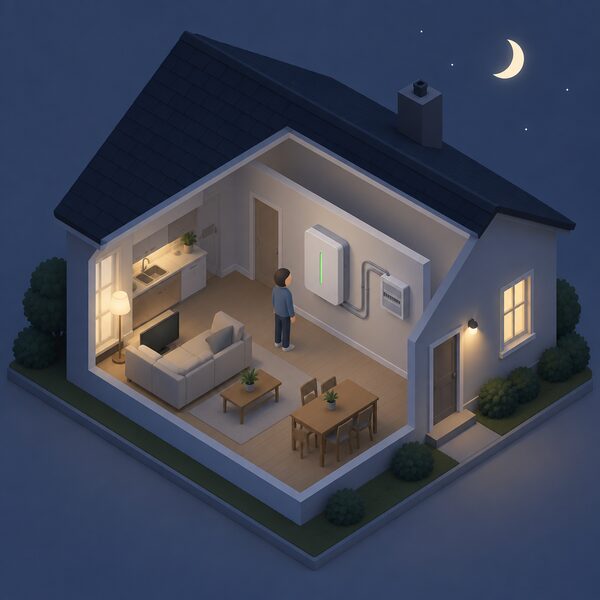
The base load is the part of a household's demand that independence has to solve first, because it is the part that cannot be timed, shifted or generated on demand. Everything else, heating, hot water, cooking, charging, can be moved to a sunny hour or a cheap window. The floor cannot. It runs at night, in winter, when the panels are producing nothing.
That is why the order of work runs from measurement to reduction to sizing, not the other way round. A home that measures its base load, cuts what can be cut, and then sizes generation and storage against the remainder will need less of both. A home that buys generation first and discovers its base load afterwards will find the system undersized for the hours that matter most. The whole-home energy system design process starts from the same principle.
The dependence that remains is worth stating plainly. A smart meter is a grid device: it measures the connection to the network, and it depends on the network to report. A household that cuts its base load still draws from the grid at night unless it has storage, and still relies on a supplier for billing and for the meter itself. What changes is the size of that reliance. A lower base load is a smaller import, a smaller battery, and a shorter winter gap.
The measurement itself is free and already installed in many homes. The in-home display shows the figure, the meter records it in half-hour periods, and the supplier holds the history. For a household thinking about going off-grid, the base load is the number that decides whether that is a small system or a very large one. It is the first figure to find, and the one that changes the most when it is acted on.
Sources20 cited
- Getting a smart meter, Ofgem, 2026
- Summary of changes to the energy price cap, 1 October to 31 December 2025, Ofgem, 2025
- National Energy Efficiency Data Framework: NEED report summary of analysis 2026, GOV.UK, 2026
- Does a smart meter save money?, Smart DCC, 2026
- How do smart meters save energy?, Smart DCC, 2026
- Does a smart meter need Wi-Fi?, Smart DCC, 2026
- Lithium-ion batteries, North Wales Fire and Rescue Service, 2026
- Research briefing on peak electricity demand, Parliamentary Office of Science and Technology, 2026
- Smart meters, Welsh Government, 2026
- Get help with your smart meter, Ofgem, 2026
- Energy Ombudsman FAQs, Energy Ombudsman, 2026
- Data protection and smart meter data, Open Energy, 2026
- Do smart meters use 3G?, Smart DCC, 2024
- Smart meter performance, Ofgem, 2026
- Smart meters and decarbonisation, Smart DCC, 2026
- How to ensure a heat pump runs efficiently, Energy Saving Trust, 2026
- How to get a smart meter, Smart DCC, 2026
- Smart meters, Energy Ombudsman, 2026
- Protecting data on the smart meter network, Smart DCC, 2026
- Understand your electricity and gas bills, Ofgem, 2026
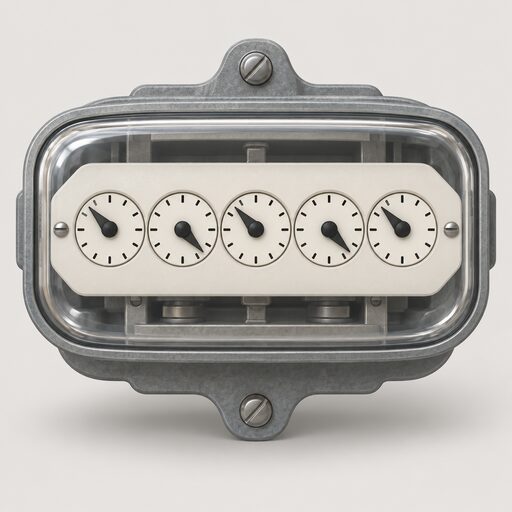 Meter Readings and EstimatesWhy is my energy bill estimated, and how often should my meter be read?
 In-Home DisplaysWhat does the little screen that came with a smart meter actually tell you, and what can you do when it stops working?
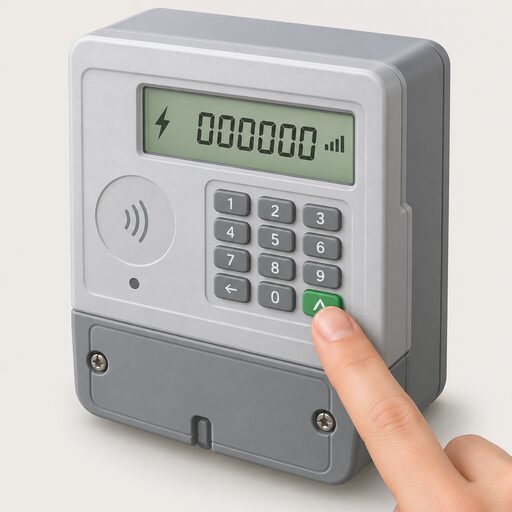 Get a Reading From a Smart MeterHow to bring up a meter reading on a smart electricity or gas meter when a manual reading is still needed, and the difference between the meter itself and the in-home display.
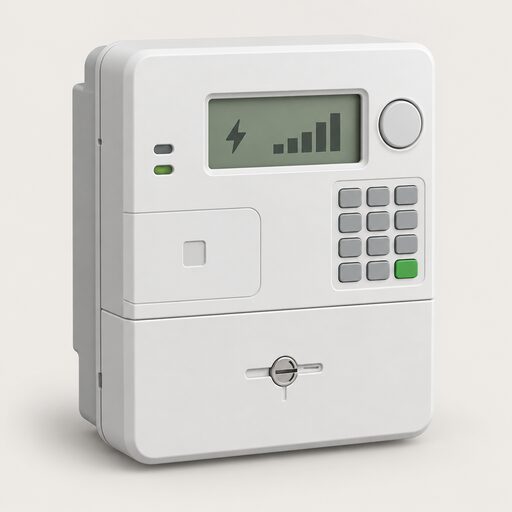 Who Owns Your Home Energy DataYour smart meter records how much gas and electricity you use, and that information belongs to you, not your supplier.
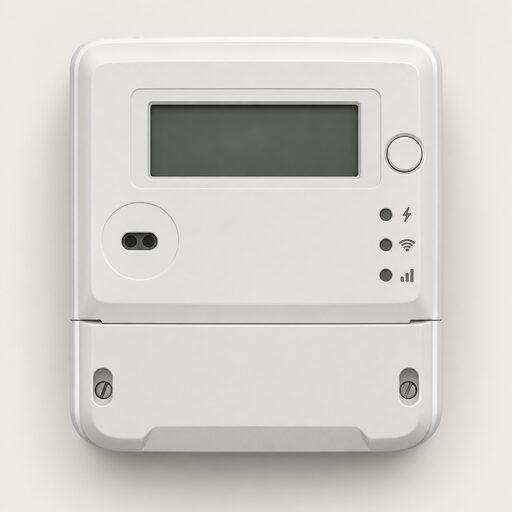 Smart Meter Faults and FixesYour smart meter has stopped working.
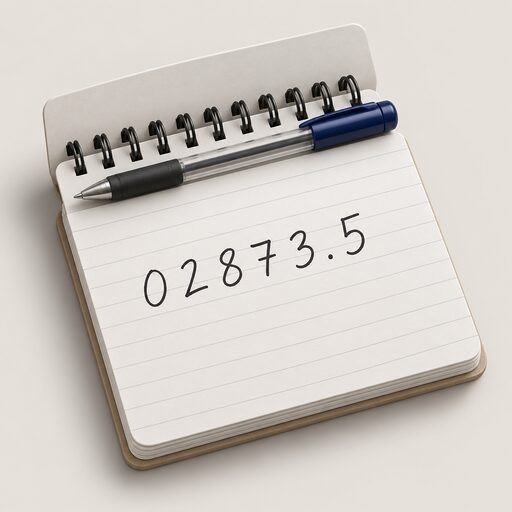 Take a Meter ReadingWhich numbers do you actually read on a gas or electricity meter, and which ones do you ignore?