
In this guide
A household that depends on electricity to run medical equipment, or that needs a warmer home because of a health condition, has two separate problems to solve. The first is practical: keeping the supply on, and knowing what happens when it fails. The second is financial: the running cost of equipment, heating and lighting that a healthy household does not carry.
The main free route for the first problem is the Priority Services Register. It provides free services including regular personal meter readings, advanced warnings of power cuts, priority support in an emergency, and accessible information1. It is a free service, and it does not change who supplies your energy2. In Northern Ireland the equivalent structures are the Customer Care Register, which all electricity and gas suppliers must keep, and the Critical Care Register operated by NIE Networks and NI Water3.
The financial side is more fragmented. Support comes through the benefits system, council-run grant schemes, energy company trusts and charity advice services, and eligibility varies by nation. One figure sets the scale of the gap: the Department for Energy Security and Net Zero estimates that 2.4 million households, some 28% of those estimated eligible for the Warm Home Discount, might not be data matched4.
The Priority Services Register: free support for households using medical equipment
The Priority Services Register is the single most useful thing a medically dependent household can be on, and it costs nothing. Ofgem's own description of the free services is specific: assistance for customers who struggle to read their meters, passwords so that customers can safely identify representatives who visit, and advance warning of power cuts and information on help available during emergencies7. Parliamentary briefing material adds regular personal meter readings, which may help stop large backlog bills building up, alongside the same warnings and accessible information8.
The register is not one list. Each supplier and network operator keeps its own register, so a household that wants both supply-side and network-side support needs to be on more than one9. That matters because the two halves do different jobs. The supplier side covers billing formats, meter access and password arrangements. The network side, run by the electricity distribution network operators, covers advance notice of power cuts and information on any help available during emergencies1.
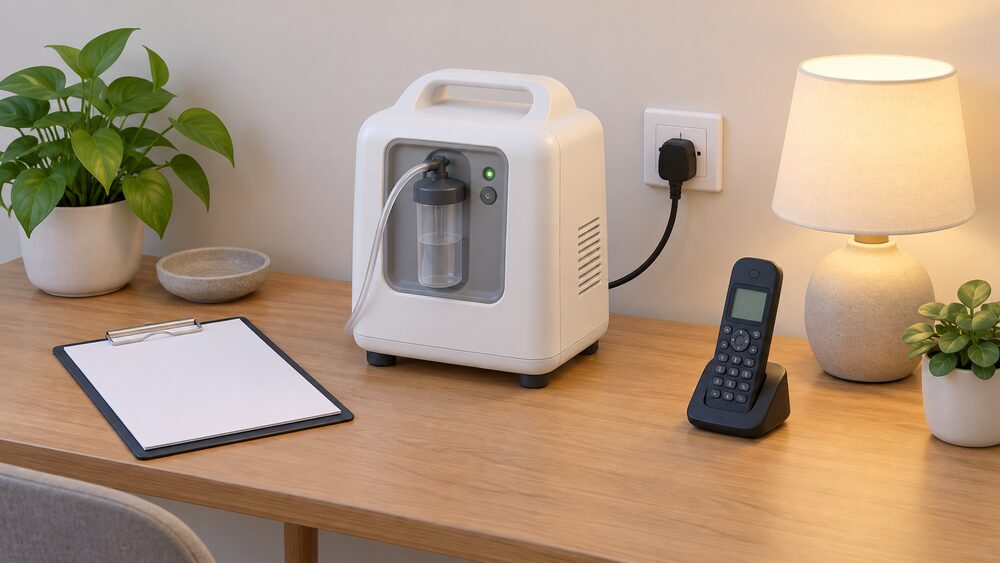
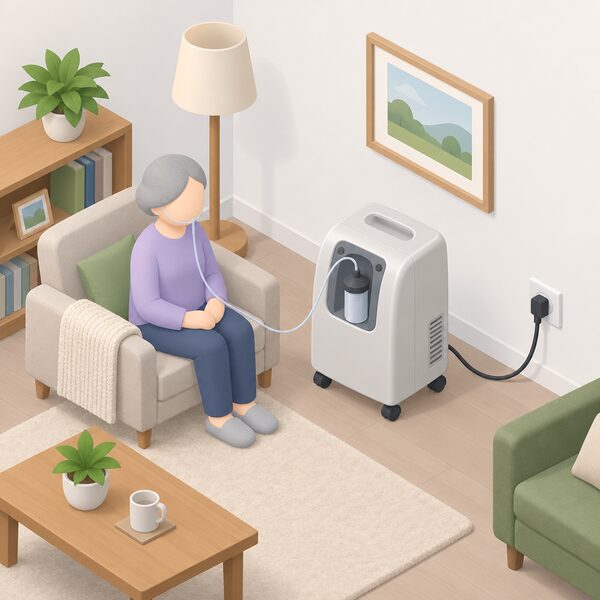
For a household running an oxygen concentrator, a home dialysis machine or a vital signs monitor, the network half is the one that matters during a storm. The practical support available during an outage is not limited to warnings: someone could be sent to check on the household, or hot meals could be provided10. The Met Office advises households that depend on electricity for medical equipment to contact their distribution network operator at any time, because the operator may be able to add them to its Priority Register for assistance during any power outage2.
The register also carries a safety function that is easy to overlook. A password arrangement means a household can verify that someone at the door is genuinely a representative, which matters for anyone who is housebound, hard of hearing or living with a cognitive impairment. Large print or braille billing, or bills sent to another person, is available for households where reading a standard bill is difficult10.
What the register does not do is alter the physical reality of the network. It prioritises contact and information, not electrons. A household on the register still loses power in a cut, and still needs a plan for what happens to equipment in the interval.
Who qualifies: disability, health needs and medical equipment reliance
Eligibility is broader than many households assume, and it is framed around need rather than diagnosis. The Met Office states the register is for older and disabled people, or for anyone who depends on electricity to keep medical or mobility equipment running2. Council guidance in Wales puts it in similar terms: a resident with a disability, a health condition, a pensioner, a household with a child under 5, or a pregnant resident can get help11.
In Northern Ireland the statutory framing is narrower and older in style. All electricity and gas suppliers in Northern Ireland must keep a Customer Care Register with the details and special needs of customers who are of pensionable age, disabled by virtue of being blind, partially sighted, deaf or hearing impaired, or chronically sick3. Separately, NIE Networks and NI Water operate a Critical Care Register, and for electricity customers this covers medical equipment such as oxygen concentrators, patient vital signs monitoring systems and home dialysis3. Adding details to that register allows the two utilities to prioritise contact details if the supply goes off3.
There is a second layer of qualification that runs through the grant system rather than the register. ECO4 Flex routes allow a local authority or NHS referral where a home houses a person suffering from severe or long term ill health from a cardiovascular condition, respiratory disease, immunosuppression or limited mobility, and their health is adversely affected by living in a cold home12. That is a health-based route into energy efficiency funding, distinct from the register's warning and communication function.
Disability benefit receipt opens other doors. The Home Heating Oil Support Scheme in Northern Ireland covers households in receipt of disability benefit, including Disability Living Allowance, Personal Independence Payment, Attendance Allowance, Armed Forces Independence Payment, and the Constant Attendance Allowance elements of the Industrial Injuries Disablement Benefit and the War Pension Scheme13. The same scheme's qualifying benefits list also includes Pension Credit, Universal Credit and income-related Employment and Support Allowance14.
What the register provides: Power Cut Plans, early warning and tailored communication
The services fall into three groups: warning, communication and practical help. Warning covers advance notice of planned power cuts, for example when engineering work is scheduled, and advance notice of unplanned cuts with information on help available during emergencies10. Communication covers bills in large print or braille, bills sent to another person, and a password or picture ID so engineers can be identified at the door10. Practical help covers moving a prepayment meter for a household that struggles to reach it, making calls a priority when the household contacts the supplier, sending someone to check the meter regularly, and helping reconnect a gas supply10.
Power Cut Plans sit within this. They have been provided to people who sign up for Priority Services since early 20251. The plan is a written record of what the household needs and who to contact, prepared with the network operator rather than the supplier.
The 105 power cut number is the route into the network side during an outage. The electricity network operators introduced it to give an easy to remember number that puts a caller through to the local people who can help during a power cut2. For a household with a Power Cut Plan, that is the number the plan will point to.
Scale matters here, because the register is not a niche service. One distribution network operator, SSEN, announced in February 2025 that its Priority Services Register had signed up its one millionth customer1. During Storm Éowyn in January 2025, its Priority Services team supported vulnerable customers across its north of Scotland and central southern England licence areas1. The same operator began a partnership with Asthma + Lung UK in December 2025 to raise awareness of free Priority Services support for people with lung illnesses during power cuts1.
The register's value is therefore concentrated in the hours that matter most. It does not prevent an outage, but it shortens the period in which a household does not know what is happening or who to ask.
What the register does not do: no faster reconnection and no change to your supplier
Two expectations need correcting firmly, because both are common and both are wrong.
The first is that registration speeds up reconnection. It does not. The register prioritises contact, information and welfare checks, not the physical restoration of supply. The support available during a cut is a visit to check on the household or hot meals, not a place at the front of the queue10. A household that needs continuity of supply for medical reasons should plan on the basis that the supply will be off for as long as the network takes to repair it.
The second is that the register changes anything about the commercial relationship. It is a free service, and it does not change who supplies your energy2. Registration is not a tariff, not a discount and not a contract.
There is a related protection worth knowing about, which sits outside the register but applies to the same households. Energy suppliers must not install a prepayment meter without household permission if there are any vulnerable people in the household, including terminal illness or severe health condition, dependence on a continuous energy supply for medical equipment, everyone aged 75 or over with no support, a child under 2, no one able to top up due to a physical or mental health condition, or temporary circumstances such as pregnancy or bereavement15. That is a prohibition on the supplier, not a service to apply for.
The National Energy System Operator, which runs the electricity system, states plainly that it does not connect directly to homes or other domestic properties16. Households sometimes approach it expecting domestic support. The correct route for a domestic connection issue is the local distribution network operator, reached through 105 during a cut.
How to register: online, by phone or by post, including on behalf of someone else
Registration is deliberately low-friction, and it can be done by someone else on a householder's behalf. The route is to contact your energy supplier or network operator to be added, because each supplier and operator keeps its own register9. There is no central national list, so a household that wants full coverage registers with both its supplier and its distribution network operator.
The channels available across the support landscape are broad. The Energy Ombudsman, for example, accepts dispute registrations via website, telephone, email or post17. The Energy Bills Support Scheme Alternative Funding, which used a similar application model, allowed applications by completing a form on GOV.UK or by calling 08081 753 287 for those who could not apply online18. The Home Heating Oil Support Scheme in Northern Ireland requires a National Insurance number, household income details if the applicant is not receiving a qualifying benefit, and a contact email address or smartphone number14.
For registration on behalf of someone else, the practical steps are:
- Identify which companies hold the relevant registers: the energy supplier, and the electricity distribution network operator for the property.
- Contact each one and ask to be added to its Priority Services Register, stating the medical equipment or health need.
- Ask specifically about a Power Cut Plan, which has been provided to Priority Services customers since early 20251.
- Record the 105 number and keep it with the equipment instructions2.
- Confirm the communication preferences, such as large print, braille or a nominated third party for bills10.
Registration can be done at any time, including during an outage, when the network operator may be able to add a household to its Priority Register for assistance2.
Northern Ireland: the NIE Networks Customer Care Register

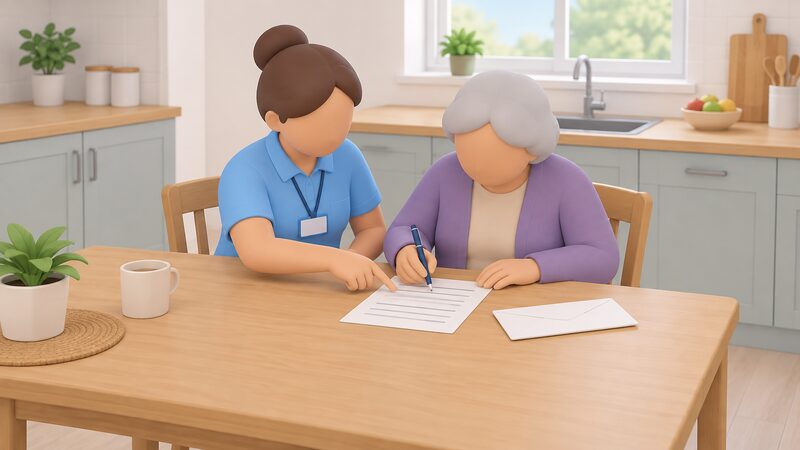
Northern Ireland runs a different structure, and households there should not look for a Priority Services Register under that name. All electricity and gas suppliers in Northern Ireland must keep a Customer Care Register with the details and special needs of customers who are of pensionable age, disabled by virtue of being blind, partially sighted, deaf or hearing impaired, or chronically sick3.
Alongside it, Northern Ireland Electricity Networks and NI Water operate a Critical Care Register3. For electricity customers this covers medical equipment such as oxygen concentrators, patient vital signs monitoring systems and home dialysis, and adding details allows the two utilities to prioritise contact details if the supply goes off3. The split mirrors the mainland arrangement: the supplier register handles communication and billing needs, while the network register handles the medical dependency.
Advice provision is separate again. NI Energy Advice offers independent and impartial energy advice to domestic householders in Northern Ireland, plus referrals to energy grants and other sources of help19. Its advice topics include energy grants and support, heating and energy use, energy bills and fuel poverty support, damp, condensation and ventilation, insulation and home improvements, renewable energy, changing electricity or gas supplier, and heating oil savings20. It is for all households across Northern Ireland20.
The Northern Ireland Housing Executive also provides energy advice, and the Home Heating Oil Support Scheme provides direct help with heating oil costs for households on qualifying benefits, including disability benefits21. The scheme's opening date was announced by the Department for Communities13.
For a medically dependent household in Northern Ireland, the practical position is that three separate registrations or contacts may be needed: the supplier's Customer Care Register, the NIE Networks and NI Water Critical Care Register, and NI Energy Advice for grant referrals.
Accessible in-home displays for sight loss, dexterity and memory needs
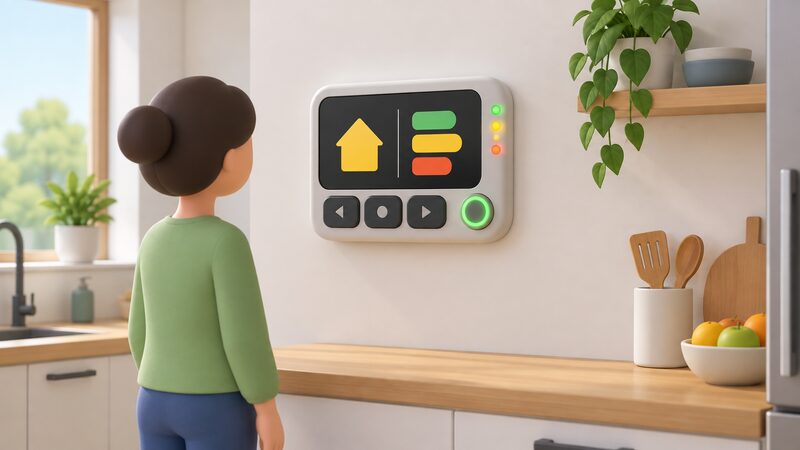
Smart meter in-home displays are a known accessibility problem, and a modified version exists. An accessible in-home display has been developed in partnership with the Royal National Institute of the Blind6. Its features are aimed squarely at the needs of households with sight loss, dexterity limitations or memory difficulties.
| Feature | What it does |
|---|---|
| TFT screen with high contrast colour scheme | Optimised for visual impairment and colour blindness6 |
| Large typeface | Improves legibility of displayed figures6 |
| Tactile buttons with feedback of button press | Confirms the press without needing to see the screen6 |
| Text to speech function | Reads the screen for navigation6 |
| Adjustable volume | Sets the speech level to the household's preference6 |
| LED push button to replay speech | Repeats the last spoken information6 |
| Coloured LEDs | Indicate electricity usage6 |
The standard in-home display allows a household to monitor its energy usage and spending22. For a household where energy costs are driven by medical equipment rather than choice, that monitoring is not a convenience but a way of seeing what the equipment is costing and when.
Availability is the limit. The accessible in-home display is being offered at no extra cost to selected customers, but it is not yet available with every supplier6. A household that needs one has to ask its supplier directly, and the answer may be no.
"The accessible in-home display is being offered at no extra cost to selected customers, but they are not yet available with every supplier."
Charity and trust schemes for medically vulnerable households
Beyond the register and the benefits system, a layer of charity, trust and council-run services exists for households whose energy costs are driven by health need. These are not entitlements, and availability varies by area, but they fill gaps that statutory schemes leave.
Council-run services often combine advice with eligibility checking. East Herts Home Energy Support Service provides information on grants and help with checking eligibility, benefits support, supplier switching advice, energy saving advice, debt advice, and referral to other organisations or contractors23. Birmingham City Council runs a comparable energy bills support route24. Carmarthenshire's Energy Bills Support Scheme Alternative Funding and Swansea's energy costs pages serve the same function in Wales25.
Some services are explicit about what they do not do. Your Home, Better does not offer grants or funding, but can identify sources that could help towards the costs of home energy projects26. That distinction matters for a household expecting direct payment.
Emergency help exists for households that own their homes. ECHO provides emergency help to fuel poor or vulnerable households who own and live in their homes24. The Disabled Facilities Grant is a separate route, available to disabled people needing to make changes to their home, including people who are physically disabled, have a learning disability, have age-related needs, are autistic, have a cognitive impairment like dementia, have a progressive condition like motor neurone disease, have a terminal illness, or have a mental health condition27.
The Warm Homes Plan provides funding, grants and loans for domestic PV installations and low carbon technologies such as solar panels, batteries and heat pumps28. For a household with high electricity consumption from medical equipment, generation and storage can reduce the imported units, though the capital cost is the barrier.
Why only about half of eligible households are signed up
Take-up is the persistent weakness of the whole system. One distribution network operator noted in January 2024 that little more than half of those eligible are signed up, and launched a campaign to address it1. The same operator had already run awareness activity in Reading in February 2023 and in the West Highlands in January 2024, the latter alongside Highland Hospice1.
The reasons are structural rather than a matter of household apathy. Data matching fails at scale: the Department for Energy Security and Net Zero estimates that 2.4 million households, some 28% of the 8.1 million people estimated eligible for the Warm Home Discount, might not be data matched4. If a scheme that runs on benefit records misses more than a quarter of its eligible population, a register that requires a household to self-identify will miss more.
There is also a measurement problem underneath. The Scottish Government has stated that it is not possible to measure whether a household member has a medical need requiring additional energy use, using Scottish Household Condition Survey data, which is why certain social security benefits are used as a proxy29. A proxy captures households on the right benefits and misses those with medical need who are not.
Awareness campaigns have targeted specific conditions and communities. Scope ran a campaign across shops, events and digital media in September 2025 to raise awareness of its Disability Energy Service and the Priority Service Register, with a particular focus on Scotland1. The British Gas Energy Trust hosted a London Disability Summit in November 2025, bringing together policy, regulatory and delivery leaders to discuss targeted action1. Energy Systems Catapult published a report in July 2025 finding that only 9.5% of surveyed homes qualified for fully funded ECO4 retrofit, and recommending seven reform principles1.
The practical consequence for a household is that support is not automatic. It has to be claimed, and often claimed more than once, from more than one organisation.
Where the dependence remains
The register and the grant system reduce the harm of a medical dependency on energy, but they do not remove the dependency itself. A household running oxygen concentrators, home dialysis or vital signs monitoring remains connected to the grid, dependent on a distribution network operator it did not choose, and reliant on a supplier for billing and communication arrangements. The Critical Care Register prioritises contact details; it does not provide a second supply3.
For households that own their homes, generation and storage can reduce imported units, and the Warm Homes Plan funds domestic PV and low carbon technologies28. For households that rent, the position is different, and the routes through landlord duties and tenant permissions are set out in Renting and Home Energy and Asking a Landlord for Energy Improvements.
The financial support landscape is fragmented by nation. Households in England, Scotland, Wales and Northern Ireland face different schemes, different qualifying benefits and different application routes, and the Northern Ireland structure in particular runs on separate registers and a separate advice service3. A household moving between nations should expect to re-register and re-apply.
The one thing that is consistent is the direction of travel on awareness. Registers exist, they are free, and they are underused. The gap between eligibility and take-up is the single largest weakness in the system, and it is a gap that a household can close for itself by asking.
Sources29 cited
- More customers in vulnerable situations receive help under Priority Services Register, Ofgem, 2016-10-25
- What to do in a power cut, Met Office, 2026-09-20
- Electricity and gas consumer protection, Consumer Council for Northern Ireland, 2026
- Warm Home Discount (Amendment) Regulations 2025Regulations2025), Hansard, 2025-09-03
- Energy security and net zero Committee report, House of Commons Energy Security and Net Zero Committee, 2025-05-09
- The accessible in-home display, Smart Energy GB, 2026-03-16
- More help for energy consumers in vulnerable situations, Ofgem, 2016-10-25
- Priority Services Register briefing, House of Commons Library, 2026-02-26
- Energy costs, Swansea Council, 2022-12-14
- Getting extra support from your energy supplier, Citizens Advice, 2026-09-17
- Help with household costs, Isle of Anglesey County Council, 2026-09-20
- ECO4 Flex and GBIS Flex information document, Ceredigion County Council, 2025-11
- Lyons announces opening date for Home Heating Oil Support Scheme, Department for Communities, 2026-08-26
- Home heating oil support, nidirect, 2026-09-17
- Check energy suppliers can install prepayment meters without household permission, Ofgem, 2026
- Help and support for domestic connections and homeowners, National Energy System Operator, 2026-09-17
- We may be able to help resolve your energy dispute, Energy Ombudsman, 2026-09-20
- Energy Bills Support Scheme Alternative Funding, Carmarthenshire County Council, 2023-03-24
- Hydropower, nidirect, 2026-09-17
- Energy saving grants in your area, nidirect, 2026-09-17
- Energy, Northern Ireland Housing Executive, 2026
- Do you have to have a smart meter by law?, Smart DCC, 2026
- Home and business grants, schemes and advice, East Hertfordshire District Council, 2026-09-17
- Getting help with your energy bills, Birmingham City Council, 2026-06-24
- Grants and funding, Tameside Council, 2026-09-17
- Register energy devices in homes or small businesses, GOV.UK, 2021-03-31
- Disabled Facilities Grants, GOV.UK, 2026-09-20
- Warm Homes Plan, Parliamentary Office of Science and Technology, 2026-06-25
- Scenario modelling on social energy tariff proposal, Scottish Government, 2025-11-10
 Prepare a Home for a Power CutA household checklist for before, during and after an outage: what to keep charged and to hand, which appliances to switch off, how long food stays safe and what to do about medical equipment.
 Power Cuts in ScotlandWho do you call when the power goes out in Scotland, and how long should it take to come back on?
 Energy Security for HouseholdsCan a household really protect itself from gas and electricity price shocks, and what actually makes a difference?
 Power Cuts in WalesWho do you call when the power goes out in Wales, and how long should it take to come back on?
 The Full Backup Power GuideHow long do UK power cuts usually last, and what can keep your fridge, heating or phone going until the power comes back?
 Older People and Home EnergyOlder people often pay more to keep warm and can miss out on help they are entitled to.