

In this guide
Landlords in England and Wales can claim a £7,500 Boiler Upgrade Scheme grant for a heat pump in a rented property, and £9,000 where the home is off the gas grid and heated by oil or LPG. The scheme is open to properties rented out to tenants, not just owner-occupiers, and it is installer-led: the installer applies to Ofgem, the grant is deducted from the quote before any payment is made, and the property owner confirms consent by email1.
The money is real but conditional. The property needs a valid energy performance certificate, the installer must be MCS certified, and the grant cannot be blended with ECO funding for the same measure or folded into an ECO4 project1. A property that has already had a BUS grant for a heat pump or biomass boiler at the same address cannot claim again4.
For landlords with several homes, the Warm Homes: Local Grant is the other route worth understanding. It fully funds upgrades for one property per landlord, and any further eligible homes are funded at half the upgrade cost, paid by the landlord5. Scotland, Wales and Northern Ireland run separate schemes with their own rules, and the EPC minimum standard for rented homes is tightening across England and Wales.
What funding landlords can actually claim for insulation and heating
The funding landscape for landlords splits into two kinds of money: capital grants for heating and insulation, and obligations that force or encourage improvement. The Boiler Upgrade Scheme is the main capital grant for private landlords in England and Wales, providing upfront grants to help reduce the cost of installing heat pumps and biomass boilers in homes and non-domestic buildings7. It opened on 23 May 2022 and closes on 30 December 20298.
The Warm Homes: Local Grant is the other significant route. It funds insulation, energy-efficient heating systems, and renewable energy installations, and it is delivered through local authorities rather than installers9. Greater Manchester, Liverpool and London all run local versions of it10. Supported home types include houses, flats, park homes and houses in multiple occupation with separate kitchens5.
For social housing landlords, the picture is different again. The Social Housing Net Zero Heat Fund offers capital grant funding to support social housing landlords across Scotland to install clean heating systems and energy efficiency measures13. In England, the Warm Homes: Social Housing Fund Wave 3 requires grant recipients to improve their social homes to at least EPC band C, with homes starting at band E to G that cannot reasonably reach band C within the cost cap exempt14.
Northern Ireland has its own arrangements. The Affordable Warmth Scheme is open to private tenants renting from a private landlord, but it is not available for tenants living in social housing, and the property must not be a holiday home, bed and breakfast or commercial establishment15. The Northern Ireland Sustainable Energy Programme lists the schemes available in 2026-2716.
What a landlord can actually claim therefore depends on tenure, nation and the fuel the property uses. A private landlord with a single gas-heated rental in England has one clear route. A social landlord in Scotland has another. A landlord with a block of flats may find that the residential landlord infrastructure grant, which requires ownership or management of a property with multiple homes such as an apartment block or an estate with buildings sharing a car park, is the relevant scheme, though that grant is not available for holiday rentals17.
The Boiler Upgrade Scheme: £7,500 grants for heat pumps in England and Wales
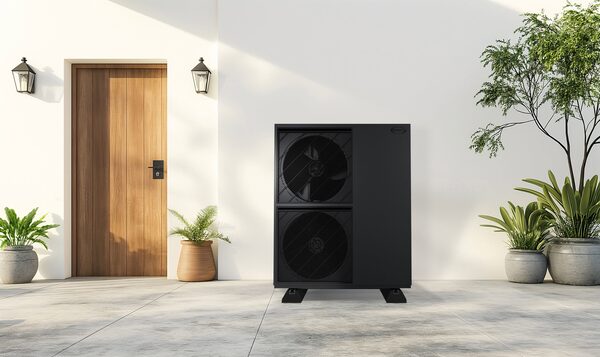
The Boiler Upgrade Scheme provides grants for heat pump installations across England and Wales18. The standard grant is £7,500 towards an air source heat pump, and the scheme also supports ground source heat pumps, air-to-air heat pumps and biomass boilers1. Air-to-air heat pumps are only eligible in residential properties, while both residential and non-residential properties may be eligible for the scheme overall2.
The scheme is deliberately narrow in what it will fund. Eligible technologies are air-to-water heat pumps, air-to-air heat pumps, ground source heat pumps including water source heat pumps and shared ground loops, and biomass boilers4. Exhaust air-to-air heat pumps are not eligible for support under the scheme at this time4. Self-build properties are only eligible for BUS funding for heat pumps4.
Take-up has been concentrated. Of the grants paid by technology in the quarter to 27 February 2026, 36 (0.05%) went to shared ground loop ground source heat pumps19. That figure illustrates how small the shared ground loop segment remains relative to the rest of the scheme, which matters to landlords considering a communal ground array for a block or estate.
The scheme's budget has been the subject of conflicting figures. One set of guidance states a £450 million budget, while official statistics give £295 million for 2025/26, with 2024/25 funding increased by £30 million4. What is not in dispute is the direction of travel: the grant was raised to £7,500, and the off-gas-grid uplift to £9,000 took effect on 21 July 20265.
For a landlord, the practical consequence is that the grant covers a meaningful share of a heat pump installation but not all of it. The remaining cost is installer-quoted and varies with the property, the technology and the work needed to make the home heat-pump ready. The scheme pays a fixed capital sum; it does not cap the total bill.
The £9,000 uplift for off-gas-grid properties replacing oil or LPG
From 21 July 2026, eligible off-gas grid properties can apply for an uplifted grant of £9,0005. The uplift applies to air-to-water heat pumps and ground source heat pumps in properties heated by oil or LPG, and the property must not be fuelled by mains gas5. Official statistics describe it as £9,000 towards an air-to-water or ground source heat pump for eligible off-grid properties heated by LPG or oil20.
This is the single largest capital grant available to a private landlord under the scheme, and it is aimed squarely at the rural rental stock that has historically been the hardest and most expensive to decarbonise. Off-gas-grid homes are covered in more detail in Living Off the Gas Grid, and the fuel choice question is set out in Oil vs LPG heating.
The uplift does not apply to biomass boilers, and it does not apply to air-to-air heat pumps. A landlord replacing an oil boiler with an air-to-water heat pump in an eligible property can claim £9,000; the same landlord installing a biomass boiler claims the standard grant. The distinction matters because biomass is a niche option with fuel supply and storage implications that a heat pump does not carry.
There is a planning dimension for landlords removing oil or LPG infrastructure. Permitted development allowances for fuel tanks do not apply to flats and maisonettes, so a landlord of a flat considering tank removal or replacement needs to check the position rather than assume the householder rules apply21. For houses, the fuel tank rules are set out by the Planning Portal.
The uplift is dated and time-limited by the scheme's closing date of 30 December 20298. A landlord weighing the work should note that the grant value is fixed at the point of application, and the voucher then has a validity period in which the installation must be completed.
Eligibility: which rental properties qualify and which are excluded

The Boiler Upgrade Scheme includes properties rented out to tenants, second homes and holiday homes among eligible domestic and non-domestic properties, and churches and park homes may be eligible if an EPC can be issued22. That breadth is unusual: most grant schemes exclude second homes and holiday lets, and the Energy Efficient Scotland Area Based Scheme states plainly that second home and holiday let properties are not eligible23.
The exclusions are equally specific. You cannot get a grant for most new build properties, social housing, or a property that has already been given government funding or support for a heat pump or biomass boiler1. New build properties which the developer is still building are not eligible, though a finished new build with a fossil fuel boiler may be able to get a grant for a heat pump1.
The property must have a valid energy performance certificate, and the installer must be certified by the Microgeneration Certification Scheme8. A property is not eligible if a previous BUS grant has already been received for installing a heat pump or biomass boiler at the same address4. That restriction follows the address, not the landlord.
For the Warm Homes: Local Grant, privately rented properties with an EPC rating of Band D or E are eligible, and there is no eligibility restriction against landlords based on the number of properties that they own12. That is a change from earlier schemes, where portfolio size could disqualify a landlord. The grant aims to increase the property's EPC rating, with Band C as the target11.
How the installer-led voucher process works, from quote to discount
The Boiler Upgrade Scheme is installer-led, with the installer applying for the grant on the property owner's behalf8. The installer discounts the grant from the invoice, applies to Ofgem for a grant voucher, and redeems the voucher after installation and commissioning8. MCS certified installers apply for and redeem vouchers on behalf of property owners7.
The sequence runs as follows:
- The installer provides the property owner's details to Ofgem, which emails the owner asking them to consent to the installer applying on their behalf24.
- The installer submits the voucher application, including the total quote amount without the BUS grant deducted, the total quote amount with the grant deducted, the total cost of the heat pump or biomass boiler unit without the grant deducted, the quote reference number, and the date on the quote3.
- The installer must deduct the full BUS grant value from the quote before any payment is made by the property owner3.
- The installer redeems the voucher and receives the grant following installation and commissioning24.
Property owners are required to confirm consent for a BUS grant application being made on their behalf3. Installers must pass on the full value of the BUS grant as an upfront discount to the property owner, and must not request or accept payment of the BUS grant amount from the property owner3.
The voucher windows are tight. Vouchers for air-to-water heat pumps, air-to-air heat pumps and biomass boilers are valid for 3 months, while vouchers for ground source heat pumps are valid for 6 months3. The installer must commission and install the heat pump within 120 days of applying for the grant or it will not be eligible1. Retrospective applications are permitted if properly made within 120 days of commissioning25.
"Installers must deduct the full BUS grant value from the quote before any payment is made by the property owner."
The Green Homes Grant, which closed in 2021, worked on a similar principle: homeowners applied for vouchers with a certified installer, who received the grant funding once the measure was fitted26. The National Audit Office reported on that scheme's difficulties, and the lesson for landlords is that the installer carries the administrative burden and the property owner's protection lies in the discount being applied before payment, not after.
MCS certification: why your installer and equipment must be certified
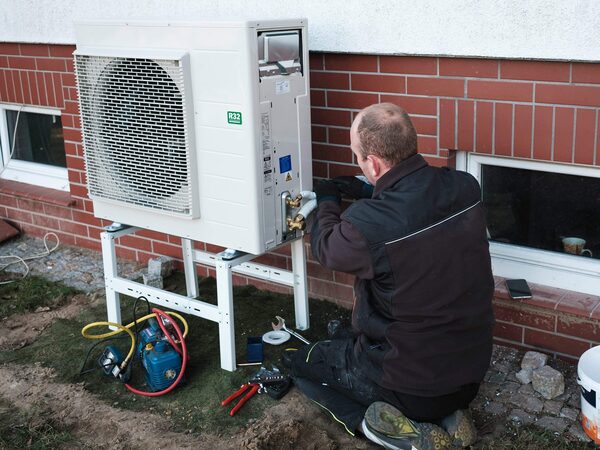
Installers must be MCS certified and be certified to install heat pumps and/or biomass boilers4. The property owner's chosen installer will need to be certified by the Microgeneration Certification Scheme, a nationally recognised certification body8. This is not a formality: an installer without MCS certification cannot apply for or redeem a BUS voucher, so the grant is unavailable through them regardless of the quality of their work.
The certification requirement extends to the equipment. The scheme funds specific technologies, and the installer must be certified for the technology being installed. A landlord who receives a quote from a competent heating engineer who is not MCS certified for heat pumps will find that the grant cannot be claimed on that installation.
For landlords, the practical check is straightforward: ask for the MCS certificate number and confirm the certification covers the technology proposed. The certified installer grant rule applies across government grant schemes, not just BUS.
Ofgem's role is to publish guidance for installers and property owners, process voucher applications and redemption applications, make payments to installers following successful redemption, publish reports on how the scheme is operating, monitor and enforce compliance with the regulations, carry out audits and assurance activity, and investigate suspected fraud7. That enforcement role is why the paperwork matters: a reviewable decision can require repayment of a grant already paid to the installer4.
What BUS will not fund: hybrids, social housing and second grants
The scheme's exclusions are as important as its grants. Hybrid heating systems for homes off the gas grid are not permitted under the Warm Homes: Local Grant, and the same principle of avoiding part-fossil solutions runs through the BUS rules11. A hybrid system that keeps a gas or oil boiler alongside a heat pump does not fit the scheme's purpose of replacing fossil fuel heating.
Social housing is excluded from BUS. The scheme is for private landlords and owner-occupiers, and social housing landlords have separate funding routes through the Warm Homes: Social Housing Fund and, in Scotland, the Social Housing Net Zero Heat Fund14. Grant funding from other Energy Efficiency Schemes cannot be used as co-funding for the Social Housing Fund, and it is not possible to use funding from previous Waves to support Wave 3 projects14.
A property cannot receive a second BUS grant for a different technology. A property is not eligible if a previous BUS grant has already been received for installing a heat pump or biomass boiler at the same address4. This means a landlord who installed a heat pump under BUS in 2023 cannot return for a biomass boiler grant at the same property later.
The ECO4 restriction is the one that catches landlords combining schemes. Funding from BUS and ECO cannot be blended for the same measure or be included within an ECO4 project27. ECO and Warm Home Discount funding cannot be combined for any measures27. For in-fill houses under ECO4, the eligible measures are limited to solid wall insulation and district heating connection27.
EPC standards for rented homes and the road to Band C

The regulatory backdrop is shifting. Landlords of domestic private rented properties, including public sector landlords, may not grant a tenancy to new or existing tenants if the property has an EPC rating of band F or G, unless an exemption applies6. The UK Government has proposed raising the minimum EPC standard for domestic private rented properties to band C by 2030, but this is proposed and not yet in force6.
The exemption categories are detailed. They include where all relevant improvements have been made but the property remains below E, where the cost of relevant improvements exceeds the spending cap, where no improvements are possible, where expert written advice states that wall insulation would harm the fabric or structure, where third-party consent is required after reasonable attempts, where a RICS registered valuer report shows improvements would reduce market value by more than 5%, where the property was already let when the landlord purchased an interest, and sudden landlord circumstances such as insolvency of a tenant where the landlord was guarantor6.
The Energy Efficiency (Private Rented Property) (England and Wales) Regulations 2015 cover private, local authority and other public body landlords, as well as a tenant who sub-lets a property falling within scope6. The regulations also list property exclusions, including listed or officially protected properties where requirements would unacceptably alter them, temporary buildings used for two years or less, places of worship, low-energy industrial sites, workshops or non-residential agricultural buildings, detached buildings under 50 m2 total floor space, buildings occupied less than four months a year with expected energy consumption under 25% of all-year use, properties due for demolition with consents, and certain HMOs not sold or let as a single rental in the past ten years6.
For the Warm Homes: Local Grant, the EPC thresholds differ by tenure. Privately rented properties need an EPC rating of Band D or E, while owner-occupied properties can be Band D, E, F or G11. The grant aims to raise the property to Band C11. That means a landlord with a Band E rental is in the target group, while a landlord with a Band C rental is not.
The EPC system itself is due to change. The Energy Performance of Buildings regime reforms will replace the single efficiency score with four headline metrics from the second half of 202728. Landlords planning work that will be assessed under the current EPC should note that the rating methodology is not fixed for the life of the improvement.
Where landlords in Scotland can turn for support
Scotland runs its own schemes, and the BUS does not extend there. The Social Housing Net Zero Heat Fund offers capital grant funding to support social housing landlords across Scotland to install clean heating systems and energy efficiency measures13. For private landlords, the Energy Efficient Scotland Area Based Scheme is the relevant route, though second home and holiday let properties are not eligible23.
The Scottish Government's heat in buildings progress reporting sets out the wider policy context, including capital grant funding to support social housing landlords to install clean heating systems and energy efficiency measures29. Argyll and Bute Council publishes home energy efficiency advice for households in its area, which illustrates how the area-based delivery model works in practice23.
The practical difference for a Scottish landlord is that the funding is administered through local authorities and Scottish Government programmes rather than through Ofgem, and the eligibility rules are set separately. A landlord with property in both England and Scotland faces two different application processes, two different sets of eligibility criteria, and two different grant values.
Wales has its own arrangements. The Welsh Government has committed £5 million to help Welsh households invest in greener homes, and the Development Bank of Wales operates Green Homes Wales loan terms and conditions for eligible work18. The Anglesey trading standards guidance on other consumer problems is a reminder that grant-funded work in Wales is subject to the same consumer protection framework as any other building work6.
Northern Ireland's Affordable Warmth Scheme is open to private tenants renting from a private landlord, but not to social housing tenants, and the property must not be a holiday home, bed and breakfast or commercial establishment15. Belfast City Council publishes home heating guidance for households in the city31. The Northern Ireland Sustainable Energy Programme lists the schemes available for 2026-2716.
For a landlord with property across the UK, the funding map is genuinely four maps. The BUS covers England and Wales only8. Scotland, Wales and Northern Ireland each layer their own schemes on top, with different eligibility rules, different grant values and different delivery bodies. The UK private rented sector page sets out the stock and energy performance context across the four nations.
Sources31 cited
- Check if you're eligible for the Boiler Upgrade Scheme, GOV.UK, 2026-09-17
- BUS guidance for property owners V5, Ofgem, 2026-04-24
- BUS guidance for installers V5, Ofgem, 2026-04-24
- Boiler Upgrade Scheme guidance for installers v5.1, Ofgem, 2026-07-02
- Boiler Upgrade Scheme statistics, July 2026, Department for Energy Security and Net Zero, 2026-08-27
- Energy performance certificate exemptions and minimum standards, Isle of Anglesey County Council, 2026-05
- Boiler Upgrade Scheme, Ofgem, 2026-09-17
- Boiler Upgrade Scheme, Find Government Grants, 2026-09-18
- Home and business grants, schemes and advice, East Hertfordshire District Council, 2026-09-17
- Warm Homes Local Grant, Greater Manchester Combined Authority, 2026-09-17
- Warm Homes: Local Grant policy guidance, Department for Energy Security and Net Zero, 2026-07
- Apply for a Warm Homes Local Grant, Liverpool City Council, 2026-09-17
- Heat in buildings progress report 2025, Scottish Government, 2025-10-02
- Warm Homes: Social Housing Fund Wave 3 scheme guidance addendum, Department for Energy Security and Net Zero, 2026-06
- Affordable Warmth Scheme, Northern Ireland Housing Executive, 2026-09-17
- NISEP list of schemes 2026-27, Utility Regulator Northern Ireland, 2026-04
- Changes to electric vehicle chargepoint grant schemes from 1 April 2026, GOV.UK, 2026-02-25
- £5 million to help Welsh households invest in greener homes, Welsh Government, 2026-03-05
- BUS quarterly report issue 15, Ofgem, 2026-02-27
- BUS quarterly report issue 17, Ofgem, 2026-08-31
- Fuel tanks, Planning Portal, 2026-09-17
- BUS property owner guidance V2.3, Ofgem, 2023-09-25
- Home energy efficiency, Argyll and Bute Council, 2026-09-17
- Boiler Upgrade Scheme installer guidance, Ofgem, 2022-05
- BUS guidance for property owners V5 draft, Ofgem, 2026-03-25
- Green Homes Grant, National Audit Office, 2021-09-08
- ECO4 delivery guidance v3.2, Ofgem, 2025-12-08
- EPC C meaning: what it is and why it matters for landlords, Chameleon Technology, 2026-05-20
- Heat in buildings progress report 2025, Scottish Government, 2025-10-02
- Green Homes Wales loan standard terms and conditions, Development Bank of Wales, 2026-09-17
- Home heating, Belfast City Council, 2026-09-20
 Where to Start If You RentRenting means you can switch supplier or get a smart meter yourself, but insulation, glazing and heating need your landlord's agreement.
 Energy in Social HousingWhat must your landlord do if your home is cold, damp or mouldy?
 The Full Heat Pumps GuideWill a heat pump keep my house warm in winter, and what does one cost to buy and run?
 Energy Improvements in FlatsLiving in a flat, what can you actually change yourself and what needs the freeholder or management company to agree?
 Landlord Energy PermissionHow a tenant raises a request for insulation, heating, glazing or ventilation work in a rented home, what the EPC and the minimum band E rule mean, which grant schemes need landlord consent, and what happens when a landlord refuses.
 Insulation a Heat Pump NeedsWill a heat pump still work if your home is not well insulated, and would you need to add loft, wall or floor insulation first?