
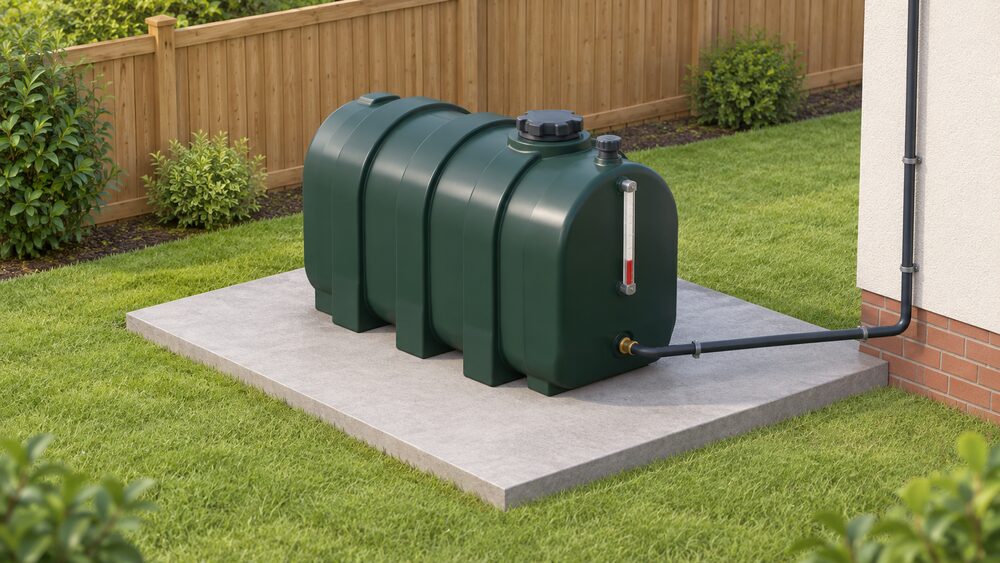
In this guide
A domestic heating oil tank in the UK is governed by Part J of the Building Regulations and the guidance in Approved Document J, which deals with combustion appliances and fuel storage systems. Section 5 of that document gives guidance on heating oil storage installations with capacities up to 3,500 litres, and section 4 covers oil-burning installations of up to 45kW rated heat output1. The two requirements that matter most to a householder are J6, on separating liquid fuel storage from buildings and boundaries so that fuel is less likely to ignite in a fire next door, and J7, on constructing tanks and oil lines so that oil does not escape and pollute, with a durable notice explaining what to do if it does1.
In practice the rules resolve into a handful of numbers. Trade guidance puts the tank at least 1.8 metres from any opening into a building, doors and windows included, and 760mm from a non-fire rated boundary such as a wooden fence2. The tank sits on a level, non-combustible, imperforate base of concrete, paving stones or stonework that extends at least 300mm beyond the tank on every side4. Official guidance in Northern Ireland asks owners to inspect tanks, pipes and equipment for leaks, damage and interference once a month, and to have the boiler and tank serviced at least once a year by an OFTEC technician5.
Oil storage is the part of an off-grid heating system that most resembles genuine independence: the fuel is bought in bulk and stored on the property, so a household holds weeks of heat on site rather than drawing it continuously from a network. The dependence that remains is real. The tank must be filled by a road tanker, so access matters; the household carries legal responsibility for any pollution; and the upkeep, inspection and eventual replacement of the tank are the owner's, not a supplier's. UKIFDA describes 1.7 million oil-heated households in the UK6.
What Approved Document J covers, and what it does not
Approved Document J supports the Building Regulations and gives practical guidance on complying with requirements J1 to J7, and regulation 7, of the Building Regulations 2010 for England and Wales1. Following its guidance carries a presumption of compliance with the requirements it covers, but it is guidance rather than law: the document itself states that there is no obligation to adopt any particular solution if the requirement can be met in some other way1. Persons intending to carry out building work are advised to check with their Building Control Body, either the local authority or an approved inspector, that their proposals comply1.
The scope is set by capacity and output. The oil storage guidance runs to 3,500 litres; oil installations are covered up to 45kW rated heat output, solid fuel to 45kW and gas to 70kW net (77.7kW gross); LPG storage guidance runs to 1.1 tonne1. Requirement J6 bites on fixed oil storage tanks with capacities greater than 90 litres sited outside the building, and on LPG installations above 150 litres. Requirement J7, the pollution requirement, applies to fixed outdoor tanks of 3,500 litres or less serving buildings used wholly or mainly as private dwellings, and excludes buried systems1. The document takes effect on 1 October 20101.
Requirement J7 is worth reading as written:
"Oil storage tanks and the pipes connecting them to combustion appliances shall: (a) be so constructed and protected as to reduce to a reasonable level the risk of oil escaping and causing pollution"
The document is also relevant to the fuels burned: Class C2 (kerosene) and Class D (gas oil) as specified in BS 2869:2006 or equivalent, liquid biofuel conforming to EN 14213:2003, and blends of mineral oil and liquid biofuel1. That matters for households considering renewable liquid fuel later, because the storage side of the system is where the compatibility question starts.
Regulations vary by nation
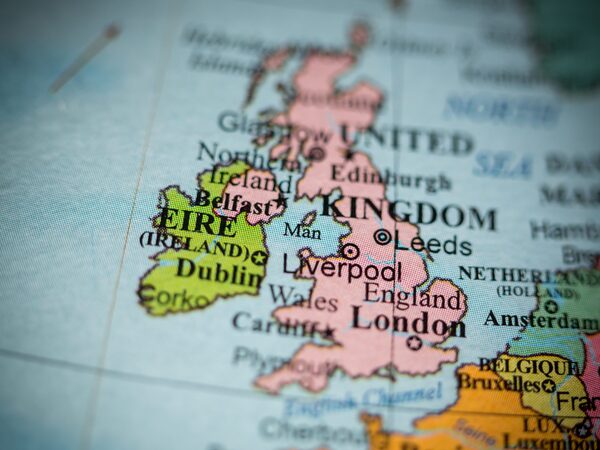
Building Regulations are devolved, and are therefore different in England, Scotland, Wales and Northern Ireland7. OFTEC states plainly that the regulations for oil tank installation vary according to which region of the UK or Ireland you live in, alongside other environmental factors8.
| Nation | What applies |
|---|---|
| England | Approved Document J supports the Building Regulations 2010 (as amended); OFTEC registered technicians can self-certify installation work1 |
| Wales | Approved Document J 2010 edition incorporating 2010 and 2024 amendments applies to buildings and building work in Wales, approval taking effect on 6 January 202510 |
| Scotland | Building standards are separate; the domestic technical handbook excludes work associated with an oil storage tank of more than 90 litres from the type 6 exemption11 |
| Northern Ireland | Building control regulations cover boilers and stoves and the siting of an oil tank12 |
The 2024 Welsh amendment also added guidance that where a new or replacement fixed flued combustion appliance of any fuel type, oil, gas including LPG, or solid fuel, is installed in a dwelling, a carbon monoxide alarm should be provided10. That point is developed further on carbon monoxide safety.
For planning rather than building control, the guidance published by the Planning Portal relates to the planning regime for England, and policy in Wales may differ13. In Wales, installing a fuel tank is permitted development, not needing planning permission, subject to stated limits and conditions14. Within the curtilage of a listed building, any container requires planning permission wherever it stands13.
Capacity thresholds: 90, 3,500 and 5,000 litres
Three figures set the boundaries of the domestic regime. Above 90 litres, a fixed outdoor oil storage tank falls within requirement J6 on fire separation1; the Scottish domestic technical handbook similarly excludes work associated with an oil storage tank of more than 90 litres from the type 6 exemption11. At 3,500 litres, several lines converge: Approved Document J's oil storage guidance runs up to that capacity1, permitted development for a fuel tank in Wales is limited to not more than 3,500 litres14, the Planning Portal gives the same maximum capacity for England13, and official guidance states that secondary containment such as a bund is a legal requirement for domestic tanks storing more than 3,500 litres5.
A distributor states that the government heating oil storage guidance applies to tanks that can store up to 5,000 litres of fuel, and that higher volumes would have to refer to business regulations15. That figure sits above the 3,500 litre threshold in the official documents; where the two differ, the Approved Document and planning limits are the official position.
Permitted development in England also carries dimensional limits: a maximum height of 2.5 metres within two metres of a boundary, and in National Parks, the Broads, Areas of Outstanding Natural Beauty and World Heritage Sites, a limit of 10 square metres on the area covered by buildings, enclosures, containers and pools more than 20 metres from the house13. In Wales, the container cannot extend beyond the side elevation of the house where the development would be closer to a highway than the existing house, or at least 5 metres from the highway, whichever is nearest14. The permitted development regime includes liquefied petroleum gas tanks as well as oil storage tanks13, though LPG carries its own separation distances, covered on LPG boilers and heating.
Siting the tank: fire separation, drains and ground
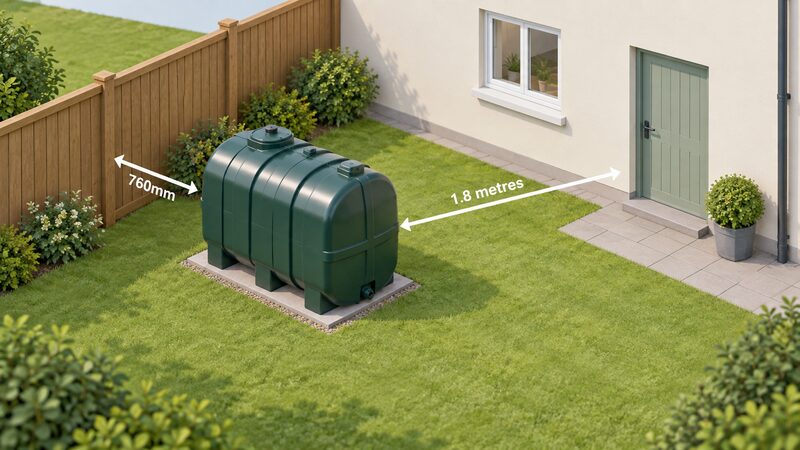
Two separate hazards drive siting: fire and pollution. On fire, guidance gives 1.8 metres away from openings such as doors or windows in a fire rated building or structure, for example a brick-built house or garage; 1.8 metres away from a non-fire rated building or structure such as a garden shed; and 760mm away from a non-fire rated boundary such as a wooden boundary fence3. UKIFDA and Which? both state the 1.8 metre minimum from openings to buildings2.
Where the 1.8 metre distance is not possible, a fire barrier can be built between the tank and the hazard2. That is a construction rather than a workaround: an OFTEC-registered tank installer advises on the best place to locate the tank so that it meets the location, safety and building regulations requirements2.
On pollution, official guidance is to keep site tanks as far away as possible from drains, streams and ponds5, and Welsh government guidance states that an oil tank requires containment of oil leakages so that ground water is not contaminated18. Before choosing a position, trade guidance advises identifying nearby drains, bore holes or sensitive groundwork areas, since any of these will affect the location17. The tank should be installed at ground level with pipework well protected17.
Practical constraints pull in a third direction. A replacement tank should be positioned where it will be more secure, while leaving clear access for fuel deliveries and making sure the gauge can be seen19. Screening with a fence, wall, plants or a trellis is suggested for theft deterrence, provided enough room is left for servicing, maintenance and fuel deliveries and the fire-safety recommendations are still met20. These pull against each other, and the resolution is site-specific.
The base: 300mm clearance, concrete or slabs
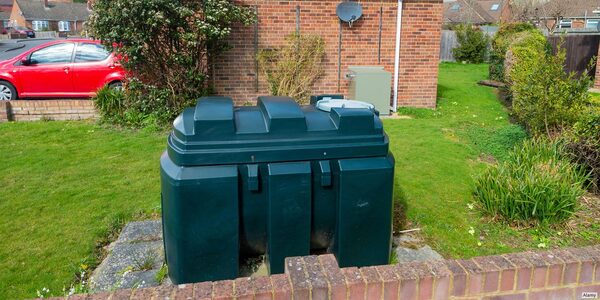
The tank stands on a base that is non-combustible, imperforate and level, constructed of concrete, paving stones or stonework, and large enough to extend 300mm beyond all sides of the tank4. UKIFDA puts the same requirement as a stable level base at least 300mm bigger in all directions than the tank itself2, and Which? describes a solid, sturdy base extending at least 30cm beyond the tank on all sides16.
On thickness, trade guidance specifies either a 100mm thick concrete slab or paving slabs a minimum of 50mm thick17. Welsh Approved Document J guidance of 2010 gives a hard surface such as concrete or paving slabs at least 42mm thick, extending out at least 300mm beyond the perimeter of the tank1. A boiler maker's guidance states that the tank must sit on solid ground, either concrete or paving slabs, extending out at least 300mm beyond the perimeter22.
The base is not a formality. Subsidence on the base is one of the listed warning signs of a failing installation17, and a plastic tank that loses level support under a full load is carrying several tonnes of fuel on an uneven bearing. The 300mm margin exists so the tank is fully supported at its edges and so a technician can walk the perimeter during an inspection.
Single-skin, double-skinned or bunded
Heating oil tanks can be single skinned, double skinned, where the tank has two layers, or integrally bunded, where a protective outer layer contains any escape from the inner16. A distributor describes the same three choices23. A bund is what turns a leak into a contained nuisance rather than a pollution incident, which is why secondary containment such as a bund is a legal requirement for domestic tanks storing more than 3,500 litres5, and why OFTEC notes that in some regions it is now mandatory for tanks to be bunded to minimise pollution risk from fuel spills3.
| Type | What it is | Where it matters |
|---|---|---|
| Single skin | One wall of plastic or steel | No secondary containment if the wall fails16 |
| Double skinned | Two layers of tank material16 | Added protection against a breach |
| Integrally bunded | Inner tank within a protective outer layer16 | Required above 3,500 litres stored5 |
On construction standards, OFTEC recommends that the chosen tank is manufactured to OFTEC standards, OFS T100 for plastic or OFS T200 for steel3. Which? advises checking before purchase that a tank is manufactured to meet the standards of the trade organisation OFTEC16.
Bunding also has a forward-looking argument attached to it. UKIFDA presents installing a bunded oil tank as compatible with renewable liquid fuels such as HVO24, and describes the bunded tank as also compatible with liquid biofuel25. Approved Document J already covers liquid biofuel conforming to EN 14213:2003 and blends with mineral oil1. For a household weighing whether its storage will outlive kerosene, that compatibility is the relevant question, and it is discussed further alongside oil boilers and heating oil.
Unlike LPG, where the tank is usually owned by the company that supplies the gas, bringing an ongoing annual rental charge26, an oil tank is the householder's property. That is a real gain in independence: no rental, no tie to one supplier's tank, and a free choice of who delivers. It is also why the maintenance burden sits squarely with the owner.
Inspection: monthly looks, six-month checks and the annual service
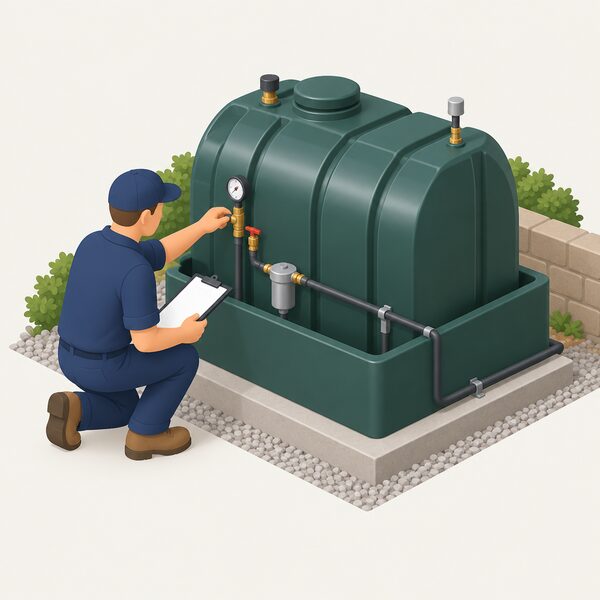
The inspection regime is layered, and the sources give different intervals for different depths of check.
| Interval | What is done | Source of the guidance |
|---|---|---|
| Monthly | Inspect tanks, pipes and other equipment for leaks, damage and interference5 | Official, Northern Ireland |
| At least every six months | Thorough check of the oil tank2 | Trade guidance |
| Annually | Tank inspected as part of the annual heating system service; boiler and tank serviced by an OFTEC technician, including underground pipework3 | Trade and official guidance |
| Every three to five years | Leak testing of underground tanks5 | Official, Northern Ireland |
Which? states that a tank should be inspected at least once a year by an OFTEC-registered technician, and that inspections should cover pipework, the integral bund, gauges, valves, oil filters and air vents16. UKIFDA describes the annual inspection as covering the overall condition of the tank for wear and tear, a check for water or condensation which can damage heating oil, and a written report of observations and actions2. The convenient arrangement is to have the tank inspected at the same time as the boiler service17, which is set out more fully under boiler servicing and maintenance.
Water is the quiet problem. Condensation or water collects at the bottom of the tank; when oil is delivered it is stirred up and can be carried to the boiler, causing a breakdown17. Related advice is to keep at least 12 inches of oil in the tank, which prevents disturbing the sediment that settles at the base2. Deliveries should be supervised, the tank should never be overfilled, and no more oil should be ordered than can be safely stored5.
OFTEC's own position is that ensuring fuel tank systems are installed and checked on a regular basis by OFTEC liquid fuel technicians, with defects or faulty equipment dealt with promptly, is what prevents oil spills27. UKIFDA's Winter Heating Checklist 2025, published on 29 October 2025, recommends booking an annual service with a local OFTEC-registered engineer28.
Warning signs of wear
Trade guidance lists the signs that a tank is deteriorating: rust; splits or cracks; bulging; subsidence on the base; gauges not working; and an unusual oil smell17. UKIFDA's winter checklist adds checking for cracks, leaks or signs of rust and clearing away overgrown areas so that access routes stay safe for deliveries28.
Each of these points at a different failure. Rust is the steel tank's ageing process and eventually becomes perforation. Bulging on a plastic tank indicates the wall is deforming under load or heat and has lost its original shape. Splits and cracks are already a leak path. Subsidence means the base is no longer doing its job, which loads the tank unevenly. A gauge that has stopped working removes the ability to notice an unexplained drop in level, which is both a leak signal and a theft signal: electronic fuel level gauges can alert on sudden drops, and an alarmed tank sign can be displayed20. An unusual oil smell is often the earliest sign of all, and is worth acting on before anything is visible.
If an OFTEC-registered technician highlights the tank as being at risk of failure, guidance is that it must be replaced with a new one17. There is no repair route offered in that circumstance. Anyone with concerns about an existing tank, or about installing a new one, is advised to contact a local fuel supplier or an OFTEC registered engineer17. Maintaining the fuel storage tank on the property is the owner's responsibility3.
Building control and who can certify the work
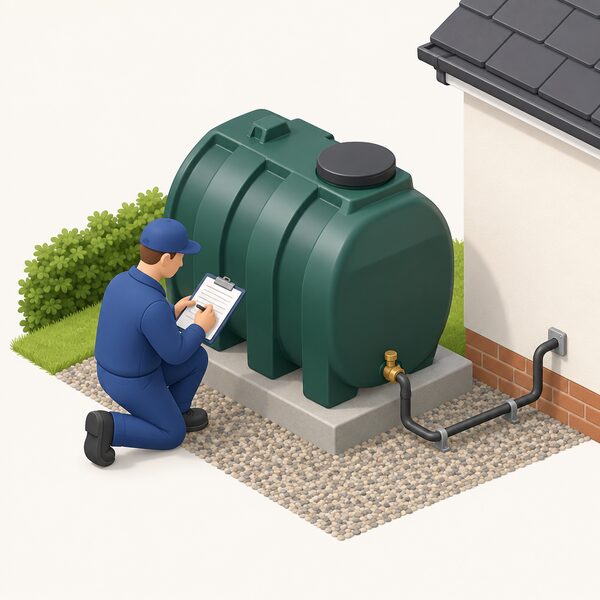
The installation of a fuel tank should meet the necessary building regulations requirements18. The route to demonstrating that depends on who does the work. Welsh government guidance states that if you are installing an oil tank or connecting pipework and you employ an installer registered with one of the related competent person schemes, you will not need to involve a building control service18. The same principle runs through Approved Document L for England: where the owner employs an installer registered with a relevant competent person scheme designated in the regulations, for certain services or fittings including fuel-burning appliances, a building control body does not need to be notified29.
In England, Wales, the Channel Islands and Isle of Man, OFTEC registered technicians are authorised to self-certify that their installation work complies with the regulations, avoiding the need for it to be checked by a building control officer9. Scotland and Northern Ireland operate their own building standards systems, and the Northern Ireland building control regulations expressly cover the siting of an oil tank12. The general position on notification and certification is set out on building regulations for heating, and registration itself on OFTEC registration.
One trap is worth naming for anyone replacing rather than installing new. Following the guidance in Approved Document J may mean that replacement oil storage tanks cannot be sited where the old tank was30. Local authorities may set aside the Approved Document guidance on tank location where they consider it unreasonable, considering fire vulnerability and oil pollution risks case by case30. A like-for-like swap in the same spot is therefore not a given, and the question should be settled before the old tank is lifted.
Replacing a tank: disposal, redundant pipework and insurance
The old tank should be emptied and removed using a licensed waste carrier that will dispose of it at a hazardous waste site2. A tank that has held kerosene for two decades is not general scrap, and the residue is the reason for the licensed route.
Redundant fill pipework is the second half of the job and is often left behind. It should be removed, or securely capped and marked 'DO NOT FILL'2. The risk if it is not is a delivery pumped into a disconnected line, which discharges straight into the ground.
Insurance sits alongside. Official guidance is to check that home insurance covers clean-up costs on both your property and neighbouring land, and always to tell insurers immediately if there is a spill or a suspected spill5. Trade guidance advises speaking to the home insurer about the type of cover held and what happens in the event of a leak or overspill17. If a tank starts leaking, the guidance is to try to stop the oil soaking into the ground or going down drains, and to contact the insurance company to arrange for an OFTEC technician or an ISAS accredited clean-up company5. The Oil Care Campaign, a joint initiative between the UK environmental regulators, trade and professional bodies and industry, sits behind much of this advice31.
The point of independence cuts both ways here. Owning the storage means owning the liability. A grid-connected household never faces a clean-up bill on a neighbour's land; an oil-heated one can, and the insurance position is the only thing standing between the household and that cost.
What the storage does for energy independence, and what it does not
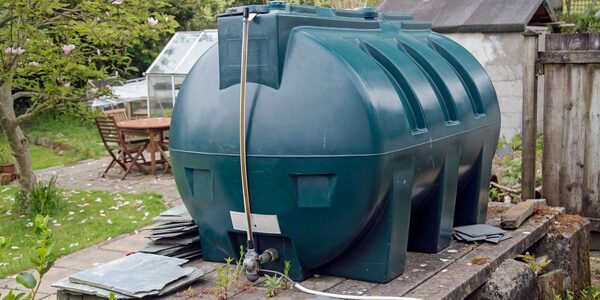
On-site liquid fuel storage gives a household something no networked fuel does: weeks of heat held on the property, independent of a daily supply, and a tank it owns outright rather than rents. The household chooses when and from whom to buy, which is the substance of the difference from LPG, where the supplier owns the tank26. The storage is also fuel-flexible in principle, since Approved Document J already recognises liquid biofuel and blends1 and bunded tanks are presented as compatible with renewable liquid fuels24.
What remains is a dependence on road delivery, on access and hardstanding staying clear, on an OFTEC-registered trade for lawful installation and annual service, and on insurance for the pollution risk that ownership brings. UKIFDA also warns that official bodies running support schemes, including councils and national advice services, will not cold call, ask for bank details, or request payment information unexpectedly6. Households comparing this with other off-grid options will find the wider picture on heating a home off the gas grid and on home heating and energy independence.
Sources31 cited
- Approved Document J: Combustion appliances and fuel storage systems, Welsh Government, 2026-09-17
- Tank care and security, UKIFDA, 2026-02-18
- Your home guide to liquid fuel heating, OFTEC, 2026-09-20
- Tank support, OFTEC, 2026-09-17
- Check your oil tank, nidirect, 2026-09-17
- UKIFDA launches Winter Heating Checklist 2025, UKIFDA, 2025-10-29
- Building Regulations and the Future Homes and Buildings Standard, CIBSE, 2026-09-17
- Frequently asked questions, OFTEC, 2026-09-17
- Why choose an OFTEC registered competent person, OFTEC, 2026-09-17
- Approved Document J, 2010 edition incorporating 2010 and 2024 amendments, Welsh Government, 2024-10-04
- Building Standards Technical Handbook, Domestic, Scottish Government, 2026-03
- Domestic oil installation and boiler servicing, nidirect, 2024-08-27
- Fuel tanks: permitted development, Planning Portal, 2026-09-17
- Planning permission: fuel tanks, Welsh Government, 2026-09-17
- Heating oil buying guide, UKIFDA, 2026-02-18
- Heating oil tanks explained, Which?, 2026-06-01
- Oil tank care, UKIFDA, 2025-02-23
- Building regulations: fuel tanks, Welsh Government, 2026-09-17
- Oil tank security, UKIFDA, 2025-02-23
- Guidance on avoiding heating fuel thefts, OFTEC, 2026-09-20
- Help and advice, UKIFDA, 2026-01-29
- How does an oil-fired boiler work, Viessmann, 2022-03-24
- Tanks: frequently asked questions, Certas Energy, 2026-09-20
- Energy efficiency tips, UKIFDA, 2026-02-18
- Future liquid fuels, UKIFDA, 2026-01-27
- What heating options are available off the grid, OFTEC, 2026-09-20
- Are you insured for a fuel tank leak?, OFTEC, 2026-09-20
- Winter Heating Checklist 2025, UKIFDA, 2025-10
- Approved Document L, Volume 1: Dwellings, UK Government, 2026-09-17
- Boilers and heating: building regulations, Planning Portal, 2026
- Trouble shooting tips, OFTEC, 2026-09-20
 Where the Outdoor Unit Can GoWhere can you put a heat pump outside your home?
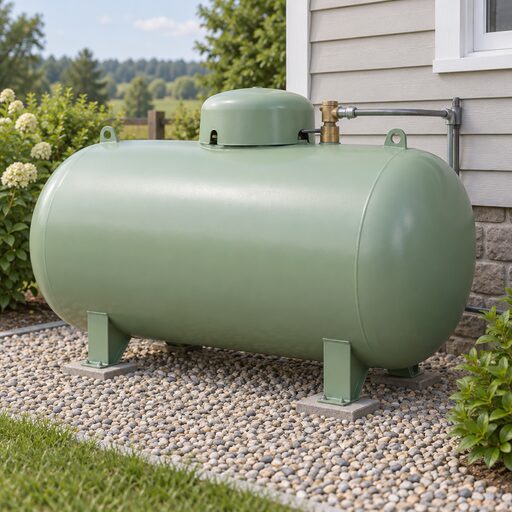 LPG and Heating Oil SuppliersWho owns the tank in your garden, and can you switch supplier if they do?
 Which Homes Suit a Heat PumpMost UK homes can have a heat pump fitted, so the real question is whether yours makes it easy or expensive.
 HVO for Home HeatingExplains hydrotreated vegetable oil as a drop-in replacement for heating oil, the burner and tank changes involved and the demonstration homes that have run on it.
 Storing Generator Fuel at HomeHow much petrol can you legally keep at home, and where should you put it?
 Home HeatingWhy do so many homes in Northern Ireland run on heating oil, and will that ever change?