

In this guide
OFTEC runs a competent person scheme for people who work on oil fired heating: boilers, cookers that also supply central heating, oil storage tanks and their pipework, and, increasingly, renewable heating. Official guidance on boilers and heating states that an oil fired boiler installer "should be registered with one of the relevant Competent Person Schemes"1, and UK government guidance on carbon monoxide names OFTEC as the qualified register "for oil appliances"2. In England and Wales a registered technician is authorised to self-certify that the installation complies with the Building Regulations, so no building control notice and no site inspection by a council or private approved inspector is needed3.
That is the practical difference for a householder. Using an installer outside a scheme does not make the work illegal, but it moves the paperwork: the installer cannot self-certify, and the firm or the householder must give notice to the local authority of the intention to carry out the boiler work in advance and pay a notification fee1. OFTEC reported over 9,000 technicians registered on its UKAS accredited competent person scheme as of February 20204. Registration follows an approved training course and assessment, and every registered technician carries an identity card showing their photograph and the work they are qualified to do3.
The certificate matters beyond the day of the install. A competent person scheme certificate can be used as evidence of compliance and shows up in solicitors' searches on sale6. Work that is not compliant "may make it more difficult to sell your home because you will not have a certificate of compliance"7.
What OFTEC registration is and who it covers
A competent person scheme is, in the government's words, "a way for tradespeople to prove their ability to carry out certain work to required standards, instead of you applying for building regulations approval"6. Membership is voluntary; an installer who does not join, or does not use the scheme for a given job, can still use local council or private inspectors11. OFTEC is the scheme most closely associated with liquid fuel heating, and in Northern Ireland it "maintains a register of trained and assessed technicians who are qualified to work safely with oil-fired appliances"5.
The register is not confined to oil. OFTEC also offers registration for technicians who hold Part P electrical qualifications and for those who install energy efficiency measures under PAS 20303. That breadth matters when reading a technician's card: the card lists the work they are qualified to do, and a person registered for oil appliance servicing is not by that fact registered for tank installation, electrical work or a heat pump.
Entry is not automatic. All technicians must first undertake an approved training course and assessment3. Across competent person schemes generally, an applicant's work is assessed to check they meet the level of competence required before approval, and there are then ongoing inspections, yearly for the first two years11. Schemes differ in their application processes and their fees, and installers are told to choose a scheme that supports their trade or types of work11.
Checking a technician before work starts
- Read the identity card: it shows the photograph and the work the technician is qualified to do5.
- Match the categories on the card to the job quoted: appliance, tank, electrical or renewable scopes are separate.
- Official guidance is that a householder is advised to check the installer is a member of a scheme covering the work they will be undertaking12.
For the wider picture of which trades can certify their own work, see competent person schemes, and for the oil specific question, does an oil boiler installer need to be OFTEC registered.

Why oil heating work falls under the Building Regulations
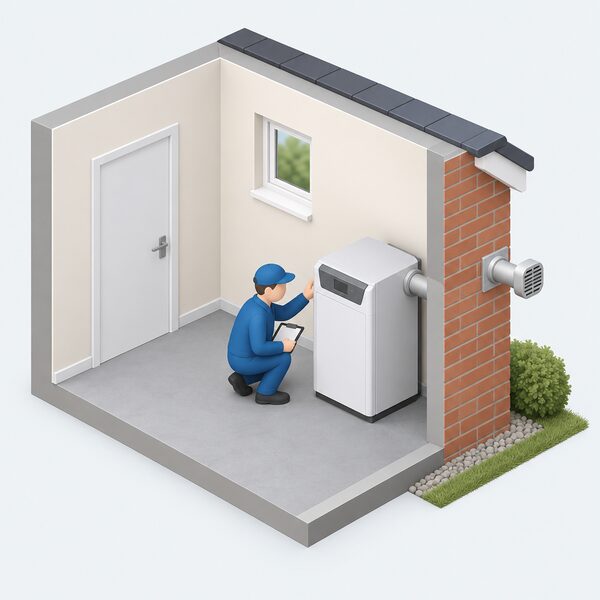
Building regulations set standards for the design and construction of buildings to ensure the safety and health for people in or around those buildings13, and they also include requirements to ensure that fuel and power is conserved14. Planning Portal guidance is specific about heating: work to install a new boiler, or a cooker that also supplies central heating such as an Aga or Raeburn, needs Building Regulations approval because of safety issues and the need for energy efficiency1. OFTEC's own guidance puts it plainly: the installation of heating equipment "must comply with building regulations and it is a legal requirement to do so"7.
The regulations bite on installations as well as buildings. They probably apply where work provides services or fittings in a building such as hot water cylinders, foul water and rainwater drainage, replacement windows, and fuel burning appliances of any type15. An oil boiler and its flue is a fuel burning appliance; an oil storage tank and its connecting pipework is a controlled service and fitting. Work must also not make other fabric, services and fittings less compliant than they were before, or dangerous16.
Oil jobs rarely stop at the appliance. Where a heating installation involves electrical work, building regulations apply to that too, in the same way they do to the electrical parts of micro CHP and small scale hydro installations17. In England and Wales the Building Regulations set standards for electrical installation work in dwellings19. Welsh guidance states that a qualified installer, registered or not, should give a signed BS 7671 electrical safety certificate for all types of electrical work20.
Scotland runs its own system: the technical handbooks were revised to amend Section 0 General, Section 2 Fire, Section 3 Environment and Section 4 Safety for use from 6 April 202621. Householders in Scotland should read the arrangements set out under using an installer in Scotland, because the self-certification route described below does not extend there.
Self-certification: what a registered technician can sign off
Where a registered installer with the relevant competencies carries out the work, they are approved to carry out the work to comply with building regulations without involving local authority building control, and a certificate is issued on completion22. OFTEC states that in England, Wales, the Channel Isles and Isle of Man its technicians "are authorised to self-certify that their installation work complies with the regulations without needing to submit a building control notice"3. The consequence is concrete: a site inspection by a local council building control officer, or a private approved building inspector, is not required, "saving you time and money"3.
The geography varies slightly between OFTEC's own pages: some describe England and Wales only, others England, Wales, the Channel Isles and Isle of Man3. All of them stop at the same place, and none of them extends self-certification to Scotland or Northern Ireland.
| Where | Self-certification by an OFTEC registered technician | Source |
|---|---|---|
| England | Yes, no building control notice required3 | OFTEC, 2026 |
| Wales | Yes; for an oil tank and connecting pipework, employing an OFTEC registered installer means you will not need to involve a Building Control Service25 | Welsh Government, December 2021 |
| Channel Isles and Isle of Man | Yes, per OFTEC3 | OFTEC, 2026 |
| Scotland | Not described in this arrangement; the building standards system is separate21 | gov.scot, April 2026 |
| Northern Ireland | OFTEC maintains the register of qualified oil technicians5 | nidirect, August 2024 |
Self-certification is not only paperwork relief. Competent person schemes have insurance-backed warranties and complaints procedures if there is a problem with the work6. OFTEC adds that work self-certified by an OFTEC competent person "carries a workmanship warranty against building regulation non-compliance", with remedial work carried out by someone else if the installer is no longer trading7. That is a narrow warranty: it answers non-compliance with the regulations, and it is triggered where the installer has ceased trading. It is not a general guarantee of the boiler or of the quality of every aspect of the job. The broader picture is in workmanship warranties and aftercare and when your installer goes bust.
Notifications, certificates and timescales
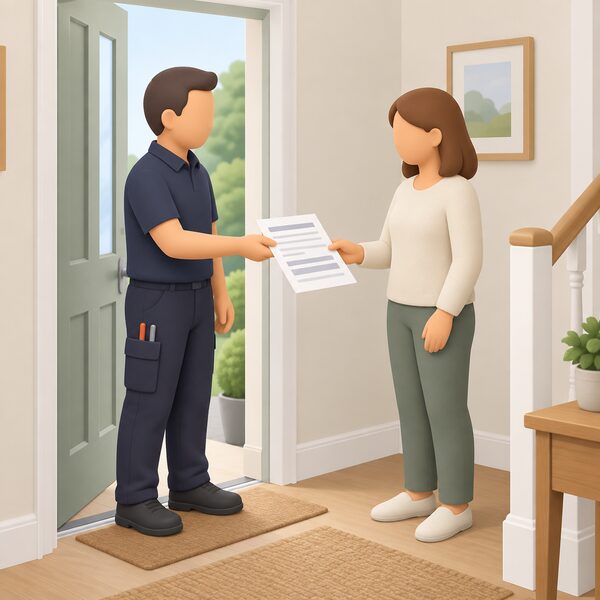
On completion of installation work the OFTEC registered technician completes a CD/10 installation completion report for the householder's records23. The Domestic Building Services Compliance Guide records that the Oil Controlled Document System produced and managed by OFTEC, forms CD/10 and CD/11, can be used to show that oil fired appliances and systems have been properly commissioned26. Alongside that, the scheme arranges the building regulations compliance certificate.
The deadline is stated differently in different official documents, and they disagree. Approved Document L requires the compliance certificate to reach the householder "within 30 days of the work being completed"8. Welsh guidance on Part J repeats that the occupier of the building be given, within 30 days of the completion of the work, a certificate confirming that the work complies27, and Welsh guidance on electrical work gives the same 30 day figure19. UK government guidance on competent person schemes states that the scheme will give a certificate "within 8 weeks of completion"6. Both figures are official and current; a householder should expect the certificate inside 30 days on the Approved Document L timetable, and treat 8 weeks as the outer figure stated in scheme guidance. For comparison, where full plans are deposited with building control instead, a completion certificate usually arrives within 8 weeks of completion of the building work, as long as it complies28.
Where the installer is not scheme registered, the sequence reverses: notification comes first. The firm or the householder will need to give notice to the local authority of the intention to carry out the boiler work in advance, and pay a notification fee1. The same principle appears elsewhere in the regulations: for a heat pump, if the installer is not a registered competent person, before work begins the installer must either notify the local authority or arrange for a registered building control approver to oversee the work8. Choosing a non-registered installer in England or Wales means obtaining a Building Control Notice and arranging an inspection, which OFTEC describes as "costly and time consuming"23.
TrustMark registration through OFTEC: what it adds
OFTEC operates a TrustMark registration scheme that can be applied for as an extension to the OFTEC competent person scheme30. It is run in accordance with the Framework Operating Requirements, and prior to acceptance onto the scheme one of OFTEC's compliance team carries out a desktop audit of the business30. Applicants fill in an online application and use a portal to upload information about the business30.
One caveat is stated by OFTEC itself:
"This scheme sits outside of OFTEC's UKAS ISO17065 accreditation but is subject to periodic compliance audits from TrustMark"
The registration scopes required for TrustMark are set by work type, and they show how far the scheme now reaches beyond oil.
| Work type | Required OFTEC scope |
|---|---|
| Heating Engineers, competent person scheme | OFT10-105E and OFT10-101 |
| Air Source Heat Pump, competent person scheme | OFT21-504A |
| Air Source Heat Pump, MCS | OFT21-504A(MCS) |
| Heating System Insulation, PAS | C4 - 2023 |
| Hot Water Systems, PAS | C6 - 2023 |
| Underfloor Heating (Wet), PAS | C8 - 2023 |
Source: OFTEC30
TrustMark matters mainly where public money or a funded scheme is involved. Installers under the Energy Company Obligation must be TrustMark accredited and will have a registration number, except in the case of installers of district heating connections31. Under ECO4, measures should be installed by or under the responsibility of a TrustMark registered installer and have a relevant certificate of lodgement32. ECO4A measures must be installed by, or under the responsibility of, a person registered with TrustMark with a certificate of lodgement issued by the TrustMark operator, or be subject to equivalent quality assurance arrangements33. Innovation measures must be lodged with TrustMark, or an equivalent, and delivered by TrustMark or equivalent registered businesses34. Wave 3 scheme guidance states that all installers are required to be TrustMark registered, or equivalent, and compliant with the corresponding requirements set out on TrustMark's website35. Green Homes Wales loan terms require the installer to be registered with TrustMark and to remain registered until the installation work has been completed, and to be someone other than the borrower or a member of their household or immediate family36. See TrustMark registration and installer requirements for grants.
Renewables through OFTEC: heat pumps, hot water and insulation scopes
For installing renewable technologies, including heat pumps, there are currently six registered competent person schemes: APHC, BESCA, Certsure, HETAS, NAPIT and OFTEC9. OFTEC's workmanship warranty expressly covers "renewable heating technology installations"37, and heat pump installation work can be certified either by self-certification by a registered competent person or by certification by a building control body8.
That is the Building Regulations route. A separate route governs grants and permitted development, and OFTEC registration alone does not satisfy it. Heat pump installers under government schemes must be certified by the Microgeneration Certification Scheme or equivalent38. The Microgeneration Certification Scheme includes clear standards to support the installation of wind turbines and air source heat pumps39, and for permitted development rights for wind turbines and air source heat pumps, equipment must be installed by an installer certificated through the scheme using a certificated product40. For the current heat pump grant, the installer applies for the grant on the householder's behalf through Ofgem, and quotes are obtained through the MCS find a heat pump installer tool or via an energy supplier41. This is why OFTEC's TrustMark table separates an air source heat pump competent person scheme scope from an air source heat pump MCS scope30: they answer different requirements. MCS certified installers covers that scheme in detail.
One further registration sits outside both: heat pumps must be registered with the local Distribution Network Operator42. That is a grid connection matter, not a building control one, and it is a reminder that a household adding a heat pump takes on a relationship with the network operator that an oil boiler never required.

Where the work is not registered or not compliant

If an installer is not in an approved competent person scheme, they will not be able to self-certify that their work is compliant25, and the work must instead be notified to building control before it starts1. Doing neither leaves the installation unevidenced. Government guidance on competent person schemes warns that "you may have to correct the work or pay a fine if building regulations are not followed"6.
Responsibility is worth stating carefully, because householders often assume it rests with the trade. Planning Portal guidance states that if you are the owner of the building, "it is ultimately you who may be served with an enforcement notice if the work does not comply with the regulations", and that where a builder is employed the responsibility will usually be theirs, but this should be confirmed at the very beginning15. Recording who carries the building regulations duty in the contract is therefore a matter of substance. Installation contracts and your cancellation rights sets out what a contract should cover.
The effect on a sale is the practical sanction. Non-compliant work "may make it more difficult to sell your home because you will not have a certificate of compliance"24, while a scheme certificate can be used as evidence of compliance and will show up in solicitors' searches6. Where the installation was properly notified, a lost certificate can be replaced24. Where it was not notified at all, there is nothing to replace.
Competent person schemes also carry complaints procedures if there is a problem with the work6. For older tanks, Scottish scheme experience shows a middle path exists: under Warmer Homes Scotland, if a tank is not to current standards but is not immediately unsafe, the installation can still proceed and the customer is issued an OFTEC approved advisory note43. An advisory note is not a certificate of compliance; it is a record that a known shortfall was identified and left in place.
Owning an oil system: servicing, tanks and the paperwork that matters
Oil heating puts more of the system on the household's own property than mains gas does: the tank, the fill point, the pipework and the appliance. Northern Ireland government guidance advises arranging for the boiler and tank to be serviced at least once a year by an OFTEC technician, and that this should include any underground pipework10. OFTEC states that its registered servicing businesses "follow a set of procedures that are designed to ensure that all aspects of your heating system are checked and maintained in accordance with industry and manufacturers' approved standards"3.
Tank work carries its own registration concession. Welsh guidance states that if you are installing an oil tank or connecting pipework and you employ an installer registered with OFTEC, you will not need to involve a Building Control Service25. The tank, the bund and the pipe run are as much a regulated service and fitting as the boiler, and the same certificate logic applies.
For the household, an oil system trades one dependence for another. There is no gas network connection and no supplier contract for the fuel supply in the way a metered gas customer has one, and the tank holds a buffer of fuel on site. In exchange the household depends on deliveries of oil, on a tank it owns and must maintain, on electricity for the boiler's controls and pump, and on the continuing availability of a technician holding the right registration categories. Where a heat pump replaces an oil boiler, the fuel dependence disappears, but grid dependence and a Distribution Network Operator registration take its place42, and grant access depends on MCS certification rather than on OFTEC registration38.
The paperwork a household should be able to produce, for a sale or for a warranty claim, is short: the CD/10 installation completion report23, the building regulations compliance certificate8, a signed BS 7671 electrical safety certificate where electrical work was done20, and annual service records10. Where a grant or an obligation scheme funded the work, add the TrustMark registration number of the installer31 and, for renewable installations, the certificate and handover documents described under your MCS certificate and installation handover pack. Registration schemes across the trades are compared on the installers and retailers pillar.
Sources43 cited
- Boilers and heating: building regulations, Planning Portal, 2026
- Carbon monoxide: general information, GOV.UK, 24 May 2022
- Why choose an OFTEC registered competent person, OFTEC, 17 September 2026
- Domestic oil storage, Issue 8, OFTEC, February 2020
- Domestic oil installation and boiler servicing, nidirect, 27 August 2024
- Use a competent person scheme, GOV.UK, 17 September 2026
- Building regulations and heating installation work, OFTEC, 20 September 2026
- Approved Document L, Volume 1: Dwellings, GOV.UK, 2026
- Future Homes and Buildings Standards consultation response, GOV.UK, March 2026
- Check your oil tank, nidirect, 17 September 2026
- Building regulations: competent person schemes, GOV.UK, 17 September 2026
- Solar photovoltaics and planning in conservation areas, West Suffolk Council, 17 September 2026
- Difference between planning permission and building regulations approval, Planning Portal, 17 September 2026
- Building regulations and planning permission compared, Planning Portal, 17 September 2026
- When you need building regulations approval, Planning Portal, 2026
- Building regulations, Planning Portal, 2026
- Micro combined heat and power: building regulations, Planning Portal, 2026
- Building regulations: hydro electricity, Welsh Government, 17 September 2026
- Building regulations: electrics, Welsh Government, 17 September 2026
- Quick guide to the building regulations: questions and answers, Welsh Government, December 2021
- Monitoring and improving building regulations, Scottish Government, 6 April 2026
- Doors and windows: building regulations, Planning Portal, 2026
- Your home guide to liquid fuel heating, OFTEC, 20 September 2026
- Building regulations and heating installation work, OFTEC, 20 September 2026
- Building regulations: boilers and heating, Welsh Government, 17 September 2026
- Domestic Building Services Compliance Guide 2022, Scottish Government consultation, June 2022
- Building regulations guidance: Part J, heat producing appliances, Welsh Government, 17 September 2026
- Building regulations approval: how to apply, GOV.UK, 17 September 2026
- Approved Document L Volume 1 consultation version, Welsh Government, August 2025
- TrustMark registration, OFTEC, 17 September 2026
- Energy Company Obligation: homeowners and tenants, Ofgem, 17 September 2026
- ECO4 delivery guidance version 4.0, Ofgem, 26 March 2026
- The Energy Company Obligation Order 2023, legislation.gov.uk, 24 July 2023
- ECO4 Innovation: Approved Innovation Measures, Ofgem, April 2023
- Warm Homes: Social Housing Fund wave 3 guidance addendum, GOV.UK, June 2026
- Green Homes Wales loan standard terms and conditions, Development Bank of Wales, 17 September 2026
- OFTEC workmanship warranty, OFTEC, 20 September 2026
- Decarbonisation of heat: evidence to committee, UK Parliament committees, 17 May 2022
- Heat pumps and the Microgeneration Certification Scheme, Planning Portal, 17 September 2026
- Air source heat pump noise and permitted development rights in Wales, phase 1 report, Welsh Government, 13 December 2023
- Heat pump grant, GOV.UK clean energy campaign, 10 September 2026
- Register energy devices in homes or small businesses, GOV.UK, 31 March 2021
- Warmer Homes Scotland first annual review, Scottish Government, 3 November 2016
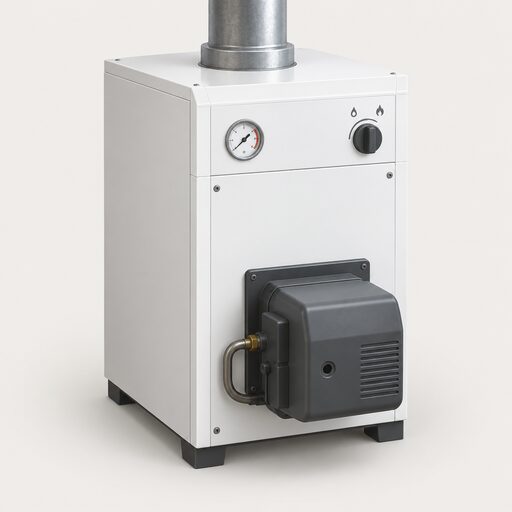 Oil Boilers and Heating OilHow oil-fired boilers work, the kerosene they burn, and the tanks, burners and servicing they need.
 Using an Installer in EnglandHow do you check an installer is registered to sign off their own work, and what happens if they are not?
 Finding an Insulation InstallerHow to find, verify and check an insulation, glazing or ventilation installer in the UK: the registration schemes, trade bodies and guarantee arrangements that cover the work, how to compare quotes, what a written specification should state, and how complaints and disputes are handled.
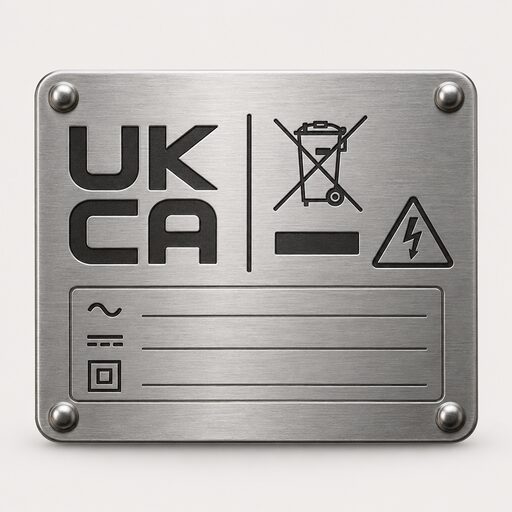 Appliance Standards and MarkingWhich marks should a boiler, heat pump or cylinder have before you buy, and what do they actually prove?
 Installer Schemes and CodesCheck whether your installer is on TrustMark, and whether they belong to HIES or the Renewable Energy Consumer Code.
 Installer QualificationsWhat training and qualifications should a heat pump installer actually have?