In this guide
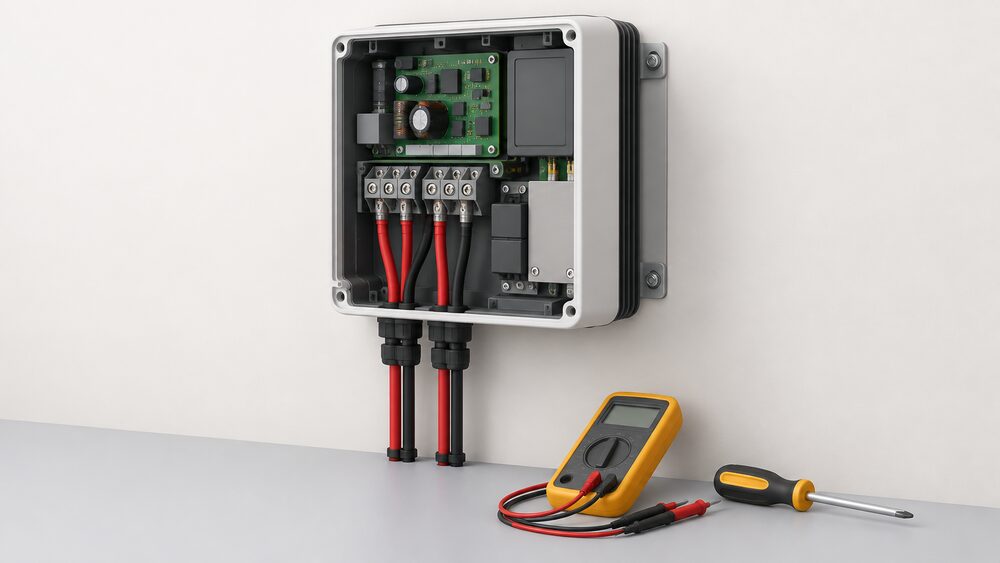
A faulty installation is work that does not perform as the contract, the certification rules or the manufacturer's instructions require, and the defects that recur are narrower than the range of products involved. On solar, the most common and most serious problem owners face is with the inverter, and a system that stops generating altogether is most likely to have a fault with the inverter or a problem with the wiring1. A drop in generation is more often weather, dirt, or a change in the environment such as shading from trees or new structures, and occasionally a faulty DC string1.
What matters for a household is that the remedy is usually written into the paperwork before anything goes wrong. Faults caused by poor workmanship should be covered free of charge by the installation warranty, though the cost of labour for replacing a panel and any scaffolding may not be covered1. TrustMark sets a minimum two-year warranty for work, and a minimum 25-year guarantee for certain measures installed under the Energy Company Obligation2.
What counts as a faulty installation, and the defects that show up most often
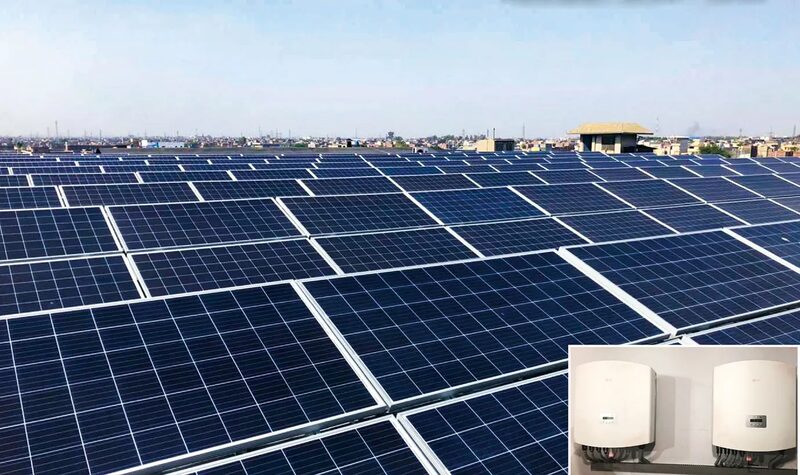
The dividing line is between a fault and a change in conditions. Solar generation falls for weather conditions, dirt building up, or a change in the environment such as shading from trees or new structures, and only sometimes because of a faulty DC string1. A system producing nothing at all points the other way: it is most likely a fault with the inverter or a problem with the wiring, and occasionally a failed generation meter or lost wifi communication after a router change1. A cracked panel rarely happens after installation, and where it does it would most likely have been caused by impact1.
That pattern repeats across technologies. A heat pump that underperforms may be badly sized, badly commissioned or badly set up rather than broken, and the certification framework treats design and commissioning as part of the installation, not as separate services. The Energy Company Obligation rules require measures to be installed by, or under the responsibility of, a person registered with TrustMark for that measure, with a certificate of lodgement issued by TrustMark's operator6. For measures installed before 1 July 2021 the same registration requirement applied under the earlier order7.
The practical consequence is that a defect is often a paperwork defect as much as a physical one. If the measure was not lodged, or the installer was not registered for that measure, the household's route to remediation is weaker than the warranty suggests. Checking the lodgement record is therefore part of diagnosing the fault, not an administrative afterthought.
Who regulates quality: TrustMark, MCS and the certification bodies
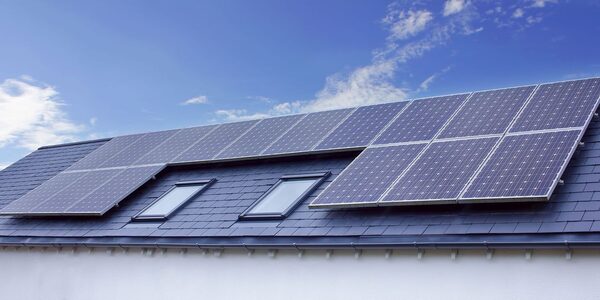
Two registers carry most of the weight. TrustMark is a government endorsed quality scheme9, and the Microgeneration Certification Scheme certifies, quality assures and provides consumer protection for microgeneration installations and installers, covering small-scale renewable electricity technologies such as solar photovoltaic panels, biomass, wind, heat pumps and heat products10. Installers under UK Government schemes must be TrustMark registered and/or MCS certified2.
Certification itself is issued by bodies rather than by the schemes. A scheme specification for solar panel installation lists acceptable issuers of a current and valid MCS certificate as Certsure LLP trading as NICEIC, Napit Certification Ltd, Simply Certification, The IAA (Installation Assurance Authority) and Amtivo Group trading as British Assessment Bureau, and requires the company providing the installation to carry valid TrustMark registration and MCS certification11. That matters when a single body changes what it offers: certification is held by the business and can be issued by another listed body.
The TrustMark Quality Assurance Framework requires measures covered by PAS, and projects containing such measures including MCS, to be installed by or under the responsibility of a TrustMark registered installer and to have a relevant certificate of lodgement12. Under the Green Homes Wales loan terms, the installer must be registered with TrustMark and the relevant body for the relevant type of eligible measure, must comply with relevant PAS certification, and must not be the borrower, a member of the borrower's household or immediate family13.
TrustMark's own record is not unblemished. Neither TrustMark nor the Department for Energy Security and Net Zero have been able to provide minutes of meetings which took place between 2022 and 2024, and as of November 2025, 22 installers had been fully reinstated after meeting requirements on TrustMark's "robust six-point plan", including full remediation of the problems identified14. Reinstatement follows remediation, which is the outcome a household is seeking.
TrustMark: the Government-endorsed quality scheme and what registration means
Registration is a claim about a business, not a guarantee about a job. TrustMark operates as a competent person register for finding an installer that will assess your circumstances and property to identify suitable measures15. The register entry tells a household which measures the business is registered for, which is the detail that decides whether a complaint can be routed through the scheme at all.
The volume of lodged work gives a sense of scale. There were around 14,700 WH:LG measures lodged in the TrustMark data warehouse up to the end of July 2026, covering around 6,700 households5. Lodgement is the mechanism that creates a record independent of the installer's own filing.
Where registration is a condition of funding, it is written into the rules rather than left to good practice. ECO4 providers, agents, installers and contractors should be TrustMark registered16, and the Green Homes Wales terms require the installer to remain registered with TrustMark until the installation work has been completed13. For a household, that means the register entry should still be live at the point the work finishes, not merely at the point the contract was signed.
Guarantees and warranties: what protection to hold in writing
Solar panels usually come with a 25-year performance warranty and a five to 10-year product warranty, while plug-in solar panels carry a typical warranty of 10 years1. The product warranty covers defects in materials and craftsmanship, and many parts of a solar panel system are covered by a warranty from the installer, so warranty documents are worth keeping safe3. Faults caused by poor workmanship are covered free of charge by the installation warranty while the system is still within its installation warranty period5.
Coverage is not total. The cost of labour for replacing a panel and any scaffolding may not be covered, a replacement panel may look different from the original, and some manufacturers require independent testing to prove underperformance before a cracked panel claim is accepted6. Some installers require a full service within a specific period to keep the warranty valid, and fixings screwed into the frame compromise the panel's warranty4. For plug-in systems, registration with the manufacturer activates any warranty and ensures contact over problems or safety recalls7. REC's ProTrust Warranty gives added protection should an REC panel need servicing, but only when installed by an REC Certified solar installer8.
TrustMark, the only Government endorsed scheme for domestic trades, requires a minimum two-year warranty for work and a minimum 25-year guarantee for certain measures installed under the ECO9. Its members are subject to initial and ongoing assessment and surveillance visits, and TrustMark carries out desktop monitoring and risk-based inspections on lodged works10. TrustMark is a member of the Dispute Resolution Ombudsman and offers a Trading Standards Approved membership option through Buckinghamshire & Surrey Trading Standards11.
The warranty is the first line of remediation and the one most often misunderstood. Faults caused by poor workmanship should be covered free of charge by the installation warranty, but the cost of labour for replacing a panel and any scaffolding may not be covered, a replacement panel may look different, and some manufacturers require independent testing to prove underperformance1. Those three caveats decide who pays for the labour even when the fault is admitted.
TrustMark's baseline is a minimum two-year warranty for work, and a minimum 25-year guarantee for certain measures installed under the Energy Company Obligation2. The two figures cover different things: the two-year term is a workmanship warranty, while the 25-year term attaches to specified measures rather than to the whole job.
| Protection | Term | What it covers |
|---|---|---|
| TrustMark workmanship warranty | Minimum two years2 | Work carried out by a registered installer |
| ECO guarantee for certain measures | Minimum 25 years2 | Specified measures installed under the scheme |
| CIGA cavity wall guarantee | 25 years3 | Problems caused by faulty or inappropriate installation of cavity wall insulation |
The CIGA guarantee is for 25 years and covers problems that are caused by faulty or inappropriate installation of cavity wall insulation, and CIGA will have your property registered if the cavity walls have been insulated by an installer covered by the guarantee3. Registration is the trigger: without it, the guarantee does not attach to the property.
The TrustMark 'Find and Fix' service: a free check at no cost to you
Remediation support exists at no charge to the household in some routes. Bristol City Council operates a free Home Repairs Support Service17. The Department for Energy Security and Net Zero has confirmed that it has nominated TrustMark to directly support customers of the Consumer Energy Support service18.
TrustMark's homeowner support is reached through an online form at trustmark.org.uk/homeowner/support/ces, by email at disputes@trustmark.org.uk, or by telephone on 0333 555 123418. The support role is to work with the registered business and its certification body on the defect, which is why the lodgement record and the register entry matter before contact is made.
How to raise a complaint, and where TrustMark's role ends
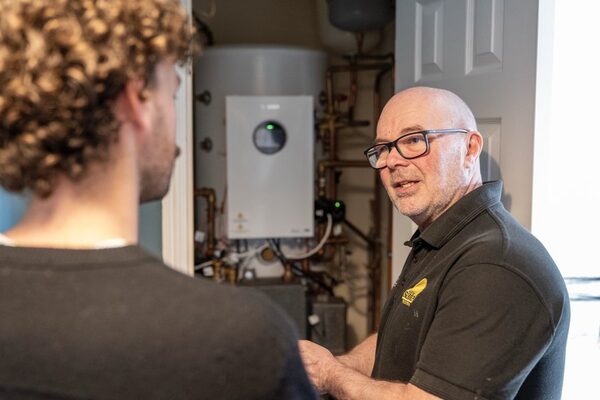
The sequence is installer first, then TrustMark, then dispute resolution. Department for Energy Security and Net Zero advice is to complain directly to the installer, then to TrustMark, then to dispute resolution2. TrustMark's role ends at the point where the business and its certification body have been pressed and the matter is not resolved; it does not adjudicate the technical standard of the work itself.
The Energy Ombudsman accepts a complaint where a problem reported is not fixed within eight weeks, where the household and the energy company cannot agree on a fix, where a deadlock letter is received, or where the decision received is not satisfactory4. The same eight-week threshold appears across Ofgem's consumer guidance, including for complaints about a supplier or network operator19.
| Stage | Route | Trigger |
|---|---|---|
| 1 | Installer's own complaints process | Fault identified |
| 2 | TrustMark homeowner support | Installer does not resolve it18 |
| 3 | Certification body | Registration or standards breach |
| 4 | Dispute resolution | Deadlock, or eight weeks without resolution4 |
The Energy Ombudsman provides an independent escalation route for consumer complaints20, and consumers can complain to it if the issue is not resolved to their satisfaction21. Where a supplier has failed and the household has been moved to a new supplier, a complaint to the new supplier that is unresolved after eight weeks can be pursued through the Energy Ombudsman22. Feed-in Tariff generators have the same eight-week escalation point for disputes with a FIT licensee23.
CIGA and the 25-year guarantee for cavity wall insulation
Cavity wall insulation carries a guarantee structure that predates the current grant schemes and outlasts most of them. The CIGA guarantee is for 25 years and covers problems that are caused by faulty or inappropriate installation of cavity wall insulation, and CIGA will have your property registered if the cavity walls have been insulated by an installer covered by the guarantee3.
The condition is coverage at the time of installation. A household that cannot establish that the installer was covered by the guarantee has no CIGA registration, and the 25-year term does not apply retrospectively. This is the clearest example of why the paperwork matters as much as the physical defect: the guarantee attaches to the property through registration, not through the household's belief that the work was done properly.
Escalation routes: ombudsman, arbitration and dispute resolution

Escalation depends on what is being disputed. For energy supply, the household needs to follow the company's dispute process to give it an opportunity to fix any issue before the ombudsman will take the case24. Once a final decision or deadlock letter is received, or eight weeks have passed and the complaint has not been resolved, a dispute can be registered4.
The remedies available are concrete. Resolution can take the form of financial compensation, an apology, agreeing to fix the problem, a refund, or providing an affordable payment plan25. That list is the realistic range of outcomes, and it is worth holding against the cost of the defect before deciding how far to escalate.
For installation work rather than supply, the certification body and the consumer code are the intermediate steps, and the Energy Ombudsman is not the forum for a workmanship dispute with an installer. The eight-week threshold is nonetheless the common marker across the routes, and it appears in Ofgem's guidance on complaints about a supplier or network operator19, in the Feed-in Tariff generator guidance23, and in the Energy Ombudsman's own process4.
Choosing an installer so problems don't happen again
The published guidance is consistent and narrow. Solar panel installations should always be carried out by a trained and experienced installer26, and it is advisable to contact an installer who can provide the necessary advice, preferably one who belongs to the Competent Person Scheme27. For solar photovoltaic work specifically, the best way to avoid problems with building regulations is to use an MCS certified installer28, and households are advised to get various quotes to compare prices of different installers29.
Structural work is separated out. Where a roof needs assessment for a solar installation, this must be done by a qualified structural engineer30. Electrical assessment is likewise a distinct competence: a scheme specification requires the existing installation within the dwelling to be assessed by an NICEIC certified electrician11.
The pattern across all of it is that registration is checked per measure, not per company. A business may be registered for one measure and not another, and the register entry is the evidence. Checking that entry, keeping the certificate of lodgement, and holding the warranty terms in writing are the three things that decide whether a defect is remediable at the installer's cost or the household's.
Sources30 cited
- Solar panel problems and how to solve them, Which?, 2026-03-26
- Green Homes Grant Voucher Scheme, House of Commons Library, 2026-05-13
- Cavity wall insulation advice, Centre for Sustainable Energy, 2025-12
- Complain about your energy supplier or network operator, Ofgem, 2026
- Warm Homes Local Grant statistics: August 2026, Department for Energy Security and Net Zero, 2026
- The Electricity and Gas (Energy Company Obligation) Order 2023, legislation.gov.uk, 2023-07-24
- The Electricity and Gas (Energy Company Obligation) Order 2018, legislation.gov.uk, 2018-11-12
- ECO4 and the Great British Insulation Scheme mid-scheme changes consultation, Department for Energy Security and Net Zero, 2024-11-14
- Get a grant or loan to improve your home energy efficiency, Bristol City Council, 2026
- ECO flexibility funding, Ceredigion County Council, 2026-09-17
- Barcud Solar Panel Installation Scheme Specification, Sell2Wales, 2026-06-15
- ECO4 delivery guidance version 4.0, Ofgem, 2026-03-26
- Green Homes Wales loan standard terms and conditions, Development Bank of Wales, 2026-09-17
- Public Accounts Committee report, House of Commons Public Accounts Committee, 2026-01-23
- Energy Company Obligation (ECO) scheme, Leeds City Council, 2026-09-20
- ECO4 Flex and GBIS Flex information document, Ceredigion County Council, 2025-11
- Home improvement assistance, Manchester City Council, 2026-09-20
- Written statement: support for householders impacted by the closure of the Energy Company Obligation scheme, Welsh Government, 2026-03-13
- Complain about your energy supplier or network operator, Ofgem, 2026
- Heat networks, Scottish Government, 2026-09-17
- Smart meters: your rights and expectations, Department for Energy Security and Net Zero, 2025-08-08
- Supplier of Last Resort information, Energy Ombudsman, 2026-09-20
- Guidance for FIT generators V18, Ofgem, 2026-04-01
- Understanding your rights, Energy Ombudsman, 2026-09-20
- Our process, Energy Ombudsman, 2026-09-19
- Solar thermal water heating, Planning Portal, 2026-09-17
- Building regulations: solar panels, Planning Portal, 2026-09-17
- Building regulations and renewables guidance, Bedford Borough Council, 2026-09-17
- Solar photovoltaic (PV) panels, London Borough of Bromley, 2026-09-17
- Solar panels: planning and building, East Hertfordshire District Council, 2026-09-17
 Workmanship WarrantiesIf something goes wrong with your solar panels, who actually fixes it and who pays?
 Warranties and DegradationHow long do solar panels actually last, and what do the warranties really cover?
 Support and Spare PartsYour solar inverter or heat pump has broken down.
 When Your Installer Goes BustWhat happens to deposits, part-completed work, workmanship guarantees and complaints when a home energy installation company fails, and how to claim on deposit protection, an insurance-backed guarantee, card or finance cover, and who honours the manufacturer's warranty.
 Buying Energy Equipment OnlineWho fits your solar panels, battery or heat pump when you buy them online, and who puts things right if they go wrong?
 Manufacturer WarrantiesHow long does a boiler, heat pump or solar panel warranty actually last, and what do you have to do to keep it valid?