

In this guide
Paying for a home energy installation is a credit decision as much as a construction one. Where a credit card is used for at least part of the price, Section 75 of the Consumer Credit Act makes the card provider jointly liable with the supplier for a breach of contract or a misrepresentation, so a claim can be pursued against a lender rather than only against an installer who may have stopped trading. The protection attaches to the credit agreement, not to the size of the card payment, and it covers the whole cash price of the goods or services.
The practical value of that rule is that it survives the installer. Deposits and stage payments are the point of greatest exposure in an installation contract, because money moves before the work exists. Card payment, and where possible a credit card rather than a debit card, keeps a second party in the transaction. Debit card payments and PayPal transfers fall outside Section 75 and rely on chargeback, a scheme rule rather than a statutory right, with shorter time limits and no joint liability.
This page sets out how the two routes differ, how buy now, pay later sits outside both, what the MCS financial protection products add, and how a refused claim is escalated to the Financial Ombudsman Service. It also covers the checks worth completing before any money is paid, because protection is a remedy after a failure, not a substitute for vetting an installer.
Section 75: when your card provider is jointly liable
Section 75 is the strongest payment protection available to a householder paying for an installation, because it creates a legal liability on a party that is not the installer. The card provider becomes jointly and severally liable with the supplier for any breach of contract or misrepresentation by the supplier, covering the full cash price of the goods or services rather than only the amount placed on the card. The qualifying band is £100 to £30,000, and the purchase must be made with a credit card, not a debit card or a charge card1.
The connected lender relationship is what makes the route work in practice. Where an installer arranges finance through a lender, or where a card provider extends credit for the purchase, the lender is connected to the supply and can be pursued directly. That matters most in the scenario householders actually fear: a company that takes a deposit, does partial work, and then stops trading. A claim against a dissolved installer is worth little; a claim against a regulated lender is worth pursuing.
The limits are as important as the cover. Section 75 does not apply to debit card payments, to bank transfers, or to payments made through a third-party payment processor that is not the supplier's agent. It does not cover a payment made to one business for work carried out by another, unless the two are connected. And it does not remove the need to prove the breach: the householder still has to show what was promised, what was paid, and how the supply fell short.
For a solar installation, the paperwork that supports a claim is the same paperwork that supports any complaint. The contract, the performance estimate, the quotation, the survey record and the payment receipt together establish the terms and the sums. Where a battery is installed at the same time as the panels, the two are treated as a single supply of an installation of solar panels for VAT purposes, which reflects how the transaction is viewed as one job rather than two5. That framing helps a claim, because the whole installation is the subject of the contract rather than a set of separate purchases.
Chargeback: the other route for card and PayPal payments
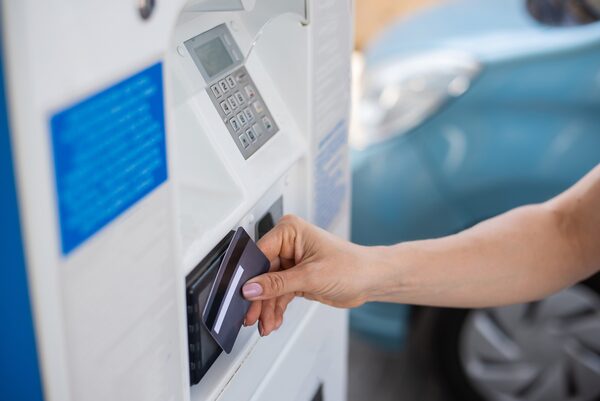
Chargeback is a scheme rule operated by the card networks, not a statutory right, and it is the route that remains open when Section 75 does not apply. It covers debit card payments, credit card payments outside the £100 to £30,000 band, and payments made through PayPal and similar processors, subject to each scheme's own rules and time limits. The claim is raised with the card issuer or the payment provider, which then raises it with the merchant's bank.
The practical differences from Section 75 are three. First, chargeback is not joint liability: the provider is not legally liable for the supplier's breach, it is operating a scheme process, and the outcome depends on the scheme's rules and the evidence. Second, the time limits are shorter and vary by scheme, so a claim raised months after the event may be refused on timing alone. Third, chargeback recovers the amount paid, not the whole value of the contract, so it is a refund route rather than a compensation route.
For installation work, chargeback is most useful at the deposit stage. A deposit paid by debit card before any work begins is a clean chargeback case if the installer then fails to start, because the payment is identifiable, the service was not delivered, and there is no argument about the quality of completed work. Once work is part-completed, the position becomes a dispute about value rather than a simple non-delivery, and both Section 75 and chargeback become harder to run.
The two routes can be pursued in parallel where the facts support both, but they should not be conflated in correspondence. A Section 75 claim is made under the Consumer Credit Act and asserts joint liability; a chargeback request is made under scheme rules and asks the issuer to reverse a transaction. Keeping the two separate in writing avoids a provider treating a statutory claim as a scheme request and refusing it on scheme grounds.
Buy now, pay later: how protection differs
Buy now, pay later is the weakest of the payment routes for installation work, and the reason is structural rather than a matter of provider conduct. These products are typically offered under an exemption from consumer credit regulation, which means the provider is not a connected lender in the Section 75 sense and the joint liability does not attach. The householder's claim is against the installer, and the instalment obligation to the buy now, pay later provider continues independently of whether the work was done.
That separation is the risk. If an installer takes a deposit through a buy now, pay later facility and then stops trading, the householder may still owe the instalments while having no completed installation and no lender to pursue. The provider's own dispute process may allow a payment to be paused while a dispute is investigated, but that is a commercial process, not a statutory right, and it depends on the provider's terms.
The same logic applies to any payment method that inserts a third party between the householder and the supplier without creating a credit agreement. A payment made to a platform that then pays the installer is not automatically a payment to the installer for Section 75 purposes, and the connected lender analysis turns on who extended the credit and to whom. Where the credit is extended by the installer or by a lender connected to the installer, the position is different from where it is extended by an unrelated payment platform.
For a household planning a solar, battery or heat pump installation, the practical consequence is that buy now, pay later should be treated as a payment convenience rather than a protection. Where the sum involved is significant, a credit card payment of at least part of the price preserves the Section 75 route, and a regulated finance agreement arranged through the installer may carry its own protections under the lender's authorisation. The two are not equivalent, and the difference only becomes visible when something goes wrong.
Paying for installation work safely: deposits, stage payments and what to avoid
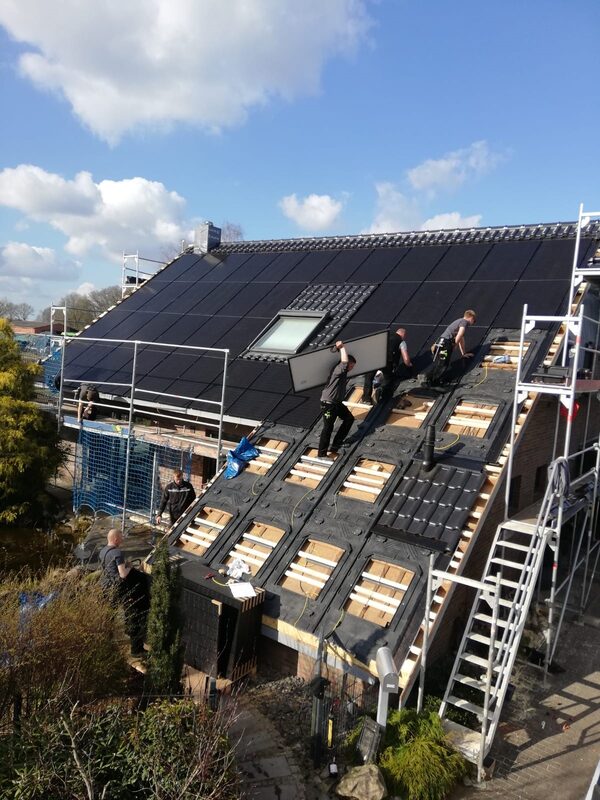
Deposits and stage payments are where households lose money, and the pattern is consistent: a large sum paid up front, work that starts late or not at all, and an installer who becomes unreachable. The protection available depends on how the payment was made, so the payment method is a risk decision made at the same time as the contract.
A staged structure tied to completed milestones limits exposure in a way that a single up-front payment cannot. Money released against work that has been done and inspected is money that cannot be lost to a company that stops trading mid-job. Where a deposit is unavoidable, keeping it proportionate to the mobilisation cost, and paying it by credit card, keeps both the amount at risk and the recovery route in view.
The checks that belong before any payment are technical as well as commercial. A solar installation imposes additional loading on the roof structure, and the roof must be checked for the additional wind, snow and static load imposed by the panels, with compliance against Part A: Structure7. That assessment must be done by a qualified structural engineer7. Electrical work should be undertaken by a Part P registered electrician7. Building regulations approval for solar photovoltaics centres on structural safety, electrical safety and ventilation8, and in Wales the applicable parts are Part A structural safety, Part B fire safety, Part L conservation of fuel and power, and Part P electrical safety9.
The commercial checks are equally concrete. Getting various quotes to compare prices of different installers is the standard starting point11, and using a qualified installer is the baseline expectation7. For solar thermal, checking with the divisional planning office about planning issues before panels are installed avoids a position where permission has to be sought after the system is in place, which can be difficult and expensive12. Where a group-buying scheme such as Solar Together is used, a surveyor visits the property after the offer is accepted to assess roof suitability and confirm the number of panels, their location, cabling locations and colour7.
MCS financial protection products: the new approved scheme
The MCS scheme has been redeveloped to add a layer of financial protection that sits alongside the installer's own registration. The redeveloped MCS:2025 scheme is designed to close the gap in consumer protection, with mandatory financial protection and single-point accountability for resolution13. That is a change in the structure of installer obligations rather than a change to the payment methods a household uses, and the two work together: the scheme protection covers the installer's failure, while Section 75 or chargeback covers the payment.
The timeline matters for anyone assessing an installer's claims. MCS launched a four-week consultation on proposed changes to financial protection on 25 April 2025, with feedback due by 10.00am on Monday 19 May 2025, and published the consultation outcome on 19 August 2025. MCS then announced new approved financial protection product requirements on 28 January 2026, saying the first approved products would be listed on its website by mid-February 2026. By February 2026, MCS had approved new financial protection products and continued to require installers to purchase an MCS approved financial protection product for each customer.
The practical effect is that an MCS certified installer is expected to hold an approved financial protection product for the customer's job, and the products themselves are listed by MCS. That is a scheme requirement, and it is separate from any warranty the manufacturer offers on the equipment. A manufacturer warranty on a solar array, for example, may run for at least 25 years, as with the UKSOL MCS certified monocrystalline panels with built-in Tigo optimisers, which carry a 25 year manufacturer's warranty14. A manufacturer warranty covers the product; the financial protection product covers the installer's obligations. They are not substitutes.
Choosing an installer: checks before you pay anything

The checks that reduce the need for a claim are the same checks that make a claim easier if one is needed. Registration, competence and paperwork all matter, and they can be verified before a deposit is paid.
- Certification. MCS certification covers microgeneration installations and installers, including solar photovoltaic panels, biomass, wind, heat pumps and heat products16. Registration can be checked against the scheme's own records.
- Electrical competence. All electrical work should be undertaken by a Part P registered electrician7.
- Structural assessment. The roof must be checked for the additional wind, snow and static load imposed by the panels, and for compliance with Part A: Structure, by a qualified structural engineer7.
- Building regulations. For solar photovoltaics, the relevant areas are structural safety, electrical safety and ventilation8. In Wales, Parts A, B, L and P apply9.
- Planning position. Solar panels on a house or flat, or on a building within its grounds, are considered in most cases permitted development under the Town and Country Planning (General Permitted Development) (England) Order 2015, Schedule 2, Part 14, Class J17. The permitted development rights for solar panels sit in Part 14 (Renewable Energy) of that Order18.
- Quotations. Getting various quotes to compare prices of different installers is the standard approach11.
- Planning advice. For solar thermal, checking with the divisional planning office before installation avoids the difficulty and expense of seeking permission afterwards12.
Where the property is in a conservation area, the position changes. Prior approval is required before installation where solar panels are located on a flat roof in conservation areas and National Landscapes19. In a conservation area on a flat roof, prior approval is required before installation7. Listed buildings need planning permission and listed building consent20. Panels must not be installed within 1 metre of the edge of the roof under Part 14, Class J for roof-mounted non-residential installations21, and where roof slopes face the highway and rear-facing panels are not feasible, technical evidence is required that no other location could support the equipment, with visual impacts minimised21.
The payment decision follows the checks. A household that has verified registration, seen the structural assessment, and holds a written quotation with a staged payment schedule is in a position to pay a deposit by credit card with the Section 75 route intact. A household that has been asked for a large up-front sum by an unverified installer is not, and the payment method will not repair that.
The Financial Ombudsman Service: free escalation if things go wrong
The Financial Ombudsman Service is the free escalation route when a card provider or lender refuses a claim, and the Energy Ombudsman handles energy disputes on the same free basis. The Energy Ombudsman states that its service is free to consumers looking to resolve energy disputes2, and that disputes can be registered free by website, post, email or telephone22. The same free and independent service is available to heat network consumers under the legislation that extended it23.
The escalation route depends on the type of complaint. For Green Deal complaints, the official scheme rules direct consumers to the Financial Ombudsman Service or the Energy Ombudsman depending on what the complaint is about, and specifically where the complaint is not resolved within eight weeks of contacting the provider1. The scheme rules also cover complaints that a consumer was mis-sold the Green Deal, for example where the provider did not make the consumer aware of the relevant terms1. The Energy Ombudsman also provides dispute resolution services for Flex Assure domestic and microbusiness scheme members24.
The eligibility rules are strict on one point: the consumer must have complained to the supplier first. The Energy Ombudsman's dispute process requires that the complainant has already complained to the named company and has sufficient evidence, including the date the complaint was raised, and that the company name matches the account holder's bill25. The same prerequisite applies to heat network complaints, where the complainant must have complained to the named operator already23. For a Section 75 claim, the equivalent step is complaining to the card provider and allowing it the opportunity to respond before escalating.
"If your complaint is not resolved within 8 weeks of contacting your provider"
The eight-week point is the practical trigger. A provider that has not resolved a complaint within that period has given the consumer the right to escalate, and the ombudsman will take the case. Where a provider has issued a final response sooner, that response also opens the escalation route. The ombudsman's decision is binding on the firm where the consumer accepts it, which is what gives the route its weight.
Complaining to the ombudsman: eligibility, contact details and urgent help

The Energy Ombudsman publishes the contact details a consumer needs, and they should be taken from its own website rather than from any message that arrives unprompted. The published email address is enquiry@energyombudsman.org3, and the postal address is Energy Ombudsman, P.O. Box 966, Warrington, WA4 9DF4. For energy complaints and heat networks, the published telephone number is 0330 440 1624, with option 3 for those lines2. A separate support article gives 0845 055 0760, so the two published numbers disagree and the current one should be confirmed on the ombudsman's own site before calling.
The information needed to open a case is specific. The Energy Ombudsman asks for the energy supplier's name, the name of the account holder, the account number and the date the complaint was first raised with the supplier, for both email and post cases4. For a named company, the eligibility check requires that the complainant has already complained to that company and has sufficient evidence including the date the complaint was raised, and that the company name matches the account holder's bill25. Where a company has an ombudsman reference code, such as C35SAAE01 for SAA Energy Solutions Ltd, that code identifies the company in the scheme25.
Where money has disappeared and urgent help is needed, the sequence is to contact the card provider or bank immediately, raise the dispute in writing so there is a dated record, and avoid any unprompted communication that asks for personal or banking details. The ombudsman route remains open once the provider has had its opportunity to respond, and the eight-week point is the trigger for escalation where the provider has not resolved the complaint1.
What this means for a household's energy independence
Payment protection does not make a household more self-sufficient in energy, but it does determine whether the money spent on that self-sufficiency can be recovered when an installation fails. A solar array, a battery or a heat pump is a long-lived asset that reduces reliance on a supplier and the grid, and the financial exposure sits in the weeks before it exists, when deposits and stage payments have left the household's account and the equipment has not arrived.
The dependence that remains is on the payment chain rather than the energy chain. A credit card provider, a lender, a card scheme and an ombudsman all sit between the household and the installer, and each has its own rules, time limits and eligibility conditions. Section 75 gives the strongest position because it creates joint liability on a regulated lender, but it applies only to credit card purchases in the £100 to £30,000 band1. Chargeback covers more payment methods but recovers less and expires sooner. Buy now, pay later leaves the instalment obligation running while the claim sits against an installer who may no longer exist.
The MCS financial protection products add a scheme-level layer that is independent of the payment method, with mandatory financial protection and single-point accountability for resolution under the redeveloped MCS:2025 scheme13. That is the protection that attaches to the installer's registration rather than to the transaction, and it is why checking certification before paying anything is the first step rather than the last. A household that verifies registration, pays a proportionate deposit by credit card, and keeps the contract, quotation and payment records together holds both routes at once.
Sources25 cited
- Green Deal energy saving measures, GOV.UK, 2026-09-17
- Energy Ombudsman FAQs, Energy Ombudsman, 2026-09-19
- Complain about your energy supplier, Ofgem, 2026
- Creating a case with the Energy Ombudsman, Energy Ombudsman, 2026-09-20
- VAT energy saving materials: VENSAV3210, HM Revenue & Customs, 2026-09-17
- VAT energy saving materials: VENSAV3330, HM Revenue & Customs, 2026-09-17
- Installing solar panels at your home, Brighton & Hove City Council, 2026-09-17
- Building regulations renewables guidance, Bedford Borough Council, 2026-09-17
- Barcud Solar Panel Installation Scheme Specification, Sell2Wales, 2026-06-15
- Installing solar panels safely, HSENI, 2014-05-20
- Solar photovoltaic (PV) panels, London Borough of Bromley, 2026-09-17
- Solar thermal panels, nidirect, 2024-10-22
- Guidance on scam emails claiming to be from Energy Ombudsman, Energy Ombudsman, 2026-02-09
- ECO4 Innovation Approved Innovation Measures v1.17, Ofgem, 2026-01-28
- ECO4 Innovation Approved Innovation Measures v1.5, Ofgem, 2023-10
- ECO4 Flex and GBIS Flex information document, Ceredigion County Council, 2025-11
- Solar panels, Wirral Council, 2026-09-17
- Solar panels and permitted development, London Borough of Richmond upon Thames, 2026-07-06
- Retrofit and energy efficiency: permitted development, Cotswold District Council, 2026-09-17
- Solar panels and planning permission, Cornwall Council, 2026-09-17
- Solar panels planning permission checklist, London Borough of Islington, 2026-09-17
- Information for disputes with flexibility service providers, Energy Ombudsman, 2026-09-20
- Theodore Stevenage Limited, Energy Ombudsman, 2026-09-19
- SAA Energy Solutions Ltd, Energy Ombudsman, 2026-09-19
- Growth Panel Energy FZCO, Energy Ombudsman, 2026-09-19
 Deposits and Staged PaymentsHow much deposit should you pay for solar panels or a heat pump, and what happens to your money if the installer goes bust?
 When Your Installer Goes BustWhat happens to deposits, part-completed work, workmanship guarantees and complaints when a home energy installation company fails, and how to claim on deposit protection, an insurance-backed guarantee, card or finance cover, and who honours the manufacturer's warranty.
 Consumer Rights for Faulty WorkIf an installer does shoddy work, can you make them come back and put it right, and can you get money back if they won't?
 The Full Installers GuideHow do you find an installer you can trust, and what should you check before signing anything?
 Manufacturer Approved NetworksDoes an approved installer badge mean better work, or just a longer warranty on the boiler or heat pump?
 Using an Installer in EnglandHow do you check an installer is registered to sign off their own work, and what happens if they are not?