
In this answer
Short answer
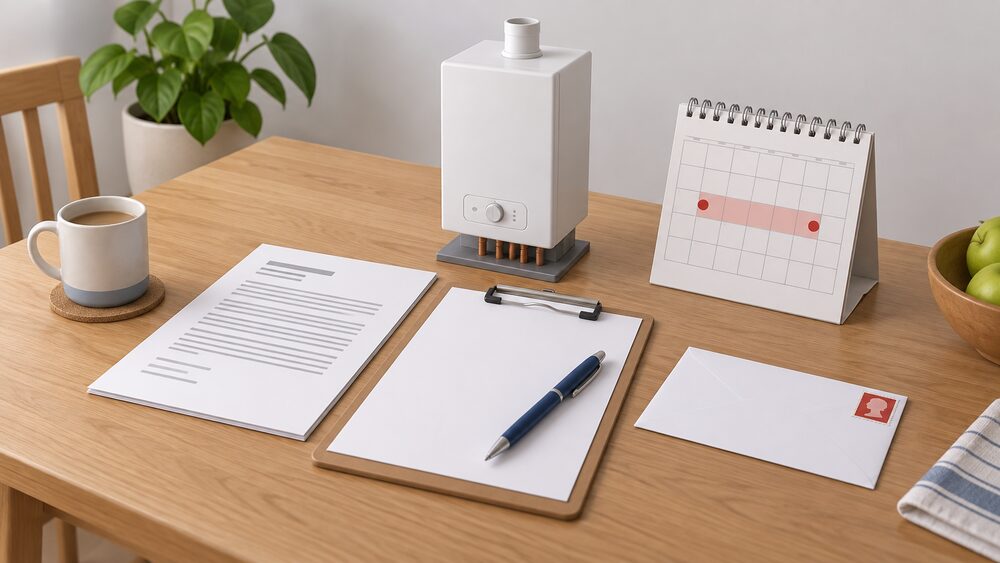
A cancellation charge is money a trader asks for when a household ends a contract before the work is finished or before it has started. Whether it can be charged at all turns on how the contract was made and how far the work had gone. For a service arranged away from the business's premises, by phone, internet, mail order or elsewhere outside their business, there is a cooling-off period of 14 days to cancel and get a refund1. The cancellation period begins when the contract is entered into2.
The critical exception is work that has already begun. If a service has begun during the 14 days cooling off period, all labour and materials provided to date will need to be paid for if the customer then decides to cancel the contract3. Where the householder asked for the service to be provided during the cooling-off period and the business provided the cancellation information, they will have to pay a part of the agreed price, depending on how much was completed when they asked to cancel1. Where the business began work during the cooling-off period without approval, the householder is entitled to a full refund of all costs1.
Complaining is a sequence rather than a single act: the installer first, then any consumer code the firm belongs to, then trading standards or a card and finance route. This page sets out what a cancellation charge is, when it may not be fair, what to put in a complaint, and how far each escalation route reaches.
What a cancellation charge is and when it can be charged
A cancellation charge is a payment a trader seeks when a contract ends early. Its legal basis differs sharply depending on where the contract was made. For a contract made on the business's premises, the 14 day cooling-off period does not apply, and a trader may ask the householder to pay for either or both of a cancellation fee and any loss of profit caused by the cancellation1. That is a materially weaker position for the householder than a distance or off-premises contract, where the right to cancel exists by law.
Where work has started, the charge is usually framed as recovery of costs rather than a penalty. A trader may ask for labour costs up until the time of cancellation, any items installed that cannot be removed without damage, the return of delivered items, and loss of profit1. Independent guidance for one consumer code puts it more simply: reasonable payment may be due for any work carried out, and if the customer decides to cancel within seven working days, reasonable payment may be due for works already carried out prior to cancellation7.
Energy supply contracts follow their own pattern. A household leaving a fixed rate tariff early is normally charged a cancellation fee8. Bulk domestic LPG supply contracts give customers improved rights to cancel or to switch supplier if prices rise beyond a specified level9. These are contract terms rather than installation disputes, and they are handled through the supplier's own complaints process.
The practical point for a household is that the charge should be traceable to something the trader actually did or lost. A figure that appears without any work having started, on a contract made away from the trader's premises, sits awkwardly against the statutory right to cancel without incurring liability except under the provisions of the regulations2.
Your consumer rights: when a cancellation charge may not be fair

The starting position in law is strong. A consumer may cancel a distance or off-premises contract at any time in the cancellation period without giving any reason, and without incurring any liability except under the provisions of the regulations2. Where those provisions apply, the contract is treated as including them as terms, so they cannot be contracted out of10.
The exceptions are narrow and specific. Regulation 34 allows a trader to recover an amount where the value of goods is diminished by handling beyond what is necessary to establish the nature, characteristics and functioning of the goods, up to the contract price11. Regulation 35 deals with return costs and carves out the case where the trader has agreed to bear those costs12. For digital content, the consumer bears no cost for supply in the cancellation period where consent was not given, consent was given without acknowledgement that the right to cancel would be lost, or the trader failed to provide the required confirmation13.
There is also a separate route where selling was improper. A refund based on the difference between what was paid and what the item or service should have been worth is available where the item or service cost £5,000 or more and the householder paid more than the going market price with clear evidence14. That is a distinct basis from the cooling-off rules and applies to misleading or aggressive selling.
Pre-purchase information matters to fairness. A consumer must be informed of cancellation rights before completing the purchase, and an online order must be supplied with a cancellation form3. Where that information was not given, the trader's position on charging for a cancellation weakens considerably.
"The consumer may cancel a distance or off-premises contract at any time in the cancellation period without giving any reason, and without incurring any liability except under these provisions"
How to complain: step-by-step from the installer to the ombudsman
The escalation route is sequential, and skipping a step usually sends the complaint back. The first step is to inform the installer of the complaint as soon as possible and give them at least 10 working days to resolve it before contacting the consumer code4. That 10 working day window is a condition of using the code, not a courtesy.
For complaints about an installation delivered under the Energy Company Obligation, there is a dedicated complaints process page15. For complaints about Ofgem's administration of the Boiler Upgrade Scheme, the contact address is feedback@ofgem.gov.uk16. Complaints about prepayment meter installation follow the supplier route, and the Energy Ombudsman can be contacted if the householder is not happy with the way the supplier has handled the complaint18.
The Energy Ombudsman service is free, but only once the supplier route has been exhausted: a complaint must be raised with the supplier in the first instance, and if the issue is not resolved after eight weeks, or a deadlock letter is received, the ombudsman can take it on5. One supplier's own guidance frames the same waiting period as a question, asking why a customer has to wait 8 weeks20.
Reform is in progress. A parliamentary debate on energy market consumer protection recorded that the complaints process is being shortened and automatic referral to the ombudsman made easier21. Until that takes effect, the eight week clock and the deadlock letter remain the practical gateways.

What to include in your complaint letter
A complaint about a cancellation charge is decided on documents, so the letter should read as a file rather than an argument. Complaints should clearly specify the nature of the complaint and include photographs, copies of any existing correspondence, full contact details, and the name and registration number of the registered business involved22. That list comes from a consumer code's own procedure and is a reasonable template for any installer complaint.
Notice of cancellation should itself be in writing. Cancellation should be communicated in writing or by e-mail to the person shown on the contract7. A template letter exists for cancelling a service arranged online, over the phone or by mail order, and it states plainly that the consumer would like to cancel the contract under the regulations23. Using that wording ties the complaint to the statutory right rather than to goodwill.
The letter should also record the facts the trader will rely on: the date the contract was entered into, since the cancellation period begins then2; whether work had started and whether the householder asked for it to start; and what was actually supplied. Where the complaint concerns an energy account rather than an installation, the topics an ombudsman will recognise include late, incorrect, or missing bills, back billing, being overcharged, a faulty meter, poor customer service, and refusing to refund credit from an account24.
Escalation: trading standards and alternative dispute resolution

Where the installer is not a member of a consumer code, or the code route has run out, the next step is trading standards, reached through Citizens Advice. The Welsh trading standards consumer advice service sets out remedies and redress as an overview of key consumer rights, and the same framework applies across England and Wales26. The Consumer Council for Northern Ireland sets out the other laws that protect consumer rights in Northern Ireland3.
Alternative dispute resolution is a parallel route. The CIGA Arbitration Scheme based the price to lodge a complaint at £25 plus VAT27. That is a lodgement fee, not a charge for the outcome, and it applies to disputes within that scheme's scope.
Where an installer is not registered with a competent person scheme, a different problem arises. The installer cannot self-certify, and the firm or householder must give notice to the local authority of the intention to carry out the boiler work in advance and pay a notification fee28. In Wales the same notification principle applies to boiler and heating work under the building regulations29. In England, a building control body does not need to be notified for certain services or fittings if the owner employs an installer registered with a relevant competent person scheme designated in the regulations30.
For work funded through the Green Deal, the Energy Ombudsman can be contacted if the householder is not happy with the work the installer did, or if they moved into a property and the seller or landlord did not tell them about the loan31. That is a closed scheme, but the redress route for historic installations remains.
If you paid by card or finance: chargeback and Section 75
Card and finance payments give a second, separate route that does not depend on the installer's cooperation. Chargeback is a scheme rule rather than a statutory right: usually, a consumer must make a chargeback claim within 120 days of when they bought the goods or service, but this can vary6. The window is short, so a cancellation dispute that may end in a chargeback should be raised with the card issuer early rather than after the installer has gone quiet.
A separate provision of the Consumer Credit Act 1974 covers finance arranged specifically to buy the goods, service or digital content. It applies where the cost exceeds £30,000 and is less than £60,26026. That band is narrower than many householders assume, and it is tied to finance arranged for the purchase rather than to any card payment.
Energy account credit follows a different rule again. When switching to a new supplier, the old supplier will refund any credit in the final bill, and the householder could get compensation if they do not32. That is a refund of money owed rather than a reversal of a cancellation charge, but it is a common source of the same kind of dispute.

What this means for a household's energy independence
A cancellation charge is a small dispute with a large bearing on how confidently a household can commit to work that reduces its dependence on the grid and on a supplier. The protections that matter are procedural: a 14 day cooling-off period for services arranged away from the trader's premises1, a statutory right to cancel without liability except under the regulations2, and a documented escalation route through a consumer code, trading standards and, for energy supply, the Energy Ombudsman5.
The dependence that remains is on the trader's own record keeping. A cancellation charge is only as fair as the evidence behind it, and the householder's protection rests on written notice, dated correspondence and the registration details of the firm22. Where the installer is not in a scheme, the household carries the notification burden itself, including the notification fee to the local authority28. Where the payment was by card or finance, the recovery route is time-limited, at usually 120 days for chargeback6 and, for purchase finance, within the £30,000 to £60,260 band set by the Consumer Credit Act 197426.
The practical position is that a household that keeps the contract, the cancellation notice and the correspondence has a route at every stage. A household that cancels by phone and relies on memory does not.
Sources33 cited
- Cancelling building or decorating work, Citizens Advice, 2026-09-17
- The Consumer Contracts (Information, Cancellation and Additional Charges) Regulations 2013, Regulation 29, legislation.gov.uk, 2026-09-17
- Other laws that protect your consumer rights, Consumer Council for Northern Ireland, 2026
- Who to contact, Ofgem, 2026-09-17
- Worried about your energy bills, Energy Ombudsman, 2026-03-24
- Consumer protection and the chargeback scheme, House of Commons Library, 2026-09-17
- Cancellation form, Renewable Energy Consumer Code, 2026-09-17
- Energy: your questions answered, Confused.com, 2026-07-03
- Liquid Gas UK customer charter, Liquid Gas UK, 2026-09-20
- The Consumer Contracts (Information, Cancellation and Additional Charges) Regulations 2013, Regulation 34, legislation.gov.uk, 2026-09-17
- The Consumer Contracts (Information, Cancellation and Additional Charges) Regulations 2013, Regulation 37, legislation.gov.uk, 2026-09-17
- The Consumer Contracts (Information, Cancellation and Additional Charges) Regulations 2013, Regulation 35, legislation.gov.uk, 2026-09-17
- Consumer Rights Act 2015, Part 1, Chapter 4, legislation.gov.uk, 2026-09-17
- If you were misled or pressured into buying something you didn't want, Citizens Advice, 2026-09-20
- Energy Company Obligation contacts, guidance and resources, Ofgem, 2026-09-17
- Boiler Upgrade Scheme guidance for property owners, Ofgem, 2026-04
- Boiler Upgrade Scheme guidance for property owners v5.1, Ofgem, 2026-07
- Installing a prepayment meter without your permission, Ofgem, 2026
- Check energy suppliers can install prepayment meters without household permission, Ofgem, 2026
- Raise a dispute: OVO Energy, Energy Ombudsman, 2026-09-19
- Energy Market Consumer Protection, Hansard, 2026-06-17
- Complaints procedure, The Installation Assurance Authority, 2026-09-20
- Letter to cancel a service arranged online, over the phone or by mail order, Citizens Advice, 2026-09-17
- Complain about your energy supplier, Ofgem, 2026
- Heat networks consumer protections draft guidance, Ofgem, 2025-09-05
- Remedies and redress: an overview of your key consumer rights, Trading Standards Wales, 2025-10
- ADR CEDR, CIGA, 2026-09-20
- Boilers and heating: building regulations, Planning Portal, 2026
- Building regulations: boilers and heating, Welsh Government, 2026-09-17
- Approved Document L, Conservation of fuel and power, Volume 1: Dwellings, HM Government, 2026-09-17
- Green Deal energy saving measures, GOV.UK, 2026-09-17
- Check if you are owed money on your energy bill, Ofgem, 2026
- How your electricity or gas bill is calculated, Ofgem, 2026
 Installation ContractsCan you cancel a solar panel or boiler contract after signing?
 Back Billing RulesCan a supplier really charge you for energy you used years ago?
 Prepayment Meters and DebtCan your energy supplier force you onto a prepayment meter because you owe them money?
 Disconnection and WarrantsCan your energy supplier force you onto prepayment or cut you off for debt?
 Energy Debt Repayment PlansOwe money to your energy supplier?
 Buying Pre-Production ProductsWhat happens to your money when you pay a deposit or pledge for an energy product that does not exist yet?