

In this guide
Disconnection for energy debt is rare in Great Britain, and the rules are built to keep it that way. If you have not paid a bill after 28 days, your supplier may contact you about the possibility of disconnecting your gas or electricity, but the usual outcome is a repayment arrangement or a prepayment meter rather than a cut-off1. Where a supplier wants to force a prepayment meter on a household that will not agree, it needs a warrant to enter the property, or it can switch an existing smart meter to prepayment mode remotely2.
The protections are layered. Suppliers must make at least 10 attempts to contact you using different methods before an involuntary installation, must visit your home to check whether a prepayment meter is safe and suitable, and must not install one at all where anyone in the household is vulnerable in the defined ways2. Once installed or remotely switched, £30 credit per meter is applied3. A separate compensation route covers forced prepayment meters installed between 1 January 2022 and 21 January 2023 where the supplier did not follow the rules properly2.
What follows is the process in order: the debt trigger, the notice and contact requirements, the warrant route, the grounds that block an installation, the winter and year-round protections, what happens when credit runs out, and how a household moves back to a credit meter. The lens throughout is independence: a prepayment meter keeps the supply connected but hands control of the payment method to the supplier, and self-disconnection remains the household's own risk.
Can your energy be disconnected, and when a supplier can act
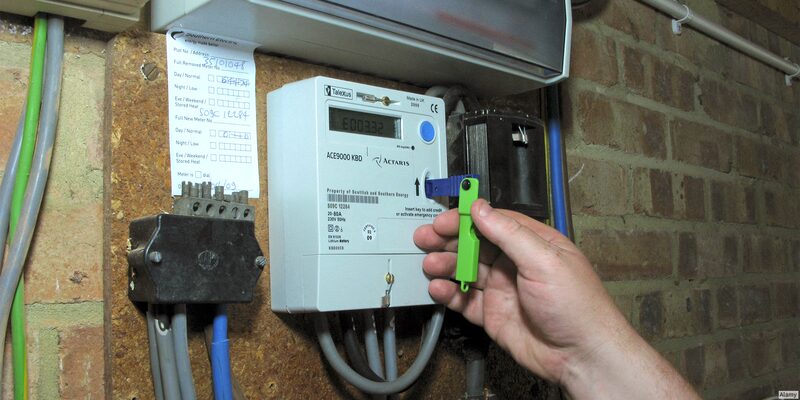
The starting point is that a supplier cannot simply cut a supply off because a bill is unpaid. If you have not paid a bill after 28 days, your supplier may contact you about the possibility of disconnecting your gas or electricity1. That contact is the opening of a process, not the end of it. It is rare to be disconnected, because your supplier will usually offer to install a prepayment meter instead1.
Before any disconnection, the supplier is expected to have explored alternatives. Ofgem's heat network guidance states the principle plainly: any installation of prepayment meters with the explicit consent of the consumer must be explored before disconnection, which should be an absolute last resort6. Disconnection of a heat customer's supply should only be undertaken as a last resort, once all other reasonable options have been exhausted7.
There is also a support duty that runs alongside the debt process. If you are struggling to pay for energy or think you may get into difficulty, you can ask your supplier to agree a payment plan, a payment break or a reduction, to review your payments and debt repayments, and to give access to hardship funds8. A supplier can review your current payments and debt repayments as part of that conversation8.
Two situations that are not debt disconnections are worth separating out. If your energy supplier goes out of business because of financial problems, you will still have electricity and gas supplied to your home or business, and your energy supply will not be cut off9. A supply cut off because of a faulty energy meter is a different matter again, and the route is to contact your energy supplier8. Neither is a debt case, and neither follows the warrant route.
For a household's independence, the practical point is that the supply itself is protected by process, but the payment method is not. A supplier that cannot reach agreement on repayment has a route to change how you pay, and that route is the subject of the next section.
Forced prepayment meter installation: the conditions and the notice
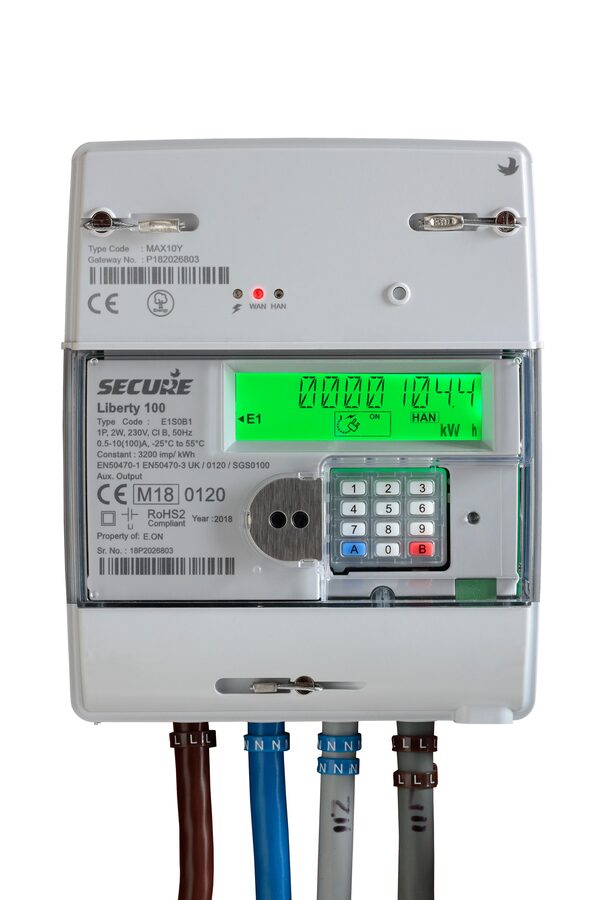
A supplier can install a prepayment meter without your permission if you are building up an energy debt and other ways of recovering that debt have not worked2. The mechanism is either a warrant to enter your property and install a prepayment meter, or a remote switch of your existing smart meter to prepayment mode2. Ofgem defines an involuntary prepayment meter in the same terms: a prepayment meter can be installed with a warrant, or a smart meter switched to prepayment meter mode, to get back debt owed to them without consent from the customer3.
Before that happens, the supplier must meet a set of conditions.
- At least 10 contact attempts, using different methods, for example phone calls, letters or text messages2.
- A home visit to understand your circumstances and check whether a prepayment meter is safe and suitable for your household2.
- An explanation before installation of why the decision was made, when the meter will be installed, what will happen during the installation, and how to contact the supplier if circumstances have changed or the decision is thought to be wrong10.
- £30 credit once the meter is installed or the existing meter is remotely switched10.
The Code of Practice on involuntary prepayment installations sets the same figure: give a £30 credit per meter, or an equivalent non-disconnection period, applied on all warrant installations and remote switches11.
For a household, the significance is that the switch can happen without anyone entering the property at all, where a smart meter is already fitted. That is the point at which the payment method, and with it day-to-day control of the supply, moves to the supplier.
Court warrants: the route to a forced installation
Where a household does not agree to a prepayment meter and the supplier decides to proceed, the route is a court warrant. If you do not come to an agreement with your supplier to pay off your debt, it can apply to a court for a warrant to enter your home to disconnect your supply, and it must send a notice telling you it is applying1. The same warrant mechanism is what allows entry to install a prepayment meter rather than to disconnect2.
The warrant is the point at which the process becomes formal and documented. The supplier must send notice of the application, which gives the household an opportunity to respond, to seek advice, or to reach an agreement before the application is heard. The published guidance does not attach a fee to the household for the warrant itself, and the meter installation is not charged to the customer; the £30 credit runs the other way, onto the meter10.
The scale of past failures in this area is documented. Ofgem's Market Compliance review resulted in energy suppliers that did not follow the rules when installing prepayment meters to collect debt without household permission paying £18.6 million in total compensation and debt write-off4. Of that, suppliers paid £5.6 million in compensation using Ofgem's guidelines to 40,000 customers that had a prepayment meter installed without permission during the assessment period4.
"Energy suppliers that did not follow the rules when installing prepayment meters to collect debt without household permission"
A household that believes a warrant was obtained or executed improperly has a compensation route. You may be able to claim compensation if you were forced to have a prepayment meter between 1 January 2022 and 21 January 2023 and your supplier did not follow the rules properly2.
Grounds to refuse a prepayment meter: vulnerability and unsafe circumstances
The strongest protection in the framework is the list of households where an involuntary prepayment meter must not be installed at all. Your supplier must not install one if there are any vulnerable people in your household2. The defined categories include terminal illness or a severe health condition, dependence on a continuous energy supply for medical equipment, everyone in the household being 75 or over with no support, a child under 2, no one able to top up due to a physical or mental health condition, or temporary circumstances such as pregnancy or bereavement making it unsafe or unsuitable2.
| Circumstance in the household | Effect on an involuntary prepayment installation |
|---|---|
| Terminal illness or severe health condition | Must not install2 |
| Continuous supply needed for medical equipment | Must not install2 |
| Everyone aged 75 or over, with no support | Must not install2 |
| A child under 2 | Must not install2 |
| No one able to top up, through physical or mental health | Must not install2 |
| Pregnancy or bereavement making it unsafe or unsuitable | Must not install2 |
Where a smart meter is already fitted, remote disconnection carries its own conditions. Before a supplier remotely disconnects a household with a smart energy meter, it must have contacted you to discuss options for repaying your debt, for example through a repayment plan, and visited your home to assess your personal situation1.
There is a parallel duty on authorised heat network suppliers. They are obliged to offer a reasonable amount of additional support credit in a timely manner where a prepayment consumer has self-disconnected or self-rationed in circumstances in which any occupant of the relevant household is in a vulnerable situation7. Where the supplier switches an existing supply meter to prepayment mode without the consumer's consent, it must ensure that the consumer receives prepayment meter credit, unless that is technically infeasible or otherwise outside the supplier's control7.
For independence, this is the section that matters most to households with medical equipment or young children. The protection is a rule about the household's circumstances, not about its ability to pay, and it applies before the warrant stage rather than after it.
The Energy UK Vulnerability Commitment: winter and year-round bans
Beyond the statutory and licence rules, most suppliers have signed up to an industry agreement. Most suppliers have signed up to an agreement called the Energy UK Vulnerability Commitment1. Under it, they will not disconnect you at any time of year if you are disabled, have long-term health problems, have severe financial problems, or have children under 6 years old living at home1.
There is also a seasonal protection that applies more widely. In some situations your supplier must offer you support before it disconnects you, and between 1 October and 31 March each year it must offer support, for example help setting up a payment plan, if someone you live with has reached State Pension age, is disabled, or has a long-term physical or mental health condition1. That winter window runs across the whole of Great Britain, and the support duty sits alongside the year-round commitment rather than replacing it.
The two protections work differently, and the difference matters to a household checking its position.
| Protection | Who it covers | When it applies | Basis |
|---|---|---|---|
| Energy UK Vulnerability Commitment | Disabled, long-term health problems, severe financial problems, children under 6 | All year | Industry agreement signed by most suppliers1 |
| Winter support duty | Someone in the household at State Pension age, disabled, or with a long-term condition | 1 October to 31 March | Requirement on suppliers in the relevant circumstances1 |
The practical effect for a household is that the coldest months carry the strongest protection, and that a supplier's own vulnerability policy is worth reading alongside the industry commitment. The published guidance does not set out a separate regime for Scotland, Wales or Northern Ireland on these points; the Energy UK commitment and the winter support duty are described as applying to suppliers generally1.
Self-disconnection and self-rationing when credit runs out
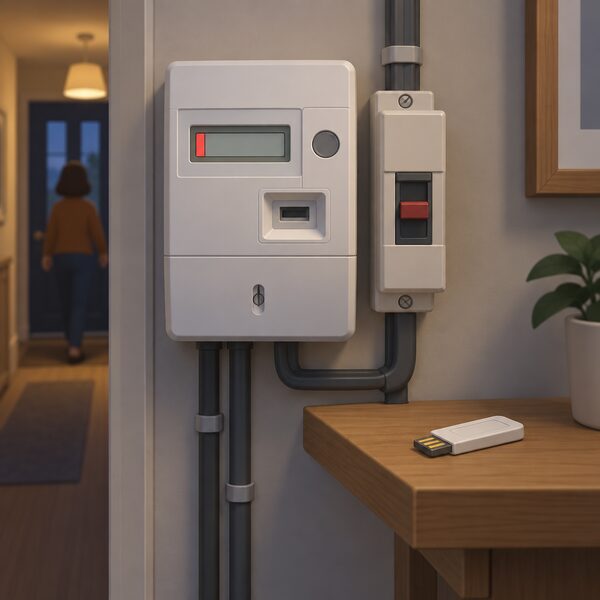
A prepayment meter changes the nature of the risk. Once your credit runs out you will not be able to use any energy until you top up again12. That is self-disconnection, and it happens without any supplier action at all. Self-disconnection happens when a consumer with a prepayment meter does not have enough money to top up their meter and their meter cuts out, or when they do not realise that credit on the meter is running out13.
The financial consequence continues even when the supply stops. The standing charge, and any fuel debt, will still apply even if you completely run out of credit, stop topping up your meter, or stop using energy altogether5. A household that self-disconnects therefore continues to accrue charges while receiving nothing, which is the mechanism by which a short gap in top-ups becomes a larger debt.
Self-rationing is the related behaviour: using less energy than the household needs because credit is short, rather than letting the meter cut out. The heat network guidance treats self-disconnection and self-rationing together as triggers for additional support credit where a vulnerable occupant is in the household7.
For independence, self-disconnection is the clearest limit of the prepayment model. The household holds the meter and the top-up, but the supply stops the moment the balance reaches zero, and the account keeps running. Emergency credit is the buffer against that, and it is finite.
Emergency credit and temporary credit
Prepayment meters give you a small amount of emergency credit which is designed to maintain your energy supply after your regular credit runs out, and it is reclaimed from your next top-up5. Most pay as you go smart meter systems include emergency credit if your balance reaches zero, and it can usually be activated directly through the meter or the in-home display14.
The purpose of emergency credit is narrow and worth stating exactly. It is designed to help avoid sudden disconnection, provide temporary energy access, and give customers time to top up15. It is not a grant and it is not a payment holiday: the amount advanced is recovered from the next top-up, so a household that uses it starts the following period with less credit than it paid for.
The published guidance does not give a single emergency credit amount, because the figure is set by the meter and the supplier rather than by a national rule. A household that needs to know its own figure can find it on the meter or the in-home display, or by asking the supplier. What the guidance does establish is the mechanism: emergency credit is available on most smart prepayment systems at a zero balance, activated at the meter or display, and repaid from the next top-up14.
For a household's independence, emergency credit is the difference between a gap in top-ups and a night without supply, but it is a loan against future credit rather than a source of support. Households that rely on it repeatedly are, in effect, running a persistent shortfall, and the debt and standing charge continue underneath5.
Debt on a prepayment meter: how repayments are taken
Once a prepayment meter is in place, debt is recovered through the top-ups rather than through a separate bill. The standing charge and any fuel debt still apply even if you completely run out of credit and stop topping up, known as self-disconnection5. In practice that means each top-up is split: part goes to the standing charge, part to the debt repayment, and the remainder becomes credit for energy.
The rate at which debt is recovered is a matter for the arrangement with the supplier, and the published guidance does not set a single percentage or a single weekly figure. What it does set is the direction of travel: a supplier can review your current payments and debt repayments, and can agree a payment plan, a payment break or a reduction where you are struggling8. A household that cannot manage the deduction rate can ask for it to be reviewed rather than simply stopping top-ups, because stopping top-ups does not stop the debt5.
There is a switching consequence attached to debt. You cannot switch supplier if you have been in debt to your supplier for more than 28 days16. That rule keeps a household with arrears tied to its current supplier until the debt position changes, which is a real limit on independence for anyone trying to move to a cheaper tariff while repaying.
The Fuel Bank Foundation route exists for households at the sharp end. Its eligibility includes those with prepayment meters and at risk of imminent disconnection15. That is emergency support rather than a debt solution, and it sits alongside the supplier's own hardship funds8.
Moving off a prepayment meter: switching to a credit meter
Leaving a prepayment meter is possible, and the rules differ depending on whether the household rents. Some fuel suppliers will install a new meter for free, although in most cases you will need to pass a credit check or pay a refundable deposit, and private tenants who are the bill payer have the right to change payment method5. Switching from an existing gas or electricity prepay meter to a smart credit meter is straightforward for customers who meet the supplier's conditions17.
For renters, the position is set out in official guidance. If you are a private renter, if the energy bills are in your name or you prepay for your energy, you can choose to have a smart meter, after checking the tenancy agreement and letting the landlord know18. That is a right to the meter, and it sits alongside the right of a bill-paying tenant to change payment method5.
Debt is the main obstacle. You cannot switch supplier if you have been in debt to your supplier for more than 28 days, and a prepayment customer who owes up to £500 is treated differently from one who owes more16. The published guidance gives the £500 figure as the threshold for prepayment customers in the switching rules, and it does not set out a separate route above it16.
For independence, moving to a credit meter restores the ordinary billing relationship and removes the self-disconnection risk, but it depends on a credit check, a deposit, or a debt position that satisfies the supplier. The meter is the household's, but the decision is the supplier's.
Compensation and complaints: what may be owed and where to escalate

Complaints about energy supply start with the supplier. The supplier is the contact point for problems relating to late, incorrect or missing bills, back billing, being overcharged, a faulty meter, poor customer service, or refusing to refund credit from your account19. Where energy is paid for through a site owner or landlord, that party is the first point of contact for a problem or complaint8.
If the supplier does not resolve it, the Energy Ombudsman is the next step. You must raise a complaint with your supplier in the first instance, and the service is free if the issue is not resolved after eight weeks, or you receive a deadlock letter20. The Ombudsman is an independent service, separate to Ofgem, for problems with an energy supplier, an energy broker, a network operator or a heat network supplier21. It can require the company to correct the problem, apologise, explain what happened, and make a financial award22. Possible outcomes include financial compensation, an apology, agreeing to fix the problem, a refund, or providing an affordable payment plan19.
For prepayment meter cases specifically, you can contact the Energy Ombudsman if you are not happy with the way your supplier has handled your complaint2. Heat network consumers should notify their heat supplier first, and the heat supplier has 8 weeks to resolve the complaint before the Ombudsman is approached6.
The volume of complaints is rising. The Energy Ombudsman accepted 46,532 cases in the first half of 2026, the first half-year rise since 2023, with billing disputes accounting for 58% of cases23. Consumers were informed about their right to refer unresolved complaints to the Ombudsman after eight weeks or once a deadlock had been reached23.
For a household's independence, the complaints route is the main lever when the supplier controls the payment method. It is slow, and it depends on the supplier having had the chance to resolve the issue first, but it can produce compensation and a change of approach.
Sources23 cited
- If you've been told your energy supply will be disconnected, Citizens Advice, 2026-09-20
- Check if energy suppliers can install prepayment meters without household permission, Ofgem, 2026
- Involuntary prepayment meter energy supplier Code of Practice, Ofgem, 2023-04-18
- Compensation for installing prepayment meters without permission, Ofgem, 2025-05-28
- Prepayment meters, Centre for Sustainable Energy, 2025-08
- Heat networks regulation consumer protection guidance decision, Ofgem, 2026-01-13
- Heat networks consumer protections draft guidance, Ofgem, 2025-09-05
- Get help with your energy bills, Ofgem, 2026
- What happens if your energy supplier goes out of business, Ofgem, 2026
- Installing a prepayment meter without your permission, Ofgem, 2026
- Energy suppliers sign new Code of Practice on involuntary prepayment installations, Ofgem, 2023-04-18
- Prepayment meters consumer guidance, Ofgem, 2026
- Self-disconnection research briefing, Parliament, 2022-12-14
- How to use a smart meter in prepay mode to save money, Smart Energy GB, 2026
- Boosting the Fuel Insecurity Fund, Scottish Government, 2026-09-17
- Switch your home energy supplier, Ofgem, 2026
- How to get a smart meter, Smart DCC, 2026
- Smart meters, Energy Ombudsman, 2026-09-20
- Complain about your energy supplier, Ofgem, 2026
- Worried about your energy bills, Energy Ombudsman, 2026-03-24
- Complain about your energy supplier or network operator, Ofgem, 2026
- How to leaflet, Ofgem, 2014-08
- Energy Ombudsman H1 data 2026, Energy Ombudsman, 2026-08-24
 Prepayment Meters and DebtCan your energy supplier force you onto a prepayment meter because you owe them money?
 Prepayment and Vulnerable RulesThe licence obligations on energy suppliers when a household falls into debt: when a prepayment meter may be installed without consent, the warrant process, the ban covering highly vulnerable households, remote switching of smart meters, and the free help available.
 Prepayment Meter DebtHow debt repayment is set on a prepayment meter, the limits on the share of a top-up that can be taken, and how to have a rate reviewed.
 Energy Debt Repayment PlansOwe money to your energy supplier?
 Check Supply Capacity FirstAdding a heat pump, car charger or home battery can push your electricity supply past what it can safely handle.
 Smart Meter InstallationCan your supplier make you have a smart meter, and how long should you wait for an appointment?