
In this guide
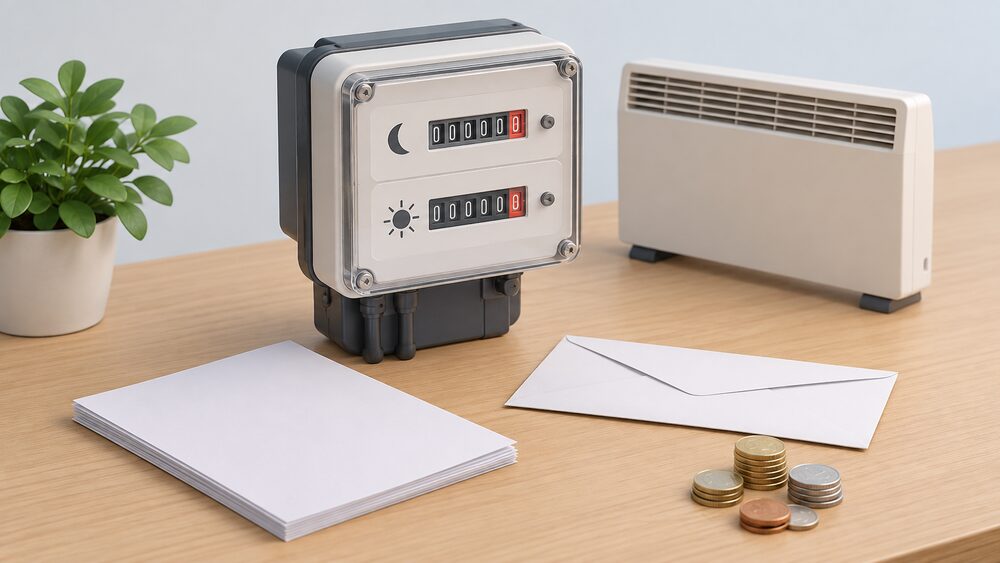
Economy 7 is a two-rate electricity tariff: a cheap rate for seven hours overnight and a more expensive rate for the other 17 hours of the day1. It is not a supplier, a meter brand or a contract, but a billing structure that has to be matched to a meter able to record consumption in two registers. The cheaper rate usually runs between midnight and 7am, though the exact window is set by the regional network operator and varies by supplier and region1.
The economics are simple and unforgiving. Because the daytime rate is usually higher than on a normal tariff, the tariff only pays for a household that can shift a large share of its consumption into the cheap window1. Independent guidance puts the threshold at more than 40% of electricity used at night, with other sources saying more than 35%, and one putting the floor at 30%1. Below that, a single-rate tariff is likely to cost less.
Economy 10 is the variant for households that need cheap power during the day as well as at night. It gives ten off-peak hours in total, split into blocks rather than one continuous run, and it is far less widely available than Economy 75. Both sit inside the price cap, which covers default tariff customers paying by standard credit, Direct Debit, prepayment meter or Economy 7 meter7.
What Economy 7 is: a dual-rate tariff with seven cheap hours overnight
Economy 7 is a time-of-use electricity tariff that charges two different prices depending on when power is used10. The cheaper off-peak rate applies for seven hours out of every 24, usually at night, and the on-peak rate applies for the remaining 17 hours2. Ofgem has described the structure in the same terms for well over a decade: all major suppliers offer Economy 7 tariffs, which offer cheaper electricity at night but slightly more expensive rates during the day12.
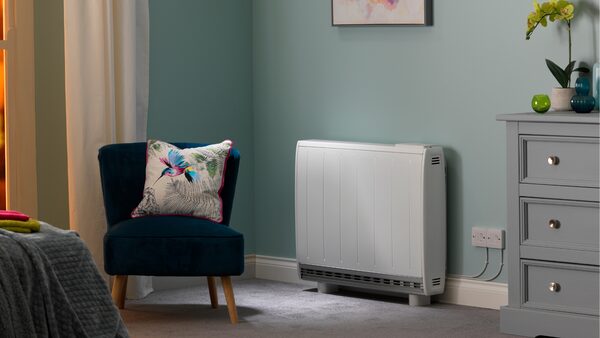
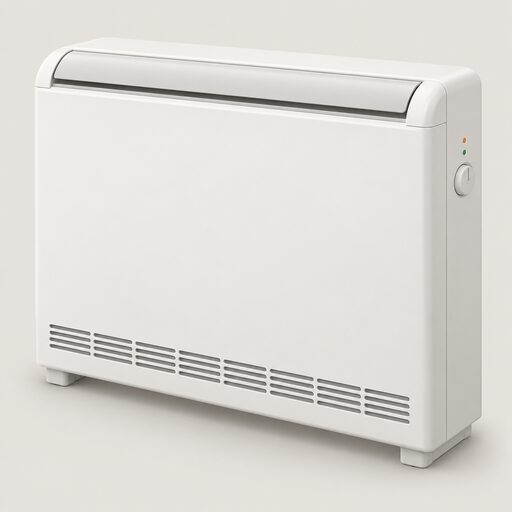
The tariff exists because of storage heating. Economy 7 and Economy 10 tariffs are mainly intended for homes that run on an electric heating system and use storage heaters, which draw power overnight to charge a thermal store and release it through the following day2. People with Economy 7 typically use the cheap hours to charge their electric storage heaters with heat13. Storage heaters themselves need a time-of-use tariff such as Economy 7 or Economy 10 to access cheaper electricity prices, so the meter, the tariff and the heating system are a package14.
That package has a boundary. Economy 7 is only available for electricity-heated homes and not those with a gas supply, and the same restriction applies to Economy 1015. It is also not possible to get an Economy 7 meter for a gas supply1. A household with mains gas therefore cannot use the tariff as a general cheap-power window for the whole house; the arrangement is built around an all-electric or electrically heated property.
For a household's energy independence, Economy 7 does something specific and limited. It lets a home buy a large block of electricity at a price well below the daytime rate, which suits a property that can store energy as heat or, increasingly, in a battery. It does not reduce dependence on the grid, on a supplier or on the wholesale market that sets both rates. The cheap window is a price signal, not a source of supply, and the household remains connected and billed throughout.
Off-peak hours: when the cheap window actually runs
The seven cheap hours are not a national fixed clock. The cheaper rate usually runs between midnight and 7am, but this varies across suppliers1. One description puts the window as a seven-hour period at some point between 11.00pm and 8.00am2. The regional network operator, the company responsible for physically supplying electricity to a property, defines the hours, and the window can run between seven and nine hours depending on the area2.
That regional variation matters more than it first appears. A household that runs a storage heater or charges a battery needs to know its own window, not the national average, because the charging period has to fit inside it. Some energy companies also offer extra hours during winter, which lengthens the cheap period in the season when electric heating demand is highest15. Some Economy 7 variations offer 8.5 or 10 hours rather than seven13.
Economy 10 works differently. It gives ten hours of cheaper electricity, usually in three time periods throughout the day15. The published accounts of where those hours fall do not agree:
| Source | Economy 10 off-peak shape |
|---|---|
| Energy Helpline | Seven hours during the night and three during the day, most likely in the afternoon or evening5 |
| National Energy Action | Three hours in the afternoon, two in the evening and five through the night6 |
| Smart Energy GB | Three of the hours in the afternoon and seven overnight2 |
| Uswitch | Examples include three hours in the afternoon, four in the evening and three in the early morning, and two hours at lunchtime, three in the evening and five overnight16 |
For a household, the difference between the two tariffs is where the cheap power lands. Economy 7 concentrates it overnight, which suits storage heating and overnight battery charging. Economy 10 spreads it into the afternoon and evening, which suits a household that is at home during the day or that wants to run appliances outside the overnight block. Neither gives cheap power at will: both are fixed windows, and consumption outside them is charged at the peak rate.
How much cheaper the night rate is, and what the day rate costs
The gap between the two rates is the whole point of the tariff, and it is wide. The assumed Economy 7 unit rates used in official modelling are 34.38p per kWh for on-peak and 15.43p per kWh for off-peak, on a 58:42 on-peak to off-peak split8. The off-peak figure of 15.43p per kWh is also cited as the average cost of an Economy 7 off-peak rate in January 202614. The night rate is therefore a little under half the day rate on those assumptions.
The day rate is where the tariff bites. The daytime rate will usually be higher than on a normal tariff, and some Economy 7 tariffs charge almost double the night rate during the day1. For comparison, most suppliers charge around 26.3p per kWh of electricity on their single-rate standard variable tariffs in the South Wales (SWALEC) region2. A household on Economy 7 is therefore paying a premium on every unit used outside the cheap window, and the size of that premium is what the night usage has to overcome.
The price cap treats multi-rate tariffs as a category of their own. Ofgem defines a multi-rate tariff as one where a customer pays one rate during a specified off-peak period and another, more expensive rate during peak hours, with Economy 7 as the example17. The cap covers default tariff customers paying by standard credit, Direct Debit, prepayment meter or Economy 7 meter7. Within the cap, Economy 7 customers paying by standard credit face an additional £84 compared with those on Economy 7 meters paying by Direct Debit13. In the 1 April to 30 June 2025 period, the standard credit cap level for electricity-only customers on Economy 7 meters rose to £1,275, a £55 or 5% increase19.
The cap level for Economy 7 Direct Debit customers from 1 October 2026 is £1,046, up 1% on the previous period, against £1,723 for Direct Debit customers generally9. The assumed consumption split behind those figures is set by direction: Ofgem has used a specific Assumed Consumption Split for Economy 7 tariffs in the prepayment price cap20. That split is what makes the Economy 7 cap figure look lower than the headline number: it assumes a household using a heavier share of its electricity overnight than many homes, which is why the threshold figures elsewhere on this page sit at 30% and above.
Is Economy 7 worth it? The night-usage threshold for savings
The threshold is the single most useful number on the page, and the published figures differ. One states that a household would have to use more than 40% of its electricity during the night to make switching worthwhile1. Another puts the general rule of thumb at more than 35% of electricity at night for Economy 7 to be cost-effective2. A third says that for Economy 7 to be economical, a household should be able to use at least 40% of its electricity at night6. A fourth sets the floor lower, at least 30% of electricity during the cheaper night-time hours15. A fifth says that using less than 30% of electricity during the cheaper night-time hours could mean paying less on a single-rate tariff7.
Read together, the range runs from 30% to 40%, and the direction of travel is consistent: the higher the night share, the safer the case. The disagreement is not trivial, because a household sitting at 35% would be inside the threshold on one source and outside it on another. The reason for the spread is that the answer depends on the size of the day rate premium on the particular tariff, which varies by supplier and region, and on the standing charge, which is not always lower on a two-rate tariff.
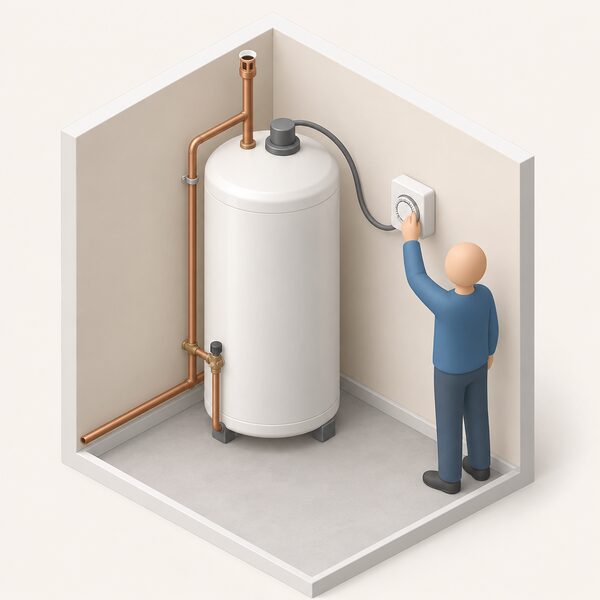
What drives the night share is the heating and hot water system. A property with storage heaters charging overnight, an immersion heater on a timer and a battery charging in the cheap window can push a large share of consumption into the off-peak register. A property with a gas boiler and ordinary daytime habits cannot, because most of its electricity use is lighting, appliances and cooking in the evening peak. Economy 7 is only available for electricity-heated homes and not those with a gas supply, and it suits households using a decent share of their electricity overnight; homes with little night-time use are usually better off on a single rate21.
For energy independence, the threshold is the honest limit of the tariff. Economy 7 rewards a household that can store energy, whether as heat in a storage heater or as charge in a battery, and it penalises one that cannot. It does not make a home self-sufficient and it does not insulate a household from price changes, because both rates move with the cap and the wholesale market. What it does is give a household with the right equipment a way to buy its energy at a materially lower price for part of the day.
The Economy 7 meter: readings, displays and how to identify one
An Economy 7 meter includes two different readings10. One is for on-peak hours, which could be marked as normal or day, and one is for off-peak hours, marked low or night, and these may be shown as Rate 1 and Rate 2 or R1 and R215. The meter has two sets of numbers, one marked low, which means night, and normal, which refers to today1. These two sets of numbers are typically marked low and normal2.
On a digital or prepayment meter, each reading is usually accessed by pressing a button on the meter, sometimes marked Rate 1 and Rate 222. The daytime or on-peak reading should either be the top one, marked as normal or day, or the default display, and the night-time or off-peak reading is the bottom one, marked low or night22. A meter may also have a number marked day rate alongside a red button that is pushed to get the night rate1. A smart meter can be configured for Economy 7, and all smart meters can support tariffs which charge different prices at different times throughout the day and night, including Economy 7, with Economy 10 meters also available23.
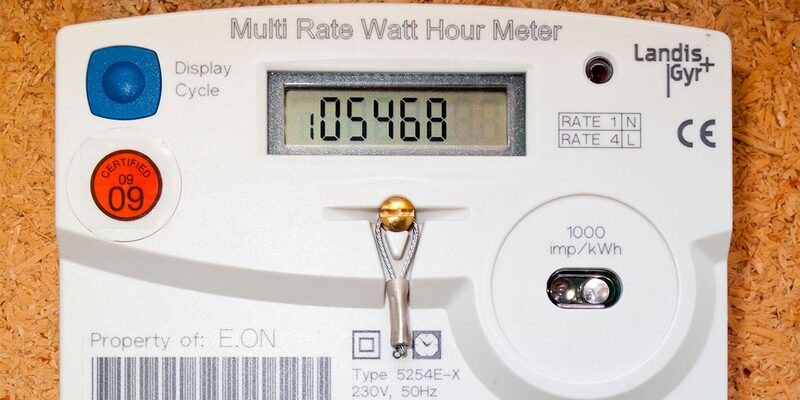
Identifying the meter is straightforward from the bill. The signs are:
- two meter readings;
- a low or off-peak rate;
- a normal, high or on-peak rate;
- a button to press to see each rate on an electronic meter6.
In Scotland, Economy 7 meters are known as white meters, because the meters supplied by energy companies are white10. Where a property has solar panels and an export meter, the display shows a small 5 followed by five numbers, and those five numbers are the export reading, which is separate from the two import registers24.
Economy 10: ten off-peak hours split across the day
Economy 10 offers much cheaper usage rates during 10 off-peak hours of the day5. It works in the same way as Economy 7 but offers 10 hours of low-cost electricity per night, according to one description10, while others describe the hours as split. The tariff provides 10 set hours of cheaper off-peak electricity, with three hours in the afternoon, two in the evening and five through the night6. Another account gives seven hours during the night and three during the day, most likely in the afternoon or evening5. A third says three of the hours are in the afternoon and seven are overnight2. A fourth gives examples including three hours in the afternoon, four in the evening and three in the early morning, and two hours at lunchtime, three in the evening and five overnight16.
The variation is the defining feature. Not all Economy 10 tariffs operate on the same off-peak hours, and some suppliers change their off-peak hours when the clocks go forward and back5. The off-peak times vary from supplier to supplier and region to region16. A household on Economy 10 therefore has to establish its own window from its own supplier rather than assume a national pattern.
Economy 10 is not as widely used as Economy 7, and not all suppliers offer tariffs that support it6. There simply are not many Economy 10 suppliers available16. Many price comparison sites, including Uswitch, cannot support comparisons for Economy 10 meters because of the complexity of the three different rates, and Uswitch does not support Economy 10 switching at all, directing customers to suppliers directly2. Most price comparison sites, including Uswitch, do not compare Economy 10 deals16.
The cost structure differs too. Economy 10 offers unit rates of up to half the price of peak rates, but the standing charges are often higher16. Standing charges can be higher on an Economy 10 tariff than on Economy 72. Economy 10 tariffs typically only offer five hours of heat at night, complemented with three in the afternoon and two in the evening, which is a different shape of cheap power from the seven continuous overnight hours of Economy 716. For a household, that means Economy 10 suits a pattern of daytime occupancy and daytime appliance use, while Economy 7 suits a pattern built around overnight storage.
Economy 10 availability, meters and the cost of switching in or out
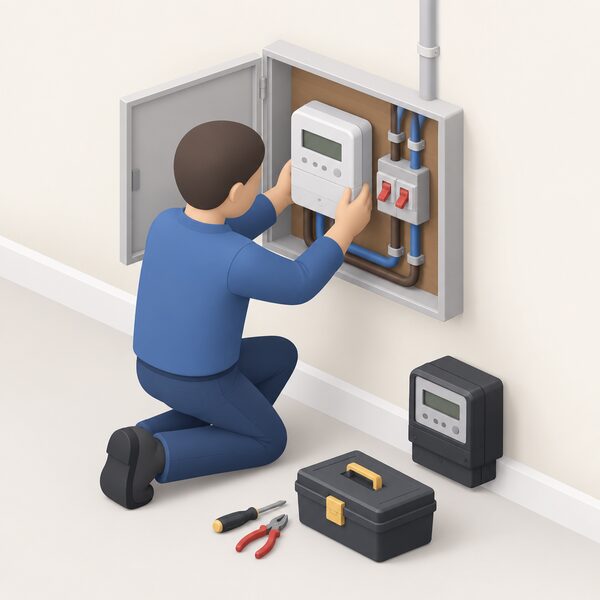
Economy 10 requires its own meter. To get an Economy 10 tariff a household must have an Economy 10 meter6. A supplier may be able to install one but may charge a fee to do so, as they are fairly uncommon16. A household can request an Economy 10 meter from its energy supplier, which may charge for it, and can request a smart meter at no additional cost2.
Leaving the tariff also has a cost. If a household is switching away from Economy 10 to a standard tariff, it may need to pay a fee to have a standard meter installed16. If it wants to switch back to a fixed tariff, it will need to pay to replace the meter with a regular one5. Switching from one Economy 10 plan to another may require the meter to be reprogrammed by an engineer16. These are meter costs, not exit fees, and they fall on the household rather than the supplier.
Economy 7 and Economy 10 are older time-of-use tariffs that need compatible meters, while newer flexible tariffs typically work with smart meters21. Time-of-use tariffs are becoming less common as the legacy meters that support them are being phased out26. That phase-out has a hard edge for some households: anyone with radio teleswitch systems on Economy 7 or Economy 10 tariffs will need a new meter to ensure their heating and hot water continue turning on and off as usual27.
For households that have already left an Economy 7 or Economy 10 tariff, the position is calmer. There is no rush: the meter will continue to function normally and, providing all electricity is on one circuit, there should be no difference, though the Centre for Sustainable Energy recommends smart meters27. That distinction matters, because it separates the households facing a forced meter change from those simply sitting on an old two-rate meter they no longer use as intended.
Economy 7 compared with single-rate and smart tariffs
The comparison is not between two prices but between two shapes of pricing. A single-rate tariff charges one unit rate at all hours, so a household pays the same for a unit used at 3am as at 6pm. Economy 7 charges one rate during a specified off-peak period and another, more expensive rate during peak hours17. The single-rate tariff is simpler and has no threshold to clear; the two-rate tariff is cheaper only for households that can shift enough consumption into the window.
Smart meters change the menu rather than the principle. Smart meters enable time-of-use tariffs, where different amounts are charged for electricity used at different times7. Economy 7 and Economy 10 use fixed cheaper periods, while newer electric vehicle and tracker tariffs can be more dynamic and usually work best with a smart meter21. A household does not have to change tariff if it gets a smart meter28. A smart meter is compatible with Economy 7 tariffs and fixed rate tariffs and can enable newer time-of-use tariffs, so the meter itself does not lock a household into one structure2.
For a household with a battery, the guidance points in a particular direction: a battery-only setup is best served by either a dynamic tariff or Economy 715. That is a statement about the shape of the cheap window, not a recommendation of a supplier. A dynamic tariff moves its prices with the market and can reward a battery that charges and discharges at the right moments; Economy 7 offers a fixed overnight window that a battery can be programmed to fill. Both depend on a meter able to record consumption by time, and both leave the household connected to the grid and dependent on a supplier.
The choice between them turns on how much control a household wants and how much complexity it will manage. Economy 7 is a static, predictable window with a known number of cheap hours. Dynamic tariffs are variable and usually need a smart meter to work. Neither removes the standing charge, and neither changes the fact that the household is buying from a supplier at prices that move with the cap and the wholesale market.
Northern Ireland: Economy 7 prices and the Consumer Council comparison tables
Northern Ireland has its own electricity market and its own Economy 7 price information. The Consumer Council publishes an Economy 7 price comparison table for Northern Ireland, with tariffs correct on the day of comparison29. The table published on 28 August 2026 carries that date, and the Council's stated policy is that tariffs will be updated on the date when the new increase or decrease comes into effect, not when announced29. The Council also offers an energy price comparison tool to compare electricity and gas tariffs for all suppliers in Northern Ireland30.
The published price list for Northern Ireland Economy 7 tariffs carries prices for 18 September 2026 including VAT of 5%, and notes that some tariffs may be available to new customers only30. That VAT position is a Northern Ireland feature and differs from the rest of the UK. The Consumer Council's comparison tables are the practical reference point for a household there, because the GB price cap does not apply in the same way and the supplier landscape is different.
For households struggling with bills in Northern Ireland, separate advice is available from nidirect31. The wider point for energy independence is the same as in Great Britain: Economy 7 in Northern Ireland buys a cheaper overnight block from a supplier, and the household remains dependent on that supplier, the network and the wholesale market. The tariff changes the price of part of the day, not the source of the power.
Sources31 cited
- What is Economy 7?, Energy Helpline, 2026
- What is Economy 7?, Smart Energy GB, 2026
- Time of use tariffs explained, Which?, 2026
- What is Economy 7?, Confused.com, 2026
- What is Economy 10?, Energy Helpline, 2026
- Getting the most from Economy 7, National Energy Action, 2026
- Gas meters and electricity meters: what you need to know, Which?, 2026
- Electric heating, Centre for Sustainable Energy, 2026
- Summary of changes to the energy price cap, 1 October to 31 December 2026, Ofgem, 2026
- Types of energy tariff, Confused.com, 2025
- Should I switch to a time of use tariff?, Energy Saving Trust, 2026
- Demand side response consultation, Ofgem, 2010
- Summary of changes to the energy price cap, 1 October to 31 December 2025, Ofgem, 2025
- Storage heaters, Which?, 2026
- Tariffs for renewable technology, Energy Saving Trust, 2026
- Economy 10, Uswitch, 2025
- Understand your electricity and gas bills, Ofgem, 2026
- Changes to the energy price cap between 1 January and 31 March 2026, Ofgem, 2025
- Summary of changes to the energy price cap, 1 April to 30 June 2025, Ofgem, 2025
- Prepayment price cap direction to use a new assumed consumption split for Economy 7 tariffs, Ofgem, 2017
- Energy flexibility, Smart Energy GB, 2026
- How to read your gas and electricity meter, Confused.com, 2025
- Smart meters, Energy Ombudsman, 2026
- Import and export meters, NIE Networks, 2026
- Energy tariffs explained, Uswitch, 2026
- How to switch energy supplier, Which?, 2026
- Important reminder for Economy 7 and 10 meters, Centre for Sustainable Energy, 2026
- Time of use tariffs: the benefits, Smart Energy GB, 2026
- Economy 7 price comparison table, 28 August 2026, Consumer Council, 2026
- Economy 7, Consumer Council, 2026
- Advice if you're struggling to pay your energy bills, nidirect, 2026
 Economy 7 TariffsEconomy 7 gives you seven hours of cheaper electricity at night, but the exact hours depend on where you live and who supplies you.
 Time-of-Use Tariffs ExplainedCan you pay less for electricity by using it at different times of day?
 Meters and Time-of-Use TariffsDo you need a smart meter for a time-of-use tariff, and does it have to send readings every half an hour?
 Economy 7 and TariffsHow off-peak and time-of-use electricity tariffs work for heating, including Economy 7, Economy 10, Scottish white meter arrangements and the end of the Radio Teleswitch Service.
 Radio Teleswitch Switch-OffIs your storage heating or hot water still run by an old radio-controlled meter?
 Flexibility Payments for HomesCan you really get paid for using less electricity at peak times, and how much would a household actually earn?