
In this answer
Short answer
Your distribution network operator (DNO) is the company that owns and operates the towers, cables and substations bringing electricity from the national transmission network to your home. It does not sell you electricity: that is the retailer named on your bill1. In Great Britain there are 14 licensed DNOs owned by six different groups, each covering a defined geographic region2. Northern Ireland is served separately by NIE Networks3.
To find yours, enter your postcode in the Energy Networks Association lookup tool, which names the electricity distribution network operator for any address1. If you live in London, the South East and East of England, that company is UK Power Networks4. If you live in the Midlands, South West England or South Wales, it is National Grid5.
The distinction matters because the DNO is the contact for power cuts, connections and anything to do with the physical wires, while your supplier handles billing and tariffs6. The 105 number reaches your network operator free of charge during an unplanned power cut7.
What a distribution network operator is, and what it is not
A DNO owns and operates the infrastructure that delivers power to your property11. It maintains the physical electricity supply to your home or business, and it is the company responsible for the pipes and wires that move energy, to be contacted about power cuts or connection issues in your area6. The Energy Saving Trust defines it as the local company that owns the electricity network and cables, responsible for transporting power to and from buildings12.
What it is not is a retailer. DNOs do not sell electricity to consumers; that is done by the electricity retailers whose name appears on your bill1. This separation is the single most common source of confusion. A householder who wants to change tariff contacts the supplier; a householder whose power has failed contacts the DNO.
There is a further distinction worth holding. DNOs do not currently have a consumer facing role and are not currently structured for close engagement with households, according to a consultation response from the Energy Systems Catapult13. Citizens Advice has noted that many DNOs already work closely with local authorities, which is a different kind of relationship from the one a household has with its network operator14.
For a household's energy independence, the DNO is the fixed point. You can switch supplier, install solar, add a battery or a heat pump, but the wires to your property belong to one company and that company does not change with your tariff. UK Power Networks states that as a DNO its primary role is to maintain the electricity network and ensure there is enough power available to connect low carbon technologies, and that it is not directly involved in installing new technologies15. The dependence on the network remains whatever a household generates or stores.
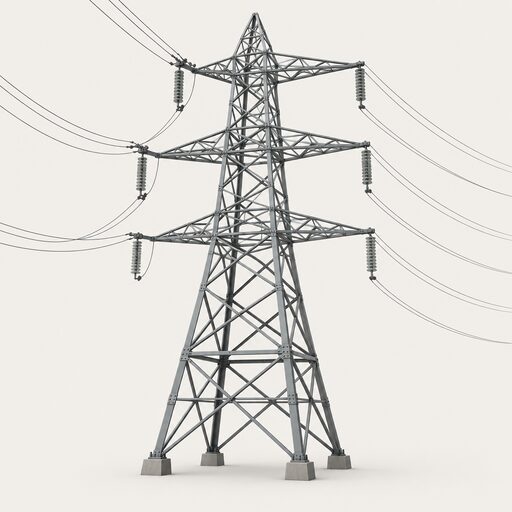
"DNOs own and operate the distribution network of towers and cables that bring electricity from the national transmission network to homes and businesses."
Finding your DNO: licence areas and how to match yours
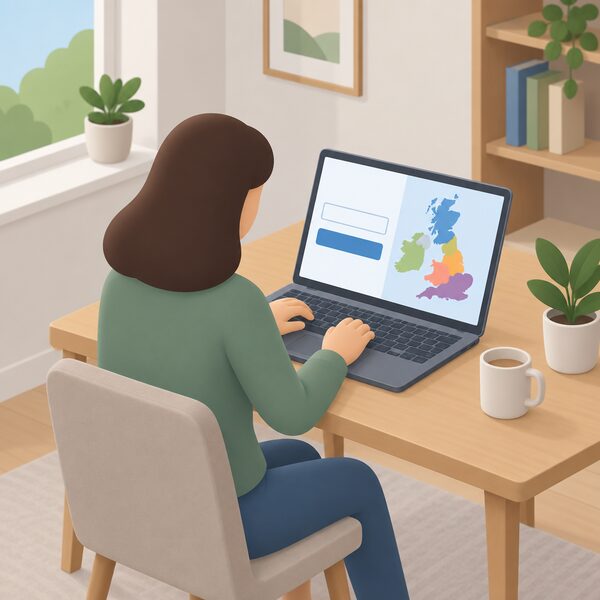
The Energy Networks Association postcode lookup is the standard route: enter your postcode on the page to find out who your electricity distribution network operator is1. The Met Office points householders to the same Energy Networks Association listing for the details of all the electricity Distribution Network Operator companies16.
Licence areas are geographic and do not follow council boundaries, which is why a postcode lookup beats guesswork. The 14 licensed DNOs are owned by six different groups covering specific geographically defined regions of Britain2. Some areas are served by an independent distribution network operator (IDNO) instead: an IDNO network is connected to the local power network, which is owned by the incumbent DNO, so the incumbent still matters even where a new-build estate has its own operator17.
If you are arranging a connection rather than identifying an existing one, the National Energy System Operator advises that you will need to contact your local distribution network to find out whether your property is connected, or how to arrange it11. The same company that answers a power cut call is the one that handles a new or upgraded supply.
| Nation or region | Electricity network operator | Source |
|---|---|---|
| London, South East, eastern England | UK Power Networks | 10 |
| Midlands, South West England, South Wales | National Grid | 5 |
| Northern Ireland | NIE Networks | 3 |
For gas, the picture is separate again. A gas distribution network operator is different and separate to your energy supplier18, and the gas networks run their own winter readiness and priority services arrangements19. Households that want both networks identified by postcode can use the same lookup approach for each fuel.
UK Power Networks: London, the East and the South East
UK Power Networks is the electricity distribution operator for London, South-East England and East Anglia20. Its licence areas are listed as Eastern England, London and South Eastern England, with distributor IDs 10, 12 and 191. The company describes its coverage as London, south-east and eastern England10.
For householders in that territory, UK Power Networks offers a supplier lookup: if you live in London, the South East and East of England it can tell you who the current electricity supplier is for your address4. That is a useful service after a move, when the previous occupant's supplier is unknown.
On contact, the published figures do not all agree. The emergency line is given as 0800 31 63 105 or 105, available 24 hours a day8. General phone lines are reported as open Monday to Friday, but one source gives 8.30am to 5.00pm and another 9.00am to 5.00pm, and no single opening time is settled21. Email response times are likewise reported differently, at within 48 hours for the domestic supply move team and at within five working days elsewhere22. A householder with an urgent matter should use the 24-hour emergency line rather than a general enquiry channel.
The company also runs a domestic supply move service, which handles the administrative side of moving a supply point, and states that the team will get back to you within 48 hours22. For a household weighing up whether to move a meter without moving the supply, that service is the relevant contact rather than the supplier.
NIE Networks: the DNO for Northern Ireland
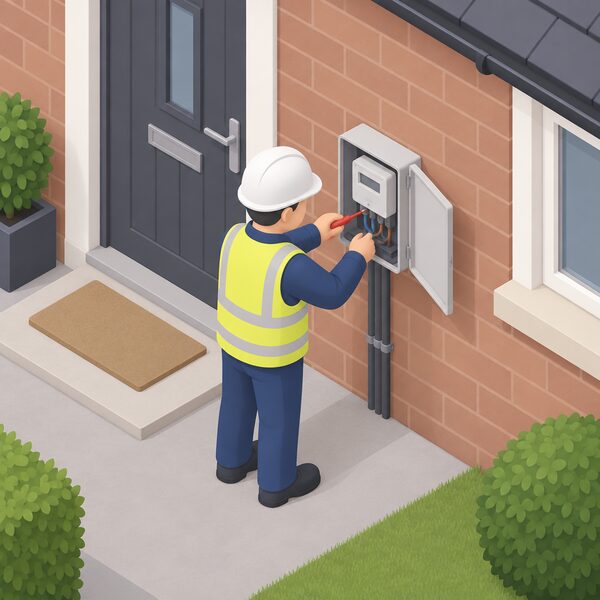
Northern Ireland sits outside the Great British distribution arrangements. NIE Networks maintains the meters at the properties of all customers across Northern Ireland no matter who your supplier is3. That is a broader role than a Great British DNO holds, where metering is a supplier matter.
The contact number is 03457 643 643, and the maker states that lines are open 24 hours a day, seven days a week9. The same number appears in supplier guidance for pay-as-you-go top-up problems, where customers are directed to ring NIE Networks on 03457 643 6439.
For a Northern Ireland household, the practical consequence is that the network company is the first call for metering as well as for faults and connections. The dependence on a single network operator is the same as in Great Britain, but the range of tasks that route through that operator is wider. Households in Great Britain with a metering query go to their supplier; households in Northern Ireland may find the network operator is the correct contact.
Power cuts and emergencies: the 105 number and when to call 999
105 is the free national power cut number. It puts you through to your electricity network operator, the local people who can help during a power cut23. The service was introduced to give customers an easy-to-remember number to call23. It is free to call from a mobile or landline7.
The number works across Great Britain. Network companies direct customers to contact them online or call 1057, and consumer guidance describes it as the free power cut line24. Ofgem advises calling 105 for free, which will put you through to your electricity network operator, for unplanned power cuts25.
For complaints rather than faults, the route is the same company. Complaints about power cuts or connection problems go to your distribution network operator, the company in charge of the supply to your area26. That is distinct from a billing complaint, which goes to the supplier. Age UK's guidance draws the same line between supplier complaints and network complaints26.
A household's exposure here is worth stating plainly. Whatever generation or storage a home has, a fault on the local network removes grid supply, and only the DNO can restore it. The 105 service exists because that dependency is universal.
A substation or cables on your land: access, rights and payments
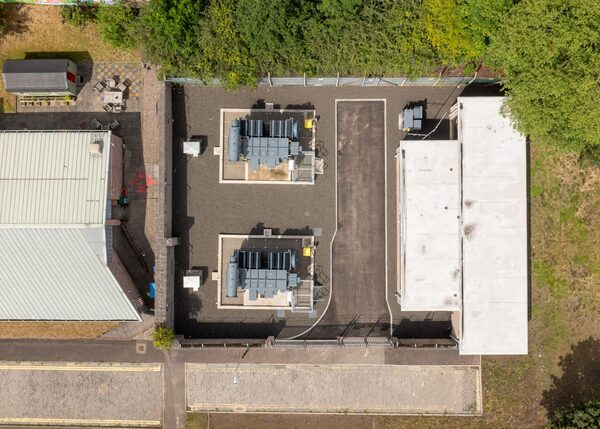
Where an electricity substation is located on your property or within your building, UK Power Networks states that it will generally hold a lease or freehold interest in the land with associated access and cable rights27. That is the legal basis on which equipment sits on private land, and it explains why a substation is not simply a structure a household can remove or relocate.
Energy network operators are the company to contact if you have energy infrastructure on your land28. They manage and maintain the underground cables, overhead wires and substations that bring electricity into your community29. Where equipment crosses or sits on private property, the operator holds the rights and carries the maintenance obligation.
For a household, this cuts both ways. A substation or cable route on your land may bring an interest, an access arrangement and a payment, but it also means a third party has rights over part of your property. The network operator, not the supplier, is the counterparty in that arrangement.
The same principle applies to upgrades. The district network operator is responsible for upgrades to your supply30. A household planning a heat pump, an electric vehicle charger or a larger connection applies to the network operator, not to the energy retailer. That is the point at which a home's electrical capacity, and therefore its ability to run more of its own energy systems, is set by the network company.
Metering, readings and who does what
Metering sits mostly with the supplier rather than the DNO. With a smart meter, readings should be sent automatically to your energy supplier31. The Data Communications Company is responsible for establishing and managing the new smart meter network that carries those communications32.
Smart meters do not give a supplier the ability to cut off power at will; the smart meter facts address that question directly24. The meter records consumption and communicates it; the network operator controls the physical supply.
For a new connection, the sequence starts with the network operator. You will need to contact your local distribution network to find out whether your property is connected, or how to arrange it11. The meter itself is arranged through the supplier, with the Data Communications Company behind the communications network32.
| Task | Who to contact |
|---|---|
| Power cut or network fault | Distribution network operator, via 1057 |
| Billing, tariff or meter reading query | Energy supplier31 |
| New or upgraded connection | Local distribution network11 |
| Meter installation in a new connection | Supplier, with the Data Communications Company behind smart metering32 |
| Substation or cables on your land | Network operator28 |
The pattern is consistent: the network operator owns the wires and the connection, the supplier owns the commercial relationship, and the household's independence is bounded by the first of those whatever it does about the second.
Sources32 cited
- Find my network operator, Energy Networks Association, 2026
- How to find out if there's a power cut, Which?, 2026
- Meter replacements, NIE Networks, 2026
- What's the difference between you and my electricity supplier, UK Power Networks, 2026
- What role does National Grid play in your energy bill, National Grid, 2026
- Complain about your energy supplier or network operator, Ofgem, 2026
- Power cut, Energy Networks Association, 2026
- What is an electrical substation, UK Power Networks, 2026
- Powercode not sent to my meter, Power NI, 2026
- Who supplies my electricity and gas, Uswitch, 2026
- Domestic and homeowners connections help, NESO, 2026
- Energy jargon buster, Energy Saving Trust, 2026
- Response to consultation on DNO low carbon technology and energy efficiency, Energy Systems Catapult, 2026
- Citizens Advice response to consultation on DNOs' future role, Citizens Advice, 2026
- Low carbon technology domestic, UK Power Networks, 2026
- What to do in a power cut, Met Office, 2026
- What is an ICP, Electricity North West, 2026
- Disconnecting from the gas network, IGEM, 2026
- Be winter ready, SGN, 2026
- How to move your gas or electricity meter, Uswitch, 2026
- Help and contact, UK Power Networks, 2026
- Move your electricity supply, UK Power Networks, 2026
- The 105 service, Energy Networks Association, 2026
- Can a smart meter cut off power, Smart Energy GB, 2026
- Plan for a power cut, Ofgem, 2026
- Energy complaints, Age UK, 2026
- Electricity equipment on your land, UK Power Networks, 2026
- Customers, Energy Networks Association, 2026
- Power cut 105, Power Cut 105, 2026
- Hybrid heat pumps, Energy Saving Trust, 2026
- Smart meters: your rights and expectations, GOV.UK, 2025
- How do smart meters work, Smart Energy GB, 2026
 Distribution Networks and DSOsWho actually owns and runs the cables and substations bringing power to your home?
 Network Operators and 105When the lights go out, who do you actually ring?
 Who Owns Which Energy SupplierWho is actually behind the company that sends your energy bill?
 Gas Distribution NetworksWho actually owns the pipes under your street, and who do you call when gas smells or the supply fails?
 Heat Network SuppliersWho supplies the heating in your home if it runs on a communal or district system?
 The Transmission NetworkWondering who owns the pylons near your house, or why the grid needs upgrading before you can run a heat pump or an electric car?