
In this guide
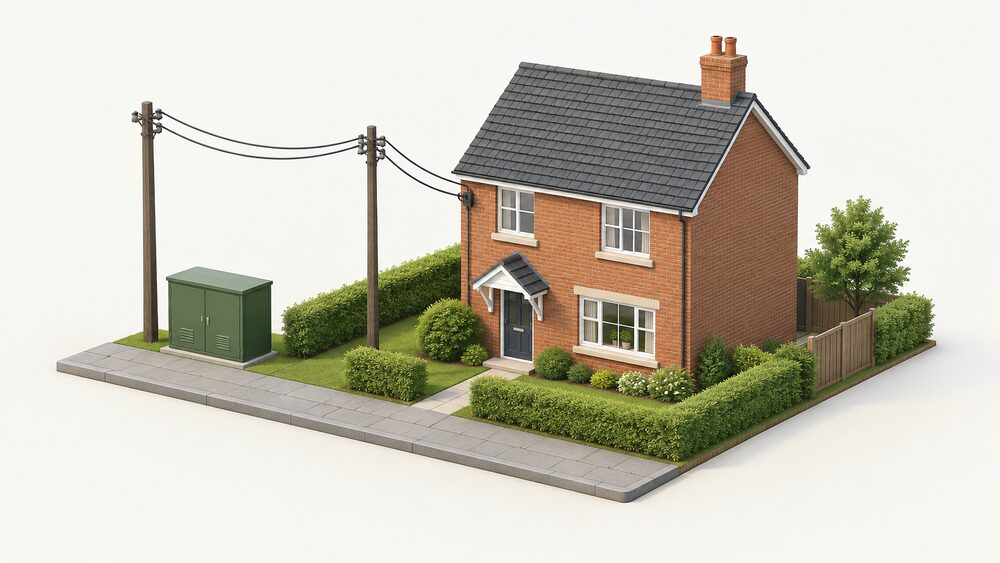
Your local electricity network is not run by the company that sends your bill. The towers, cables and substations that carry power the last few miles to your home belong to a Distribution Network Operator (DNO), a regional monopoly that owns and operates the infrastructure delivering power to your property1. DNOs do not sell electricity: that is done by the retailers whose name appears on your bill2. There are 14 licensed DNOs owned by six different groups, covering specific geographically defined regions of Britain3.
That structure is now changing. Networks are moving from passive operation, where they reinforce cables when demand grows, to distribution system operation, where they actively manage generation, storage and demand on the low-voltage network. For a household with solar panels, a battery or an electric vehicle, this shift matters more than any change in the wholesale market, because it decides whether the local network can accept what the home wants to export or draw.
The other half of the picture is what a household is owed when the network fails. Ofgem sets Guaranteed Standards of Performance that specify what an electricity distribution network operator must pay a customer if it fails to meet specified standards4. In normal weather the restoration deadline is 12 hours; in a severe storm category 2 it is 48 hours3. Payments for unplanned cuts are £100 for homes and £195 for businesses on the standard triggers, with a further £45 for every additional 12-hour period and a maximum of £400 where 5,000 or more properties are affected2.
What a distribution network operator is and what it does
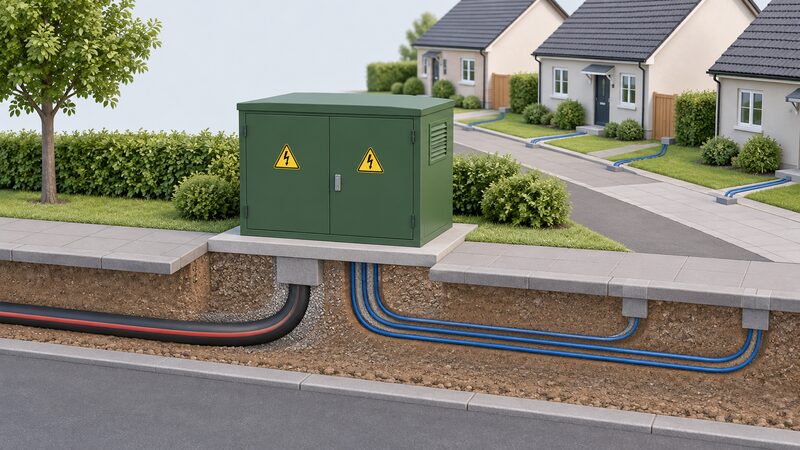
A DNO owns and operates the distribution network of towers and cables that bring electricity from the national transmission network to homes and businesses1. This is the lower-voltage layer of the system: the transmission network moves bulk power at high voltage between regions, and the distribution network steps it down and delivers it street by street. The DNO is responsible for maintaining physical electricity supplies to your home or business1.
The commercial position is unusual and worth stating plainly. A DNO does not sell electricity to consumers; that is done by the electricity retailers whose name appears on your bill2. A household cannot choose its DNO, cannot switch away from it, and does not pay it directly. The network's costs are recovered through charges that ultimately sit inside the standing charge and unit rate a supplier bills. That is the first dependence a household has on the network: the wires are a regulated monopoly, and the relationship is not a market one.
Alongside the licensed DNOs there are independent electricity network operators running smaller electricity networks in parts of the country3. These are typically the networks serving new housing developments, business parks, ports and some private estates. A household on such a network still has a DNO somewhere upstream, and the independent operator's arrangements determine who is contacted when supply fails.
The distinction between owning the network and selling the energy is the source of most household confusion about power cuts. A network operator is responsible for the pipes and wires that move energy, and should be contacted about power cuts or connection issues in your area5. The supplier handles billing, tariffs and metering. When the lights go out, the supplier is not the organisation that fixes it.
Who your DNO is: the UK's regional network companies
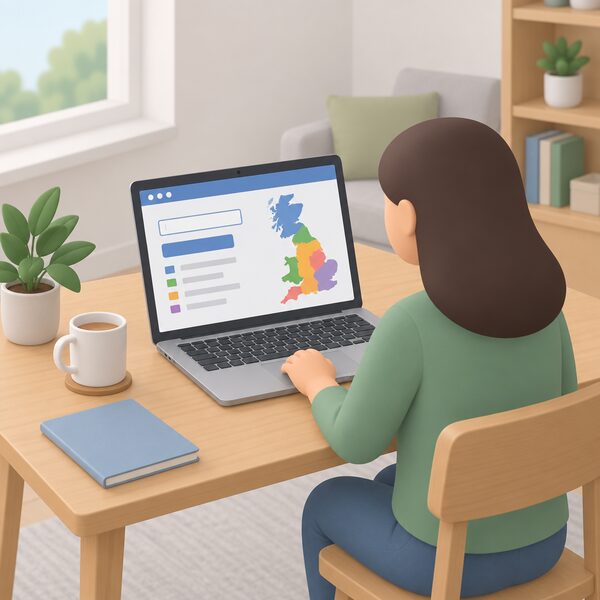
The Energy Networks Association runs a postcode lookup tool listing the details for all the electricity Distribution Network Operator companies1. The Energy Ombudsman directs households to the same website to find out who their network provider is4. This is the authoritative route: a postcode determines the DNO, and the answer does not change when a household switches supplier or tariff.
The regional structure is a legacy of the privatised electricity boards. There are 14 licensed DNOs owned by six different groups that cover specific geographically defined regions of Britain3. In practice a household deals with one of a small number of familiar names:
- UK Power Networks across London, the South East and the East
- National Grid Electricity Distribution across the Midlands, the South West and South Wales
- Northern Powergrid in the North East and Yorkshire
- Electricity North West in the North West
- SP Energy Networks in central Scotland, Merseyside and North Wales
- SSEN in the north of Scotland and central southern England
Scotland's position illustrates how the map is not uniform. In Scotland two electricity Distribution Network Operators and one Gas Distribution Network own and operate the networks6. That is a different count from England and Wales, and it reflects the separate history of the Scottish boards.
Northern Ireland sits outside this structure entirely. The Guaranteed Standards of Performance rules that Ofgem publishes cover England, Scotland and Wales2. Northern Ireland has its own legislation: under Article 27, a distributor may disconnect the supply to a consumer's installation, another distributor's network or a street electrical fixture without giving the notice otherwise required, where the disconnection can be justified on grounds of safety, and must serve notice giving the reasons as soon as reasonably practicable afterwards7. Compensation arrangements there follow the Northern Ireland regulations rather than the Ofgem scheme.
For a household, the practical consequence is simple. The DNO is fixed by geography, it is the organisation to call when supply fails, and it is the organisation that owes compensation when restoration takes too long. The supplier is a separate company with a separate role.
From DNO to DSO: why the networks are changing roles
Distribution system operation is the shift from running the network as passive copper to actively managing it. A traditional DNO reinforces cables and substations when demand grows, on the assumption that power flows one way, from transmission down to homes. A DSO coordinates generation, storage and flexible demand on the distribution network, so that the same cables carry more useful energy without being replaced.
The pressure behind the change is visible in the government's own interventions. DNOs have been ordered to ensure that communication systems are adequate to meet demand, and to introduce telephone systems and websites capable of handling increased traffic during a storm8. That instruction is about resilience and customer contact, but it sits inside a wider expectation that networks operate as responsive, data-driven organisations rather than as passive asset owners.
The regulatory framework that pays for this is the RIIO price control, which sets the revenue each network company can collect and the outputs it must deliver in return. The current electricity distribution control, RIIO-ED2, runs to 2028, and the next control period, RIIO-ED3, is the one being designed now. The design question at the centre of it is how much of the network's job should be done by building more capacity and how much by buying flexibility from households and businesses.
For a household, distribution system operation shows up in three places:
- Whether a solar inverter is allowed to export at full output or is curtailed by active network management.
- Whether a battery or an electric vehicle charger can be paid for shifting its demand away from peak times.
- Whether a new connection or an upgrade is offered on the basis of conventional reinforcement or a flexible connection with agreed limits.
The dependence that remains is structural. A household with its own generation and storage is still connected to a monopoly network whose operating decisions it does not control, and whose charges it pays indirectly. Self-sufficiency at the meter does not remove the connection, the standing charge or the network's right to curtail.
UK Power Networks' DSO: what it runs and what it has delivered
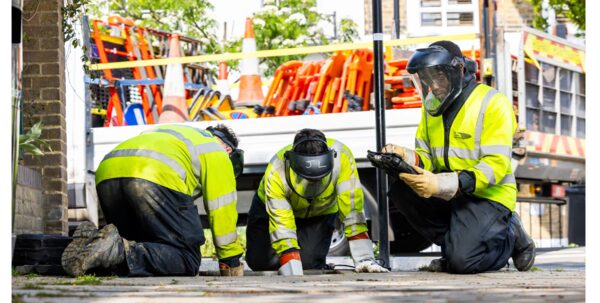
UK Power Networks is an electricity network operator covering a region of Great Britain1. It is one of the larger DNO groups by geography, taking in London, the South East and the East of England, and it has been among the more visible networks in developing a distribution system operation function.
The company's published charging statements show the scale of the operation. Use of System Charges statements and schedules of charges effective 1 April 2027 are published for Eastern Power Networks, London Power Networks and South Eastern Power Networks, the three licensed areas within the group. That is the mechanism by which the network recovers its costs from suppliers, and it is the reason network charges appear inside household bills rather than as a separate line.
Physical work continues alongside the commercial framework. UK Power Networks plans to complete cable works in Mayfair by Spring 2027, a reminder that the distribution network in dense urban areas is a live asset requiring replacement and reinforcement, not a fixed inheritance.
For households in the group's areas, the practical points are these. The network is the organisation to contact about a power cut or a connection issue. Its standards of performance determine the restoration deadlines and the compensation owed. Its flexibility activity determines whether a battery or a charger can earn anything for shifting demand. And its charging statements determine, indirectly, part of what appears on the bill.
Guaranteed Standards of Performance: the minimum service you are owed
The Guaranteed Standards of Performance specify what an electricity distribution network operator must pay a customer or relevant authority if it fails to meet specified standards of performance9. They are not discretionary goodwill: they are the regulated minimum, and the same standards stipulate what must be paid10.
The structure has two layers. The distribution standards cover the network's own failures, principally restoration times and repeated interruptions. The supplier standards cover the supplier's service failures, and Ofgem has been consulting on a £40 automatic compensation level for breaches of supplier standards, with the supplier Guaranteed Standards of Performance setting minimum standards that all suppliers must meet for specific services or pay £40 automatic compensation if they do not11. The supplier GSOPs set minimum supplier service standards, with consumers automatically compensated if they are breached12.
Awareness of these protections is poor. Ofgem's own research found that participants had low awareness of Guaranteed Standards of Performance, though there was widespread agreement that compensation is an important element of responding to service failings when guarantees are breached13. The same research found that service failings related to loss of supply were typically seen as the most severe, and that views on the appropriate level of compensation varied widely amongst the sample13.
The amounts are reviewed annually. Ofgem reviews and updates the amount paid for a power cut each year based on inflation2. That means the figures quoted here are the current ones and will move; a household checking a claim should confirm the rate in force at the time of the interruption.
Power cut compensation: what you can claim and when
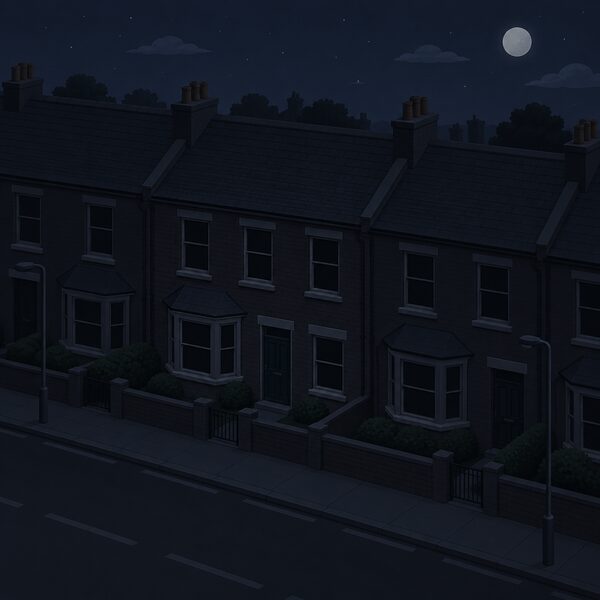
For an unplanned cut in normal weather, the standard payment is £100 for homes or £195 for businesses where fewer than 5,000 properties are affected for more than 12 hours, or where more than 5,000 properties are affected for more than 24 hours2. The same figures appear in Ofgem's consumer guidance on planning for a power cut3.
The payment escalates with duration. An extra £45 is payable for every additional 12-hour period without electricity, and the maximum amount payable is £400 if the power cut affects 5,000 or more properties2. Worked examples make the arithmetic concrete: a cut lasting more than 12 hours and interrupted for 36 hours produces two additional £45 payments, adding up to £90, while a cut lasting more than 24 hours and interrupted for 72 hours produces four additional £45 payments, adding up to £1802.
Planned cuts have their own standard. A household can get £40 compensation if the operator does not give two days' notice, or cuts supply on a different day from the one notified3. Businesses can get £120 for planned and unplanned power cuts2.
There are exclusions, and they are worth knowing before assuming a payment is due. No payment applies for blackouts caused by a national power shortage, damage to electrical equipment or appliances, or a low supply after a power cut2. Damage to electronic devices is not covered by the standards, though the operator may make a discretionary goodwill payment3.
| Situation | Homes | Businesses |
|---|---|---|
| Fewer than 5,000 properties off for more than 12 hours | £100 | £195 |
| More than 5,000 properties off for more than 24 hours | £100 | £195 |
| Each additional 12-hour period | £45 | £45 |
| Maximum where 5,000 or more properties affected | £400 | £400 |
| Planned cut without two days' notice, or on a different day | £40 | £120 |
Restoration deadlines: 12 hours in normal weather, longer in storms
The restoration deadline is the trigger for compensation, and it varies with conditions. The local network operator must restore supply within 12 hours for interruptions outside of severe weather3. In severe storm category 1 weather the deadline is 24 hours, and in severe storm category 2 weather it is 48 hours3.
National Grid Electricity Distribution states the same framework in its own customer guidance: if electricity supply fails because of a problem on its network during normal weather conditions, it must restore supply within 12 hours14. For a severe weather category 1 storm it must restore supplies within 24 hours, or make a guaranteed standard failure payment to the customer, and for a severe weather category 2 storm it has 48 hours to restore supplies14.
The deadlines are not the same as the payment triggers, and the difference matters. A cut that is restored inside the deadline may still generate a payment if it lasted long enough and affected enough properties. A cut that breaches the deadline generates a payment on the deadline itself.
Where a customer is supplied by an independent network operator, the arrangements can be more complex. If a problem with National Grid Electricity Distribution's network caused supply to be off over Category 2 Storm timescales, the company will arrange a payment via the customer's network operator14. That routing means a household on a private or independent network may receive compensation through a different organisation from the one whose equipment failed.
Storm categories and how they change the deadlines
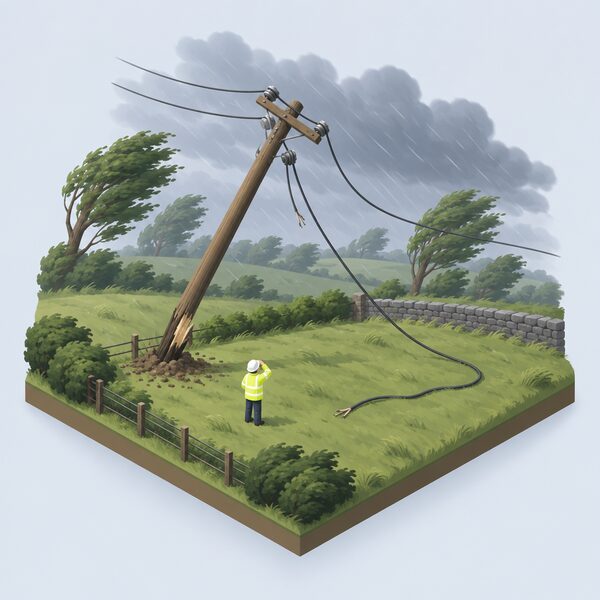
Storm categories are not the same as weather warnings. A storm is given a category depending on what problems it caused, and these are different to the storm categories used by the Met Office3. Ofgem states the same point directly: the categories are different to the storm categories issued by the Met Office3. A named storm that produces few faults may not reach category 1; an unnamed period of high winds that damages overhead lines may.
The thresholds are defined by fault numbers. Category 1 is a storm causing between eight and twelve times the daily average number of faults in a 24-hour period, and category 2 is a storm causing more than twelve times the daily average number of faults in a 24-hour period, both as defined in the Electricity (Standards of Performance) Regulations 201515. The change to those thresholds was based on the 10-year historical performance, from 2012/13 to 2021/22, of the mean daily faults at distribution higher voltage of DNOs15.
The operator determines the category and can tell a household which one applies. National Grid Electricity Distribution calculates the storm category on the number of incidents on the high voltage network in a 24-hour period during the storm14.
Compensation during a storm follows the category. For storm category 2, homes and businesses can get £90 for the first 48 hours and an extra £45 for every 6 hours after2. For storm category 1, the figure is £90 for the first 24 hours and an extra £45 for every 6 hours after2. Note the different escalation rate: storm payments add £45 every 6 hours, while normal weather payments add £45 every 12 hours.
Automatic payments, claims and the role of Ofgem
Ofgem is the independent energy regulator for England, Scotland and Wales16. It monitors energy suppliers and network operators to make sure they meet the rules set out in licences, regulations and law, provide good customer service, and reply quickly to customers who contact them5. It also provides independent dispute resolution and helps to build trust in the market17.
Most unplanned power cut payments are automatic. A household should get an automatic payment from the electricity network operator within 10 working days, and if it has not been paid, an extra £40 may be owed3. The regulator requires suppliers to automatically make payments to consumers for some common problems18.
The repeated cuts payment works differently. An extra £100 is payable if power has gone off more than four times between 1 April and 31 March the following year, with each cut lasting at least 3 hours2. This one requires a claim: the household must make a claim with the local network operator, which will decide whether the payment should be made2. The same condition appears in Ofgem's consumer guidance3.
Where a payment is missed, the network operator may owe an extra £402. Where a household is dissatisfied with how a network operator has handled a matter, the Energy Ombudsman can help: it provides independent dispute resolution and helps to build trust in the market17. The Ombudsman also handles smart meter issues19.
Ofgem's wider role extends beyond power cuts. It administers the Smart Export Guarantee, with suppliers obliged to offer at least one SEG tariff to eligible installations, assess eligibility, make payments based on export meter readings, handle complaints from generators and provide data to Ofgem on tariff offerings, uptake and payments20. It sets energy suppliers' obligations under schemes such as the Energy Company Obligation and the Great British Insulation Scheme21, and it licenses load controllers under Part 8 of the energy smart appliances and load control provisions23. For a household with solar, a battery or a smart appliance, Ofgem is the body behind the rules that govern how those assets interact with the network.
What DSOs mean for household energy independence
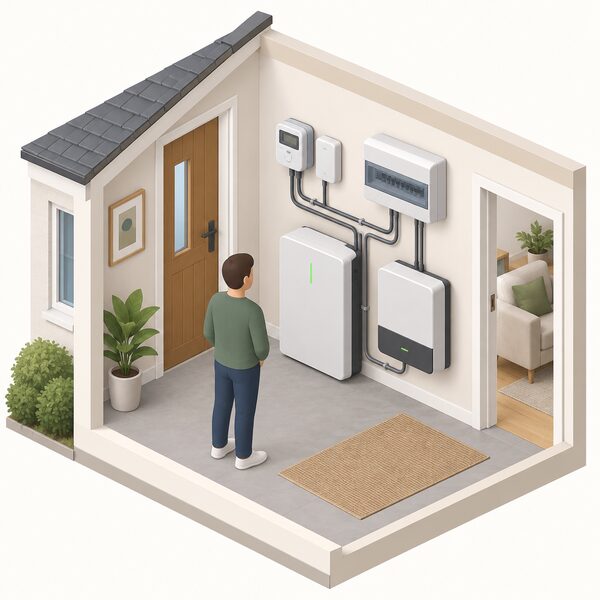
Distribution system operation changes what a household can do with its own generation and storage, and it also sets the limits of that independence.
The gains are real. A household with solar and a battery can, in principle, export when the local network can accept it and shift demand away from peak times. Ofgem's Smart Export Guarantee framework requires suppliers to offer at least one tariff to eligible installations and to pay based on export meter readings20. Smart meter performance is monitored for suppliers with over 150,000 customers in England, Scotland and Wales24, and the smart metering Targets Framework, which commenced on 1 January 2022, sets energy suppliers individual minimum targets19. The metering and payment infrastructure for household-level participation exists.
The limits are equally real. The network remains a monopoly whose operating decisions a household does not control. Active network management can curtail export when the local network is constrained. Connection offers may come with agreed limits rather than unlimited capacity. Network charges are recovered through suppliers and appear inside the bill, not as a separate negotiable item. And the physical network is still the thing that delivers power when the sun is not shining and the battery is empty.
There is a further dependence that is easy to overlook: the communications layer. The 2G network will be switched off in 2033, with SMETS1 meters needing physical replacement and SMETS2 meters needing a replacement Communications Hub25. A household's ability to participate in flexibility, export payments and time-of-use tariffs rests on metering and communications infrastructure it does not own and cannot maintain.
The honest summary is that distribution system operation widens what a household can earn and control at the margins, while leaving the fundamental relationship unchanged. The home is connected to a regulated regional monopoly, pays for that connection through its supplier, and depends on that network for every unit of electricity it does not generate and store itself. Independence at the meter is real but partial; the wires remain shared.
Sources25 cited
- Power cut 105, Energy Networks Association, 2026
- Check if you can get a payment for a power cut, Ofgem, 2026
- Plan for a power cut, Ofgem, 2026
- Network operators, Energy Ombudsman, 2026
- Complain about your energy supplier or network operator, Ofgem, 2026
- Consumer attitudes to energy networks in Scotland, Ofgem, 2019
- Electricity (Standards of Performance) Regulations (Northern Ireland) 2012, Article 27, legislation.gov.uk, 2012
- UK government orders network operators to improve storm responses, GOV.UK, 2022
- Adjustments to Guaranteed Standards of Performance 2026, Ofgem, 2026
- Adjustments to Guaranteed Standards of Performance 2025, Ofgem, 2025
- Ofgem transformed to strengthen protections for energy consumers, GOV.UK, 2026
- Energy consumer outcomes: proposed implementation, Ofgem, 2026
- Energy consumer experiences of customer service standards, Ofgem, 2026
- Standards of performance, National Grid Electricity Distribution, 2026
- Statutory consultation on amendments to the Electricity (Standards of Performance) Regulations 2015%20Regulations%2020151680596597411.pdf), Ofgem, 2023
- Customers' satisfaction with their supplier: supplier-level findings, July to August 2025, Ofgem, 2025
- One million consumers helped by Energy Ombudsman as service marks 20 years, Energy Ombudsman, 2026
- Get compensation if you have a power cut, Citizens Advice, 2026
- Smart meters, Energy Ombudsman, 2026
- Smart Export Guarantee annual report, year 5, Ofgem, 2025
- Great British Insulation Scheme: energy suppliers, Ofgem, 2026
- Feed-in Tariffs guidance for licensed electricity suppliers, Ofgem, 2024
- Energy Company Obligation, Ofgem, 2026
- Smart meter performance, Ofgem, 2026
- Smart meter Guaranteed Standards of Performance draft impact assessment, Ofgem, 2025
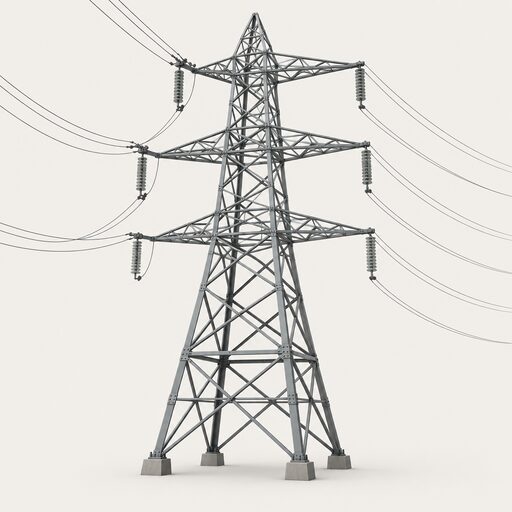 The Transmission NetworkWondering who owns the pylons near your house, or why the grid needs upgrading before you can run a heat pump or an electric car?
 TNUoS, BSUoS and Network ChargesWondering why your electricity bill mentions network costs, or whether where you live changes what you pay?
 Electricity Network ChargesWhy are network charges on my bill so high, and who decides how much they are?
 Gas Distribution NetworksWho actually owns the pipes under your street, and who do you call when gas smells or the supply fails?
 Who Owns Which Energy SupplierWho is actually behind the company that sends your energy bill?
 National Home Energy InstallersWho actually turns up to fit your boiler or solar panels when you book with a big national company?