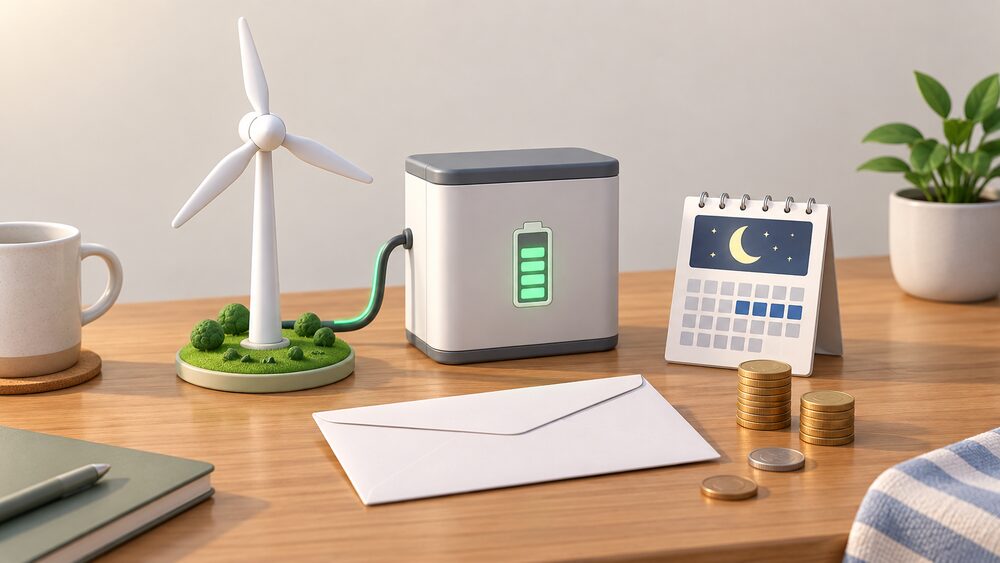
In this guide
Negative electricity prices are half-hourly wholesale market events in which the price paid for a unit of electricity falls below zero. They happen when supply cannot be turned down quickly enough to match demand, and they are now a routine feature of the British market rather than an anomaly. Wind output is the main driver: independent analysis found that wholesale power prices would have been 46% higher in 2025, at £121/MWh rather than £83/MWh, if there had been no windfarms generating electricity1.
The distinction that matters for a household is between the wholesale market and the retail bill. A negative price is settled between generators, suppliers and the system operator. It does not arrive as a payment to a home on a standard variable tariff, whose unit rate is set by the price cap. It reaches a household only through a tariff that follows the wholesale market, and even then it usually appears as a very cheap or zero-cost import window rather than money paid out.
This page explains what negative pricing is, why it happens in Great Britain, how long the longest runs have lasted, who is exposed to it and who is insulated, and how time-of-use and plunge-pricing tariffs pass the effect through. It also sets out the eligibility conditions for one supplier's three-rate import and export tariff, and states plainly where the limits lie.
What a negative electricity price means
A negative price means a generator, or a party holding a position in the market, pays to have electricity taken rather than being paid for producing it. In a half-hourly settlement system, the price for that period is struck in the wholesale market and can settle below zero when there is more supply offered than demand requires at that moment.
The context is a British market where wholesale prices have been volatile and where household prices remain high by international standards. Lower prices in the UK have meant it has been third or fourth highest out of the EU and UK in the past two years5. Industrial electricity prices in the UK are around four times as much as companies in the US6. Negative half-hourly prices sit inside that wider picture: they are a short-run signal about a specific settlement period, not a change in the general level of prices.
For a household, the practical meaning is narrow and specific. A negative price does not reduce the standing charge, which is a fixed daily amount. It does not reduce the network charges that make up part of the unit rate. It affects only the wholesale energy component, and only for the half hours in which it occurs. The regional cap tables show how much of a bill is fixed before any energy is used: in the Northern region, the nil-consumption figure under the cap for 1 October to 31 December 2025 was £237.50 for single-rate metering, with an annual figure of £1,029.76 at 3,100 kWh7.
That structure explains why negative pricing is felt most by parties that buy and sell in the wholesale market directly, and least by households on a capped default tariff. It also explains why the tariffs that do pass it through are built around half-hourly metering, because only half-hourly data can attribute consumption to the specific periods when the price collapses.
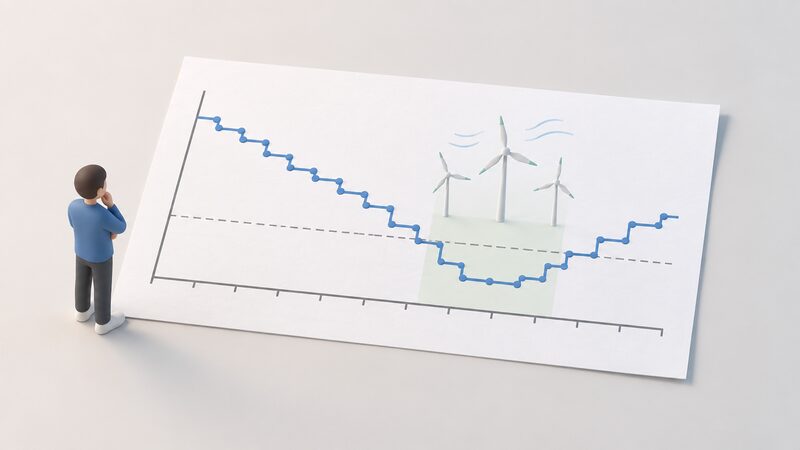
Why wholesale prices go below zero in Great Britain
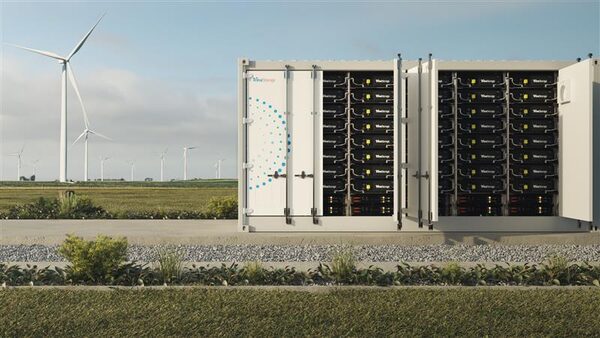
Three conditions combine. First, a large volume of generation that cannot easily be turned down or that has a strong incentive to keep running. Second, low demand, typically overnight or in mild weather. Third, limited ability to move the surplus elsewhere, whether through storage, interconnection or demand that can be shifted.
Wind is the dominant variable. The independent analysis of 2025 prices puts the effect precisely: wholesale power prices would have been 46% higher in 2025, at £121/MWh rather than £83/MWh, if there had been no windfarms generating electricity1. That is an average effect across the year, and it shows how much wind output suppresses wholesale prices generally, not only in the half hours that go negative.
The system operator's own account of the balancing challenge describes the other side of the coin. Last summer saw a period of 16 weeks with very little wind2. A long, still period removes the very output that drives prices down, and the market swings the other way. Negative pricing and tight, expensive periods are two faces of the same variability.
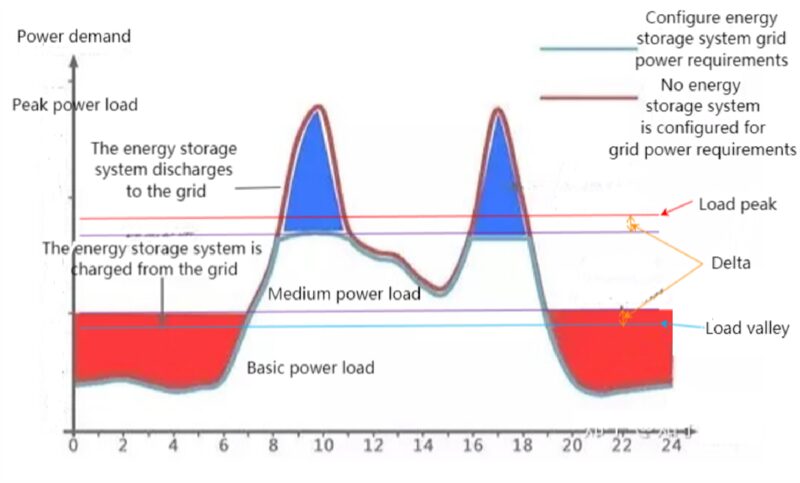
Storage is the main tool for absorbing surplus. The system operator explains that storage helps balance the grid by shifting energy from periods of surplus to periods of need2. Grid-scale batteries, pumped storage and, increasingly, household batteries all act on the same signal: charge when the price is low or negative, discharge when it is high.
There is also a policy dimension. The Climate Change Committee has recommended rebalancing prices to remove policy levies from electricity bills, describing making electricity cheaper through that route as a key recommendation to the UK Government8. Levies on electricity rather than gas change the relative cost of running a home on electricity, and they bear on how attractive flexible, electric heating and charging become.
The 17-hour record: how long negative prices have run
The length of a negative price run depends on how long the surplus persists. A single windy night can produce a handful of negative half hours. A sustained period of high wind and low demand can produce a much longer sequence, and the market has seen runs measured in hours rather than minutes.
The clearest published figure on the scale of the underlying variability is the system operator's account of last summer, when there was a period of 16 weeks with very little wind2. That is the mirror image of a negative price run: it describes the opposite extreme, when wind output is absent for an extended period and the market has to be met from other sources.
For a household, the practical question is not the record length but the frequency and predictability of cheap windows. A run of negative or near-zero half hours is useful only if consumption or charging can be moved into it. That is why the tariffs built around price swings publish fixed windows rather than relying on the household to watch the market: a predictable overnight window is easier to schedule a battery around than an unpredictable sequence of negative half hours.
The record also matters for the argument about storage. If surplus periods are long, storage has more to absorb; if they are short and irregular, the value of storage depends on how quickly it can respond. The system operator's description of storage as a balancing tool covers both cases, because storage shifts energy between periods of surplus and periods of need2.
Who gets paid negative wholesale prices, and who does not
The parties exposed to negative prices are those trading in the wholesale market: generators, suppliers with open positions, and flexibility providers that can respond to a signal. A generator that keeps running through a negative period is, in effect, paying to stay on. A flexible load that can increase consumption in that period is being paid, in the sense that it avoids a cost or receives a payment for taking the surplus.
Households on a default tariff are insulated from this entirely. The price cap sets a maximum unit rate and standing charge, and the regional tables show how those maxima vary. Under the cap for 1 October to 31 December 2025, the Northern region single-rate figure was £237.50 at nil consumption and £1,029.76 at 3,100 kWh, while the multi-register annual figure at 4,200 kWh was £1,267.037. The Southern region stood at £183.50 at nil consumption and £1,008.32 at 3,100 kWh single-rate, with £1,252.38 multi-register at 4,200 kWh7. North Wales and Mersey was higher, at £272.95 at nil consumption and £1,136.66 at 3,100 kWh single-rate, with £1,386.93 multi-register at 4,200 kWh7.
Those regional differences are larger than any single negative price event would produce for a household. The gap between the lowest and highest regional nil-consumption figures is a fixed cost difference, not a wholesale one.
There is also a supplier-side picture. Ofgem's review of wholesale costs found that two suppliers, 32% of those examined, under-recovered with a range of -£6 to -£56 per SVT electricity customer across cap periods 9a to 10b9. The lower quartile of wholesale allowances minus costs was -£2 per SVT customer at benchmark consumption over October 2022 to September 20239. These figures describe supplier margins under the cap, not household prices, but they show that wholesale movements do not pass through cleanly even at supplier level.
Support schemes work differently again. The Warm Home Discount is applied to the electricity bill by the supplier, and the money is not paid to the household10. The costs of the Feed-in Tariffs scheme are spread across all licensed electricity suppliers in Great Britain through the levelisation process, based on their share of the electricity supply market12. A supplier's market share for that purpose is calculated from the electricity supplied to customers in Great Britain, less the exempt amount supplied to qualifying Energy Intensive Industries, expressed as a percentage of the total supplied by all licensed suppliers13.
How households can benefit: tariffs that follow the wholesale market
A household reaches the wholesale market only through a tariff designed to follow it. Time-of-use tariffs vary electricity prices throughout the day, usually with a cheaper overnight charging window14. That structure is the retail expression of the same signal that produces negative wholesale prices: cheap when supply is abundant, expensive when it is scarce.
The evidence that this can reduce bills comes from the official research base. Demand side response could make household energy bills cheaper3. That finding is about shifting consumption rather than about negative prices specifically, but it is the mechanism by which a household captures any part of a price collapse.
The wider market design matters too. The government confirmed its decision to retain a single UK wide wholesale market and proceed with Reformed National Pricing15. A single wholesale market means the price signal that produces negative periods is set nationally, while the network charges that make up the rest of a bill vary by region. That is why two households on the same tariff structure can face different total costs.
There is a distributional question that the sources address directly. On the British industrial competitiveness scheme, no households would see their bills increase as a result of the scheme, as it would be funded through a combination of charges6. That is a statement about a specific scheme, not about negative pricing, but it shows the care needed before assuming that any wholesale market change reaches household bills.
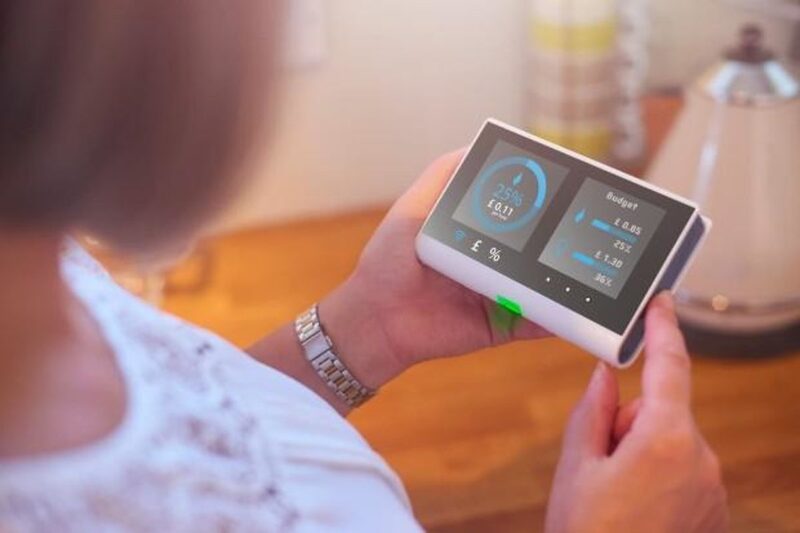
For a household, the practical route is a meter that records consumption half-hourly and a tariff that prices those half hours differently. Without half-hourly data, no supplier can attribute consumption to a cheap window, and no payment or discount can be calculated for it.
Octopus Flux: a three-rate import and export tariff built around price swings
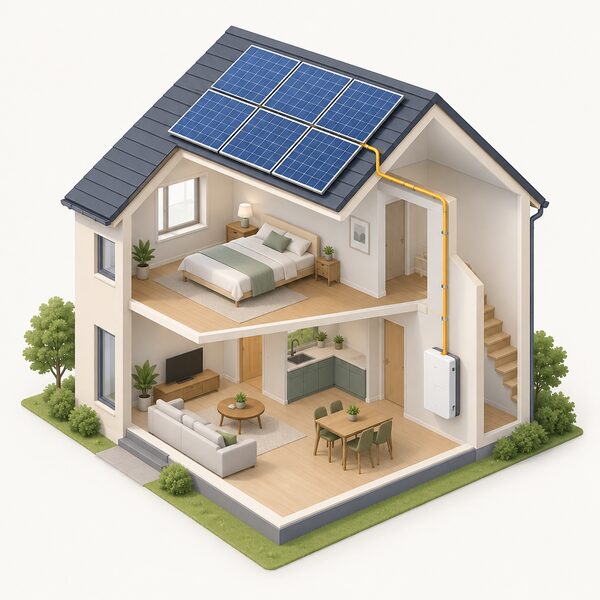
Octopus Flux is a three rate electricity tariff combining both import and export, described by the supplier as a combination tariff with symmetrical import and export tariffs and three price periods throughout the day4. It is a flexible tariff, meaning the unit rate and standing charges can rise and fall with wholesale energy prices4. When the rates of the supplier's flexible tariff change, the price of Flux will also change4.
The tariff is designed exclusively for solar and battery owners4. It requires a solar system and home battery, and it works with all solar and battery systems4. Solar panels are required for eligibility, but they do not need to have been installed by the supplier, and a household can start the switch while they are being installed4.
The supplier states that the import is 100% renewable, and that every MWh of electricity consumption on the tariff is matched with a Renewable Energy Guarantee of Origin certificate from British renewable energy generation4. There are no exit fees or tie-ins, and a household is free to switch tariffs or change suppliers at any time4.
On the export side, Ofgem's scheme year 5 report records that Octopus Energy's Intelligent Octopus Flux Export tariff offered the second highest rate available, averaging 27p/kWh16. That tariff was available to customers on the Intelligent Flux import tariff, who had solar PV and battery storage but also allowed Octopus to control their battery exports16. That is a distinct product from Flux itself, and the control condition is the difference.
| Feature | Octopus Flux |
|---|---|
| Structure | Three rate import and export tariff4 |
| Tariff type | Flexible; unit rate and standing charges can rise and fall with wholesale prices4 |
| Eligibility | Solar system and home battery required4 |
| System compatibility | Works with all solar and battery systems4 |
| Installer | Panels need not have been installed by Octopus4 |
| Metering | Smart meter providing half-hourly readings4 |
| Exit fees | None; no tie-ins4 |
| Renewable matching | Every MWh matched with a REGO certificate from British renewable generation4 |
Rate periods: 02:00 to 05:00 super cheap, 16:00 to 19:00 peak
The published periods are specific. Super cheap rates run between 02:00 and 05:00 every day, when a battery can be topped up with any extra energy needed4. A peak rate runs between 16:00 and 19:00, described as the optimum time to discharge a battery and export surplus energy back to the grid4.
Those two windows define the whole economics of the tariff. The overnight window is when a battery is filled; the evening window is when it is emptied, either into the home or onto the grid. Everything between the two is a holding period.
For comparison, the published fuel price assumptions used in energy modelling give off-peak unit rates of 15.00 p/kWh for a 7-hour tariff low rate and 19.28 p/kWh for a 10-hour tariff low rate, both from 1 January 202617. Those are modelling assumptions for off-peak tariffs generally, not Flux rates, and they show the order of magnitude that a long overnight window can reach.
The clock change is a practical question the supplier's product page does not separately address. The periods are stated in clock time, and the supplier gives reasonable notice when flexible rates change4. A household scheduling a battery should treat the published windows as the reference and confirm the current terms with the supplier.
Why a battery changes the economics
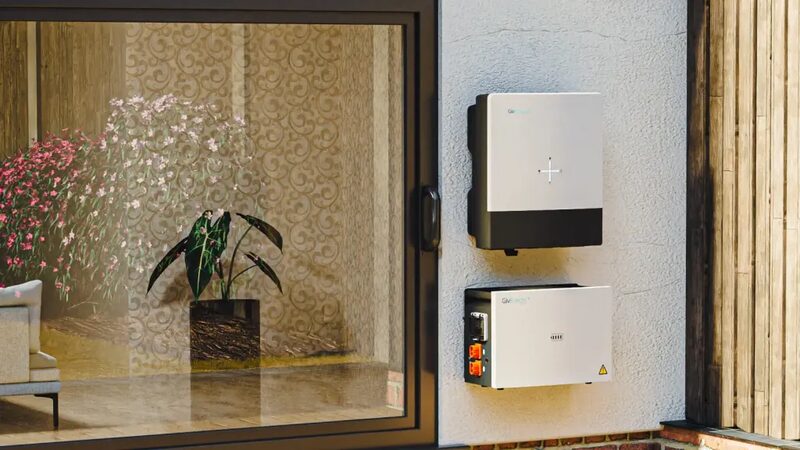
A battery converts a price signal into a physical position. Without storage, a cheap overnight window is useful only to loads that can run at that time. With storage, the cheap window can be banked and released during the peak window, when the price is highest.
The case for acting on price swings rests on how far household electricity prices have moved. Electricity prices were 13% higher in real terms in May 20265. Electricity unit prices under the cap are 38% higher than mid-20215. Those are the figures that make shifting consumption worthwhile, because the gap between a cheap window and a peak window is a saving on a larger base.
The system operator's account of storage is the grid-level version of the same logic: storage helps balance the grid by shifting energy between periods of surplus and need2. A household battery does at small scale what a grid-scale battery does at large scale, and both respond to the same price differences.
There is a control question. With Flux, a household needs to manually schedule the battery to charge and discharge based on the tariff's unit rates; Intelligent Octopus Flux offers battery control for compatible batteries4. That distinction matters because a manually scheduled battery depends on the household getting the schedule right, while a controlled battery depends on the supplier's system and on the battery being compatible.
The limits are as important as the benefits. A battery is a manufactured product with a finite life, and its performance depends on the inverter and the battery management system. The tariff is a commercial product that can change, and the supplier states that rates move with its flexible tariff4. The household's exposure to the wholesale market is therefore real but bounded: it captures the difference between the tariff's windows, not the full range of half-hourly wholesale prices.
Solar without a battery: what works and where it falls short
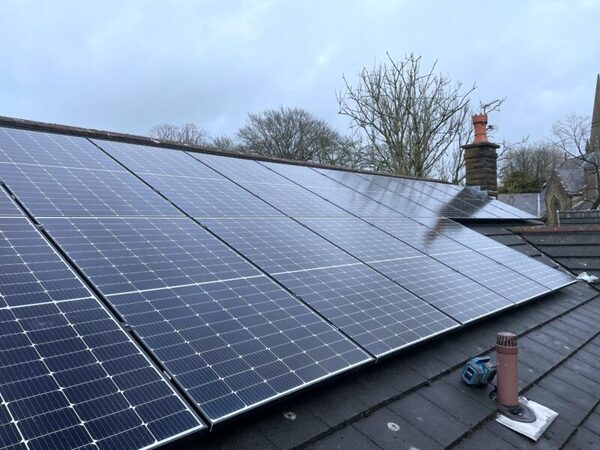
Solar panels without storage can still export, and export can still be paid. The Smart Export Guarantee sets the framework, and payments can reach up to 25 pence per kWh as of June 2026, which is comparable to the unit rate of electricity3. That is the ceiling across the scheme, not a rate any particular household is guaranteed.
The eligibility rule is firm. An eligible installation must have an export MPAN to manage exported electricity volumes to the SEG licensee18. Without an export MPAN, export cannot be measured or paid. The supplier states that an Export MPAN is needed to join Flux, and that it can apply for one on the customer's behalf if none exists4.
Where solar without a battery falls short is in timing. Panels generate when the sun shines, which is not necessarily when prices are high. Without storage, the household cannot hold generation back for the peak window, and it cannot buy cheap overnight energy to use in the evening. The export payment is earned at the moment of export, whatever the price then is.
There is a regulatory direction of travel worth noting. The government has consulted on plug-in solar, including systems that connect plug-in solar systems without batteries directly to a standard mains socket19. That is a consultation, not a settled rule, and it concerns a different product category from a rooftop array with an MCS certificate.
For a household with panels and no battery, the practical position is that export income is available and the peak-window arbitrage is not. Adding storage is what converts the tariff's two windows into a usable spread.
Eligibility, smart meters and how to switch
The eligibility conditions for Flux are cumulative. A household needs solar panels, a solar system and home battery, a smart meter providing half-hourly readings, and an Export MPAN4. It must already be on an import and export tariff, both with Octopus Energy; if not, it must first switch to the supplier's standard tariff for import and its export tariff4. A copy of the MCS document for the installation is needed before the switch can be completed4.
The meter condition is the one that most often delays a switch. The supplier states it can connect to second generation SMETS2 meters and some types of first generation SMETS1 meters, and that a household needs either a SMETS2 meter or a SMETS1 made by Secure to join a smart tariff4. It generally takes around 14 days to connect to a smart meter so it can be read remotely4. Without half-hourly readings, the supplier states it cannot create bills and payments for Flux4.
Once connected and receiving half-hourly readings, the supplier emails the household to accept the terms and conditions of Flux to complete the switch, and the tariff then changes automatically4.
- Confirm solar panels and a home battery are installed.
- Confirm the meter is SMETS2 or a SMETS1 made by Secure.
- Confirm an Export MPAN exists, or ask the supplier to apply for one.
- Be on an Octopus import and export tariff, switching first if necessary.
- Provide a copy of the MCS document for the installation.
- Accept the tariff terms and conditions once half-hourly readings are flowing.
Smart metering is the enabling infrastructure for all of this. Smart Energy GB is the not-for-profit campaign helping everyone in Britain understand the importance of smart meters and their benefits to people and the environment20. The environmental case is stated as being able to take energy-saving steps to reduce CO2 emissions and play a part in Britain's journey to Net Zero21.
There is a separate caution about availability. Octopus has introduced its lower standing charge tariff trial to a limited number of homes22. That is a different offer from Flux and a reminder that tariff availability can be limited and can change.
Feed-in Tariff payments and switching supplier
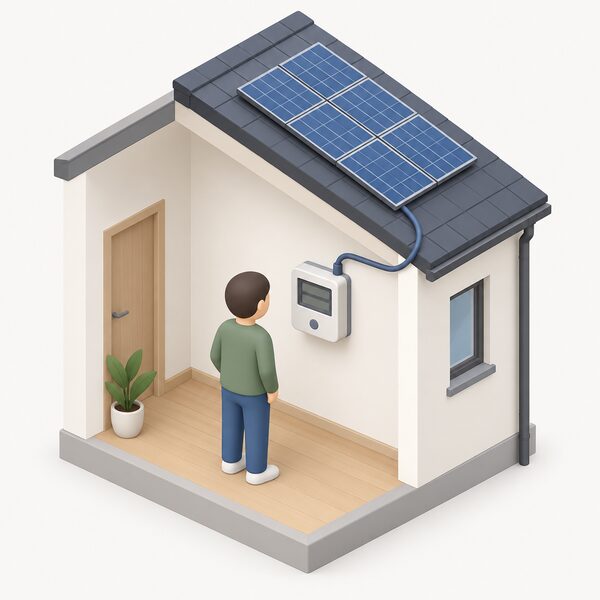
A household with an existing Feed-in Tariffs installation has a separate set of considerations from a new solar and battery owner. The scheme has paid nearly £16.2 billion to generators over its lifetime23. In scheme year 14, generation fell by around 0.56 TWh, 6.7%, from scheme year 13 levels, which the report links to an increase in tariff rates23. Export payments fell by £2.3 million, 2.9%, while the amount of electricity exported slightly increased by 2.9%23. The scheme is described as helping the UK reduce its carbon emissions and meet its renewable energy and 2050 decarbonisation targets24.
The risk to manage is the payment route. Ofgem states that if a household receives FIT payments from a FIT licensee that has failed, payments will not transfer automatically25. That is a statement about licensee failure, and it means a generator must make arrangements to keep receiving payments rather than assuming continuity.
The costs of the scheme are spread across all licensed electricity suppliers in Great Britain through the levelisation process, based on their share of the electricity supply market12. A supplier's market share for that purpose is calculated from the electricity supplied to customers in Great Britain, less the exempt amount supplied to qualifying Energy Intensive Industries, expressed as a percentage of the total supplied by all licensed suppliers13. That is why FIT costs appear on bills across the market rather than only on the bills of households that have installations.
For a household considering a switch to a wholesale-following tariff, the practical step is to confirm with the existing FIT licensee how generation payments are made and what happens if the import or export supply moves. The scheme rules and the tariff rules are separate, and a change of supplier for import and export does not by itself settle the FIT position.
What negative pricing does and does not do for a household
Negative wholesale prices are a real and recurring feature of the British market, driven mainly by wind output and low demand, and they are the clearest signal that the grid sometimes has more electricity than it needs. The independent estimate that wholesale power prices would have been 46% higher in 2025 without windfarms, at £121/MWh rather than £83/MWh, shows how large that effect is across the year1.
What they do for a household is indirect. They create the conditions for time-of-use and plunge-pricing tariffs, which pass a version of the signal through as cheap or zero-cost windows. A household with a smart meter, a suitable tariff and a battery can buy in the cheap window and discharge in the peak window, and a household with solar can export for payment under the Smart Export Guarantee, up to 25 pence per kWh as of June 20263.
What they do not do is remove dependence. A household on a wholesale-following tariff still depends on the grid for every unit it does not generate or store, still depends on a supplier for billing and settlement, and still depends on a manufacturer for the battery and inverter. The tariff itself is a commercial product whose rates can change with the supplier's flexible tariff4. The meter must be a compatible smart meter, and the export payment requires an export MPAN18.
The honest summary is that negative pricing gives a household a way to buy electricity more cheaply at certain times, and to be paid for exporting at certain times, within a structure it does not control. It is a genuine improvement in the terms on which a home buys power. It is not independence from the grid, and it does not change the fixed costs that make up a large part of a bill.
Sources25 cited
- Q&A: What the UK's record auction for offshore wind means for bills and clean power by 2030, Carbon Brief, 2026-01-15
- How does storage help us balance the grid?, NESO, 2026-09-17
- Smart Export Guarantee, POST, 2026
- Octopus Flux, Octopus Energy, 2026-09-16
- Electricity prices in Great Britain, House of Commons Library, 2026-09-20
- Electricity prices in Great Britain, House of Lords Library, 2026-06
- Energy price cap levels 1 October to 31 December 2025, Ofgem, 2025
- DESNZ annual report and accounts 2025 to 2026: performance report, GOV.UK, 2026-09-17
- Energy price cap wholesale adjustment decision, Ofgem, 2024-02
- The Warm Home Discount Scheme: if you live in England and Wales, GOV.UK, 2026-09-17
- The Warm Home Discount Scheme: if you live in Scotland, GOV.UK, 2026-09-17
- Feed-in Tariffs (FIT), Ofgem, 2026
- FIT Guidance for Licensed Electricity Suppliers V17.1, Ofgem, 2024-09-06
- EV tariffs and home charging: what consumers need to know, Energy Ombudsman, 2026-09-11
- Energy price cap wholesale costs review, Ofgem, 2023-12-15
- Smart Export Guarantee Annual Report Year 5, Ofgem, 2025-12
- SAP 10 fuel prices from 01/01/2026, BRE Group, 2026-01-01
- Draft licence conditions, GOV.UK, 2026-09-17
- Plug-in solar consultation, GOV.UK, 2026-09-18
- How do smart meters send readings?, Smart DCC, 2026
- How do smart meters help the environment?, Smart DCC, 2026
- Should I get a no standing charge tariff?, Uswitch, 2026-07-27
- FIT annual report SY14, Ofgem, 2026-09-17
- Feed-in Tariffs Annual Report Scheme Year 13, Ofgem, 2023-12
- Feed-in Tariffs: FIT generators, Ofgem, 2026-09-17
 Standing ChargesWhy is there a daily charge on a gas or electricity bill even when nothing is used, and what does it actually pay for?
 Wholesale Energy MarketsGas and electricity prices are set by several markets, and gas often decides the electricity price even when wind is blowing.
 Flexibility Payments for HomesCan you really get paid for using less electricity at peak times, and how much would a household actually earn?
 The Full Energy Bills and the Price Cap GuideWondering why your bill went up even when you used less power?
 The Full Tariffs GuideWhich energy tariff suits how you live, and will switching really save you money?
 Electricity InterconnectorsWhere does Britain's electricity come from when the wind drops, and how much do we buy from abroad?