In this guide
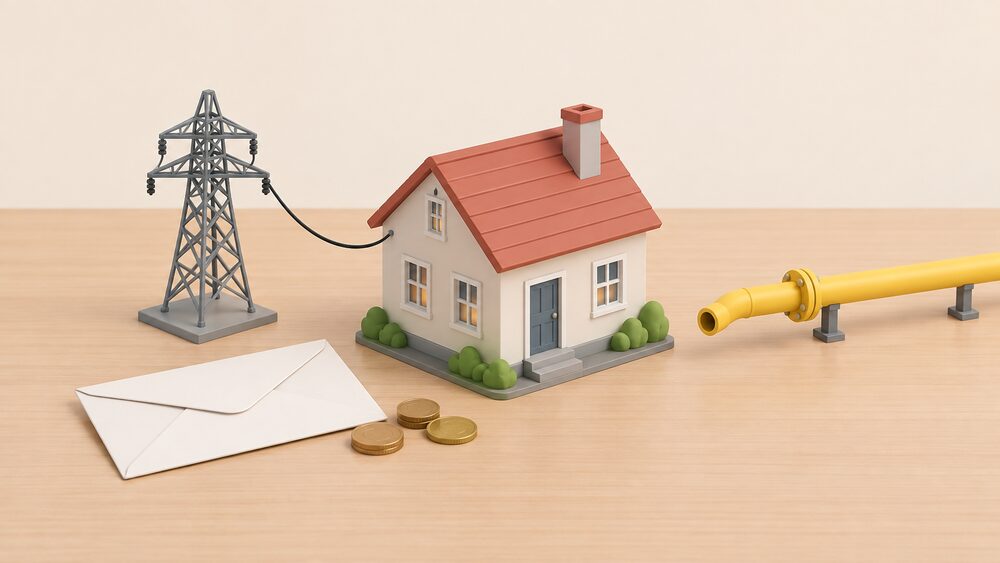
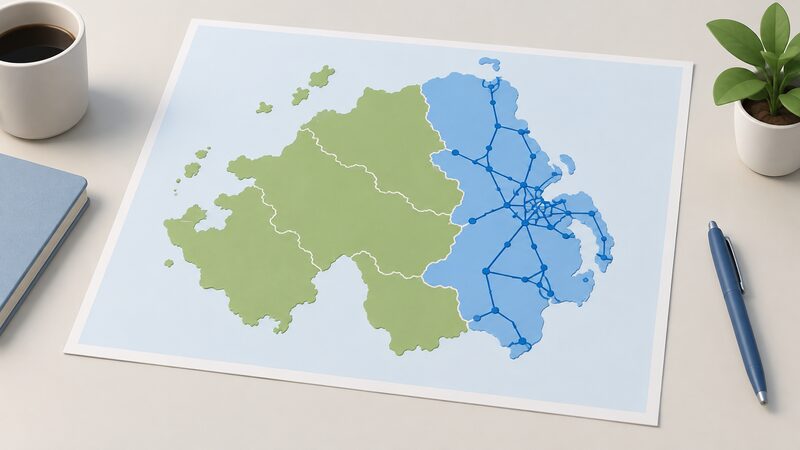
Northern Ireland's energy supply is built on two networks that do not look like their counterparts in Great Britain. Electricity is traded through the Single Electricity Market, an all-island wholesale arrangement, and delivered by NIE Networks under guaranteed standards that set out both response times and cash payments when they are missed. Gas reaches only part of the province: not all areas of Northern Ireland are connected to the gas network, with urban and suburban areas tending to be well served while many rural and western parts have limited or no access1.
For a household, that split matters more than any single tariff. A home on the gas network has a choice of fuels for heat; a home off it does not, and its energy independence rests on electricity, stored fuel or a renewable installation of its own. The guaranteed standards are the other half of the picture, because they are the one part of the supply chain a household can hold to a fixed timetable and a fixed sum.
How energy supply works in Northern Ireland
Electricity in Northern Ireland is bought and sold through the Single Electricity Market, an all-island wholesale market that covers both Northern Ireland and the Republic of Ireland. That arrangement is the reason the province's supply security is assessed alongside its neighbour's rather than in isolation, and it is why the interconnectors to Britain and to the Republic carry weight in any discussion of shortage risk. The market sets the wholesale price; the network companies move the power; the suppliers bill the household.
Gas is a different geography. The network does not reach everywhere, and the pattern is consistent: urban and suburban areas tend to be well served, whereas many rural and western parts have limited or no access1. A household outside the network cannot simply request a connection in the way a household in a served street can, and the alternatives are heating oil, LPG, electricity or a renewable system. The pages on heating oil and LPG supply and on getting a new gas connection set out what those routes involve.
Public charging infrastructure follows a similar pattern of concentration. All public chargepoints in Northern Ireland are operated and maintained by a single private provider, the Electricity Supply Board (ESB), which is currently upgrading older chargepoints3. That is a single point of dependence for anyone relying on public charging rather than a home supply.
The practical consequence for a household is that energy independence in Northern Ireland is decided less by tariff choice than by which networks reach the property. On the gas network, a home can switch between gas and electricity for some needs. Off it, the household's resilience depends on what it stores or generates itself.
Who does what: policy, network and supplier
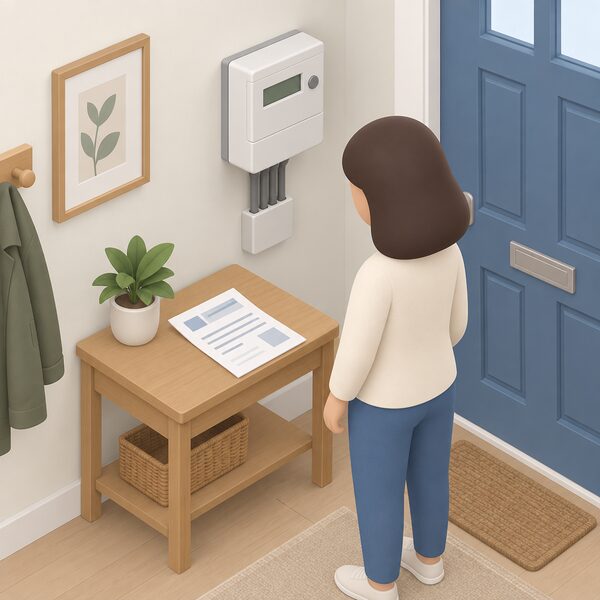
Responsibility is divided between government, a regulator, two network companies and the supplier that bills the household.
| Body | Role |
|---|---|
| Department for the Economy | Energy policy for Northern Ireland4 |
| Utility Regulator (UREGNI) | Regulates licensed suppliers and network companies; publishes the Northern Ireland Sustainable Energy Programme5 |
| NIE Networks | Owns and operates the electricity distribution network; sets the guaranteed standards2 |
| SONI | Operates the transmission system and balances the all-island market |
| The supplier | Billing, meter faults, credit refunds and complaints7 |
The Department for the Economy holds the energy policy role in Northern Ireland, and the Department for Energy Security and Net Zero appears as the source for Northern Ireland's domestic electricity consumption indicator4. The Utility Regulator, UREGNI, regulates the licensed suppliers and network companies and publishes the Northern Ireland Sustainable Energy Programme, whose schemes are aimed at helping homes and businesses in Northern Ireland5.
NIE Networks owns and operates the electricity distribution network and is the body behind the guaranteed standards. SONI operates the transmission system and balances the all-island market. The supplier is the commercial counterparty: it is the point of contact for late, incorrect or missing bills, back billing, being overcharged, a faulty meter, poor customer service, and refusing to refund credit from an account7.
For advice rather than supply, the Consumer Council NI and Northern Ireland Energy Advice give free, independent and impartial energy advice to all domestic householders in Northern Ireland, and NI Energy Advice can also make referrals to energy grants and other sources of help10. The Northern Ireland Energy Advice Service can be reached on 0800 111 4455, open 9am to 5pm Monday to Friday12. The Consumer Council also offers an energy price comparison tool to compare electricity and gas tariffs for all suppliers in Northern Ireland10.
NIE Networks' guaranteed standards: what you are entitled to
There are eleven guaranteed standards, and NIE Networks states that if it fails to meet any of them it is committed to compensating the customer for the inconvenience2. Each standard pairs a deadline with a payment.
| What the standard covers | Deadline | Payment if missed |
|---|---|---|
| Restore supply after a power cut | Within 24 hours | £50 home, £125 business premises, then £25 per 12 hours2 |
| Quote for a new connection | 7 working days (small job) or 15 days (larger job) | £502 |
| Install a meter | 2 days at a home, 4 days at a business | £252 |
| Replace the main fuse | 3 hours on a working day, 4 hours on other days | £252 |
| Investigate a prepayment meter problem | 3 hours on a working day, 4 hours on other days | £252 |
| Respond on a voltage issue | 5 days, or 7 days if a visit is needed | £252 |
| Respond on a meter recording issue | 5 days, or 7 days if a visit is needed | £252 |
| Answer a payment query and pay if needed | 5 working days | £252 |
| Keep an agreed appointment | As agreed | £50, or £125 for other premises2 |
| Notify a planned interruption | At least 3 days before | £252 |
| Send a cheque after a failed guarantee | Within 10 working days | £252 |
For a missed appointment, one figure is £50 or £125 for other premises, and another is £25; the two are not reconciled in the material available, so a household should treat the higher figure as the one NIE Networks publishes and the lower as an alternative reading.
The standards are not only about money. They set the timetable a household can plan around: a meter installation within 2 days at a home, a main fuse replaced within 3 hours on a working day, a voltage query answered within 5 days or 7 if a visit is needed2. For a home running a heat pump, an electric vehicle or medical equipment, those windows are the difference between a minor disruption and a serious one.
Power cuts and restoration: the 24-hour standard and £50
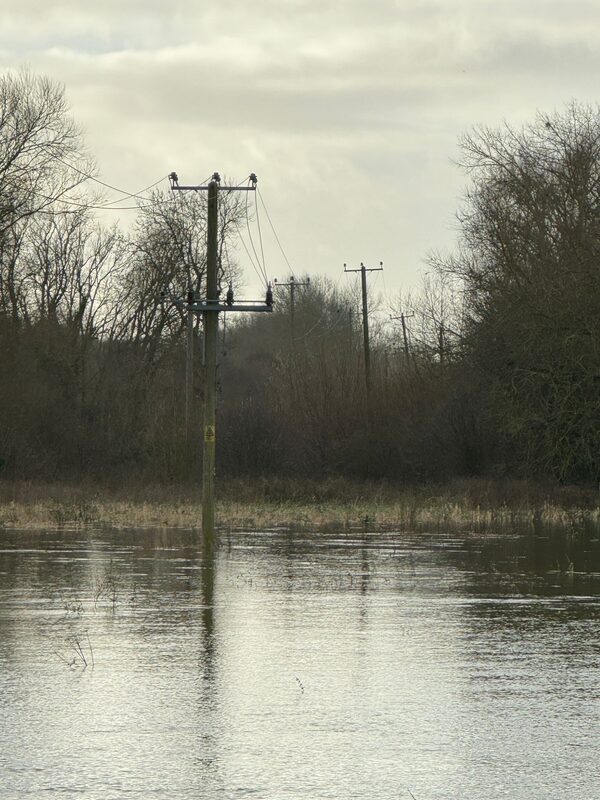
The headline standard is that NIE Networks will restore electricity within 24 hours of a power cut2. If it does not, £50 is due for a home or £125 for business premises, then £25 for every 12 hour period after that2.
Longer outages escalate. Where more than 5,000 homes are affected, £100 can be claimed if power is off for more than 24 hours13. Ofgem's guaranteed standards, which apply in Great Britain, illustrate how the same principle scales: a cut lasting more than 12 hours and interrupted for 36 hours could produce 2 additional £45 payments, adding up to £90, and a cut lasting more than 24 hours and interrupted for 72 hours could produce 4 additional £45 payments, adding up to £18014. Those figures are the Great Britain scheme, not the Northern Ireland one, and are given here only to show the shape of escalation.
That exemption is the main limit on the compensation regime. A storm that brings down lines across a region is precisely the event most likely to leave a household without power for days, and it is also the event most likely to fall inside the exemption. The standards are a service guarantee for ordinary faults, not insurance against severe weather.
For a household, the resilience question is what happens during the exempt hours. A home with no stored heat, no backup generation and no off-grid capability is fully exposed for the duration, however the compensation is eventually settled.
Connection quotes, meter installation and planned interruptions
A new connection starts with a quote. NIE Networks commits to getting a quote to the customer within 7 working days if the connection is a small job, or 15 days if it is a larger job, with £50 due if that is missed2.
Meter installation carries its own standard: within 2 days at a home or within 4 days at a business, with £25 due if not2. A missed appointment carries £50, or £125 for other premises, on one reading, and £25 on another2.
Planned interruptions work the other way round. NIE Networks will let the customer know at least 3 days before if it needs to temporarily interrupt supply, and independent guidance states the same requirement: if supply is turned off for planned reasons, three days' notice must be given2. That notice is what allows a household to charge a battery, run a generator or move perishable food, and it is the one part of the outage regime a household can prepare for.
For a household considering a connection upgrade, the quote timetable is the first fixed point in the process. The pages on getting a new or upgraded electricity connection and on applying for an electricity supply upgrade cover the wider process.
Voltage, metering and payment problems: response times and £25 payments
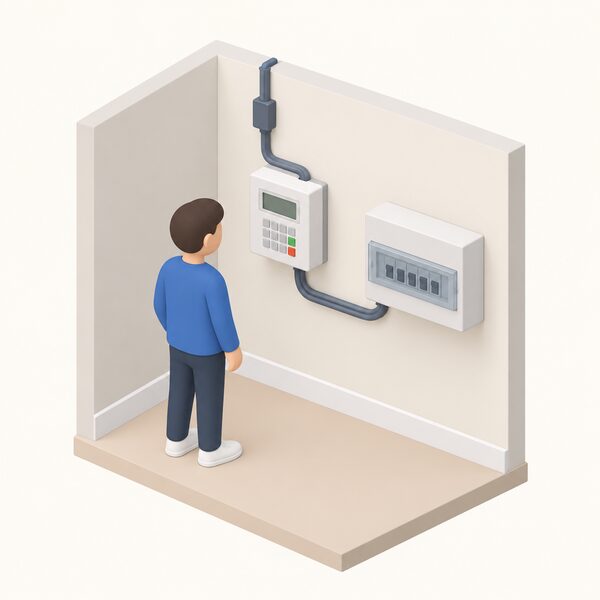
Not every problem is an outage. NIE Networks has standards for the slower, more irritating failures: a voltage issue, a meter recording issue, a payment query, a prepayment meter fault.
- Voltage issue: contact within 5 days, or 7 days if a visit is needed, £25 if missed2
- Meter recording issue: contact within 5 days, or 7 days if a visit is needed, £25 if missed2
- Payment query: answered within 5 working days, and any payment made within 5 working days2
- Prepayment meter problem: investigated within 3 hours on a working day or 4 hours on other days, £25 if missed2
These are the standards that matter most to a household on a prepayment meter, because a meter fault can remove supply without any network fault at all. The response window is measured in hours, not days, which reflects that.
Where the problem is commercial rather than physical, the route is the supplier. Contact the energy supplier for late, incorrect or missing bills, back billing, being overcharged, a faulty meter, poor customer service, and refusing to refund credit from an account7. If the supplier does not resolve it, the complaint escalates to the network operator or the ombudsman route set out by the regulator17.
Claiming compensation: deadlines, payment times and exemptions
The claim process is short and time-limited. A claim must be made within 1 month of the day of the interruption2. Once a guarantee has been failed, NIE Networks will send a cheque within 10 working days2.
The exemption rule is the substantive limit. The legislation behind the guaranteed standards recognises exceptional events and allows for exemptions to be applied, with extreme weather causing significant damage to the electricity network, or access difficulties, given as examples2. Independent guidance repeats the point: exceptional events can allow for exemptions to be applied to these rules13.
For a household, three things follow. First, the clock starts on the day of the interruption, not the day supply returns, so a claim should be lodged promptly. Second, the payment is a cheque, which takes its own time to clear. Third, an exemption does not remove the outage, only the payment, so the practical answer to a long outage is still a household's own contingency.
Where a household is struggling to pay for energy rather than seeking compensation, the routes are different. The Northern Ireland Sustainable Energy Programme funds schemes aimed at helping homes and businesses in Northern Ireland, and applications are made by identifying the scheme, checking eligibility and contacting the relevant scheme manager by telephone or email6. The Northern Ireland Energy Advice Service on 0800 111 4455 can make referrals to energy grants and other sources of help12.
Connecting solar or other generation: G98 and G99
The grid standards that govern a home generating its own electricity are not the same in Northern Ireland as in Great Britain. Engineering Recommendation G98 applies to Great Britain only17. In Northern Ireland, connection requirements are set out separately by Engineering Recommendation G98/NI17, and are governed by the Electricity Safety, Quality and Continuity Regulations (Northern Ireland) 2012 and the Engineering Recommendation G98/NI18.
That separation is the single most important thing for a household planning a solar installation, because it means guidance written for England, Scotland or Wales does not transfer directly. The connection requirements, the application route and the technical standard all sit in the Northern Ireland documents.
A consultation proposes amending the G98 Engineering Recommendation to allow the connection of plug-in microgenerators complying with an interim product specification to low-voltage distribution networks18. That would create a route for small plug-in solar units that does not exist in the same form today. Until it is settled, the position is that a household installation connects under the existing Northern Ireland requirements.
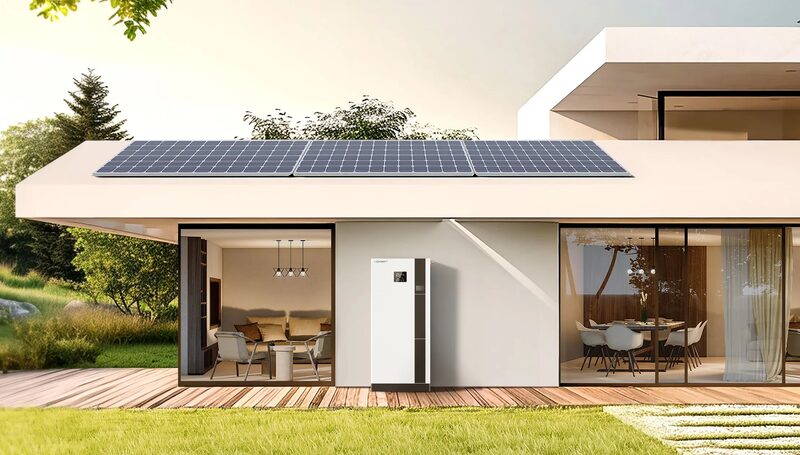
For a household, self-generation is the clearest route to energy independence available, because it reduces the volume of electricity bought from a supplier and the exposure to wholesale prices. What it does not remove is the connection itself: the property remains on the NIE Networks distribution network, and the export and import arrangements run through it.
Low carbon heat: the direction of policy for homes
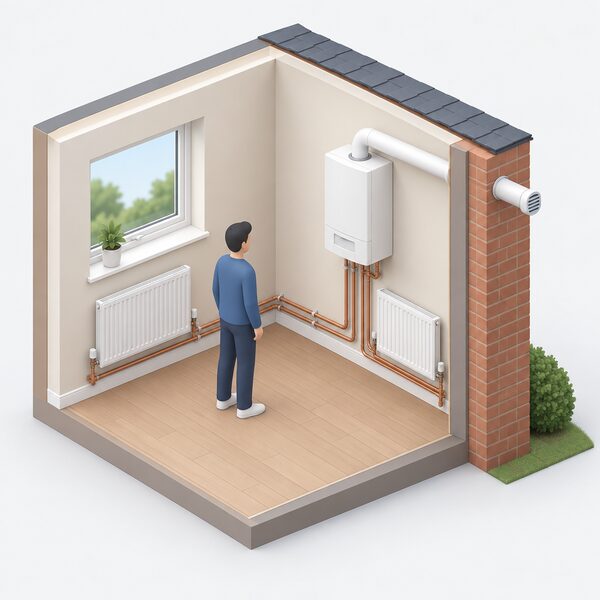
Heat policy in Northern Ireland is under active consultation. The Department for the Economy has consulted on support for low carbon heating in residential buildings, framed as helping to shape future heat policy in Northern Ireland19. That consultation is the clearest signal of direction, and it sits alongside the wider advice route: the Consumer Council NI and Northern Ireland Energy Advice give free, independent and impartial energy advice to all domestic householders in Northern Ireland10.
The constraint on any heat transition is the gas network's reach. A household off the gas network is already using a non-gas heating fuel, and the switch to a low carbon system is a different proposition from a household on the network replacing a gas boiler. The pages on heating oil and LPG supply and on energy security and household independence set out what those households can control.
For a household on the gas network, the direction of policy points towards electrified heat, which increases dependence on the electricity network and on the all-island market. For a household off it, the direction points towards a system the household owns and stores, which increases independence but shifts the maintenance and replacement cost onto the owner.
Either way, the household's exposure is to two things it does not control: the wholesale price set in the Single Electricity Market, and the physical network operated by NIE Networks and SONI. What a household can control is the volume it buys, the efficiency of the building, and whether it generates any of its own supply.
Sources19 cited
- Continuous Household Survey: Heat and Insulation 2024/25, Northern Ireland Statistics and Research Agency, 2025-11-11
- Customer standards and guaranteed standards, NIE Networks, 2026-09-20
- Electric vehicle charging market study: final report, Competition and Markets Authority, 2021-07-23
- Domestic electricity consumption indicator, Office for National Statistics, 2025-12-18
- NISEP List of Schemes 2024-25, Utility Regulator, 2024-10
- Northern Ireland Sustainable Energy Programme List of Schemes 2026/2027 published, Utility Regulator, 2026-04-01
- Complain about your energy supplier or network operator, Ofgem, 2026
- Complain about your energy supplier, Ofgem, 2026
- Complain about your energy supplier or network operator, Ofgem, 2026
- Advice if you're struggling to pay your energy bills, nidirect, 2026-09-17
- Low carbon heating, nidirect, 2026-09-17
- NISEP List of Schemes 2026-27, Utility Regulator, 2026-04
- Power cuts: how to find out if there's a power cut, Which?, 2026-06-04
- Check if you can get a payment for a power cut, Ofgem, 2026
- Plan for a power cut, Ofgem, 2026
- Check if you can get a payment for a power cut, Ofgem, 2026
- Plug-in solar: interim product specification, Department for Energy Security and Net Zero, 2026-07
- Plug-in solar consultation document, Department for Energy Security and Net Zero, 2026-06-16
- Consultation on support for low carbon heating in residential buildings, Department for the Economy, 2026-09-19
 Suppliers in Northern IrelandNorthern Ireland runs its own energy market, with its own regulator, its own suppliers and no price cap.
 Utility Regulator NIWho sets your energy prices in Northern Ireland and who can you complain to?
 Community Energy in NICan a community group in Northern Ireland sell power to its neighbours, and is there funding to get a project off the ground?
 The Full Energy Suppliers GuideWho the UK's domestic gas and electricity suppliers are, how the market is structured across Great Britain and Northern Ireland, what a supplier is licensed and obliged to do, how the price cap limits bills, what happens when a supplier fails, and who regulates it all.
 Power Cuts in Northern IrelandNorthern Ireland has a single electricity distribution network, run by NIE Networks, and its own reporting number, registers and compensation arrangements.
 Home HeatingWhy do so many homes in Northern Ireland run on heating oil, and will that ever change?