

In this guide
Northern Ireland runs its own generation connection rules, separate from the rest of the UK. Engineering Recommendation G98/NI covers micro-scale systems up to 16 amps per phase, which on a single-phase supply means exporting roughly 3.68 kW back to the network1. Anything larger, or anything that does not meet the G98/NI criteria, falls under G99/NI Fast Track or the full G99/NI process, which is not a fit-and-notify route: approval must be granted before installation begins2.
The Fast Track route changed on 1 May 2026. Applicants can now apply for a G99/NI Fast Track installation of up to 60A per phase, previously 16A per phase, with individual inverter size limited to 32A per phase and the export limit still held at 16A per phase3. That widened the diversity of what can be connected without changing how much a site may export4.
Everything runs through NIE Networks, the distribution network operator for Northern Ireland, and applications are submitted through the ENA's Connect Direct website5. Fees, validity rules and milestone deadlines are strict, and missing them can cost a household its export capacity.
G99/NI or G98/NI: which connection route applies to your generator
The route depends on the capacity of what is being connected, not on the technology. G98/NI is the set of rules that apply when generation equipment such as solar panels is connected at a house and exports electricity to the network1. It covers micro-scale systems up to 16 amps per phase, and on a single-phase supply that means roughly exporting a maximum of 3.68 kW back to the electricity network1. The same page states the eligibility in three forms: a maximum of 3.68 kW on single phase, under 11.04 kW on three-phase, or under 16 amps per phase7.
Above that, the system falls under either G99/NI Fast Track or G99/NI, which has a different application process1. The distinction matters because G99/NI is not a fit-and-inform process: approval must be granted before installation begins2. G98/NI, by contrast, is a notify-and-connect arrangement for fully type tested equipment.
The national framework behind both sits in the Energy Networks Association's connection guidance. From 27 April 2019, all generating equipment connected to any electricity distribution network, whether owned by a DNO or an IDNO, must comply with G98 and G998. Northern Ireland has different connection arrangements, and its requirements are set out separately by Engineering Recommendation G98/NI9.
For a household, the practical consequence is that the route is fixed by the inverter and array size, and the paperwork differs sharply between them. A system at or under the threshold is notified after commissioning; a system above it needs approval first. The G98 and G99 guide for wind, hydro and CHP sets out the wider framework, and the microgeneration pillar covers the technologies themselves.
Fast Track eligibility: 16 amps per phase and the widened parameters
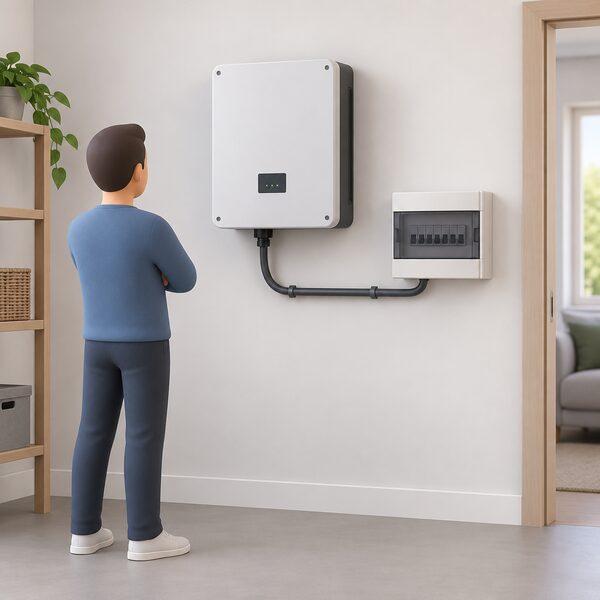
G99/NI Fast Track is the middle route: larger than micro-scale, but simple enough to avoid a full detailed study. Its parameters changed on 1 May 2026. From that date applicants can apply for a G99/NI Fast Track installation of up to 60A per phase, previously 16A per phase, with the export limit remaining at 16A per phase3. NIE Networks describes the change as improving the diversity of what can be connected4.
The current limits are layered. G99/NI Fast Track covers capacity up to 60 Amp per phase with individual inverter size limited to 32 Amp per phase and export limited to 16 Amp per phase11. Elsewhere the same limits are expressed as a maximum inverter size of 32A per phase, which translates to a TIC of 13.8 kW with a maximum inverter size of 7.36 kW3. If your Total Installation Capacity is between 16 Amp and 60 Amp per phase (3.68 kW to 13.8 kW) then it may fall under G99/NI Fast Track11.
| Parameter | Limit |
|---|---|
| Total Installation Capacity | 16A to 60A per phase (3.68 kW to 13.8 kW)11 |
| Individual inverter size | 32A per phase3 |
| Export to network | 16A per phase3 |
| Previous capacity limit | 16A per phase, before 1 May 20263 |
The design logic is that a site may install generation well above what it exports, provided the export is actively limited. That is why the inverter limit and the export limit are separate figures. NIE Networks advises using your Total Installed Capacity and the decision flow chart if you are not sure which route should apply4.
For a household, Fast Track widens what can be installed without a full G99/NI study, but it does not widen what can be sold or spilled to the grid. The 16A per phase export ceiling is the binding constraint, and it is enforced through the equipment and the evidence supplied with the application.
What your G99/NI application must include
A G99/NI Fast Track application is a documentary exercise as much as an electrical one. NIE Networks requires installer details, the site address and site contact details, and the payee contact details12. Where a meter is installed, the application needs the 11-digit MPRN, found on your bill or meter, and the meter serial number, found on the meter front panel12.
Equipment information is required for all existing and new equipment, such as PV panels and inverters, including datasheets12. A compliance certificate with test results must be supplied12. Where export is being limited, the application must include a circuit diagram showing how export is limited to 16 Amps per phase, and the limiting arrangement must comply with NIE Networks Policy 21/007 and EREC G5/4-112. Evidence takes the form of either the G100 test certificate or the manufacturer's Statement of Compliance12.
Once submitted, NIE Networks checks the application details and the information provided, and may request more information or clarification13. A valid application is placed in the generation queue, and each application is assessed in turn to determine the extent of work that may be needed for the connection13. The application is considered valid once all of the correct information is received and the fee is paid13.
For a household, the practical lesson is that incomplete applications do not sit in the queue waiting to be topped up. They sit outside it. The electrical safety and wiring page covers the installation side of the same work.
Fees, validity and applying through Connect Direct

There are application fees for all generation applications with the exception of the G98/NI submissions2. The fee is either a fixed fee derived from Schedule 2 of the Statement of Connection Charges, or a fee based on the outturn cost of carrying out the relevant detailed studies, preparing a connection design and issuing a Terms Letter3. Schedule 2 of the Statement of Charges and the Application Fee Guide carry the detail12.
Payment must be made before an application is considered valid12. NIE Networks reviews all applications to ensure they are complete and valid before processing, and the application joins the queue once all required information and the application fee are received12. VAT must be included with the payment3.
Applications are submitted through the ENA's Connect Direct website5. The same channel applies to other connection types: installers must submit all applications through Connect Direct5. For commercial installs, or for help with the application process, NIE Networks provides an email contact for installers14.
For a household, the fee position is straightforward: G98/NI costs nothing to notify, and everything above it carries a fee payable up front. The Northern Ireland export payments page covers what happens once the connection is live.
Milestone deadlines: 120 days to accept, 24 months to connect
Connection offers carry deadlines, and the deadlines carry consequences. For G99/NI applications, NIE Networks must issue the connection offer within a three-month licence standard6. The three months start from the day the application is considered valid, which is when everything needed to process the application and the application fee have been received6.
The planning milestone applies to G99/NI applications seeking export to the grid for permitted development. It has a deadline of 120 calendar days after NIE Networks issues the connection offer, meaning the quotation documents including the Terms Letter2. If planning permission has not been sent by that date, the export capacity can be retracted and the applicant will have to re-apply2.
Two further milestones govern the life of the offer. The Longstop Milestone Date has a deadline of 24 months after the Scheduled Completion Date, and if the connection works are not completed by that date the export capacity can be retracted3. The Utilisation Milestone Date has a deadline of 24 months after the completion of the connection works, and if the generating units are not fully connected and commissioned by that date the export capacity can be reduced to the level of the commissioned units3. For sites that already have a connection and where no works are to be carried out, the utilisation date is two years from the date the connection offer is issued2.
| Milestone | Deadline | If missed |
|---|---|---|
| Connection offer issue | 3-month licence standard6 | Not stated |
| Planning milestone | 120 calendar days after offer2 | Export capacity can be retracted; re-apply2 |
| Longstop | 24 months after Scheduled Completion Date3 | Export capacity can be retracted2 |
| Utilisation | 24 months after completion of works3 | Export capacity reduced to commissioned units2 |
For a household, the planning milestone is the one most likely to bite, because it depends on a separate consent process. The Northern Ireland wind turbine planning page covers that side of the sequence.
Export limiting to 16A per phase: Policy 21/007, G5/4-1 and G100 evidence
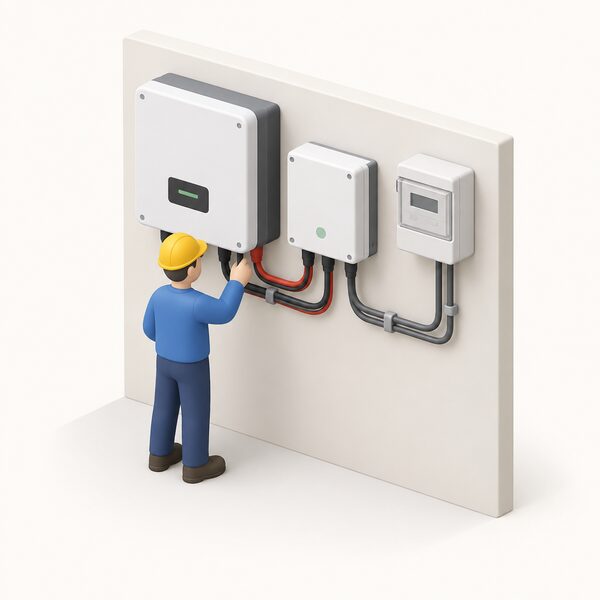
The export limit is the fixed point in an otherwise widening process. The export limit will remain at 16A per phase, and the diversity of what can be connected has been improved3. That sentence captures the whole design of the 2026 change: more installed capacity, same export ceiling.
The limit is enforced through equipment and evidence rather than through inspection alone. The application must include a circuit diagram showing how export is limited to 16 Amps per phase, and the arrangement must comply with NIE Networks Policy 21/007 and EREC G5/4-112. Evidence is either the G100 test certificate or the manufacturer's Statement of Compliance12. G98 notifications require approved Inverter Type Test Certificate(s) and a G100 declaration16.
The underlying capacity rules are set at the same level. Engineering Recommendation G98 applies to projects with a capacity of 16A per phase or less, and where multiple generation or storage units are connected at the same premises the combined capacity per phase is what counts17. The simplified G99 application form applies where the total of all generation, fixed storage and the power export capacity of vehicle-to-grid is under 50 kW three-phase or 17 kW single-phase17.
For a household, export limiting is what makes a larger array possible on a constrained network. It also means the metered export figure, not the array size, is what the connection is built around. The exporting electricity page covers the commercial side.
Inverters and equipment: type testing and the ENA Type Test Register
Equipment approval is checked before the application, not after. The ENA Type Test Register, reached through the Connect Direct website, confirms whether an inverter is compliant and approved for use in Northern Ireland12. G98/NI type-tested inverters and G99/NI Type A type-tested inverters are permitted for installations up to 16 amps per phase12.
The type testing requirement is general. All micro-generators connecting under EREC G98 must be fully type tested18. Technology connected under G98 must be type tested under the requirements of EREC G9817. In all cases, any generating units, including electricity storage, connected through the fast track process must use EREC G99 or G98 type tested inverters16. Where a power generating unit was installed before 27 April 2019, EREC G59 or G83 type tested inverters may also be used16.
"All Micro-generators connecting under EREC G98 must be Fully Type Tested."
Storage is treated as generation for these purposes. Revised technical and compliance requirements for storage in EREC G98 and G99 came into effect from September 202218. Inverters also carry an environmental rating: the outdoor environmental category according to BS EN 62109-1:2010 Table 420.
For a household, the register is the check that prevents a failed application. An inverter that is not on it cannot support a G98/NI or Fast Track submission, whatever its datasheet claims. The small wind turbine standards page covers certification more broadly.
Costs, reinforcement and who pays for network upgrades
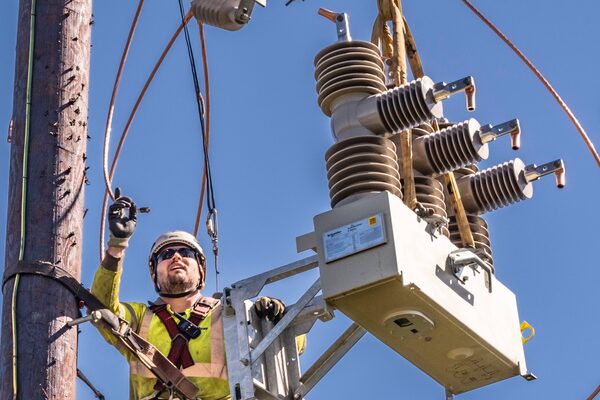
The charging framework changed on 1 July 2026. From that date, customers applying for a new connection to the electricity distribution network no longer have to pay for wider network reinforcement costs incurred by their connection, and those costs are now shared across all electricity consumers15. The change was announced by the Department for the Economy, supported by the Utility Regulator15.
That does not remove all cost. Where reinforcement is specific to the connection, the position is different. Under the G98/NI Stage 2 process, if reinforcement work is required there may be a fee incurred or a connection quotation issued for the network upgrade work7. The customer then has the option to proceed with the reinforcement work, to withdraw the application, or to revise design loads to change the reinforcement required21. If the decision is to proceed, that must be confirmed within 90 days of receiving the quote21.
The same principle appears in the wider connections process. If EV chargers or other low-carbon technologies push demand above the available supply, an upgrade may be required, and NIE Networks will assess the work and provide costs before proceeding5. If an upgrade is needed, NIE Networks outlines the work including any network reinforcement and provides a formal quotation, and no work proceeds until the quote is accepted5.
For cost information before applying, NIE Networks offers a budget quote tool that can provide a provisional cost for a new connection, though it cannot provide a cost for complex work such as housing developments and does not cover all postcodes yet22. A detailed cost proposal for a connection or alteration you will definitely be proceeding with requires logging in to your Connections account and submitting an application form22. The Statement of Charges provides typical costs for the main items of expenditure, excluding VAT, for a new or modified connection23.
For a household, the 2026 change shifts the balance: shared reinforcement is no longer charged to the connecting customer, but site-specific work still is, and it is quoted before any work proceeds.
NIE Networks and where to get help with your application
NIE Networks is the single point of contact for generation connections in Northern Ireland, and it handles both new supplies and upgrades24. Its connections scope covers businesses and farms, and solar, wind and other generation connections24. The connection types it lists include moving a supply, disconnecting a supply, changing the size of a connection, connecting microgeneration under G98/NI, connecting small or large scale generation under G99/NI or G99/NI Fast Track, and moving NIE Networks equipment25.
The connections team can be reached on 03457 643 64325. Customer service hours are 8.30am to 5.00pm Monday to Friday, excluding public and bank holidays11. A WhatsApp support line runs from 7.30am to 11.30pm, seven days a week, including public and bank holidays24.
Applications themselves go through Connect Direct rather than the phone line. Installers must submit all applications through the ENA's Connect Direct website5. For commercial installs, or for help with the application process, NIE Networks provides an email contact for installers14. The connections portal asks for specific supporting material depending on the application type: for new connections at new builds or extension work, a planning application reference number or its current status, photos of the existing site and any existing NIE Networks equipment such as poles, overhead cables, underground service entry points, meter boxes or equipment on the property boundary, and a site boundary drawing shown in red26. Those items are not usually needed for disconnect, change of incoming power, moving equipment or G98/NI applications26.
For a household, the practical sequence is to choose the equipment first, then nominate an installer who carries out checks at the property and submits the application, managing the whole process on the customer's behalf14. NIE Networks then assesses the new equipment and the existing electricity supply, and notifies the customer and installer if the supply can cope, or advises how to proceed if it cannot14.
Sources26 cited
- What is G98/NI, NIE Networks, 2026-09-19
- G99/NI installations, NIE Networks, 2026-09-17
- G99/NI Fast Track installations, NIE Networks, 2026-09-19
- Recent changes to G99/NI parameters, NIE Networks, 2026-09-19
- EVs and heat pumps, NIE Networks, 2026-09-19
- When will I get my connection offer for my G99/NI application, NIE Networks, 2026-09-19
- Micro-scale generation connections, NIE Networks, 2026-09-20
- Installations above 3.68kW per phase but 50kW or less, SSEN, 2026-09-17
- Power cuts advice, NIE Networks, 2026-09-19
- G98 Single Premises, Energy Networks Association, 2026-09-17
- Connect generation, NIE Networks, 2026-09-20
- What you need to start your application, NIE Networks, 2026-09-19
- Once I send all the information what happens next, NIE Networks, 2026-09-19
- Your connections process, NIE Networks, 2026-09-19
- Connection charging announcement FAQs, NIE Networks, 2026-09-20
- G99 Fast Track process, Electricity North West, 2026-09-19
- G98 Single Premises Summary Guide, Energy Networks Association, 2026-09-17
- Connecting generation to the electricity networks, Energy Networks Association, 2026-09-17
- Compliant equipment, NIE Networks, 2026-09-19
- Plug-in solar final interim product specification, UK Government, 2026-07
- Your connections journey, NIE Networks, 2026-09-19
- What is the cost of a new electricity connection), NIE Networks, 2026-09-19
- Help and guidance, NIE Networks, 2026-09-19
- Connections, NIE Networks, 2026-09-19
- Help to select, NIE Networks, 2026-09-19
- App help for multiple houses, NIE Networks, 2026-09-19
 G98 and G99 NotificationAdding a home battery usually means telling your network operator first, but sometimes you can just let them know afterwards.
 Home Energy Planning Rules in NIDo you need planning permission for solar panels or a heat pump in Northern Ireland?
 Planning Permission in NIDo you need planning permission for a home battery in Northern Ireland, and does it matter whether it goes inside the house or in an outbuilding?
 Wind Turbine Planning in NIDo you need planning permission for a home wind turbine in Northern Ireland?
 Community Energy in NICan a community group in Northern Ireland sell power to its neighbours, and is there funding to get a project off the ground?
 Planning Permission NIHow Northern Ireland's planning rules apply to external air conditioning and air-to-air heat pump units, when consent is needed, and how the position differs from England, Scotland and Wales.