

In this guide
There is no UK-wide grant for a domestic wind turbine, a micro hydro scheme or a micro-CHP unit. The money that exists is territorial: Scotland runs the Community and Renewable Energy Scheme (CARES) through Local Energy Scotland, and the Home Energy Scotland Grant and Loan Scheme for homeowners; Wales runs the Ynni Cymru capital grant scheme, which announced a third round of £10 million for 2026-271. England and Northern Ireland have no equivalent dedicated pot for these three technologies.
What does exist at UK level is the export route rather than a capital grant. The Smart Export Guarantee supports solar photovoltaics, wind, micro-combined heat and power, hydropower and anaerobic digestion, up to 5 megawatts in capacity, or up to 50 kW for micro-CHP, with installations located in Great Britain3. That pays for generation, not for the equipment.
The practical consequence for a household is that wind, hydro and micro-CHP are funded either privately, through a Scottish scheme if the property is in Scotland, or through a community route where a group rather than a single home applies. This page sets out which scheme covers what, who can apply, and where the boundaries fall.
What grants exist for domestic wind, hydro and micro-CHP in the UK
The honest answer is that the main domestic funding streams are built around heat and solar, and the three technologies on this page sit outside them. The Warm Homes Plan provides funding, grants and loans for domestic PV installations and low carbon technologies such as solar panels, batteries and heat pumps6. The Warm Homes Local Grant is aimed at low income households in private housing in England, including off-grid homes7. Neither names wind, hydro or micro-CHP as a funded measure.
Northern Ireland is the one part of the UK where micro-CHP has an explicit official presence: domestic sized models are now available there8. That is a statement about availability, not about funding. Northern Ireland's household grant activity is directed at loft and cavity wall insulation and a new boiler or heating system, available to homeowners and private tenants9.
The Domestic Renewable Heat Incentive, which closed to new applications, covered households in England, Scotland and Wales and was administered by Ofgem10. It is relevant here only as history: it supported air source heat pumps and similar measures, not wind or hydro, and its application windows have closed.
Where a household in Great Britain does install one of these technologies, the continuing income route is export. The Smart Export Guarantee obliges licensed suppliers to pay for exported electricity from eligible installations, and wind, micro-CHP and hydropower are all on the list3. That is a payment for output, and it does not reduce the capital cost of the machine.
Scotland: the Community and Renewable Energy Scheme (CARES)
CARES is the most substantial public funding route for the technologies on this page, and it is aimed at communities rather than individual households. It provides advice and funding to communities across Scotland looking to develop renewable energy, heat decarbonisation and energy efficiency projects, including shared ownership projects1. It is delivered by Local Energy Scotland1.
Its purpose is to encourage community ownership of renewable energy projects across Scotland, helping to maximise the benefits of renewable energy systems, and ensuring that the delivery of community energy comes with benefits for people in Scotland1. It supports progress towards the Scottish Government target of two GW of community and locally owned energy1.
The scale is significant. Since its inception, CARES has offered funding of over £51 million and supported over 600 projects to develop, own or take a stake in local renewable energy projects across Scotland11. A later Scottish Government update records that it has supported over 600 community and locally owned renewable projects throughout Scotland12.
CARES also carries a support function that matters more than the money for a first-time group. It has a network of development officers across Scotland to provide free, expert and impartial advice and support to community groups, charities and other eligible organisations seeking to explore their renewable energy options1. For repowering projects, there is dedicated guidance covering financing, evaluation and governance, as well as targeted support from Local Energy Scotland through CARES, including help to develop proposals1.
For a household, the practical reading is that CARES is not a domestic grant. A single home cannot normally apply for a community scheme, but a household that joins or forms a community group, or that takes a shared ownership stake in a local development, is inside the structure CARES exists to support. That is the route by which a domestic-scale wind or hydro interest can attract public money in Scotland.
Home Energy Scotland Grant and Loan: up to £7,500, or £9,000 for rural and island homes
The Home Energy Scotland Grant and Loan Scheme is the household-facing Scottish scheme. It helps eligible homeowners pay for energy efficiency improvements and clean heating systems13. It is open to all domestic owner-occupiers in Scotland4.
The scheme provides grant and loan funding directly to owner occupiers, as well as private registered landlords for their rented properties14. That direct-to-owner structure matters for anyone hoping to apply on someone else's behalf: the funding relationship is with the owner-occupier.
The most recent development extends the scheme into heat networks. The Scottish Government has introduced grant support for homeowners to enable connections to heat networks through the long running Home Energy Scotland scheme, with grants of up to £9,000 together with loans for households in island and remote rural areas to connect to local district heat networks5.
On the headline amount, two figures are in circulation. One independent source gives the figure as £7,500, while another gives up to £18,00013. The discrepancy is unresolved, so a household checking eligibility should treat the published scheme guidance as the authority for its own case rather than relying on either headline.
What the scheme does not do is fund a domestic wind turbine or a micro hydro scheme. Its stated scope is energy efficiency improvements and clean heating systems13. A Scottish householder with a windy site or a burn should read the scheme as covering the fabric and the heating, and look to CARES or to private funding for the generator itself.
Wales: the Ynni Cymru capital grant scheme and its £10 million fund

Ynni Cymru is the Welsh Government's community energy programme, and its stated purpose is to promote community ownership of renewable energy and drive Wales' transition to a low-carbon economy15. It provides financial support to community energy organisations, social enterprises, public sector bodies, and SMEs developing innovative local energy projects15.
The funding has moved in rounds. In autumn 2024 the programme launched a £10 million grant fund for organisations developing smart local energy systems in Wales16. The round announced in September 2025 shared over £12.9 million between 48 successful projects, which the Welsh Government said would help ensure the transition to clean energy directly benefits Welsh communities17.
The third round was announced in March 2026. The Welsh Government announced the third round of the Ynni Cymru Grant Capital Scheme for 2026-27, with £10 million available2. Two previous rounds accounted for £22.9 million and supported 78 projects across Wales2. Once the third round opens, the Welsh Government states it will have invested more than £32 million in total2.
The scheme is open to community energy organisations, social enterprises, public sector bodies and SMEs2. Match funding requirements differ by applicant type. Community organisations and social enterprises face a 0% match funding requirement, while SMEs face 25% and public sector organisations face 25%18. For SMEs and public sector applicants, solar PV funding is capped at 40% of eligible capital costs, subject to the scheme's payback rules18.
The Welsh Government has described the grant as providing funding to keep the momentum towards its target19. For a household, Ynni Cymru is again a community and organisational route rather than a domestic one. A homeowner with a suitable site who wants public money in Wales is looking at joining or forming an eligible organisation, not at a household application.
| Ynni Cymru round | Amount | Projects supported |
|---|---|---|
| First and second rounds combined | £22.9 million | 78 projects across Wales2 |
| Round announced September 2025 | Over £12.9 million | 48 successful projects17 |
| Third round, 2026-27 | £10 million available | Not yet awarded2 |
| Total once third round opens | More than £32 million | Not stated2 |
Who can apply: households, community groups and SMEs
Eligibility splits cleanly along the household and organisation line, and the two do not overlap much.
For households, the Scottish scheme is the only direct domestic route among those covered here. It is open to all domestic owner-occupiers in Scotland4, and provides grant and loan funding directly to owner occupiers as well as private registered landlords for their rented properties14. In Northern Ireland, grants for home energy efficiency are available to homeowners and private tenants, but they fund loft and cavity wall insulation and a new boiler or heating system9. In England, the Warm Homes Local Grant is directed at low income households in private housing, including off-grid homes7, and lists solar PV among eligible measures20.
For organisations, the picture is broader. Ynni Cymru is open to community energy organisations, social enterprises, public sector bodies and SMEs2, and its projects can be delivered by community energy organisations, social enterprises, public sector bodies, and SMEs developing innovative local energy systems17. CARES works with community groups, charities and other eligible organisations1.
There is a further category worth noting for completeness. The Non-Domestic Renewable Heat Incentive was open to industrial, commercial, public sector and not-for-profit organisations21. It is closed, but it shows the pattern: organisational support has historically been wider than household support for generation technologies.
Social housing sits in its own lane. Where grants are made to Private Registered Providers of Social Housing, for example Housing Associations, this is considered a subsidy in accordance with the task of provision of affordable, energy efficient social housing under Services of Public Economic Interest22. That is a funding mechanism for landlords, not for individual tenants.
| Applicant | Route | What it covers |
|---|---|---|
| Scottish owner-occupier | Home Energy Scotland Grant and Loan | Energy efficiency improvements and clean heating systems13 |
| Scottish community group or charity | CARES, via Local Energy Scotland | Renewable energy, heat decarbonisation and energy efficiency projects1 |
| Welsh community energy organisation or social enterprise | Ynni Cymru capital grant | Local energy projects, 0% match funding18 |
| Welsh SME | Ynni Cymru capital grant | Local energy projects, 25% match funding18 |
| English low income household | Warm Homes Local Grant | Insulation, ventilation and solar PV20 |
| Northern Ireland homeowner or private tenant | Home energy efficiency grants | Loft and cavity wall insulation, new boiler or heating system9 |
Advice before funding: why insulation and a home energy check come first
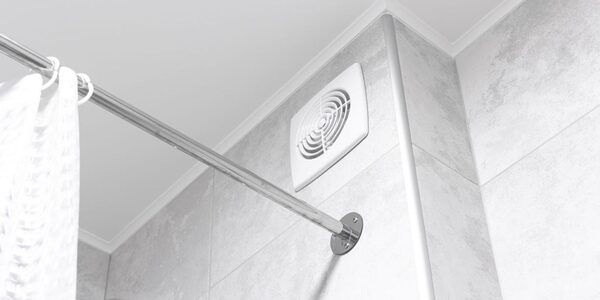
Public funding for generation is scarce, and the schemes that do exist are built on a fabric-first principle. The Warm Homes Local Grant uses a fabric-first approach, which prioritises insulation and ventilation, for example trickle vents and extractor fans, following a technical survey23. That ordering is deliberate: reducing demand comes before adding supply.
The same logic runs through the advice infrastructure. Home Energy Scotland can offer free advice on improving the energy efficiency of your home24, and Energy Saving Trust provides advice on energy at home and a guide to green renovation to help you put energy efficiency first room by room25. Home Energy Scotland also runs a Funding Finder to search for funding and support on improving your home's energy efficiency, reducing energy bills and making your home warmer24.
For a household considering wind, hydro or micro-CHP, the sequence matters for a practical reason. A generator sized against an unimproved home will be larger and more expensive than one sized against a home that has already had its fabric addressed, and the funding that is available is more likely to be directed at the fabric. Where a scheme does not offer grants or funding, it can still identify sources that could help towards the costs of home energy projects26.
There is also a seasonal dimension. Keeping a home warm in winter is the baseline that any generation investment is measured against, and the Met Office publishes seasonal advice on keeping your home warm in winter26. A home energy check before committing capital to a generator is the step that tells a household what the generator is actually for.
How to apply and what the process involves
Applications to these schemes run through the administering body, and the technical requirements are set by certification rather than by the funder.
The Microgeneration Certification Scheme includes clear standards to support the installation of wind turbines and air source heat pumps27. Its reach extends into planning: permitted development rights for wind turbines and air source heat pumps will only be accorded for equipment installed by an installer who has been certificated through the scheme using a certificated product28. The same rule is stated for wind turbines and air source heat pumps under permitted development rights, where equipment must be installed by an installer who has been certificated through the scheme using a certificated product27.
In Wales, a stand alone wind turbine is permitted development only if the installation complies with the Microgeneration Certification Scheme Planning Standards or equivalent standards29. A building mounted wind turbine is different: it will be necessary to make a planning application to your local planning authority if you wish to install a building mounted turbine29.
In Scotland, installing a free-standing wind turbine in the curtilage of a dwellinghouse falls under prior notification and prior approval30. Scottish consultation material describes domestic micro-scale wind turbines as under 50 kW capacity and over 100m from the nearest property boundary31.
The application sequence for a funded project therefore runs:
- Establish eligibility with the administering body.
- Confirm the planning route for the specific installation.
- Appoint a certificated installer using a certificated product.
- Complete the work.
- Submit the claim with the certification paperwork.
The Domestic Renewable Heat Incentive illustrates how tightly certification and payment were tied, with one year from the commissioning date shown on the MCS certificate to submit an application for installations commissioned before 1 March 201932. That scheme is closed, but the pattern of paying against certification persists.
Where to get free, impartial advice: Home Energy Scotland and Local Energy Scotland

Home Energy Scotland gives free impartial advice on energy efficiency and renewable energy in Scotland33. It is administered by the Energy Saving Trust on behalf of the Scottish Government3, and it acts as a referral partner for eligibility enquiries, providing free and impartial advice funded by the Scottish Government34.
The contact details are straightforward. Home Energy Scotland can be reached on 0808 808 228226, and calls are free from landlines and most mobile networks33. Phone lines are open Monday to Friday 8am to 8pm, and 9am to 5pm on Saturdays24.
Local Energy Scotland is the delivery body for CARES1, and its development officers provide free, expert and impartial advice and support to community groups, charities and other eligible organisations seeking to explore their renewable energy options1. For a community group rather than a household, that is the first call.
Local authority pages also carry signposting. Argyll and Bute directs residents to Home Energy Scotland for advice34, Edinburgh lists financial help for energy efficiency and low carbon heating improvements25, West Lothian points to Energy Efficient Scotland area based schemes24, and Tameside lists grants and funding25. In Northern Ireland, grant information and energy advice is handled by NI Energy Advice, contactable by email or on 0800 1114 4559.
For the Warm Homes Local Grant, the published complaints line is 0800 021 3145, with unresolved complaints going to the administering council23. A household approached by a cold caller claiming to offer an energy grant should compare the offer against the published scheme contact details; a genuine scheme has a named administrator and a published route.
Sources34 cited
- Local and small scale renewables, Scottish Government, 2026-09-17
- £10 million to help Welsh communities cut energy bills, Welsh Government, 2026-03-03
- The Smart Export Guarantee, House of Commons Library, 2026-05-13
- Heat in Buildings progress report 2025, Scottish Government, 2025-10-02
- Heat in Buildings Bill update from the Cabinet Secretary, Scottish Parliament, 2025-11-18
- Warm Homes Plan, Parliamentary Office of Science and Technology, 2026-06-25
- Warm Homes: Local Grant, House of Commons Library, 2026-09-17
- Micro combined heat and power, nidirect, 2026-09-17
- Home heating, Belfast City Council, 2026-09-20
- Domestic Renewable Heat Incentive annual report, scheme year 11, Ofgem, 2025-07
- Heat in Buildings Strategy, Scottish Government, 2021-10-07
- Heat in Buildings Strategy 2022 update, Scottish Government, 2022-10-31
- Home Energy Scotland Grant and Loan Scheme application and claim processing times, Scottish Government, 2026-03-12
- FOI 202500448310, Scottish Government, 2025-02-20
- £10 million support for community-led energy projects across Wales, Welsh Government, 2025-05-01
- Energy generation in Wales 2023, Welsh Government, 2024-09
- £12.9 million support for Welsh communities to transition to renewable energy, Welsh Government, 2025-09-17
- Ynni Cymru capital grant funding scheme 2026 to 2027 guidance, Welsh Government, 2026-04
- Publication of Energy Generation and Energy Use in Wales first combined edition report, Welsh Government, 2026-03-18
- Apply for a Warm Homes Local Grant, Liverpool City Council, 2026-09-17
- Heat pump deployment quarterly statistics, United Kingdom 2025 Q2, Department for Energy Security and Net Zero, 2025-09-04
- Warm Homes: Social Housing Fund Wave 3 scheme guidance addendum, Department for Energy Security and Net Zero, 2026-06
- Warm Homes Local Grant 2025 to 2028, Birmingham City Council, 2026-06-24
- Energy Efficient Scotland area based schemes, West Lothian Council, 2026-09-17
- Grants and funding, Tameside Council, 2026-09-17
- Financial help for energy efficiency and low carbon heating improvements, City of Edinburgh Council, 2026-09-20
- The Microgeneration Certification Scheme, Planning Portal, 2026-09-17
- Planning permission: wind turbines, Welsh Government, 2026-09-17
- Householder permitted development rights circular 1/2024, Scottish Government, 2024-05
- Who to contact: Domestic Renewable Heat Incentive, Ofgem, 2026-09-17
- Extending permitted development rights in Scotland: sustainability appraisal, Scottish Government, 2019-06
- Key terms explained: Domestic Renewable Heat Incentive, Ofgem, 2026-09-17
- Home energy efficiency, Argyll and Bute Council, 2026-09-17
- Keeping your home warm in winter, Met Office, 2026-09-20
 Why Energy Grants DifferWhere you live in the UK changes which home energy grants you can get.
 Check Which Energy Grants ApplyWhich energy grants can you actually get right now, and which have closed?
 Devolved vs Reserved PowersWho decides what you pay for gas and electricity, and who decides how your home is insulated or improved?
 Microgeneration UptakeScotland has more solar panels and heat pumps per household than England, while Wales has built larger solar schemes and Northern Ireland lags behind.
 Devolution and Energy PowersLiving in Scotland, Wales or Northern Ireland can mean different grants and building rules for your home than in England.
 The Full Wind, Hydro and Micro-CHP GuideCould a small wind turbine or water wheel work at your home, and what about boilers that make their own electricity?