
In this guide
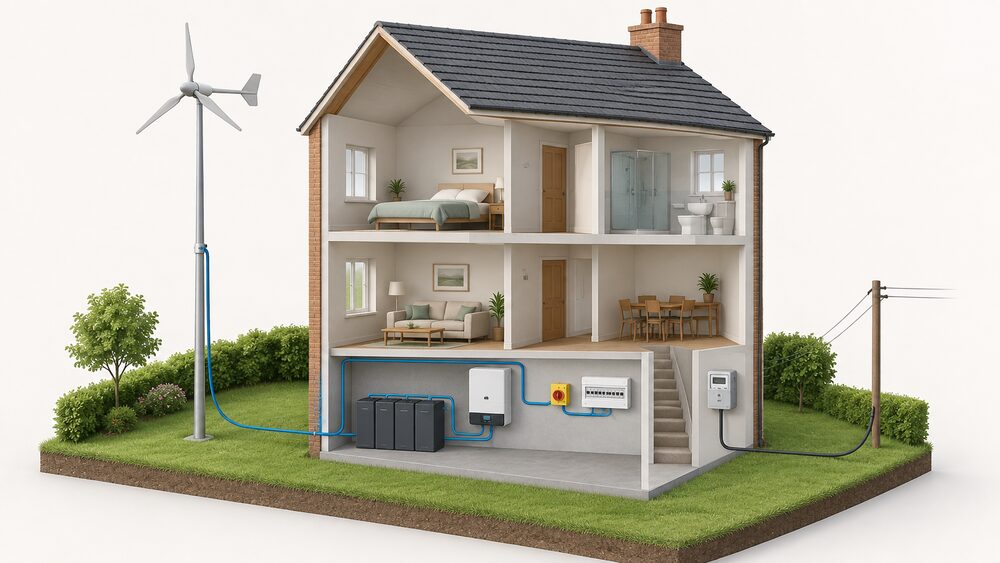
A home that generates its own electricity is no longer only a consumer of the grid. It is a source, and that changes what the wiring has to do. A small wind turbine turns wind into electricity through a generator, and most small turbines produce direct current that is stored in a battery before use1. That DC stage, the inverter that follows it, and the point where the installation meets the mains all need isolating, earthing and protecting in ways a conventional domestic circuit does not.
The connection rules are set by the size of the generator. Small-scale generation of 3.68kW or less per phase, such as solar panels or wind turbines, follows the G98 notification route, while larger installations exceeding 3.68kWp need a G99 application2. Behind-the-meter energy systems in general usually only need the electricity network operator to be notified4. Notification is not the same as permission: in Wales and Northern Ireland, planning permission is required before a wind turbine is installed5.
Safety outcomes for small generating equipment are good when the equipment is sound. An official study of plug-in solar found that such systems can operate safely within the tested conditions, with stable behaviour, effective protective device operation, and no evidence of sustained unsafe energisation or unacceptable thermal effects6. The same study found product quality is not uniform across the market6. The risk sits less in the principle of home generation than in the provenance of the hardware and the competence of the person wiring it.
Why electrical safety matters more when you generate your own power
A generating installation introduces a second source of energy into a house that was wired for one. The grid can be isolated at the main switch, but a turbine, a battery or an inverter can still be live on the house side of that switch. That is the core reason the safety regime for microgeneration is stricter than for an ordinary circuit: the installation must be capable of separating from the grid, and it must remain safe when it has done so.
The technology mix matters. Wind turbines generate electricity by using wind to turn blades connected to a generator5, and most small turbines produce direct current and store it in a battery1. Where battery storage is present, excess electricity from wind turbines and solar panels can be stored for later use5. A battery bank is a substantial store of energy sitting inside the home, and the DC side of the system carries currents that domestic AC protective devices were never designed to interrupt.
There is also a maintenance dimension that does not exist for a passive installation. A rotating machine has bearings, blades and a tower or mounting, and the electrical and mechanical sides interact. A turbine that is no longer needed for, or capable of, generating electricity must be removed as soon as reasonably practicable under the Scottish permitted development rules10, and the same removal requirement appears in the Class H permitted development conditions for England11. A machine left standing but disconnected is still a structure with a cable run attached to it.
For a household, the independence gain is real: a turbine with battery storage can supply power when the grid is down, and reduces the electricity drawn from a supplier. The dependence that remains is on the integrity of the isolation and protection equipment, on the competence of whoever installed it, and on the continued availability of parts and support from a manufacturer. Electrical safety is what converts a generating asset into a reliable one.
Grid connection standards: G98 and G99, and what replaced G83 and G59
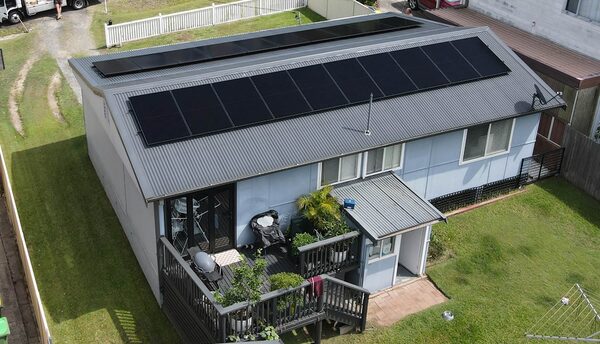
The connection standard that applies to a home generator is decided by its capacity, measured per phase. G98 covers small-scale electricity generation, such as solar panels or wind turbines, with a capacity of 3.68kW or less per phase2. That is a notification process: the installer tells the distribution network operator what has been connected, and the equipment is expected to meet the protection requirements built into the standard. G99 is the application route for larger installations exceeding 3.68kWp, and it requires a formal application to connect before energisation3.
| Route | Applies to | Process | Evidence required |
|---|---|---|---|
| G98 | 3.68kW or less per phase2 | Notification to the network operator2 | Type-tested equipment, protection built in |
| G99 | Installations exceeding 3.68kWp3 | Application before energisation3 | Protection settings tested and recorded |
The per-phase wording is the part households most often misread. A single-phase property has one phase, so the ceiling is 3.68kW. A three-phase supply has three, and the threshold applies to each of them. The practical effect is that a larger machine, or a combination of wind and solar, can push an installation from the notification route into the application route, with the longer timescale and technical assessment that implies.
The older standards, G83 and G59, have been superseded by this pair. G83 covered small-scale connection and G59 covered larger generation; the current framework replaces them with G98 and G99 respectively. The engineering purpose is unchanged: the network operator needs to know what is connected, and the equipment must disconnect automatically when the grid goes outside its permitted operating envelope, so that a generator cannot energise a network that linesmen believe is dead.
Notification is also distinct from the metering and payment arrangements. A Feed-in Tariff generator must tell its FIT licensee if it becomes the owner, nominated recipient or a connected person of 25 or more FIT installations12. That is a separate obligation from the connection notification and applies to the scheme's own administrative rules.
Protection and disconnection: how your equipment must separate from the grid
The protective requirement at the heart of any grid-connected generator is automatic disconnection. For compliant plug-in equipment, the specification calls for automatic disconnection from the mains supply within 100 ms7. That figure is the benchmark for how quickly a generating device must stop exporting when the mains supply is lost or falls outside its permitted range, and it exists to protect anyone working on the network as much as the household.
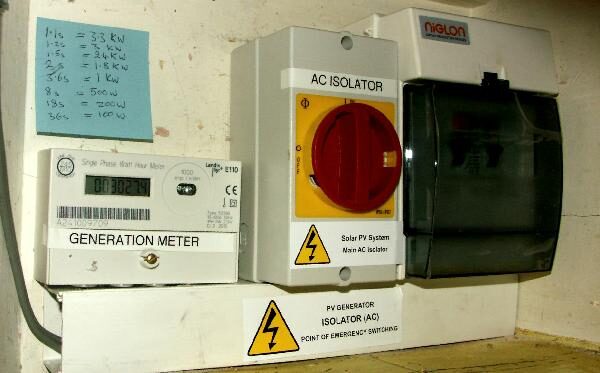
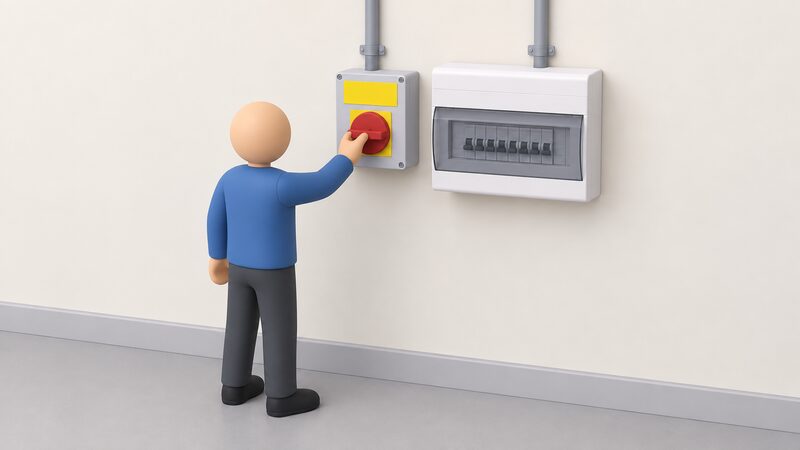
In a fixed installation, the same function is performed by the inverter's built-in interface protection, backed by an isolation switch that a person can operate. The isolation point needs to be accessible and labelled, so that a future electrician, a network operative or a firefighter can see that the property has a generation source and can isolate it. Labelling is not decoration: it is the difference between a safe isolation and an assumption that the installation is dead when it is not.
Earthing is the other half of the arrangement. A generating installation must be earthed in a way that suits its configuration, and the earthing arrangement interacts with the type of supply the property has. This is specialist work, and it is one of the reasons the installation route runs through a registered competent person rather than a general builder.
There is a removal obligation attached to the equipment itself in some circumstances. Under the Welsh permitted development rules for a stand-alone wind turbine, the machine must be removed as soon as reasonably practicable when no longer needed for microgeneration13. The Scottish equivalent, Class 6G for a free-standing turbine in a dwelling curtilage, requires removal as soon as reasonably practicable if the turbine is no longer needed for, or capable of, the generation of electricity10. A decommissioned machine with a live cable is a hazard, not an asset.
Interface protection in practice: relays, fault tests and operating ranges
Interface protection is the set of functions inside the inverter or controller that watches the grid and acts when it moves outside its permitted envelope. It covers over-voltage and under-voltage, over-frequency and under-frequency, and loss of mains. When any of those conditions is detected, the device disconnects. The 100 ms disconnection figure in the plug-in specification is the visible expression of that logic7.
In practice, households meet interface protection through its symptoms rather than its design. Grid voltage mismatch is a reported cause of solar inverter faults14, and the same class of fault affects small wind inverters operating to the same standards. A property at the end of a long rural line, which is exactly where a wind turbine is most likely to be sited, can sit at the top of the permitted voltage band, and an inverter that trips repeatedly on over-voltage is doing its job rather than failing.
Voltage changes at a property are managed by the distribution network operator, which is the body that investigates supply voltage complaints14. That division of responsibility matters when a fault is diagnosed:
- An inverter tripping on voltage is a network question, directed to the distribution network operator14.
- An inverter tripping on internal fault codes is a maker's question.
- The two are often confused, and the confusion leads households to replace equipment that was working correctly.
Fault tests are part of commissioning. An installer commissioning a G99 installation will test the protection settings and record them, because the network operator's application process requires evidence that the interface protection operates at the specified thresholds. For G98 installations the equipment is type-tested to the standard, so the protection is built in rather than configured on site.
The operating range also has a physical dimension. Wind turbines work best in exposed, windy locations and are less suitable for built-up or sheltered areas5. A turbine in a turbulent site will spend more time at the edges of its operating envelope, cycling in and out, which puts more demand on the interface protection and the inverter than a machine in clean airflow. Siting is therefore an electrical question as well as an energy-yield one.
Building Regulations Part L and what it means for generation installations
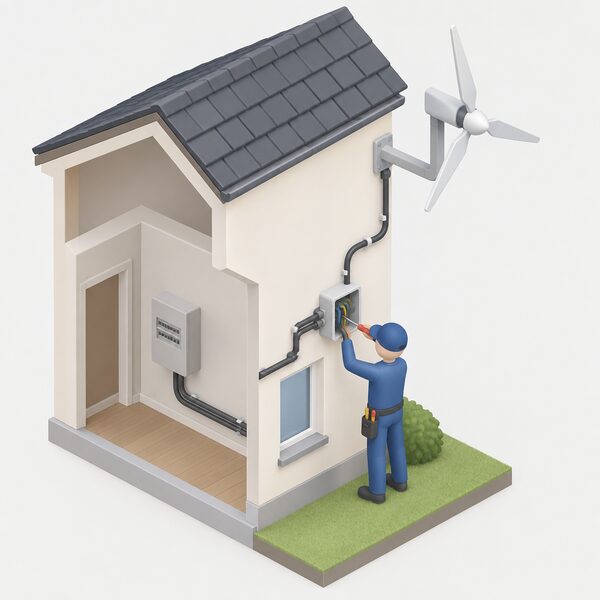
Building regulations apply to a wind turbine attached to a house, and they also apply to the electrical installation and other aspects of the work15. That sentence covers the two distinct strands: the structure and its attachment to the building, and the electrical work that connects it. A turbine attached to the house normally falls within building regulations; a free-standing one in the garden may not, depending on its size and position.
Part L of the Building Regulations sets the standards for the energy performance of new dwellings and non-domestic buildings16. Broadly, the Part L requirements apply to buildings, or extensions of such buildings except those of Class 7 type, or work to or in connection with such a building where it is a roofed construction having walls and uses energy to condition the indoor climate15. The requirements are, in general, technology and fuel neutral17, which means Part L does not mandate a particular generating technology in England.
Wales has moved further. Under Part L of Schedule 1 to the Building Regulations 2010 as amended in Wales, when a dwelling or a building containing a dwelling is erected, a system for renewable electricity generation must be installed on-site, subject to specified limitations18. A Welsh Government consultation in 2023 proposed mandating the use of renewable technologies, especially solar thermal and solar photovoltaics, and battery storage in all new developments and significant renovations or extensions19. The 2025 review of Part L in Wales covers the impacts of changes to Part L including changes to Part F on ventilation, Part O on overheating and associated Approved Document guidance20.
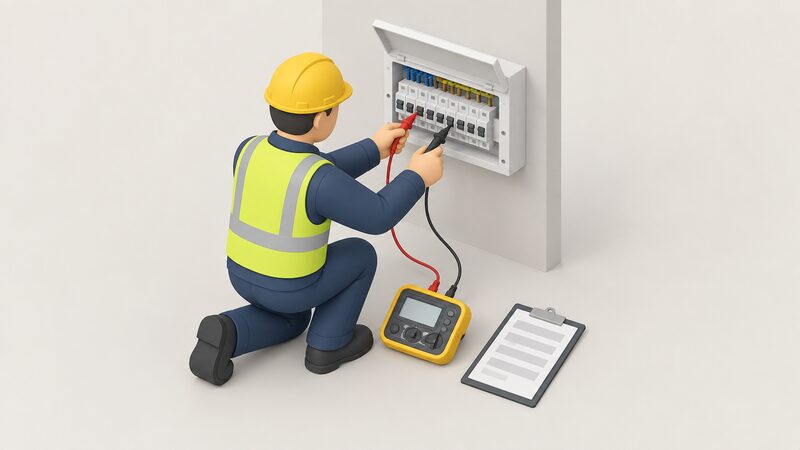
For a household adding generation to an existing home, the practical consequence is that the electrical work is notifiable in its own right. It is recommended to hire an installer who is registered with a competent person scheme, a registered competent person, who can self-certify that the work meets the required standards21. That route avoids a separate building control application for the electrical element, provided the work is of a type the scheme covers.
Using a registered electrician: why Electrical Safety First says always
The competent person scheme is the mechanism that makes self-certification possible. In Wales, the electrician must be registered by an organisation authorised by the Secretary of State and able to certify the work as safe without notifying Building Control22. That is the definition that matters: the scheme member carries the responsibility for certifying compliance, rather than the household applying to building control separately.
For wind turbines specifically, the route depends on where the machine is mounted.
| Mounting | Building Regulations route | Self-certification |
|---|---|---|
| Turbine attached to the house | Row 17 of Schedule 315 | Registered competent person may self-certify without involving local authority building control15 |
| Turbine not attached to the house | Row 12 of Schedule 315 | Registered competent person listed against that row may self-certify without involving local authority building control15 |
The row that applies is decided by the type of work, not by the household's preference.
The reason to use a registered installer is not administrative convenience. It is that the certification is a statement that the work meets the required standards, made by someone with the qualifications and the insurance to stand behind it. An unregistered installer can produce work that looks correct and passes a visual inspection while failing on earthing, isolation or protection settings, and those failures are invisible until something goes wrong.
An installer can also assess the property and recommend a suitably sized wind turbine5, which links the electrical design to the physical site. Sizing affects the connection route: a machine that pushes the installation above 3.68kWp moves it from G98 notification to a G99 application3, with the technical assessment that follows.
Recalled and unsafe products: stop using an item until it has been checked
A recall is a maker's or regulator's statement that a product should not be used until it has been checked. Electrical Safety First maintains an online product checker that shows whether an appliance has been recalled23. For generation equipment, the equivalent check is against the manufacturer's own safety notices and the product checker, because an inverter or charge controller that has been recalled may still be installed and working, which is precisely when the risk is highest.
Registration is the mechanism that makes a recall reach the household. Registering an appliance with the manufacturer means the owner can be notified if there is a problem23. Without registration, a recall notice has to be found rather than received, and equipment installed in a loft, a garage or an outbuilding is easy to forget.
The wider product safety framework is being tightened. A government consultation on the UK's new product safety framework reported that 90% of toys purchased from third party sellers failed to meet UK legal safety requirements, and 81% failed a safety standard24. Those figures are for toys, not generation equipment, but they describe the same marketplace problem: a product sold through a third party seller may not have been through the conformity process that a mainstream retail channel requires.
For generation equipment, the official study of plug-in solar found that product quality is not uniform across the market6, and recommended product requirements, consumer guidance and a simplified registration approach to support safe and proportionate rollout6. The direction of policy is towards clearer product requirements and easier registration, which would make the recall route work better for small generating devices.
Buying online: the marketplace risk, where 96% of tested products failed safety tests
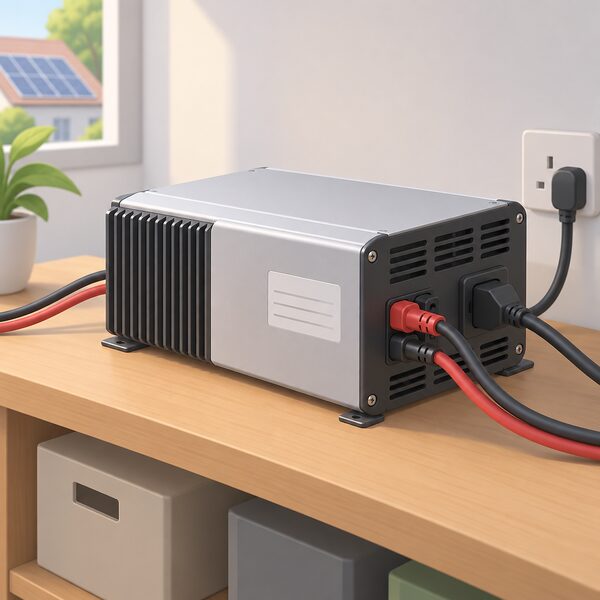
The marketplace risk is documented in the product safety consultation, which found 90% of toys from third party sellers failing to meet UK legal safety requirements and 81% failing a safety standard24. The pattern is consistent across product categories: goods sold through marketplace sellers, without a UK responsible person or conformity assessment, are more likely to fall short.
Generation equipment is not exempt. The plug-in solar study found product quality is not uniform across the market6, and the interim product specification for plug-in solar was withdrawn, which indicates how unsettled the product requirements remain7. A household buying an inverter, a charge controller or a complete small wind kit online is buying into that variability.
The rooftop PV audit evidence is starker still. Across over 600 safety audits, 97 percent of the systems presented safety issues linked to ignition hazards9. That figure comes from a fire safety report on solar photovoltaic panels and describes installed systems, not products on a shelf, but it shows how often installation quality and product quality combine into a fire risk.
The counterweight is that compliant equipment performs well. The plug-in solar study found that such systems can operate safely within the tested conditions, with stable behaviour, effective protective device operation, and no evidence of sustained unsafe energisation or unacceptable thermal effects6. The variable is not the concept but the specific product and the specific installation.
For a household, the practical test is provenance: a UK supplier with a named manufacturer, a declaration of conformity, a warranty that can be claimed, and a registration route. Where those are absent, the saving on the purchase price is being taken out of the safety margin.
Fire risk in the home: half of accidental domestic fires involve electricity
Every year, half of accidental domestic fires in the UK are caused by electricity, and that figure is not changing8. The stated causes are misuse of appliances, poor regulation of electrical safety checks particularly in the private rented sector, and faulty appliances8. Generation equipment adds a new category of appliance to that list, one that runs for long periods and often sits in a loft, a garage or an outbuilding where a fire can develop unnoticed.
The white goods comparison is useful because it shows how a familiar appliance class behaves. Over five fires a day in England are caused by white goods such as tumble dryers, washing machines and dishwashers8, and those appliances account for a high proportion of electrical fires in the UK23. The common factors are continuous operation, a heating element or motor, and a location where the appliance is out of sight for hours at a time. An inverter and a battery share the first and third of those.
Electrical Safety First campaigns for mandatory five-yearly electrical checks in rented homes8. That is a policy demand, not current law, and it does not yet cover owner-occupied homes with generation equipment. The absence of a statutory interval means the check schedule for a home installation is set by the installer's commissioning certificate, the manufacturer's maintenance instructions and the household's own judgement.
The fire safety report on solar photovoltaic panels found that 97 percent of the systems audited presented safety issues linked to ignition hazards9. That is the strongest single argument for commissioning tests, correct isolation and periodic inspection: the failure mode is not usually a dramatic equipment failure but a connection or component that overheats over time.
Smoke alarms and night-time risk: simple measures that save lives
Most household fires that kill happen at night, when occupants are asleep and the early warning that would allow escape is absent. Smoke alarms are the measure that addresses this directly, and they are independent of the generation equipment. A home with a battery store and an inverter has the same need for early warning as any other, plus the specific consideration that a fire involving a battery may behave differently from a conventional one.
Carbon monoxide alarms follow a parallel logic for combustion appliances. Approved Document J requires that the alarm should incorporate a warning device to alert users when the working life of the alarm is due to pass25. That end-of-life warning matters because an alarm that has silently expired provides no protection while appearing to be present.
The gas safety regime provides the model for scheduled checks.
- A landlord must ensure that a gas safety check is done every year on each gas appliance or flue26.
- For LPG appliances owned and provided by the landlord, a Gas Safe registered engineer must carry out a safety check at least once every 12 months27.
- For homeowners, all gas appliances or flues are regularly maintained and a safety check is carried out annually or at any other time if there is a safety doubt, by a Gas Safe registered installer28.
- Northern Ireland applies the same principle through its domestic gas installation guidance13.
Generation equipment has no equivalent statutory annual check for owner-occupied homes. The practical schedule is therefore built from the commissioning certificate, the maker's maintenance interval, and a visual check of the installation after any storm or fault. For a wind turbine, that includes the cable run and the isolator as well as the machine itself.
Where the independence ends
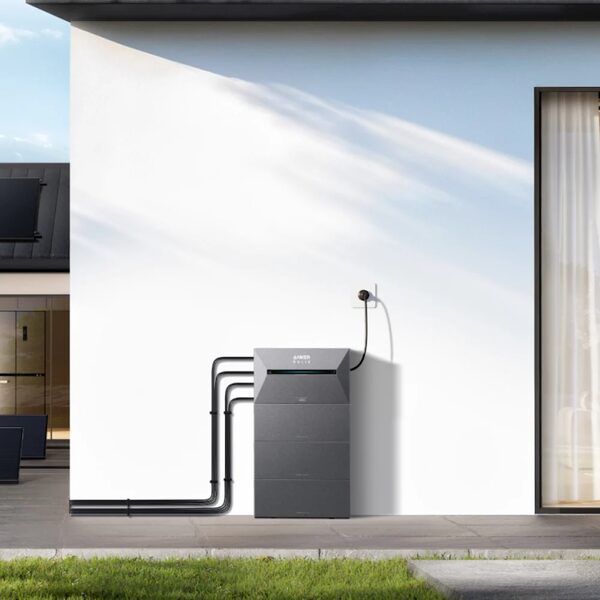
A home generating installation delivers genuine independence: it produces electricity on site, it can store surplus in a battery, and it can continue to supply the house when the grid is down, provided the isolation and protection arrangements are correct. The G98 and G99 framework exists to make that safe for the network as well as the household, and the competent person route exists to make sure the certification is real.
The dependence that remains is specific and worth naming. The installation depends on the grid for its reference and for export, on a network operator for connection and voltage management, on a manufacturer for parts, firmware and warranty support, and on a registered electrician for periodic inspection. A battery adds a dependence on the maker's battery management system, and an inverter with monitoring adds a dependence on an app or cloud service that may not outlive the hardware.
None of that undoes the case for generating at home. It sets the terms. The safety regime is what allows a household to run a generator, store its output and stay connected, and the evidence from the official studies is that compliant equipment does this safely. The variable that decides whether a particular installation is safe is the product and the person who wired it, which is why the notification, certification and registration steps are not paperwork but the substance of the thing.
Sources28 cited
- Small-scale wind turbines, nidirect, 2026-05-18
- Micro generation connections up to 3.68kW per phase, SSEN, 2026-09-17
- Building regulations renewables guidance, Bedford Borough Council, 2026-09-17
- Behind-the-meter energy systems guidance, Welsh Government, 2026-06-29
- Wind turbines, Energy Saving Trust, 2026-05-20
- Plug-in solar electrical safety study, GOV.UK, 2026-06-16
- Plug-in solar interim product specification (withdrawn), GOV.UK, 2026-06
- 10 ways to avoid electrical fires in your home, Electrical Safety First, 2026-09-19
- Fire safety of solar photovoltaic panels, GOV.UK, 2026-01-07
- The Town and Country Planning (Scotland) Amendment Regulations 2024, legislation.gov.uk, 2024-05-24
- Class H: installation of wind turbine on domestic premises, legislation.gov.uk, 2026-09-17
- Guidance for FIT generators, Ofgem, 2026-04-01
- Planning permission: wind turbines, Welsh Government, 2026-09-17
- Managing voltage changes in your property, Electricity North West, 2026-09-19
- Wind turbines: building regulations, Planning Portal, 2026
- Energy efficiency characteristics of new dwellings, GOV.UK, 2026-02-04
- Preparing Wales for a renewable energy 2050, Welsh Government, 2024-06-14
- Building (Amendment) (Wales) Regulations 2026, Welsh Government, 2026-03-06
- Preparing Wales for a renewable energy 2050 report, Welsh Government, 2023-10
- Building Regulations Part L: 2025 review, Welsh Government, 2025-08-26
- Do I need building regulations approval for electrical work?, Planning Portal, 2026
- Building regulations: electrics, Welsh Government, 2026-09-17
- Demand flexibility service: running appliances at cheaper times, Electrical Safety First, 2026-09-19
- The UK's new product safety framework, GOV.UK, 2026-03-31
- Approved Document J: combustion appliances and fuel storage, Welsh Government, 2024-10-04
- Gas safety checks: what they involve, Health and Safety Executive, 2026
- Gas safety: frequently asked questions, Health and Safety Executive, 2026
- Domestic gas installation and health and safety, nidirect, 2025-10-28
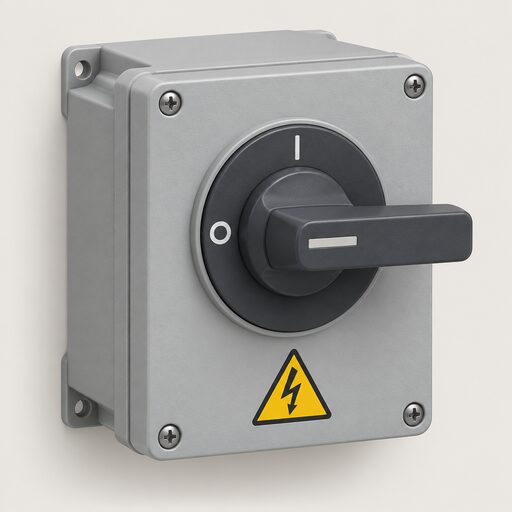 Backup Power Safety RulesWho signs off a battery or backup circuit, and can you legally plug in a power station or a plug-in solar panel in the UK?
 Solar Panel InstallationHow long will the panels actually take to fit, and what happens on the day?
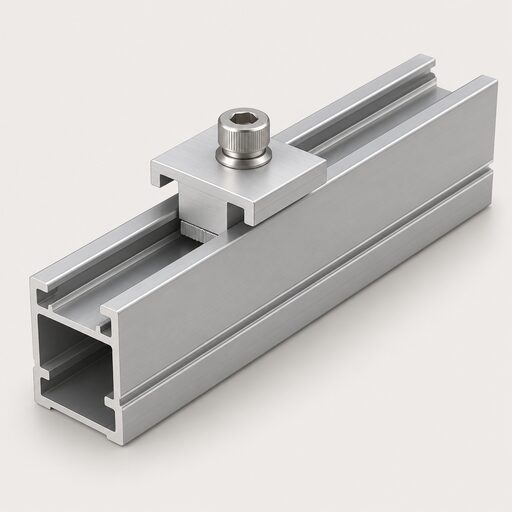 Solar Mounting System MakersWhich solar mounting brands might appear on your quote, and does the maker actually matter?
 Telling the Network OperatorFitting a generator, solar panels or a battery that works alongside the grid usually means telling your network operator.
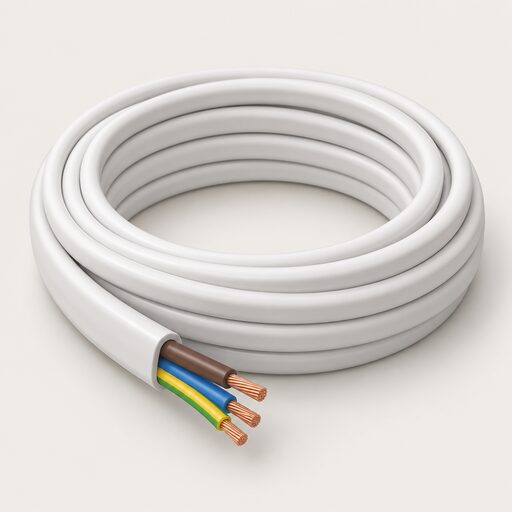 Electrical Safety RegulationElectrical work at home raises real questions about who can do it, what needs signing off, and what paperwork you should keep.
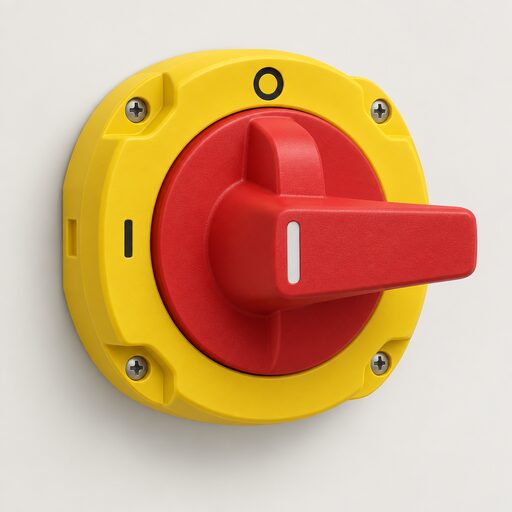 Fire and Electrical SafetyHow likely is a solar panel fire, and what actually causes one?