
In this guide
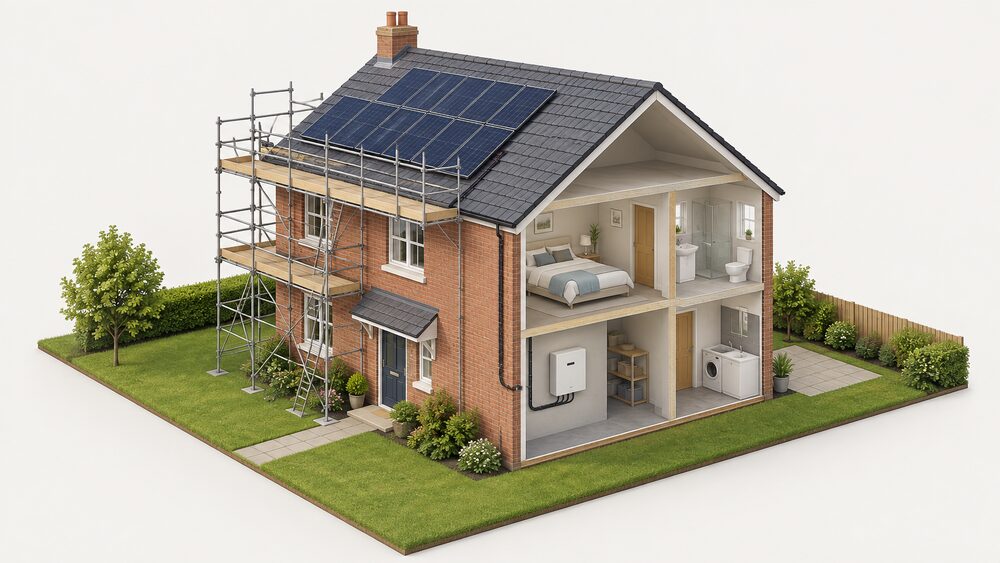
A domestic solar installation is a sequence of checks and sign-offs, not a single day's work. It starts with a survey that establishes whether the roof can take the load, moves through planning and building regulations where they apply, then scaffolding, fixing, DC and AC wiring, commissioning, and a handover pack of drawings, certificates and instructions. Most installations are completed within one or two days once the scaffolding is up1, and a typical residential job takes about 1 to 3 days on site2. The whole process from consultation to grid connection can take a few weeks because of permitting, design and inspection requirements2.
The money side is well documented. A typical solar panel installation costs around £6,1003, and payback is usually put at 10 to 12 years, with one council figure giving a range of 6 to 12 years3. The system must be registered with your Distribution Network Operator, usually by the installer4, and anything above 3.68kW needs the DNO's approval before it can be connected6.
What follows is the process in order, with the rules that govern each stage, the documents you end up holding, and the points where a household's independence from the grid, a supplier or a manufacturer is real and where it is partial.
What the installation process covers, from first survey to handover
The scope of a professional installation runs from site assessment and design through to wiring and grid connection, with the work set up so that local regulations and codes are met2. In practice that means four phases: survey and design, permissions, physical installation, and commissioning with handover.
The survey and design phase produces a basic panel design for the roof and descriptions of the installation, including a basic drawing of the proposed layout. That drawing is what a household uses to apply for a lawful development certificate, planning permission or listed building consent if any of those are needed10. The design also fixes the number of panels, their location, cabling routes and colour10.
The permissions phase is where the timetable usually stretches. Planning permission is generally not needed for a domestic installation12, but building regulations apply to roof-mounted work regardless of whether planning permission is required8. Where the property is listed, or sits in a conservation area, or the panels go on a wall facing a public road, the position changes and an application may be needed13.
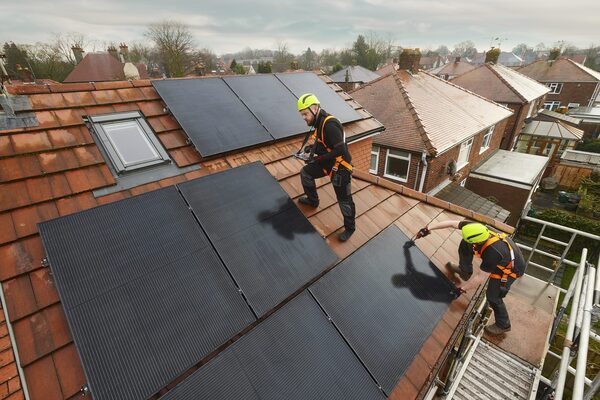
The physical phase is short. Scaffolding goes up, panels are fixed, DC cabling is run to the inverter, AC wiring connects to the consumer unit, and the system is tested and commissioned. One publicly funded scheme specification requires the installation to be completed, tested and commissioned within 21 days of the scaffolding being erected unless otherwise agreed9.
The final phase is handover: record drawings, test and completion certificates, maintenance instructions, manufacturers' literature, a full description of the works and commissioning certificates, handed to the client at practical completion9. That pack is the household's evidence base for warranty claims, insurance and any future sale.
For a household's energy independence, this process is what converts a roof into a generating asset. What it does not remove is the connection itself: the system is registered with the DNO, and above 3.68kW it depends on the DNO's prior approval4.
Planning permission and building regulations: when you need them
Installing solar panels will generally not need planning permission12. That is the default for a house, and it is why most installations proceed without an application. The exceptions are specific and worth checking before anything is ordered.
Building regulations are the more consistent requirement. A building regulations application is needed when installing a solar panel on a roof, the roof strength must be assessed and may need strengthening, and the regulations also cover the electrical installation16. The installation itself is subject to standard building regulations regardless of whether planning permission is required8, and installing solar panels may require approval under the Building Regulations because of the additional loading on the roof structure and the associated electrical works17. Building regulations will normally apply to installing solar panels on your roof18.
MCS certified installers generally do not need to submit a Building Regulations Application, but all installers should check with local Building Control9. That is a useful distinction: certification changes the paperwork route, not the standard the work must meet.
Where planning permission is needed, the triggers are consistent across councils. If your installation does not meet government requirements, you will need to apply for planning permission19. If you cannot comply with the permitted development conditions, you will need to obtain planning permission20. In conservation areas and on listed buildings, planning permission may be required12.
Listed buildings carry the heaviest requirements. Solar panels on listed buildings need planning permission and listed building consent16, and installation will require planning permission and is likely to require an application for listed building consent14. If your property is listed, you always need planning permission and listed building consent13. Listed building consent will be required to place solar panels on a listed building, including buildings within the curtilage of the listed building which pre-date July 194815. To install solar panels on a listed building you will need listed building consent before you can commence17.
Two further points matter for households in the devolved nations. Building regulations guidance on solar panels is published separately for Wales21, and the same Welsh guidance covers energy efficiency requirements for extensions22. Where a property is listed, the consent route applies across England, Scotland, Wales and Northern Ireland, though the planning system that administers it differs.
The independence question here is legal rather than technical: permitted development rights are what allow a household to add generation without seeking anyone's permission, and the listed building and conservation area rules are the boundary of that freedom.
The roof survey: what a surveyor checks before anything is agreed
The survey is the point at which the design stops being generic. Once you accept your offer, a surveyor visits the property to assess whether the roof is suitable for a solar installation and to confirm the number of panels, their location, and other details such as cabling locations and colour10. That visit is also when the practical constraints of the roof are recorded.
Structural checks sit alongside the visual survey. A qualified surveyor should go into the loft to check the integrity of the roof and the rafters first1. A structural engineer will need to check the roof for its strength, and some strengthening work may be needed10. The check is that the roof can support the additional wind, snow and static load imposed by the solar panels, and that it complies with Part A: Structure23. The adequacy of the existing roof to carry the load from the panel will need to be checked and proven21, and the ability of the existing roof to carry the load of the panel will need to be checked and proven21.
That assessment must be done by a qualified structural engineer23. It is possible that you will be asked to supply evidence in the form of a Structural Engineer's report that your roof will accept the new load8.
Condition matters as much as strength. The roof structure, walls and existing coverings must be in sound repair prior to installation17. A roof that needs work is better dealt with before panels go on, because removing and refitting panels later adds cost and risk.

The survey output feeds directly into the paperwork. The contractor provides a basic panel design for the roof and descriptions of the installation, including a basic drawing of the proposed layout, which can be used to apply for a lawful development certificate, planning permission or listed building consent11. For the household, the survey is the moment to establish what the roof can actually hold, and therefore what the system can actually deliver.
Getting quotes: why at least three MCS certified installers
Getting quotes from at least three certified installers is the standard recommendation4. The reason is not price alone. Three quotes give a household three independent structural and design opinions, three views on what the roof will take, and three sets of assumptions about shading, orientation and cable routes. Where those differ, the differences are worth understanding before signing.
Certification is the filter to apply to each quote. Your installer should be certified by the Microgeneration Certification Scheme4. Councils recommend using an installer who is certified by the Microgeneration Certification Scheme24, and the best way to avoid problems with building regulations is to use an MCS certified installer for the fitting8. The full list of certified installers is published on the MCS website8.
Publicly funded work adds a second badge. The company providing the installation must carry a valid Trustmark and be MCS certified9. Tender paperwork for that work records the MCS Certification Number and the relevant electrical certificate number for the contractor9.
For eligibility under government schemes, the requirement is stated as a chain: for low carbon heating, or solar panels, to be eligible, they must be installed using an MCS approved product, by an MCS certified installer, to the relevant MCS installation standard25. Each link matters. A certified installer fitting an uncertified product, or a certified product fitted to a different standard, breaks the chain.
"The best way for you to avoid any problems with building regulations is to use an MCS certified installer for the fitting"
The independence angle is straightforward. Certification is what makes a system eligible for the schemes that pay for export and for grant funding, and it is what gives a household a complaints route if the work falls short. A cheaper installation outside the scheme has no such route.
Why MCS certification matters for your installation
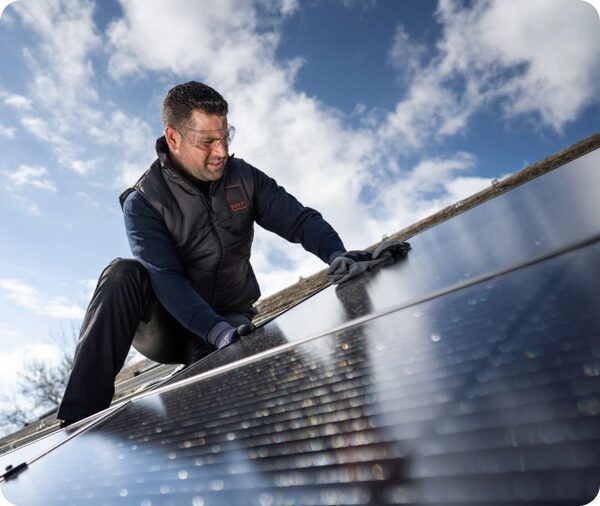
MCS certification is the mechanism that ties a product, an installer and an installation standard together. For scheme eligibility, solar panels must be installed using an MCS approved product, by an MCS certified installer, to the relevant MCS installation standard25. That three-part requirement is what a household is buying when it chooses a certified installer.
The installation standard itself is defined. MIS 3002 covers the requirements for contractors undertaking the supply, design, installation, set to work commissioning and handover of solar photovoltaic microgeneration systems26. That is the full lifecycle of the job, not just the fixing of panels, and it is why the handover pack matters as much as the roof work.
Certification also changes the building regulations route. MCS certified installers generally do not need to submit a Building Regulations Application, but all installers should check with local Building Control9. The certification is therefore doing two things at once: it is the passport to scheme eligibility, and it is the basis on which the building control process is simplified.
Where a household wants written confirmation that the work is lawful under permitted development, the design drawing supplied by the contractor supports an application for a lawful development certificate19. That certificate is separate from MCS certification, but the two often travel together because the same design pack supports both.
The limit is worth stating plainly. MCS certification is a competence and compliance scheme, not a guarantee of performance. It does not promise a particular generation figure, and it does not remove the household's dependence on the grid for the periods when the array is not generating. What it does is make the installation traceable, insurable and eligible for the payments that improve the economics.
Scaffolding, roof work and panel installation: how long it takes
Most solar panel installations are completed within one or two days, with larger complex jobs taking longer4. A typical solar panel installation for a residential home takes about 1 to 3 days2. Once the scaffolding is up, the panels could be installed in less than a day1. The whole process from consultation to grid connection can take a few weeks because of permitting, design and inspection requirements2.
The scaffolding timetable is the part households notice most. One scheme specification requires the installation to be completed, tested and commissioned within 21 days of the erection of scaffolding unless otherwise agreed9. That is a contractual backstop rather than a typical duration, but it sets the outer limit for how long the structure should be standing.
The sequence on site is consistent. Scaffolding is erected, roof fixings and rails are installed, panels are mounted, DC cabling is run to the inverter position, the inverter is installed and connected, AC wiring is taken to the consumer unit, and the system is tested and commissioned. The scheme specification requires not less than 24 hours notice before commencing tests9, which matters where a household or a building manager wants to be present.
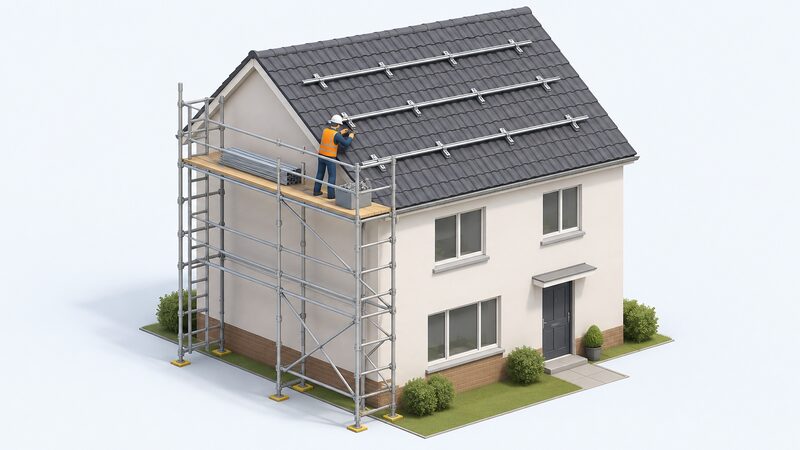
Panel layout is governed by a setback rule in publicly funded work: panels must be installed with at least 400mm from roof edges in all directions, including rooflights, dormers, valleys and chimneys9. That spacing affects how many panels fit, and therefore the system size, which is why the survey and the design drawing matter before scaffolding goes up.
For independence, the installation itself is the moment the household stops being a pure consumer. From commissioning onward the roof generates, and the meter runs backwards when generation exceeds demand. What remains is the connection, the inverter and the monitoring app, all of which sit outside the household's control.
Grid connection and DNO notification: the 3.68kWp threshold
A solar system must be registered with your Distribution Network Operator, and the installer usually registers it4. The installer must contact the DNO via connect and notify or apply to connect8. Which route applies depends on size.
Currently, DNOs only need to be notified in advance of rooftop solar installation above 3.68 kW6. Larger systems over 3.68kW will usually need the DNO's approval before they can be connected to the grid7. Residential rooftop solar projects above 3.68kW per phase must receive DNO approval3. Apply to connect is for larger installations exceeding 3.68kWp and requires a G99 application8. G99 applications cover installations over 3.68kWp which require prior approval from the DNO9.
Below the threshold, the route is notification after the fact. This involves completing a G98 application form within 28 days of the solar panels being in place8.
| System size | Route | Timing |
|---|---|---|
| Up to 3.68kW | Connect and notify, G98 form | Within 28 days of panels being in place8 |
| Above 3.68kW | Apply to connect, G99 application | Prior approval from the DNO required8 |
The threshold is per phase, which matters for larger properties3. Where a G99 application is required, the paperwork goes to the network operator's records team; one published specification gives the postal address for National Grid Electricity Distribution as the Records Team, 6th Floor, Toll End Road, Tipton, DY4 0HH9.
This is the clearest limit on household independence in the whole process. The array may be on your roof and the inverter in your garage, but the connection to the network is licensed infrastructure, and the DNO's approval is what makes export possible. A battery and an export-limiting setup can reduce what the network sees, but they do not remove the registration requirement.
Cost: around £6,100 for a typical system
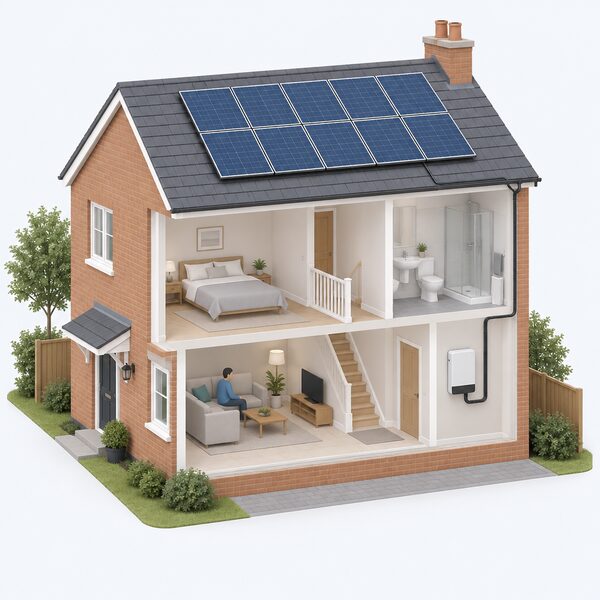
A typical solar panel installation costs around £6,1003. A typical solar system can cost around £6,100 to install4. Those two figures, from an official roadmap and an independent consumer body, agree closely, which makes £6,100 a reasonable central estimate for a typical house system of around 3.5kWp3.
The spread around that central figure comes from system size, panel choice, inverter type, mounting method, scaffolding, and whether a battery is included. Prices are installer-quoted, and no published price range beyond the typical figure is available, so any household comparing quotes is comparing labour, access and equipment assumptions as much as headline numbers.
| Item | What it covers | Evidence |
|---|---|---|
| Typical system cost | Around £6,100 for a typical house system of around 3.5kWp | Official roadmap3 |
| Independent estimate | Around £6,100 to install | Energy Saving Trust4 |
| Payback | 10 to 12 years | Official roadmap and Energy Saving Trust3 |
| Payback, council estimate | 6 to 12 years | Bristol City Council5 |
The cost figure is where the evidence is thinnest, and it is worth being honest about that. The two sources that give a number agree, but neither breaks it down into panels, inverter, scaffolding, labour and certification. A household should expect the quote to itemise those, and should expect the itemisation to differ between installers.
For independence, cost is the entry price. Once paid, the generation is free at the point of use, and the payback period is the measure of how long the household waits before the system has paid for itself. The dependence that remains is on the installer's workmanship, the inverter manufacturer's warranty, and the network connection.
Payback: 6 to 12 years depending on your system
Solar panels usually pay for themselves in 10 to 12 years3. At the moment the payback period is about 10 to 12 years4. One council puts the payback in the region of 6 to 12 years5.
What drives the difference is the assumptions behind each figure. Payback depends on the system size, the proportion of generation used on site rather than exported, the export payment available, the household's electricity price, and whether a battery shifts generation into the evening. A household that uses most of its generation during the day will pay back faster than one that exports most of it.
The range across sources is therefore a range across circumstances, not a contradiction. The 10 to 12 year figures are the mainstream estimate for a typical installation3. The 6 to 12 year figure reflects a wider set of cases, including those where self-consumption is high5.
For a household's independence, payback is the point at which the system has returned its capital and begins returning free electricity. After that point the household's exposure to electricity price rises is reduced, though not eliminated, because the grid still supplies everything the array cannot cover at the time it is needed.
Handover documentation and what to check before signing off

The handover pack is the household's permanent record of what was installed and how it was tested. One published specification requires record drawings, test and completion certificates, maintenance instructions, manufacturers' directory and colour product literature, a full description of works, and commissioning certificates, handed to the client at practical completion9. After satisfactory completion of tests, two copies of inspection and completion certificates are submitted to the client9.
That list is a useful checklist even where the installation is not publicly funded, because it is the same set of documents an MCS certified installer works to under MIS 3002, which covers supply, design, installation, set to work commissioning and handover of solar photovoltaic microgeneration systems26.
Before signing off, the practical checks are:
- Record drawings showing the panel layout, cable routes and inverter position9
- Test and completion certificates, in two copies9
- Commissioning certificates confirming the system was set to work9
- Maintenance instructions and manufacturers' literature9
- A full description of the works as installed9
- Confirmation of the DNO notification, with the G98 form submitted within 28 days where applicable8
- The MCS certification number for the installer and the product9
Where a listed building is involved, residents will normally be able to get sign-off of the details using the information provided by their solar equipment installers27. That is the same principle: the installer's documentation is what satisfies the consent authority.
Ofgem publishes separate dispute resolution contacts for the Feed-in Tariff28 and for the Domestic Renewable Heat Incentive29, which apply where those schemes are involved rather than the installation itself.
The independence this stage delivers is documentary. A complete handover pack is what allows a household to prove what it owns, claim on warranties, insure the system correctly, and sell the property without argument about what is on the roof.
Sources29 cited
- Solar panel installation, Which?, 2026-08-12
- Solar panel installation, myenergi, 2026-09-17
- UK Solar Roadmap, Department for Energy Security and Net Zero, 2025-10
- Solar power facts, Energy Saving Trust, 2026-08-13
- Bristol Warm Homes Plan, Bristol City Council, 2025-04
- POST note on solar, Parliamentary Office of Science and Technology, 2026-06-25
- Behind-meter energy systems guidance, Welsh Government, 2026-06-29
- Building regulations renewables guidance, Bedford Borough Council, 2026-09-17
- Barcud solar panel installation scheme specification, Sell2Wales, 2026-06-15
- Installing solar panels at your home, Brighton and Hove City Council, 2026-09-17
- Solar Together domestic planning guidance, Southampton City Council, 2026-09-17
- Solar Together Norfolk, South Norfolk and Broadland District Council, 2026-09-17
- Planning and solar, Frome Town Council, 2025-09-02
- Planning permission for solar panels, Welsh Government, 2026-09-17
- Solar photovoltaics and planning in conservation areas, West Suffolk Council, 2026-09-17
- Solar panels and planning permission, Cornwall Council, 2026-09-17
- Solar panels guidance, City of York Council, 2026-09-17
- Solar panels, Wirral Council, 2026-09-17
- Guidance on retrofitting homes: solar panels, Lambeth Council, 2026-09-17
- Solar panels guidance, Islington Council, 2026-09-17
- Building regulations: solar panels, Welsh Government, 2026-09-17
- Building regulations: energy efficiency, Welsh Government, 2026-09-17
- Solar panels, East Hertfordshire District Council, 2026-09-17
- Solar photovoltaic panels, London Borough of Bromley, 2026-09-17
- Warm Homes: Social Housing Fund wave 3 scheme guidance addendum, Department for Energy Security and Net Zero, 2026-06
- Fire and solar PV systems literature review, Building Research Establishment, 2015
- Local listed building consent order case study, Local Government Association, 2022-07-11
- Feed-in Tariff dispute resolution, Ofgem, 2026-09-17
- Domestic Renewable Heat Incentive contacts, Ofgem, 2026-09-17
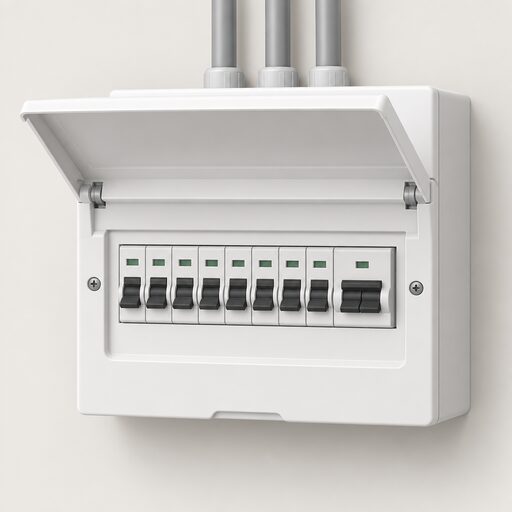 Installation ProcessA home battery installation usually starts with a survey, then the fitting itself, then a handover.
 Certificates You Should ReceiveAfter work like solar panels or a new boiler, what paperwork should you actually be handed, and by when?
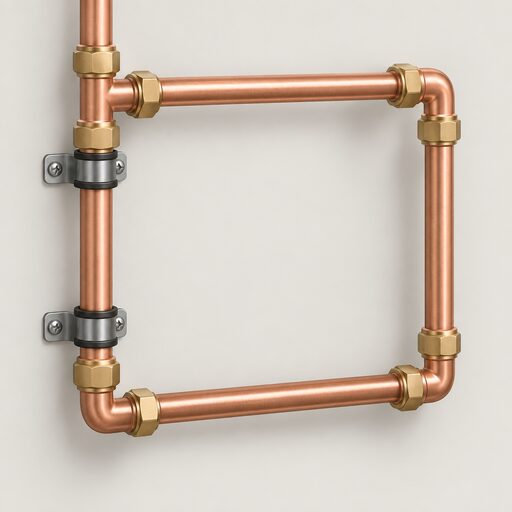 Installation Survey to HandoverWalks through the survey, design, pipework and electrical stages of a domestic heat pump installation and what happens on each day.
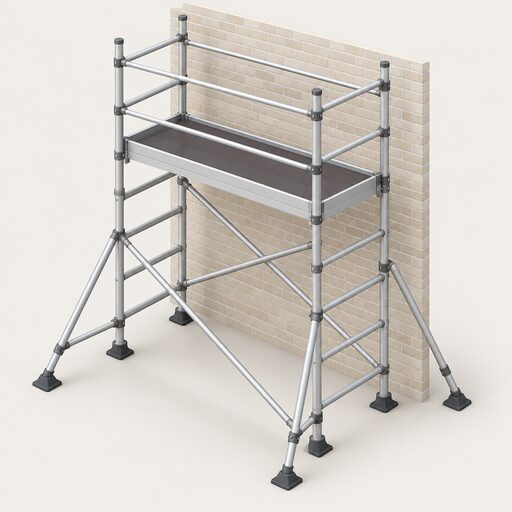 What Happens on Installation DayHow long will installation day take, and will you need to be in?
 G98 and G99 Grid ConnectionDoes your solar system need telling the network or asking it first?
 Solar Mounting SystemsWill your roof take the extra weight of solar panels, and will it still keep the rain out afterwards?