

In this guide
The number of quotes a household should get is not a matter of taste. The Microgeneration Certification Scheme, the government-endorsed certification body for renewable installations, states that a household should always aim to get at least three quotes for an installation, so that it can be more confident in the cost1. Energy Saving Trust gives the same figure for heat pumps specifically, recommending quotes from at least three installers2. Solihull Council's building control guidance, aimed at general building work, says to get at least 3 quotations3. Three is the working minimum, not a target to stop at.
What a household receives at the end of that process varies in kind as well as in price. An estimate is a rough figure, a quotation is a priced offer on a defined specification, and a fixed price is a quotation that will not move unless the scope changes. No published definition of these three terms is available, so the distinction has to be read from the document in front of you: what is included, what is excluded, how long the price holds, and what happens if the survey finds something the first visit did not.
For a household pursuing energy independence, the quote stage is where the economics of self-generation and self-heating are settled. A typical solar panel installation costs around £6,100 and saves between £530 and £650 a year on electricity bills, paying for itself in 10 to 12 years4. An air source heat pump, including VAT, labour costs and the Boiler Upgrade Scheme grant, comes in at around £6,500 to £11,5005. Those are the figures a quote has to be measured against, and the reason three quotes are worth the effort.
How many quotes to get, and why three is the floor
The case for three quotes rests on more than price. MCS frames it as confidence in the cost, which matters because installation pricing is not published in the way a retail price is1. Energy Saving Trust's heat pump fact check repeats the recommendation for heat pumps, where system design varies more between installers than a boiler swap does2. Solihull Council's guidance for building work generally says to get at least 3 quotations3.
Three quotes do three separate jobs. They establish a market rate, so a household can see whether one figure is an outlier. They expose differences in specification, because two installers quoting for the same house may size a heat pump differently or propose different panel counts. And they test availability: Energy Saving Trust notes that there is a shortage of qualified heat pump installers in the UK, so it may be more difficult finding someone to service the system2. A quote that arrives quickly from a busy firm is itself information.
For larger or more unusual work, three is a starting point rather than a limit. A combined heat pump and solar project, a listed building, a flat roof requiring tilted and spaced mounting, or a property with an Article 4 Direction in force all narrow the pool of installers competent to quote. No higher recommended number is published, so the sensible reading is that the complexity of the job, not a fixed count, sets how many quotes are worth seeking.
What a good quote should include
A quote is only comparable with another quote if both describe the same job. No required contents list for installation quotations is published, but the consumer code that governs renewable work does cover quotations as one of the areas it regulates, alongside marketing, pre-contractual information, deposits, contracts, guarantees and after-sales service9. That places the quotation inside a regulated process rather than outside it.
In practice, a quotation that can be compared should state the specification in enough detail that a second installer could price the same thing. For solar, that means the system size: the average solar panel system is around 3.5 kilowatt peak, typically covering between 10 and 20 square metres of roof and using between six and 12 panels4. For heat pumps, it means the proposed model and the heat loss assessment behind it. Where a grant is claimed, the paperwork tightens: under the Welsh scheme rules, the borrower must provide the Development Bank of Wales with a copy of the quotation provided by the installer, in the form required by the scheme, and all information must be true, accurate and complete10.
Exclusions matter as much as inclusions. Scaffolding, electrical upgrades, roof strengthening, making good and the removal of old equipment are the items most often left out of a headline figure. A quote that does not name them is not necessarily cheaper; it is less complete.

Checking installer credentials: Gas Safe, MCS and TrustMark

Credential checking is the part of the quote process that protects the household after the price is agreed. For renewable work, MCS is the government-endorsed route: households should use the Microgeneration Certification Scheme to find certified installers, and should get at least three quotes from reputable installers4. MCS itself states that a household should always look for the MCS Certified Mark for reassurance that the installer is certified1. Energy Saving Trust's guidance for heat pumps is to look for installers certified with the Microgeneration Certification Scheme2.
Certification also gates grant money. Ofgem's Boiler Upgrade Scheme guidance for installers records an explicit rule that installers cannot use a temporary MCS certification number to create an account or apply for a voucher, and that retrospective applications are allowed only after full certification, at the installer's risk11. A household relying on a grant should therefore confirm that the certification is complete, not pending.
For gas work, Gas Safe registration is the relevant check, and the register advises obtaining quotes from three different engineers before hiring someone8. For electrical work associated with solar, battery storage or a heat pump, the relevant registration schemes are covered in more detail on the pages for MCS certified installers, Gas Safe registered engineers and TrustMark registered businesses.
Insurance, consumer codes and the paperwork to expect
Two consumer codes are relevant to the Boiler Upgrade Scheme, and the Renewable Energy Consumer Code covers marketing, pre-contractual information, quotations, deposits, contracts, guarantees and after-sales service9. That scope is the reason the code matters at quote stage: the quotation itself is a regulated document for members.
Complaint routes have their own timings. Ofgem's guidance on who to contact states that a consumer should have given the installer at least 10 working days to resolve a complaint before contacting the consumer code7. The wider consumer protection framework rests on four Acts of Parliament, 27 licence conditions and general consumer law13. Where a dispute escalates, the Energy Ombudsman's published case studies show how far a disagreement can run: one case involved a consumer making more than 20 telephone calls and sending several emails to dispute charges14.
Consumer protection for home upgrade schemes has been under review, with a consultation document running to 80 pages15. The Green Claims Code covers case studies where multiple principles apply, which bears on how savings and performance are presented in marketing and quotations16. Consultation responses on the Boiler Upgrade Scheme and certification requirements for clean heat schemes numbered 357 to Part 117.
The paperwork a household should expect after installation includes the Energy Performance Certificate and its recommendation report18.
Costs by technology: boilers, heat pumps and solar PV
Published figures exist for two technologies and none for a straight boiler replacement. That gap is itself worth stating: for gas boiler work, prices are installer-quoted and no range is given here.
| Technology | Published cost figure | Basis | Date |
|---|---|---|---|
| Air source heat pump | around £6,500 to £11,500 | Including VAT, labour costs and the Boiler Upgrade Scheme grant5 | 2024-03-28 |
| Solar PV, typical system | around £6,100 | Typical system for a house, around 3.5 kWp4 | 2025-10 |
| Solar PV, annual saving | £530 to £650 a year | Typical home without electrical heating or an electric vehicle4 | 2025-10 |
| Solar PV, payback | 10 to 12 years | 4 | 2026-09-17 |
The solar saving splits by occupancy: £650 a year if someone is home all day, £530 a year if everyone is out until 6pm4. That difference is the clearest illustration of why a quote cannot be judged on price alone. The economics depend on when the electricity is used, because rates for selling electricity to the grid are much lower than tariffs for using electricity from the grid, so using solar electricity yourself is much more cost-effective4.
For heat pumps, the £6,500 to £11,500 figure is stated as including the grant, so a household comparing it with a quote should check whether the grant has been deducted or is being claimed separately5. The deployment statistics show how the market is moving: Home Upgrade Grant installations ran at 1,077 in 2025 Q1 and 265 in 2025 Q219.
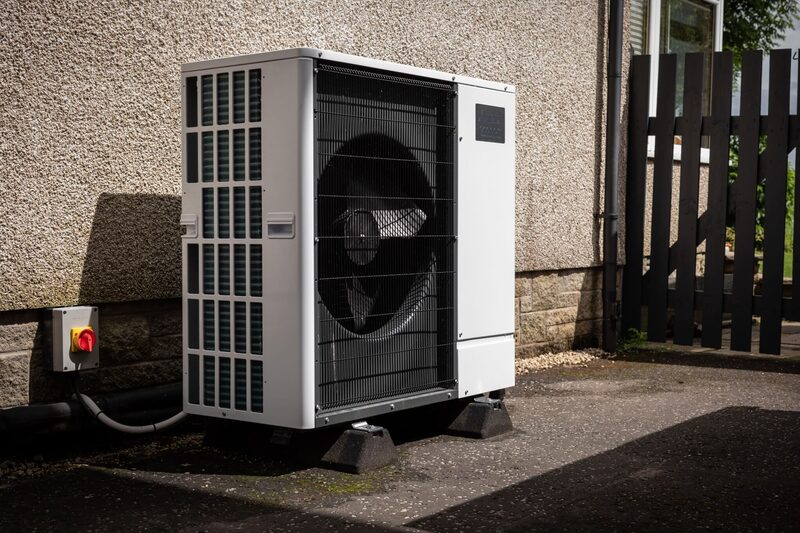
What affects the price you are quoted

Several factors bear on what an installer prices. Roof suitability is one: a roof must be in good condition, have sufficient space and receive ample sunlight throughout the day, and if a roof is heavily shaded, solar panels may not be the most suitable option20. Orientation changes output: a system facing east or west tends to get around 15 to 20% less energy than one facing directly south4. Solar panels can be installed on both pitched and flat roofs, but on a flat roof they need to be tilted and spaced to avoid shading4.
Planning status affects cost and timescale. Solar panels often do not need permission because they are considered permitted development, with exceptions for listed buildings and homes in conservation areas4. Conditions attached to the original planning permission, an Article 4 Direction, or restrictions in the property's deeds can all require a different route20. Where permitted development rights do not apply, planning permission will be required20.
Consumer research on energy choices offers a wider signal about how households weigh offers: customer service ratings and exit fees are significant factors in deal choice, with scores of 32% and 22% respectively21. That research concerns tariffs rather than installations, but the pattern, that service terms carry weight alongside headline price, is consistent with the consumer code's coverage of guarantees and after-sales service9.
Timing your installation: grants, VAT and deadlines
Timing interacts with price through grant availability and VAT treatment. The Boiler Upgrade Scheme is currently set to end in 2028, and grants of up to £7,500 towards heat pump installation are stated as available until 20285. The 0% VAT rate on installing energy-saving materials including heat pumps runs until March 2027. Both dates sit inside the life of a typical installation project, so a quote obtained now may be priced against a different grant and VAT position than one obtained in two years.
Scheme rules impose their own deadlines. Under the Welsh scheme rules, requests for payments must be submitted with all required supporting information and declarations before the Grant Validity Period expires, and documents must be obtained no later than seven days before that period ends10. Any change to information previously provided must be reported within seven days of becoming aware of it10. A change of installer or eligible measure before work starts requires contact with the Development Bank of Wales and re-validation, with no guarantee of approval, particularly if it would result in additional grant being payable10.
For electric vehicle chargepoint claims, installers asked for further information to support a claim must submit it by 13 July 2026 unless the claim's current deadline on the portal is earlier22. The pattern across schemes is that the deadline on the offer letter, not the general scheme end date, governs.
After the quote: surveys, contracts and installation day

A quote is followed by a survey, a contract and an installation day, and each stage has its own paperwork. For solar, the household must register the installation with UK Power Networks, usually done by the installer4. Installing solar panels may also require approval under the Building Regulations, because of the additional loading on the roof structure and the associated electrical works20. The Building Regulations approval route for homeowners is set out by Solihull Council3.
Network connection timescales give a sense of what to expect where a supply change is needed. One operator estimates 10 days to get a quote for two to four domestic connections or small commercial work, and 4 days for one new domestic connection23. A separate operator states that a personalised quote is sent within 5 to 15 days and that the quote is valid for 90 days6.
The contract stage is where cancellation rights, deposits and staged payments are settled. Those subjects are covered on the pages for installation contracts and your cancellation rights, deposits and staged payments and what happens on installation day. Comparing quotes properly is a discipline in itself, set out on comparing installation quotes, and the performance figures an installer puts in writing are covered on performance estimates and savings claims.
Where the household's independence stands after the quotes
Quotes are the point at which a household decides how much of its energy it will own. A solar installation at around £6,100 with a 10 to 12 year payback shifts a defined share of electricity use onto the roof, and the self-consumption economics are the reason that share is worth maximising4. A heat pump at around £6,500 to £11,500 including the grant shifts space and water heating off gas, but leaves the household dependent on electricity from the grid and on a supplier5.
The dependence that remains is real. Solar panels produce direct current that must pass through a solar inverter to become alternating current, and inverters usually need replacing after around 12 years while the panels themselves last 25 years or more4. A heat pump depends on the electricity network and on an installer workforce that Energy Saving Trust describes as short of qualified people2. Registration with UK Power Networks is a condition of the installation, not an optional extra4.
What the quote stage can do is make those dependencies visible before money changes hands. A quote that names the inverter, the certification, the grant treatment, the notification route and the validity period is a document a household can hold an installer to. A quote that does not is a price without a specification.
Sources23 cited
- Your renewable installation, MCS Certified, 2026-08-03
- Heat pump fact check, Energy Saving Trust, 2026-07-01
- Building Regulations approval for homeowners, Solihull Council, 2026-09-17
- Solar panels, London Borough of Hammersmith and Fulham, 2026-09-17
- Heat pumps explained: experts answer your questions, GOV.UK, 2024-03-28
- Moving your meter, SSEN Distribution, 2026-09-19
- Who to contact, Ofgem, 2026-09-17
- Gas safety in the home: FAQs, Health and Safety Executive, 2026
- Renewable Energy Consumer Code, Chartered Trading Standards Institute, 2026-09-20
- Green Homes Wales loan standard terms and conditions, Development Bank of Wales, 2026-09-17
- Summary of updates to BUS guidance for installers, Ofgem, 2026-04
- Boiler Upgrade Scheme guidance for property owners, Ofgem, 2026-04-28
- Customer protection framework factsheet, Ofgem, 2002-01-29
- Estimated meter readings lead to £2,200 electricity bill dispute, Energy Ombudsman, 2026-07-29
- Reforming consumer protection for home upgrade schemes, GOV.UK, 2026-06-17
- Green claims code: making environmental claims, GOV.UK, 2021-09-20
- Boiler Upgrade Scheme and certification requirements for clean heat schemes, GOV.UK, 2025-04-30
- What does an Energy Performance Certificate contain, Planning Portal, 2026
- Heat pump deployment quarterly statistics, United Kingdom, 2025 Q2, GOV.UK, 2025
- Solar photovoltaic (PV) panels, London Borough of Bromley, 2026-09-17
- Understanding consumers' energy tariff choices, Ofgem, 2025-07
- Electric vehicle chargepoint and infrastructure specifications, GOV.UK, 2026-07-13
- How much will my new supply cost, Electricity North West, 2026-09-20
 Comparing Installation QuotesWhat should a solar or heat pump quote actually include before you pay a deposit?
 Installation Cost TrendsTracks the published median and average installed costs of domestic solar, heat pumps and batteries and how they have moved.
 The Full Brands GuideWhich boiler, heat pump or solar brand can you trust, and who actually owns it?
 New Build Homes and EnergyWhat heating will a new build actually have, and will it be a heat pump rather than a gas boiler?
 Energy ConsultationsWhen new rules on boilers, heat pumps or energy certificates are proposed, you can have your say before they become final.
 Air Source Heat PumpsHow an air source heat pump takes heat from outdoor air, the difference between air-to-air and air-to-water systems, typical efficiency, the £7,500 Boiler Upgrade Scheme grant, noise and planning limits, and what ownership means for a household's energy independence.