
In this guide
Two datasheets from two makers rarely line up, even when the products do the same job. The reason is that a specification sheet mixes three different kinds of number: figures measured to a published standard, figures the maker has chosen to quote, and figures that only make sense once you know the size of the thing being described. Sorting them apart is the whole skill of comparing brands.
The standards do most of the work where they exist. Solar modules are tested to EN50380:2003 and IEC61215:2005 in the Which? programme, which is the same family of tests a maker's own datasheet draws on1. Heat pumps are measured differently again: space heating performance is calculated from EN 14825 test data combined with BS EN 15316-4-2:2017, while hot water only units are tested to EN 16147:2017 to load profile M2. A seasonal performance factor of 4.0 means that for every 1 kWh of electricity consumed, the heat pump delivers 4 kWh of heat, and that single sentence is the fairest comparison available between two heat pumps3.
What follows is a method for reading rival specifications side by side: what the baseline tests actually fix, which marks on a datasheet carry weight in the UK, where certification stops being useful, and what a household can reasonably conclude from the numbers that remain.
Why specifications are hard to compare between brands
The first obstacle is that a datasheet is a marketing document as well as a technical one. A maker chooses which figures to lead with, which to bury in a footnote, and which to leave out. Two modules of identical output can be presented so differently that a household reading both would not realise they are the same product class.
The second obstacle is that the same word means different things in different product categories. Efficiency on a solar datasheet is output divided by area at a fixed test condition. Efficiency on a heat pump datasheet is a ratio of heat delivered to electricity consumed, measured over a season or at a single point. Comparing the two numbers, or comparing a heat pump's efficiency with a boiler's, produces nonsense. The standards exist precisely to stop that happening, and they only work if the reader knows which standard sits behind which figure.
The third obstacle is cost, which is the barrier households actually report. Ofgem's tracking research found that cost remains the main barrier to adopting EVs, heat pumps and solar panels among consumers unlikely to adopt low carbon technologies6. That shapes how specifications get read: a household comparing two quotes is usually comparing two prices, and the specification is the thing that justifies the difference. Reducing the price of electricity relative to gas would make heat pumps more competitive, a reminder that the running cost comparison depends on tariff ratios as much as on the unit's own figures7.
The practical consequence is that a like for like comparison needs a fixed frame. Pick the standard, pick the test condition, pick the unit of measurement, and only then read across brands. Everything below is about establishing that frame.
Standard Test Conditions: the 1.5 air mass baseline behind every watt figure
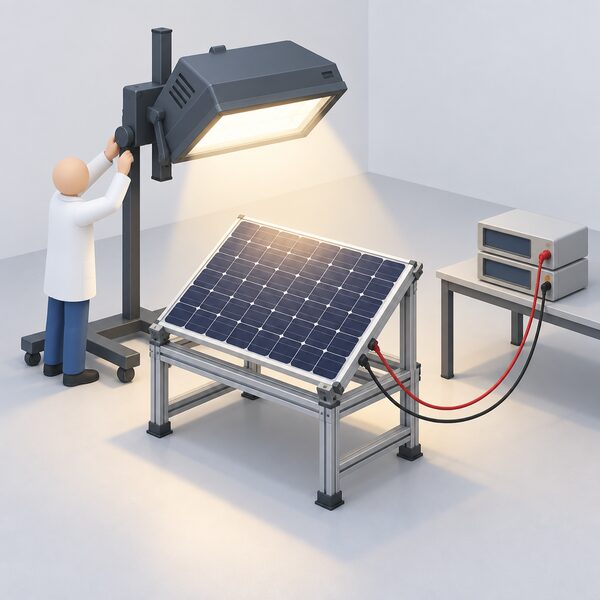
Every watt figure on a solar datasheet rests on a set of fixed laboratory conditions. Standard Test Conditions pin the irradiance, the cell temperature and the air mass the module is measured under, with the air mass fixed at 1.51, so that a module from one maker and a module from another are claiming the same thing. Without that shared baseline, the watt figure would be meaningless as a comparison.
The same principle runs through heat pump testing, where the baseline is a calculation method rather than a single set of conditions. Space heating performance uses EN 14825 test data in combination with calculations from BS EN 15316-4-2:2017, and the method applies a global minimum temperature difference of 5 K throughout2. That 5 K figure is the kind of detail that never appears on a sales sheet but determines whether two quoted seasonal figures are genuinely comparable.
Hot water is separated out because it behaves differently. Heat pumps providing water heating only are tested according to EN 16147:2017, and for hot water only heat pumps the EN 16147:2017 test data must be available to load profile M2. A maker quoting a hot water performance figure without naming the load profile has given you a number you cannot place against a rival's.
"An SPF of 4.0 means that for every 1 kWh of electricity consumed, the heat pump delivers 4 kWh of heat."
The lesson for a household is that the test condition is part of the specification, not a footnote to it. A watt figure, a seasonal performance factor and a hot water rating are only comparable when the standard behind each is named. Where a datasheet omits the standard, the figure is a claim rather than a measurement.
IEC 61215: what the core module standard actually tests
IEC 61215 is the design qualification and type approval standard for terrestrial photovoltaic modules. It is the document that decides whether a module design is fit to be sold as a module at all, and it works by subjecting samples to a sequence of accelerated stresses and checking that performance stays within defined limits.
The Which? testing programme gives a clear view of what a full module assessment involves, and it maps closely onto the standard's concerns: power stabilization with solar radiation exposure of 25 kWh/m², determination of maximum overall production performance, nominal efficiency, performance decline after sun exposure, power output, power exposure with an external solar radiation exposure of 60 kWh/m², determination of maximum power generation, electroluminescence, and current leakage due to humidity1. Each of those is a separate test with its own pass threshold.
The standard also has parts that deal with module types rather than the general case. IEC 61215-1-5 Ed. 1.0 covers terrestrial photovoltaic modules with special requirements for testing of flexible, non-glass superstrate modules, published in July 20178. That matters because a flexible module and a framed glass module cannot be judged by identical mechanical tests, and a datasheet that cites only the general part is not telling the whole story for a flexible product.
What IEC 61215 does not do is test the installation. It says nothing about the roof, the mounting system or the wiring. East Hertfordshire Council's guidance is explicit that a household needs to check that the roof can support the additional wind, snow and static load imposed by the solar panels, and that it complies with Part A: Structure5. That check sits entirely outside the module standard, and a certified module on an unassessed roof is still a risk.
IEC 61730 and the other marks on a datasheet: which ones matter
IEC 61730 is the safety standard, and it is the one that carries fire classification. The distinction matters because fire performance varies sharply with construction. Government fire research found that fire spread was much less significant on glass backed panels, rated class A under IEC 61730-2, than on plastic backed PV panels, rated class C under the same standard4. Two modules can both be certified and still sit at opposite ends of that scale.
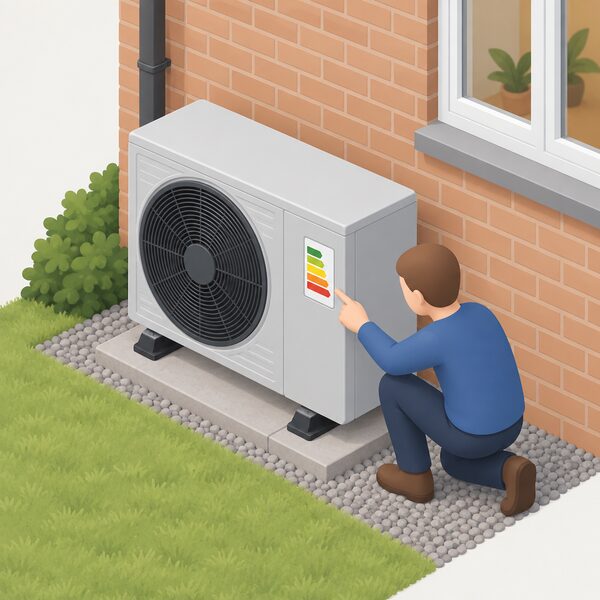
For heat pumps the equivalent third-party mark in the UK market is the Heat Pump KEYMARK. It is a voluntary, independent, third-party certification mark based on European standards EN 14825 and EN 14511, owned by CEN/CENELEC9. The certification is based on independent third-party testing and is compliant with efficiency requirements as set by Ecodesign10. It verifies the performance, efficiency and quality of heat pumps, and the scheme's stated purpose is to ensure market transparency9.
The KEYMARK's listed benefits are worth reading as a description of what third-party testing buys: certified product quality, compliance with EU standards and Ecodesign, increased consumer confidence, increased sales opportunities, and reduced costs for testing, inspection and certification10. To apply, a maker contacts one of the empowered Certification Bodies, and requirements for testing laboratories are listed in Annex H of the KEYMARK documents10.
| Mark | What it covers | Where it applies |
|---|---|---|
| IEC 61215 | Design qualification and type approval | Solar modules |
| IEC 61730 | Safety, including fire class | Solar modules |
| EN 50380 | Datasheet and nameplate information | Solar modules |
| Heat Pump KEYMARK | Performance, efficiency, quality | Heat pumps |
| MCS 020 | Noise assessment for planning | Air source heat pumps |
For planning purposes, air source heat pumps must comply with the Microgeneration Certification Scheme Planning Standards (MCS 020) or an equivalent standard11. That is a different kind of mark from a product certification: it is about where the unit sits and how loud it is, not how well it performs.
Hail and mechanical load testing: the 25 mm, 23 m/s benchmark
The mechanical load and hail test is the part of module certification most often quoted in sales material, and it is worth knowing exactly what it applies. The benchmark is a 25 mm ice ball fired at 23 m/s. That is the impact the type test uses, and it is the figure a datasheet is implicitly claiming when it says a module is hail resistant.
Two things follow. First, a larger stone or a steeper angle of impact is outside the test, so a hail pass is not a promise about every storm. Second, the test permits a defined power loss after impact rather than requiring the module to be unchanged. A module can pass and still be measurably down on output, which is why the hail claim should be read alongside the power tolerance and the performance warranty rather than instead of them.
Mechanical load testing is the companion concern, and it is where the module standard and the building standard meet. The roof load assessment required by East Hertfordshire Council covers wind, snow and static load, and it is a structural question about the building rather than the panel5. A module certified to withstand a mechanical load in the laboratory is being tested as a component; the roof it sits on is assessed separately, and the two assessments do not substitute for one another.
What IEC 61215 cannot tell you: the limits of certification testing
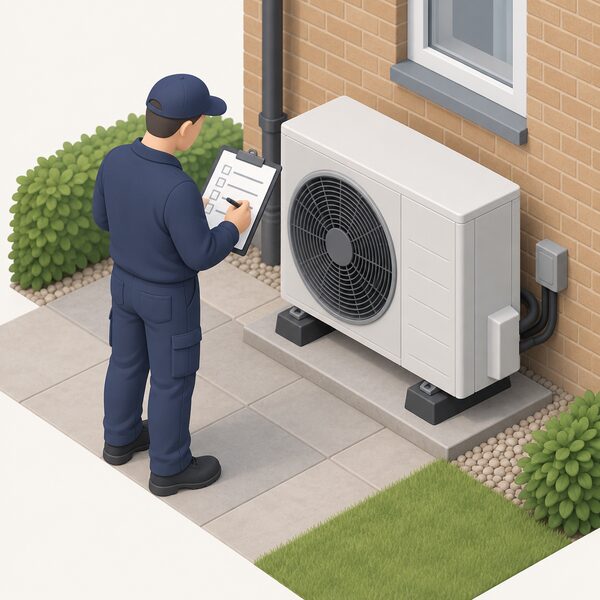
Certification is a type test on samples. It establishes that a design can pass a defined sequence of stresses, not that every unit shipped will perform identically, and not that the design will behave the same way on every roof.
The clearest limit is that certification is scoped. MCS product certification covers heat pumps not exceeding 45 kWth, which is a capacity ceiling rather than a quality judgement12. An innovation measure approved under ECO4 carries the limitation that the system is not certified for use in high rise buildings13. Those are boundaries on where a certified product may be used, and they are easy to miss when a datasheet leads with the certification mark alone.
There is also a difference between a product being certified and a system being commissioned properly. The Future Homes and Buildings Standards consultation response cited the need to provide a commissioning checklist as evidence that commissioning has been carried out correctly, referencing MCS and Heat Pump Association documents as examples14. A certified heat pump installed without that commissioning record is a certified product in an unverified system.
For a household, the honest reading is that certification narrows the field of what can go wrong but does not close it. It rules out designs that fail the accelerated tests. It says nothing about the installer, the roof, the wiring or the commissioning.
Extended certifications: when a datasheet goes beyond the baseline
Some datasheets list marks beyond the core standards, and it is worth knowing which of those are meaningful in the UK and which are simply additional paperwork.
The most common extension is a parallel safety listing. A datasheet may carry both IEC 61730 and UL 61730, which cover the same safety ground for different markets. Where a maker lists both, the IEC mark is the one that matters for UK product listing. Where a datasheet lists only UL, the safety case for a UK installation rests on a document written for a different regulatory regime.
Beyond product marks, there are scheme-level requirements that a datasheet will not show. The Boiler Upgrade Scheme requires that the installer must be MCS-certified and the heat pump must be MCS-certified15. That is a condition on the grant rather than on the product, and it means a perfectly good uncertified heat pump is not eligible however well it performs.
There are also documentation requirements that sit alongside certification in publicly funded work. A solar panel installation tender specification for Barcud required handover to the employer at practical completion of record drawings, test and completion certificates, maintenance instructions, manufacturers' directory and colour product literature, a full description of works, and commissioning certificates16. None of those are product certifications, but they are the evidence trail that a certified product was installed and commissioned as specified.
For heat pumps, the baseline requirements for eligibility in European schemes are CE marking, compliance with Ecodesign (ErP) regulations, and documented performance data, typically SCOP values backed by standardised testing and registered in EPREL15. That is a useful description of the minimum evidence a household should expect to see behind any performance claim.
Reading a datasheet like for like: a checklist

The method reduces to a short sequence. Establish which standard sits behind each figure, check that both products were measured to the same one, and only then compare.
- Name the standard. For a solar module, look for EN 50380 and IEC 61215. For a heat pump, look for EN 14825 with BS EN 15316-4-2:2017 for space heating, and EN 16147:2017 with a named load profile for hot water1.
- Check the safety mark separately. IEC 61730 carries the fire class, and glass backed and plastic backed modules sit at different classes under it4.
- Confirm the scope. MCS product certification covers heat pumps not exceeding 45 kWth, and some approved measures carry building type limits12.
- Look for the third-party mark where it exists. The Heat Pump KEYMARK is based on independent third-party testing and is compliant with Ecodesign efficiency requirements10.
- Read the warranty terms, not just the warranty length. Which? notes that on cracked panel claims the cost of labour for replacing the panel and any scaffolding may not be covered, that a replacement panel may look different, and that some manufacturers require independent testing to prove underperformance17.
- Get comparable quotes. Bromley Council's guidance is to get various quotes to compare prices of different installers18.
- Check the commissioning record. A commissioning checklist is the evidence that the system was set up correctly, and it is separate from the product certification14.
"the cost of labour for replacing the panel and any scaffolding may not be covered"
Two further points complete the picture. Solar panels from MCS-registered brands are made with tempered glass so will shatter rather than crack, like a car windscreen, which is a construction fact that affects how a break behaves rather than whether one happens17. And solar thermal panels can be installed alongside other renewable or traditional heating systems, though they are not so easy to combine with a combi boiler, which is the kind of compatibility limit that never appears in a headline efficiency figure19.
What this means for a household's energy independence
Specifications are the point at which a household's independence is either real or nominal. A module certified to IEC 61215 and IEC 61730, on a roof assessed for wind, snow and static load, connected to a system that has been commissioned and documented, is a genuine reduction in reliance on a supplier. The same module on an unassessed roof, or a heat pump without a commissioning record, is a certified product in a system nobody has verified.
The dependence that remains is worth stating plainly. A solar array still relies on the grid for the periods it cannot cover, and on a supplier for the export and import arrangements. A heat pump relies on electricity, and its running cost depends on the ratio between electricity and gas prices, which is a policy question rather than a product one7. Certification marks do not change any of that.
What they do change is the risk of buying something that fails early. The standards exist because accelerated testing catches design faults that would otherwise appear on roofs and in gardens. Reading them properly, and refusing to compare figures that were not measured the same way, is the difference between a specification and a sales claim.

Sources19 cited
- How we test solar panels, Which?, 2026-08-12
- Home Energy Model: heat pump methodology, UK Government, 2026-01
- Heat pump transition report, UK Government, 2026-05
- Fire spread over pitched roofs fitted with solar panels: summary, UK Government, 2025-12-22
- Solar panel costs, Which?, 2026-08-03
- Solar photovoltaic (PV) panels, Bromley Council, 2026-09-17
- Tracking energy consumers' use of low carbon and flexible products and services 2025, Ofgem, 2025-06
- Fire solar PV systems literature review, UK Government, 2017-07-17
- Heat Pump KEYMARK certification celebrates a decade, EHPA, 2026-01-05
- Heat Pump KEYMARK, EHPA, 2026-08-19
- Planning guidance: heat pumps, Richmond Council, 2026-04-22
- Domestic hybrid heat pumps, UK Government, 2016-11
- ECO4 approved innovation measures, Ofgem, 2024-07
- Future Homes and Buildings Standards consultation response, UK Government, 2026-03
- The link between certification and incentives, Eurovent Certification, 2026-05-21
- Barcud solar panel installation tender specification, Sell2Wales, 2026-06-15
- Solar panel problems and how to solve them, Which?, 2026-03-26
- Solar panels planning and sustainability, East Hertfordshire Council, 2026-09-17
- Heating your home with renewable energy, Which?, 2025-09-22
 How Energy Products Are TestedWhy does a solar panel's datasheet power rating look better than what you actually get on a UK roof?
 Comparing Installation QuotesWhat should a solar or heat pump quote actually include before you pay a deposit?
 Sizing and Heat LossHow do installers work out what size heat pump your home needs, and why can a unit that is too big cost more to run than one that is slightly small?
 Where Energy Products Are MadeWhere are solar panels and heat pumps actually made, and does it matter where yours comes from?
 Sizing a System With DataWhat does your smart meter data actually show about how your home uses power?
 Tier 1 and Bankability RatingsDoes a Tier 1 badge mean better panels, or just a bigger company?