
In this guide
A heat pump does not create heat by burning a fuel. It moves heat from the air, the ground or water into the home, and the electricity it uses only drives the compressor and pumps. That is why the efficiency figures look impossible next to a boiler: heat pumps typically deliver three to four units of heat for each unit of electricity needed to run them1. A well-specified heat pump should give three or four units of heat for every unit of electricity consumed2.
Three abbreviations carry almost all of the meaning on a datasheet. COP, the coefficient of performance, is the heat produced for every unit of electricity used, published under specific test conditions1. SCOP, the seasonal coefficient of performance, is the average COP across the whole year3. SPF, the seasonal performance factor, is the ratio of heat delivered to total electrical energy supplied over a year, so a heat pump with an SPF of 2.5 delivers on average 2.5 kWh of heat for every 1 kWh of electricity it uses4.
The distinction matters because the first two are standardised and the third is measured. A quoted COP of 3.0 means three times more heat energy than the electrical energy consumed, at one test point3. What a household actually gets depends on flow temperature, insulation, emitters and controls, and the spread in monitored UK systems runs from an SPF of 1.3 to 5.85.
What heat pump efficiency means: heat delivered per unit of electricity
Efficiency in a heat pump is a ratio, not a percentage of perfection. The amount of heat produced for every unit of electricity used is the coefficient of performance, and it is published under specific test conditions so that products can be compared1. A heat pump with an efficiency rating of COP 3.0 can produce three times more heat energy than the electrical energy it consumes3. Expressed as a seasonal figure, an SPF of 4.0 means that for every 1 kWh of electricity consumed, the heat pump delivers 4 kWh of heat5.
The same relationship appears across independent and official guidance with only small variation. Heat pumps typically produce three to four units of heat for every unit of electricity they use10. An air source air-to-water unit is often described with a COP of 3, meaning three units of heat are provided for every one unit of electricity used11. An efficient heat pump will be somewhere between 300% and 400% efficient, with some achieving efficiencies over 400%12.
That ratio is the whole basis of the case for a heat pump, and it is also the source of most confusion. A boiler cannot exceed 100% because it converts a fuel, and the losses are unavoidable. A heat pump moves existing heat, so the ratio can sit well above one. The higher the ratio, the less electricity is needed for the same warmth, which is what links efficiency to running cost and to how much of a household's heating bill is exposed to electricity prices rather than gas.
For a household's energy independence, the ratio is the lever. Every unit of heat delivered at a ratio of four is a unit of heat that did not need imported gas, and a unit of electricity that could, in principle, come from a rooftop array or a tariff rather than a supplier's fuel mix. The dependence that remains is on the electricity grid and on a supplier, plus the manufacturer for parts and the installer for commissioning. Efficiency does not remove that dependence; it reduces how much energy has to be bought to keep the house warm.
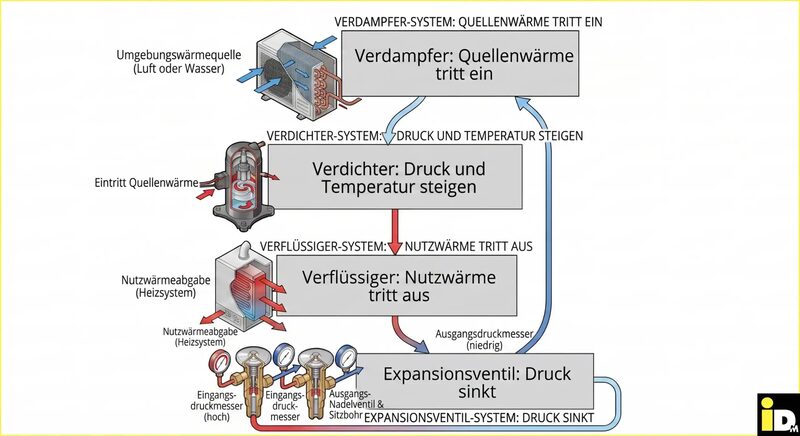
COP: the snapshot measure at one test point

COP is a snapshot of performance at one test condition13. That single sentence explains most of the arguments about heat pump efficiency. The figure is real, it is measured to a standard, and it describes one combination of outdoor temperature and water flow temperature. Change either and the number changes.
Because it is a point measurement, a datasheet normally carries several. The Panasonic Aquarea range, for example, lists a COP of 4.48 to 5.08 at 7°C / 35°C, in accordance with EN1451114. The letters name the two temperatures: A for ambient outdoor air, W for the water leaving the unit, both in degrees Celsius. A7/W35 is therefore outdoor air at 7°C and flow water at 35°C. A colder outdoor test point or a hotter flow test point will produce a lower COP for the same machine.
The minimum COP in the government's methodology for heat pumps providing space heating is set at 115. That is a floor for calculation rather than a target, and it matters because it defines the point at which a heat pump is no better than a resistive heater. Anything above 1 is the useful range, and the practical range is far above it.
The consequence for a buyer is that a COP figure on its own says very little. It is a laboratory statement about one operating point, useful for checking that a unit performs sensibly at the temperatures it will actually meet, and not a prediction of the winter bill. The seasonal figures below are the ones that describe a year.
COP values in practice: typical ranges and what counts as good
There is no single pass mark, because the answer depends on the technology and the test point. Ground source heat pumps sit highest in the quoted ranges: a typical unit can generate 3.5 to 4.5 units of heat for each unit of electricity it uses6. Air source units are usually quoted lower, with an example of 3 kilowatts of heat supplied for 1 kilowatt of electricity, and a COP typically in the range 3 to 416. Air-to-air heat pumps reach COPs of up to 3.5 with an external temperature of 10°C17.
The home itself moves the figure as much as the machine. In a well-insulated home, a heat pump can usually reach a COP of 3 to 4; in a poorly insulated home its COP can drop to around 2 or even lower9. That is not a fault in the unit. It is the same machine working against a higher heat loss and, often, a higher flow temperature to compensate.
| Technology | Quoted efficiency | Test or context |
|---|---|---|
| Ground source heat pump | COP 3.5 to 4.5 | Typical unit6 |
| Air source heat pump | COP 3 to 4 | Example, air-to-water16 |
| Air-to-air heat pump | COP up to 3.5 | External temperature 10°C17 |
| Hot water only heat pump | COP around 3 to 3.4 | Domestic hot water17 |
| Heat pump in a well-insulated home | COP 3 to 4 | In use9 |
| Heat pump in a poorly insulated home | COP around 2 or lower | In use9 |
The range is wide because the test conditions differ, not because the physics differs. A ground source unit benefits from a stable ground temperature and is quoted at a favourable point, typically 3.5 to 4.5 units of heat for each unit of electricity it uses17. An air source unit quoted at 10°C outdoor air is being described in mild conditions, with COPs of up to 3.518. A figure taken from a monitored home includes every cold morning and every hot water cycle.
What counts as good, then, is a figure that holds up at the flow temperature the home actually needs. A COP of 3 at a low flow temperature is unremarkable; the same figure at a high flow temperature is a strong result. The seasonal measures below are the fairer comparison.
SCOP: seasonal efficiency averaged over a whole year

SCOP is the average COP across the whole year3. It exists because a single test point cannot describe a heating season. SCOP compares products under standardised seasonal conditions13, and it is a way to rate a heat pump's performance in a given climate19. For a UK household, that makes it the more useful of the two headline figures.
The regulatory floor is well established. Heat pumps must have a seasonal coefficient of performance of at least 2.8 under the Boiler Upgrade Scheme20. The same 2.8 appears in the government's own carbon calculations for hydronic heat pumps, which use a SCOP of 2.8 for hydronic heat22. The scheme's property owner guidance adds a qualification: the SCOP 2.8 requirement applies to air-to-water systems, not all heat pumps23.
Above the floor, the market spreads widely, and the flow temperature is the reason. Medium temperature air source heat pumps range from SCOP 2.32 to 4.55 at 55°C, while medium temperature ground source heat pumps range from 2.59 to 4.44 at 55°C24. High temperature air source units, which are built to run hotter, range from 2.55 to 3.25 at 65°C24. The most energy efficient models currently on the market can achieve a maximum SCOP rating of 5 or more, meaning they can generate 500% more heat than the electricity they consume in ideal conditions19.
Two further points shape what a household should expect. First, the Product Characteristics Database is the preferred source of annual efficiency data for heat pumps18, so a figure quoted from it is comparable with another figure quoted from it. Second, the PEL does not consider SCOP of heat pumps and installers need to calculate this separately25, which means the seasonal figure is a design output rather than a label on the box.
For independence, SCOP is the number that determines how much electricity a household must buy over a winter to stay warm. A unit at SCOP 4 needs roughly half the electricity of one at SCOP 2 for the same heat, which changes both the bill and the load a rooftop array or battery would have to cover.
SPF: measured efficiency from your own metering
SPF is the measured counterpart to SCOP. It is the ratio of heat delivered to total electrical energy supplied over a year, so a heat pump with an SPF of 2.5 will on average deliver 2.5 kWh of heat for every 1 kWh of electricity it uses4. Where SCOP is calculated from standardised test data, SPF comes from the installation itself, including the pumps, the controls and the way the household runs the system.
The design calculation is a formal step. Heat pump installers must calculate the SPF based on the system design for your home1, and the calculation draws on the average temperatures at your location and the size of your radiators1. Under the Renewable Heat Incentive, from 25 March 2016 installers calculated the SPF using the SCOP value from the MCS website, entered directly into the MCS database4. The Boiler Upgrade Scheme sets a minimum Seasonal Performance Factor of 2.5 for eligible systems26.
Measured results in UK homes vary enormously. Indicative SPF values recorded from systems' own monitoring ranged from 1.3 to 5.85. At the other end of the distribution, the average efficiency on the Heat Pump Monitor platform is a SCOP of 3.9, and systems on that platform operate, on average, at 39% higher efficiency than systems installed under the Electrification of Heat project5. A good quality installation that is managed and controlled well can get an SPF significantly higher than 3.1, sometimes more than 427.
That gap between 1.3 and 5.8 is the honest picture. It is not evidence that heat pumps do not work; it is evidence that design, commissioning and control decide the outcome. For a household, SPF is the figure that matters for independence, because it is the one that reflects what was actually bought from the grid. It is also the figure a monitoring system can produce, which turns efficiency from a brochure claim into a measurement.
The test standards behind the numbers: EN 14511 and EN 14825

The figures on a datasheet are not free-floating. They come from named standards, and knowing which one produced a number tells you what it can be compared with.
EN 14825 governs seasonal performance. The methodology applies to heat pumps that have been tested to EN 14825:2018, and the EN 14825 test data is used in combination with calculations from BS EN 15316-4-2:2017 to calculate the performance of heat pumps providing space heating15. The COP from the EN 14825 test data corresponds to the H1 boundary, which defines where the system boundary sits for the measurement15.
EN 14511 governs the point measurement. COP is measured using the procedures in BS EN 14511-228. The standard is used for determining COP for electric heat pumps; applied to hybrid systems it is likely to give representative values for air and water source products but to underestimate performance for ground source products29. That caveat is worth remembering when a ground source figure looks conservative.
The two standards answer different questions. EN 14511 gives a laboratory snapshot at a stated condition, which is what a datasheet COP is. EN 14825 gives a seasonal figure built from a set of conditions weighted for a climate, which is what a SCOP is. A third family of figures, the EER and SEER, covers cooling rather than heating, and is dealt with below.
For a household comparing quotes, the practical rule is that figures from the same standard and the same flow temperature can be compared, and figures from different ones cannot. A SCOP quoted at 35°C and a SCOP quoted at 55°C are not the same claim, even when the numbers look close.
Flow temperature: the biggest lever on real-world efficiency
If one variable decides whether a heat pump performs near its quoted figure, it is the temperature of the water it sends to the radiators. Standard, or low temperature, heat pumps are at their most efficient when running at 35 to 45 degrees3. Heat pumps work most efficiently at lower flow temperatures, typically around 50°C in one monitored development30.
The measured effect is large and consistent. Air source heat pumps running at a 35°C flow temperature showed a mean SCOP starting around 3.9 and ending around 4.0 across 2016 to 2021; at 50°C the mean SCOP started around 3.3 and rose to around 3.5; at 55°C it started around 3.0 and ended around 3.231. The same fleet of heat pumps, in other words, delivered roughly a quarter more heat per unit of electricity at 35°C than at 55°C.
That is why the design flow temperature is recorded alongside every efficiency figure. PCDB records provide efficiency values and maximum output for design flow temperatures of 35°C, 45°C, 55°C and 58°C, and 65°C for high temperature heat pumps18. A household comparing two units should compare them at the flow temperature its own radiators can support, not at the most flattering one on the sheet.
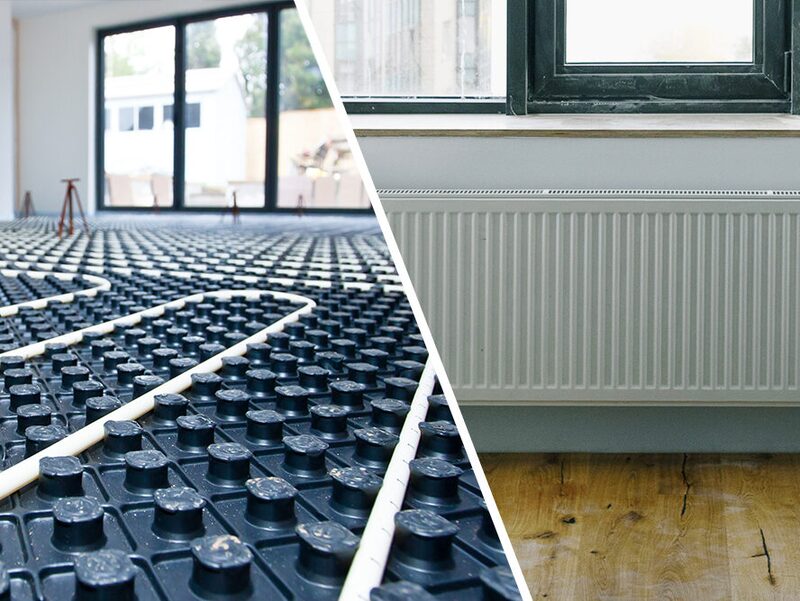
Lower flow temperatures are achieved through emitter size, insulation and control rather than through the heat pump itself. Larger radiators or underfloor heating allow the same heat output at a lower water temperature, and a well-insulated home needs less heat in the first place. This is the point at which efficiency stops being a property of the machine and becomes a property of the whole system, which is also why the same model can produce an SPF of 1.3 in one home and above 4 in another.
What efficiency means for running costs and the energy label
Efficiency converts into money only through the price of the energy it replaces. A heat pump operating at a low COP can end up costing more to run than a gas boiler in a poorly insulated home without pricing reform9. That is the honest limit of the efficiency case: a high ratio against expensive electricity can still cost more than a low ratio against cheap gas.
The comparison is usually framed in ratios. Heat pumps are around four times as efficient as a gas boiler, maybe slightly more27, though heat pumps tend to run with a seasonal performance factor of 3.1 in practice27. The gap between the four-times claim and the 3.1 figure is the difference between a laboratory comparison and a seasonal one, and it is the reason running cost estimates vary so much between sources.
Official work has used a 300% efficiency assumption in illustrative running cost examples32. That sits below the seasonal figures quoted for good installations and above the worst monitored results, which makes it a reasonable middle for modelling and a reminder that the figure chosen drives the answer.
The energy label side is separate. The Energy Efficiency Rating on a domestic EPC is a form of energy cost metric33, so it responds to running cost rather than to the heat pump's COP. A household can therefore improve its heating efficiency and still see a modest EPC movement, because the rating is measuring cost, not physics.
For independence, the running cost question is the one that decides whether a heat pump reduces exposure to fuel markets. A system at SCOP 4 on a tariff backed by rooftop solar buys far less from the grid than one at SCOP 2 on a standard tariff. The efficiency figure sets the size of that purchase; the tariff and the insulation set its price.
Comparing COP, SCOP, SPF and EER like for like
The four abbreviations describe different things, and mixing them is the most common error in comparing heat pumps.
| Metric | What it measures | Basis |
|---|---|---|
| COP | Heat output divided by electrical input | Point measurement at one test condition13 |
| SCOP | Average COP across the whole year | Standardised seasonal conditions3 |
| SPF | Heat delivered divided by total electricity over a year | Measured in the installation4 |
| EER | Cooling output divided by electrical input | Point measurement in cooling mode34 |
EER describes how efficiently a heat pump operates in cooling mode at a specific test condition, and it is calculated as cooling capacity divided by electrical input34. In Europe, cooling performance testing is conducted according to EN 14511, which defines standardised laboratory conditions, and EER values around 3 to 4 are common for modern residential heat pumps34. For seasonal cooling efficiency, SEER is more relevant34. The factors that move EER include outdoor air temperature, indoor return temperature, compressor technology, heat exchanger design and airflow management34.
The practical rules for comparison follow from the table. Compare COP with COP at the same A and W test points. Compare SCOP with SCOP at the same design flow temperature. Treat SPF as a result rather than a specification, since it depends on the installation. And do not read an EER as a heating figure, because it describes cooling.
Where a household is weighing a heat pump against a boiler, the relevant comparison is the seasonal figure against the boiler's efficiency, combined with the price of electricity against the price of gas. Where it is weighing two heat pumps, the relevant comparison is SCOP at the flow temperature the home can actually run, which is usually the lower of the two figures on offer.
Where the figures come from and how to read them
A datasheet figure is a claim about a test, and the test conditions are part of the claim. The A7/W35 notation on a product page is the clearest example: it names outdoor air at 7°C and flow water at 35°C, and it tells the reader that the COP beside it applies at that point and not at a January morning14.
The standards behind the numbers are stable and public. EN 14825:2018 supplies seasonal test data, combined with BS EN 15316-4-2:2017 for space heating performance15. BS EN 14511-2 supplies the point measurement procedure28. The Product Characteristics Database is the preferred source of annual efficiency data18, and the Boiler Upgrade Scheme sets its own floor of SCOP 2.8 for air-to-water systems7.
What a household should take from all of this is a short list. The quoted COP is a snapshot at one test point. The SCOP is the seasonal average at a stated flow temperature. The SPF is what the installation actually achieved. The flow temperature is the variable that moves all three, and insulation and emitter size are what allow a low one.
None of these figures removes the household's dependence on the grid, a supplier, or the manufacturer for parts and support. What they do is quantify how much energy has to be bought to keep the house warm, which is the part of energy independence a household can influence directly.
Sources34 cited
- In-depth guide to heat pumps, Energy Saving Trust
- Low carbon heating choices, CAT
- An introduction to heat pumps, Which?
- Domestic RHI Essential guide, Ofgem, 2022-03
- Heat pump transition report, GOV.UK, 2026-05
- Ground source heat pump costs and savings, Which?, 2026-05-08
- Boiler Upgrade Scheme guidance for installers v5.1, Ofgem, 2026-07-02
- Factcheck: what it really costs to heat a home in the UK with a heat pump, Carbon Brief, 2026-01-30
- The role of insulation in the Warm Homes Plan, NIA, 2026-03-02
- Heat pumps expert guide for homeowners, Development Bank of Wales, 2024-11-07
- Air source heat pumps (air to water), Nesta, 2025-02-03
- Living with a heat pump, Home Energy Scotland, 2024-02
- Heat pump running costs: 6 factors, Solax Power, 2026-09-15
- Panasonic Aquarea M-series T-cap 9kW, Quiet Mark, 2026-09-17
- Heat pump methodology, GOV.UK, 2026-01
- Existing and future technologies for retrofitting the UK housing stock, CREDS, 2021-06-08
- Future Homes Standard Phase 1: network to emitter impact report, BEAMA, 2023-04
- SAP 10.3 full specification, BRE Group, 2026-01-13
- How heat pumps work: a guide for homeowners, NICEIC, 2025-09-17
- BUS PO guidance V2.3, Ofgem, 2023-09-25
- Boiler Upgrade Scheme guidance for installers v2.1, Ofgem, 2023-05-18
- From carbon to competitiveness, HPA UK, 2026-01
- Summary of updates for BUS guidance for property owners v5.1, Ofgem, 2026-07
- Raising minimum standards for heat pumps: options assessment, GOV.UK, 2024-11-27
- Boiler Upgrade Scheme guidance for installers V5, Ofgem, 2026-04-28
- Eligible heating systems, Ofgem, 2026-09-17
- Heat pump questions answered, Energy Saving Trust, 2026-05-27
- Domestic Building Services Compliance Guide 2022, Scottish Government, 2022-06
- Domestic hybrid heat pumps, GOV.UK, 2016-11
- Altecnic Ltd and Amber Heating, CIPHE, 2025-06-05
- Reduce the cost of heat pumps, Nesta, 2016
- Building regulations discussion document 2023, Northern Ireland Department of Finance, 2023-10-11
- Technical annex for chapter 2: what EPCs measure, GOV.UK, 2026-03-09
- Heat pump efficiency: EER, iDM Energie, 2026-07-06
 Heat Pump Electricity TariffsA heat pump tariff gives you cheaper electricity for part of the day, so running your heating costs less than on a standard rate.
 How They Perform in UK HomesHow well do heat pumps really work in UK homes, and why do some run far better than others?
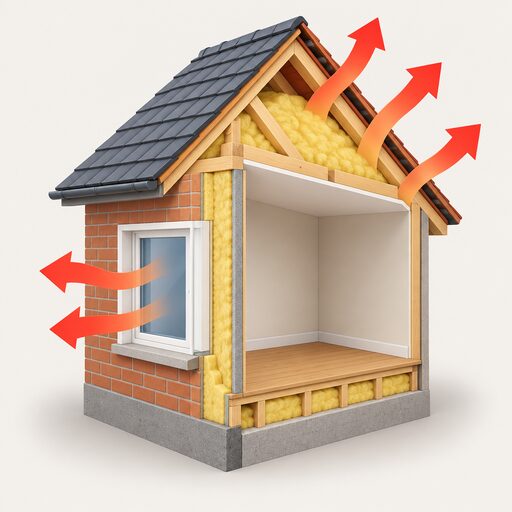 Sizing and Heat LossHow do installers work out what size heat pump your home needs, and why can a unit that is too big cost more to run than one that is slightly small?
 Standards and CertificationHow do you know a heat pump will really perform as promised?
 Energy IndependenceA heat pump runs your heating on electricity instead of gas or oil, so how much does that really cut what you pay and how exposed you are when fuel prices jump?
 High Temperature Heat PumpsHigh-temperature heat pumps deliver flow temperatures of roughly 65 to 80°C, close to boiler levels, so existing radiators can often stay in place.