
In this guide
Panasonic builds the Aquarea range of air-to-water heat pumps, sold in the UK through its Heating and Cooling Solutions division. The range covers domestic outputs from 3 to 16 kW, in mono-bloc and split configurations, single and three-phase, with the newest models using R290 (propane) refrigerant and T-CAP versions holding full heating capacity down to around -20°C1. Aquarea units are reversible, so the same outdoor unit can heat in winter and cool in summer2.
For a household, the appeal is straightforward: an Aquarea replaces a gas, oil, LPG or electric heating system with a unit that runs on electricity and draws most of its heat from the outdoor air. Panasonic describes the 5kW Mono-Bloc as a sustainable alternative to oil, LPG and electric heating systems3. What it does not remove is the electricity supply, the meter and the tariff behind it, and the controls layer adds a dependence on a home broadband connection and Panasonic's cloud services.
The range is well established in UK installations rather than a newcomer. Aquarea units have gone into social housing portfolios, listed thatched cottages, rural off-gas properties and new builds, and Panasonic has a servicing partnership with British Gas covering the range across the UK4. This page sets out what the range includes, how it performs in cold weather, what the warranty requires, and where the limits sit.
What an Aquarea is: an air-to-water heat pump
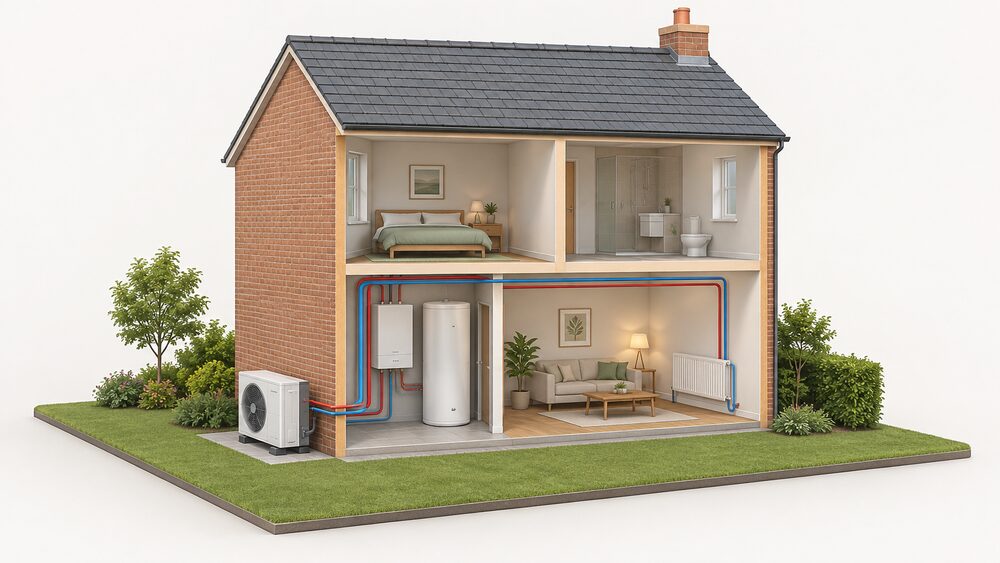
Aquarea is an air-to-water heat pump, which means it takes heat from outdoor air and delivers it to a wet heating circuit: radiators, underfloor heating, or both, plus a hot water cylinder. That is the same circuit a gas or oil boiler serves, which is why Panasonic describes the range as easy to install on new or existing installations, in all types of properties5. It is not an air-to-air system, so it does not heat rooms directly through the air; the air-to-water route is what allows it to replace a boiler rather than supplement one.
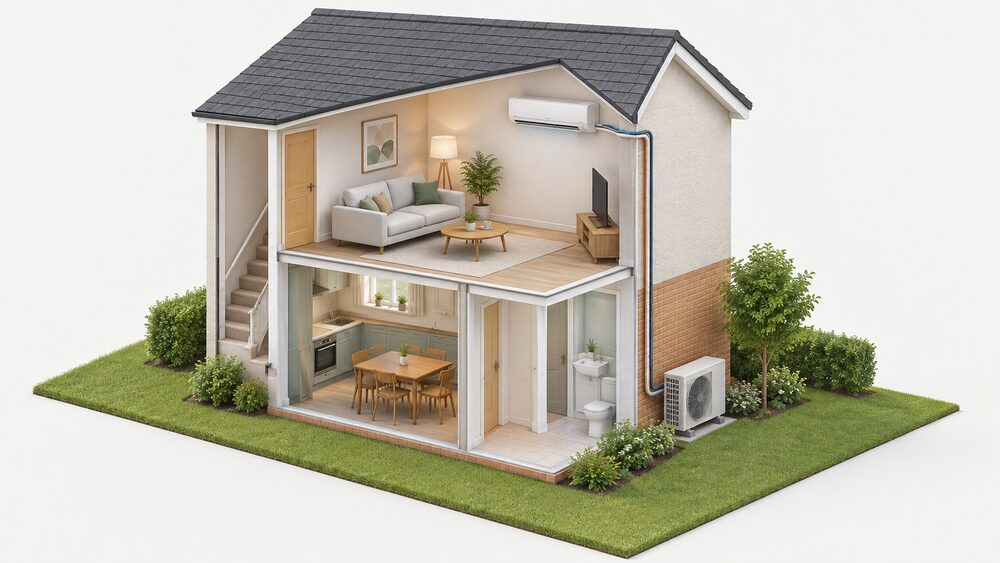
The unit is reversible. Panasonic states that the heat pump can be used for both heating and cooling2, which means the same equipment can take the edge off summer heat through the same emitters, subject to the system being designed for it. Panasonic markets the range as a "Heating Plug and Play System" designed for low consumption homes5, a positioning that points at well-insulated properties where the heat demand is modest and the flow temperature can stay low.
The M Series is offered in a modular way: an outdoor unit with controller only, a hydraulic module, or an all-in-one unit with a domestic hot water tank2. That choice matters for a UK retrofit, because it determines whether the indoor equipment needs a plant room, an airing cupboard or a utility space. The 5kW Mono-Bloc is aimed at small houses with high performance requirements3, and Panasonic notes that no buffer tank is required because the inverter compressor regulates capacity itself3.
The range: 3 to 16 kW, mono-bloc and split, single and three-phase
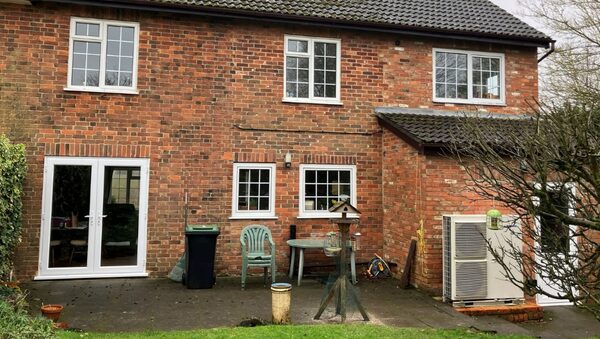
The Aquarea line-up spans domestic outputs from 3 to 16 kW, with mono-bloc and split (Bi-Bloc) formats and single and three-phase electrical options. The 16kW M Series model WH-WDG16ME8 is a three-phase unit1, which matters in larger properties where a single-phase supply would be stretched. Panasonic's own case studies describe installations from a 7 kW L Series All-in-One in a two-bedroom Birkenhead bungalow to two 12 kW T-CAP units in a 654m2 Hampshire self-build.
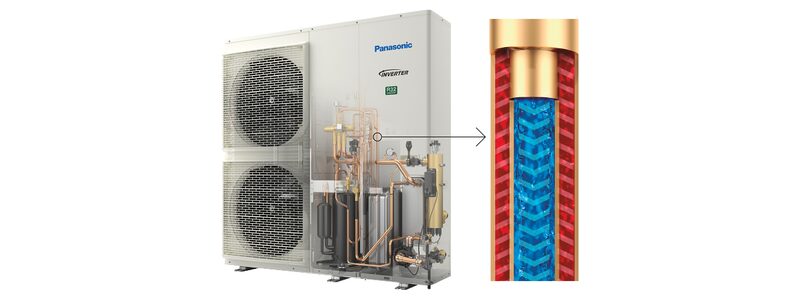
Mono-bloc means the refrigerant circuit is sealed inside the outdoor unit, so no refrigerant work is needed on site and the footprint is small3. Bi-Bloc splits the system between an outdoor unit and an indoor hydraulic unit, which suits properties where the indoor unit can sit within the heated envelope. The Bi-Bloc specification includes a 3 kW electrical heater, an automatic air purge valve and an A Class pump5.
| Configuration | What it means on site | Notable specification |
|---|---|---|
| Mono-bloc | Sealed refrigerant circuit outdoors, no on-site refrigerant work3 | No buffer tank required, inverter compressor3 |
| Bi-Bloc | Outdoor unit plus indoor hydraulic unit5 | 3 kW electrical heater, automatic air purge valve, A Class pump5 |
| T-CAP | Cold-weather variant across M Series sizes1 | Full heating capacity to around -20°C1 |
| All-in-one | Outdoor unit with integrated DHW tank2 | Suits retrofit where indoor space is tight |
The monobloc and split distinction is the first decision in specifying an Aquarea, because it determines who can install it and what space the property needs to give up.
Efficiency and cold-weather performance
Panasonic's M Series listings put seasonal efficiency at around 5 for low-temperature heating, depending on the model1. That is a SCOP figure, the seasonal measure rather than a single-point COP, and it sits well above the minimum efficiency requirement for grant-funded installations: heat pumps must have a seasonal coefficient of performance of at least 2.8 under the Boiler Upgrade Scheme rules6. The gap between the two numbers is the difference between a regulatory floor and what a well-designed low-temperature system can reach.
Cold-weather performance is where the range makes its strongest claims. Panasonic states that its heat pumps can work in outdoor temperatures as low as -28°C2, and that T-CAP technology maintains full heating capacity down to around -20°C1. The 5kW Mono-Bloc is quoted as working down to -20°C while guaranteeing capacity without backup heating3. Independent guidance is more cautious about the general case: heat pumps can perform down to -15°C or lower, but there may come a point when output is not enough for the property7, and efficiency drops in very cold weather8.
The practical point is that cold-weather capacity is a design question, not just a badge. A unit that holds full output at -20°C removes the need for a supplementary element in most of the UK, but the heat loss of the building still sets the size required. The cold weather performance of any heat pump depends on the balance point between what the unit delivers and what the house loses.
Refrigerant and series: R32 J Generation, R290 L Series and the M Series
The current M Series uses R290, also called propane, described by Panasonic as a natural refrigerant with a very low global warming potential of 31. The same refrigerant appears across the 9kW, 12kW and 16kW T-CAP models2. R290 has become the mainstream choice for new heat pump designs, and other manufacturers have moved the same way: a new residential air source heat pump launched for 2026 is described as using R290 refrigerant11.
The series history runs through three generations. The J Generation used R32, and the L Series introduced R290 to the Aquarea line, with a documented Scottish installation of an L Series R290 unit in a bungalow integrated with solar PV. The M Series is the current generation, and the first UK installation of a 9kW M Series T-CAP monobloc took place in Thurso, Scotland, replacing a gas combi boiler.
Refrigerant choice matters for a household in two ways. First, the global warming potential of the charge: R290 at a GWP of 3 is far lower than the fluorinated gases it replaces, which is why the F-Gas rules push the market this way. Second, R290 is flammable, so installation and servicing require the relevant competence, and that shapes who can work on the unit.
Warranty: up to 7 years, subject to servicing
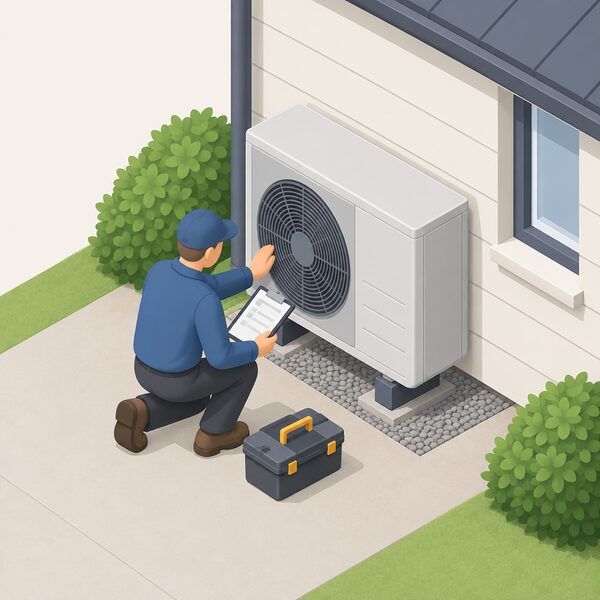
Product listings for the Aquarea M Series quote up to a 7 year extended parts and labour warranty2. That is longer than the general market position: heat pumps usually come with warranties lasting two to three years, which can often be extended for a fee12. Panasonic's extended term is therefore a genuine differentiator on paper, but it is conditional.
The conditions are the usual ones for the sector. The unit must be commissioned by a competent installer, registered with Panasonic, and serviced annually to keep the extended cover valid. The servicing and warranty relationship is the same across manufacturers: a missed annual service is the most common reason an extended term is refused. For a household, that means budgeting for a service visit each year, not just the installation.
Lifespan expectations sit well beyond the warranty period. Heat pumps are quoted at 20+ years13, so a 7 year parts and labour term covers roughly the first third of a unit's working life. The lifespan of an air source heat pump depends heavily on installation quality and system cleanliness, which is why the commissioning record matters as much as the badge.
Controls and smart monitoring: Comfort Cloud and Service Cloud
Aquarea units are compatible with Panasonic Comfort Cloud and Aquarea Service Cloud for remote monitoring, diagnostics and weather compensation2. Comfort Cloud is the householder-facing app; Service Cloud is the installer and maintenance side, and Panasonic has used it in social housing work, including a programme with Together Housing covering over 1,200 properties across the North of England with a further 750 homes scheduled for retrofit.
The 5kW Mono-Bloc adds Auto Mode, which automatically changes from heating to cooling depending on outdoor temperature, an energy consumption display split by heating, cooling and domestic hot water, and a Holiday Mode3. Those features sit on top of the core control function, which is weather compensation: the flow temperature adjusts to outdoor conditions rather than running at a fixed level.
This is the clearest dependence the range creates. Local control at the unit continues without an internet connection, but remote scheduling, energy monitoring and remote diagnostics depend on home broadband, Panasonic's servers and the manufacturer's app. The heat pump controls layer is where a household trades some autonomy for convenience, and it is worth being explicit that the cloud services are a manufacturer's platform, not a household asset.
Panasonic as a manufacturer: scale, compressor heritage and UK presence
Panasonic is one of at least 33 manufacturers supplying air source heat pumps in the UK, a market where Mitsubishi Electric, Vaillant, Daikin and Samsung account for nearly two-thirds of total annual UK sales14. No published figure isolates Panasonic's own share. The wider context is that only 2 to 3% of homes in the UK have a heat pump15, and the UK's domestic manufacturing sector meets just over 30% of UK demand14, with the market share predicted to grow to around one half of heat pumps manufactured in the UK by 203016.
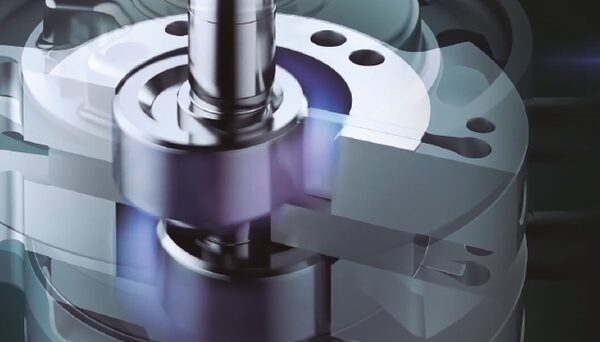
Panasonic's background is in compressors and air conditioning, which is the technical heritage behind the Aquarea line. The company's UK presence in heating runs through its Heating and Cooling Solutions division and a servicing partnership with British Gas, announced in March 2025, covering maintenance for Aquarea air source heat pumps installed across the UK4. British Gas engineers have completed hands-on training for maintenance, diagnostics and repairs of the range4.
For a household weighing independence, the manufacturer relationship is a form of dependence: warranty terms, spare parts, fault diagnostics and the app all run through Panasonic and its approved partners. The heat pumps and energy independence picture is that the fuel source changes from gas to electricity, which shifts rather than removes reliance on an external network.
Where Aquarea fits in a UK home
Aquarea has a documented UK installation record across property types that most heat pump buyers would recognise. A 1970s two-bedroom bungalow in Birkenhead was retrofitted from a combi gas boiler to a 7 kW L Series All-in-One in 2024. A pre-1900s listed five-bedroom thatched cottage in Royston was converted from a gas boiler to two 12 kW K Series T-CAP heat pumps with bi-bloc indoor units, with the homeowner receiving £7,500 through the Boiler Upgrade Scheme. A rural Shropshire farm building replaced an oil-fired boiler with a 9kW M Series Monobloc in October 2025.
New build work is part of the picture too. A Bedfordshire new build had Aquarea units installed in October 2022, and a 654m2 five-bedroom Hampshire self-build completed to Passive House standards in 2022 used two 12kW Aquarea T-CAP heat pumps with Panasonic Smart Cloud control. Gleeson Homes ran a trial of 5kW Aquarea Mono-bloc heat pumps at three locations before planning a controlled roll-out across thousands of its properties.
The pattern across these installations is that Aquarea suits both well-insulated new builds and older properties where the fabric has been addressed or the emitters upgraded. The homes that suit a heat pump question is answered by heat loss and emitter sizing rather than by property age, and the radiators and emitters design is what determines the flow temperature the system can run at.
Sources16 cited
- Panasonic Aquarea M Series 16kW WH-WDG16ME8, Quiet Mark, 2026-09-17
- Panasonic Aquarea M Series T-CAP 9kW WH-WXG09ME8, Quiet Mark, 2026-09-17
- New 5kW Aquarea Mono-Bloc single phase, Panasonic, 2026-09-17
- Panasonic partners with British Gas for Aquarea service and maintenance, Panasonic, 2025-03-17
- Aquarea designed for low consumption homes, Panasonic, 2026-09-17
- Boiler Upgrade Scheme guidance, Ofgem, 2023-09-25
- How to ensure a heat pump runs efficiently, Energy Saving Trust, 2026-05-19
- An introduction to heat pumps, Which?, 2025-09-22
- Panasonic Aquarea M Series T-CAP 12kW WH-WXG12ME8, Quiet Mark, 2026-09-17
- Panasonic Aquarea M Series T-CAP 16kW WH-WXG16ME8, Quiet Mark, 2026-09-17
- Viessmann to launch new residential air source heat pump, CIPHE, 2026-05-14
- Living with a heat pump, Home Energy Scotland, 2024-02
- Heat pumps vs boilers, The CPA, 2025-02-18
- Energy in buildings 2025, Department for Energy Security and Net Zero, 2025-06
- Heat pumps: beyond affordability, Which?, 2026-06
- Raising minimum standards for heat pumps: options assessment, Department for Energy Security and Net Zero, 2030
 Panasonic air conditioning for homesPanasonic air conditioning cools your home in summer and heats it in winter from the same unit.