
In this guide
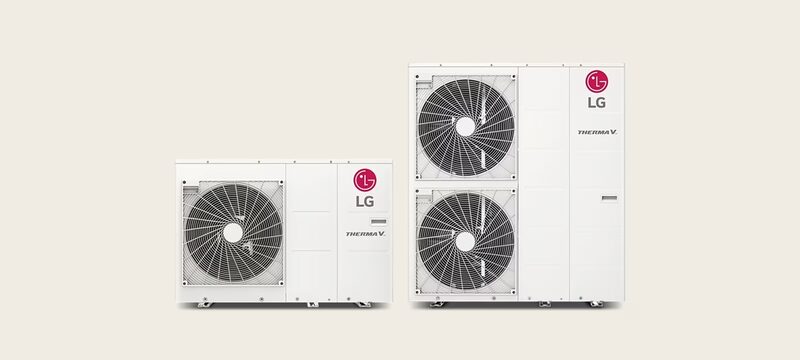
LG sells the Therma V R290 Monobloc air source heat pump into the UK market, in four sizes from 9 to 16 kW, with several models carrying Quiet Mark certification and a maximum flow temperature of up to 75℃1. The company is trading and the range is current. The failure that matters to some households is not LG's: Home Energy and Lifestyle Management Ltd, a firm named in official guidance on a Green Deal complaint, has gone out of business3.
That distinction shapes the whole page. A household with an LG heat pump has a manufacturer behind the equipment and, in many cases, no installer behind the workmanship. The two are separate warranties, and the second one is the one that disappears when a firm stops trading.
Home Energy and Lifestyle Management Ltd has gone out of business
Official guidance records that Home Energy and Lifestyle Management Ltd "has gone out of business", in the context of a Green Deal complaint about the company4. For a household, the practical consequence is that the installer's own workmanship guarantee, and any aftercare promise made at the point of sale, cannot be enforced against a company that no longer exists.
What survives is the manufacturer's warranty on the equipment, any guarantee or insurance-backed warranty the installer bought in, and the routes attached to whichever scheme funded the work. The Energy Company Obligation is one such route: 36% of government-supported heat pump installations in the year ending March 2025 were funded through it6. Where a scheme funded the installation, the scheme's own complaint and redress arrangements may still be open even though the installer is not.
The wider pattern is not unique to this firm. Parliament has debated consumer protection in the energy market, and official guidance now addresses cases where the installer that fitted a faulty installation is no longer trading and the guarantee is missing, fraudulent or cancelled7. That guidance exists precisely because installer failure is a recognised category of household harm, not an isolated event.
For owners, the first step is documentary: locate the original guarantee, the commissioning certificate and the benchmark or handover paperwork. The second is to establish which body, if any, stands behind the work. manufacturer failures and orphaned products sets out how these cases are handled in general.
LG's heat pump range: the Therma V
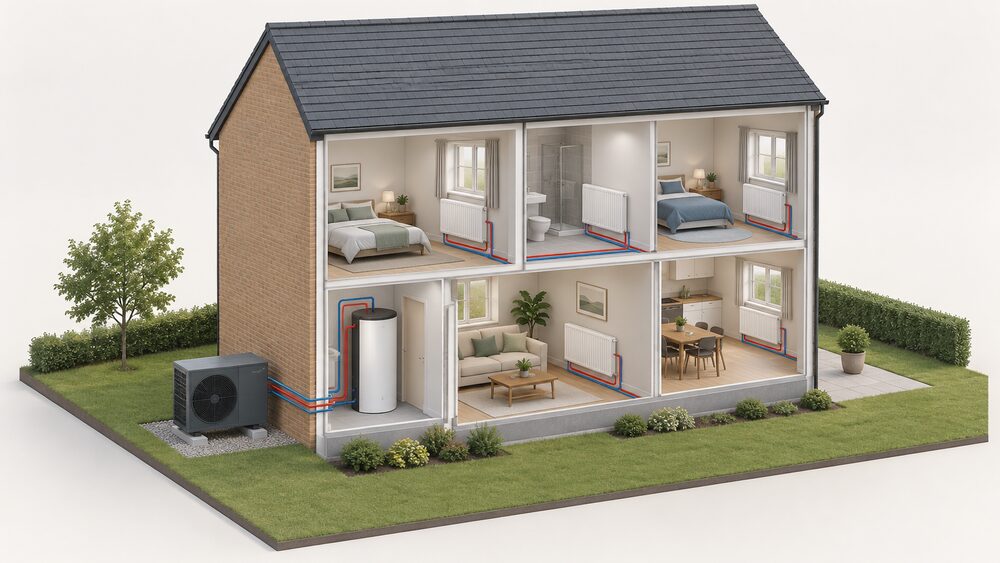
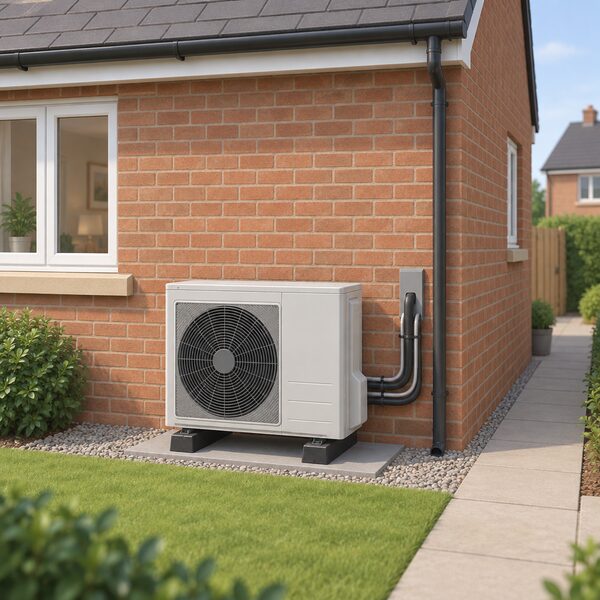
The Therma V R290 Monobloc is an air source heat pump sold in the UK in four sizes from 9 to 16 kW, described by LG as covering renovation and large new build projects1. The range is monobloc in design, meaning the unit is "connected by only water piping", which eliminates the need for refrigerant piping between an outdoor and indoor unit8. That matters for installation and for servicing: there is no refrigerant circuit running through the fabric of the house.
| Model | Output | Phase | Key published figures |
|---|---|---|---|
| Therma V R290 Monobloc 9kW | 9 kW | 1 phase | Heating 9 kW at A7/W35, flow up to 75℃, 3 indoor unit types2 |
| Therma V R290 Monobloc 9kW | 9 kW | 3 phase | Flow up to 75℃, 3 indoor unit types, Quiet Mark certified8 |
| Therma V R290 Monobloc 12kW | 12 kW | 1 phase | ErP A+++/A+++, operation down to -28℃1 |
| Therma V R290 Monobloc 14kW | 14 kW | 3 phase | ErP A+++/A+++, 9 to 16 kW range3 |
| Therma V R290 Monobloc 16kW | 16 kW | 1 phase | Low GWP (GWP 3), Quiet Mark certified10 |
Two figures stand out for a UK household. The first is the maximum flow temperature of up to 75℃, which is high enough to serve existing radiators and a cylinder without a wholesale emitter upgrade in many cases2. The second is the operating range down to -28℃ ambient, well beyond typical UK winter conditions1. LG also states heating performance of 100% at a leaving water temperature of 35℃ and an outdoor temperature of -15℃ on the 9 kW single phase model2.
The refrigerant is R290, propane, with a stated global warming potential of 3 on the 16 kW model10. That is a low-GWP figure by comparison with older fluorinated refrigerants, and it is a flammable natural refrigerant, so installation and servicing sit with competent engineers rather than householders.
Market share: what the official data does and does not show
No official statistic in the published deployment data breaks the UK heat pump market down by manufacturer, so a verified LG-specific share does not exist in the government figures. What is published is the shape of the market as a whole, and that is the honest context for any brand claim.
Around 1% of homes in the UK have a heat pump installed5. Government-supported installations in the year ending September 2024 were 98% air source heat pumps, with ground source making up the remainder11. Within the Renewable Heat Incentive, air source accounted for 67.4% of accreditations since scheme launch and ground source 13.2%12. Regionally, the South East took 12% of government-supported installations in the year to September 2024, behind the South West at 14%, while London held 4% in the year to September 202511.
The ambition is far larger than the current base. The government's stated target is up to 1.9 million heat pump installations a year by 2035, described as a UK-level ambition14. Against a base of around 1% of homes, that target implies a transformation rather than a trend.
Two structural facts bear on how that market is supplied. The government is confident there are fewer than 100 heat pump manufacturing businesses operating in Great Britain16. And in the ground source segment, one UK manufacturer, Kensa, holds 41% of the market and is the only UK manufacturer of GSHP systems17. Air source, where LG competes, is a more crowded field, and the official statistics do not rank the participants.
What owning an LG heat pump means for household energy independence
A heat pump changes what a household buys, not whether it buys. Running a Therma V means buying electricity rather than gas, oil or LPG, so the household remains connected to the grid and to an electricity supplier. What changes is the fuel, and with it the exposure.
The economics turn on the price relationship between electricity and gas. Government analysis states plainly that reducing the price of electricity relative to gas would make heat pumps more competitive18. That is a statement about relative running costs, and it is the single largest variable in whether a heat pump saves money in a given home. Additional savings are possible with flexible electricity tariffs, which shift consumption towards cheaper periods18.
For a household off the gas grid, the comparison is different and the support is larger. Official announcements describe £9,000 off the cost of a heat pump for homeowners living in properties heated by oil and LPG19. That figure is a grant amount and applies to that group specifically, not to gas-heated homes.
The independence question has three parts. Fuel: a heat pump moves a home off delivered fossil fuel and onto electricity, which is a genuine reduction in exposure to oil and LPG supply. Grid: the home remains dependent on the electricity network and a supplier, with no change to that relationship. Manufacturer: the appliance, its controls and any connected features depend on LG for parts, firmware and support over the life of the unit. The Heat Pump Ready Programme exists to reduce the lifetime costs of domestic heat pumps, which is an acknowledgement that cost, not capability, is the barrier20. Manufacturers and household energy independence covers the wider picture.
Service, warranty and support after an installer ceases trading
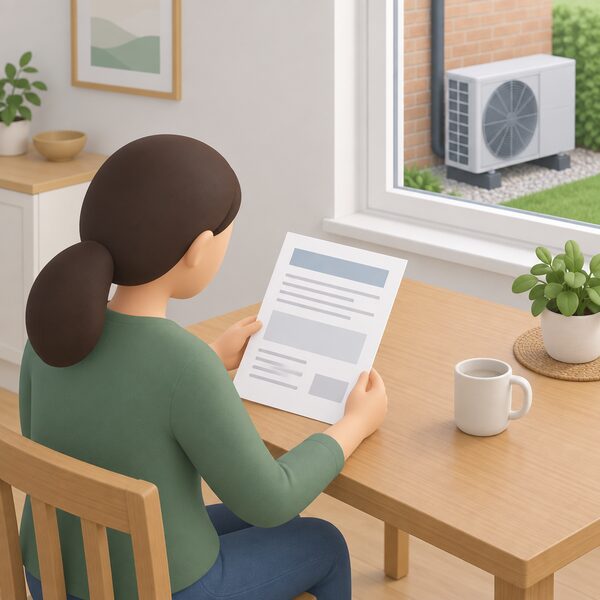
Warranty terms for the Therma V are not consistent across LG's own published material. Maker product pages have carried both a shorter term and a term of up to 7 years for the same range, and the two figures are unresolved. Where two figures exist and neither has been ruled correct, the figure that applies to a given installation is the one in the paperwork issued with it, and a household should read that document rather than rely on a web page.
The general principle for any funded installation is that the warranty comes with conditions. The Northern Ireland Sustainable Energy Programme states that the scheme manager or installer will provide information about the warranty and any specific terms and conditions needed to keep the warranty valid21. That is the pattern to expect: a warranty that survives only if registration, servicing and sometimes specific components are in place.
When an installer stops trading, the routes that remain are the manufacturer, the competent person register the installer belonged to, and the funding scheme. TrustMark is the government-endorsed competent person register, described in official guidance as a place to search for an installer who will assess circumstances and property to identify suitable measures22. For a household needing remedial work, that is the starting point for finding someone to assess what was installed.
Warranty registration and manufacturer service plans explain how these conditions work across brands. For households in Wales, the Green Homes Wales loan terms set out eligibility conditions including the use of a TrustMark-registered Retrofit Coordinator and a requirement that work must not start before the grant offer letter is issued23. Those conditions are scheme-specific and do not apply across the UK.
LG beyond heat pumps: solar and storage in the home
LG's presence in home energy extends past heat pumps, but the published UK-facing material is uneven. LG Electronics acquired the OSO Group, described as the European market leader in stainless steel hot water tanks, in June 202524. That acquisition puts a cylinder business inside the group that also makes the Therma V, which matters for households pairing a heat pump with a hot water cylinder.
On batteries, LG Energy Solution is a separate listed company and operates at grid and industrial scale. It announced the start of production at its Lansing battery plant in August 2026, secured a multi-year supply of US-produced lithium carbonate from Smackover Lithium in August 2026, and published work with Seoul National University on commercialising next-generation LMR batteries in September 202625. Those are manufacturing and research announcements, not a UK domestic storage product line.
The distinction between LG Electronics and LG Energy Solution is worth holding onto. They are different companies with different product lines, and a household researching a home battery under the LG name is looking at a different business from the one that supplies the Therma V.
For context on what households actually install, independent statistics covering the presence of solar panels, battery storage, electric heating, smart heating controls, heat pumps and air conditioning units in homes show these technologies are tracked together as a single picture of domestic energy equipment26. Home battery manufacturers and solar panel manufacturers cover the brands active in those markets.
Where the Therma V fits and what it does not settle
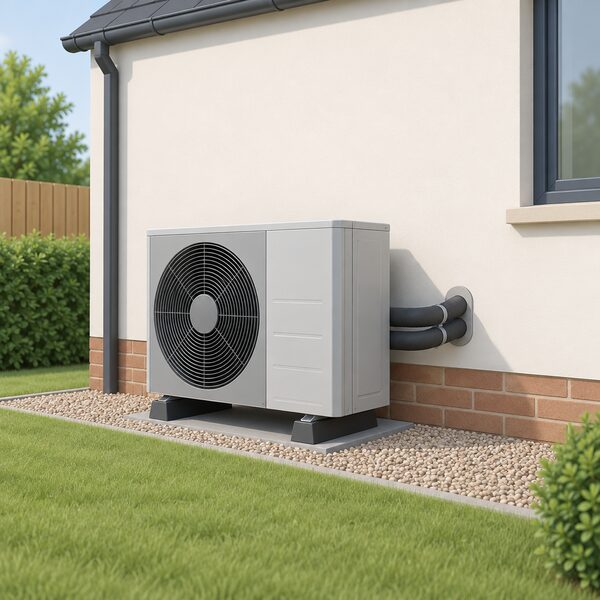
The Therma V is a monobloc air source heat pump with a high maximum flow temperature and a wide operating range, sold in four sizes from 9 to 16 kW1. It is a credible option for a renovation or a large new build, which is how LG positions the range1. It is not a route to independence from the grid or from a supplier, and it does not remove the need for a competent installer, a commissioning record and a maintained warranty.
The installer question is the one that most affects existing owners. Where the firm that fitted the system has gone out of business, the equipment warranty and the workmanship warranty part company, and only the first is likely to be enforceable4. Households in that position should treat the paperwork as the priority: guarantee, commissioning certificate, scheme documentation and any registration confirmation.
For those still choosing, the official data offers scale rather than brand guidance. Around 1% of UK homes have a heat pump, government-supported installations are overwhelmingly air source, and the target for 2035 is up to 1.9 million a year5. The market is early, the installer base is the weak link, and the manufacturer's identity is one factor among several. Heat pump manufacturers supplying UK homes sets the range against its competitors.
Sources26 cited
- LG Therma V R290 Monobloc 12kW 1 phase, Quiet Mark, 2026-09-17
- LG Therma V R290 Monobloc 9kW 1 phase, Quiet Mark, 2026-09-17
- LG Therma V R290 Monobloc 14kW 3 phase, Quiet Mark, 2026-09-17
- Green Deal and home energy efficiency complaints, UK Parliament, 2026-05-13
- Heat pumps and the UK's net zero targets, House of Commons Environmental Audit Committee, 2025-05-09
- Heat pump deployment quarterly statistics, UK 2025 Q1, Department for Energy Security and Net Zero, 2025
- Energy market consumer protection debate, Hansard, 2026-06-17
- LG Therma V R290 Monobloc 9kW 3 phase, Quiet Mark, 2026-09-17
- LG Therma V R290 Monobloc 7kW 3 phase, Quiet Mark, 2026-09-17
- LG Therma V R290 Monobloc 16kW 1 phase, Quiet Mark, 2026-09-17
- Heat pump deployment quarterly statistics, UK 2024 Q3, Department for Energy Security and Net Zero, 2024
- Domestic Renewable Heat Incentive annual report 2023-24, Ofgem, 2024-07
- Heat pump deployment quarterly statistics, UK 2025 Q3, Department for Energy Security and Net Zero, 2025
- Heat pumps investment roadmap, Department for Energy Security and Net Zero, 2035
- Warm Homes Plan technical annex, Department for Energy Security and Net Zero, 2026-09-17
- Raising minimum standards for heat pumps: options assessment, Department for Energy Security and Net Zero, 2024-11-27
- Energy innovation and net zero: heat and buildings, Department for Energy Security and Net Zero, 2025-06
- Heat pumps and the electricity price ratio, Parliamentary Office of Science and Technology, 2026-09-19
- Greater protections to restore families' trust in home upgrades, Department for Energy Security and Net Zero, 2026-06-17
- Information about the Heat Pump Ready Programme, Department for Energy Security and Net Zero, 2026-05-11
- Northern Ireland Sustainable Energy Programme, Energy Saving Trust, 2026-09-07
- Energy Company Obligation scheme guidance, Leeds City Council, 2026-09-20
- Green Homes Wales loan standard terms and conditions, Development Bank of Wales, 2026-09-17
- LG acquires the OSO Group, OSO Hotwater, 2025-06-30
- LG Energy Solution newsroom, LG Energy Solution, 2026-09-07
- Make electricity cheaper for consumers, says climate advisor, Climate Change Committee, 2025-06-25
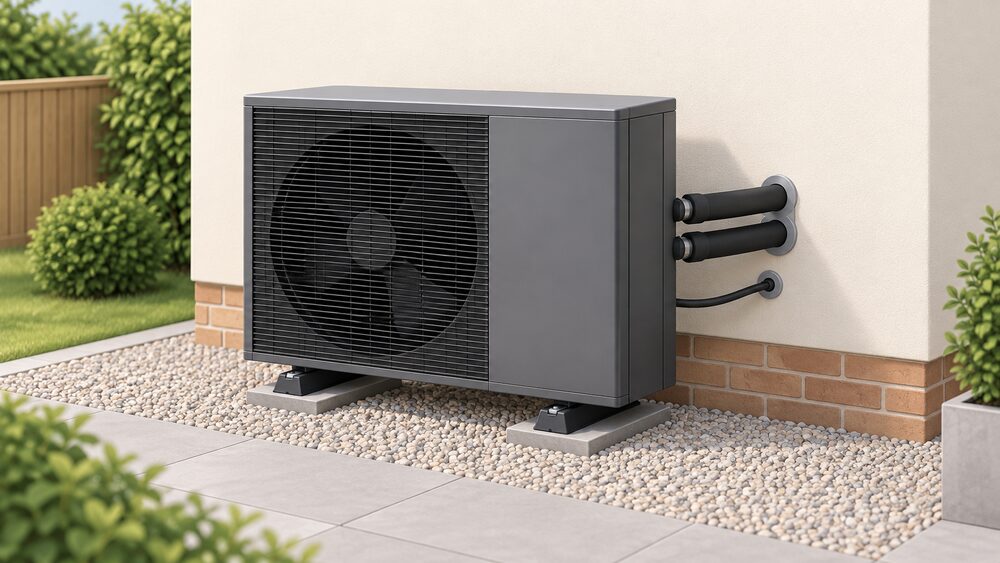 LG Therma V heat pumpsIf you are weighing up an LG Therma V for your home, the questions are usually the same: what sizes does it come in, how well does it heat when it is freezing outside, what does it run on, and how long is it covered for?
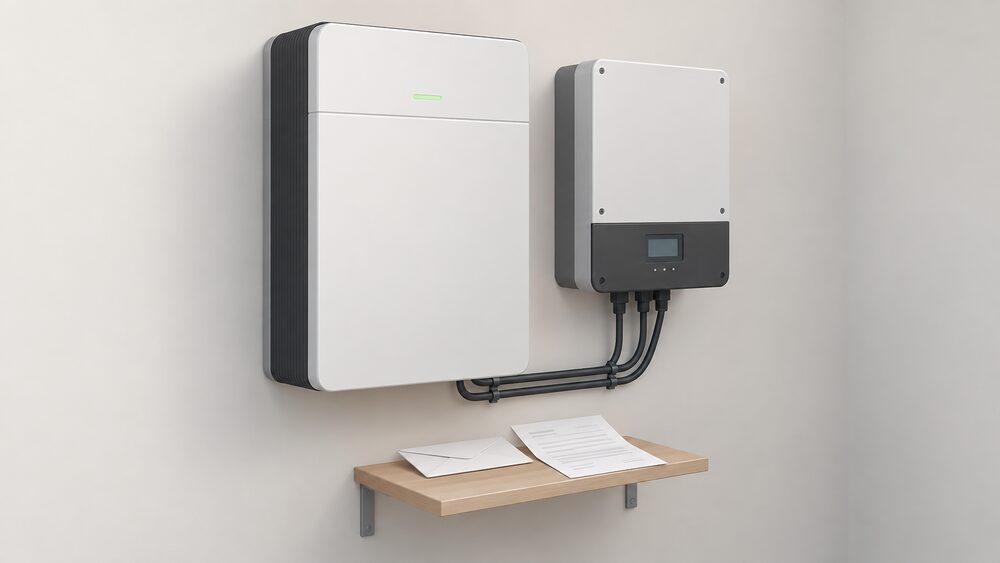 LG Home BatteriesLG Chem and LG Energy Solution are one maker; RESU batteries remain in UK homes, but a live recall covers many models.
 LG air conditioning and Artcool systemsThinking about LG air conditioning for your home?