

In this answer
Short answer
An installer that has stopped trading leaves a household with two separate problems: work that may be unfinished or faulty, and a guarantee that may or may not be worth anything. The first thing to establish is which of those applies, because the route to a remedy is different in each case. Where an insurance-backed guarantee was in place, protection applies "in the unlikely event your installer ceases to trade and cannot complete or rectify your installation"1. Where it was not, the household is largely reliant on the installer's own estate and whatever the scheme body can do.
The second thing to establish is who the installer was registered with. A scheme body can investigate a concern even after the business has gone: CIGA states that if the installer is no longer a member or has ceased trading, the concern will be investigated by CIGA as a first step2. For grant-funded work the guarantee provider is the named fallback, and for metered schemes there are notification deadlines that matter.
The third is paperwork. The handover pack, the completion certificate, the Benchmark Checklist and the guarantee policy are what establish who did what, when, and under whose registration. Without them, a claim is much harder to pursue.
First steps when your installer stops trading
The order of operations matters more than the speed. Before contacting anyone, establish what stage the job reached: nothing started, work in progress, or work completed but with defects. Each leads to a different remedy.
Where the installer is still contactable in any form, the standard complaint route applies. Ofgem's guidance for one scheme is to inform the installer of the complaint as soon as possible and give them at least 10 working days to resolve it before contacting the consumer code5. A parallel route gives the installer a week to respond6. These are not deadlines for the household so much as conditions that must be met before an escalation is accepted.
Where the installer has ceased trading, the scheme body becomes the first contact rather than the last. CIGA's position is explicit: if the installer is no longer a member or has ceased trading, the concern will be investigated by CIGA as a first step2. That is a different posture from a normal complaint, where the installer is expected to have a chance to put things right.
For metered renewable schemes there is a hard deadline. A change of installer after scheme closure is allowed if the current installer has ceased trading, provided the scheme administrator is told within 28 days of becoming aware7. That is a deadline measured from awareness, not from the failure itself, so the clock starts when the household learns of it.

What stopping trading means for your warranties and guarantees

Not all guarantees behave the same way when a company fails, and the distinction is the single most useful thing a household can understand.
A manufacturer's product warranty normally sits with the manufacturer, not the installer, so the installer's failure does not usually affect it. A workmanship guarantee is the installer's own promise about their own work, and it is only as good as the installer's continued existence unless it was insured. An insurance-backed guarantee exists precisely to bridge that gap: it provides protection should the installer cease to trade, subject to the policy terms and conditions9.
Some schemes require the workmanship guarantee to be insured. MCS states that the guarantee must be insured to ensure that the workmanship guarantee will be honoured if the company ceases to trade10. OFTEC describes a workmanship warranty that covers work where the installer is no longer trading and the work does not meet building regulations4. Flexi-Orb states that all installations come with an insurance-backed guarantee, and that if an installation company ceases trading the consumer can still rely on the guarantee provided by the insurance11. The Consumer Protection Association makes the same point in general terms: an insurance-backed guarantee ensures that cover remains valid even if the contractor ceases trading12.
Deposit and stage payment protection is a separate product from the guarantee on completed work. It covers the money paid before completion, with completion by another installer or a refund, subject to policy terms3. A household that paid a large deposit and got nothing installed is claiming on that, not on the workmanship guarantee.
"An insurance-backed guarantee (IBG) ensures that your cover remains valid even if the contractor ceases trading."
Who to contact: scheme bodies, insurers and the installer's administrator
The right contact depends on how the work was funded and who registered it.
For grant-funded energy efficiency work, the parliamentary record sets out the route: families affected should first contact the installer who carried out the installation, and where the installer is no longer trading or unable to remedy damages, they can contact their guarantee provider to initiate a claim13. The same record notes a further fallback where the installer is no longer trading and the guarantee is missing, fraudulent or cancelled13.
In Northern Ireland, the scheme managers are named directly. The Help to Insulate scheme is managed by Energystore Ltd, and the Keep Warm Scheme by Workspace Ltd, each with published telephone numbers and email addresses14. That is a more direct route than a general consumer code complaint.
For ECO Flex declarations, the contact route runs through the local authority or its agent; Bristol City Council publishes an installer contact address for ECO Flex declarations15, and Leeds City Council sets out the Energy Company Obligation scheme for its area16. Where a solid wall insulation installation under ECO4 or GBIS was audited and found non-compliant, the installer is required to provide evidence of correction within 8 weeks, and if not remediated by that point the certification body should inform the installer of the implications of not having done so by 12 weeks from the audit17. That timetable continues to run even if the installer is in difficulty.
The installer's administrator is the formal route for money owed by the company itself. Where a company has entered administration, the administrator handles claims against the estate, and the scheme body or insurer handles claims under the guarantee. These are separate claims and should be pursued separately.
Getting outstanding work finished or corrected
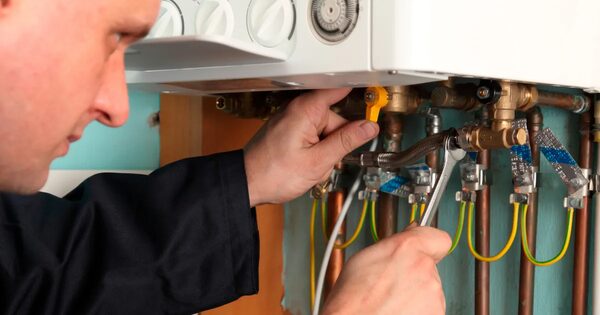
Where the original installer cannot finish the job, another installer has to take it on, and there is a practical caution attached to that.
MCS states that starting repair or remediation work on an installation not originally done by the installer may mean that if a complaint is ongoing or raised later, it cannot determine which installer was responsible18. That is a reason to establish the position on any live complaint or claim before new work begins, not a reason to leave a system in an unsafe state.
Safety comes first regardless. Guidance for installers is to ensure that the product or system is left in a safe condition and, whenever possible, in good working order19. Where a gas appliance is involved, the legal position is that fixed gas appliances must be installed and maintained by a Gas Safe Registered installer20, and gas appliances should be properly installed and maintained at regular intervals by an engineer on the Gas Safe Register21. For gas boilers, an installer should be Gas Safe Registered from 1 April 200922. Where pipework needs replacing, only Gas Safe registered engineers should be used23.
For electrical products that are faulty, the recommended action is to unplug and contact the retailer, manufacturer, or a qualified repair technician24.
Completion paperwork matters for the replacement work too. Under competent person schemes, a certificate showing the work was done by a registered installer is issued when work is complete25. For cavity wall insulation, the installer must declare that the work has been undertaken correctly26. A registered installer is approved to carry out work to comply with building regulations without involving local authority building control, and a certificate is issued on completion27. In Wales, the equivalent building regulations guidance for doors and windows sets out the same notification framework25.
Where a certification body is involved, there is a consequence for non-compliance: if rectification work is not done satisfactorily or no resolution is agreed, the installer may jeopardise their certification28.
Keeping paperwork and records safe
The documents from the original installation are the evidence base for every claim described above, and they are worth assembling before any contact is made.
The handover pack should include the installer's full contact details29. For metered installations it should also contain a process to follow to check that the meter is operating correctly, maintenance or calibration requirements and reading instructions7. The Benchmark Checklist, completed on the inside back pages of the installation instructions and signed by the householder to confirm a full and clear explanation of operation was received, is a standard requirement19.
Beyond the handover pack, the completion certificate, the guarantee policy document and any grant offer letter should be kept together. The grant offer letter in particular has conditions attached: it is only valid where the installer is the particular installer described in the Project Information Summary, and ceases to be valid on cancellation or once payment has been made following redemption8.
Where a company has failed, the practical example is Safestyle, which has ceased to trade; for all repairs, homeowners are directed to speak to the provider of their Insurance Backed Guarantee30. That is the pattern to expect: the failed company's own aftercare disappears, and the guarantee provider becomes the point of contact.
Choosing a new installer: what to check before you commit

A replacement installer has to be checked to the same standard as the original, and in grant-funded work there are additional conditions.
For Green Homes Wales, the installer contracted to supply and install eligible measures must be registered with TrustMark and must remain registered until the installation work has been completed8. The same scheme rules require the installer to be registered with TrustMark and the relevant body for the relevant type of eligible measure, to comply with relevant PAS certification, and not to be the borrower, a member of the borrower's household or immediate family8. A change of installer or eligible measure before work starts requires the scheme administrator to be contacted and the change re-validated, with no guarantee of approval, particularly if it would result in additional grant being payable8.
For the cross-pavement charging grant, an installer can be changed after a grant offer, but a new quote must first be emailed for approval before installation begins31.
For general installer selection, TrustMark is the government-endorsed competent person register for finding an installer that will assess circumstances and property to identify suitable measures16. Checking registration is the starting point, and the registration should be verified rather than assumed.
Where the replacement work is on a system covered by a consumer code, the code's complaint route applies to the new installer as it did to the old one. The first step remains to inform the installer and give them at least 10 working days to resolve it before contacting the consumer code5.
Sources31 cited
- Consumer protection for renewable installations, EPVS, 2026
- Reporting a concern about an installer, CIGA, 2026
- Deposit and stage payment protection, HIES, 2026
- Workmanship warranty, OFTEC, 2026
- Who to contact, Ofgem, 2026
- Dispute resolution, Ofgem, 2026
- Domestic RHI guide to metering, Ofgem, 2022
- Green Homes Wales loan standard terms and conditions, Development Bank of Wales, 2026
- Insurance-backed guarantees, Flexi-Orb, 2026
- Insurance-backed guarantee products, MCS, 2026
- How EPVS and Flexi-Orb are improving standards, EPVS, 2026
- Comparing contractors fairly, The CPA, 2025
- Energy market consumer protection debate, Hansard, 2026
- NISEP list of schemes 2026-27, UREGNI, 2026
- Energy Company Obligation, Bristol City Council, 2026
- Energy Company Obligation scheme, Leeds City Council, 2026
- Solid wall insulation under ECO4 and GBIS: statistical audit results, GOV.UK, 2026
- Whistleblowing and installer complaints, MCS, 2026
- HHIC guidance, HHIC, 2026
- Safety advice, Liquid Gas UK, 2026
- Gas safety and carbon monoxide, nidirect, 2025
- Building regulations: boilers and heating, Welsh Government, 2026
- Safety check, Liquid Gas UK, 2026
- Recycling electricals and batteries, Electrical Safety First, 2026
- Building regulations: doors and windows, Welsh Government, 2026
- Cavity wall installer scheme, Kiwa, 2026
- Building regulations for doors and windows, Planning Portal, 2026
- NAPIT FAQs, NAPIT, 2026
- Pre and post installation checklists, Flexi-Orb, 2024
- FENSA Safestyle FAQs for homeowners, FENSA, 2026
- Cross-pavement charging grant, Energy Saving Trust, 2026
 Using an Installer in EnglandHow do you check an installer is registered to sign off their own work, and what happens if they are not?
 When Your Installer Goes BustWhat happens to deposits, part-completed work, workmanship guarantees and complaints when a home energy installation company fails, and how to claim on deposit protection, an insurance-backed guarantee, card or finance cover, and who honours the manufacturer's warranty.
 Installer in Northern IrelandHow do you check an installer in Northern Ireland is properly registered, and who do you complain to if the work goes wrong?
 Workmanship WarrantiesIf something goes wrong with your solar panels, who actually fixes it and who pays?
 Installer ReviewsCheck whether an installer is signed up to a scheme like MCS or TrustMark before you trust their star rating.
 Consumer Rights for Faulty WorkIf an installer does shoddy work, can you make them come back and put it right, and can you get money back if they won't?