In this guide
- Who Checks an Installer
- TrustMark Quality Scheme
- MCS Quality Mark
- NICEIC Certification Body
- Consumer Codes Explained
- Competent Person Schemes
- Warranties and Guarantees
- What MCS Certification Covers
- When Installers Get It Wrong
- Escalating a Dispute
- Energy Ombudsman Powers
- Deadlines and Dates
- Who Sells and Installs
- Energy Independence Impact
Home Energy Installers and Retailers: The Full UK Guide to Hiring, Checking and Complaining
A home energy installer in the UK is checked by certification schemes, not by a single regulator. Installers working under UK Government schemes must be TrustMark registered and/or certified by the Microgeneration Certification Scheme (MCS). TrustMark registration carries a minimum two-year warranty for work, and a minimum 25-year guarantee for certain measures installed under the Energy Company Obligation (ECO). Electrical work is commonly certified through bodies such as NICEIC, and competent person schemes let a registered installer self-certify that the work meets Building Regulations.1
When something goes wrong, the route runs from the installer, to its certification body or consumer code, and then, for disputes the Energy Ombudsman covers, to the Ombudsman. A company has 8 weeks to resolve a complaint before the Ombudsman can take it, unless it issues a deadlock letter sooner. For energy suppliers the Ombudsman can award up to £10,000 in domestic disputes. It cannot fine or punish a company.2
Certification also has limits. MCS requires a design-stage prediction of a heat pump's efficiency but does not verify how the system actually performs, and it does not require remediation when a system underperforms its design. Knowing what each badge promises, and what it leaves out, is what makes a household's energy independence dependable in practice.3
Who checks an installer: TrustMark, MCS, NICEIC and the consumer codes
Home energy work has no single licence. A House of Commons Library briefing from May 2026 describes a consumer protection system in which installers under UK Government schemes must be TrustMark registered and/or MCS certified. Warranties, guarantees and complaint routes are attached to that registration.1
In practice, funded work stacks several layers on the same job. Surrey County Council's Warm Homes: Local Grant network is one example. Its installers are TrustMark registered, MCS accredited for renewable technologies, and certified to PAS 2035:2023, the retrofit specification.7 The same pattern appears in legislation. Under the Warm Home Discount (England and Wales) Regulations 2026, a boiler or central heating system must be installed by, or under the responsibility of, a person registered with TrustMark. A certificate of lodgement must also be issued by the operator of TrustMark.8
MCS certification is not issued by MCS directly to each firm. A Welsh public sector solar specification published in June 2026 requires installers to hold a current and valid MCS certificate issued by one of the following certification bodies:
- Certsure LLP, trading as NICEIC
- Napit Certification Ltd
- Simply Certification
- The IAA (Installation Assurance Authority)
- Amtivo Group, trading as British Assessment Bureau9
One body can therefore sit behind a single firm in more than one role. NICEIC, for example, may certify a firm's electrical competence and also issue its MCS certification. The detailed pages on MCS certified installers, TrustMark registered businesses, NICEIC registration and NAPIT registration cover each layer. Gas, oil and solid fuel work have their own registers, described on the pages for Gas Safe registered engineers, OFTEC registered technicians and HETAS registered installers.
Certification is followed by checks. Under the Boiler Upgrade Scheme, MCS undertakes its own checks on installations completed by MCS certified installers. These are separate from Ofgem's audit programme, and MCS may contact the property owner directly.10

TrustMark: the government-endorsed quality scheme for work in and around the home

Council guidance describes TrustMark as a government endorsed quality scheme.11 For households its main use is as a register. Leeds City Council points residents who want work done to a competent person register such as TrustMark. There they can find an installer who will assess their circumstances and property and identify suitable measures.12
TrustMark's weight comes from the funded schemes. The House of Commons Library states that all works completed under government energy efficiency schemes have to be undertaken by a TrustMark-registered installer.13 Ofgem's ECO4 delivery guidance puts the same requirement in delivery terms. Measures covered by PAS, and projects containing such measures (including MCS measures), should be installed by or under the responsibility of a TrustMark registered installer. They should also have a relevant certificate of lodgement.14 That lodgement is the household's paper trail. It records the measure against the property on the TrustMark system, and it is one of the certificates a household should receive after funded work.
Requirements differ in detail across the nations. Green Homes Wales, run by the Development Bank of Wales, requires installers to be registered with TrustMark as an approved PAS 2030 installer. Where the job involves a low carbon technology such as a heat pump or solar panels, the installer must be TrustMark registered and MCS certified.15 ECO itself is a Great Britain scheme, so its TrustMark rule does not extend to Northern Ireland in the same way. The pages on installers in England, Scotland, Wales and Northern Ireland set out the differences.
Supplier-funded schemes and grants pay for energy-saving improvements to the home.16 Local authorities that run ECO4 Flex publish the TrustMark-registered installers they work with. Birmingham City Council's statement of intent of 11 August 2025 names City Energy Network Ltd and Next Energy Solutions Ltd among them, with contact addresses.17 A named council installer list is one way to confirm that a firm which approaches a household about "free" measures is part of a real scheme. The page on installer requirements for grants covers this further, and how to complain about a TrustMark registered business sets out the complaint route.
MCS: the quality mark for small-scale renewables, from heat pumps to solar
Government scheme guidance describes MCS as the leading quality assurance organisation for microgeneration, meaning small-scale renewable technologies of 50kW or smaller.4 Ofgem describes it as a certification scheme for microgeneration installation companies and products. Its stated aim is to ensure consistent standards and provide confidence to consumers.18 MCS certifies two things: the company that fits the system, and the product that is fitted.19
Council ECO guidance from November 2025 lists the technologies covered as solar photovoltaic panels, biomass, wind, heat pumps and heat products.20 Under the Boiler Upgrade Scheme, Ofgem lists MCS's roles as including, but not limited to:
- setting and maintaining technical standards for installations and products
- certifying installers and products against those standards
- issuing MCS certificates for completed eligible installations
- assisting certification bodies to review and address cases and consumer issues relating to installers or products21
MCS matters to households because funding depends on it. Under the Domestic Renewable Heat Incentive, the eligible technology had to be installed and commissioned by an MCS certified installer who could provide an MCS certificate.22 Government guidance from 2021 made the same point for other incentives. Installation contractors had to be certified by MCS and install MCS certified products to qualify for schemes such as the Renewable Heat Incentive.23 MCS certificates also underpin the official statistics. The UK heat pump deployment statistics for Q2 2026 exclude any retrofit installations that are not MCS certified, which are thought to be small in number, and all installations in new dwellings.24
An installation outside MCS is lawful. It falls outside the grant schemes, and it is absent from the national record. The technical rules are covered on the page about MCS installation standards. The paperwork is covered under your MCS certificate and handover pack. Firms working under another company's certification are covered under MCS umbrella schemes.
NICEIC: the UK's largest certification body for electrical businesses
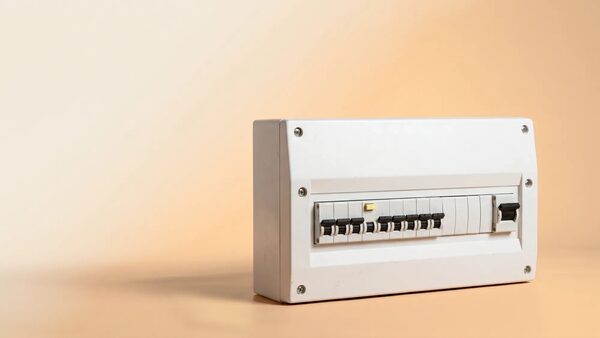
Almost every home energy installation ends at the consumer unit. Solar PV, battery storage, heat pumps and chargepoints all need an electrical installation that is designed, tested and certified. NICEIC certifies electrical businesses. According to its own guidance, dated November 2025, registration means three things for a householder:
| What NICEIC states | Detail |
|---|---|
| Assessment | The business is assessed annually by an experienced NICEIC assessor to ensure it meets stringent quality and technical requirements |
| Insurance | The business has comprehensive insurance to protect the customer and the property in the unlikely event of accidental damage or injury |
| Guarantee | Registered electricians are backed by NICEIC's Platinum Promise guarantee |
These statements are NICEIC's description of its own scheme, not an independent assessment.25
NICEIC, as the trading name of Certsure LLP, is also one of the bodies named in public procurement documents as an issuer of MCS certificates. A solar installer's MCS certification and its electrical registration can therefore come from the same organisation.9 A household can check a firm's registration, and a complaint has a body to go to.
The detailed pages cover what the NICEIC Platinum Promise covers, how to verify an electrician is registered, when a qualified electrician is needed by law and who can self-certify electrical work in a home. NAPIT is the other electrical body a household is likely to meet. Its route for disputes is set out under how to complain about a NAPIT registered installer.
Consumer codes: RECC, HIES and a requirement in transition
A consumer code governs selling: advertising, quotes, deposits, contracts and cancellation. MCS standards govern how the system is fitted. For years the two were tied together. The Chartered Trading Standards Institute (CTSI) states that companies wanting MCS certification must first be members of a CTSI Approved Consumer Code of Practice scheme. It also states that the Renewable Energy Consumer Code (RECC) was developed, and is sponsored and run, by Renewable Energy Assurance Ltd (REAL).26 Ofgem's Boiler Upgrade Scheme guidance of September 2023 named the two codes concerned:
"A condition of MCS certification is membership to HIES or RECC."
That position has changed, and the published documents do not all agree. The government's November 2025 response on amendments to the Boiler Upgrade Scheme records that MCS has replaced the requirement for contractors to be members of a CTSI approved consumer code. In its place is MCS's own "Customer Commitment".28 Ofgem's installer guidance of July 2026 explains the transition. Installers that have not transitioned to the MCS Redeveloped Installer Scheme must still hold consumer code membership with one of the other two approved codes, HIES and RECC.19 Some Ofgem pages, including its Domestic RHI contacts page, still state that MCS installation companies working with domestic customers must be a member of a consumer code approved by the Trading Standards Institute.18
| Document | Date | What it says about consumer codes |
|---|---|---|
| Ofgem BUS property owner guidance v2.3 | September 2023 | Membership of HIES or RECC is a condition of MCS certification27 |
| Government response on BUS amendments | November 2025 | MCS has replaced the CTSI code requirement with its own Customer Commitment28 |
| Ofgem BUS installer guidance v5.1 | July 2026 | Installers not yet transitioned to the redeveloped scheme must still hold HIES or RECC membership19 |
So a household cannot assume in 2026 that every MCS installer is a RECC or HIES member. An installer's protection may come from a code, or from the MCS Customer Commitment, depending on whether the firm has moved to the redeveloped scheme. The codes remain in use elsewhere. Under the Domestic RHI's Assignment of Rights arrangement, an investor had to be a member of RECC or HIES before registering. The scheme's annual report of July 2025 describes both as CTSI approved consumer protection codes.29 Ofgem's July 2026 update to its property owner guidance refreshed the content and contact information for MCS, HIES and RECC together.30
The pages on the Renewable Energy Consumer Code, the HIES consumer code, RECC and HIES compared and the Electric Vehicle Consumer Code give the detail of each.
What a competent person scheme means for Building Regulations

Much home energy work is "building work" in law, so it must comply with Building Regulations and be shown to comply. A competent person scheme lets the installer show this. GOV.UK states that an installer, for example of windows or boilers, who is registered with a scheme can self-certify that the work complies with building standards.31 Membership is voluntary for installers, and it covers only certain types of building work.32 The Planning Portal's guidance on electrical work says it is best to use an installer registered with a competent person scheme, who can self-certify compliance.33
Self-certification removes a step for the household. A planning guidance note on solar panels explains that installers who are members of a relevant competent person scheme can self-certify certain types of building work, including the installation of solar PV. This avoids the need to seek separate Building Regulations approval.34
The role of these schemes is growing. In its March 2026 response to the Future Homes and Buildings Standards consultation, the government said it had made significant amendments to the Approved Documents. The amended documents state that a competent person scheme should be used when undertaking a heat pump or mechanical ventilation installation. The response also noted that there are currently four registered competent person schemes for installing mechanical ventilation and air conditioning systems in dwellings.35 These Approved Documents apply to England. In Wales, the Welsh Government's guidance on micro combined heat and power advises contacting an installer who can provide the necessary advice, preferably one who belongs to the relevant competent person scheme.36 Scotland works through building warrants, not competent person self-certification. That system is explained on the page about using an installer in Scotland.
The main page on competent person schemes lists which schemes cover which work. The page on the Building Regulations Compliance Certificate explains the document a household should receive afterwards.
Warranties and guarantees: from a two-year work warranty to 25-year ECO guarantees
Home energy work carries three different kinds of promise. They last for different periods and depend on different parties. The floor under TrustMark registration is set out in the House of Commons Library's description of the consumer protection system:
"a minimum two-year warranty for work, and a minimum 25-year guarantee for certain measures installed under the ECO."
The two-year figure relates to the installer's own work. The 25-year figure applies only to certain measures, and only where they were installed under ECO. It is not a general guarantee on any insulation or heating job.
Market practice varies around those minimums. Guidance published by an energy supplier in June 2026 states that installer workmanship guarantees typically last between 1 and 10 years. It adds that MCS-certified installers are required to offer a minimum of two. This is a supplier's description of typical terms and not a scheme rule book, so it is weaker evidence than the official sources. It is, however, consistent with the two-year TrustMark minimum.38
| Promise | Minimum or typical term | Who stands behind it |
|---|---|---|
| Warranty for work under TrustMark | Minimum two years1 | The installer |
| Guarantee for certain ECO measures | Minimum 25 years1 | A guarantee provider |
| Installer workmanship guarantee (market range) | Typically 1 to 10 years, as one supplier reports38 | The installer |
A workmanship warranty depends on the installer still trading. A long guarantee is only dependable if it is held by a separate body that outlasts the firm. Households on funded schemes meet that model through the Cavity Insulation Guarantee Agency and the Installation Assurance Authority, and it is the reason insurance-backed guarantees exist. Product warranties from manufacturers are a third layer, discussed under manufacturer approved installer networks. The page on workmanship warranties and aftercare covers service plans and the conditions attached to them. When an installer goes bust covers what happens to each promise when the firm fails.
What MCS certification does and does not promise
MCS certification promises that a certified company fitted a certified product to a published standard, and that a certificate records the work. The certificate is time-sensitive. Ofgem's Feed-in Tariff guidance describes it as proof that the installation is MCS certified. The guidance says certificates should only be issued once the installation is fully installed and commissioned, and a certificate issued before completion is ineligible.39 An installer offering a certificate before the system has been commissioned is therefore a warning sign, not a convenience. The pages on how long an MCS installer has to give you your certificate and whether an MCS installation can be certified retrospectively deal with the timing.
Certification also includes checks after completion. Ofgem's Boiler Upgrade Scheme guidance of July 2026 confirms that MCS carries out its own checks on completed installations. These are separate from Ofgem's audits, and MCS may contact owners directly or arrange a visit.40 Property owners contacted for these checks should aim to respond within seven days.41
MCS certification does not promise performance in use. A report on the heat pump transition, published by the government in May 2026, states the position:
"MCS requires installers to provide a design-stage prediction of system efficiency, not verify actual performance."
The same report adds that MCS "does not require remediation of systems that are underperforming relative to their design", and that third party non-modulating controls are not prohibited.3 For a household that wants to reduce its dependence on gas, this is the most important limit on this page. The efficiency figure in a quote is a modelled prediction. A system that uses more electricity than predicted has not, for that reason alone, breached the MCS standard. Other design choices that affect running costs, such as the type of controls, are also left to the installer. The pages on what an MCS performance estimate must show and performance estimates and savings claims explain how to read these figures. Claims that go beyond the modelled estimate are covered by the pages on mis-selling and consumer rights for installation work.

When the installer gets it wrong: MCS complaints and TrustMark support

The complaint route follows the certification chain in order. The official guidance describes the following steps:
- The installer. Ofgem's dispute guidance treats the installer as the first step, and only an unresolved complaint moves on.42
- MCS. If the complaint is not resolved, the MCS Administrator will advise how to make a complaint about the MCS installer.42 Ofgem names MCS as the body to contact for issues with the installation process, the installer, or the MCS certificate or product.18
- The consumer code, where the installer belongs to one. Ofgem's contacts page gives the RECC telephone number as +44 (0)207 981 0850.18 See how to complain to the Renewable Energy Consumer Code.
- TrustMark, where the work was carried out by a TrustMark registered installer under a funded scheme, with the certificate of lodgement as the record of the measure.14
- The Energy Ombudsman, for the categories it covers. For Green Deal work these include being unhappy with the work the installer did. They also include moving into a property where the seller or landlord did not disclose the loan.43
The Energy Ombudsman is not a general installer ombudsman. It reaches installation work mainly through Green Deal plans, energy suppliers and the other company types in its remit. For a privately paid installation by an independent firm, the routes are the certification body, the code or Customer Commitment, the household's statutory rights and its payment protection.
The pages on complaining about an installer, poor quality installations, Section 75 and payment protection and what to do if your installer has stopped trading follow each route to its end. The closed schemes have their own pages: Green Deal finance mis-selling and Green Homes Grant installers.
Escalating a dispute: the Energy Ombudsman, from 8-week wait to decision
The Energy Ombudsman will take a case once the company has had 8 weeks to resolve it, or once the household has received a deadlock letter allowing earlier escalation.44 Its FAQ says: "If after 8 weeks your issue is still unresolved, we can then investigate."5 Its eligibility checklist counts the 8 weeks from when the issue was first raised with the supplier.6 A deadlock letter from the company allows a household to go to the Ombudsman sooner.45
Ofgem describes what follows. Once a complaint is escalated, the Ombudsman will:
- ask for information and evidence relating to the complaint
- review the evidence from the household and the energy company
- inform the household of its decision within 6 weeks
- give the energy company a set of actions to resolve the problem46
The Ombudsman's own description of the timing differs slightly. It says that on average most disputes are resolved within 6 weeks of it receiving evidence from both parties.2 Under the Ombudsman's version, the 6 weeks run from the point both sides' evidence is in, not from the day of escalation. A dispute can therefore take several months from the first complaint to a decision.
The eight-week period is consistent across the areas the Ombudsman covers:
| Type of complaint | Period before escalation |
|---|---|
| Energy supplier | 8 weeks, or a deadlock letter5 |
| Heat network supplier | Eight weeks; the consumer should first contact the heat supplier49 |
| Smart Export Guarantee | Eight weeks without a satisfactory solution1 |
| Green Deal (England and Wales) | Eight weeks1 |
| Feed-in Tariff, domestic or micro business generator | 8 weeks from the complaint being lodged42 |
The Ombudsman's March 2026 complaint data release repeated the rule. After eight weeks, a household can bring the complaint to the Ombudsman if it is unresolved or the household is unhappy with the response.50 The narrow page on how long before you can take a complaint to the Energy Ombudsman covers the exceptions.
What the Energy Ombudsman can and cannot do for you

Ofgem describes the Energy Ombudsman as an independent service, separate to Ofgem. It handles problems with an energy supplier, an energy broker, a network operator or a heat network supplier.47 The Ombudsman is approved by Ofgem to handle service disputes in the energy sector.5 It told an Ofgem call for evidence in February 2025 that this approval ensures it has the requirements to operate its schemes while remaining independent and impartial.51
It can tell a company to take practical action, such as crediting or cancelling an account or changing a tariff. It can also tell a company to make an apology or to offer a financial award, or any combination of these. It may make recommendations to prevent the problem happening again. Financial awards are based on the cost of putting things right, such as ensuring charges are accurate, clearing unfair charges or fixing faults.2
It cannot punish companies, dictate how companies operate, or issue fines.6 It states that these are the responsibility of the companies' trade body or regulator.5 This is set to change. A government announcement of 17 June 2026 said the Ombudsman will be empowered to fine companies that do not comply with its rulings. New measures will also clarify the route for consumers to go through the courts as a last resort.52
| Type of company | Maximum financial award |
|---|---|
| Energy suppliers | Up to £10,000 for domestic energy disputes; up to £20,000 for small business disputes |
| Flexibility service providers | Up to £10,000 for domestic energy disputes; up to £20,000 for micro business consumers only |
| Energy brokers | Up to £10,000 |
The maximum may vary with the type of company and the terms of reference for that scheme.2 These are ceilings, and typical awards are far lower. The Ombudsman states that its average award is around £50.6
The Ombudsman's remit has widened. It has handled heat network disputes since 1 April 2025, and disputes with a number of flexibility service providers since 8 January 2026.53 It can consider network operator disputes where there is a loss of service or a problem with a connection or repair.45 It can consider Green Deal disputes where the provider is unable or unwilling to help.53 It can also consider complaints about electric vehicle charging at a consumer's home, but not charging away from the home.51
Only domestic consumers, micro-businesses and small businesses may apply.42 The Ombudsman states: "We only handle disputes involving suppliers trading in Britain."5 Its thresholds for micro business and small business consumers are set by energy use, turnover and staff numbers. A small business, for example, must have fewer than 50 employees or their full-time equivalent.5 Other sectors, such as retail, insurance, financial products and banking, fall to other ombudsman schemes. There are over 20 ombudsman schemes in the UK.54
The Ombudsman has acknowledged that too many consumers who could use its service either cannot or choose not to. Its reasons include consumers not knowing who the Ombudsman is, or being daunted by the process.51
Deadlines and dates that affect your installation: ECO4, VAT and the Future Homes Standard
ECO4 has the firmest published deadline. The scheme obliges the larger energy suppliers to deliver a target of annual bill savings by installing energy efficiency and heating measures in homes across Great Britain.56 It has been extended to 31 December 2026, to meet existing targets and remediate non-compliant installations.1
The standards behind ECO4 work are fixed in legislation. The scheme's 2025 amending order references PAS 2030:2023 for the installation of energy efficiency measures in existing dwellings. It also references PAS 2035:2023 for retrofitting dwellings, each incorporating Corrigendum No. 1 and published by the British Standards Institution in 2024.57 These are the standards behind a statement that a funded installer is "certified to PAS 2035:2023".
The Future Homes and Buildings Standards will be implemented through the Building Regulations etc. (Amendment) (England) Regulations 2026.58 The accompanying amendments to the Approved Documents state that a competent person scheme should be used when undertaking a heat pump or mechanical ventilation installation.35 These are England's regulations. Wales, Scotland and Northern Ireland set their own building standards.
The zero rate of VAT on energy-saving materials is time-limited. The rate, its scope and its end date are covered on the page about VAT on energy-saving installations. The page on finance for boilers, solar, batteries and heat pumps covers how the VAT position interacts with loans and grants.
The official statistics record what these schemes deliver. The government's Household Energy Efficiency Statistics, with a headline release in June 2026, cover measures installed under ECO and the Green Deal.59 The Office for National Statistics' release on the energy efficiency of housing in England and Wales is next due in October 2026.60
Who sells and installs: national firms, online sellers, merchants and local trades
A household in the UK can buy home energy work through several routes. The same certification rules apply to all of them. The firm that signs the MCS certificate, lodges the work with TrustMark or self-certifies under a competent person scheme is the firm that counts. The brand on the van or the website makes no difference.
- National installers and energy suppliers. See national home energy installers, Octopus Energy installation services and British Gas home energy installations. National installer or local firm compares the two routes.
- Online fixed-price sellers and training networks. See online fixed-price installation, BOXT, Heat Geek and BOXT vs Heat Geek.
- Merchants and online retailers. See builders' merchants and trade retailers and buying home energy equipment online. Buying equipment separately from the installation changes who is responsible for the warranty.
- Collective and alternative schemes. See group-buying schemes for solar and heat pumps and Flexi-Orb.
The stages of buying are covered by separate pages: getting quotes, comparing quotes, checking an installer before you sign, installer reviews and directories, contracts and cancellation rights, deposits and staged payments and what happens on installation day. Installer prices are quoted per job by each firm, and there is no published national price list.

What this means for a household's energy independence

Solar panels, a battery or a heat pump reduce a household's dependence on a supplier and on imported gas. The installation brings dependences of its own. The workmanship warranty depends on the installer continuing to trade. The grant depends on the MCS certificate. Building Regulations compliance depends on the installer's scheme membership. Redress depends on bodies with limited powers, including an ombudsman that cannot yet fine a company and whose average award is around £50.6
Households can verify most of this in advance. A household can check registration on the scheme's own register, and it can establish which consumer code or customer commitment applies. It can ask for the long guarantee as a document from a named guarantee provider. It can treat the efficiency figure as a design-stage prediction, because MCS does not verify actual performance.3 The page on installers and household energy independence takes this further.
Sources60 cited
- Research briefing CBP-9585 on energy efficiency schemes and consumer protection, House of Commons Library, 2026-05-13
- What to expect from the Energy Ombudsman, Energy Ombudsman, 2026-09-19
- Report on the heat pump transition, GOV.UK, 2026-05
- Warm Homes: Social Housing Fund Wave 3 scheme guidance addendum, GOV.UK, 2026-06
- Energy Ombudsman FAQs, Energy Ombudsman, 2026-09-19
- We may be able to help resolve your energy dispute, Energy Ombudsman, 2026-09-20
- Warm Homes: Local Grant, Surrey County Council, 2026-09-17
- Warm Home Discount (England and Wales) Regulations 2026, legislation.gov.uk, 2026-03-27
- Barcud solar panel installation scheme specification, Sell2Wales, 2026-06-15
- Boiler Upgrade Scheme guidance for property owners, version 5 draft, Ofgem, 2026-03-25
- Get a grant or loan to improve your home energy efficiency, Bristol City Council, 2026
- Energy Company Obligation (ECO) scheme, Leeds City Council, 2026-09-20
- Spray foam insulation and mortgages, House of Commons Library, 2026-09-20
- ECO4 delivery guidance version 4.0, Ofgem, 2026-03-26
- Green Homes Wales, Development Bank of Wales, 2026-09-17
- Get help with your energy bills, Ofgem, 2026-09-17
- GBIS and ECO4 Flex statement of intent, Birmingham City Council, 2025-08-11
- Domestic RHI: who to contact, Ofgem, 2026-09-17
- Boiler Upgrade Scheme guidance for installers, version 5.1, Ofgem, 2026-07-02
- ECO4 Flex and GBIS Flex information document, Ceredigion County Council, 2025-11
- Boiler Upgrade Scheme, Ofgem, 2026-09-17
- Domestic Renewable Heat Incentive: applicants, Ofgem, 2026
- Register energy devices in homes or small businesses: guidance, GOV.UK, 2021-03-31
- Heat pump deployment tables Q2 2026, GOV.UK, 2026-09-10
- Everything you need to know about choosing an electrician, NICEIC, 2025-11-21
- Renewable Energy Consumer Code, Chartered Trading Standards Institute, 2026-09-20
- Boiler Upgrade Scheme guidance for property owners, version 2.3, Ofgem, 2023-09-25
- Amendments to the Boiler Upgrade Scheme: government response, GOV.UK, 2025-11
- Domestic RHI annual report, scheme year 11, Ofgem, 2025-07
- Summary of updates for BUS guidance for property owners, version 5.1, Ofgem, 2026-07
- Use a competent person scheme, GOV.UK, 2026-09-17
- Building regulations: competent person schemes, GOV.UK, 2026-09-17
- Electrics: Building Regulations general information, Planning Portal, 2026
- Solar photovoltaics and planning in conservation areas, West Suffolk Council, 2026-09-17
- Future Homes and Buildings Standards consultation response, GOV.UK, 2026-03
- Building regulations: micro combined heat and power, Welsh Government, 2026-09-17
- Building regulations: boilers and heating, Welsh Government, 2026-09-17
- How to choose a solar panel installer, Fuse Energy, 2026-06-05
- Feed-in Tariff FAQ version 5, Ofgem, 2018-12
- Boiler Upgrade Scheme guidance for property owners, version 5.1, Ofgem, 2026-07
- Boiler Upgrade Scheme guidance for installers, version 5, Ofgem, 2026-04-28
- Feed-in Tariffs: dispute resolution, Ofgem, 2026-09-17
- Green Deal: energy saving for your home, GOV.UK, 2026-09-17
- Creating a case with the Energy Ombudsman, Energy Ombudsman, 2026-09-20
- How we can help: network operators, Energy Ombudsman, 2026-09-20
- Complain about your energy supplier or network operator, Ofgem, 2026
- Complain about your energy supplier or network operator (home and business), Ofgem, 2026
- Complain about your energy supplier, Ofgem, 2026
- Heat networks regulation: consumer protection guidance decision, Ofgem, 2026-01-13
- Energy Ombudsman publishes complaint data and shares advice for households, Energy Ombudsman, 2026-03-20
- Response to Ofgem call for evidence, Energy Ombudsman, 2025-02-28
- Greater protections to restore families' trust in home upgrades, GOV.UK, 2026-06-17
- How we can help, Energy Ombudsman, 2026-09-19
- Raise a dispute, Energy Ombudsman, 2026-09-19
- Raise a dispute: heat network contact details, Energy Ombudsman, 2026-09-19
- Extending the ECO4 end date, GOV.UK, 2025-08-29
- ECO4 amending order 2025 (SI 2025/941), legislation.gov.uk, 2025-07-31
- RPC opinion: Future Homes and Buildings Standards impact assessments, GOV.UK, 2026-03-25
- Household Energy Efficiency Statistics, headline release June 2026, GOV.UK, 2026-06-25
- Energy efficiency of housing in England and Wales: 2025, Office for National Statistics, 2025-10-28