

In this guide
A solar performance estimate is a design-stage prediction, not a measurement. MCS requires installers to provide a design-stage prediction of system efficiency, not verify actual performance1. That single sentence explains most of the gap between the savings figure in a quote and the savings a household actually sees. The estimate is a modelled output built on stated assumptions, and the standard that governs it, MCS 032: 2025 Solar PV & Battery: Pre-Sale Information and System Performance Estimate Standard, exists so that customers can compare different systems on a like-for-like basis1.
The rules bite before signature, not after. MCS 032 states that its requirements shall be complied with before a contract is awarded to the customer, and compliance is mandatory for MCS contractors certified to MCS: 20251. Where an estimate is exaggerated, the legal backdrop is the Consumer Protection from Unfair Trading Regulations 2008, which apply to business-to-consumer practices across the UK and cover misleading actions, misleading omissions and aggressive practices2. Government guidance on marketing green heating and insulation sets out illustrative examples of how those principles apply to headline price information and product claims3.
The Energy Performance Validation Scheme, known as EPVS, sits on top of this as an independent check on the paperwork, the marketing material and the monitoring data behind a quote. What follows sets out what a compliant estimate contains, where savings claims go wrong, how validation works, what to check before signing, and what redress exists when the numbers do not materialise.
What an MCS performance estimate is and what it should contain
An MCS performance estimate is the document that tells a household what a proposed system is expected to generate, what that is expected to be worth, and on what assumptions. Its stated purpose is to enable customers to compare different systems1. That purpose shapes its content: a figure without its assumptions cannot be compared with anything, so the standard requires the assumptions to travel with the number.
The estimate is produced under MCS 032, which is to be used in conjunction with the MCS Customer Commitment1. The standard's wider purpose is to specify best practice in achieving high-quality low carbon technology installations1. It applies to solar photovoltaic and battery work, and it sits alongside the product-level standards that govern the hardware. Solar photovoltaic modules are certified under MCS 005, and building integrated photovoltaic products under MCS 0176.
The estimate is not a guarantee, and the distinction matters for a household's energy independence. A design-stage prediction tells a household how much of its own electricity a system is expected to supply, which is the core of self-sufficiency. It does not tell the household how much it will actually import from the grid, because that depends on when the household uses power, not only on how much the panels produce. MCS 032 includes a method to estimate the electrical self-consumption of solar photovoltaic installations in domestic buildings, which is the part of the calculation that speaks directly to independence1.
What the estimate cannot do is verify performance. MCS requires installers to provide a design-stage prediction of system efficiency, not verify actual performance1. A household that wants to know whether the prediction held has to measure its own import and export, which is why the monitoring element of validation matters.

Why savings claims in quotes go wrong: the legal backdrop
Savings claims go wrong for a structural reason before any question of dishonesty arises. The estimate is a prediction, and predictions are sensitive to inputs that the installer does not control: weather, household behaviour, tariff changes and the condition of the building. MCS requires installers to provide a design-stage prediction of system efficiency, not verify actual performance1, so the estimate is honest about being a model and dishonest only when it is presented as a certainty.
The weather input is a good example of how a legitimate model can mislead. Weather compensation is not mandatory under current requirements of the Microgeneration Certification Scheme7. A system modelled without weather compensation will produce a different figure from one modelled with it, and the household sees only the output.
There is a second, subtler failure mode: the estimate can be accurate about the technology and wrong about the building. Energy Performance Certificate ratings do not always capture the true efficiency of a retrofit, and measures like PV panels or air-source heat pumps may improve an EPC score but fail to address fundamental building issues such as poor insulation or moisture risks8. A household that buys solar on the strength of an EPC improvement may find the underlying building problem untouched.
Where a savings figure is not merely optimistic but misleading, the legal backdrop is the Consumer Protection from Unfair Trading Regulations 2008. Those regulations apply to business-to-consumer practices across the UK2. They are the instrument a household would rely on if a quote promised savings that no reasonable modelling could support.
Consumer Protection from Unfair Trading Regulations: misleading actions, omissions and aggressive practices
The regulations create three categories of unfair commercial practice that matter to a savings claim: misleading actions, misleading omissions and aggressive practices. A misleading action is a claim that is untrue or that deceives the average consumer. A misleading omission is the failure to give information the consumer needs to make an informed decision, which is where an estimate quoted without its assumptions sits. An aggressive practice is pressure selling, which is covered separately in the site's material on mis-selling and doorstep sales.
Government guidance on marketing green heating and insulation covers providing headline price information and making product claims in marketing, and it provides illustrative examples of how these principles can be applied to different marketing claims3. That guidance is the closest thing to a worked answer on what an exaggerated solar savings claim looks like in practice.
The regulations also carry criminal liability. Regulation 15 of the 2008 Regulations deals with offences committed by bodies of persons9, which means a company, not only an individual salesperson, can be liable. The regulations were revoked on 6 April 2025 by the Digital Markets, Competition and Consumers Act 2024, with additional revocation under S.I. 2025/2729.
Where a practice is found to involve a misleading action or an aggressive practice, the rights of redress are the right to unwind the contract, the right to a discount and the right to damages4. Those three remedies are the practical answer to the question of what a household can do when a savings claim turns out to be false.
| Practice | What it looks like in a solar quote | Redress available |
|---|---|---|
| Misleading action | A savings figure presented as certain when it is modelled | Unwind, discount or damages4 |
| Misleading omission | An estimate given without its assumptions or system size | Unwind, discount or damages4 |
| Aggressive practice | Pressure to sign before the estimate is explained | Unwind, discount or damages4 |
EPVS: the Energy Performance Validation Scheme explained
The Energy Performance Validation Scheme is the independent check that sits between a quote and a contract. It validates the paperwork behind a performance estimate, the marketing material used to win the work, and the monitoring data that shows whether the prediction held. Its authority rests on the MCS standards, because MCS certifies, quality assures and provides consumer protection for microgeneration installations and installers, covering small-scale renewable electricity technologies such as solar photovoltaic panels, biomass, wind, heat pumps and heat products10.
The scheme's scope follows the MCS product standards. Solar photovoltaic modules are certified under MCS 005 and building integrated photovoltaic products under MCS 0176. Battery storage sits within the same framework, and the MCS domestic battery installation statistics note that figures may be revised following receipt of more complete data from the MCS11, which is a reminder that the underlying data set is live rather than fixed.
Validation is not a government function. MCS is an industry-owned certification scheme, and its consumer protection performance is reported annually by the MCS Consumer Protection Oversight Panel, which will publish an annual report on their consumer protection performance12. That reporting structure is what makes the scheme accountable, and it is also the limit of its independence: it is a scheme run by the industry it certifies, overseen by a panel rather than by a regulator.
For a household's energy independence, validation matters because it is the mechanism that stops a savings claim from being unfalsifiable. A validated estimate has assumptions that can be checked against monitoring data. An unvalidated one does not.

How EPVS validates a quote: paperwork, marketing materials and monthly monitoring

Validation works on three inputs. The first is the paperwork: the performance estimate produced under MCS 032, with its assumptions, its system size and its methodology stated. The second is the marketing material: the claims made in the quote, the brochure and the sales conversation, tested against the consumer law guidelines on headline price information and product claims3. The third is monitoring data, which is where the prediction meets reality.
The monitoring element is what distinguishes validation from a paperwork exercise. Solar PV deployment has been reported on a monthly basis13, and the same rhythm of monthly data is what allows a prediction to be tested against actual generation over a season rather than a single reading. A household that wants its estimate validated should expect the monitoring to run for long enough to cover more than one weather pattern.
The methodology behind the estimate is itself specified. MCS 032 includes a method to estimate the electrical self-consumption of solar photovoltaic installations in domestic buildings1, which is the figure that determines how much of the generation actually displaces imported electricity. A system that generates a large amount but exports most of it delivers less independence than the raw generation figure suggests.
The standard's requirements are mandatory and time-bound. Compliance with MCS 032 is mandatory for MCS contractors certified to MCS: 2025, and the standard and its associated requirements shall be complied with before a contract is awarded to the customer1. That timing is the point: validation is meant to happen before the household is committed, not after.
The EPVS certificate: when you get it and what it covers
The certificate follows commissioning rather than signature. Under the Barcud Solar Panel Installation Scheme specification, MCS commissioning certification is to be issued to the employer within 14 days of commissioning, and no later than 10 working days after commissioning the installation shall be registered by the MCS contractor on the MCS Installation Database so that an MCS certificate can be generated5. Those two deadlines are the practical timetable a household should hold an installer to.
The MCS certificate is not only a record of the work. For solar PV, wind and micro-CHP installations up to 50kW, the Smart Export Guarantee requires presenting a Microgeneration Certification Scheme certificate or equivalent14. Without the certificate, a household cannot access export payments, which is a direct link between paperwork and the economics of independence.
The certificate's coverage follows the standards under which the work was done. An eligible installation under the feed-in tariff framework is one certified under MCS or an equivalent scheme and installed by an MCS or equivalent installer, for combined heat and power, solar photovoltaic or wind, at a capacity of 50 kilowatts or less15. The same certification logic runs through the successor schemes.
Certification is not permanent in the sense a household might assume. Preliminary accreditation for solar PV has a validity period of six months16, which is a reminder that scheme status is time-limited and should be checked at the point of purchase rather than remembered from an earlier conversation.
| Document | Deadline | What it covers |
|---|---|---|
| MCS commissioning certification | Within 14 days of commissioning5 | The installation as commissioned |
| MCS Installation Database registration | No later than 10 working days after commissioning5 | Generation of the MCS certificate |
| MCS certificate | On registration5 | Eligibility for export payments14 |
What to check in a quote before you sign
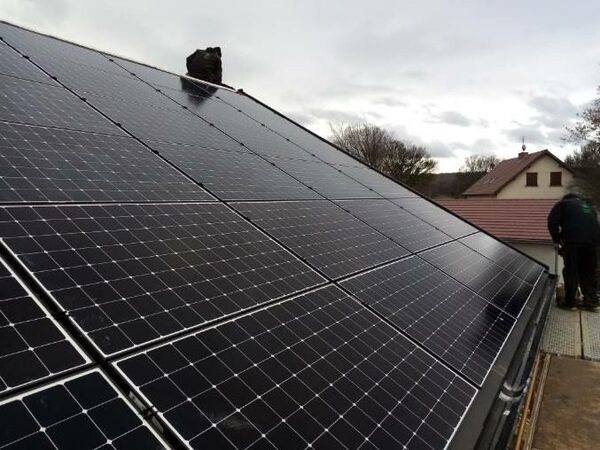
The first check is the estimate itself: whether it states its assumptions, its system size and its methodology, because an estimate without those cannot be compared with any other1. The second is the installer's certification. Solar photovoltaic systems should only be installed and certified by MCS certified contractors working to the latest published MIS3002 standards5, and the Centre for Sustainable Energy publishes a detailed guide with information about the cost of solar panel installation and how to find an MCS accredited installer18.
The third check is the savings basis. Energy Saving Trust states that savings are based on a 4m2 system and will vary from user to user, based on trial data and Microgeneration Certification Scheme methodology19. For Northern Ireland, the same source states that savings are based on a 4m2 system in Northern Ireland and will vary from user to user, based on Energy Saving Trust field trial data and MCS methodology19. A quote that presents a single savings figure without naming the system size it assumes is not comparable with either.
The fourth check is the building. EPC ratings do not always capture the true efficiency of a retrofit, and measures like PV panels or air-source heat pumps may improve an EPC score but fail to address fundamental building issues such as poor insulation or moisture risks8. A household should know whether the savings figure depends on fabric improvements that are not in the quote.
The fifth check is the paperwork trail. The site's guide to comparing installation quotes sets out what a quote must show, and the material on your MCS certificate and installation handover pack covers what should arrive after the work.
If the savings don't materialise: mis-selling complaints and your rights of redress
The first route is the installer. If the complaint is not resolved, the household can approach the MCS Administrator, who will advise how to make a complaint about the MCS installer21. That escalation path is set out in more detail in the site's guide to complaining about an installer.
The statutory route runs in parallel. Where services do not conform to the contract, the statutory remedies may include the right to require repeat performance or the right to a reduction in price22. Section 54 of the Consumer Rights Act 2015 provides that if the service does not conform to the contract, the consumer has the right to require repeat performance and the right to a price reduction22. Those remedies address the quality of the work rather than the accuracy of the savings claim.
For the savings claim itself, the relevant remedies are the rights of redress under the unfair trading rules: the right to unwind the contract, the right to a discount and the right to damages, available where an unfair commercial practice involves a misleading action or an aggressive practice4. Where the mis-selling concerned Green Deal finance, the Financial Ombudsman Service can consider a complaint if the household thinks it was mis-sold the Green Deal, for example if the provider did not make the household aware of the relevant terms23.
The distinction between the two routes matters. A badly installed system is a service quality problem with a repeat performance remedy. An exaggerated savings claim is a pre-contract problem with an unwind, discount or damages remedy. A household may have both.
MCS consumer protection changes and what they mean for householders
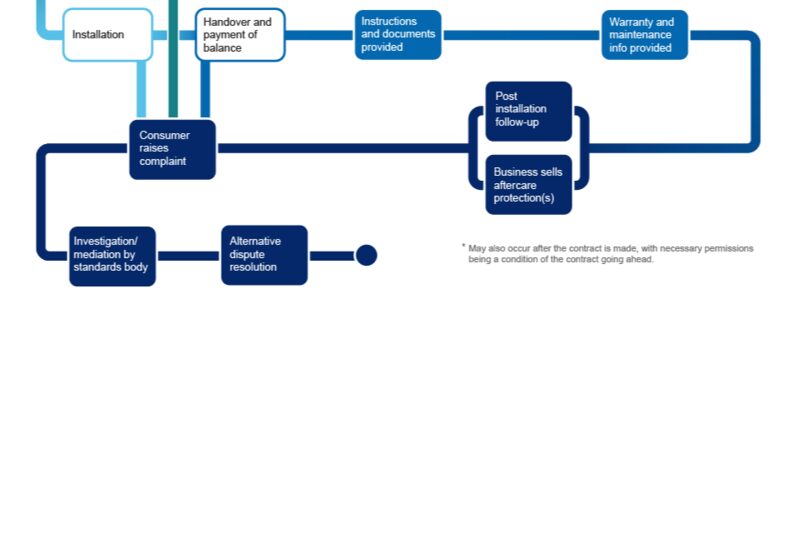
MCS has been redeveloping its consumer protection arrangements, and the changes affect what a household can expect from a certified installer. MCS certifies, quality assures and provides consumer protection for microgeneration installations and installers, covering small-scale renewable electricity technologies such as solar photovoltaic panels, biomass, wind, heat pumps and heat products10. The redeveloped scheme tightens that consumer protection role.
The transition has a deadline. The transition phase is due to end on 31 March 2027, by which date all MCS certified installers must operate under the redeveloped scheme12. A household buying in the interim may encounter installers at different stages of transition, which is a reason to check the certificate date rather than assume the scheme status is current.
Oversight is being formalised. The MCS Consumer Protection Oversight Panel will publish an annual report on their consumer protection performance12. That reporting is the mechanism by which the scheme's consumer protection claims can be tested against outcomes rather than intentions.
The wider policy context includes the Clean Heat Market Mechanism, whose revisions ahead of scheme year 2, 2026 to 2027, were set out in a government response12. For a household, the practical effect of these changes is that the paperwork trail matters more, not less: the estimate, the certificate and the monitoring data are the three documents that make a savings claim checkable.
The limits of the scheme should be stated as plainly as its benefits. MCS is an industry scheme, not a regulator, and its consumer protection performance is reported by a panel rather than enforced by a statutory body. The statutory remedies under the unfair trading rules and the Consumer Rights Act 2015 remain the household's ultimate protection, and they operate independently of any scheme membership.
Sources23 cited
- MCS 032: 2025 Solar PV & Battery: Pre-Sale Information and System Performance Estimate Standard, MCS, 2025-01-01
- Consumer protection and the unfair trading regulations, House of Commons Library, 2026-09-17
- Marketing green heating and insulation products, UK Government, 2024-07-16
- Remedies and redress: an overview of your key consumer rights, Trading Standards Wales, 2025-09
- Barcud Solar Panel Installation Scheme Specification, Sell2Wales, 2026-06-15
- MCS Microgeneration Certification, BSI, 2026-09-17
- Consumer First Panel report on the heat pump transition, UK Government, 2026-05
- Review of retrofit assessment in Scotland, Scottish Government, 2025-06-06
- The Consumer Protection from Unfair Trading Regulations 2008, Regulation 15, legislation.gov.uk, 2026-09-17
- ECO4 Flex and GBIS Flex information document, Ceredigion County Council, 2025-11
- MCS domestic retrofit battery installations 2025 to 2026, UK Government, 2026-05-28
- Clean Heat Market Mechanism revisions ahead of scheme year 2, 2026 to 2027: government response, UK Government, 2026-09-18
- Solar PV deployment, December 2014, UK Government, 2015-01-29
- Smart Export Guarantee Annual Report Year 5, Ofgem, 2025-12
- Draft licence conditions, UK Government, 2026-09-17
- Guidance for suppliers v14, Ofgem, 2021-08
- Feed-in Tariffs: Guidance for Licensed Electricity Suppliers v15.0, Ofgem, 2021-12
- How do I retrofit my home: solar panels, Oxfordshire County Council, 2026-09-17
- Could solar water heating work for you, Energy Saving Trust, 2026-05-20
- Five top tips from Which? to cut your energy bills, Climate Action Wales, 2026-03-18
- Feed-in Tariffs: dispute resolution, Ofgem, 2026-09-17
- Consumer Rights Act 2015, Part 1, Chapter 4, legislation.gov.uk, 2026-09-17
- Green Deal energy saving measures, UK Government, 2026-09-17
 MGD 003 Self-ConsumptionBuying a battery with solar panels means asking how much of your own solar you will actually use instead of sending it to the grid.
 Comparing Installation QuotesWhat should a solar or heat pump quote actually include before you pay a deposit?
 Warranties and DegradationHow long do solar panels actually last, and what do the warranties really cover?
 Insulation Savings and PaybackHow much can you really save by adding insulation, and does it depend on your home, your heating and how you use it?
 Getting Installation QuotesHow householders obtain quotes for boilers, heat pumps and solar PV, how many quotes are usually recommended, what a survey should involve, and the difference between an estimate, a quotation and a fixed price.
 Workmanship WarrantiesIf something goes wrong with your solar panels, who actually fixes it and who pays?