
In this guide
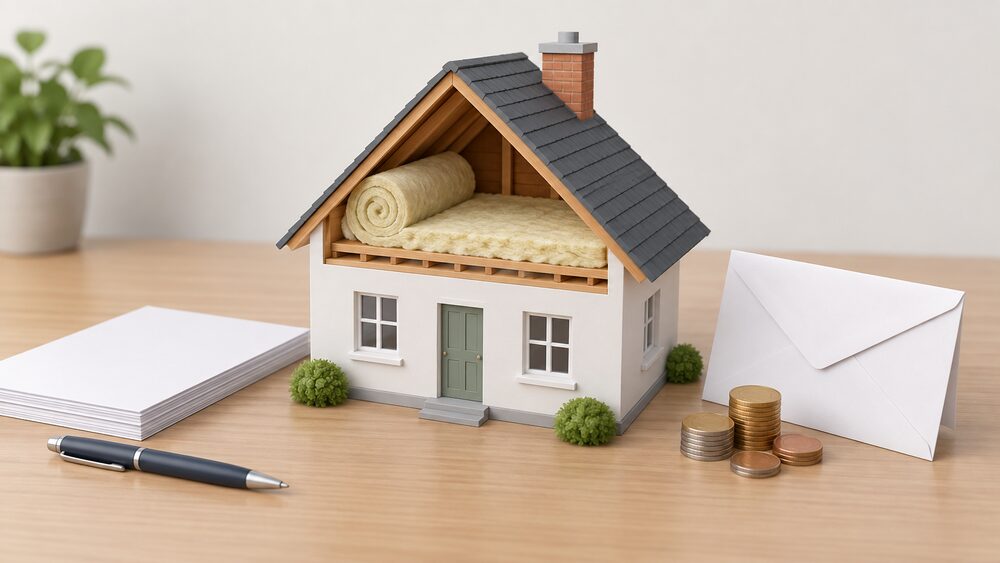
Insulation saves money by reducing the heat a home loses, so the boiler or heat pump runs for fewer hours to hold the same temperature. The published figures are modest and specific: topping up roof insulation from 120mm to at least 270mm saves around £17 a year in Great Britain and £20 a year in Northern Ireland1. Insulating a loft saves around £155 a year, and solid wall insulation around £250 a year2. Government has put the wider figure at potentially around £200 per year for insulating more homes across the country3.
Those numbers are estimates built on assumptions about the home, the fuel, the tariff and how the occupants behave. They are not a quote, and no installer can promise them. What they do show is the shape of the return: the measures that stop the most heat escaping return the most money, and the ones that top up an already insulated element return the least.
Where a home loses heat: walls and the roof
The savings figures only make sense against the heat loss they are addressing. The Energy Saving Trust estimates that an un-insulated dwelling loses a third of all its heat through the walls and a further quarter through the roof4. Between them, walls and roof account for the majority of the heat a poorly insulated home loses, which is why they dominate the published savings tables.
Installing loft and cavity wall insulation lowers the amount of heat escaping and could cut fuel bills6. That is the mechanism in one sentence: less heat leaving the building means less energy bought to replace it. The size of the saving depends on how much heat was escaping before, so a home with no loft insulation at all stands to gain more than one already topped up to 270mm.
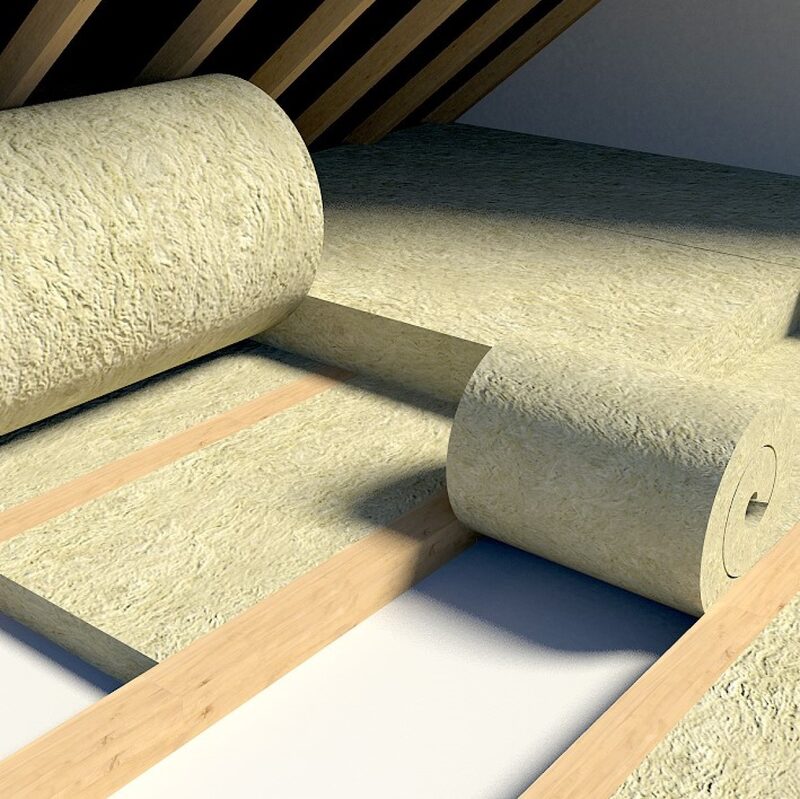
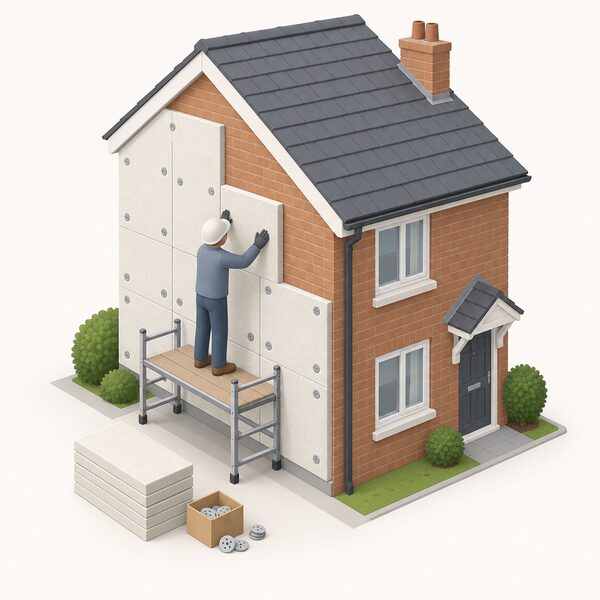
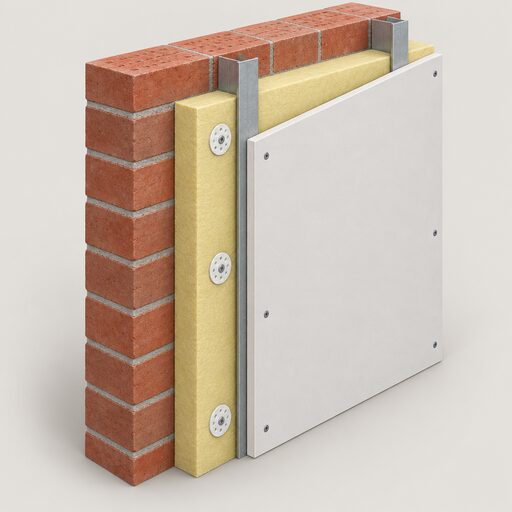
The distinction between the two elements matters for payback. A loft is usually the cheapest and easiest place to add insulation, because access is straightforward and the material is inexpensive. Walls are harder: a cavity can be filled from outside, but a solid wall needs either internal or external insulation, both of which are more disruptive and more expensive. Internal wall insulation has been modelled at a 36% saving on heat demand7, which is a measure of heat demand rather than of bills, and the two are not the same thing.
For a household, the practical reading is that the roof is the first place to look and the walls are where the larger sums sit. The pages on loft insulation and cavity wall insulation set out the detail for each.

What the savings look like on a typical bill
The published savings are annual figures in pounds, and they vary by measure and by nation. The table below sets out what the sources give.
| Measure | Annual saving | Nation | Source |
|---|---|---|---|
| Roof top-up, 120mm to 270mm | around £17 | Great Britain | 1 |
| Roof top-up, 120mm to 270mm | £20 | Northern Ireland | 1 |
| Loft insulation | around £155 | not stated | 2 |
| Solid wall insulation | around £250 | not stated | 2 |
| Insulating homes (government estimate) | around £200 | not stated | 3 |
| Cylinder jacket upgrade to 80mm | £35 | not stated | 2 |
The gap between the £17 roof top-up and the £155 loft figure is not a contradiction: they describe different starting points. Topping up an already insulated roof from 120mm to 270mm adds a relatively small amount of thermal resistance, so the marginal saving is small. Insulating a loft that had none is a much larger change, so the saving is larger. The same logic applies to walls: a solid wall with no insulation loses far more heat than a cavity that has been filled.
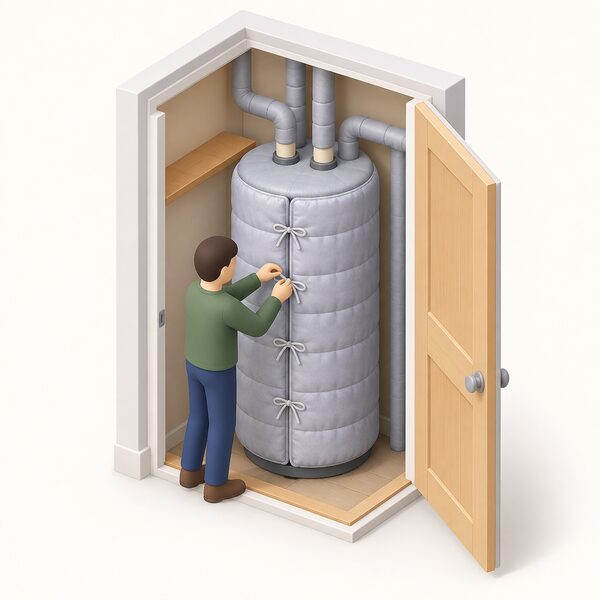
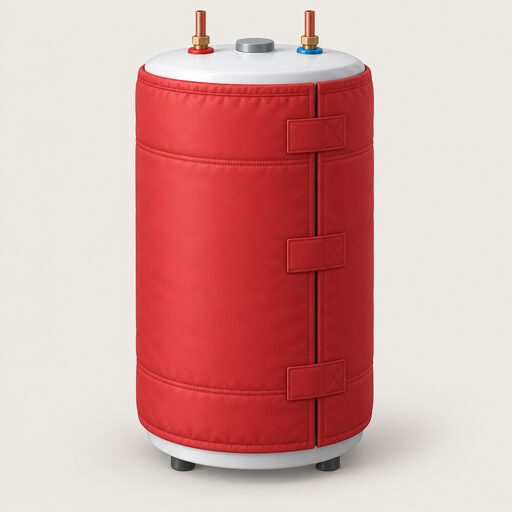
The £35 figure for upgrading a hot water cylinder jacket to a British Standard Jacket 80mm thick, from thin spray foam or a loose 25mm jacket, is a reminder that not all savings come from the building fabric2. Pipe, duct and vessel insulation improves energy efficiency by preventing uncontrolled heat loss or heat gains from that equipment8, and it is often the cheapest measure available. The page on insulating pipes, tanks and cylinders covers it.
What a household should expect in practice is that the quoted figures are modelled averages for a typical home and a typical occupancy. A larger home, a colder climate, a higher tariff or a household that heats more will see larger cash savings from the same measure. A smaller, already efficient home will see less.
Why savings depend on the price cap and your tariff
A saving in kilowatt hours only becomes a saving in pounds at whatever price the household pays for that energy. The price cap is the reference point for most of the published figures, and it is widely misunderstood.
The cap protects people on standard variable tariffs, where the unit rate can go up or down depending on the energy market9. It does not apply to fixed tariffs, business energy contracts, heat networks or heating oil9. It sets maximum prices for a unit of energy and daily standing charges, with separate caps for gas and electricity, and it does not limit annual bills, which depend on how much energy a household uses10. A separate cap is set for each of the 14 regions and applies throughout the region, with no breakdown below regional level10.
The cap is revised each quarter10. For 1 January to 31 March 2026, the electricity unit rate was 27.69p per kWh with a 54.75p daily standing charge, and the typical annual bill for a dual-fuel home with typical usage in Great Britain paying by direct debit was around £1,75811. Ofgem confirmed that the cap for 1 April to June 2026 would fall by 7%11. For 1 October to 31 December 2025, the cap was 0.9% lower when adjusted for inflation than the same period in 202412.
Network costs make up almost 30% of the total under the cap10, and government cut policy costs in April 2026 by ending a levy-funded energy efficiency scheme and shifting the largest renewable generation support scheme to general taxation10. That last change is directly relevant to insulation: a scheme that was funded through bills is no longer funded that way.
For a household on a fixed tariff, the cap is irrelevant to the bill, but the arithmetic of insulation is not. Ofgem has stated that shopping around for a fixed tariff had the potential to save some consumers more than £200 compared to the upcoming price cap13. A fixed tariff locks the unit rate; insulation reduces the units. The two work on different parts of the bill.
Insulation alongside other measures: thermostats and heating controls

Insulation is not the only lever, and the published figures for controls are worth setting beside it. Reducing the thermostat by one degree could save up to 25% of heating bills and associated carbon, according to one local authority guidance14. Northern Ireland guidance gives as much as 10 per cent on heating bills from turning the thermostat down by one degree Celsius15.
Those two figures disagree, and the documents do not resolve the difference. The 25% figure is the more generous and the 10% figure the more commonly repeated. Both are percentages of heating bills rather than pounds, so neither can be added to the insulation figures directly.
The reason controls and insulation are discussed together is that they interact. Insulation slows heat loss, so a home reaches its set temperature faster and stays there longer, which means the thermostat runs the heating for fewer hours. Controls then determine how precisely that heating is delivered. A well insulated home with poor controls can still waste energy; a well controlled home with no insulation still loses heat through the fabric.
Thermal insulation to heating pipes, ducts and hot water storage vessels improves energy efficiency by preventing uncontrolled heat loss or heat gains from that equipment8. That is a controls-adjacent measure: it keeps the heat in the system rather than in the room, and it is cheap relative to wall insulation.
The honest position is that the sources give no combined figure for insulation plus controls, and no source in this set models the interaction. What can be said is that the measures address different losses, and that the fabric measures are the ones with published annual savings in pounds.
Fabric first: why insulation is done before new heating
The order of works matters because heating systems are sized to the heat loss of the building they serve. A home that loses a third of its heat through the walls and a quarter through the roof4 needs a larger heat source than one that does not. Insulate first, and the heat source can be smaller.
Internal wall insulation has been modelled at a 36% saving on heat demand7. That is a measure of how much less heat the building needs, not of how much the bill falls, and the distinction is important: a 36% reduction in heat demand does not translate into a 36% reduction in a bill, because the bill also includes hot water, lighting, appliances and standing charges.
The Scottish Government's heat in buildings strategy sets out the direction of travel, with all buildings across all tenures to achieve good energy efficiency by 2033 and zero emissions heating by 2045, regulated for where within legal competence17. That sequencing, fabric before heat source, is the same principle at national scale.
For a household, the practical consequence is that insulation done first keeps options open. Insulation done after a heating system has been sized and installed may leave that system oversized for the reduced heat demand. The page on planning a whole-house retrofit sets out the order of works, and what insulation a heat pump needs covers the heating side.
Grants and schemes that can pay for insulation
Support varies by nation, and the schemes change. In Northern Ireland, the current scheme list gives a grant of 40% towards the cost of cavity wall insulation and loft insulation, up to £650 maximum grant per insulation measure and up to £1,000 maximum grant for cavity wall insulation involving extraction and refill, with a hot water tank jacket as a fully funded additional measure18. The same document lists Help to Insulate and Efficiency Plus with the same terms18.
Earlier versions of the same list show how quickly terms move. For 2024-25, the Keep Warm Discount Scheme gave a grant of one third towards the cost of cavity wall insulation or loft insulation, up to £500 maximum per measure, with fully funded LED light bulbs19. For 2023-24, the Housing Association Energy Saver scheme gave £200 off cavity wall or loft insulation20.
In Scotland, the Home Energy Scotland Grant and Loan Scheme helps eligible homeowners pay for energy efficiency improvements and clean heating systems21. The grant can be up to £7,500 for energy-efficiency improvements such as insulation and up to £7,500 for clean heating systems such as heat pumps5.
| Nation | Scheme | Support for insulation |
|---|---|---|
| Northern Ireland | Keep Warm Discount, Help to Insulate, Efficiency Plus | 40% of cost, up to £650 per measure, up to £1,000 for cavity extraction and refill18 |
| Scotland | Home Energy Scotland Grant and Loan | up to £7,500 for energy-efficiency improvements5 |
The pages on insulation grants in England, Scotland, Wales and Northern Ireland carry the detail for each nation.
Deadlines that make insulation urgent: EPC rules and VAT changes
Two sets of rules give insulation a deadline as well as a payback.
On VAT, a rate of 0% applies to certain energy-saving products supplied by an installer and to the cost of all work to install those products in the home in Great Britain22. Insulation on walls, floors, ceilings and lofts qualifies for a lower rate of VAT22. In Northern Ireland, installations of energy-saving materials including solar panels and heat pumps benefit from a zero rate23. The reduced-rate provisions for installation of energy-saving materials apply from 1 April 202724.
The reduced-rate VAT rules have their own history. The changes affected supplies made on or after 1 October 2019, except for supplies paid for before that date or made under a contract entered into before that date25. Under the reduced rate, an example given in official guidance is a £400 insulation material cost, where the materials are 40% of the total supply, producing 5% of £1,000, which is £50 of reduced-rate VAT on the total supply24.
On EPC rules, the UK Government has consulted on requiring private rented properties in England and Wales to achieve an EPC rating of C or above by 203026. Separately, the Scottish Government has proposed new minimum energy efficiency standards for private landlords to meet by 20285. The two nations are on different timetables.
For landlords, the relevant improvement definition under the existing regulations is a measure, or package of measures, recommended in the EPC report which can be purchased and installed for £3,500 or less including VAT26. The page on MEES for rented homes covers the rules in full.
Where to get impartial advice: Energy Saving Trust and Home Energy Scotland
Advice is free and independent of any installer. Energy Saving Trust offers advice on energy at home and a guide to green renovation to help put energy efficiency first room by room27. Home Energy Scotland can give free impartial advice on energy efficiency and renewable energy in Scotland28, and can offer free advice on improving the energy efficiency of a home27. It is a referral partner for eligibility enquiries, providing free and impartial advice funded by the Scottish Government29.
Energy Saving Trust administers Scottish Government heat and energy efficiency grant and loan schemes under a contract awarded through competitive tender, with the contract starting on 1 December 2023 and an initial term running until November 202630. The amount paid to Energy Saving Trust for administration of the Home Energy Scotland Grant and Loan scheme from December 2023 onwards was withheld under environmental information regulations covering the confidentiality of commercial or industrial information30.
"For advice on energy at home and a guide to green renovation to help you put energy efficiency first room by room visit Energy Saving Trust."
For a household, the value of these services is that they are not selling anything. An installer quoting for a measure has an interest in the size of the job; an advice service does not. The pages on finding an insulation installer and insulation scams and cold calling cover the other side of that.
What insulation means for energy independence
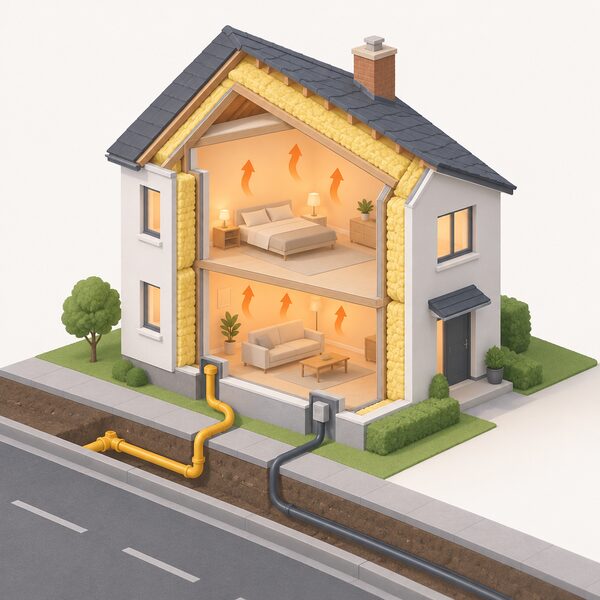
Insulation reduces the energy a household must buy, and that is the whole of its contribution to independence. It does not generate anything, does not store anything, and does not disconnect a home from the grid or from a supplier. A household that insulates still buys gas or electricity, still pays a standing charge, and still depends on the network and on whatever tariff it has signed.
What changes is the size of the dependence. A home that loses a third of its heat through the walls and a quarter through the roof4 is buying energy to replace heat it did not need to lose. Reducing that loss reduces the units purchased, which reduces exposure to unit price, to the quarterly cap revisions10, and to the standing charge only insofar as a smaller system may allow a different tariff.
The limits are worth stating plainly. Insulation savings are modelled averages, not guarantees. They depend on the starting condition of the home, the fuel used, the tariff, the occupancy and the comfort taken. The published figures range from around £17 a year for a roof top-up1 to around £250 a year for solid wall insulation2, and the government's own estimate for insulating homes is around £200 per year3. None of those figures is a promise, and none of them removes the standing charge or the grid connection.
The measures that come closest to genuine independence are the ones that generate or store, and those sit outside insulation. The page on insulation and energy independence sets the fabric measures in that wider context.
Sources30 cited
- Top energy saving ideas for your home improvement project, Energy Saving Trust, 2026-08-03
- Save energy and money, Consumer Council, 2026-09-20
- Help to save households money and deliver cleaner heat to homes, GOV.UK, 2024-11-21
- Scottish House Condition Survey 2024: key findings, Scottish Government, 2026-02
- Home Energy Scotland Grant and Loan Scheme, House of Commons Library, 2026-05-13
- Heating technologies to suit your home, nidirect, 2026-09-17
- Heat in buildings: multiple ownership, mixed use buildings, energy retrofit possibilities, Scottish Government, 2023-11-28
- Building standards technical handbook 2022: domestic, energy, Scottish Government, 2022-06-01
- Energy price cap, Ofgem, 2026-09-17
- Energy price cap explained, House of Commons Library, 2026-09-20
- Energy price cap explained, Welsh Government, 2026
- Changes to the energy price cap between 1 October and 31 December 2025, Ofgem, 2025
- Energy price cap will rise 2 percent in October, Ofgem, 2025-08-27
- Home and business grants, schemes and advice, East Herts Council, 2026-09-17
- Insulation, nidirect, 2026-09-02
- Central heating controls, nidirect, 2026-09-02
- Heat in buildings strategy: summary, Scottish Government, 2021-10
- NISEP list of schemes 2026-27, Utility Regulator, 2026-04
- NISEP list of schemes 2024-25, Utility Regulator, 2024-10
- NISEP list of schemes 2023-2024, Utility Regulator, 2023-05
- Home Energy Scotland Grant and Loan Scheme: application and claim processing times, Scottish Government, 2026-03-12
- Tax on shopping: energy-saving products, GOV.UK, 2026-09-17
- Support to generate your own electricity, nidirect, 2025-09-22
- Draft VAT guidance on changes to energy-saving materials, GOV.UK, 2026-09-17
- Draft VAT guidance on changes to energy-saving materials, GOV.UK, 2026-09-17
- Domestic private rented property minimum energy efficiency standard: landlord guidance, GOV.UK, 2017-10-01
- Home energy efficiency advice, City of Edinburgh Council, 2026-09-20
- Who to contact, Ofgem, 2026-09-17
- Home energy efficiency, Argyll and Bute Council, 2026-09-17
- FOI 202500462873, Scottish Government, 2025-07-22
 Insulation and IndependenceBetter insulation and glazing mean your home holds onto more of the heat you pay for, so you buy less gas and electricity.
 Fabric First ApproachWhy insulate before replacing the boiler or fitting a heat pump?
 Do Smart Controls Save Money?Do smart heating controls really cut your bills, and by how much?
 Solid Wall InsulationSolid walls lose far more heat than cavity walls, so what can actually be done about it?
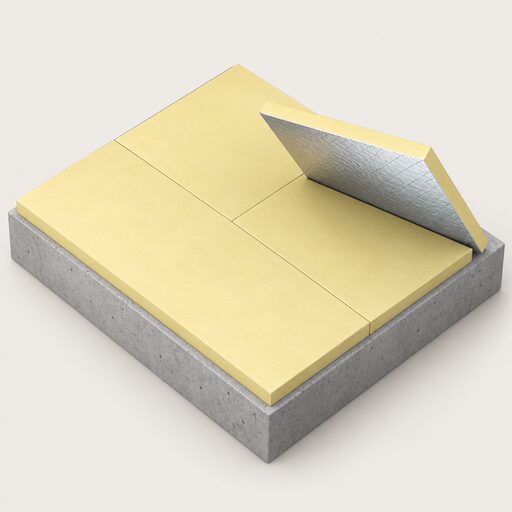 Floor InsulationHow much warmth escapes through the floor, and is it worth insulating?
 Cost of Energy IndependenceA heat pump and better insulation are the usual starting point, but what does the whole job really cost, and what help is there with the bill?