In this guide
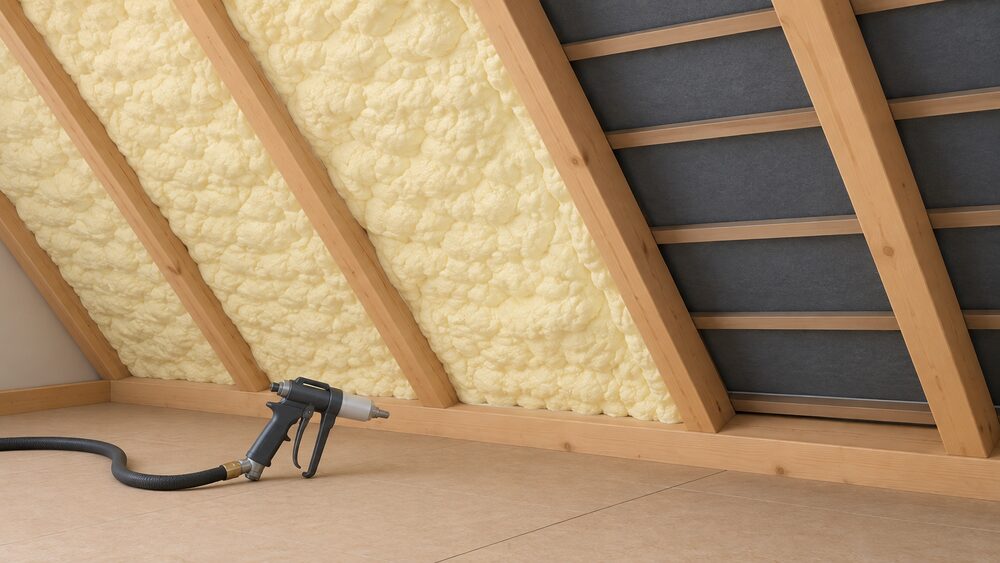
Spray foam insulation is a polyurethane foam applied with a spray gun to the inside of roofs, into walls and under floors, where it expands and sets to form a continuous insulating layer1. In UK homes it is most often sprayed onto the underside of a sloping roof in a loft, and it is also used under suspended timber floors3. An estimated 250,000 UK homes have had it installed4.
For a three bedroom semi-detached house, the National Insulation Association gives a typical cost of around £2,500 for professionally installed spray foam loft insulation, with a guide price of around £20 to £50 per square metre: the lower figure for a thin stabilisation layer, the higher for a thicker insulating layer5. Removal is costed at about £40 per square metre6, and official 2025 figures put removal of spray foam and cavity wall insulation from a typical three bedroom semi at between £2,000 and £3,2007.
The problems are well documented. Government modelling of foam applied to timber sloped roofs found the highest risk where foam is applied directly onto the roof covering, with high risk under all modelled scenarios in that case8. Citizens Advice reports that 1 in 3 people with spray foam insulation in their loft have experienced problems9. The government position is that where foam has been installed in line with the relevant standards it should not require removal or prevent a homeowner obtaining a mortgage6, but in practice lenders have been cautious and households have run into difficulty when selling10.
What spray foam is and where it goes
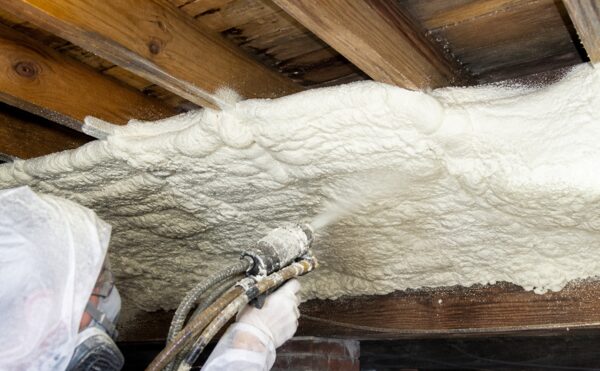
Spray foam is applied wet using a spray gun, then sets in place to form an insulating layer12. Installers mix the product on site at the property13. Both open cell and closed cell types are usually made from polyurethane and filled with bubbles of gas or air5. In retrofit jargon, PU foam means polyurethane foam, a closed cell insulation that can be sprayed14.
Three applications dominate in UK housing:
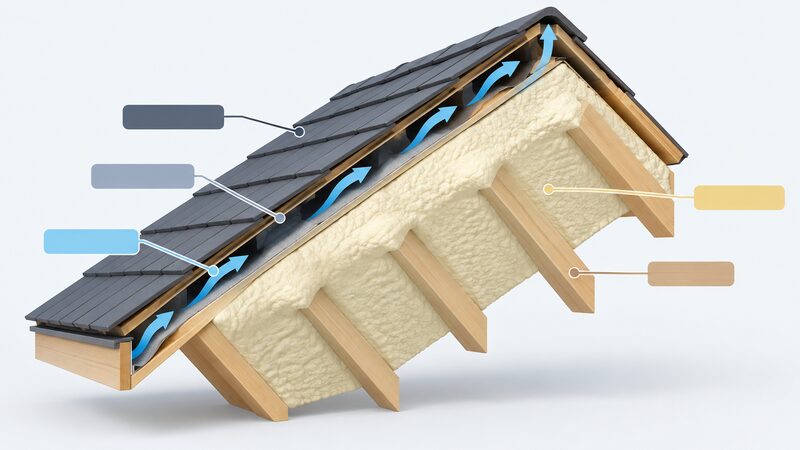
- Pitched roof slopes. Where a home has a pitched roof with an uninsulated loft, foam is sprayed onto the underside of the sloping roof as an alternative to mineral wool at joist level12. Retrofitted spray applied closed and open cell polymeric insulation to the underside of roofs of dwelling properties is the configuration that official fire testing examined15.
- Walls. Foam is sometimes sprayed into empty cavity walls, usually where standard cavity wall insulation is not considered suitable12.
- Suspended timber floors. Foam is sprayed to the underside of the floor, often using a robot to access the underfloor space12. Q-Bot's robotic spray foam installation is priced from £3,250 for a floor up to 25m², then £126.50 per additional square metre16; Which? reports costs starting at around £3,000 to £4,500 for a typically sized two or three bedroom terrace17.
Underfloor spray foam is not the same proposition as loft spray foam. Some loft installations leave roof timbers on the cold side of the insulation, allowing condensation, damp and damage where ventilation is poor or blocked18. The appeal of the material is that it reaches hard places: the nozzle gets into small gaps and the foam expands to fill the space. That is also why it is hard to undo.
Open cell or closed cell: the two types compared
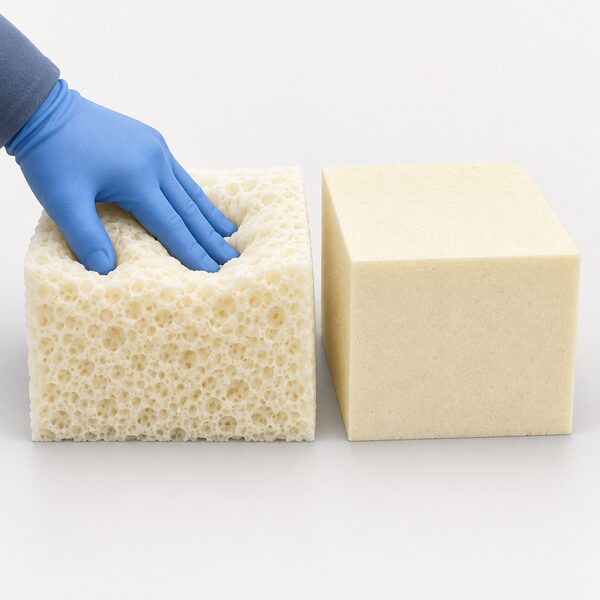
Spray foam comes in two forms, and the difference matters more for moisture than for warmth6.
| Property | Open cell | Closed cell |
|---|---|---|
| Texture once set | Remains soft6; can be compressed by hand5 | Rigid once set6 |
| Insulating performance | Less dense, so does not provide the same level of insulation6; a thicker layer is needed for the same effect12 | The better insulator6; one of the most effective insulation materials commonly used in homes12 |
| Vapour behaviour | More vapour permeable, generally a good thing12; allows moisture through so less chance of condensation building up5 | Not vapour permeable; moisture cannot move through it, which can cause trapped moisture and rot3 |
| Condensation risk | Not as prone to condensation as closed cell6 | More likely to cause condensation damp than open cell3 |
| Other | Lighter and more flexible12; better for sound insulation but more fragile3 | Generally pricier than open cell5 |
Open cell foam is often used as sound insulation because it blocks and reduces airflow5. Closed cell foam acts as a vapour barrier that can reduce ventilation6, and its rigid nature creates a barrier that traps air and moisture, which can lead to condensation and decay in timber framed roofs19.
Neither type is inherently safe or unsafe. Official modelling found high risk in London where open cell insulation is applied with no air and vapour control layer present, reducing to low risk when a closed cell insulant and/or an air and vapour control layer is used8. The same modelling found high levels of risk in Newcastle without that layer, reduced to medium or low by its presence8. Performance therefore depends on the whole build-up, not the choice of foam alone. As a rough measure of thickness, 100mm of spray foam is equivalent to around 170mm of mineral wool loft insulation5.
What it costs, and how that compares
The headline figure from the National Insulation Association is around £2,500 for professionally installed spray foam loft insulation in a three bedroom semi-detached property, within a guide range of £20 to £50 per square metre5. Which? reporting in February 2024 gave a typical cost of between £600 and £1,100, and recorded a Care and Repair Cymru older client who paid £3,500 for spray foam loft insulation20. Those figures are not reconcilable into a single number: the spread reflects roof size, the thickness applied and, in mis-selling cases, what the householder was persuaded to pay. Spray foam is much more expensive to install than standard mineral wool laid on the loft floor3, and mineral wool may be cheaper and better at insulating1.
Removal is the cost that catches people out. Guide figures are about £40 per square metre6, with the Centre for Sustainable Energy describing removal as very expensive, in the thousands of pounds for most properties3. Official 2025 analysis puts removal of spray foam and cavity wall insulation at between £2,000 and £3,200 for a typical three bedroom semi, against around £700 for removing rockwool or fibreglass loft insulation7.
The risks: condensation, timber decay and hidden defects
The Building Safety Regulator published modelling on 28 March 2024 investigating the level of moisture and timber degradation risk where a sprayed foam insulant is applied to typical domestic timber roofs; the publication applies to England8. Its central findings were that the highest risk assessed is when spray foam is applied directly onto the roof covering, leading to high risks under all modelled scenarios, and that higher levels of risk arise in some scenarios when foam is applied to high resistance underlay8. A related exchange of letters on spray foam insulation was published in May 202421.
Independent advice points the same way. The Centre for Sustainable Energy cites a Health and Safety Executive study suggesting spray foam causes timber decay in more than a quarter of all cases when applied directly to the underside of roof tiles3. The Energy Saving Trust explains the mechanism: spraying foam directly to the underside of the roof partially seals the timber, so leaked rainwater can cause rot and condensation can cause similar problems, with lower risk from open cell foam12. Where a closed cell layer is used, ventilation of the room or loft has to be maintained to avoid a build-up of condensation5.
Three practical consequences follow for the household:
- Defects get hidden. Foam can cover up roof problems1, and a layer of spray foam makes a survey of the roof impossible, which may mean solar panels cannot be installed later3.
- The roof has to be sound first. No insulation system should be applied to a leaking roof; the roof must be fixed first12, and missing or slipped tiles must be fixed before applying foam22.
- Loft conversions are a poor fit. Foam is not recommended in loft conversions because it carries a higher risk of damaging the roof structure23.
There are safety points beyond moisture. Harmful fumes are produced during installation and in the days the material takes to set, and if poorly installed dangerous chemicals can continue to leach out for a long time afterwards3. Foam can be harmful to handle, particularly if it is not cured properly24. Some types can cause damp problems or be a fire risk if not properly installed, or where cheaper products are used25. On fire performance specifically, official testing concluded that such sprayed configurations can satisfy the highest demands for roof covering classification as currently included in Approved Document B guidance15. Related issues are covered under insulation safety and fire and condensation, damp and mould after insulation.
Spray foam and mortgages: why lenders ask questions
The official line is now reasonably clear. Where spray foam insulation has been installed in line with the relevant standards, it should not require removal or prevent homeowners obtaining a mortgage6. In a Commons debate on 17 June 2026 a range of major lenders, including Nationwide, Lloyds, Santander and Barclays, were reported to have confirmed that they will not take a blanket approach to houses with spray foam10.
That is a change of tone rather than a clean slate. The Federation of Master Builders states that mortgage lenders are wary of spray foam insulation and often refuse to lend to buyers where it has been installed26. RICS noted in 2023 that concern within specific sectors of the lending market, such as equity release mortgages, was by then having a wider impact on lenders27. Citizens Advice found that some affected homeowners are unable to sell or remortgage as lenders become increasingly wary9, and the same debate acknowledged that many households who had spray foam installed have encountered problems when selling their home10.
The underlying reason is assessment, not ideology: lenders and valuers have struggled with the difficulty of assessing the structural integrity of insulated lofts19, which is a direct consequence of foam making the roof unsurveyable3. The Energy Saving Trust judges that mortgage issues were possibly true for a while, but that industry progress in determining whether a house is at risk means there should be less of an issue where foam was installed correctly12. The Insulation Manufacturers Association published a code of practice for the installation of spray foam insulation in roofs in May 20236, which is part of that industry framework.
Selling a home with spray foam: what paperwork carries weight

The presence of spray foam can make homes harder to sell, particularly if a survey finds the insulation was poorly installed3. The defence is documentation. Citizens Advice sets out four items a household should hold2:
- a report from a survey carried out before any work started
- a product certificate showing what type of spray foam was used
- a guarantee from the trader who carried out the work
- a guarantee from the manufacturer of the insulation
A proper pre-installation survey should include a U-value calculation showing how well insulated the home is, an assessment of the risk of condensation occurring, and identification of any problems and the measures needed to prevent them5. RICS has observed that this form of insulation, widely used for several decades, can all too often be marketed as an easy fix when it is a significant alteration needing careful consideration27. Where removal is being pressed by a buyer or a valuer, the sensible order is assessment first: check with a building surveyor before paying to have spray foam removed, or use a specialist spray foam assessor from the Property Care Association1. More detail sits on the spray foam paperwork page.
Removal is difficult, costly and sometimes effectively permanent
Spray foam is considered a permanent installation, and removing it at a later stage might also require replacing the structure it was applied to12. Once applied it can be a very difficult and costly job to remove28. Timbers coated in foam are more difficult to replace, as are tiles or slates where there is no roofing felt or other layer between foam and tiles12. Under floors, foam is difficult to remove from joists, wires and pipework, so it presents a problem when maintenance work is needed in that area in future29.
The reasons householders seek removal are damp and condensation, damage to the property, or the need to make a repair such as a roof repair1. Removal is not automatic: the government position that compliant installations should not require removal6 means the assessment step matters financially as well as technically.
Where spray foam does not belong
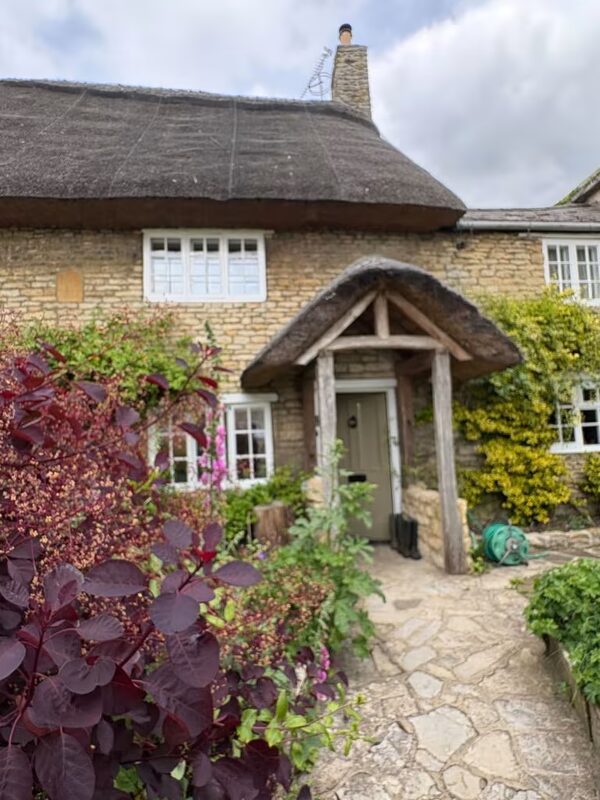
Spray foam should not be used in listed buildings or houses with thatched roofs5. Listed building consent must be obtained before installing it anywhere in a listed property, and consent is unlikely to be granted3. Older homes generally are a poor fit: spray foam can be effective but is not suitable for all homes, especially older ones, and independent advice should be taken before considering it30. See insulating and glazing a listed building and retrofitting traditional and pre-1919 buildings.
There are narrower cases where foam is proposed on merit: some types are waterproof but also breathable, which has been described as suiting homes in flood-prone areas5, and foam may occasionally be more suited to a property than polystyrene beads in a cavity wall, where the installer should advise12. The Centre for Sustainable Energy's November 2025 review concluded that in almost all cases installing spray foam carries considerable risks and other forms of insulation should be considered first3. Which? notes that there are controversies around spray foam and that badly installed foam can be very damaging to a home22. Alternatives are compared on the insulation materials page and in spray foam vs mineral wool for lofts.
Installation, certification and avoiding mis-selling
Spray foam should always be installed by a professional, installers must be trained and assessed by the BBA, and the product should have a BBA certificate or equivalent5. The BBA's own position is that installation of such materials is a technically complicated area requiring the use of suitably experienced construction professionals31. Spray foam can only be installed by a professional who mixes the product at the property13, and the installation must conform with the manufacturer's requirements, building regulations, and health and safety rules20.
Although spray foams are mainly professionally installed, they are also available as a DIY measure22. Because of the safety issues, the National Insulation Association strongly warns against DIY spray foam installation5.
Before any work, independent advice from a buildings surveyor is advised, or at least three quotes from different home improvement traders if surveyor advice costs too much1. The Energy Saving Trust suggests getting multiple quotes from accredited installers such as TrustMark-registered companies, looking for genuine customer reviews, and keeping the property well maintained12. Related guidance sits on finding an insulation installer and insulation scams and cold calling.

What it means for energy independence
Insulation is the one measure that reduces a household's demand for bought energy permanently, without a supplier, a tariff or an app. Spray foam delivers that in physical terms, and 100mm of it is equivalent to around 170mm of mineral wool5. What it can also do is transfer dependence elsewhere: onto a manufacturer's guarantee and a trader's guarantee2, onto a lender's willingness to look past a valuer's caveat5, onto a specialist assessor if damp appears1, and onto a removal contractor charging around £40 per square metre if the roof has to be opened up6. A material that cannot be surveyed through also forecloses options, including solar panels3.
The evidence base is mixed rather than uniformly negative. Official modelling identifies specific configurations that are high risk and specific ones that are low risk8, and the government maintains that compliant installations should not trigger removal or block a mortgage6. The practical question for a household is whether its own roof, its ventilation and its paperwork can be shown to sit on the low risk side of that line.
Sources31 cited
- Make sure your home is energy efficient, Citizens Advice, 2026-09-19
- Make sure your home is energy efficient (Wales), Citizens Advice, 2026-09-17
- Spray foam insulation advice, Centre for Sustainable Energy, 2025-11
- Common spray foam insulation problems, Snugg, 2024-07-03
- Spray foam insulation review, Which?, 2026-05-26
- Spray foam insulation and mortgages, House of Commons Library, 2026-09-20
- EINAS 2025: heat and buildings, UK Government, 2025-06
- Moisture risk of spray foam insulation applied to timber sloped roofs, GOV.UK, 2024-03-28
- A Foamidable Challenge: mis-selling of spray foam, Citizens Advice, 2025-06-17
- Energy Market Consumer Protection debate, Hansard, 2026-06-17
- Grants and loans, Home Energy Scotland, 2026-09-17
- Spray foam insulation, Energy Saving Trust, 2024-12-05
- Roof insulation guide, OVO Energy, 2021-11-11
- Retrofit jargon buster, Retrofit Academy, 2019-09-06
- Fire safety: spray foam roof insulation testing summary, GOV.UK, 2025-12-22
- Compare underfloor insulation methods, Q-Bot, 2026-08-27
- Floor insulation, Which?, 2026-05-26
- Underfloor spray foam compared with loft spray foam, Q-Bot, 2026-05-11
- Postleigh roof retrofit case study, SuperFOIL, 2026-09-20
- Beware of scammers peddling dodgy spray foam loft insulation, Which?, 2024-02-14
- Exchange of letters on spray foam insulation, GOV.UK, 2024-05-08
- Roof insulation, Which?, 2026-05-05
- Loft conversions, insulation and ventilation, Centre for Sustainable Energy, 2026-08
- Is insulation dangerous?, SuperFOIL, 2025-05-01
- Scam alert: loft insulation cold calls, Which?, 2024-10-16
- House insulation: the ultimate guide, Federation of Master Builders, 2026-09-20
- RICS releases new spray foam consumer guide, RICS, 2023-03-03
- Everything you need to know about loft insulation, Plymouth Energy Community, 2026-09-20
- Park homes advice, Centre for Sustainable Energy, 2026-07
- Wrap your home in insulation, Low Carbon Hub, 2025-11-27
- The BBA's position on spray foam insulation, British Board of Agrément, 2023-06-30
 Selling a Home With Energy KitCovers the paperwork a sale requires when a home has solar panels, a heat pump, insulation or a leased roof, and how warranties, export payments and guarantees transfer.
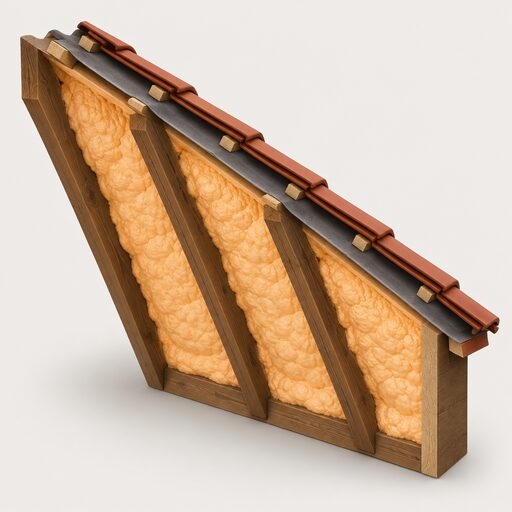 Insulation Scams and Cold CallsHow funded insulation mis-selling works, from the cold call and the fake 'illegal insulation' claim to spray foam removal bills, plus the TrustMark check, the guarantee position, and where to report a scam.
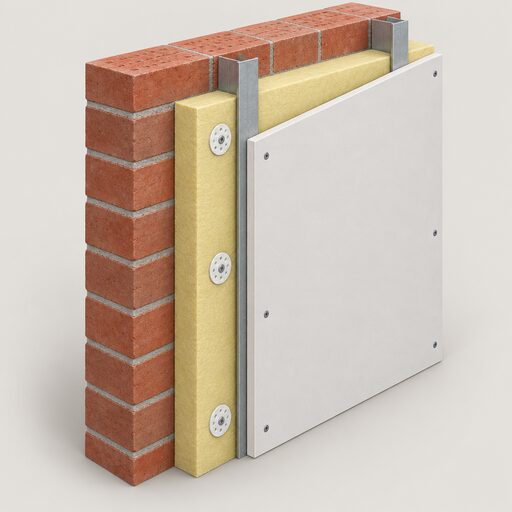 Solid Wall InsulationSolid walls lose far more heat than cavity walls, so what can actually be done about it?
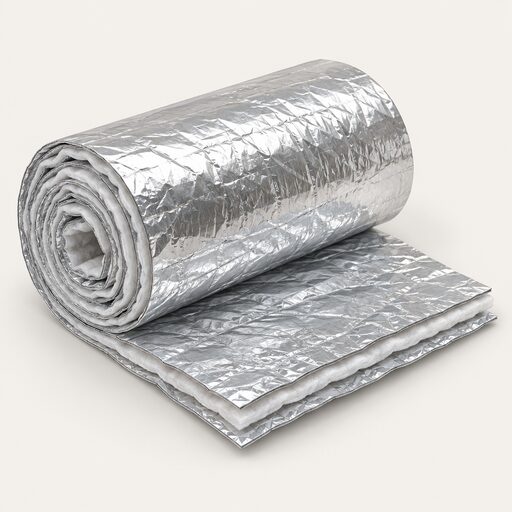 Multifoil InsulationDoes thin foil insulation really keep a home warm, and how does it compare with thick rolls of wool or rigid boards?
 Draught-Proofing a HomeCovers sealing around windows, doors, floorboards, loft hatches, letterboxes and chimneys, and the products used for each.
 Floor InsulationHow much warmth escapes through the floor, and is it worth insulating?