
In this answer
Short answer
Open cell spray foam is the more vapour permeable of the two spray foam types, and that permeability is the reason it is generally treated as the lower risk option on a timber sloped roof. It allows moisture through, so there is less chance of condensation building up, and official guidance states it is not as prone to condensation as closed cell spray foam1. It is also lighter and more flexible than closed cell foam, and remains soft after setting3.
That is not the same as low risk in every build-up. Official modelling of spray foam applied to timber sloped roofs in dwellings found high moisture and timber degradation risk under all modelled scenarios where foam was applied directly onto the roof covering, and high risks in London when open cell insulation is applied with no air and vapour control layer present1. The foam type matters, but so does what sits behind it.
The practical answer for a household is therefore conditional. Open cell foam on a timber sloped roof is rated low risk where the build-up manages moisture, and high risk where it does not. The rest of this page sets out what drives that difference, where the residual risk comes from, and how it interacts with surveys, lending and energy performance certificates.
The moisture risk in plain terms: what happens when foam meets timber
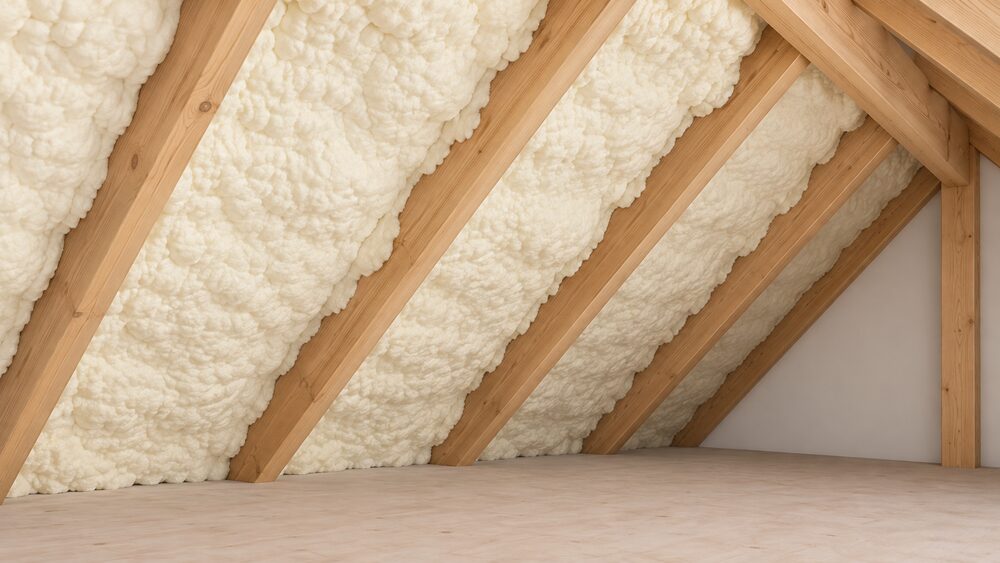
The official modelling behind this question investigated the level of moisture and timber degradation risk which may be encountered when a sprayed foam insulant is applied to typical domestic timber roofs, and it applies to England1. The mechanism is straightforward. Spraying foam directly to the underside of the roof partially seals the timber. If rainwater from a leak collects there, it can cause rot, and condensation can cause similar problems, with lower risk from open cell foam3.
The risk is not uniform across a roof or across the country. The highest risk assessed is when spray foam insulation is applied directly onto the roof covering, and that configuration leads to high risks under all modelled scenarios1. The modelling also identified higher levels of risk in some scenarios when a sprayed foam is applied to high resistance underlay1. High levels of risk were identified in Newcastle as well as London1.
Independent guidance puts a figure on the decay outcome. A study by the Health and Safety Executive suggests spray foam insulation causes timber decay in more than a quarter of all cases when applied directly to the underside of roof tiles5. That figure sits alongside the modelling rather than contradicting it: both point at direct application to the roof covering as the configuration that carries the risk.
For a household, the point of independence here is that the roof structure is the one part of the thermal envelope that is expensive and disruptive to repair. Foam that traps moisture against timber converts a cheap future repair into a structural one, and it does so invisibly. The moisture question is therefore not a technicality about foam chemistry; it is the difference between an insulation measure that can be reversed and one that compromises the building.
Open cell versus closed cell: why the foam type changes the risk
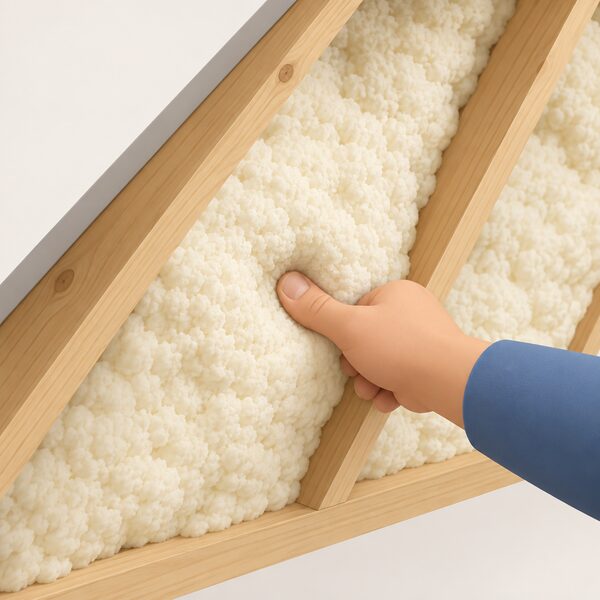
Spray foam insulation can come in two forms, open cell and closed cell, and the difference in behaviour on a timber roof follows from their physical structure4. Open cell foam remains soft after setting4. It is less dense once set, compressible by hand, so a thicker layer is needed to get the same insulation effect2. It is more vapour permeable, more flexible and better for sound insulation, but more fragile than closed cell foam5. It is often used as sound insulation because it blocks and reduces airflow2.
Closed cell foam behaves in the opposite way on almost every count. It sets into a rigid solid, which can help support the structure of a property2. It is a better insulator than open cell spray foam, but it is also a vapour barrier that can reduce ventilation4. Independent guidance states plainly that closed cell foam is more likely to cause condensation damp than open cell foam5. A maker case study describes the same mechanism from the other direction, noting that its rigid nature creates a barrier that traps air and moisture, leading to condensation and potential decay in timber-framed roofs6.
The trade-off is therefore not simply better versus worse. Closed cell foam buys thermal performance and structural rigidity at the cost of vapour closure, which is precisely the property that makes a timber roof vulnerable if moisture is present and cannot escape. Open cell foam buys vapour openness at the cost of thermal performance per millimetre, which is why it needs a thicker layer. Closed cell spray foam insulation is generally pricier than open cell2.
| Property | Open cell | Closed cell |
|---|---|---|
| Set form | Remains soft after setting4 | Sets into a rigid solid2 |
| Density | Less dense, compressible by hand2 | Rigid, can help support structure2 |
| Vapour behaviour | More vapour permeable5 | A vapour barrier that can reduce ventilation4 |
| Insulation performance | Less effective, thicker layer needed3 | A better insulator4 |
| Condensation tendency | Not as prone to condensation4 | More likely to cause condensation damp5 |
| Relative price | Lower | Generally pricier2 |
Why open cell is rated low risk on timber sloped roofs
The rating comes from the modelling rather than from the foam alone. In London, high risks were determined when open cell insulation is applied with no air and vapour control layer present, reducing to low risks when a closed cell insulant and, or, an AVCL is used1. In Newcastle, high levels of risk were identified, which were reduced to a medium or low risk by the presence of an AVCL1.
Read together, those results show that the AVCL, not the cell structure on its own, is doing much of the work in the modelled outcomes. Open cell foam contributes because it is vapour permeable and not as prone to condensation as closed cell spray foam4, and because it allows moisture through, so there is less chance of condensation building up2. But the modelled low-risk outcome in London required either a closed cell insulant or an AVCL, and the Newcastle reduction required an AVCL1.
That has a direct consequence for specification. Where a vapour permeable airtightness layer is being installed elsewhere in the building fabric, the same principle applies: when insulating a suspended timber floor, a vapour permeable airtightness layer should also be installed7. The logic of managing moisture movement rather than blocking it runs through the guidance.
"This type of spray foam is the more vapour permeable, which is generally a good thing."
The independence question follows from this. A roof insulated with open cell foam plus a correctly detailed AVCL is a managed build-up; the household depends on the installer having got the layer right, and on nobody later puncturing it. A roof insulated with open cell foam and no AVCL is the configuration the modelling rated high risk in London1. The foam type alone does not settle it.
Where the risk still comes from: leaks, condensation and partial sealing
Three routes keep the risk alive even where open cell foam is used.
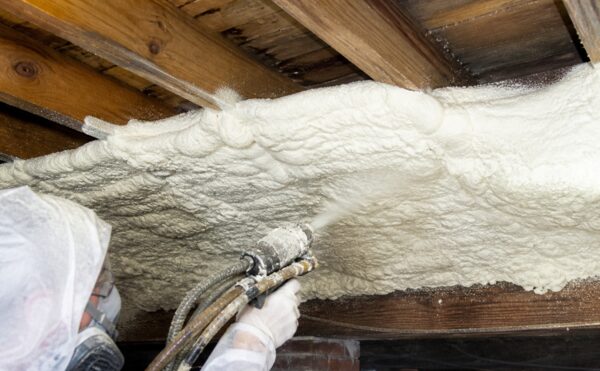
The first is a leak. Because foam partially seals the timber, leaked rainwater can collect rather than drain or evaporate, and condensation can cause similar problems3. A roof that would previously have shown a damp patch and dried out can instead hold moisture against the structure.
The second is ventilation and the position of the timbers. Some loft spray foam installations leave roof timbers on the cold side of the insulation, allowing condensation, damp and damage if ventilation is poor or blocked8. Insulating at ceiling level results in a colder attic space above, meaning an increased risk of condensation and pipe freezing9. Where closed cell foam is used, it is also a barrier to moisture, so the room or loft needs to be well ventilated to avoid the build-up of condensation2.
The third is partial sealing itself. The same property that makes foam effective at blocking airflow makes the roof harder to inspect and harder to dry.
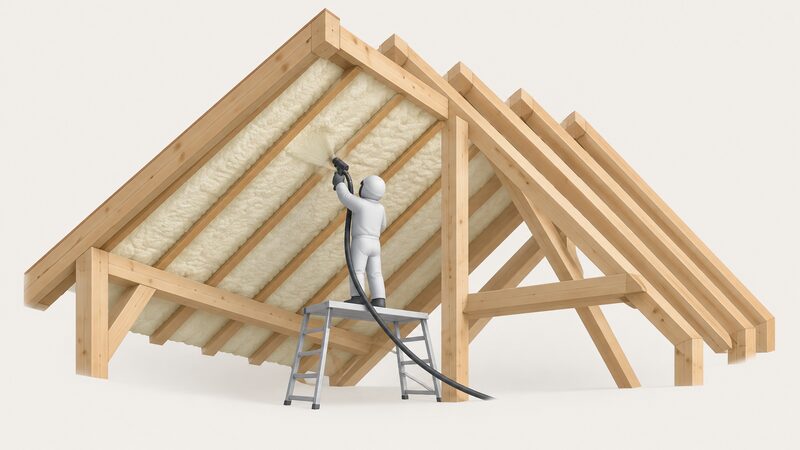
There are also non-moisture risks attached to the material. Harmful fumes are produced during the installation of spray foam insulation and in the days it takes the material to set, and if poorly installed, dangerous chemicals can continue to leach out for a long time afterwards5. Spray foam can only be installed by a professional, who mixes the product at the home10. Official work has also examined fire performance: the introduction of a semi-permanent fire load increases the likelihood of fire spread across a boundary if the roof covering is penetrated11.
What this means for mortgages, surveys and EPC ratings
This is where the moisture question becomes a property question. Independent guidance reports that mortgage lenders are wary of spray foam insulation, often refusing to lend to buyers if the property has spray foam insulation installed12. A layer of spray foam will make a survey of the roof impossible, which may mean solar panels cannot be installed5. The issue has reached Parliament: many households who had spray foam installed have found they have encountered problems when selling their home13.
The official position is more measured. Where spray foam insulation has been installed in line with the relevant standards, it should not require removal or prevent homeowners obtaining a mortgage4. In May 2023, the Insulation Manufacturers Association published a code of practice for the installation of spray foam insulation in roofs4. A range of major lenders are already on side and have confirmed that they will not take a blanket approach to houses with spray foam13. Independent guidance notes that mortgage issues were possibly true for a while, but industry progress in determining whether a house is at risk means there should be less of an issue where spray foam was installed correctly3.
Documentation is what carries that distinction into a transaction. The paperwork to hold includes a report from a survey done before any work started, a product certificate showing what type of spray foam was used, and guarantees from both the trader who carried out the work and the manufacturer of the insulation14. Independent guidance recommends getting independent advice from a buildings surveyor before installation, or at least three quotes from different traders if surveyor advice costs too much15. Before paying for removal, check with a building surveyor, or use a specialist spray foam assessor from the Property Care Association15.
Two further constraints matter. Spray foam should not be used in listed buildings or houses with thatched roofs2. It is not recommended in loft conversions because it has a higher risk of damaging the structure of the roof16. And funding is not available for spray foam insulation, so it is not a route to a grant-funded upgrade17.
On energy performance, the certificate records the fabric as installed, and a roof that cannot be surveyed is a roof whose condition cannot be confirmed at the point of sale. The wider direction of travel in the rented sector, where minimum standards are tightening, makes that documentation more rather than less important over time. For a household weighing independence, the honest summary is that open cell foam on a timber sloped roof reduces reliance on heating fuel only if the moisture build-up is properly managed; where it is not, the household trades a small ongoing energy dependence for a large contingent repair liability, and for a property that some lenders will not finance1.
Sources17 cited
- Moisture risk of spray foam insulation applied to timber sloped roofs, GOV.UK, 2024-03-28
- Spray foam insulation, Which?, 2026-05-26
- Spray foam insulation, Energy Saving Trust, 2024-12-05
- Spray foam insulation and mortgages, House of Commons Library, 2026-09-20
- Spray foam insulation, Centre for Sustainable Energy, 2025-11
- Postleigh case study, SuperFOIL, 2026-09-20
- Floor insulation, Centre for Sustainable Energy, 2025-08
- Is underfloor spray foam the same as loft insulation?, Q-Bot, 2026-05-11
- Guide to the conversion of traditional buildings, Scottish Government, 2026-08-10
- Roof insulation, OVO Energy, 2021-11-11
- Fire safety: roof insulation fire testing summary and recommendations, GOV.UK, 2025-12-22
- House insulation: the ultimate guide, Federation of Master Builders, 2026-09-20
- Energy Market Consumer Protection, Hansard, 2026-06-17
- Make sure your home is energy efficient, Citizens Advice Wales, 2026-09-17
- Make sure your home is energy efficient, Citizens Advice, 2026-09-19
- Loft conversions: insulation and ventilation, Centre for Sustainable Energy, 2026-08
- Funding: grants and loans, Home Energy Scotland, 2026-09-17
 Spray Foam InsulationOpen and closed cell spray foam on roof slopes and under floors: what it costs, the moisture and timber decay risks identified in official modelling, why lenders and surveyors ask questions, what paperwork exists and what removal involves.
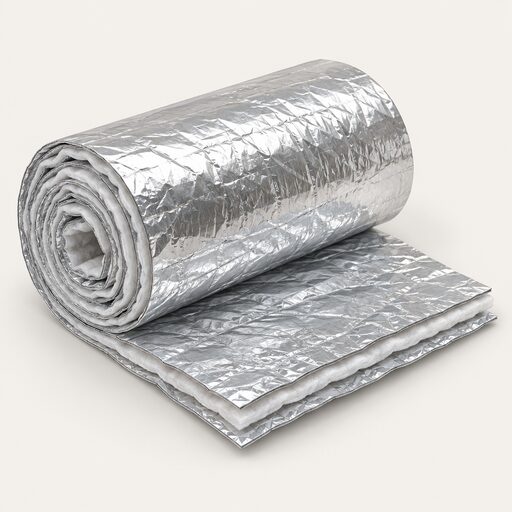 Multifoil InsulationDoes thin foil insulation really keep a home warm, and how does it compare with thick rolls of wool or rigid boards?
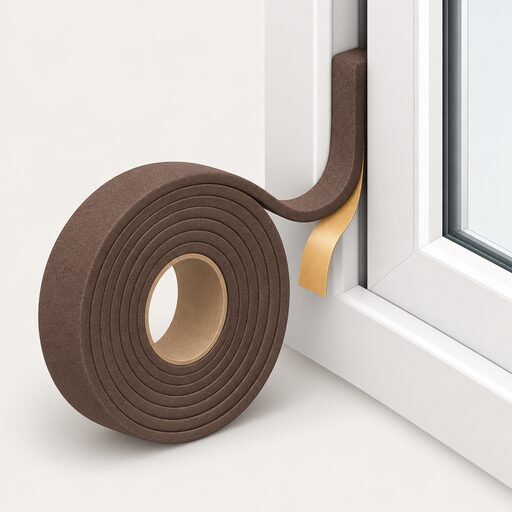 Draught-Proofing a HomeCovers sealing around windows, doors, floorboards, loft hatches, letterboxes and chimneys, and the products used for each.
 Retrofitting Pre-1919 BuildingsOlder homes with solid walls need different insulation from modern houses, and getting it wrong can trap damp inside.
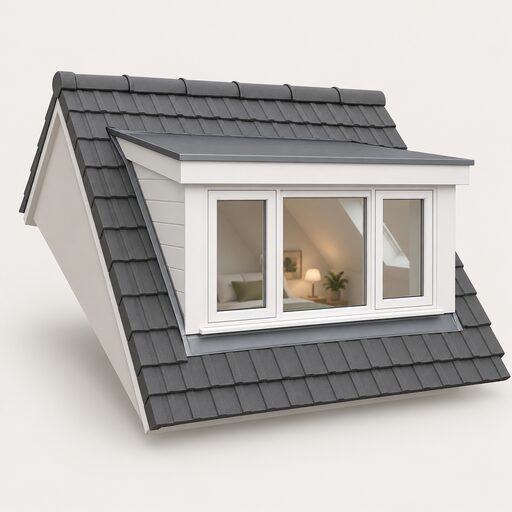 Room-in-Roof InsulationTurning a loft into a room changes how the roof keeps heat in, so the insulation has to work with the ventilation rather than being squeezed in afterwards.
 Solar Mounting SystemsWill your roof take the extra weight of solar panels, and will it still keep the rain out afterwards?