
In this answer
Short answer
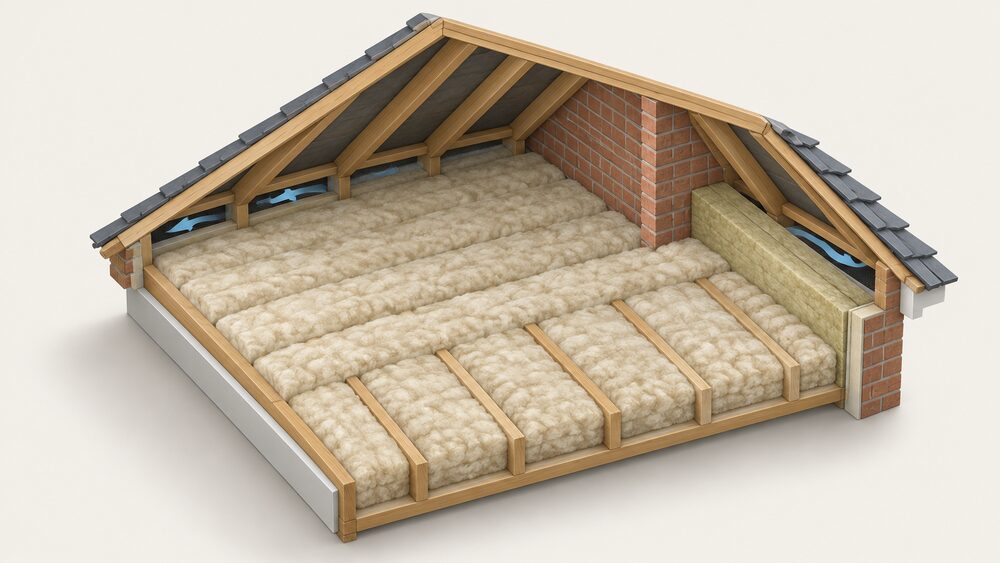
Yes. Sheep's wool insulation can be used in older homes, and breathability is the reason it is specified for them. The material is vapour-open: it can absorb and release moisture in the air without losing its thermal qualities, so it does not trap water inside a solid wall or a traditional roof the way a sealed plastic foam can1. Independent guidance for older, traditional properties recommends vapour open insulation materials such as sheep's wool and wood fibre boards for timber floors2, and the same logic applies wherever a pre-1919 building has to manage moisture rather than exclude it.
The limits are just as clear. Wool is intended for internal environments and should not be used where permanent moisture build-up is expected3. It is not a cavity fill, and cavity wall insulation of any kind should not be installed where there are structural issues, damp, dirty cavities or exposed driving-rain locations4. Fire performance is the other constraint: wool is treated with borax rather than being inherently non-combustible, so mineral wool remains the material of choice where an A1 or A2 Euroclass rating is required5.
Why breathability matters in solid-walled and traditional buildings
A traditional building has no cavity to drain and no damp-proof course in the modern sense. Its walls take in moisture from driving rain, rising damp and condensation, and they have to let it back out again by evaporation. Official guidance is explicit that the fabric of a traditional building needs to "breathe", so that moisture within walls can be released through evaporation7. Independent retrofit guidance puts it more bluntly: in an older or solid-wall home, breathable materials and steady ventilation are essential8.
This is where the choice of insulation stops being a matter of thermal performance alone. The breathability of insulation materials is particularly important in older buildings with solid walls9, because a material that seals the wall from the inside traps moisture against timber and masonry. Wool's highly breathable properties allow moisture to move safely through the fabric of the building, reducing the risk of condensation, damp or mould10. The same principle governs the finishes: in older homes, breathable materials such as lime plaster let walls dry naturally8.
There is a summer benefit too. Researchers from Leeds Sustainability Institute found fabric insulation of walls and roofs to be one of the most effective ways to retrofit an older, solid walled home to prevent overheating in summer and prevent heat loss in winter11. For a household, the independence argument is straightforward: a breathable fabric retrofit reduces reliance on heating and on mechanical cooling, and it does so without creating the damp problems that force a household back onto a dehumidifier or an extractor running continuously.
Where it cannot be used: cavity walls and other limits
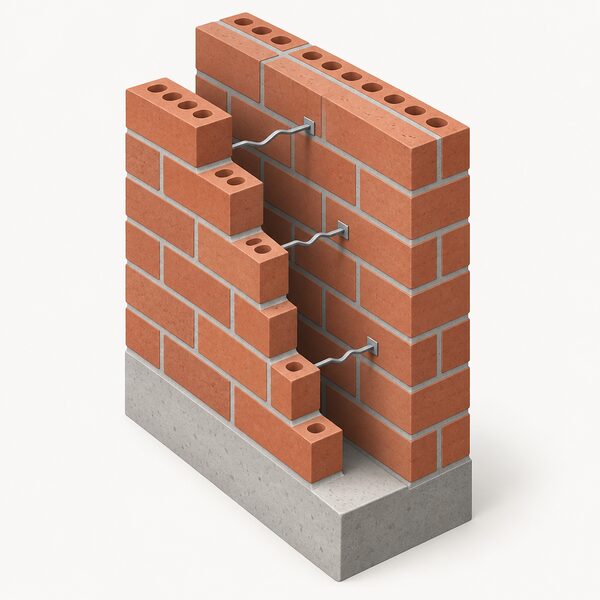
The maker states that wool insulation can be used in floors, roofs, walls and lofts10. That describes internal construction, not a blown cavity fill. Wool is not a cavity wall insulation product, and the general rules on cavity filling are strict regardless of material. Cavity wall insulation should not be installed where there are poor maintenance or structural issues such as cracks, evidence of rising or penetrating damp, dirty cavities, wall ties or builder's rubble, exposed locations with extreme weather and driving rain, or overflowing and blocked guttering, where no remedial action is appropriate4.
Where a cavity is uninsulated or only partially insulated, official guidance for external wall insulation says it should be assumed not suitable unless expert advice is sought12. That is a separate measure from cavity fill, but it shows how cautiously the fabric of an older wall is treated. For rented homes, the position is written into the exemption rules: cavity wall insulation, external wall insulation or internal wall insulation for external walls is not considered a relevant measure where written expert advice indicates it is not appropriate because of its potential negative impact on the fabric or structure of the property13.
Other natural materials carry their own exclusions. Hemp insulation is not suitable for use in potentially damp environments without a vapour barrier, such as cellars and basements6. Spray foam should not be used in listed buildings or houses with thatched roofs14. Wool's own exclusion is the moisture one: it is intended for internal environments and should not be used where permanent moisture build-up is expected3.
Fire performance: Euroclass E, borax treatment and where mineral fibre is still needed
Wool is treated, not inert. The maker states that under normal service conditions the borax remains within the wool fibres and provides protection for the entire life of the insulation3. The maker also states that sheep wool is not flammable and has the benefit of being far more breathable than synthetic loft insulation1. Those are the maker's own claims about its own product, and they describe a treated natural fibre rather than a mineral one.
Mineral wool occupies a different category. It is non-combustible and A1/A2 Euroclass fire rated, and in separating floors that rating helps compliance with Part B5. The same non-combustible A1/A2 rating is cited for mineral wool in timber frame walls16 and for roofs17. Mineral wool is also widely used for closing the external wall cavity at the junction between separating walls and external walls, to minimise flanking sound transmission and fire spread18.
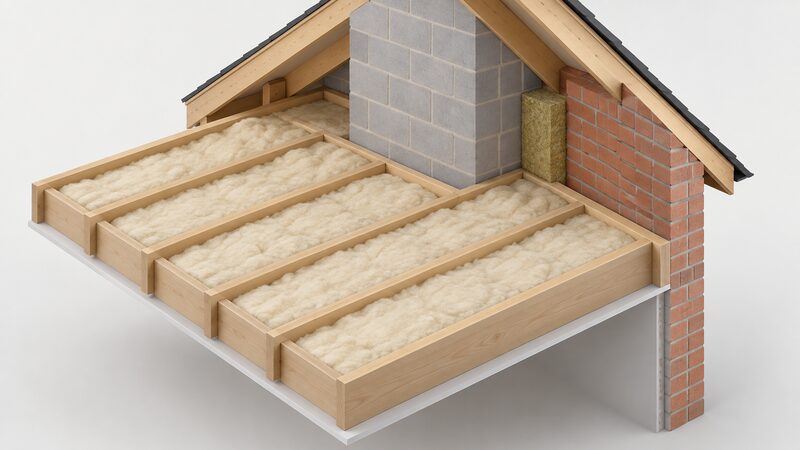
The practical consequence for an older home is that wool and mineral wool are not interchangeable in every position. In a loft floor, a breathable wool batt between joists is a normal specification. At a party wall junction, in a separating floor, or anywhere a building control body expects a non-combustible A1/A2 material, mineral wool is the material the guidance describes. A household retrofitting a period property will often end up with both: wool in the breathable parts of the fabric, mineral wool where fire separation or cavity closure is the governing requirement.
Pests, insects and rodents: what the evidence shows
The maker's position is that the borax treatment provides protection for the entire life of the insulation under normal service conditions3. Independent guidance does not single wool out as a pest problem. What it does list, among the reasons old loft insulation has to be removed, is rodents or other pests causing damage, alongside significantly squashed insulation, hazardous material such as asbestos, and any damage from water or fire15. Pest damage is a general risk in lofts, not a property of one fibre.
The conditions that invite rodents are structural and behavioural: gaps at eaves, unsealed service penetrations, stored food, and voids that give shelter. A tightly fitted wool batt with no gaps is no more attractive than a mineral wool roll in the same position, and both are less vulnerable than a loose fill that can be burrowed through. Where a thatched property is involved, the guidance on flues is separate and specific: a bird guard type cowl of an open-type mesh design may be required to avoid nesting within the flue19.
Ventilation is the other half of the pest and moisture picture. Pollutants including VOCs, humidity, CO2 and carpet fibres build up in sealed homes20, and a breathable fabric only works if the building can still exchange air. For an older property, that means keeping the ventilation paths the building was designed with rather than sealing them as part of an insulation upgrade.
Cost, thickness and installing it yourself between joists
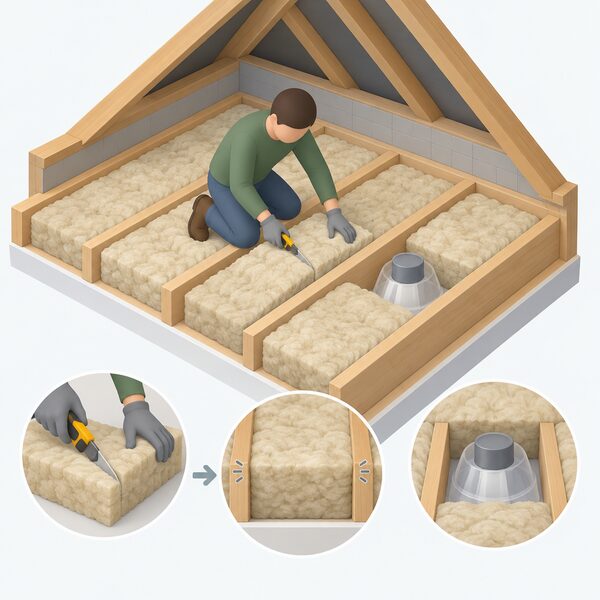
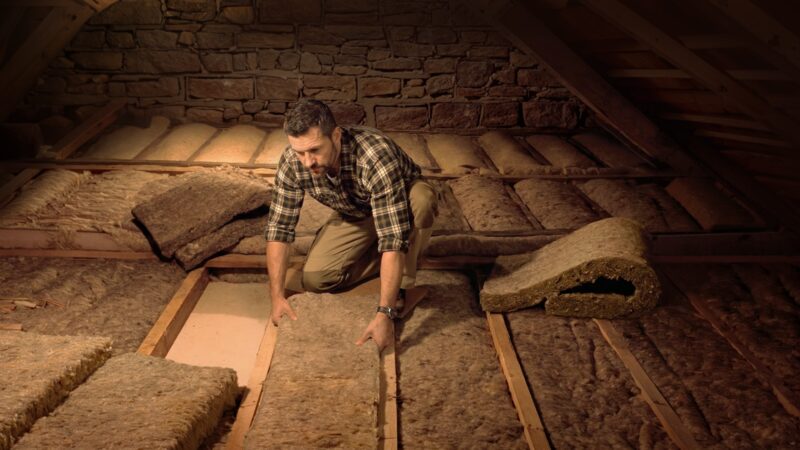
Wool is a DIY-friendly material in the same family as blanket insulation, which independent guidance describes as suitable for DIY install, inexpensive, and available in more sustainable and non-irritant options including recycled glass and sheep's wool21. The installation method for a loft floor is well established: one of the cheapest ways to do this is by installing mineral wool insulation between and on top of the joists22, and insulation can be placed between the ceiling joists with the thickness varying depending on the material chosen23. The same placement applies to suspended timber floors, where insulation is placed between the joists with thickness depending on the product used24, and to conversion projects where insulation can be placed between the ceiling joists25.
On cost, the published comparisons are relative rather than absolute. Cellulose insulation is described as still comparatively expensive, at up to twice that of mineral wool or rigid foam6. Spray foam is much more expensive to install than standard mineral wool loft insulation laid on the loft floor26. Wool sits in the natural-fibre bracket above mineral wool, and no published UK price for wool is given here, so figures are installer-quoted.
Cutting is straightforward. The maker's guidance for stone wool boards is that they can easily be cut to shape using a knife or cutting saw and preserve their stability27, and wool batts behave in the same way. Cut slightly wide so the material friction-fits between joists with no gaps at the edges, and keep the full loft-floor coverage continuous over the joist tops where a second layer is added.
Thermafleece: composition, sourcing and UK availability
Thermafleece is a British-made, sustainable insulation rich in British sheep's wool, described by the maker as natural fibre insulation28. Its composition is three-quarters British sheep's wool and a quarter recycled polyester1. The wool comes from the fleece of British Hill Sheep, supporting British farming and local business10, and specifically from hardy hill and mountain sheep in England, Scotland and Wales, shorn annually in the spring28.
The product range is built on British wool. Thermafleece CosyWool and UltraWool harness the unique properties of British wool to provide versatile, durable insulation29, and the range is available in a wide range of sizes to suit any project, with the maker describing the wool blends as a sustainable way to save energy and reduce carbon29. For a household in an older property, the significance of the sourcing is that the material is produced domestically from a fleece that would otherwise be a by-product, which is a different supply chain from imported petrochemical foam.
| Attribute | Detail |
|---|---|
| Composition | Three-quarters British sheep's wool, one quarter recycled polyester1 |
| Wool source | Hardy hill and mountain sheep in England, Scotland and Wales, shorn annually in spring28 |
| Format | Rolls, batts and boards in a wide range of sizes29 |
| Intended environment | Internal; not for areas of permanent moisture build-up3 |
| Fire treatment | Borax, retained in the fibres for the life of the insulation under normal service conditions3 |
The independence picture is mixed and worth stating plainly. A wool-insulated loft reduces the household's demand on the gas grid and on imported insulation materials, and it does so with a fibre sourced from British farms. What it does not do is remove dependence on the grid, on a supplier, or on the building's own ventilation. Wool is one component of a fabric strategy, and the household still buys its heat and its electricity from the network. For the wider picture, see insulation and energy independence and retrofitting traditional and pre-1919 buildings.
Sources29 cited
- Insulate with British sheep's wool, Thermafleece, 2026-07-29
- Floor insulation, Centre for Sustainable Energy, 2025-08
- Insects and durability, Thermafleece, 2026-07-28
- Cavity wall insulation, Centre for Sustainable Energy, 2025-12
- Separating floor insulation, MIMA, 2026-09-20
- Cellulose vs hemp vs cork, Uswitch, 2025-11-21
- Improving energy saving and sustainability in conservation areas and listed buildings, Brighton & Hove City Council, 2026-09-17
- Your home retrofit guide, Low Carbon Hub, 2025-10-30
- Understanding insulation, CAT, 2023-12-10
- Why wool works for your home, Thermafleece, 2026-07-30
- 7 tips to keep your home cool during a heatwave, Elmhurst Energy, 2025-08-13
- Approved Document L Volume 1 consultation version, Welsh Government, 2026-09-17
- Guidance on PRS exemptions and exemptions register evidence requirements, GOV.UK, 2026-05-05
- Spray foam insulation, Which?, 2026-05-26
- Installing blanket insulation, Which?, 2026-05-26
- Timber frame wall insulation, MIMA, 2026-09-20
- Roofs, MIMA, 2026-09-20
- Separating wall insulation, MIMA, 2026-09-20
- Installations in thatch properties, HETAS, 2026
- Ventilation and air quality guide: building regulations explained, IAA, 2026-09-20
- Installing blanket insulation, Which?, 2026-05-26
- Loft insulation at joist level, MIMA, 2026-09-20
- Building regulations: insulation and thermal elements, Planning Portal, 2026
- Building regulations: flooring, Planning Portal, 2026
- Building regulations: conversion projects, Planning Portal, 2026
- Spray foam insulation, Centre for Sustainable Energy, 2025-11
- Shed insulation, ROCKWOOL, 2026-09-20
- Information and advice, Thermafleece, 2026-08-12
- Why wool, Thermafleece, 2026-07-28
 Retrofitting Pre-1919 BuildingsOlder homes with solid walls need different insulation from modern houses, and getting it wrong can trap damp inside.
 Multifoil InsulationDoes thin foil insulation really keep a home warm, and how does it compare with thick rolls of wool or rigid boards?
 Insulation Safety and FireWill insulation catch fire, and is it safe to have in your walls?
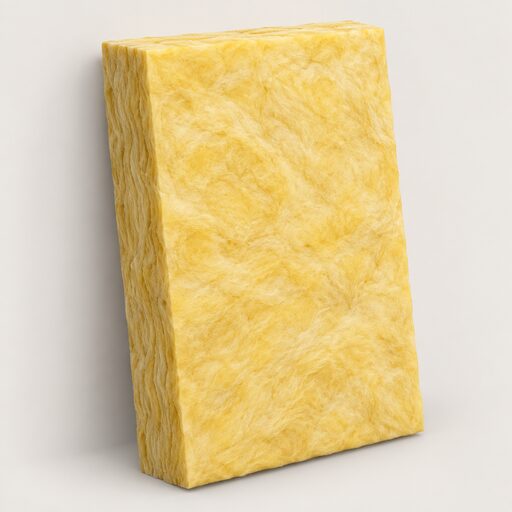 Fabric First ApproachWhy insulate before replacing the boiler or fitting a heat pump?
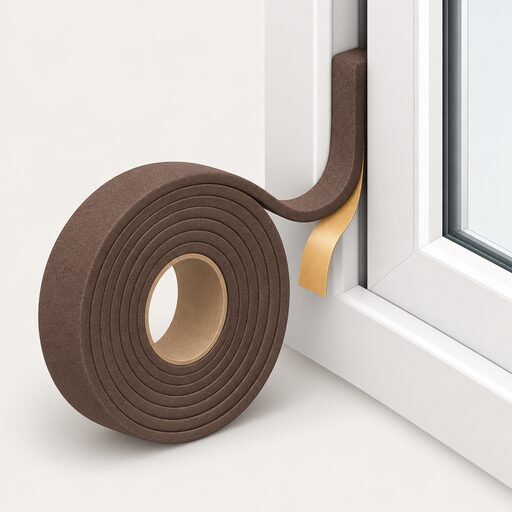 Draught-Proofing a HomeCovers sealing around windows, doors, floorboards, loft hatches, letterboxes and chimneys, and the products used for each.
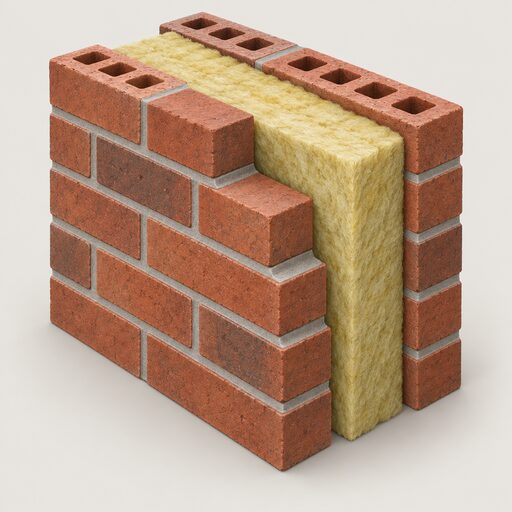 Cavity Wall InsulationCavity wall insulation could cut your heating bill, but is your home suitable?