
In this guide
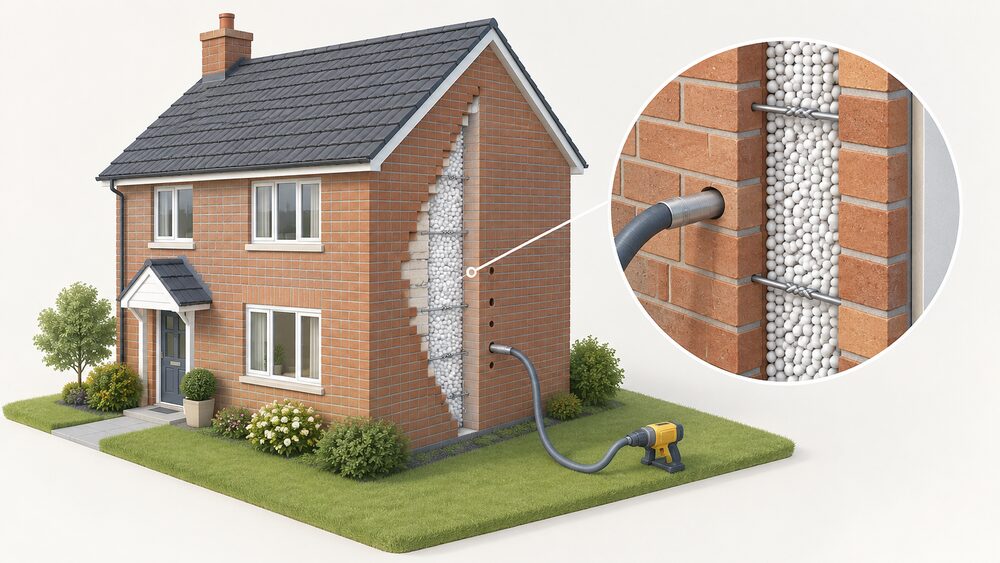
A cavity wall is made of two masonry leaves separated by a gap, and cavity wall insulation fills that gap with a blown material so that heat escaping through the wall is slowed. The construction is common in homes built from the 1920s onwards, and the cavity is typically around 50 mm, with some sources describing gaps of 50 to 100 mm tied together with metal wall ties. About a third of all the heat lost in an uninsulated home escapes through the walls, and cavities that are not insulated can add up to 25 per cent onto a heating bill1.
Fill is one of the cheapest fabric measures available to a masonry house. A typical installation in Great Britain costs around £2,200 unsubsidised, and around £1,000 in Northern Ireland, with estimated annual savings of around £200 in Great Britain and £240 in Northern Ireland3. Around 6 million homes in Britain have had cavity wall insulation installed, and around 5 million homes still have empty cavities that could be filled4. Work takes about two hours in a typical three-bedroom house, is blown in from outside, and is notifiable under the Building Regulations.
For household energy independence the gain is a permanent, unmetered reduction in the heat a home needs, which lowers demand on gas or electricity whoever supplies it. The dependence that remains is real: the fill cannot be self-installed, it relies on a registered installer and on a guarantee agency remaining solvent, and where a wall is exposed to driving rain or is in poor repair the measure may be refused outright. Official gas savings data for England and Wales suggests the reductions from wall insulation are durable rather than fading5.
What the measure does, and why an empty cavity is not insulation
Masonry cavity walls were originally designed to resist the risk of rain penetration, and the cavities themselves were not insulated, so they delivered minimal thermal performance8. The gap keeps water crossing the outer leaf from reaching the inner leaf, but a ventilated air gap does very little to stop heat moving outward. Filling it converts a rain barrier into a thermal barrier.
The fill is a thermally effective material blown in between the two leaves, occupying the void so that conduction and air movement across it are reduced9. Guarantee scheme guidance describes the system as designed so that any water that does enter the cavity can drain away, while the insulation reduces heat loss through the wall10. That drainage principle is why the choice of material and the quality of installation matter as much as the presence of fill: a material that bridges water across the cavity, or a fill that slumps and leaves voids, undermines the wall's original purpose.
Cavity walls are easier to insulate than solid walls and the process is less invasive11. There is no internal disruption, no loss of floor area, no rendering and no scaffolding in normal cases, and the disruption level is described as low12. That is the practical contrast with solid wall insulation, which is a construction project rather than a morning's work. Welsh Government has described cavity wall insulation as a cost effective way of reducing fuel bills where it has been installed correctly, a qualification that runs through everything else on this page13.
Independent guarantee material notes that studies suggest every square metre of cavity wall insulation will save more than a tonne of carbon dioxide over the average life of the building, equating to 80 tonnes or more for a semi-detached house with 80 m2 of external wall area4. A separate official figure puts the annual saving at 670 kg of CO2 per home.
Does your home have cavity walls? Age, thickness and brick pattern
The single strongest indicator is age. Homes built from 1920 onwards are likely to have cavity walls, and external solid walls are found in most UK properties built before the 1920s1. One maker states that homes built within the last 40 years almost certainly have cavity walls, and another puts the threshold after the 1930s15. The bands overlap because cavity construction spread gradually rather than starting on a fixed date, so age narrows the probability without settling it.
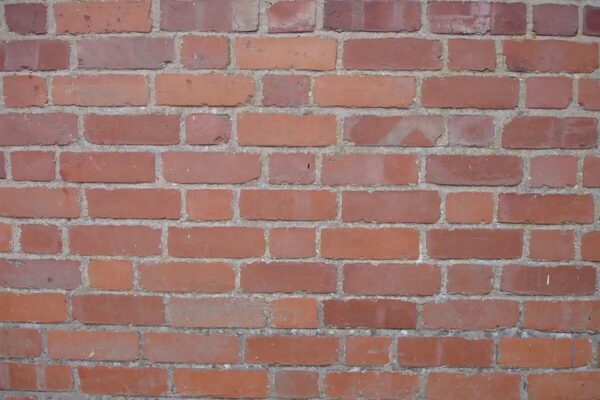
Two physical checks follow. A cavity wall can generally be recognised by its thickness, more than 11.5 inches, or by the brick pattern: a regular pattern of bricks laid on their long sides indicates a cavity, because there are no header bricks running through the wall to bond two leaves together17. The wall is simply deeper, with most cavities measuring at least two inches12.
The third question is whether the cavity is already full. Homes built in the last couple of decades are likely to have had insulation put in the cavities when they were built, and homes built in the last few years will have been insulated as a matter of course12. A retrofit survey should establish this by borescope before any drilling, because injecting into an already-filled cavity achieves nothing and injecting into a partially filled one needs a different specification. Guidance on external wall insulation makes the same point from the other side: cavity walls that are uninsulated or partially insulated should be assumed not suitable for external wall insulation unless expert advice is sought18.
There is a separate page on how to tell cavity or solid walls apart in more detail.
Materials: mineral wool, EPS bead or polyurethane foam
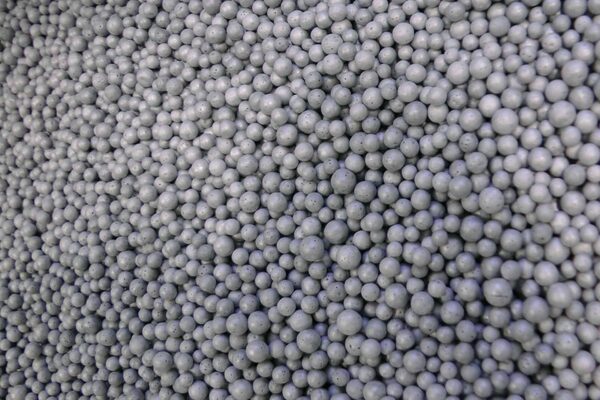
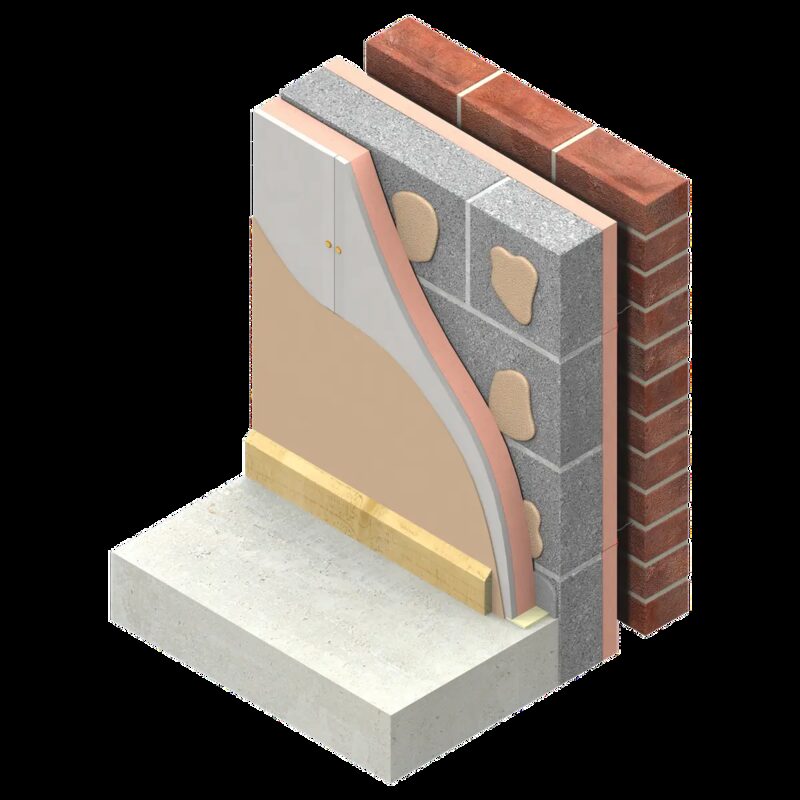
Official guidance names three main materials: mineral wool, either glass or rock wool, EPS bead, meaning polystyrene bead, and PU foam, meaning polyurethane foam19. Makers list the same three as the most common20.
| Material | Form and notes | Source type |
|---|---|---|
| Blown mineral wool (glass or rock) | Loose granular material used for blown insulation of cavity walls; mineral wool also comes as slabs, rolls and pipe sections21 | independent |
| EPS bead (polystyrene) | Described as the most common material in current use, more popular than mineral fibre and expanding foam7 | independent |
| Polyurethane foam | Injected foam; some foam materials trigger a formaldehyde risk assessment under the Building Regulations22 | official / maker |
Bead has become the default. One consumer body states the most common material used in cavity wall insulation these days is polystyrene beads, and Energy Saving Trust says the insulation material is usually polystyrene beads7. One supplier states it typically uses super bead, grey bonded EPS bead and blown mineral wool fibre23. Bonded beads are coated so they knit together in the cavity rather than pouring out of any hole later cut in the wall.
Mineral wool has its own roles in a cavity beyond full fill: it is widely used for closing the external wall cavity at the junction between separating walls and external walls, minimising flanking sound transmission and fire spread, and it uses recycled material24. Foam is the least used of the three in current retrofit, and it carries the extra regulatory step noted above.
Under ECO4, the measure is not treated as one product. Five types of cavity wall insulation measure are defined: CWI_0.040, CWI_0.033, CWI_0.027, CWI_partial_fill and PWI_cavity, with the first three differentiated by the thermal conductivity of the fill, 0.040, 0.033 or 0.02719. A lower conductivity buys more performance from the same cavity width. Scheme guidance sets a U-value of 0.55 W/m2K for the measure19. Material choice is covered further under insulation materials compared and in the question of what insulation material suits my cavity wall.
Full fill or partial fill
The cavity can be fully filled with insulation or partially filled, and manufacturers' guidance should be consulted before proceeding26. Where it is partially filled, an air gap is generally required, the size of which varies depending on the specific products used for the wall construction and the insulation27. Retrofit blown fill is normally full fill: the injected method is described as blown-in insulation suitable for new-build or existing cavities8. Partial fill, using boards held against the inner leaf with a residual clear cavity, is essentially a new-build or rebuild technique, which is why ECO4 lists CWI_partial_fill as its own measure type19.
Whichever is used, the gap between the two skins varies depending on the type of insulation to be used, and the insulation should go at least 150 mm below the damp proof course level22.
Suitability: width, condition, exposure and damp
A wall passes or fails on four tests, and the survey exists to apply them. The wall should be assessed before installing cavity wall insulation to confirm its condition and construction type18.
Conditions generally required:
- The external walls are unfilled cavity walls3
- The masonry or brickwork is in good condition3
- The cavity is at least 50 mm wide and clear of rubble3
- The walls are not exposed to driving rain or extreme weather3
Width is where the sources differ. Energy Saving Trust and Which? both state at least 50 mm, and that insulation can usually be installed in cavities no less than 50 mm wide3. The Centre for Sustainable Energy states the cavity should be at least 35 mm wide, or 50 mm for some forms of insulation7. Narrow cavities of less than 50 mm are usually found in homes built before the 1920s3.
Where fill should not go. Cavity wall insulation should not be installed, where no remedial action is appropriate, in the presence of poor maintenance or structural issues such as cracks, evidence of rising or penetrating damp, dirty cavities, defective wall ties or builder's rubble in the cavity, exposed locations with extreme weather and driving rain, or overflowing or blocked guttering7. Repair and maintenance of the exterior should be completed before insulation is added3. The ordering matters: a cavity filled over an unrepaired defect hides the defect and makes it worse.
Exposure is the hardest of the four to argue with. Draft Welsh guidance states that where assessment identifies a significant risk, for example for sites exposed to driving rain, the wall is exempt from meeting the maximum U-value using only cavity wall insulation18. That is a regulator accepting that some walls should not be filled. Independent advice agrees that homes exposed to wind driven rain need more caution29.
Which? puts the risk in proportion: in some circumstances cavity wall insulation can be the cause of damp, but this tends to be rare31. Where it goes wrong, the remedies, extraction and claims, are set out under cavity wall insulation problems and condensation, damp and mould after insulation.
How the installation works
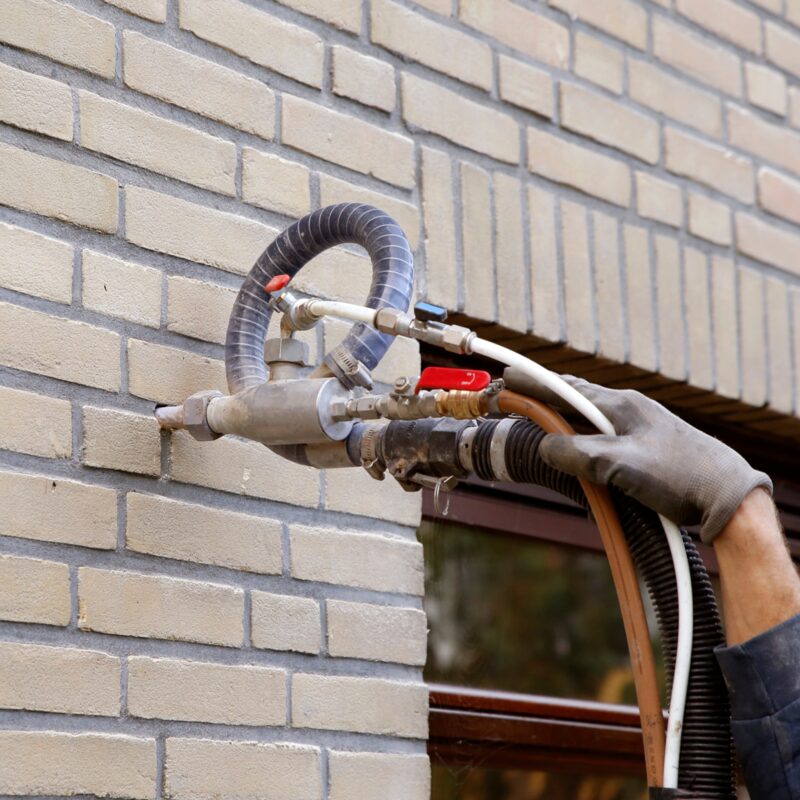
The insulation is blown into the cavity from the outside and disruption to the householder is minimal2. The sequence is short and fixed.
- Survey. The installing firm assesses the property to confirm suitability, by a surveyor or the technician, before installation17. Under one installer scheme the surveyor details the drilling pattern from the system designers' installation guide32. Some schemes add an independent inspection by the Installation Assurance Authority to confirm no pre-existing damp or mould needs addressing first14.
- Drilling. Small holes are drilled in the outer leaf, usually into the mortar joints. Energy Saving Trust describes holes around 22 mm in size at intervals of around 1 m; Which? describes holes each around 25 mm across, about the diameter of a ten pence piece; a builders' body gives 22 to 25 mm holes; one supplier states 2 cm holes in the mortar joints3. The figures cluster closely.
- Injection. The material, bead or fibre, is injected under pressure through each hole so the cavity fills from the bottom up, with the fill taken at least 150 mm below the damp proof course16.
- Making good. All the holes through which the insulation is injected are filled with mortar to match the existing colour and texture as closely as possible, and on pebbledash finishes pebbles are added to the surface17.
For homes with cavity walls, blowing in insulation should take less than a day and cause little disruption, and one supplier states installation usually takes a couple of hours depending on the size of the home29. Where a previous fill has failed, the older material has to be extracted before new material is injected, which lengthens the job considerably.
Not a DIY measure
Insulating cavity walls is not a job a householder can do: a registered installer is needed3. A professional injects the insulation material through the external wall into the gap between the inner and outer layers of brickwork12. The contrast with the loft is direct: in many cases a householder can install loft insulation themselves34. Cavity fill needs pressure equipment, a certified system and a drilling pattern derived from the system designer's guide, and it is notifiable work. Checking an installer's registration is covered under finding an insulation installer.
Cost and savings: what it runs and what it returns
Costs reported across independent and official sources vary with property type and with who is paying.
| Source and basis | Cost | Estimated annual saving |
|---|---|---|
| Energy Saving Trust, typical home, Great Britain, unsubsidised | around £2,2003 | around £2006 |
| Energy Saving Trust, Northern Ireland | around £1,0003 | around £2406 |
| Energy Saving Trust retrofit guide, semi-detached | £2,200 in GB, £0 in NI35 | not stated |
| Checkatrade estimate, 2026 | £1,800 mid-terrace to £4,600 detached12 | not stated |
| Uswitch, whole property | around £950 to £3,90036 | not stated |
| Uswitch, semi-detached, Energy Saving Trust figures updated May/June 2026 | around £2,70012 | £20012 |
Savings by property type, from Which?, are £110 for a mid-floor flat, £140 for a mid-terrace house, £180 for a detached bungalow and £240 for a semi-detached house, with up to £370 a year quoted as the maximum37. Those savings rest on an electricity price of 24.5 p/kWh and a gas price of 6.29 p/kWh1. Energy Saving Trust estimates assume a gas-heated home, with fuel prices as of July 2026 for England, Scotland and Wales and November 2025 for Northern Ireland, and an unsubsidised average install cost3. The Consumer Council in Northern Ireland gives around £185 a year38, the Federation of Master Builders gives £240 for a typical semi-detached property33, and a guide on DIY versus professional work gives a wider £160 to £470 per year34. A guarantee body states savings of up to £610 a year, which sits well above every other figure here; the estimates conflict, and the lower, independently sourced ranges are the more cautious guide4.
Payback is quoted as 9 to 12 years depending on property type by one guide, and as a maximum of 5 years by a guarantee body, again a wide disagreement12. Official analysis of installations in England and Wales between 2011 and 2015 found that the gas savings from solid and cavity wall insulation appear to be sustained in the 5 years following installation, which supports treating the saving as durable rather than decaying5. Grants and schemes are available towards the cost4; see insulation grants in England, Scotland, Wales and Northern Ireland, and the wider picture in insulation savings and payback.
Where grants are involved, Which? puts a mid-floor flat from about £1,100 for the measure40. Prices outside the published figures above are installer-quoted.
Building Regulations, building notices and the survey process

The installation of cavity wall insulation is specifically defined as notifiable building work in the Building Regulations, which means that for all buildings not exempted from the Regulations it is necessary to submit a building notice to a building control body stating that cavity wall insulation work will be carried out41. Government guidance states that cavity and solid wall insulation is notifiable work unless carried out by an installer registered with a Competent Person Scheme42. Where the installer is registered with the Cavity Insulation Guarantee Agency, the installer will in most cases submit the building notice; building owners should always check that a building notice will be submitted22. In Northern Ireland, cavity wall insulation requires a Building Control application.
The Regulations require that the insulation material used is suitable for the wall construction concerned, and where insulation is inserted into a cavity wall the appropriate requirements will be applied to ensure the insulation material is suitable22. In the case of some foam cavity wall insulating materials, an assessment of the risk of the emission of formaldehyde gas will need to be carried out22.
Before that, assessment. Official advice is that a householder should get advice from a qualified retrofit assessor before going further, and draft guidance requires the wall to be assessed to confirm its condition and construction type before installation44. One guide states the measure is highly cost-effective but requires a suitability assessment before installation45. For listed buildings, planning permission and listed building consent are required for external and internal wall insulation, and in Scotland internal insulation of a cavity is described as not best practice in building conservation but useful where masonry is unavoidably damp46. Where wall work forms part of a wider project, installing insulation requires an application for approval under the Building Regulations, but this can be included as part of the application for the overall project47. Fuller treatment sits in Building Regulations Part L.
Guarantees: the 25 year CIGA cover and its limits
Installation work should be guaranteed for 25 years by the Cavity Insulation Guarantee Agency or have an independent insurance-backed guarantee3. The guarantee covers problems caused by faulty or inappropriate installation of cavity wall insulation, and CIGA registers the property where the cavity walls have been insulated by an installer covered by the guarantee7. Complaints that involve workmanship or materials are covered by the independent 25 year guarantee provided for all CIGA installations, and details of how to submit a claim are contained within the guarantee certificate48.
"CIGA is there to protect the guarantee holder against poor workmanship and defective materials."
Where CIGA decides there is a defect with the cavity wall insulation or the way it has been installed, remedial work is free of charge50. The guarantee matters most when the original firm has gone: CIGA becomes responsible for resolving a problem where the company that installed the insulation is no longer in business51. The self-certification scheme through which many installations are notified is operated by CIGA in association with the British Board of Agrément, and qualifying installations receive the independent 25 year guarantee against defects in materials and workmanship52. A separate new build guarantee for CIGA members runs for 10 or 25 years from the day of installation53. Official scheme rules for one area based scheme require a guarantee from CIGA or an equal and approved scheme, lasting 25 years or longer54.
Two limits deserve emphasis. First, the guarantee can be lost through later building work: poor workmanship during home improvements or renovations can void the guarantee, and CIGA strongly recommends householders check that any company carrying out work on the property is reputable and aware that cavity wall insulation is installed55. Second, the guarantee covers workmanship and materials, not an unsuitable decision to fill a wall that should have been left alone, which is why the survey and the exposure rules carry the weight they do. CIGA's own complaint handling, and its registered installers' handling of claims, has itself been the subject of a thorough review56. For claims practice, see cavity wall insulation problems and, for the wider remediation picture, the ECO4 and GBIS insulation failures.
Life expectancy and later checks
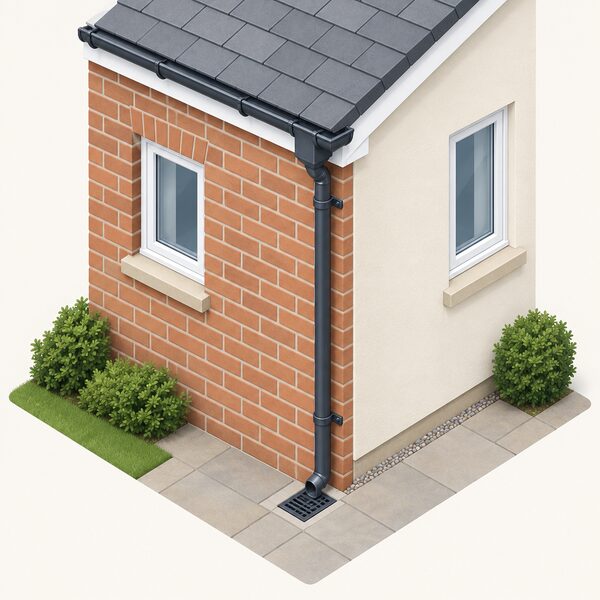
Properly installed cavity wall insulation is described as lasting the lifetime of the property, if the property is maintained39. Mineral wool, rigid boards and properly installed cavity wall insulation should perform effectively for at least 40 years33. One maker suggests planning periodic checks every 5 to 10 years to confirm the system is still functioning as intended57. There is no statutory inspection interval, and the maintenance that protects the fill is ordinary external maintenance: sound pointing, intact render, and guttering that is not overflowing, since blocked guttering is one of the conditions under which fill should not have been installed in the first place7. Information and advice about looking after a property after cavity wall insulation has been installed is part of what consumer-facing guidance covers.
What it does and does not deliver for independence
The benefits claimed for the measure are to reduce heat loss, lower energy bills, reduce the risk of condensation forming on walls, and reduce draughts3. A filled cavity cuts the heat a house needs every winter without a meter, a tariff or an app, and it keeps doing so for decades. Cavity wall insulation is regarded by government as one of the most effective energy saving measures that most people can carry out on their homes4, and the ECO4 measure specification treats it as a defined, auditable product rather than a discretionary upgrade19. Reducing fabric heat loss is also what makes a lower-temperature heating system viable, which is the connection to what insulation a heat pump needs.
The dependencies are equally plain. The work cannot be done by the household, so it depends on a registered installer and a certified system. The guarantee depends on a single agency continuing to operate and on the household not voiding it through later building work. The measure is unavailable to solid-walled, pre-1920s and badly exposed homes, and where the cavity is too narrow or fouled with rubble there is no version of the product that fits. A filled cavity also tightens the building, which shifts moisture management onto ventilation rather than onto the wall. Within the wider sequence set out in planning a whole-house retrofit and the insulation and glazing pillar, cavity fill is an early, cheap, low-disruption step, provided the survey says yes.
Sources57 cited
- Cavity wall insulation costs and savings, Which?, 2026-05-05
- Cavity wall insulation, nidirect, 2026-09-02
- Cavity wall insulation advice, Energy Saving Trust, 2026-05-08
- The benefits of insulation, CIGA, 2026-09-20
- NEED report summary of analysis 2026, GOV.UK, 2026-06-11
- Tips to improve the EPC rating of your home, Energy Saving Trust, 2026-08-03
- Cavity wall insulation advice, Centre for Sustainable Energy, 2025-12
- Masonry cavity wall insulation, MIMA, 2026-09-20
- How to improve energy efficiency in homes, Certass, 2018-11-16
- Cavity wall insulation systems, CIGA, 2026-09-20
- One thing to do this weekend to boost your insulation, Which?, 2025-11-19
- Wall insulation types, Uswitch, 2026-09-04
- Written statement: cavity wall insulation in Wales, Welsh Government, 2017-06-13
- Wall insulation measures, AgilityEco, 2026-09-20
- Cavity wall insulation, EDF, 2026-09-17
- Cavity wall insulation, E.ON, 2026-09-20
- Cavity wall insulation FAQs, CIGA, 2026-09-20
- Approved Document L Volume 1, consultation version, Welsh Government, 2025-08
- ECO4 new measures and products guidance v3.0, Ofgem, 2026-03-26
- Home insulation guide: types of insulation, Vaillant, 2026
- What is mineral wool, MIMA, 2026-09-20
- Building regulations for cavity wall insulation, Planning Portal, 2026
- Cavity wall insulation grants, E.ON Next, 2026-09-17
- Separating wall insulation, MIMA, 2026-09-20
- Roof applications for mineral wool, MIMA, 2026-09-20
- Thermal resistance of external walls, Planning Portal, 2026
- Building regulations: external walls, thermal resistance, Welsh Government, 2026-09-17
- How to insulate your home, Which?, 2026-05-05
- Energy saving at home, Centre for Alternative Technology, 2025-06-27
- Energy saving myths, Centre for Sustainable Energy, 2026-07
- How to stop condensation, Which?, 2026-05-26
- Cavity wall installer scheme, Kiwa, 2026-09-17
- House insulation: the ultimate guide, Federation of Master Builders, 2026-09-20
- DIY vs professional home insulation, Uswitch, 2025-11-07
- Retrofit explained, Energy Saving Trust, 2026-02-06
- Insulation guide, Uswitch, 2026-09-16
- Cavity wall insulation costs and savings, Which?, 2026-05-05
- Energy efficiency advice, Consumer Council for Northern Ireland, 2026-09-20
- Cavity wall insulation, Installation Assurance Authority, 2026-09-20
- Insulation grants, Which?, 2026-02-26
- Building regulations: insulation, cavity wall, Welsh Government, 2026-09-17
- Building work, replacements and repairs to your home, GOV.UK, 2014-11-03
- Building regulations: external walls, Welsh Government, 2026-09-17
- Five top tips from Which? to cut your energy bills, Welsh Government, 2026-03-18
- Typical insulation measures, Energy Saving Trust, 2025-03-31
- Guide to conversion of traditional buildings, Scottish Government, 2026-08-10
- Building regulations: energy efficiency for additional storeys, Planning Portal, 2026
- Consumer complaints process, CIGA, 2026-09-20
- Cold callers and claims companies, CIGA, 2026-09-20
- Consumer concerns, CIGA, 2026-09-20
- Reporting a concern, CWISC, Installation Assurance Authority, 2026-09-20
- CWISC: CIGA's competent persons scheme, CIGA, 2026-09-20
- New build guarantee FAQ, CIGA, 2026-09-20
- Area Based Scheme information released, Scottish Government, 2024-08
- Home improvements and your guarantee, CIGA, 2026-09-20
- Our consumer champion, CIGA, 2026-09-20
- Cavity wall insulation cost, EcoFlow, 2025-10-28
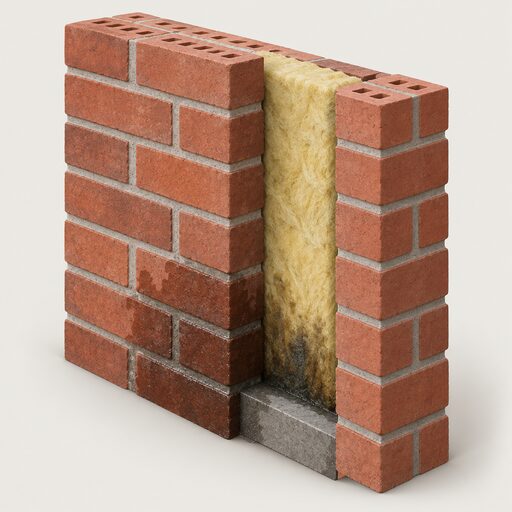 Cavity Wall Insulation ProblemsDamp patches after cavity wall insulation, and whether the guarantee actually pays out, are the two things people most want answered.
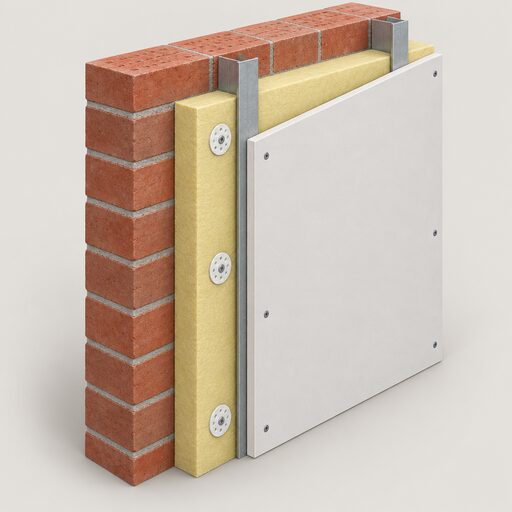 Solid Wall InsulationSolid walls lose far more heat than cavity walls, so what can actually be done about it?
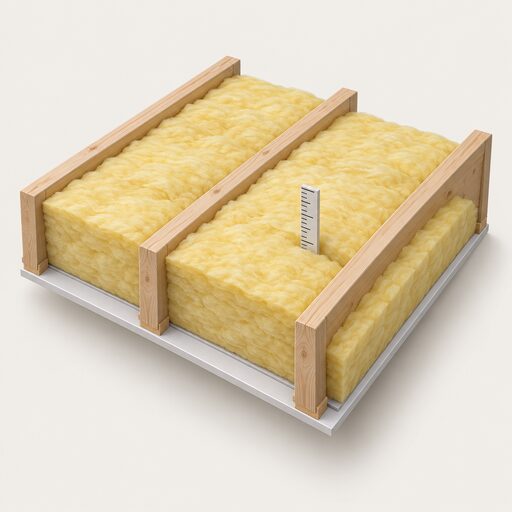 Loft InsulationHow much loft insulation do you need, and is your current depth enough?
 Insulation and Glazing CostsTypical installed costs for cavity wall, solid wall, loft and roof insulation, draught-proofing and replacement glazing, by measure and home size, with the savings, VAT position and funding schemes that shape the final bill.
 Insulation a Heat Pump NeedsWill a heat pump still work if your home is not well insulated, and would you need to add loft, wall or floor insulation first?
 Fabric First ApproachWhy insulate before replacing the boiler or fitting a heat pump?