In this guide
The UK has run a series of insulation funding programmes that have now closed. The Green Homes Grant voucher scheme closed to new applications on 31 March 2021 and was fully closed on 30 November 2021, with the wider scheme closing in March 20221. The Home Upgrade Grant opened in January 2022 and closed in March 20253. The Green Deal was never a grant at all: it was a loan mechanism, repaid through the energy bill4.
What remains live is the Energy Company Obligation, which runs until 31 March 2026, and the Warm Homes Local Grant, which started in 20255. Both are aimed at lower income households, and neither is a universal entitlement. Eligibility does not guarantee an installation: Ofgem states that eligibility for ECO does not necessarily mean that an energy supplier or installer will decide to install energy efficiency measures in your home7.
For a household, the practical question is not which scheme was best but which route is open now, what it will and will not cover, and what legacy obligations survive from the closed programmes. Outstanding Green Deal charges, warranty terms on work installed under a closed scheme, and the funding-blending rules that stop a household stacking grants on one measure are the three things most likely to matter.
Closed insulation schemes at a glance: what ran, what replaced it
The lineage runs from the supplier obligations of the late 2000s through the Green Deal and Green Homes Grant to the current pair of ECO and the Warm Homes Local Grant. Each generation changed both who paid and who qualified.
The Carbon Emissions Reduction Target required suppliers to install at least one major insulation or heating measure for households on certain benefits11. The Green Deal, introduced under the Energy Act, was a financing mechanism enabling private firms to offer domestic and non-domestic consumers energy efficiency improvements at no upfront cost, recouping payments through a charge in instalments on the energy bill12. The Green Homes Grant that followed was a voucher scheme covering up to two-thirds of the cost of works to improve the energy efficiency of homes, and spray foam insulation was one of the measures covered2.
The Great British Insulation Scheme, formerly known as ECO+, was the next iteration of the supplier obligation model13. The Warm Homes Local Grant now sits alongside ECO, funding cavity wall insulation, external wall insulation, internal wall insulation, loft insulation, room in roof insulation, flat roof insulation, under floor insulation, park home insulation, draughtproofing, hot water cylinder insulation, low energy lighting, heating controls, solar PV, battery storage, and in rare cases double or triple glazing and energy efficient doors8.
| Scheme | Type | Status |
|---|---|---|
| CERT and CESP | Supplier obligation | Superseded by ECO |
| Green Deal | Loan, repaid via energy bill | Closed |
| Green Homes Grant | Voucher grant | Closed March 20222 |
| Home Upgrade Grant | Grant, off-gas-grid | Closed March 20253 |
| ECO4 | Supplier obligation | Runs to 31 March 20265 |
| Warm Homes Local Grant | Grant, local authority delivered | Started 20256 |
The pattern across all of them is that the funding mechanism changed more often than the underlying measures. Insulation, heating controls and, increasingly, low carbon heating have been the constant; who administers the money and who qualifies has not.
Green Homes Grant: what it funded and why it closed early
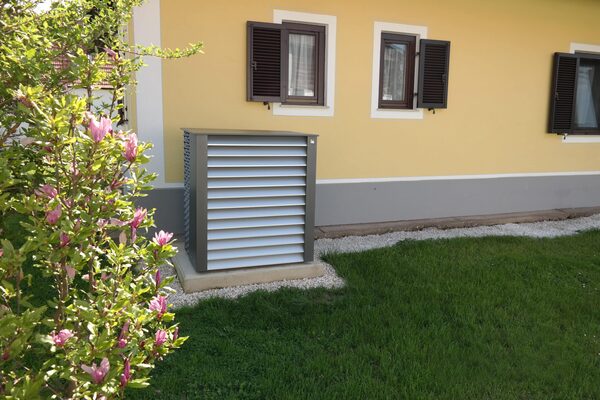
The Green Homes Grant voucher scheme provided grants to homeowners and landlords to make energy efficient improvements to homes in England14. Homeowners applied for vouchers with a certified installer, who received the grant funding once the measure had been fitted15. The scheme covered up to two-thirds of the cost of works to improve energy efficiency, and spray foam insulation was among the measures covered2.
The scheme's closure was staged. It closed to new applications on 31 March 2021 and was fully closed on 30 November 20211. The wider Green Homes Grant scheme closed in March 20222. A separate skills training competition under the scheme has also closed16.
The Local Authority Delivery arm of the Green Homes Grant was intended to support retrofit measures which improve energy efficiency and increase low carbon heating in circa 50,000 low-income households in England15. Under that arm, private landlords could access up to £5,000 of grant funding and had to make a minimum 33% contribution to the cost of upgrades15.
For a household that had work done under the scheme, the grant itself is spent and not repayable. What survives is the warranty on the installed measure and, where relevant, the certification of the installer. The Microgeneration Certification Scheme was a requirement for heat pump installations made under the Domestic Renewable Heat Incentive, the Green Homes Grant and the Clean Heat Grant, which means heat pumps installed under the Green Homes Grant should carry that certification16.
The Green Deal: loans for insulation, not grants
The Green Deal is the scheme most often confused with a grant, and it was the opposite. Home owners, landlords and tenants could get loans for improvements such as adding insulation or solar panels4. The mechanism enabled private firms to offer domestic and non-domestic consumers energy efficiency improvements at no upfront cost, and to recoup payments through a charge in instalments on the energy bill12.
That structure matters because the charge attached to the electricity meter, not to the person. A Green Deal charge can survive a change of occupier, which is why it still appears in some property searches and conveyancing enquiries today. The scheme also generated a large assessment infrastructure: official statistics tracked the number of Green Deal assessments, the number and type of energy efficiency measures installed, and the number of homes with loft insulation17.
The Green Deal Home Improvement Fund sat alongside the loan scheme and offered up to £4000 for installing solid wall insulation18. Its two-measure option covered cavity wall insulation, condensing mains gas boilers, secondary glazing, double or triple glazing replacing single glazing, flat roof insulation, replacement warm air units, fan-assisted storage heaters, energy efficient replacement doors, floor insulation, room-in-roof insulation and waste water heat recovery18.
The Committee on Climate Change recommended allowing access to Green Deal finance for renewable heat installations, which shows the scheme was being extended into heating as well as fabric19.
The statistics from the Green Deal and ECO reporting period are provisional and subject to future revisions, and were drawn from a variety of sources including the Energy Performance Certificate and Green Deal Advice Report central register20. That caveat matters when reading older figures on how many homes were treated.
CERT and CESP: the supplier obligations before ECO
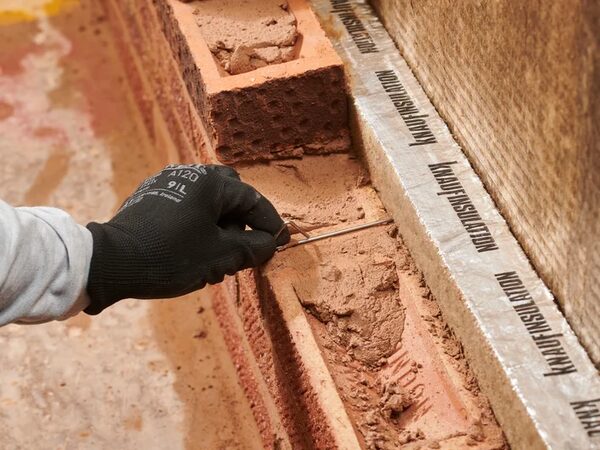
Before ECO there were the supplier obligations that established the model: a legal duty on energy companies to fund efficiency measures in homes, paid for through a levy on bills rather than through taxation. The Carbon Emissions Reduction Target required suppliers to install at least one major insulation or heating measure for households in the priority group11.
The significance of CERT is that it set the template ECO still follows. Suppliers, not government, deliver the measures; the obligation is measured in a target; and the household receives the work rather than a cash payment. The Energy Company Obligation is described in the same terms today: a requirement placed upon energy companies to help improve the domestic energy efficiency of lower income homes5.
The Community Energy Saving Programme ran alongside CERT and targeted area-based delivery, which is the ancestor of the local authority flex route used under ECO today. Both CERT and CESP were superseded when ECO was introduced in 201321.
The transition from CERT and CESP to ECO changed the emphasis from a broad priority group to a narrower fuel poverty focus. ECO is described as a government energy efficiency scheme in Great Britain to tackle fuel poverty and help reduce carbon emissions7. That is a narrower remit than CERT's, and it explains why the qualifying benefits list under ECO is specific rather than general.
For a household, the practical legacy of CERT and CESP is that some of the insulation installed under them is now old enough to be at or beyond the end of its expected service life, and that warranties from that era are often held by installers that no longer trade. Where a cavity wall was insulated under CERT, the guarantee is typically held by the installer or by CIGA rather than by the supplier that funded it.
ECO: the energy company obligation that still delivers insulation
ECO is the one scheme from this lineage that is still running. It requires medium and large energy suppliers to support energy efficiency improvements for eligible households, and it obligates the larger energy suppliers to deliver a target of annual bill savings by installing energy efficiency and heating measures to homes22. It was first introduced in 2013 and ECO4 runs until 31 March 202621.
The measures funded include insulation such as loft, roofs and walls, and more broadly insulation, heating and solar panels24. The obligation sits on suppliers with 150,000 or more domestic customers, a threshold that has been consistent across ECO1, ECO2 and Help to Heat, was tightened through ECO3, and remains the same under ECO4 as under ECO39.
Crucially, ECO is not a grant scheme. Ofgem states that ECO is not a grant scheme and that different companies or installers may provide different levels or types of support7. It is up to energy suppliers to determine which energy efficiency measures they want to fund, the level of funding they provide, and the retrofit coordinator or installers they choose to work with7. In some cases a household may be asked to contribute to the cost of the installation7.
"ECO is not a grant scheme and as such, different companies or installers may provide different levels or types of support"
The property must require energy efficiency upgrades, and the specific measures that would benefit the home are determined by a retrofit assessment7. The household must own the home or have permission from the landlord, including where the property is owned by a social housing provider or management company7. Installers under ECO must be TrustMark accredited and will have a registration number, except in the case of installers of district heating connections7.
ECO operates in Great Britain, so the scheme rules described here apply in England, Scotland and Wales7. Northern Ireland has separate arrangements and is not covered by the ECO obligation as described.
ECO eligibility: benefits, EPC bands and who counts as 'most in need'
There are two routes into ECO: the benefits route and the local authority flexible eligibility route, usually called LA Flex. They qualify different households by different means.
Under the benefits route, a household may be eligible if it receives at least one of a listed set of benefits: Child Benefit, Pension Guarantee Credit, Income-related Employment and Support Allowance, Income-based Jobseeker's Allowance, Income Support, Universal Credit, Housing Benefit, or Pension Credit Savings Credit7. Housing Benefit is a qualifying benefit under the Affordable Warmth route in ECO45. For homeowners, the relevant EPC band under the local authority scheme rules is Band D to G5.
LA Flex allows a local authority to set its own criteria, which is how households that do not receive a qualifying benefit but are still on a low income or in fuel poverty can be brought in. Ofgem publishes separate contacts for LA Flex compliance, declarations, notifications and statements of intent, which reflects that the route generates its own paperwork26.
| Route | Qualifies by | Who sets criteria |
|---|---|---|
| Benefits route | Receipt of a listed benefit7 | Government |
| LA Flex | Local authority statement of intent | Local authority26 |
Eligibility is not the same as delivery. Ofgem states that eligibility for ECO does not necessarily mean that an energy supplier or installer will decide to install energy efficiency measures in your home7. A household can meet every criterion and still receive nothing, because the decision to fund rests with the supplier.
A household can contact any of the obligated energy suppliers to find out how they may be able to help, even if that supplier is not the household's own energy provider7. Ofgem publishes a contact details page for obligated suppliers26. Eligible residents need to contact a participating energy supplier, a list of which can be found on Ofgem's website22.
Home Upgrade Grant: off-gas-grid homes, EPC D to G, income under £36,000
The Home Upgrade Grant was the scheme for homes that could not be reached by the gas network. It provided energy efficiency upgrades and low carbon heating to low income households in properties which are off the gas grid and in energy efficiency bands D to G6. It opened in January 2022 and closed in March 20253.
The scheme's purpose was to upgrade low energy-efficiency homes off the gas grid that are occupied by low income families3. Phase 1 allocated £218 million to improve energy efficiency in low-income homes off the gas grid, with latest funding totals given as £220 million6. One official figure for Phase 1 puts the allocation at £152 million to support low-income households off the gas grid, while another gives £218 million, rising to £220 million in the latest totals; the two figures are not reconciled.
The eligibility criteria combined three tests: off the gas grid, EPC band D to G, and low income. One official statistics release describes the income test as household income below £30k, while the scheme is commonly described by its EPC and off-gas-grid criteria3. The £36,000 income threshold associated with the scheme in public discussion is not the figure given in the official statistics, which state below £30k.
For a household, the significance of HUG is that it addressed the hardest-to-treat homes: those with no gas connection, often solid-walled or off the mains, where the cost per home of reaching a decent EPC band is highest. That is also why the scheme was targeted rather than universal, and why its closure left a gap that the Warm Homes Local Grant is intended to fill.
Warm Homes Local Grant: the scheme taking over from HUG
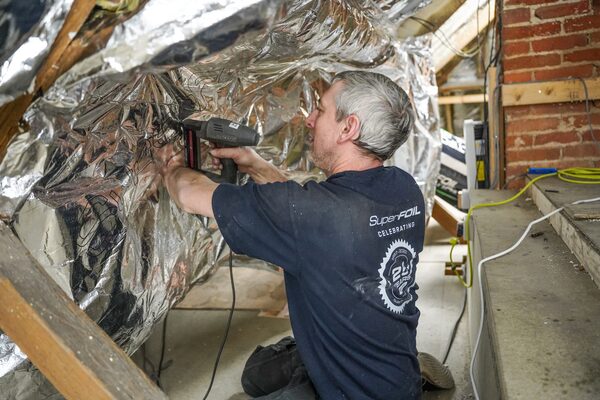
The Warm Homes Local Grant started in 2025 and is designed to help homeowners and private renters make energy-efficient upgrades to their homes such as wall and loft insulation, solar panels, heat pumps, and ventilation systems6. It is delivered by local authorities rather than by energy suppliers, which is the structural difference from ECO.
Owner occupied properties with an EPC rating of Band D, E, F or G are eligible under the scheme rules8. The eligible energy performance improvements are broad: cavity wall insulation, external wall insulation, internal wall insulation, loft insulation, room in roof insulation, flat roof insulation, under floor insulation, park home insulation, draughtproofing, hot water cylinder insulation, low energy lighting, heating controls, solar PV, battery storage, and in rare cases double or triple glazing and energy efficient doors8. Solar thermal is also listed among eligible measures27.
Social housing landlords must contribute at least 50% of the total cost of upgrades28. That is a higher contribution requirement than the 33% minimum that applied to private landlords under the earlier Green Homes Grant Local Authority Delivery scheme, where the grant cap was £5,00015.
The application process runs through the local authority. If an application is successful, the council carries out a retrofit assessment and may offer one or more measures, subject to a full survey and the funds being available27. That sequencing matters: the assessment comes after the application, not before, and the offer is conditional on both the survey and the remaining budget.
The scheme plans to run for three years, ending on 31 March 2028, and additional Warm Homes funding for 2028 to 2030 will allow new priority areas to be identified in the future. The Warm Homes Plan more broadly is intended to upgrade up to 5 million homes, lift up to a million families out of fuel poverty and triple the number of homes with rooftop solar panels by 2030, with an objective of 180,000 additional jobs in energy efficiency and clean heating by 2030.
How to apply: suppliers, local authorities and retrofit assessments
The application route depends on which scheme is being used, and the two live routes work differently.
For ECO, the household contacts a participating energy supplier, a list of which can be found on Ofgem's website22. A household can contact any obligated supplier, not only its own provider7. The supplier then determines whether to fund measures, at what level, and with which retrofit coordinator or installers7. A retrofit assessment determines the specific measures that would benefit the home7.
For the Warm Homes Local Grant, the application goes to the local authority. If successful, the council carries out a retrofit assessment and may offer one or more measures, subject to a full survey and the funds being available27.
That rule is the single most important constraint for a household trying to assemble a package. It means a home cannot use HUG money and ECO4 money on the same measure, and cannot stack the Boiler Upgrade Scheme on an ECO4-funded heat pump. Separate measures from separate schemes may be possible, but the funding cannot be combined on one.
For complaints about an ECO installation, Ofgem publishes a complaints process page26. The route described is complaining directly to the installer, then to TrustMark, then to dispute resolution. Installers under ECO must be TrustMark accredited and will have a registration number, except for district heating connection installers7. Ofgem also publishes contacts for supplier compliance, fraud reporting, new measures and products, LA Flex compliance, the LA Flex Digital Service Platform, and general enquiries26.
There is a documented quality problem in this area. 30,000 homes had defects following external and internal wall insulation installations under ECO4 and GBIS29. That figure is the reason the complaint and remediation routes matter as much as the application route.
What these schemes mean for household energy independence
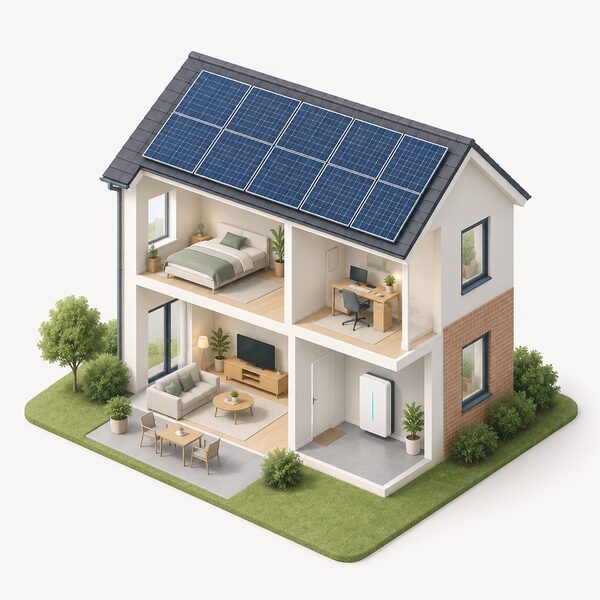
Insulation funding schemes do one thing for energy independence and leave another thing untouched. They reduce the energy a home needs, which lowers the household's exposure to price and to the amount of energy it must buy. They do not remove the connection to a supplier, to the grid, or to the gas network.
A well-insulated home needs less heating, which means a lower bill at any given tariff and a smaller exposure to price spikes. That is a real gain in sovereignty over the household budget. But the household still buys its energy from a supplier, still depends on the grid for electricity, and, unless it is off the gas grid, still depends on gas for heating. The Warm Homes Local Grant funds solar PV and battery storage, which is the one element of these schemes that directly reduces dependence on a supplier rather than just reducing demand8.
The schemes also carry a dependence on the administering body. ECO depends on a supplier deciding to fund the work, and the supplier determines the measures, the level of funding and the installers7. The Warm Homes Local Grant depends on a local authority's budget and priority areas. Neither is a right, and neither is guaranteed by eligibility alone.
"It is important to note that eligibility for ECO doesn't necessarily mean that an energy supplier or installer will decide to install energy efficiency measures in your home."
The legacy schemes add a further layer. A Green Deal charge is a repayment obligation attached to the electricity supply, not a grant, and it can transfer with the property4. Warranties on work installed under closed schemes are held by installers, some of which no longer trade. And the funding-blending rule means that a household cannot simply combine every available pot into one package7.
For a household weighing up what to do, the honest position is that the closed schemes are closed, the live schemes are targeted and discretionary, and the durable gain from any of them is a lower demand for energy rather than independence from the systems that supply it. The pages on ECO4 and GBIS insulation failures and on insulation grants in England cover the current routes in more detail, and the Green Deal scheme page deals with outstanding charges.
Sources29 cited
- Green Homes Grant Voucher Scheme, UK Parliament
- Spray foam insulation and mortgages, House of Commons Library
- Heat pump deployment quarterly statistics UK 2025 Q3, GOV.UK
- Green Deal energy saving measures, GOV.UK
- ECO scheme home energy efficiency, Leeds City Council
- Home Upgrade Grant research briefing, House of Commons Library
- Homeowners and tenants, Ofgem
- Warm Homes Local Grant, Greater Manchester Combined Authority
- HEE Stats Detailed Release March 23, GOV.UK
- ECO4 delivery guidance version 3.2, Ofgem
- Energy and Climate Change Committee report, UK Parliament
- Minor consequential improvements, Part L Building Regulations, UK Parliament
- Great British Insulation Scheme and ECO4 LA and supplier flex consultation, Ofgem
- Heat pump deployment quarterly statistics UK 2024 Q4, GOV.UK
- Green Homes Grant, National Audit Office
- Green Homes Grant skills training, UK Parliament
- Green Deal, ECO and insulation levels quarterly report to December 2014, GOV.UK
- Green Deal Home Improvement Fund details announced, GOV.UK
- Policy strengthening required to meet future carbon budgets, Committee on Climate Change
- Green Deal, ECO and insulation levels quarterly report to September 2014, GOV.UK
- Grants and funding, Tameside Council
- ECO4 scheme, West Lindsey District Council
- Extending the ECO4 end date, GOV.UK
- ECO4 Flex open, South Cambridgeshire District Council
- ECO4 Flexible Eligibility, Breckland Council
- ECO contacts, guidance and resources, Ofgem
- Apply for a Warm Homes Local Grant, Liverpool City Council
- Warm Homes Local Grant policy guidance July 2026, GOV.UK
- Green Homes Grant and retrofit research briefing, UK Parliament
 Closed Energy PoliciesIf a scheme you used has closed, do you still get paid?
 Insulation StandardsHow do you know your insulation was fitted to a proper standard, and who backs the guarantee if the installer disappears?
 Installer Schemes and CodesCheck whether your installer is on TrustMark, and whether they belong to HIES or the Renewable Energy Consumer Code.
 Grants and Energy IndependenceCan you get a grant for solar panels or a battery?
 Check Which Energy Grants ApplyWhich energy grants can you actually get right now, and which have closed?
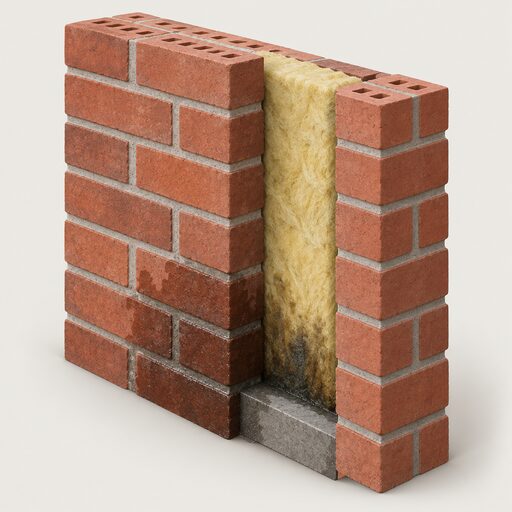 Cavity Wall Insulation ProblemsDamp patches after cavity wall insulation, and whether the guarantee actually pays out, are the two things people most want answered.