
In this guide
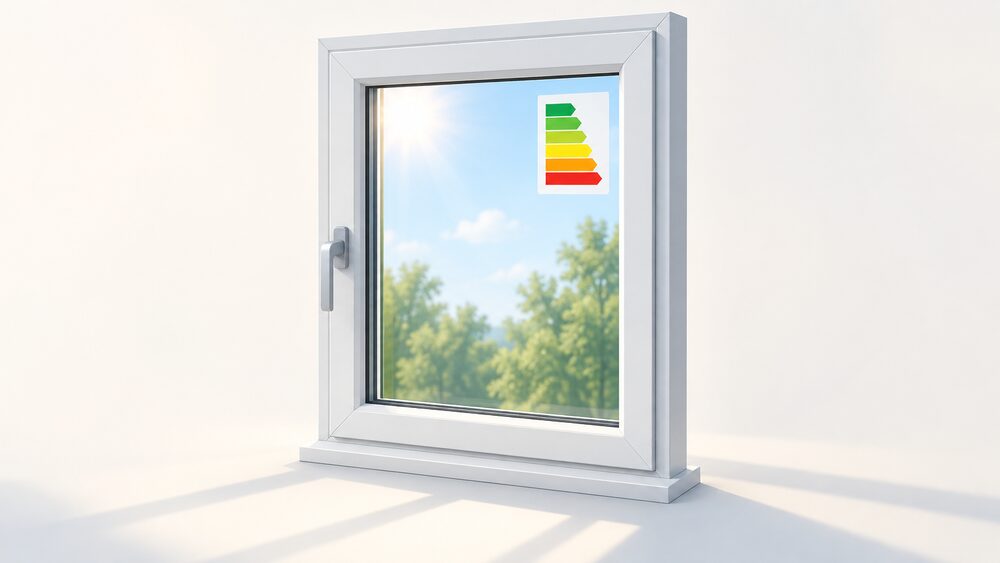
A window energy rating is a single letter, from A++ down to E, that describes how a whole window performs as an energy component: how much heat it loses, how much free solar heat it lets in, and how much air leaks around it. It is not the same as a U-value, which measures heat loss alone. The rating was developed by the British Fenestration Rating Council and takes the entire window into account, including the frame, not just the glass1.
The number most households meet first is the legal minimum. In England, a replacement window in an existing dwelling must meet a limiting U-value of 1.4 W/(m2·K) or Window Energy Rating Band B2. Older guidance permitted 1.6 W/(m2·K) or band C, and that figure still circulates widely, but the current standard is tighter. Scotland, Wales and Northern Ireland each set their own equivalent limits, and listed buildings sit outside the requirement.
For a household, the rating matters because it is the only figure that reflects the window as installed. A window with excellent glass but a poor frame, or one that leaks air around the seals, can carry a worse rating than a plainer window with better solar gain. The sections below set out the scale, the calculation, the legal minimums across the four nations, and what a better rating does and does not do for a home's energy independence.
What a Window Energy Rating is and what it measures
A Window Energy Rating is a letter grade for a complete window product. It was developed by the British Fenestration Rating Council, and it takes into consideration the entire window rather than the glazing alone1. The letter is calculated using a formula that takes into account the window product's overall thermal efficiency, air leakage and solar gain3. Those three inputs are what separate it from a U-value, which captures only the first of them.
The rating is produced by computer model simulations, which the scheme describes as very accurate3. That matters because a physical test of one sample window cannot capture how a frame design, a spacer bar and a particular glass coating interact across a range of sizes. The simulation models the product as a system.
Two features of the scheme are worth stating plainly. First, the label is voluntary: it is not a statutory requirement for window products to feature a Window Energy Rating label3. A manufacturer can sell a compliant window without one. Second, the rating is not the same as an Energy Performance Certificate band, even though both use letters. An EPC rates a whole dwelling, with ratings from band A (very efficient) to band G (inefficient)6. A window rating covers one component.
"This rating system has been developed by the British Fenestration Rating Council (BFRC) and it takes into consideration the entire window"
The rating scale: E to A++ and what each band means
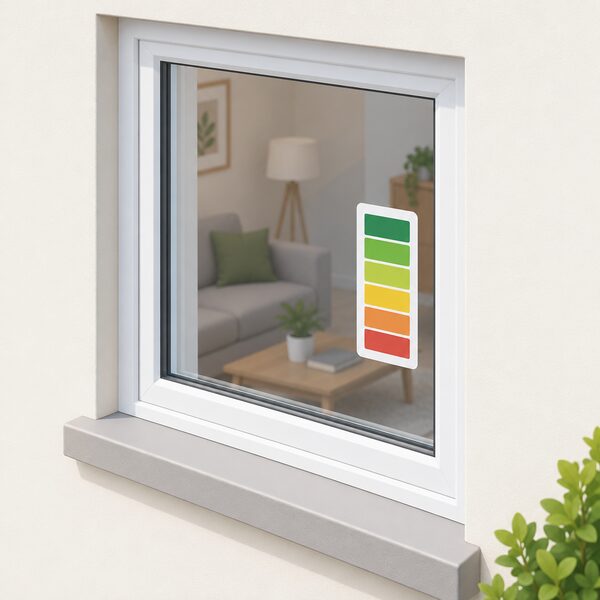
The BFRC Energy Window label uses a traffic light A++ to E scale on the basis of total energy efficiency, where A++ is the most energy-efficient3. Some manufacturers label their windows with a rating ranging from A++ to C, with A++ the most efficient1. The two descriptions are consistent: the full scale runs to E, and the best-performing products cluster at the top.
For a household, the practical question is where the legal line falls. In England, the limiting standard for a new or replacement window in an existing dwelling is 1.4 W/(m2·K) or Window Energy Rating Band B2. A window rated below band B therefore does not normally satisfy the requirement, unless an exemption applies. Band C was the older threshold and remains the figure many installers quote from memory.
There is a further wrinkle in the guidance. For timber windows, a maximum U-value of 1.6 W/(m2·K) or Window Energy Rating Band C was permissible until 14 June 2023, and from 15 June 2023 the full standard of 1.4 W/(m2·K) or Window Energy Rating Band B applies2. That transition is now closed, but it explains why older certificates and quotations still show band C for timber products.
| Band | Position on the scale | Relevance to the legal minimum |
|---|---|---|
| A++ | Most energy-efficient3 | Exceeds the standard |
| A | High performance1 | Exceeds the standard |
| B | Upper-middle | Meets the English limiting standard2 |
| C | Middle | Older threshold; below current standard for most work2 |
| D to E | Lower bands | Below the standard for new and replacement windows |
The scale is not a ranking of glass alone. Letter ratings are given to window products based on the energy performance of the whole window, including the frame material, frame design, glass type and other components3. A well-rated window in one frame material can be matched or beaten by a different material with better detailing.
U-values: the other number on the label, and why lower is better
A U-value is a measure of how much heat will pass through one square metre of a structure when the temperature on either side differs by one degree Celsius7. It is expressed in watts per square metre per degree of temperature difference (W/m2K)7. The direction of the scale is the thing to hold on to: the higher the U-value, the more easily heat can pass through the window and the window is less efficient1. Lower is better.
Measurements of U-values should be made in accordance with BS EN ISO 8990:19967. For windows and doors, the figure that matters is the whole-unit value, including the frame. Windows and doors need to comply with the requirements of the Building Regulations in relation to the amount of heat that can pass through the door or window, including the frame, which is measured as a U-value, and this U-value should not be exceeded8.
The U-value is not a fixed property of a glazing unit. For new dwellings it is calculated using the actual size and configuration of the window in line with BS EN ISO 10077-1 and BS EN ISO 10077-29. A larger window with a smaller frame proportion will generally produce a better whole-window figure than a small window with heavy framing, even with identical glass. U-values for thermal elements, windows and doors are calculated using methods and conventions set out in BRE Report BR 443, Conventions for U-value Calculations, 2006 Edition10.
That is why two suppliers can quote different U-values for what sounds like the same window. The glass may be identical; the frame, spacer and size are not. It is also why a U-value quoted without a stated size and configuration is only partly informative.
How a WER is calculated: heat loss, solar gain and the whole window
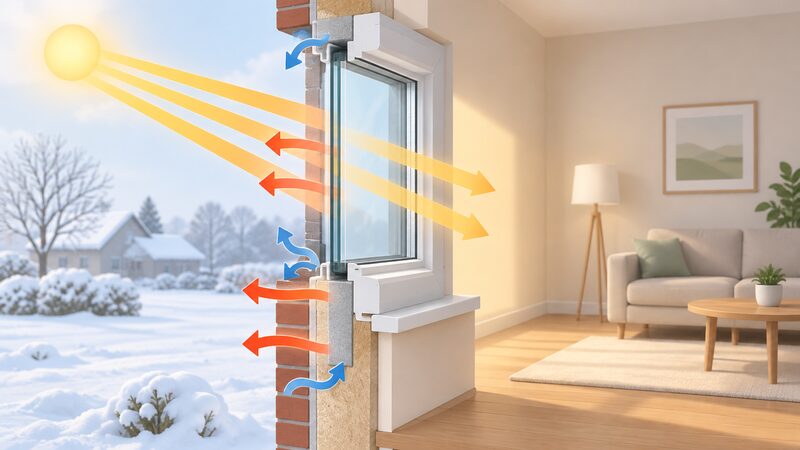
The rating is not a simple restatement of the U-value. The letter rating is calculated using a formula that takes into account the window product's overall thermal efficiency, air leakage and solar gain3. Further down the label is the window product's Energy Index, determined by a formula which takes into account available solar heat gains (window g-value) and subtracts the thermal losses (window U-value and air leakage)3. The Energy Index is the number behind the letter.
The published equation used in Northern Ireland's Technical Booklet F1: 2012 makes the structure explicit: WER = 196.7 x {(1 - f) x gglass} - 68.5 x {U + (0.0165 x AL)}, where f is the frame factor, gglass is measured per BS EN 410, U is the whole window U-value and AL is the air leakage per BS 6375-111. Read plainly, the first term rewards solar gain through the glazed area and the second penalises heat loss and air leakage.
Three consequences follow. A window with a slightly worse U-value but a much better g-value can carry a better rating, because the solar term is doing more work. Air leakage is weighted, so a poorly sealed frame drags the rating down even when the glass is excellent. And the frame factor reduces the solar contribution, because frame area does not admit solar gain.
The same logic appears in the way energy performance is modelled elsewhere. Energy Performance Certificates are based on calculated energy use using building information collected by an assessor along with a set of standard assumptions, including around occupant behaviour and weather data12. A window rating is a narrower version of the same idea: a modelled figure under standard conditions, not a measurement of a particular house.
The legal minimum: band C or a U-value of 1.6 W/m²K for new and replacement windows
The headline figures that circulate for replacement windows are 1.6 W/(m2·K) or Window Energy Rating Band C. Those were the standards in earlier editions of the guidance, and they remain the numbers many households and installers still quote. The current position in England is tighter.
In existing dwellings, the limiting standard for a window is 1.4 W/(m2·K) or Window Energy Rating Band B minimum for new fabric elements2. The same table lists doors with more than 60 per cent of the internal face glazed at 1.4 W/(m2·K) or Doorset Energy Rating Band C minimum, and other doors at 1.4 W/(m2·K) or Doorset Energy Rating Band B minimum2. The Approved Document L Volume 1 gives the worst acceptable U-value for a window or roof window as 1.4 W/(m2.K) in new dwellings, with existing dwellings referring to Table 11.113.
For new dwellings the figures differ again. The limiting U-value for a window is 1.6 W/(m2·K), including roof windows and curtain walling, and for doors including glazed doors it is 1.6 W/(m2·K)9. The notional dwelling used for compliance modelling assumes windows and glazed doors at U = 1.2 W/(m²·K) and a semi-glazed door at U = 1.0 W/(m²·K)2. The gap between the limiting value and the notional value is what drives designers towards better fabric than the bare minimum.
Replacing windows and doors is work covered by the Building Regulations approval regime14. Where a dwelling is erected, it must equal or exceed the energy efficiency rating for the dwelling which has been approved15. In Wales, references to "energy efficiency rating" have been replaced by "energy use intensity rating"16.
U-value requirements for glazed doors: 1.4 W/(m²·K) or Doorset Energy Rating band C
Doors are treated separately from windows, and the threshold depends on how much of the door is glazed. In existing dwellings, doors with more than 60 per cent of the internal face glazed must meet 1.4 W/(m2·K) or Doorset Energy Rating Band C minimum2. Other doors must meet 1.4 W/(m2·K) or Doorset Energy Rating Band B minimum2. The distinction matters because a fully glazed door behaves thermally much more like a window than like a solid door.
For new dwellings, the limiting U-value for doors including glazed doors is 1.6 W/(m2·K)9. The Approved Document L Volume 1 gives the worst acceptable U-value for doors as 1.4 W/(m2.K) for doors more than 60 per cent glazed and all other doors, with existing dwellings referring to Table 11.113. The notional dwelling assumes a semi-glazed door at U = 1.0 W/(m²·K)2.
| Element | Existing dwellings | New dwellings |
|---|---|---|
| Window | 1.4 W/(m2·K) or WER Band B2 | 1.6 W/(m2·K) limiting9 |
| Door, more than 60% glazed | 1.4 W/(m2·K) or Doorset Band C2 | 1.6 W/(m2·K)9 |
| Other doors | 1.4 W/(m2·K) or Doorset Band B2 | 1.6 W/(m2·K)9 |
| Notional dwelling window | n/a | U = 1.2 W/(m²·K)2 |
| Notional semi-glazed door | n/a | U = 1.0 W/(m²·K)2 |
There is also a fallback for existing controlled fittings in a material change of use or change to energy status, where the threshold for windows, roof windows and doors is 3.30 W/(m2·K)2. That is a much weaker standard, and it applies to a narrow set of circumstances rather than to ordinary replacement work.
How ratings are assessed and certified, and what it costs

Several energy rating schemes for windows operate in the UK, the most widespread being those operated by the British Fenestration Rating Council, the British Standards Institute and CERTASS, each working in the same way3. A manufacturer submits a product for simulation, the scheme produces a letter band and an Energy Index, and the label is issued for that specific product configuration.
The label is voluntary, so the absence of one is not evidence of non-compliance. What is compulsory is meeting the Building Regulations, and that can be demonstrated either by a documented U-value or by an energy rating band. The Approved Document route allows either: a window can comply at 1.4 W/(m2·K) or by carrying Window Energy Rating Band B2.
Scotland takes a different structural approach. The acceptable area-weighted average U-value for windows, doors and rooflights is 1.6 W/m2K17, and openings with a Window/Door Energy Rating of Band C or better may also be used17. For a dwelling created by conversion, openings with a Window/Door Energy Rating of Band C or better may also be used18. The Scottish technical handbooks also set out compensating U-values for windows, doors and rooflights, which allow a weaker element to be offset elsewhere in the envelope19.
Northern Ireland sets an area-weighted average of 1.40 W/m2.K for windows, roof windows, glazed rooflights, curtain walling and pedestrian doors, with a maximum of 3.00 W/m2.K at any point4. The same figures appear in the 2022 changes information paper5. The older Technical Booklet F1: 2012 set doors with more than 50 per cent of the internal face glazed at a U-value of 1.8 W/m2.K11, which shows how far the standards have moved.
Wales has published a 2026 Approved Document L Volume 1, and the Welsh regulations are being amended, with the Home Energy Model changes applying to all new schemes started after 4 March 2027, subject to transitional arrangements16. The Welsh consultation version of Approved Document L Volume 1 sets a window or roof window maximum of 1.4 W/(m2.K) for new dwellings and 1.4 or minimum WER Band B for existing dwellings20. Earlier Welsh guidance set the worst acceptable fabric performance values at 1.4 W/(m2.K) for a window or roof window in new dwellings, and 1.4 or WER Band B in existing dwellings21.
What a better rating means for bills and for energy independence
A better-rated window reduces heat loss and, where solar gain is well managed, admits useful free heat. The effect on a household's energy position is real but bounded. The amount of potential energy saved once the window product is installed in a home will also depend on a number of other factors, including the location of the window, other installed insulation, the building's orientation and the efficiency of the heating system3. A window is one element in an envelope, not a standalone energy system.
That is the honest limit on what glazing can do for independence. A well-rated window reduces the demand side of the equation: less heat escapes, so less fuel is burned to hold a given temperature. It does not generate anything, does not store anything, and does not reduce a household's reliance on a supplier, a grid connection or a fuel that is bought in. Home insulation, energy efficient windows and doors, and draught reduction reduce your energy bills22, but the household remains connected to the same supply chain.
Where glazing does touch independence is through the standards that other measures depend on. The Feed-in Tariff energy efficiency requirement, for example, required a building to have achieved an Energy Performance Certificate rating of level D or above to receive the higher tariff rate for solar PV23. Fabric performance and on-site generation are linked in the rules, even though they are separate purchases.
The wider policy direction reinforces the same point. Energy Performance Certificates are being reformed, with a new rating system for domestic buildings that will give clearer information on the fabric energy efficiency of a property, the emissions, efficiency and running costs of its heating system, and the cost of energy to run the home to standardised conditions26. The Energy Cost Rating will be based on the cost of energy to run the dwelling to standardised conditions27, and it provides indicative running costs expressed in pounds per year12. Windows feed into that fabric assessment.
For a household weighing up replacement glazing, the practical reading is this: a better rating lowers demand and improves the fabric score that other measures, including heat pumps and solar PV, are judged against. It does not remove the grid, the supplier or the fuel bill. For the wider picture of how fabric measures combine, see Home Insulation and Glazing: The Full UK Guide and Insulation, Glazing and Energy Independence.
Where the rating falls short, and what to check
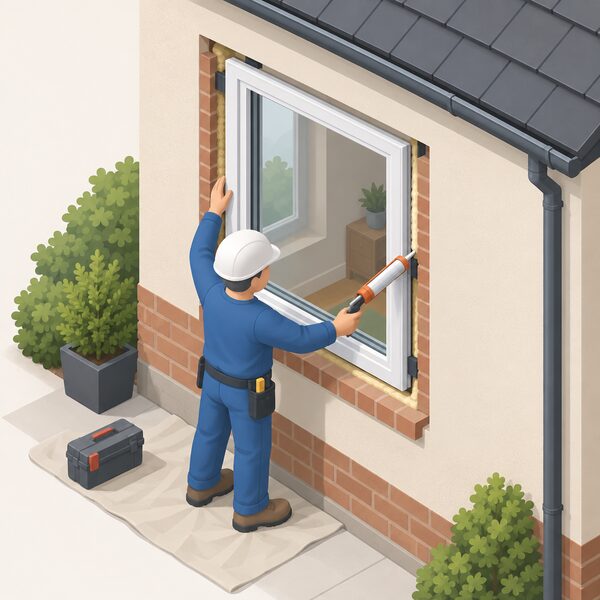
A Window Energy Rating is a modelled figure for a product, not a prediction for a house. It assumes standard conditions and does not know the orientation of the window, the shading, the airtightness of the rest of the dwelling or the efficiency of the heating system3. Two identical windows in two different homes will produce different real savings.
The rating also says nothing about installation quality. Air leakage is part of the calculation, but the figure used is the product's tested leakage, not the leakage achieved on site around a poorly fitted frame. For the rules that govern replacement work, including notification and certification, see Replacement Window Rules: Building Control, FENSA and Certificates.
Three checks are worth making before accepting a quotation. First, confirm whether the compliance route is a U-value or an energy rating band, and get the figure in writing. Second, confirm the U-value is a whole-window figure including the frame, calculated to BS EN ISO 10077-1 and BS EN ISO 10077-29. Third, check whether the property is exempt, for example a listed building, where the standard does not apply in the same way.
For households comparing glazing options more broadly, Double Glazing: Units, Frames and Performance and Triple Glazing in UK Homes set out how the products differ, and U-Values and R-Values Explained covers the underlying physics. The Glass and Glazing Federation can be contacted on +44 (0) 207 939 910128.
Sources28 cited
- Windows knowledge hub, Glass and Glazing Federation, 2026-09-20
- Approved Document L Volume 1, Dwellings, 2021 edition incorporating 2023 amendments, UK Government, 2026-09-17
- Window energy ratings, Glass and Glazing Federation, 2024-01-05
- Technical Booklet F1: 2022, Building Control Northern Ireland, 2022-06
- Part F1 and F2 Changes Information Paper, Building Control Northern Ireland, 2022-05
- Energy Performance Certificates of buildings, House of Commons Library, 2026-09-20
- Building Standards Technical Handbook 2022, 6.0 Introduction, Scottish Government, 2022-06-01
- Building regulations: rooflights, Planning Portal, 2026
- Approved Document L Volume 1, Dwellings, UK Government, 2026
- Approved Document L2B consultation version, Welsh Government, 2020-11
- Technical Booklet F1: 2012, Building Control Northern Ireland, 2012
- Technical annex for chapter 2: what EPCs measure, UK Government, 2026-03-09
- Building Regulations Approved Document L Volume 1, 2026, Welsh Government, 2026-04
- Building regulations approval, UK Government, 2026-09-17
- Building Regulations 2010, Part 6, legislation.gov.uk, 2026-09-17
- Building (Amendment) (Wales) Regulations 2026, Welsh Government, 2026
- Building Standards Technical Handbook 2022, 6.2 Building insulation envelope, Scottish Government, 2022-06-01
- Building Standards Technical Handbook 2020, 6.2 Building insulation envelope, Scottish Government, 2020-12-02
- Annex 6: Compensating U-values for windows, doors and rooflights, Scottish Government, 2020-12-02
- Approved Document L Volume 1 consultation version, Welsh Government, 2026-09-17
- Approved Document L consultation, Welsh Government, 2020-11
- Energy efficiency advice and assessment, London Borough of Bromley, 2026-09-17
- Guidance for FIT Generators V18, Ofgem, 2026-04-01
- Feed-in Tariff factsheet, Ofgem, 2017-04
- Feed-in Tariff FAQ, Ofgem, 2016-07
- Reforming energy performance certificates, Scottish Government, 2025-01-21
- Energy Performance Certificates, House of Commons Library, 2026-09-17
- Domestic RHI contacts, guidance and resources, Ofgem, 2026-09-17
 U-Values and R-ValuesWhat does a U-value on a window, wall or door actually tell you, and is a lower number really better?
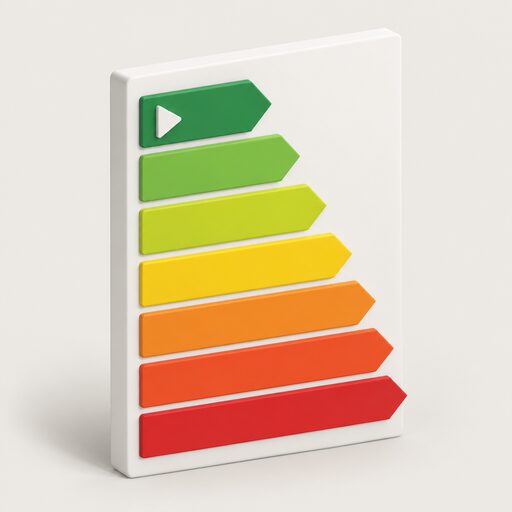 Energy Performance CertificatesAn Energy Performance Certificate rates how energy efficient your home is, from A down to G.
 Read an EPCA walk through each part of an EPC: the A to G rating and potential rating, the estimated costs, the fabric and heating assumptions and the recommendation table, plus what the assessor did and did not inspect and how the rules differ across the UK.
 Future Homes Standard FabricWill a new home be cheaper to heat than an older one?
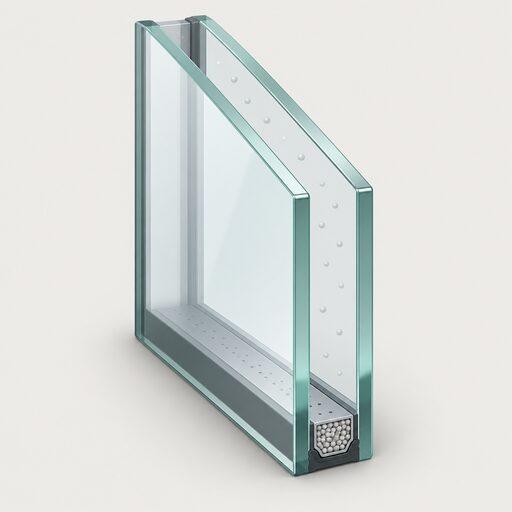 Double GlazingMisted up panes, noisy streets, rooms that never feel warm: is new double glazing worth the money, and how much could it cut your bills?
 Solar Control Window FilmSolar control window film reduces solar heat through glazing, but the UK evidence base is thin: most figures here come from glazing and shading research rather than film testing.