
In this guide
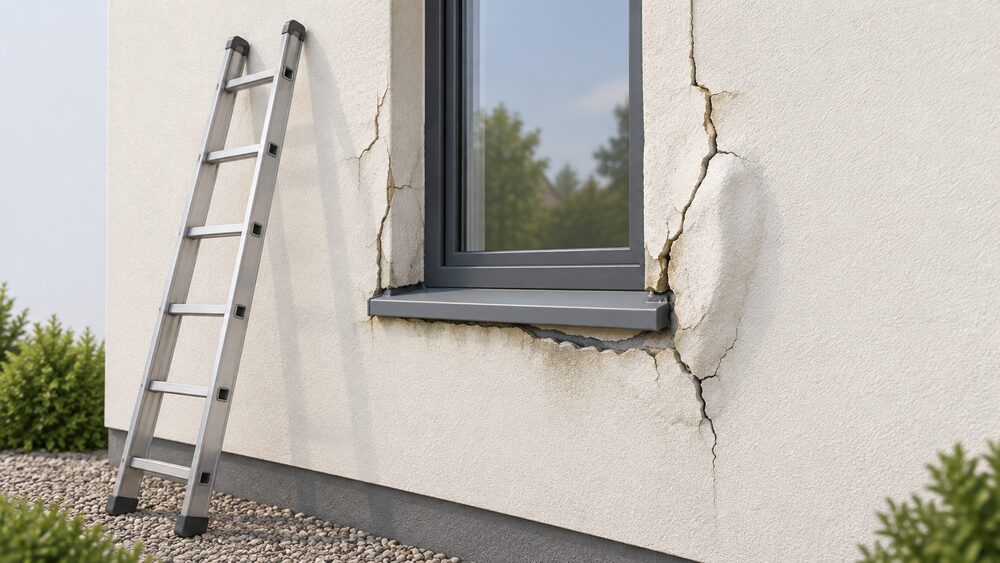
The audits of solid wall insulation installed under the Energy Company Obligation 4 (ECO4) and the Great British Insulation Scheme (GBIS) found that 30,000 homes had defects following external and internal wall insulation installations1. The randomised sample of audits was commissioned by Ofgem to understand the extent of non-compliance in solid wall insulation measures installed under these schemes1.
The headline rates are stark. Results show that 92% of external wall insulation installations and 27% of internal wall insulation installations of those audited had at least one major technical non-compliance2. A later consultation document puts the remediation figures higher still, at 98% of homes with external wall insulation and 29% of homes with internal wall insulation3. The two documents disagree, and both figures are set out below.
The schemes themselves have now closed. GBIS ran from 25 July 2023 to 31 March 2026, and the service to check eligibility has closed4. What remains live is the remediation route: the guarantee register, the installer reinstatement process and the contact channels that a household can verify before responding to any approach about its insulation.
What the audits found, and why the numbers differ
The audit was a randomised sample commissioned by Ofgem, and its stated purpose was to understand the extent of non-compliance in solid wall insulation measures installed under these schemes1. It was not a census. That distinction matters when reading the percentages, because a sample rate of 92% is an estimate of the population, not a count of every installation.
The figures also come from documents with different jobs. The statistical audit results, published in October 2025, report non-compliance found in the sample1. The consultation on reforming consumer protection for home upgrade schemes, published in June 2026, reports homes requiring remediation: 98% of homes with external wall insulation and 29% of homes with internal wall insulation installed under ECO4 and GBIS had major issues requiring remediation3. A non-compliance finding and a remediation requirement are not the same test, which is one reason the two sets of numbers sit apart.
TrustMark had already flagged the problem. In 2024 TrustMark reported quality issues with some solid wall insulation installed through government schemes1. The audit followed that signal rather than discovering it.
The practical consequence for a household is that the audit rates describe a population, not an individual home. A property with external wall insulation installed under either scheme sits inside a group where the great majority of audited installations had at least one major technical non-compliance2. Whether that particular installation is defective is established by inspection, not by the rate.
"In 2024 TrustMark reported quality issues with some solid wall insulation installed through the following government schemes"
What drives the failure rate
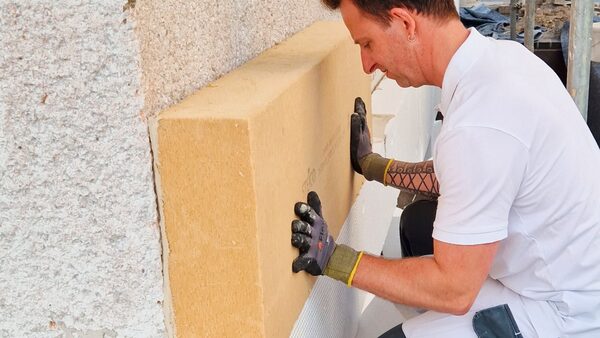
The failures are concentrated in solid wall insulation, and specifically in external wall insulation. That is the most complex of the common retrofit measures: it involves a substrate of unknown condition, a fixing regime, a weatherproofing detail at every opening and a finish that must shed water for decades. The audit found major technical non-compliance in 92% of audited external wall insulation installations2.
Internal wall insulation performed better on the same test, at 27%2. The measure is simpler to inspect and less exposed to weather, which is consistent with the gap, though the documents do not attribute cause.
The scheme design itself created pressure. GBIS was built to deliver the rapid installation of value-for-money insulation measures and, in some cases, heating controls8. It was designed to deliver improvements to the least energy-efficient homes in Great Britain to help tackle fuel poverty and reduce carbon emissions, and it targeted around 300,000 households9. Speed and volume at that scale, across a supply chain that had to be TrustMark-registered, is the background against which the quality failures occurred.
The government's response was to suspend installers. The Welsh Government's written statement records the UK Government taking immediate action to suspend installers and protect consumers, and identifies poor quality workmanship by companies installing solid wall insulation as the issue11.
How the remediation route works
Remediation runs through the installer, the obligated supplier and the guarantee register, in that order of practical contact.
All installers under GBIS had to be TrustMark-accredited and carry a registration number12. All installers delivering measures under the scheme had to be a TrustMark-registered business8. That registration is the thread a household pulls first, because it identifies who did the work and which guarantee applies.
The guarantee position is set out in TrustMark guidance: a minimum two-year warranty for work, and a minimum 25-year guarantee for certain measures installed under the ECO13. ECO4 guidance refers to a minimum 25-year insurance backed guarantee for certain insulation measures7. The current list of appropriate guarantees sits on the TrustMark website8.
Ofgem's role has limits that are worth stating plainly. Ofgem sets targets for obligated suppliers, ensures compliance and monitors progress, but has no oversight of contractual arrangements and states that its ability to help resolve complaints is limited12. Ofgem does not administer appropriate guarantees or financial protection for measures installed under the Great British Insulation Scheme8. Complaints about an installation are handled under the published complaints process14.
The installer reinstatement process has produced results. As of November 2025, 22 installers had been fully reinstated after meeting requirements on TrustMark's "robust six-point plan", including full remediation of the problems identified6. That figure describes installers, not homes.
Verifying a genuine contact about your insulation
Approaches about insulation remediation are exactly the kind of contact that fraudsters imitate, so the verification route matters more than the message.
TrustMark was nominated by the Department for Energy Security and Net Zero to directly support customers of the scheme that failed, and it publishes three contact routes: a telephone number, 0333 555 1234, an email address, disputes@trustmark.org.uk, and an online support form15. Ofgem publishes a scheme enquiry email address, GBIS.enquiry@ofgem.gov.uk, for questions about the scheme14.
A household that receives a letter, call or visit can check the claim against those published channels rather than the details in the message. Suspected fraud can be reported through Ofgem's counter fraud section, which also sets out Ofgem's role in preventing fraud14.
The scheme's own application history is a useful check on any claim that new funding is available. Applications for the Great British Insulation Scheme have closed, and installations had to be complete by 31 March 20264. Some energy suppliers were still accepting applications at the point the scheme closed, and the government advises checking with your supplier4. Questions about an existing application go to the energy supplier it was made to4.
What the rules require of an installation
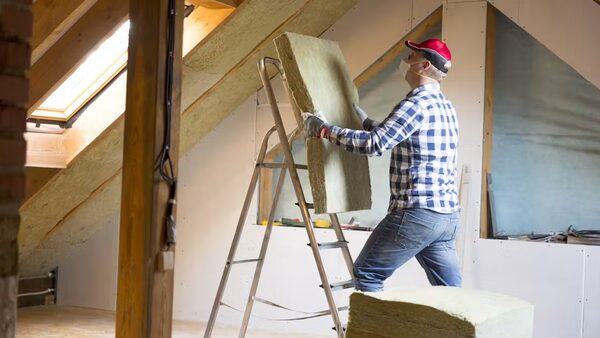
The rules that governed these installations are the standard against which a defective one is judged.
All measures available under GBIS had to be delivered according to PAS2030/20358. There was no minimum requirement under the scheme for a property's Standard Assessment Procedure rating to be increased through the measure8, which is a notable gap: a measure could be installed to standard without the scheme requiring a measurable improvement in the home's rating.
ECO4 works differently. It sets a main obligation called the Home Heating Cost Reduction Obligation16. Homes receiving any heating measure must first have all the exterior facing cavity walls and loft, including rafters, or roof, including flat, pitched, roof and room-in-roof, insulated, and park homes must first have the floor, walls and ceiling insulated5. Homes receiving any heating measure other than first time central heating or district heating connection must first have at least one insulation measure installed of flat roof, pitched roof, room-in-roof, cavity or solid wall, floor insulation, or the floor, walls and ceiling of a park home5.
The eligible measures under ECO4 Flex include solid wall insulation, cavity wall insulation, room in roof insulation, loft insulation, flat roof insulation, electric storage heater upgrade, first time central heating to air source heat pump, boiler upgrade from oil, LPG and solid fuel to air source heat pump, and solar photovoltaic panels17.
GBIS was narrower. It delivered one insulation measure per home12, and the eligible measures for both the general and low-income groups were cavity wall including party wall, loft, solid wall, pitched roof, flat roof, under-floor, solid floor, park home and room-in-roof12. Certain heating controls, such as room thermostats, were allowed as a secondary measure in owner-occupied premises in the low-income group12.
| Requirement | ECO4 | GBIS |
|---|---|---|
| Delivery standard | PAS2030/2035 | PAS2030/20358 |
| Measures per home | Multiple, subject to preconditions5 | One insulation measure12 |
| Minimum SAP uplift | Not stated in the same terms | No minimum requirement8 |
| Guarantee | Minimum 25-year insurance backed guarantee for certain insulation measures7 | Ofgem does not administer guarantees8 |
| Installer registration | TrustMark-registered | TrustMark-registered8 |
How it differs across England, Scotland, Wales and Northern Ireland
Both schemes operate across Great Britain, not the United Kingdom. The Welsh Government's written statement describes ECO4 and GBIS as operating across Great Britain11. GBIS statistics apply to England, Scotland and Wales19. ECO4 guidance describes delivering energy efficiency and heating measures to homes in Great Britain7. Northern Ireland sits outside both.
Within Great Britain the eligibility bands differ. GBIS eligibility extended to households in lower council tax band properties, bands A to D in England and A to E in Scotland and Wales, so long as their energy efficiency rating was band D or lower9. The general group was for households with properties that have an Energy Performance Certificate rating of D to G within Council Tax bands A to D in England and A to E in Scotland and Wales12.
The Welsh Government has taken a distinct position on the fallout. It issued a written statement responding to UK Government action on GBIS and ECO411, and a further written statement on support for householders impacted by the closure of the Energy Company Obligation scheme15. That is a devolved administration treating the remediation question as one it must answer for Welsh households, even though the schemes themselves are reserved.
The delivery guidance is also administered at GB level. GBIS is a government energy-efficiency scheme administered by Ofgem in Great Britain10. The scheme works by placing an obligation on medium and large energy companies to deliver measures that result in reduced energy usage10.
For a household, the practical difference is which council tax band and EPC band made it eligible, and which administration's support statement applies. The remediation route itself, through the installer, the supplier and TrustMark, does not change at the border.
What it means for a household's energy independence
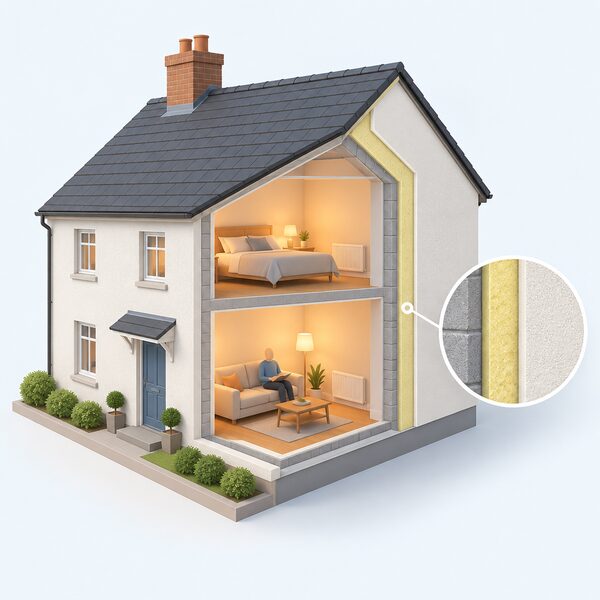
The purpose of these schemes is straightforward: ECO4 obligated energy suppliers are required to reduce heating costs for low income and vulnerable households by funding energy efficiency, insulation and heating measures17. The main objective of ECO4 is to reduce fuel poverty by improving the least energy efficient housing stock occupied by low income, vulnerable and fuel poor households18. ECO funding pays for energy efficiency measures such as heating improvements and insulation to be installed20.
A solid wall insulation measure that is installed correctly reduces the heat a home loses through its walls. That is a permanent reduction in the energy the household must buy, and it is the closest thing to independence that a fabric measure delivers: less exposure to price, less exposure to the grid's carbon intensity, less exposure to the supplier's tariff.
A defective installation delivers little of that. The household has paid, in disruption and in some cases in contribution, for a measure that does not perform, while remaining dependent on the same supplier and the same grid. The audit found that 92% of audited external wall insulation installations had at least one major technical non-compliance2. Where that is the case, the intended saving is not being realised.
The dependence that remains is structural. These are obligation schemes: the energy company funds the measure because it is required to, and the household's relationship with that company continues afterwards. Ofgem does not administer guarantees or financial protection for GBIS measures8, so the long-term protection sits with the guarantee register and the installer, not with the regulator. Remediation restores the intended performance of the measure. It does not change the fact that the home still buys its energy.
The wider context is that the schemes have closed. GBIS ran from April 2023 to March 2026, when funding ended, as with ECO49. The measures installed under them remain in the housing stock, and so do the defects. For households weighing further fabric work, the relevant questions are the ones this episode raises: who is registered, what guarantee applies, and what standard the work must meet. Those are covered in finding an insulation installer and insulation standards and certification.
Sources20 cited
- Solid wall insulation installed under ECO4 and GBIS: statistical audit results, GOV.UK, 2025-10-13
- Retrofit Measures ECO4 and GBIS, Hansard, 2025-10-13
- Reforming consumer protection for home upgrade schemes, GOV.UK, 2026-06-17
- Apply for the Great British Insulation Scheme, GOV.UK
- ECO4 delivery guidance v3.2, Ofgem, 2025-12-08
- Public Accounts Committee report, UK Parliament, 2025-11
- Energy Company Obligation ECO guidance 2022 to 2026, GOV.UK, 2022-07
- Great British Insulation Scheme: supply chain, Ofgem
- Great British Insulation Scheme briefing, House of Commons Library
- Great British Insulation Scheme, Ofgem
- Written statement: Housing Cabinet Secretary responds to UK Government action on GBIS and ECO4, Welsh Government, 2025-01-23
- Great British Insulation Scheme: homeowners and tenants, Ofgem
- Energy Company Obligation briefing, House of Commons Library
- Contacts, guidance and resources, Ofgem
- Written statement: support for householders impacted by the closure of the Energy Company Obligation scheme, Welsh Government, 2026-03-13
- ECO4 delivery guidance version 4.0, Ofgem, 2026-03-26
- ECO4 flexibility funding, Ceredigion County Council
- ECO4 Flex and GBIS Flex information document, Ceredigion County Council, 2025-11
- Great British Insulation Scheme release, September 2025, GOV.UK, 2025-09-18
- Home energy efficiency, Bridgend County Borough Council
 Finding an Insulation InstallerHow to find, verify and check an insulation, glazing or ventilation installer in the UK: the registration schemes, trade bodies and guarantee arrangements that cover the work, how to compare quotes, what a written specification should state, and how complaints and disputes are handled.
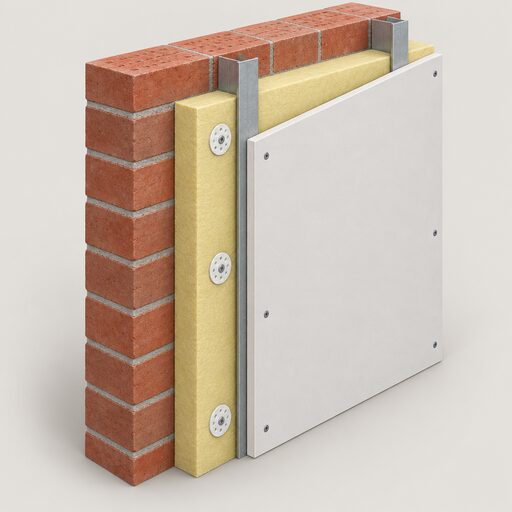 Solid Wall InsulationSolid walls lose far more heat than cavity walls, so what can actually be done about it?
 Insulation StandardsHow do you know your insulation was fitted to a proper standard, and who backs the guarantee if the installer disappears?
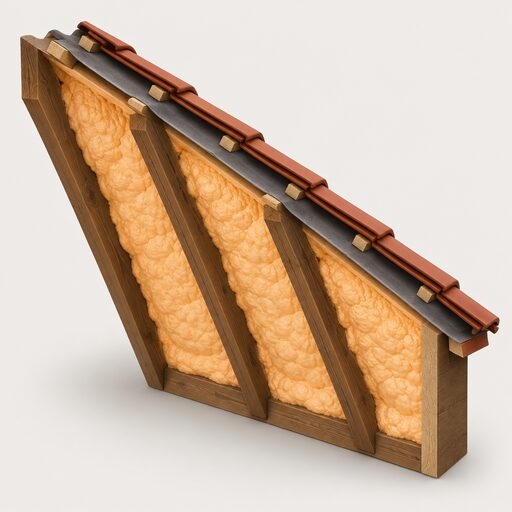 Insulation Scams and Cold CallsHow funded insulation mis-selling works, from the cold call and the fake 'illegal insulation' claim to spray foam removal bills, plus the TrustMark check, the guarantee position, and where to report a scam.
 The Full Installers GuideHow do you find an installer you can trust, and what should you check before signing anything?
 Building Regs Part L InsulationAdding insulation or replacing windows?