
In this guide
The single most useful step when looking for someone to insulate or glaze a home is to check a competent person register before making contact. Government guidance points households towards TrustMark, described as a government endorsed quality scheme, as the register for finding an installer who will assess your circumstances and property to identify suitable measures1. That is not a formality: all installers delivering measures under the Great British Insulation Scheme must be TrustMark-registered businesses and will have a registration number, and all works completed under government energy efficiency schemes have to be undertaken by a TrustMark-registered installer2.
Registration is not a guarantee of good work, and the record shows why the distinction matters. TrustMark and the certification bodies suspended 38 installer businesses, representing 81% of the external wall insulation market, and as of November 2025, 22 installers had been fully reinstated after meeting requirements on TrustMark's "robust six-point plan", including full remediation of the problems identified5. Neither TrustMark nor the Department for Energy Security and Net Zero have been able to provide minutes of meetings which took place between 2022 and 20245. A household checking a register is therefore checking a live status, not a permanent badge.
For glazing, the equivalent check runs through FENSA or CERTASS, whose registered installers are assessed against Building Regulations standards and authorised to self-certify that their work is compliant6. For ventilation, those installing and commissioning systems should typically be a member of a Competent Person Scheme or an equivalent body, though for lower risk work such as a single intermittent extract fan, adequate training is expected without scheme membership7.
TrustMark: the government-endorsed place to start your search
TrustMark is the register that government guidance names first. Leeds City Council's guidance on the Energy Company Obligation describes it as a competent person register for finding an installer that will assess your circumstances and property to identify suitable measures, and Welsh Government-backed loan terms describe it as a government endorsed quality scheme1. The practical value is that registration is a condition written into scheme rules rather than a marketing claim: contractors delivering energy efficiency or whole house retrofit works within Government schemes must be TrustMark registered, and heat pump installers must be certified by the Microgeneration Certification Scheme or equivalent12.
The register also carries obligations that run past the point of contract. Under the Green Homes Wales loan terms, the installer contracted to supply and install eligible measures must be registered with TrustMark and must remain registered until the installation work has been completed11. That continuity matters where a job runs over weeks or months, because a lapse in registration mid-project is a breach of the scheme condition rather than a private matter between householder and trader.
TrustMark's role has extended into remediation as well as selection. The Department for Energy Security and Net Zero confirmed that it nominated TrustMark to directly support customers of the closed Energy Company Obligation scheme, and TrustMark publishes a disputes address at disputes@trustmark.org.uk13. The scale of that support role is visible in the statistics: around 14,700 Warm Homes: Local Grant measures were lodged in the TrustMark data warehouse up to the end of July 2026, covering around 6,700 households14.
For a household, the independence question is straightforward. TrustMark registration does not remove dependence on a supplier, a grant administrator or a manufacturer's warranty, and it does not make a company permanent. It creates a traceable record: a registration number, a lodgement certificate, and a body with a published complaints route. That record is what a future buyer, a mortgage lender or a scheme administrator will ask for.

What TrustMark registration actually guarantees you

Registration guarantees process, not outcome. The clearest statement of what it commits an installer to comes from the Warm Home Discount (England and Wales) Regulations 2026, which require that a boiler or central heating system is installed by, or under the responsibility of, a person who is registered with TrustMark, with a certificate of lodgement issued by the operator of TrustMark15. The certificate of lodgement is the document that proves the work entered the scheme's records.
The same structure applies to insulation measures covered by Publicly Available Specification standards. Under the Energy Company Obligation delivery guidance, measures should be installed by or under the responsibility of a TrustMark registered installer and have a relevant certificate of lodgement16. That wording, "by or under the responsibility of", is significant: it allows a registered business to take responsibility for work carried out by others, but it places the accountability with the registered entity rather than with whoever happened to be on site.
Independent guidance adds the trade-specific registrations that sit alongside TrustMark. Energy Saving Trust advises checking that installers are certified with a scheme like TrustMark and are registered with GasSafe for gas boilers or OFTEC for oil boilers9. Those are separate registers with separate competence tests, and a TrustMark number does not substitute for either.
What registration does not do is insure the work. The guarantee arrangements are separate instruments, held by different bodies, and they vary by measure and by nation. A household that treats the register entry as the whole of its protection will find, if something fails, that the register is where the complaint starts rather than where the money comes from.
Insulation or glazing: the different schemes that cover each trade
There is no single register for all retrofit work. The scheme that covers a job depends on the trade, the measure and, in some cases, the nation.
For insulation delivered under government schemes, TrustMark is the common thread. All installers under the Great British Insulation Scheme must be TrustMark-accredited and will have a registration number, and the scheme is administered by Ofgem3. The measures in scope include under-floor insulation, and the wider "other insulation" category covers flat and pitched roof insulation, solid floor insulation, window glazing, draught proofing and higher performance external doors4.
For glazing, the competent person schemes are FENSA and CERTASS. Installers registered with either are assessed against Building Regulations standards and authorised to self-certify compliance6. A registered installer will be approved to carry out the work to comply with building regulations without involving local authority building control, and a certificate is issued on completion19.
For ventilation, the expectation is scheme membership or equivalent. Those installing and commissioning ventilation systems should typically be a member of a Competent Person Scheme or an equivalent body, with adequate training expected for lower risk work such as a single intermittent extract fan7. Air conditioning installation must comply with building regulations, and it is advisable to use an installer belonging to the Microgeneration Certification Scheme or a relevant Competent Person Scheme20.
For cavity wall insulation specifically, the guarantee agency route shapes who submits the paperwork. If the installer is registered with The Cavity Insulation Guarantee Agency, the installer will in most cases submit the building notice21. That is a practical division of labour: the household does not deal with building control directly.
| Work type | Register or scheme | What it establishes |
|---|---|---|
| Insulation under government schemes | TrustMark | Registration number, certificate of lodgement2 |
| Windows and doors | FENSA or CERTASS | Self-certification against Building Regulations6 |
| Ventilation systems | Competent Person Scheme or equivalent | Competence for installation and commissioning7 |
| Cavity wall insulation | Cavity Insulation Guarantee Agency | Installer submits the building notice21 |
| Gas and oil heating | GasSafe, OFTEC, alongside TrustMark | Trade-specific registration9 |
FENSA and CERTASS: checking a window and door installer in England and Wales

FENSA and CERTASS exist because window and door replacement is notifiable building work, and self-certification removes the need for a separate building control application. Installers registered with FENSA or CERTASS are assessed against Building Regulations standards and are authorised to self-certify that their work is compliant6. The certificate that follows is not paperwork for its own sake: working with installers registered under schemes such as FENSA or CERTASS matters because proper installation ensures compliance with Building Regulations and provides certification that may be required at a later date when selling the property23.
That resale point is where the certificate earns its keep. A conveyancer acting for a buyer will ask for evidence that notifiable glazing work was signed off. Where the work was self-certified by a registered installer, the certificate exists. Where it was not, the household may need to apply for regularisation, which is slower and can involve opening up work.
The scope of the schemes covers windows and doors, and the building regulations position on doors and windows is set out separately by the Planning Portal19. For roof windows, the planning position is different again: permission is not usually needed for installing new roof tiles, but the building regulations still apply to the work24.
Registration is not a statement about product quality. A FENSA or CERTASS certificate confirms that the installation met the applicable standards; it says nothing about whether the glazing specification was the right one for the property, which is a separate question covered in window energy ratings and replacement window rules.
The Installation Assurance Authority and the National Insulation Association
The Installation Assurance Authority operates a member scheme with its own complaints procedure and guarantee. All members of the scheme must adhere to the terms and conditions of the IAA, which include specific provisions in relation to handling complaints and in relation to complaints under the IAA Guarantee10. That guarantee is the mechanism that stands behind the work if the member business cannot or will not put it right.
The complaints route is published and time-bound. Complaints are logged on receipt and an acknowledgement sent within 2 working days, and the inspecting body then investigates and reports its findings within 30 working days, detailing findings from the inspection10. The contact address is concerns@theiaa.co.uk10.
The National Insulation Association sits alongside the guarantee agencies as a trade body for insulation installers, and the Cavity Insulation Guarantee Agency holds the guarantee position for cavity wall work. The practical effect of the agency route is procedural: if the installer is registered with The Cavity Insulation Guarantee Agency, the installer will in most cases submit the building notice21. The household's involvement with building control is therefore limited, and the guarantee is registered against the property rather than the person who commissioned the work.
For a household, the value of these bodies is that they create a second address for a complaint after the installer. That matters most where a business has ceased trading, because a scheme guarantee can outlive the company that did the work. It does not, however, cover every measure: the guarantee arrangements differ between cavity wall insulation, solid wall insulation, glazing and ventilation, and a household should establish which instrument applies before work starts rather than after it fails.
Warranties, guarantees and insurance-backed protection

Guarantee terms vary by scheme and by measure, and the differences are large enough to change what a household is buying. The clearest published floor comes from the Affordable Warmth Scheme in Northern Ireland, where, if grant aid is awarded for cavity wall or solid wall insulation, the installer employed must be able to provide a minimum 25-year guarantee for the work8. That is a scheme condition on the installer, not a general market standard.
The distinction between a warranty and an insurance-backed guarantee is worth holding onto. A warranty is a promise from a business; its value depends on that business continuing to trade. An insurance-backed guarantee is a policy that pays out if the business does not. The IAA Guarantee sits in the second category for its members' work, and the scheme terms and conditions include specific provisions for complaints made under it10.
Where a company has failed, the warranty position changes entirely. The pattern is visible in the wider market: the Commons Library has examined spray foam insulation and mortgages, and the interaction between installed measures, guarantees and lending decisions is a live issue for households25. A guarantee that cannot be called upon because the guarantor has gone is not protection, whatever the certificate says.
Getting quotes: why three is the minimum
Independent guidance is explicit on the number of quotes. Energy Saving Trust recommends getting quotes from at least three different installers to make sure you are getting value for money9. Three is a floor rather than a target, and the reason is that retrofit pricing varies with access, property type and the specification chosen rather than with a single market rate.
Comparing quotes properly means comparing specifications, not totals. Two quotes for the same measure can differ because one includes a ventilation provision and the other does not, because one specifies a higher-performance material, or because one carries a guarantee and the other does not. The measures in scope under government schemes give a sense of how wide a single job can be: flat and pitched roof insulation, solid floor insulation, window glazing, draught proofing and higher performance external doors all sit within the "other insulation" category18.
VAT treatment affects the figure a household sees. Where materials are 60 per cent or less of the total installation cost, an installer can charge the reduced 5 per cent VAT rate on the whole installation cost. The published example is an installer charging £1,000 excluding VAT for installation, made up of £400 for materials and £600 for labour, where materials are 40 per cent of the total and the reduced rate applies to the whole job26. A quote that does not state its VAT position is not comparable with one that does.
Where a grant is involved, the quote is not the whole transaction. Grant-funded work carries its own conditions, and the installer must be able to meet them: under the Affordable Warmth Scheme, the installer must be able to provide a minimum 25-year guarantee for cavity wall or solid wall insulation8. A household comparing a grant-funded quote with a private one is comparing two different products.

Checking credentials and avoiding cowboy installers
The checks that matter are documentary and can be done before any money changes hands. Registration numbers, trade registrations and scheme membership are all verifiable, and the scheme rules make them a condition of funded work rather than a courtesy.
For work delivered under the Energy Company Obligation or the Great British Insulation Scheme, the conduct of anyone visiting a home is specified. Providers and agents must carry and show photo identification, clearly explain who they are, who they work for and the purpose of their visit, provide contact details for their company, explain that the scheme is funded by the energy suppliers and that they are not working for or on behalf of the council, and provide a privacy notice27. That list is a useful test in itself: a caller who cannot or will not do all five is not following the scheme's rules.
Registration is also a condition on the installer side of the same schemes. Energy Company Obligation and Great British Insulation Scheme Flex providers, agents, installers and contractors should be TrustMark registered27. Where a council operates its own installer sign-up, the contact route is published locally, as with Torridge District Council's housing renewal address for installers wishing to sign up with the council28.
Two further checks are worth making. First, whether the measure is one the installer is registered to deliver: a TrustMark number covers specified measures, not every trade. Second, whether the property needs consent before work starts. Listed Building Consent will be required for most energy efficiency works, including internal works such as internal wall insulation29. Where consent is needed and not obtained, the installer's registration does not cure the problem.
If something goes wrong: complaints, disputes and the free 'Find and Fix' service
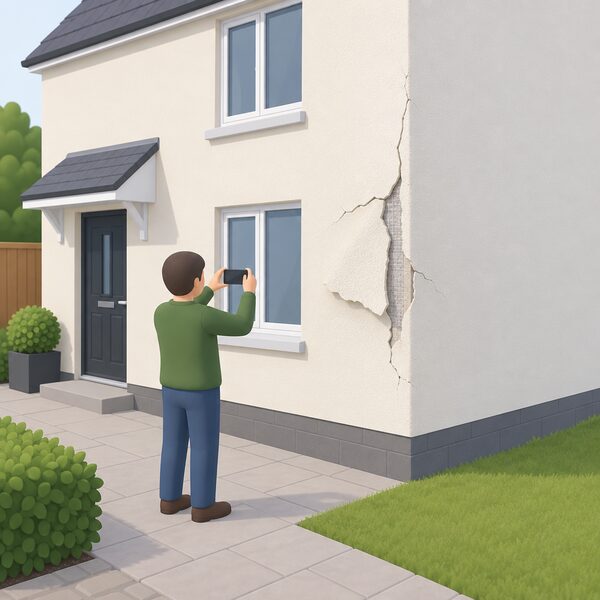
The complaints route depends on how the work was funded. For work under the Energy Company Obligation or the Great British Insulation Scheme, any complaints regarding the installer should be made to Ofgem or the energy provider30. That is a scheme rule rather than a general consumer route, and it exists because the scheme administrator holds the levers over the installer's participation.
For members of the Installation Assurance Authority, complaints go to concerns@theiaa.co.uk, are logged on receipt with an acknowledgement within 2 working days, and are investigated with a report within 30 working days10. A complaint should clearly specify the nature of the complaint and include photographs, copies of any existing correspondence, full contact details, and the name and registration number of the IAA registered business involved10. The registration number is what ties the complaint to a member bound by the scheme's terms.
Where a dispute is not resolved by the installer or the scheme, the Ombudsman Association can be used to find the right ombudsman for the complaint31. General consumer protection rights apply alongside these routes31.
The remediation picture is worth stating plainly, because it explains why the complaint routes were strengthened. TrustMark and the certification bodies suspended 38 installer businesses, representing 81% of the external wall insulation market, and as of November 2025, 22 installers had been fully reinstated after meeting requirements on TrustMark's "robust six-point plan", including full remediation of the problems identified5. Neither TrustMark nor the Department for Energy Security and Net Zero have been able to provide minutes of meetings which took place between 2022 and 20245. Households affected by faulty external wall insulation therefore sit within a remediation process that is documented but incomplete.
For households in Wales, the closure of the Energy Company Obligation scheme prompted a written statement on support for householders impacted by that closure32. The lesson for any household is that scheme closure does not close the complaint route, but it does change who is answerable.
Why a registered installer matters for grants and upcoming efficiency rules
Registration is increasingly the gate to funded work rather than an optional mark of quality. All works completed under government energy efficiency schemes have to be undertaken by a TrustMark-registered installer4. Contractors delivering energy efficiency or whole house retrofit works within Government schemes must be TrustMark registered, and heat pump installers must be certified by the Microgeneration Certification Scheme or equivalent12. For boilers and heating, compliance with building regulations is generally achieved by employing an installer who is registered under an approved scheme33.
The competent person route also removes a step. A registered installer will be approved to carry out the work to comply with building regulations without involving local authority building control, and a certificate is issued on completion19. That certificate is the evidence trail for grants, for resale and for any future claim.
The regulatory direction of travel raises the stakes. Private rented properties are expected to reach an Energy Performance Certificate rating of C by 2030, and the government has consulted on increasing the minimum energy efficiency rating to C or its equivalent by 203034. The reformed Decent Homes Standard is stated to apply in both the social and private rented sectors from 2035, with regulation and enforcement beginning then, and all rented properties are stated to be required to meet the new standard by 2035 at the latest35. In Scotland, the Scottish Government has set out an intention to regulate for good energy efficiency across all tenures by 2033 and zero emissions heating by 2045 where within its legal competence36.
For a household, the implication is that the installer's registration status is not only a quality signal but a condition of access to the funding that will pay for much of the work. A registered installer produces the certificate of lodgement, the building regulations certificate and the guarantee registration that a landlord, a buyer or a scheme administrator will later ask to see. An unregistered one may do the work well and still leave the household without the paperwork that makes it count.

Sources36 cited
- ECO scheme home energy efficiency guidance, Leeds City Council, 2026
- Great British Insulation Scheme supply chain guidance, Ofgem, 2026-09-17
- Great British Insulation Scheme: homeowners and tenants, Ofgem, 2026-09-17
- Spray foam insulation and mortgages, House of Commons Library, 2026-09-20
- Public Accounts Committee report on retrofit schemes, UK Parliament, 2026-01-23
- Energy efficient windows and doors, The CPA, 2026-03-31
- Future Homes and Buildings Standards consultation response, MHCLG, 2026-03
- Affordable Warmth Scheme, Northern Ireland Housing Executive, 2026-09-17
- Thermostats and heating controls, Energy Saving Trust, 2026-02-10
- Complaints procedure, The Installation Assurance Authority, 2026-09-20
- Green Homes Wales loan standard terms and conditions, Development Bank of Wales, 2026-09-17
- BEIS Committee report on energy efficiency, UK Parliament, 2022-05-18
- Written statement on support for householders impacted by ECO closure, Welsh Government, 2026-03-13
- Warm Homes Local Grant statistics, August 2026, MHCLG, 2026
- Warm Home Discount (England and Wales) Regulations 2026, legislation.gov.uk, 2026-03-27
- ECO4 delivery guidance version 4.0, Ofgem, 2026-03-26
- ECO4 and GBIS mid-scheme changes final stage impact assessment, DESNZ, 2025-04-07
- ECO public reports and data, Ofgem, 2026-09-17
- Building regulations for doors and windows, Planning Portal, 2026
- Is permission needed for installing new roof tiles, Planning Portal, 2026
- Building regulations: cavity wall insulation, Planning Portal, 2026
- Building regulations: insulation and cavity wall, Welsh Government, 2026-09-17
- Energy efficient home improvements, The CPA, 2026-05-07
- Building regulations: boilers and heating, Welsh Government, 2026-09-17
- Building regulations competent person schemes, MHCLG, 2026-09-17
- VAT on energy saving materials, HM Revenue and Customs, 2026-09-20
- ECO4 Flex and GBIS Flex information document, Ceredigion County Council, 2025-11
- Energy efficiency advice, Torridge District Council, 2026-09-17
- Improving energy saving and sustainability in conservation areas and listed buildings, Brighton and Hove City Council, 2026-09-17
- ECO4 scheme, West Lindsey District Council, 2025-07
- Consumer protection rights, GOV.UK, 2026-09-17
- NISEP list of schemes 2026-27, Utility Regulator Northern Ireland, 2026-04
- Guidance on PRS exemptions and exemptions register evidence requirements, MHCLG, 2026-05-05
- Home heating, Belfast City Council, 2026-09-20
- NISEP list of schemes 2024-25, Utility Regulator Northern Ireland, 2024-10
- Energy efficiency advice and grants, Bristol City Council, 2026-09-20
 Insulation StandardsHow do you know your insulation was fitted to a proper standard, and who backs the guarantee if the installer disappears?
 Using an Installer in EnglandHow do you check an installer is registered to sign off their own work, and what happens if they are not?
 Insulation and Glazing CostsTypical installed costs for cavity wall, solid wall, loft and roof insulation, draught-proofing and replacement glazing, by measure and home size, with the savings, VAT position and funding schemes that shape the final bill.
 The Full Installers GuideHow do you find an installer you can trust, and what should you check before signing anything?
 Building Regs Part L InsulationAdding insulation or replacing windows?
 Installer in Northern IrelandHow do you check an installer in Northern Ireland is properly registered, and who do you complain to if the work goes wrong?