

In this answer
Short answer
Spray foam insulation paperwork is the set of documents that proves what was installed, by whom, and on what terms. Independent guidance sets out four items a household should hold: a report from a survey done before any work started, a product certificate showing what type of spray foam was used, a guarantee from the trader who carried out the work, and a guarantee from the manufacturer of the insulation1. Those four documents are what a future buyer, a mortgage lender or a warranty provider will ask for.
The reason the paperwork matters more for spray foam than for most insulation is that the material is hard to undo. Spray foam can be used in floors, but it is difficult to remove from the floor joists, wires and pipework, so it can present a problem when maintenance work is needed in that area in the future2. It has been in use for more than 30 years and can be used in a number of ECO-eligible insulation applications to fill voids and gaps3. Once it is in, the certificate and the guarantees are the only record of what was done.
There is also a market problem behind the paperwork. Many cases of consumer harm involve cold calling, mis-selling, and rogue traders4, and rogue traders are known to use aggressive sales tactics to pressurise homeowners into installing spray foam insulation5. In Parliament it was noted in June 2026 that many households who had spray foam installed have found they have encountered problems when selling their home6. Documents obtained before work starts, and kept afterwards, are the household's defence.
Paperwork on a spray foam job: survey report, product certificate and guarantees
The four documents form a chain. The survey report establishes that the property was assessed before anything was sprayed. The product certificate identifies the material. The trader guarantee covers the workmanship. The manufacturer guarantee covers the product. Independent guidance lists exactly this set: a report from a survey that was done before any work started, a product certificate showing what type of spray foam was used, a guarantee from the trader who carried out the work, and a guarantee from the manufacturer of the insulation1.
Each document answers a different question later on. The survey report answers whether the roof or floor was suitable. The product certificate answers whether the foam is open cell or closed cell, which matters because the two behave differently in a roof. The guarantees answer who pays if something fails. Where a scheme is involved, the same principle applies: grant recipients are told that if they offer guarantees or warranties, they should make sure they get these documents after the installation9.
The material itself is usually made from polyurethane and filled with bubbles of gas or air, in open-cell and closed-cell types3. It can be sprayed on the inside of roofs, in walls and floors1. Retrofitted spray applied closed and open-cell polymeric insulation to the underside of roofs of dwelling properties has been tested for fire performance, and such sprayed configurations can satisfy the highest demands for roof covering classification as currently included in Approved Document B guidance10. That testing evidence sits with the manufacturer, not the household, which is another reason the product certificate is worth keeping.
"This should include: - a report from a survey that was done before any work started - product certificate showing what type of spray foam was used - guarantee from the trader who carried out the work - guarantee from the manufacturer of the insulation"

Pre-work survey report: what it should show and why it matters first

The survey is the document that decides whether spray foam should go in at all, and it is the one most often skipped when a household is under sales pressure. Independent guidance states that a survey should include a U-value calculation, which shows how well-insulated your home is, and an assessment of the risk of condensation occurring, along with identifying any problems and the measures needed to prevent them3. Without that assessment, a household has no record that moisture risk was considered.
The wider installer standards point the same way. Under the Kiwa Cavity Wall Insulation Installer Scheme, the property must be surveyed thoroughly before any material is installed11. The Installation Assurance Authority requires evidence of pre and post works background ventilation test results, photos and floor plan drawings to prove the presence of existing wet room ventilation and to ensure due consideration of factors such as mould and condensation risk12. Those are installer obligations, but they generate documents a household can ask to see.
Where a floor is being treated, a survey may carry a direct cost. For robotic underfloor installation, a household may also be required to pay for a survey in advance, to establish whether the floor is suitable13. That is a charge before any work, and it should produce a written report.
The moisture question is not theoretical. Official guidance on the moisture risk of spray foam insulation applied to timber sloped roofs applies to England14, and the government has published fire testing recommendations for spray foam roof insulation10. A survey report that records the roof construction, the ventilation provision and the condensation risk is the household's evidence that these issues were addressed before the foam went in.
Product certificate: identifying the type of spray foam used
The product certificate is the document that names the material. Spray foam insulation can come in two forms7, and both open-cell and closed-cell spray foam insulation are usually made from polyurethane and filled with bubbles of gas or air3. The certificate should state which one was applied, because the two have different insulation values, different vapour behaviour and different implications for a roof.
The certificate also ties the installation to a manufacturer. That matters because the manufacturer guarantee is issued by that company, and a claim under it will be assessed against the product that was actually supplied. A certificate that names a product but not a batch, or names a generic "spray foam" without a maker, leaves the household without a route to the manufacturer.
Independent guidance on the documents to hold puts the product certificate second in the list, after the survey report and before the two guarantees1. The order reflects how a later inspection works: the survey says the property was suitable, the certificate says what went in, and the guarantees say who stands behind it.
Where the work was funded through a scheme, the certificate also supports the lodgement record. Under the ECO4 delivery guidance, measures should be installed by or under the responsibility of a TrustMark registered installer and have a relevant certificate of lodgement15. The product certificate and the lodgement certificate are different documents, and a household should expect to hold both where a scheme was involved.
Guarantees from the trader and insurance-backed guarantees: the two documents to check

Two guarantees are expected, and they cover different things. The trader guarantee covers the installation workmanship. The manufacturer guarantee covers the product. Independent guidance lists both, alongside the survey report and product certificate1. A household that holds only one of the two has cover for half the risk.
The trader guarantee is only as good as the trader. Where a business stops trading, a workmanship guarantee issued by that business is difficult to enforce, which is why insurance-backed cover is treated separately. Independent guidance on professional insulation installation describes the expected package as TrustMark registered installers, membership of a trade assurance body such as the Installation Assurance Authority, Cavity Insulation Guarantee Agency or Solid Wall Insulation Guarantee Agency, public liability insurance, employer's liability and an insurance-backed guarantee16. The insurance-backed guarantee is the element that survives the installer.
The Installation Assurance Authority operates a complaints procedure and requires proof of ownership before it will act: a copy of a Land Registry extract or Mortgage Statement and a copy of a utility or council tax bill, or a tenancy agreement if the property is tenanted17. That is a practical point for anyone assembling a claim file, because those ownership documents sit alongside the installation paperwork.
TrustMark registration and ECO-funded work: when the installer must be registered
For work funded through the Energy Company Obligation, registration is not optional. Installers under ECO must be TrustMark accredited and will have a registration number, except in the case of installers of district heating connections18. The same requirement runs through the ECO4 delivery guidance, which states that measures should be installed by or under the responsibility of a TrustMark registered installer and have a relevant certificate of lodgement15.
The requirement extends beyond ECO. Under the Warm Home Discount (England and Wales) Regulations 2026, the boiler or central heating system is installed by, or under the responsibility of, a person who is registered with TrustMark, with a certificate of lodgement issued by the operator of TrustMark19. In Scotland, Home Energy Scotland Grant and Loan funding requires a TrustMark registered contractor for external wall, internal wall, flat roof, room-in-roof or floor insulation20, and the Private Rented Sector Landlord Loan requires a TrustMark registered installer for solid wall, underfloor, flat roof or room-in-roof insulation21. Where Home Energy Scotland funding is used for solid wall, underfloor, flat roof or room-in-roof insulation, the installer is required to be registered with TrustMark for those measures22.
TrustMark is described in council guidance as a government endorsed quality scheme23 and as a competent person register for finding an installer that will assess your circumstances and property to identify suitable measures24. It is also the body that reported quality problems in scheme-funded work: TrustMark notified DESNZ of suspected fraud involving retrofit businesses overclaiming for work undertaken in April 2024, and of high levels of external wall insulation installations that did not comply with the relevant quality standard in October 202425. A parliamentary committee noted that neither TrustMark nor DESNZ have been able to provide minutes of meetings which took place between 2022 and 202426. Registration is a starting point for checking an installer, not a guarantee of the work.
| Scheme or funding route | Installer registration required | Source |
|---|---|---|
| Energy Company Obligation (ECO) | TrustMark accredited, with a registration number | 18 |
| ECO4 delivery | TrustMark registered installer, with a certificate of lodgement | 15 |
| Warm Home Discount (England and Wales) 2026 | Registered with TrustMark, certificate of lodgement issued | 19 |
| Home Energy Scotland Grant and Loan | TrustMark registered contractor for wall, roof and floor measures | 20 |
| Private Rented Sector Landlord Loan | TrustMark registered for solid wall, underfloor, flat roof, room-in-roof | 21 |
Listed buildings: consent needed before any spray foam is installed

In a listed property the paperwork question starts before the survey. Listed building consent must be obtained before installing spray foam insulation anywhere in a listed property, and this is unlikely to be granted5. Council guidance confirms that introducing new materials to the property, such as insulation, is a case where consent is required27, and that more disruptive work like internal or external insulation will usually need Listed Building Consent28. Listed buildings will require listed building consent for any significant work29, and new roofing materials require listed building consent as an external alteration30.
The practical consequence is that a household in a listed building should hold a consent decision, or a written refusal, before any installer arrives. An installation carried out without consent creates an enforcement problem that no product certificate or guarantee can resolve, and it sits alongside the mortgage and sale difficulties already reported for spray foam generally6.
For listed buildings, the relevant pages are listed buildings insulation and glazing and planning permission for insulation, cladding and windows. The consent regime is administered by the local planning authority, so the documents come from the council, not the installer.
When paperwork is missing: the TrustMark 'Find and Fix' service and free home checks
Missing paperwork is common enough that a recovery route exists. TrustMark offers a free home check in which a qualified professional will look at the insulation to see if it was installed correctly, for wall insulation installed inside and outside your home31. The free audit involves a thorough inspection of the work completed at your property8. The audit line is 0333 555 1234, option 18, and the same number appears in Welsh consumer guidance as the TrustMark telephone contact32.
The first step is to approach the installer and the manufacturer, because the product certificate and the manufacturer guarantee originate with them. If the installer has ceased trading, the lodgement record becomes the main lead. TrustMark holds lodgements for measures installed under its framework, and the scheme rules require a certificate of lodgement for ECO4 measures15.
Where a home check is arranged, the household should expect contact to be verifiable. The letter or visitor will quote your 'unique measure reference' number so you know it's genuine31, and a household should ask for their ID and 'unique measure reference' number to check they're genuine31. The same verification applies to TrustMark contact32. A caller who cannot produce both should not be admitted.
Removal is sometimes the outcome. Independent guidance lists the reasons for removing spray foam as damp and condensation, damage to the property, or needing to make a repair such as a roof repair1. Where removal is proposed, the paperwork held from the original installation is what establishes what was installed and when, which is why the document set is worth reconstructing even years later.
For related subjects, see spray foam insulation, spray foam roof rot, how do I know if I have spray foam in my roof, insulation scams and cold calling and finding an insulation installer.
Sources32 cited
- Make sure your home is energy efficient, Citizens Advice, 2026-09-19
- Park homes advice, Centre for Sustainable Energy, 2026-07
- Spray foam insulation, Which?, 2026-05-26
- A Foamidable Challenge: tackling the impact of the mis-selling of spray foam, Citizens Advice, 2025-06-17
- Spray foam insulation advice, Centre for Sustainable Energy, 2025-11
- Energy Market Consumer Protection, Hansard, 2026-06-17
- Spray foam insulation and mortgages, House of Commons Library, 2026-09-20
- Booking your free audit, TrustMark, 2026-06-04
- ECO4 Flex, South Cambridgeshire District Council, 2026-09-17
- Fire safety: roof insulation fire testing summary and recommendations, GOV.UK, 2025-12-22
- Cavity Wall Insulation Installer Scheme, Kiwa, 2026-09-17
- FAQ and myth buster, Installation Assurance Authority, 2026-09-20
- Floor insulation, Which?, 2026-05-26
- Moisture risk of spray foam insulation applied to timber sloped roofs, GOV.UK, 2024-03-28
- ECO4 delivery guidance version 4.0, Ofgem, 2026-03-26
- DIY vs professional home insulation, Uswitch, 2025-11-07
- Complaints procedure, Installation Assurance Authority, 2026-09-20
- Energy Company Obligation: homeowners and tenants, Ofgem, 2026-09-17
- The Warm Home Discount (England and Wales) Regulations 2026, legislation.gov.uk, 2026-03-27
- Home Energy Scotland Grant and Loan terms and conditions, Home Energy Scotland, 2026-09-17
- Landlord loan, Home Energy Scotland, 2026-09-20
- Funding: grants and loans, Home Energy Scotland, 2026-09-17
- Get a grant or loan to improve your home energy efficiency, Bristol City Council, 2026
- Energy Company Obligation (ECO) scheme, Leeds City Council, 2026-09-20
- Energy efficiency installations under the Energy Company Obligation, Public Accounts Committee, 2026-01-23
- Support for householders impacted by the closure of the Energy Company Obligation scheme, Welsh Government, 2026
- When consent is required, Buckinghamshire Council, 2026-09-17
- Making alterations to a listed building, Bristol City Council, 2026-09-17
- Is permission needed for installing new roof tiles, Planning Portal, 2026
- Getting consent for works to a listed building, North Northamptonshire Council, 2026-09-17
- Get help with faulty solid wall insulation, Citizens Advice, 2026-09-17
- Get help with faulty solid wall insulation (Welsh), Citizens Advice, 2026-09-20
 Insulation StandardsHow do you know your insulation was fitted to a proper standard, and who backs the guarantee if the installer disappears?
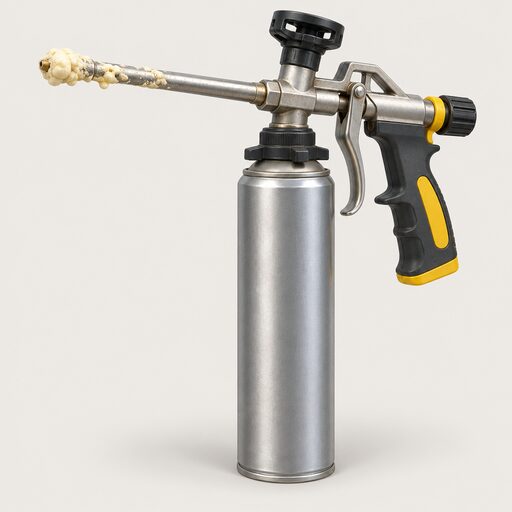 Spray Foam InsulationOpen and closed cell spray foam on roof slopes and under floors: what it costs, the moisture and timber decay risks identified in official modelling, why lenders and surveyors ask questions, what paperwork exists and what removal involves.
 Certificates You Should ReceiveAfter work like solar panels or a new boiler, what paperwork should you actually be handed, and by when?
 Selling a Home With Energy KitCovers the paperwork a sale requires when a home has solar panels, a heat pump, insulation or a leased roof, and how warranties, export payments and guarantees transfer.
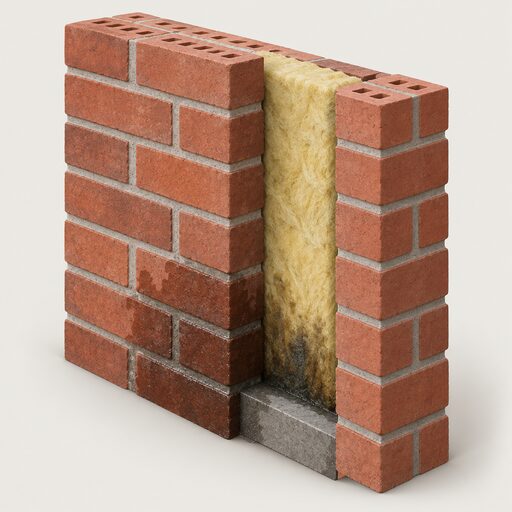 Cavity Wall Insulation ProblemsDamp patches after cavity wall insulation, and whether the guarantee actually pays out, are the two things people most want answered.
 Paperwork to KeepThe certificates, guarantees and records that follow each type of energy work, why they matter at sale, for grants and for export payments, and where replacements can be obtained.