

In this guide
A home sold with solar panels, a heat pump or insulation carries a second set of documents alongside the title: the Energy Performance Certificate, the MCS certificate, the warranty terms and, where the roof is leased, the lease itself. The Energy Performance Certificate is the only one of these that is a legal requirement in every part of the UK. It must be provided to the purchaser free of charge, and it is valid for a maximum of ten years or until another certificate is commissioned for the same building, whichever is sooner1.
The equipment itself is usually treated as part of the property. Solar panels may be included in the fixtures and fittings document as part of the house sale, and ownership documents sit with the sale agreement documents, where a solicitor can help interpret the ownership and transfer forms1. What a buyer inherits is therefore not just hardware but a set of obligations, entitlements and, in some cases, restrictions that were agreed before they arrived.
The practical risk sits in three places. First, whether the installation was certified and registered, because that determines access to export payments and to some grant schemes. Second, whether the warranty is held by a company that still exists. Third, whether anything about the installation, from a leased roof to spray foam insulation, causes a lender to refuse the mortgage. Each of these is checkable before exchange, and each is harder to fix afterwards.
What a buyer inherits: solar panels, heat pumps and the paperwork trail
Solar panels capture the sun's energy and convert it into electricity that can be used in the home, or sent back to the electricity grid in return for a payment known as the Smart Export Guarantee8. That export payment is the part of the inheritance most easily lost, because it depends on registration rather than on the panels themselves. A change of ownership form is needed to ensure the new occupier receives any export payments1.
The paperwork trail has a recognisable shape. A solar installation scheme specification used in Wales requires the installer to hand over record drawings, test and completion certificates, maintenance instructions, manufacturers' directory and colour product literature, a full description of works and commissioning certificates at practical completion9. That list is a useful checklist for any buyer, because it is the same set of documents a solicitor, a surveyor or a future purchaser will ask for.
For a heat pump, the equivalent evidence is the design-stage prediction of system efficiency that MCS requires installers to provide, together with the commissioning record. It is worth being precise about what that document is: MCS requires installers to provide a design-stage prediction of system efficiency, not to verify actual performance, and MCS does not require remediation of systems that are underperforming relative to their design10. A buyer who expects the certificate to guarantee running costs will be disappointed; a buyer who expects it to show what was specified and installed will not.
Where the property is in a conservation area or is a statutory listed building, the documentation set widens. Guidance for such properties points to the solar panel advice on the Historic England website, and a planning checklist for listed buildings asks for a heritage statement describing the significance of the listed building, detailed information about the solar panel system, written description, internal and external site photographs, details of proposed manufacturers, internal enabling works, methods of installation and finishes, and an explanation of how the proposal responds to the site and its setting11. Those documents are the record that the work was consented, and their absence is a question a buyer's solicitor will raise.
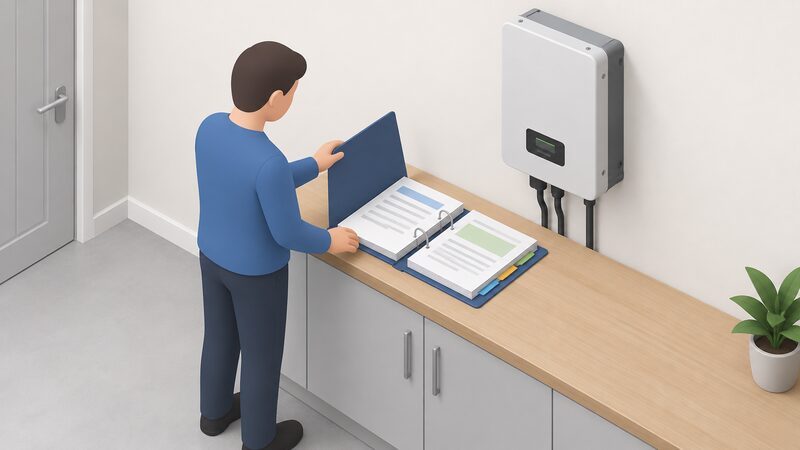
The EPC: the legal must-have when you sell

An Energy Performance Certificate is required when selling or letting an existing building, and it is needed whenever a property is built or marketed for sale or rent2. Provision of an EPC is a statutory requirement whenever a property is bought, sold or rented, and the requirement was introduced in 200713. In Scotland, EPCs must be provided when a building is advertised for sale or for let to a new tenant, and they are also required upon completion of construction of a new building14. It is a legal requirement for all new build domestic dwellings in England and Wales to have an EPC when completed16.
The duty falls on the seller. If the building is being offered for sale, it is the responsibility of the seller to provide the EPC to the potential buyer, and the certificate must be provided to the purchaser free of charge3. It must also be available for issue to all prospective purchasers, not only the eventual buyer3. The owner or landlord must have an EPC, make it available to potential buyers or tenants, and give a copy to the new owner when selling4.
The certificate is valid for a maximum of ten years, or until another EPC is commissioned for the same building, whichever is sooner4. A buyer receives a copy from the seller that can be reused within the period of validity, and the certificate should be made available at no cost4. Certificates are held on the Department for Communities and Local Government EPC register, which can also be used to find the certification body of a Domestic Energy Assessor, listed as scheme details below the assessor's contact details17.
Cost is modest relative to the transaction. Energy Performance Certificates are quick and easy to get and usually cost £50 to £1505. The price is set by the assessor rather than by government, so it varies with property size, location and turnaround. A seller who has an unexpired certificate from a previous marketing period can reuse it, which is why the ten-year validity matters more than the date of the last sale.
EPC ratings: what the certificate says about a low-carbon home
An EPC provides an assessment of a home's energy efficiency, and it rates the property from A to G, with G being the least energy efficient18. It contains information on potential energy costs and carbon dioxide emissions, with a coloured chart showing how energy efficient the building is or could be, and it gives useful information about the energy efficiency of a property, as well as its heating source, estimated carbon emissions and estimated energy cost20. Each certificate comes with a report setting out cost effective measures to improve energy efficiency and energy rating, such as low energy bulbs or upgrading insulation4.
The rating basis is the point most often misunderstood by buyers of low-carbon homes. EPC ratings are based on the costs of home heating, rather than its carbon footprint, which means that cheaper heating scores better22. A heat pump running on electricity can therefore score differently from a gas boiler even where the carbon outcome is better, because the metric follows running cost. A home with solar panels and a heat pump may have a strong carbon story and a middling rating.
The certificate is also a gateway document for support. The Nest scheme in Wales, for example, requires a home to have an EPC rating of 54 (E) or less20. That means the rating on the certificate at the point of sale can determine eligibility for later funded work, which is a reason for a buyer to read the improvement report rather than only the letter.
For a household's independence, the EPC is a weak instrument: it measures modelled cost, not self-consumption, and it says nothing about how much of a home's electricity the roof actually supplies. Its value at sale is as a disclosure document and as a trigger for the improvement measures listed alongside it.
MCS certification: why buyers check it and sellers should too
MCS is an independent certification scheme for microgeneration installation companies and products, aiming to ensure consistent standards and provide confidence to consumers17. Its roles include setting and maintaining technical standards for installations and products, certifying installers and products against those standards, issuing MCS certificates for completed eligible installations, and assisting certification bodies to review and address cases and consumer issues relating to installers or products23.
For a buyer, certification answers two questions: was the work done to a recognised standard, and is the installation registered for the payments that depend on it. Guidance for buyers of a home with solar panels puts it directly: check the system is properly registered with MCS and any export tariffs, and get the panels checked by an MCS certified specialist to confirm safe installation in line with safety standards1. A find a contractor tool is available to locate a certified professional1.
Certification also has a building control consequence. Generally, installers that are MCS certified do not need to submit a Building Regulations Application, but all installers should check with local Building Control9. A scheme specification used in Wales requires that the company providing the installation must carry a valid Trustmark and be MCS certified9. Where a buyer cannot find an MCS certificate, the absence may mean either that the work predates certification or that it was never certified, and the two have different implications for insurance, payments and future grant eligibility.
It is worth stating the limits of certification plainly. MCS specifies handover documentation but not the quality of verbal explanation, household understanding, structured follow-up or ongoing support10. Weather compensation is not mandatory under current requirements of the Microgeneration Certification Scheme, and third party non-modulating controls are not prohibited10. Certification is a floor, not a guarantee of performance.

Documentation at handover: what to pass on and what to keep

The handover pack is the seller's evidence and the buyer's protection. A solar installation scheme specification requires record drawings, test and completion certificates, maintenance instructions, manufacturers' directory and colour product literature, a full description of works and commissioning certificates to be handed to the employer at practical completion9. A building notice advice note for Northern Ireland adds that other information may also be required, including structural calculations, thermal performance specification such as CO2 emissions and thermal calculations, a certificate for cavity wall installation, and manufacturer's installation details for solar panels indicating loadings and fixings24.
Structural evidence matters because panels add load. Guidance is explicit that the roof must be checked to support the additional wind, snow and static load imposed by the solar panels, and that it must comply with Part A: Structure25. Where a loft conversion or other alteration has happened since installation, that calculation is worth re-reading rather than assuming.
Planning documents belong with the rest of the handover file. The permitted development rights relating to solar panels are Class A and Class B for domestic premises, and there are important limits and conditions to permitted development rights which must be met to benefit from them26. A buyer should check whether there are restrictions on development at the property due to conditions attached to the original planning permission, the property being subject to an Article 4 Direction, or restrictions listed in the property's deeds18. Solar panels on listed buildings need planning permission and listed building consent, and in some instances listed buildings will not be suitable for installing solar panels26.
For a household's independence, the handover file is what keeps the system working and keeps the payments flowing. Without the commissioning record, a future service visit starts from scratch; without the export registration, the roof generates for the grid rather than for the bill.
Warranties and guarantees: do they transfer to the new owner?
Solar panels usually come with a 25-year performance warranty and a five to 10-year product warranty1. Those are two different promises: the performance warranty covers output over decades, while the product warranty covers the panel itself against manufacturing defects. Ownership documents may be included in the fixtures and fittings document as part of the house sale, and a solicitor should be able to help interpret the documents relating to the solar panels, including any ownership and transfer forms1.
Transfer is not automatic in every case. A change of ownership form is needed to ensure the new occupier receives any export payments, which is a separate step from the warranty itself1. For a leased roof, the position is different again: the panels may be owned by a third party, and the lease, not the warranty, governs what the new owner can and cannot do. A buyer should establish in writing which company holds each obligation before exchange.
The same logic applies to grant-funded work. Where an installation was supported by a scheme, the scheme rules may attach conditions that run with the property. A buyer should ask which scheme funded the work and what conditions were attached, because those conditions can outlast the original household.
When something went wrong: complaints and time limits

MCS is the contact for issues with the installation process, the installer, or the MCS certificate or product17. It can be reached at mcscertified.com or by calling 0333 103 8130, and MCS may contact a property owner for a short, routine verification on behalf of Ofgem either by email or on 0333 103 81986. Property owners should aim to respond within seven days when contacted for MCS checks28.
The limits of that route are worth understanding before relying on it. MCS requires installers to provide a design-stage prediction of system efficiency, not to verify actual performance, and it does not require remediation of systems that are underperforming relative to their design10. A complaint about a system that works but delivers less than the sales conversation implied may therefore fall outside what certification can resolve.
For renewable heat installations, Ofgem publishes contact routes for the Domestic Renewable Heat Incentive, which is the body to approach for issues connected with that scheme17. For solar, the export payment sits with the supplier rather than the regulator, and the change of ownership form is the mechanism that keeps it running1.
There is no single time limit stated for complaints about energy installations. What exists instead is a set of routes: the installer, the certification body, MCS, and for scheme-related matters the scheme administrator. A buyer inheriting a problem should establish which route is still open, and whether the original household already used it.
Buying a home with solar or a heat pump: what to check before you commit
The checks fall into four groups: certification, documentation, structure and restrictions.
- Certification and registration. Confirm the system is properly registered with MCS and any export tariffs, and have the panels checked by an MCS certified specialist to confirm safe installation in line with safety standards1.
- Documentation. Ask for the handover pack: record drawings, test and completion certificates, maintenance instructions, manufacturers' literature, description of works and commissioning certificates9.
- Structure. Confirm the roof was assessed for the additional wind, snow and static load imposed by the panels and complies with Part A: Structure25.
- Restrictions. Check conditions attached to the original planning permission, any Article 4 Direction, and restrictions listed in the property's deeds18.
A survey commissioned through a solar buying scheme follows a similar pattern: once an offer is accepted, a surveyor visits the property to assess whether the roof is suitable for a solar installation and to confirm the number of panels, their location and other details such as cabling locations and colour27. That is a useful model for a private purchase, because it separates roof suitability from system performance.
For a heat pump, the questions are about design and commissioning rather than roof load. Ask for the design-stage prediction of system efficiency and the commissioning record, and treat the prediction as a design document rather than a performance guarantee10. Where the property is off the gas grid, the comparison that matters is against the fuel being replaced, and the site's off-gas-grid homes page sets out the options.
Where the property is a flat or shares a structure, consent questions arise before any technical ones. The leasehold consent for energy work page covers freeholder and management company approvals, and energy improvements in flats covers what is practical in a shared building.
EPC reform and what it means for sellers
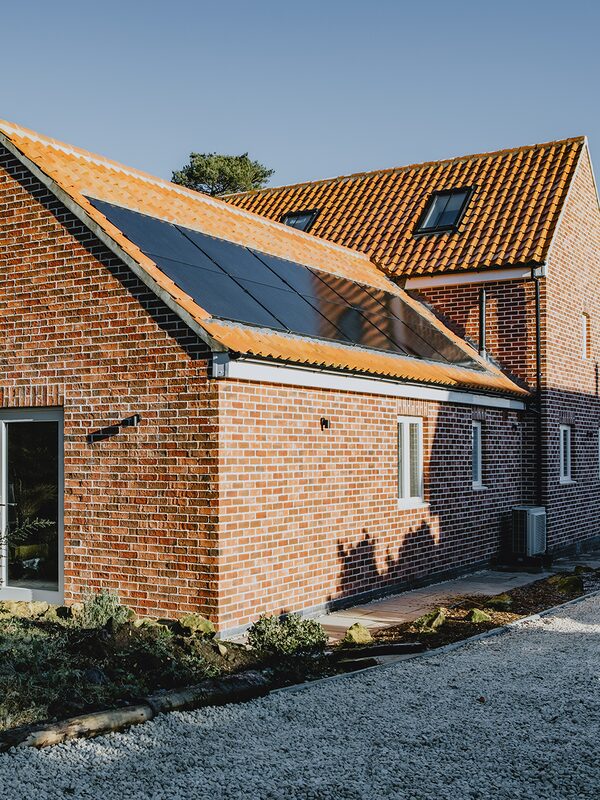
The EPC regime is being rebuilt. A new EPC rating system for domestic buildings will give clearer information on the fabric energy efficiency of a property, the emissions, efficiency and running costs of its heating system, and the cost of energy to run the home to standardised conditions29. The reforms will replace the single efficiency score with four headline metrics from the second half of 20277.
In Scotland, the Energy Performance of Buildings (Scotland) Regulations 2025 set out when certificates are required, including when a building is advertised for sale or for let to a new tenant and upon completion of construction of a new building14. The Scottish Government has published its response to EPC reform consultations, and has separately announced work on reforming energy performance certificates14.
For a seller, the practical consequence is that the certificate a buyer sees today may not resemble the one that will be required in a few years. A home with a heat pump and solar panels may score differently under a system that reports fabric, emissions, efficiency and running cost as separate metrics rather than as one cost-based letter. That is a reason to keep the installation documentation in good order now, because the next certificate will draw on it.
For a household's independence, the reform direction is modestly helpful: separating fabric from heating system makes it easier to see what a home actually needs, rather than what its fuel costs. It does not change the underlying dependence on a grid connection, a supplier and, for most homes, a gas or electricity import.
Sources29 cited
- Buying a house with solar panels, Energy Saving Trust, 2026-08-13
- When is an Energy Performance Certificate required?, Planning Portal, 2026
- Energy Performance Certificates guide: buildings for sale, Scottish Government, 2026-08-24
- Energy Performance Certificates, nidirect, 2026-02-26
- Five top tips to cut your energy bills, Welsh Government, 2026-03-18
- Boiler Upgrade Scheme guidance for property owners, Ofgem, 2026-03-25
- Delivering net zero for Scotland's buildings, Scottish Government, 2023-11
- Solar panels, Oxfordshire County Council, 2026-09-17
- Barcud solar panel installation scheme specification, Sell2Wales, 2026-06-15
- Heat pump transition report, UK Government, 2026-05
- Guidance on retrofitting homes: solar panels, London Borough of Lambeth, 2026-09-17
- Solar panels planning permission checklist, London Borough of Islington, 2026-09-17
- Energy Performance Certificates inquiry, UK Parliament, 2026-09-20
- Energy Performance of Buildings (Scotland) Regulations 2025 update, Scottish Government, 2025-10-10
- Energy Performance of Buildings (Scotland) Regulations 2025 update, Scottish Government, 2025-10-10
- Energy Performance of Buildings Certificates change note, GOV.UK, 2025-07-31
- Who to contact, Ofgem, 2026-09-17
- Solar photovoltaic (PV) panels, London Borough of Bromley, 2026-09-17
- Energy Company Obligation ECO4 scheme, Derbyshire County Council, 2026-09-17
- Nest eligibility, Welsh Government, 2026-09-17
- How energy efficiency data can help reduce our carbon footprint, Office for National Statistics, 2020-09-23
- Energy and net zero report, UK Parliament, 2025-05-09
- Boiler Upgrade Scheme, Ofgem, 2026-09-17
- Building Notice advice note, Building Control Northern Ireland, 2013
- Solar panels, East Herts Council, 2026-09-17
- Solar panels and planning permission, Cornwall Council, 2026-09-17
- Solar Together domestic planning guidance, Southampton City Council, 2026-09-17
- Boiler Upgrade Scheme guidance for installers, Ofgem, 2026-04-28
- Reforming energy performance certificates, Scottish Government, 2025-01-21
 Certificates You Should ReceiveAfter work like solar panels or a new boiler, what paperwork should you actually be handed, and by when?
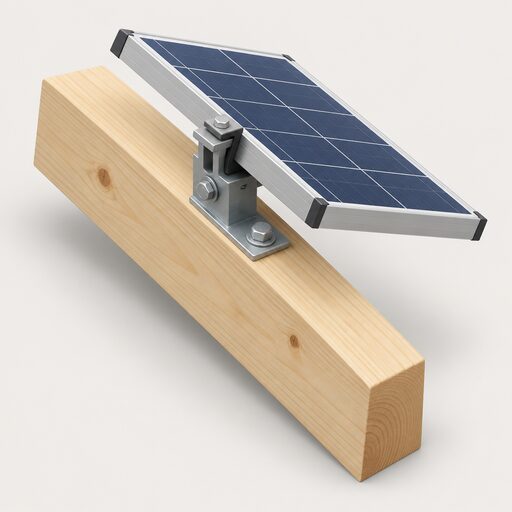 Building RegulationsExplains the building control position for a solar installation across the four nations, the structural assessment of the roof, and the fire performance requirements for roof-mounted and integrated arrays.
 Mis-Selling and Doorstep SalesCovers the practices that amount to misleading and aggressive selling of solar, insulation, boilers and batteries, and the rules that prohibit them.
 Building Regulations EnglandAdding a heat pump, solar panels or an extension usually needs building regulations approval, and it is separate from planning permission.
 New Build Homes and EnergyWhat heating will a new build actually have, and will it be a heat pump rather than a gas boiler?
 Insulation a Heat Pump NeedsWill a heat pump still work if your home is not well insulated, and would you need to add loft, wall or floor insulation first?