
In this guide
Warmer Homes Scotland is the Scottish Government's national fuel poverty scheme, launched in September 2015 and relaunched in 2023 with increased funding for clean heating systems1. It is delivered by Warmworks, a joint venture partnership formed in 2015 specifically to tender for and deliver the contract2. The scheme helps households in, or at risk of, fuel poverty improve their heating and energy efficiency, and it also supports climate goals by installing more clean heating systems and reducing emissions through improved energy efficiency1.
The scheme has invested around £399 million and helped over 47,000 households across Scotland since 20153. In 2025/26 to date, the average fuel bill savings across all completed applications is around £350 per year4. Households are offered a clean heating system in the first instance, although only where installation will avoid pushing them into fuel poverty or worsening their depth of fuel poverty4. Where clean heating would increase energy bills, an emission-producing system may be provided instead1.
Eligibility covers owner-occupiers and some private rented sector tenants who are living in or at risk of fuel poverty and who meet the qualifying criteria5. The route in is through Home Energy Scotland, which provides free and impartial advice funded by the Scottish Government6. Warmworks then carries out a survey using rdSAP software and arranges installation7. The Scottish Government meets costs in most cases, though customer contributions may be required in certain circumstances8.
Warmer Homes Scotland: what the scheme is and who runs it
Warmer Homes Scotland is the Scottish Government's national fuel poverty scheme2. It was launched in September 2015 and replaced the Energy Assistance Scheme, which ceased taking referrals on 31 March 2015 and concluded all works by the end of August 201510. The programme was relaunched in 2023 with increased funding for clean heating systems1.
The scheme is delivered by Warmworks, a joint venture partnership formed in 2015 specifically to tender for and deliver the Warmer Homes Scotland contract2. Warmworks operates Scotland-wide coverage across six delivery regions subdivided into 16 delivery zones, with two contractors procured per zone to ensure regional coverage10. The Scottish Government committed to reviewing the scheme in each of the five years it would operate11.
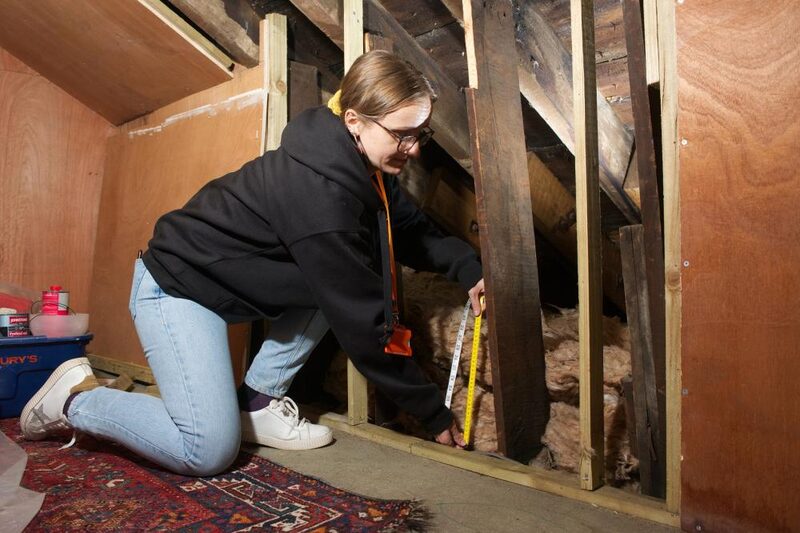
The programme has a strong focus on heating and insulation measures5. It helps eligible households by funding the installation of a range of heating measures, including renewable and micro-renewable heating, and insulation measures to improve the energy efficiency of the property12. The list of available measures includes a mix of fabric (insulation) and heating measures, including micro-renewables and measures specifically aimed at pre-1919 homes, with some mandatory and some highly recommended10.
The scheme sits within a wider Scottish policy landscape. The Heat in Buildings Strategy set out a zero emissions first approach, and the Scottish Government stated that in the short term it would continue to support the installation of replacement gas boilers under Warmer Homes Scotland for households where zero emissions heating would worsen fuel poverty13. A new, enhanced successor to Warmer Homes Scotland was to be procured following expiry of the current contract in September 2022, embedding increased support for zero emissions heating with a zero emissions first approach13.
For a household's energy independence, the scheme reduces reliance on high bills and poor heating, but it does not remove dependence on the grid or on a supplier. The measures installed are funded and arranged by the Scottish Government and its agent, so the household does not choose or pay the installer directly. The independence gained is from fuel poverty and cold, not from the energy system itself.
What it funds: heating, insulation and clean heating measures
Warmer Homes Scotland funds a mix of heating and insulation measures5. The scheme helps households in, or at risk of, fuel poverty improve their heating and energy efficiency, and it supports climate goals by installing more clean heating systems and reducing emissions through improved energy efficiency1. Most homes also get energy-saving upgrades, no matter which heating system is installed1.
The measures available include renewable and micro-generation measures such as ground source heat pumps, micro-wind, micro-hydro and micro-CHP systems5. The scheme also funds energy efficiency measures and a heat pump installed with all the work planned and carried out for the household, fully funded by the Scottish Government, if certain criteria are met15. The list of available measures includes a mix of fabric (insulation) and heating measures, including micro-renewables and measures specifically aimed at pre-1919 homes, with some mandatory and some highly recommended10.
Installation data from the scheme's first year gives a picture of what was actually fitted. Between September 2015 and June 2016, the scheme installed the measures below11.
| Measure installed, September 2015 to June 2016 | Number |
|---|---|
| Gas fired condensing boilers | 1,922 |
| Heating system insulation measures | 437 |
| Loft insulation measures | 372 |
| LPG gas boilers | 125 |
| Cavity wall insulation measures | 86 |
| External wall insulation measures | 50 |
| Internal wall insulation measures | 20 |
| Biomass boilers | 1 |
The total cost of all measure installs in that period was £8,145,746.1011.
In 2018/19, the most common type of measures installed were heating and hot water systems followed by boilers9. One biomass boiler was installed in 2018/19 compared with two in 2017/189. The scheme's scope has evolved: the 2023 relaunch brought increased funding for clean heating systems1.
For a household, the practical effect is that the scheme addresses both the heat source and the building fabric. Insulation reduces how much heat is lost, and a new heating system improves how efficiently the home is warmed. The combination is what drives the bill savings, rather than either measure alone. The household remains connected to the grid and dependent on a supplier for electricity or gas, but the amount of energy needed to keep the home warm falls.
Clean heating first: when a gas boiler is installed instead
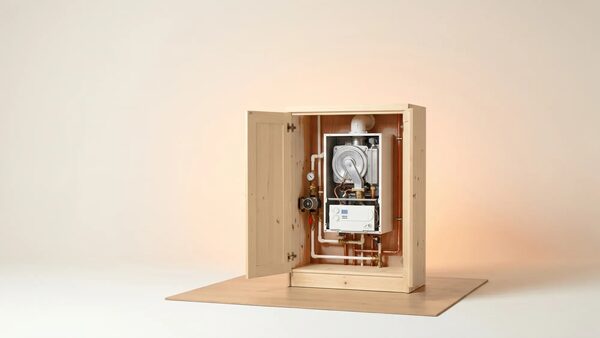
The scheme operates a clean heating first approach. Households are offered a clean heating system in the first instance, although only where installation of these systems will avoid pushing households into fuel poverty or worsening their depth of fuel poverty4. Where technically suitable, households are offered clean heating systems first1. If this would increase energy bills, an emission-producing system may be provided instead1.
The programme continues to install new gas boilers. This is because gas boilers can currently be cheaper to run due to high electricity costs and are able to be installed quicker16. The Scottish Government stated that in the short term it would continue to support the installation of replacement gas boilers under Warmer Homes Scotland for households where zero emissions heating would worsen fuel poverty13.
The policy direction is set out in the Heat in Buildings Strategy, which adopted a zero emissions first approach14. A new, enhanced successor to Warmer Homes Scotland was to be procured following expiry of the current contract in September 2022, embedding increased support for zero emissions heating with a zero emissions first approach13.
The tension here is between climate goals and fuel poverty. A heat pump may reduce emissions, but if electricity is more expensive per unit of heat than gas, a household in fuel poverty could face higher bills. The scheme's rule resolves this by prioritising the household's ability to afford warmth: clean heating is offered first, but not where it would worsen fuel poverty. That means some households still receive a gas boiler, which locks in fossil fuel dependence for the life of that appliance.
For energy independence, this is a partial step. A household that receives a heat pump and insulation reduces its reliance on gas and on imported fuel, and it may be able to use electricity from the grid more efficiently. A household that receives a gas boiler remains dependent on the gas grid and on gas prices. The scheme does not remove that dependence; it reduces the cost of it.
Support worth £10,000 or more, with bills typically cut by around £350 a year
The financial support available through Warmer Homes Scotland is substantial. Fully funded support is available to eligible homeowners through the fuel poverty schemes, with all work planned and carried out for the household17. The Scottish Government meets costs in most cases, though customer contributions may be required in certain circumstances but must be minimised and are only charged as set out in the contract rules10.
The bill savings reported by the scheme vary by year and by household.
| Period | Average fuel bill saving |
|---|---|
| 2025/26 to date | around £350 per year4 |
| 1 April 2018 to 31 March 2019 | £313 per year2 |
| Households receiving improvements | over £300 per year14 |
Individual outcomes can be higher. One Orkney household reported that bills decreased by half after installing an air source heat pump through Warmer Homes Scotland support, with an expected saving of around £1,000 a year13. That is a household's own account, not an average, and it reflects the particular circumstances of an off-gas-grid home in Orkney.
The scheme's pricing model is regional. Measures prices are set at seven Scotland-wide prices reflecting seven dwelling types, delivery prices at six regional prices, and service provider fees at six regional prices10. The price for delivery and installation of measures is firm for the first three years of the contract and then subject to CPI fluctuation annually, with automatic price variation applying to Warmworks' fee only based on referral volume bands10.
For a household, the headline is that the work is fully funded in most cases, and the bill savings are real but modest on average. The £350 per year figure for 2025/26 is an average across completed applications, so some households will save more and some less. The savings come from reduced energy demand and, where a heat pump replaces a more expensive fuel, from a cheaper running cost. The household remains dependent on the grid and a supplier, but the annual cost of that dependence falls.
Who qualifies: owner-occupiers and some private rented tenants
Warmer Homes Scotland is available to households, including owner-occupiers and some private rented sector tenants, who are living in or at risk of fuel poverty and who meet the qualifying eligibility criteria5. The scheme mainly supports owner occupiers, but it also covers tenants in private rented homes16.
There is an important restriction for private rented sector tenants. Since April 2017, tenants of landlords in the private rented sector, with some exceptions for life tenancies and agricultural tenancies, are no longer eligible for heating measures available under the scheme8. The scheme is no longer offering heating measures to those households in the private rented sector7. Insulation measures may still be available depending on the circumstances, but the heating element is closed to most private tenants.
The eligibility criteria are administered through Home Energy Scotland, which can check eligibility for financial support including Warmer Homes Scotland, the Home Energy Scotland Grant and Loan and more18. Home Energy Scotland provides free and impartial advice funded by the Scottish Government6. Advisors can discuss energy efficiency improvements and renewable energy options19.
For a household in the private rented sector, the practical position is that the scheme is unlikely to fund a new heating system. The tenant may still be able to access advice and, in some cases, insulation measures. The landlord's own obligations and the availability of other funding routes are separate matters. Tenants in the private rented sector who want improvements may need to look at other routes, including asking the landlord to act.
For energy independence, the eligibility rules mean that owner-occupiers have the strongest route to a fully funded heating and insulation upgrade. Private tenants have a much narrower route, and most cannot access heating measures at all. That limits what the scheme can do for the rented sector, and it leaves many private tenants dependent on their landlord and on the open market for any improvement.
How to apply: from Home Energy Scotland call to Warmworks survey
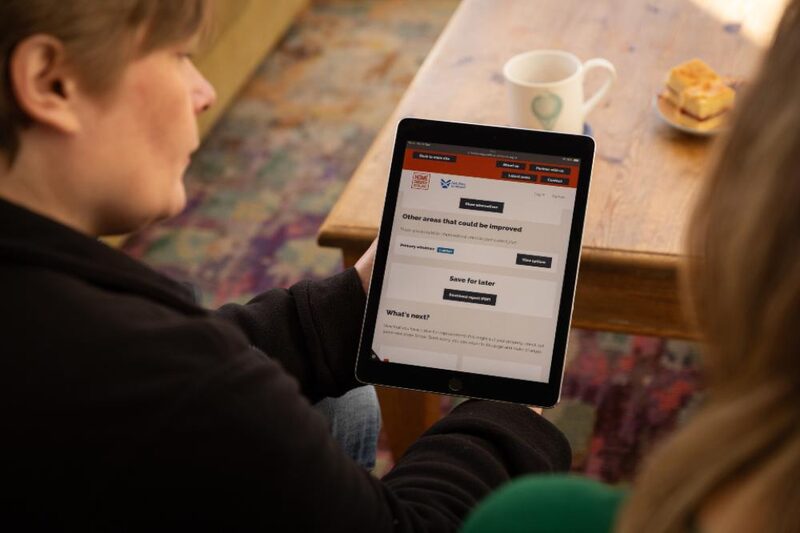
The application route starts with Home Energy Scotland. Contact is free by phone, email or WhatsApp18. The free phone number is 0808 808 2282, and calls are free from landlines and most mobile networks9. Phone lines are open Monday to Friday 8am to 8pm, and 9am to 5pm on Saturdays21. Advisors can check eligibility for Warmer Homes Scotland and other support18.
The process then runs in a fixed order:
- Contact Home Energy Scotland by phone, email or WhatsApp18.
- Have eligibility checked for Warmer Homes Scotland and other support18.
- Receive a referral to Warmworks, the managing agent2.
- Undergo an initial survey, carried out using rdSAP software7.
- Have the work planned and carried out by the scheme's contractors17.
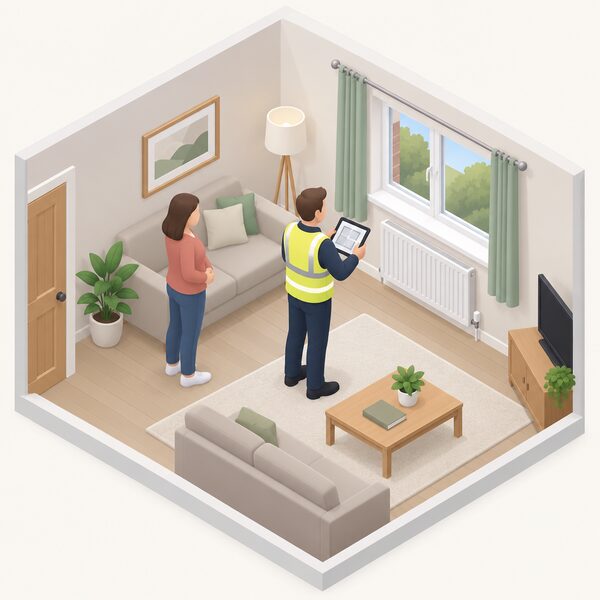
Once a household is referred, Warmworks carries out the initial survey using rdSAP software7. Warmworks is required to attempt customer contact three times at different times of the day and using different contact methods before an application can be cancelled22. Warmworks has also engaged with organisations offering enabling support to Warmer Homes Scotland customers, including Scottish and Southern Energy and other local community organisations22.
The scheme operates Scotland-wide across six delivery regions subdivided into 16 delivery zones, with two contractors procured per zone10. This structure is intended to ensure coverage across the country, including rural and island areas. The Scottish Government organised and chaired an interactive workshop with a sample group of six Warmworks surveyors in October 2017 as part of its review process7.
The household does not appoint its own installer. Projects funded by the Scottish Government must comply with all relevant building regulations, retrofit standards and guarantee requirements23. The scheme includes a service visit at the end of the initial 12 month warranty period23. Temperature monitors were placed in customers' homes for a period of 12 months under the original scheme rules10.
For energy independence, the application route means the household is dependent on the scheme's process and on Warmworks as the delivery agent. The household cannot choose its own contractor or negotiate the price. That is the trade-off for fully funded work: the household gains a warmer home and lower bills, but it does not control the installation.
Who pays: the Scottish Government meets costs in most cases
Warmer Homes Scotland is funded by the Scottish Government and offers funding and support to eligible households struggling to stay warm and keep on top of energy bills6. The Scottish Government may require customer contributions to be charged in certain circumstances, but these must be minimised and not charged other than as set out in the contract rules10.
The scheme's pricing model is set out in the contract. Measures prices are set at seven Scotland-wide prices reflecting seven dwelling types, delivery prices at six regional prices, and service provider fees at six regional prices10. The price for delivery and installation of measures is firm for the first three years of the contract and then subject to CPI fluctuation annually, with automatic price variation applying to Warmworks' fee only based on referral volume bands10.
The scheme also includes workforce requirements. The contract includes paying all staff, including sub-contractors, in line with the Scottish Living Wage, and no zero hours contracts unless the member of staff specifically requests it10. This is part of the scheme's social value framework.
Spend has grown across the scheme's life:
| Period | Spend or investment |
|---|---|
| September 2015 to June 2016 | £8,145,746.10 on all measure installs11 |
| 2016/17 | £30,839,785.2724 |
| To December 2021 | more than £156 million, helping almost 25,000 households12 |
| To 2025 | around £399 million, helping over 47,000 households3 |
For a household, the funding position is that the Scottish Government meets costs in most cases. Where a contribution is required, it must be minimised and charged only as the contract rules allow. The household does not pay the installer directly, and it does not negotiate the price. The scheme's regional pricing means the cost of the work is set by the contract, not by the market.
For energy independence, the funding model means the household is not making a capital investment. It receives the work as a funded upgrade. The independence gained is from the upfront cost of a new heating system or insulation, which would otherwise be a significant barrier. The household remains dependent on the grid and a supplier for ongoing energy, but the capital cost of improving the home is removed.
Track record: over 47,000 households helped and around £399 million invested
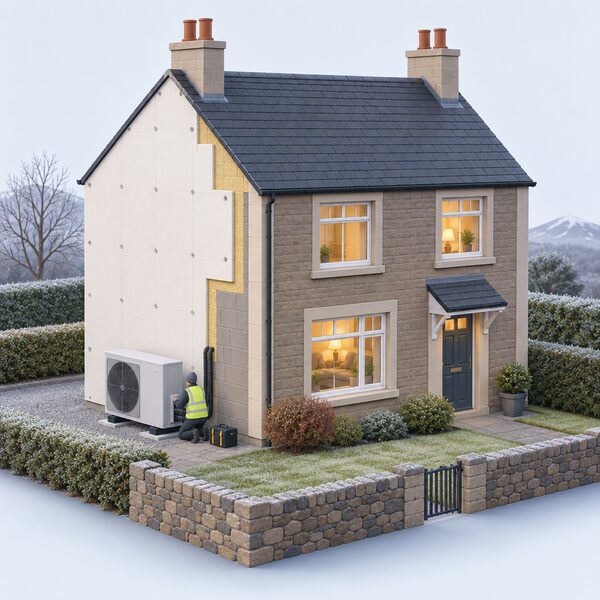
The scheme's track record is set out in official statistics. Since the launch of the first Warmer Homes Scotland scheme in 2015, the scheme has invested around £399 million and helped over 47,000 households across Scotland to live in warmer, healthier homes3. The Heat in Buildings progress report 2025 states that the scheme has helped more than 46,000 households throughout Scotland25. The Heat in Buildings progress report 2024 states that it has been operating since September 2015 and has helped more than 39,000 households throughout Scotland16.
The figures have grown over time. More than £156 million had been invested through Warmer Homes Scotland since its launch in September 2015, helping almost 25,000 households, as reported in December 202112. The scheme's own headline data states that around 21,000 households have been referred through to the Warmer Homes Scotland fuel poverty support programme since the new scheme launched in October 202325.
The scheme's first annual review reported delivery from September 2015 to March 201622. The predecessor scheme, the Energy Assistance Scheme, ceased taking referrals on 31 March 2015 and concluded all works by the end of August 201510. The scheme was reviewed in each of the five years it would operate11.
The scheme has also had gaps and waiting times in its history. The current contract expired in September 2022, and a new, enhanced successor was to be procured following that expiry14. The relaunch came in 2023 with increased funding for clean heating systems1.
For a household, the track record shows a scheme that has reached tens of thousands of homes but has also gone through a contract transition. The figures differ between reports because they were published at different dates: 39,000 in October 2024, more than 46,000 in October 2025, and over 47,000 in November 202516.
For energy independence, the track record is a measure of scale rather than of system change. The scheme has improved the fabric and heating of tens of thousands of homes, reducing their energy demand and bills. It has not removed their dependence on the grid or on a supplier, and it has not connected them to a local energy source. The independence gained is household-level: a warmer home, lower bills, and less vulnerability to cold.
Warmer Homes Scotland or the Home Energy Scotland Grant and Loan: which route fits which household
There are two main Scottish Government routes for home energy improvements, and they serve different households.
| Warmer Homes Scotland | Home Energy Scotland Grant and Loan | |
|---|---|---|
| Who it is for | Households living in or at risk of fuel poverty who meet the qualifying criteria5 | All domestic owner-occupiers in Scotland16 |
| Funding type | Fully funded5 | Grant, interest free loan or a combination of both19 |
| What it covers | Heating and insulation measures, including clean heating5 | Clean heat and energy efficiency measures16 |
| Delivered by | Warmworks, the managing agent2 | Not stated in the same terms; funded by the Scottish Government18 |
The distinction matters for eligibility. Warmer Homes Scotland is means-tested in the sense that it targets households in or at risk of fuel poverty, and it is fully funded5. The Home Energy Scotland Grant and Loan is open to all domestic owner-occupiers in Scotland, regardless of income, but it involves a loan element or a grant, not full funding16. Both are funded by the Scottish Government18.
Home Energy Scotland advisors can check eligibility for financial support including Warmer Homes Scotland, the Home Energy Scotland Grant and Loan and more18. The Funding Finder tool from Home Energy Scotland allows households to search for funding and support on improving their home's energy efficiency, reducing energy bills and making their home warmer26. Home Energy Scotland can also offer free advice on improving the energy efficiency of your home26.
For a household, the choice depends on circumstances. A household in or at risk of fuel poverty that meets the qualifying criteria may be eligible for fully funded support through Warmer Homes Scotland5. A household that does not meet the fuel poverty criteria but wants to install clean heating or energy efficiency measures may be able to use the Home Energy Scotland Grant and Loan16. The two routes are not mutually exclusive in principle, but they serve different needs.
For energy independence, the fully funded route removes the capital barrier entirely, while the grant and loan route requires the household to contribute or repay. The fully funded route is therefore stronger for households with limited means, but it is narrower in eligibility. The grant and loan route is broader but leaves more of the cost with the household.
Waiting times, refusals and gaps in the programme's history
The scheme has had periods of transition and waiting. The current contract expired in September 2022, and a new, enhanced successor was to be procured following that expiry14. The scheme was relaunched in 2023 with increased funding for clean heating systems1. The headline data records that around 21,000 households have been referred through to the fuel poverty support programme since the new scheme launched in October 202325.
Applications can be turned down at two stages, by Home Energy Scotland or by Warmworks.
| Year | Turned down by Home Energy Scotland | Turned down by Warmworks |
|---|---|---|
| 2023/24 | 68024 | not stated |
| 2021/22 | 94124 | not stated |
| 2020/21 | 73924 | 1,80024 |
| 2019/20 | 72824 | 1,37024 |
| 2016/17 | not stated | 2,22624 |
Cancellations are also recorded. In 2018/19, 317 applications were cancelled as out-with timescales8. In 2018/19, 251 cancellations, or 17.2 per cent, were due to upheaval or preparation works required8. In the earlier period, 130 customers cancelled their Warmer Homes Scotland application because of upheaval or preparation works required22.
Complaints have been low. Over the period 1 September 2015 to 31 March 2016, four complaints were escalated to the Scottish Government, none of which were upheld11. The scheme's first annual review noted the low volume of complaints escalated to the Scottish Government over the period11.
For a household, the practical expectation is that the process can take time, and that some applications are turned down. The reasons for refusal are not set out in the figures, but the two-stage process means a household may be refused by Home Energy Scotland or by Warmworks. Households refused support can ask Home Energy Scotland about other funding routes, including the Home Energy Scotland Grant and Loan18.
For energy independence, waiting times and refusals mean the scheme is not a guaranteed route. A household that is refused remains dependent on its existing heating and on the open market for any improvement. The scheme's track record shows it has helped tens of thousands of homes, but it has also turned down thousands of applications. The independence gained is real for those who receive support, but it is not universal.
Sources26 cited
- Warmer Homes Scotland scheme headline data, Scottish Government
- Warmer Homes Scotland programme annual review 2018-19, Scottish Government
- Scotland's climate change plan 2026-2040, Scottish Government
- Scottish Government response to the Green Heat Finance Taskforce, Scottish Government
- Energy saving home improvements, Scottish Government
- Argyll and Bute home energy efficiency, Argyll and Bute Council
- Home energy efficiency programmes Scotland: Warmer Homes Scotland 2016-17, Scottish Government
- Warmer Homes Scotland programme annual review 2018-19, Scottish Government
- Warmer Homes Scotland programme annual review 2018-19, Scottish Government
- Warmer Homes Scotland business case, Scottish Government
- Warmer Homes Scotland first annual review, Scottish Government
- Tackling fuel poverty in Scotland: a strategic approach, Scottish Government
- Heat in Buildings Strategy: achieving net zero emissions in Scotland's buildings, Scottish Government
- Heat in Buildings Strategy: achieving net zero emissions in Scotland's buildings, Scottish Government
- Delivering net zero for Scotland's buildings: consultation proposals, Scottish Government
- Heat in Buildings progress report 2024, Scottish Government
- Heat pump sector deal expert advisory group: Scottish Government response, Scottish Government
- Make your home warmer, Home Energy Scotland
- Local and small scale renewables, Scottish Government
- Who to contact, Ofgem
- Energy Efficient Scotland area based schemes, West Lothian Council
- Warmer Homes Scotland programme annual review 2018-19, Scottish Government
- Heat in Buildings quality assurance statement, Scottish Government
- FOI 202400434886, Scottish Government
- Heat in Buildings progress report 2025, Scottish Government
- Financial help for energy efficiency and low carbon heating improvements, City of Edinburgh Council
 Community Energy in ScotlandCommunity energy in Scotland lets you join a local scheme for cheaper, greener heat and power, or get advice and funding to make your own home warmer and cheaper to run.
 Energy Policy in ScotlandWho decides how your home in Scotland is heated and improved?
 Home HeatingMost Scottish homes are heated by mains gas, so what happens to the rest?
 Tariffs in ScotlandWhy do Scottish electricity bills differ from the rest of Great Britain, and why do standing charges cost more in the north?
 The Full Heat Pumps GuideWill a heat pump keep my house warm in winter, and what does one cost to buy and run?
 The Full Grants and Schemes GuideWhich grants can you actually get right now, and how do you apply for them?