In this guide
England runs three distinct kinds of help for low-income households, and they work in different ways. The first is a bill rebate: the Warm Home Discount takes £150 off the electricity bill of eligible households, is funded by a levy on all domestic gas and electricity customers, and has been confirmed through to 2030-311. The second is capital funding for physical improvements: ECO4 requires medium and large energy suppliers to support energy efficiency improvements, and the Warm Homes: Local Grant provides grants for energy performance upgrades and low carbon heating to low-income households living in the worst quality privately owned homes3. The third is crisis support delivered locally, where the Crisis and Resilience Fund replaces the Household Support Fund in England from April 20265.
The scale is substantial. The Warm Home Discount reached around 6 million households in winter 2025-26, each receiving a £150 rebate off their winter energy bill7. It is a fuel poverty reduction scheme that has operated since 2011 and covers England, Scotland and Wales, running until 31 March 20311. It does not run in Northern Ireland, where a separate Affordable Warmth Scheme operates1.
What follows sets out who qualifies, how each route is administered, what it is worth in practice, and where the limits fall. The schemes reduce bills and improve the fabric of homes, but none of them removes a household's dependence on the grid, on a supplier, or on the annual decisions of government and regulators.
The main grants and rebates for low-income households in England
Three routes dominate. The Warm Home Discount is a rebate on the electricity bill, delivered by suppliers and funded by a levy on all domestic customers1. ECO4 is an obligation on medium and large energy suppliers to support energy efficiency improvements for eligible households, enacted by the Electricity and Gas (Energy Company Obligation) Order 2022, as amended3. The Warm Homes: Local Grant is a government grant scheme for energy performance upgrades and low carbon heating, aimed at low-income households in the worst quality privately owned homes4.
Each has a different gatekeeper. The Warm Home Discount is administered by energy suppliers, with the Department for Energy Security and Net Zero publishing statistics and scheme rules2. ECO4 is delivered by suppliers and their installers, with local authorities able to refer households through flexible eligibility3. The Warm Homes: Local Grant is administered by local authorities, with an online form on GOV.UK to check eligibility9.
The older schemes that shaped the current landscape have closed. The Green Homes Grant voucher scheme provided grants to homeowners and landlords to make energy efficient improvements to homes, and the Home Upgrade Grant and Local Authority Delivery scheme supported low energy efficiency (EPC of D or lower) low-income (household income below £30k) households across England10. The Home Upgrade Grant: Phase 2 was aimed at households in England that are low income, off the gas grid, and have an EPC between D and G12.
For a household, the practical question is which gatekeeper to approach. A supplier-led scheme responds to a supplier relationship. A council-led scheme responds to a council application. The Warm Home Discount sits with the supplier, and the capital schemes sit with the council or an installer working under supplier obligation.
Warm Home Discount: £150 off the electricity bill
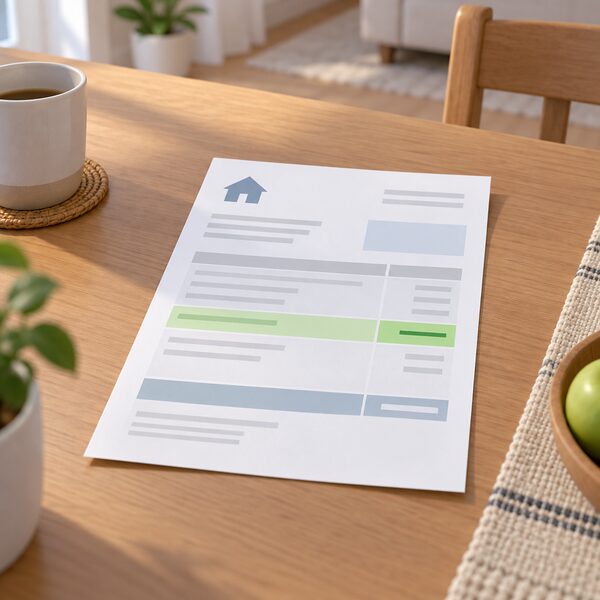
The Warm Home Discount provides low-income and vulnerable households with a £150 rebate off their energy bills1. It is a one-off payment that gives eligible older and low-income consumers £150 off their energy bill, applied to eligible customers' electricity bills between October and April2. The scheme primarily provides support through the provision of £150 energy bill rebates, funded through a levy on all domestic gas and electricity customers1.
The scheme runs in annual scheme years and covers England, Scotland and Wales, running until 31 March 20311. It does not run in Northern Ireland, where an Affordable Warmth Scheme is available instead1. The Warm Home Discount scheme requires large domestic energy suppliers to provide an annual discount of £150 to eligible households2.
The numbers have moved over time. In 2020 the scheme was described as slashing the energy bills of low income households by £140 per year, and a 2022 announcement referred to a £140 winter bill discount for pensioners in Wales13. The current figure is £150, and the scheme has been confirmed through to 2030-317. The Energy White Paper proposed that it be extended to 2025/26 and expanded to £475 million, reaching three million households15.
One structural change matters for every bill-payer. From April 2026 the recovery of Warm Home Discount costs shifts from the standing charge to the unit rate on household energy bills7. That changes how the cost is distributed across households, because a standing charge is paid regardless of usage while a unit rate scales with consumption.
"The scheme primarily provides support through the provision of £150 energy bill rebates, funded through a levy on all domestic gas and electricity customers"
Who qualifies for the Warm Home Discount and how the £150 is paid
Eligibility splits into a core group and a broader group. The core group is identified automatically, principally through receipt of the Guarantee Credit element of Pension Credit. The broader group covers other low income or vulnerable households, who may also be eligible16. The scheme is a fuel poverty reduction scheme, reducing the energy costs of low-income and vulnerable households across Great Britain since its inception in 20111.
Payment is made as a credit to the electricity account, between October and April15. Suppliers are required to provide the discount to eligible households, and the Department for Energy Security and Net Zero publishes statistics on delivery2. The scheme reached around 6 million households in winter 2025-267.
The Warm Home Discount supports low income and vulnerable households across Great Britain with the cost of living, and the scheme has been described as supporting two and a half million low-income and vulnerable households1. Around 6 million households now benefit from a £150 rebate off their winter energy bill in winter 2025-262.
For a household, the key practical point is that the discount is not a cash payment and does not pass through the benefits system. It is a credit on an energy account, which means it reduces the bill rather than increasing income. That distinction matters for anyone checking whether claiming it affects other entitlements.
Warm Homes: Local Grant for EPC band D to G homes
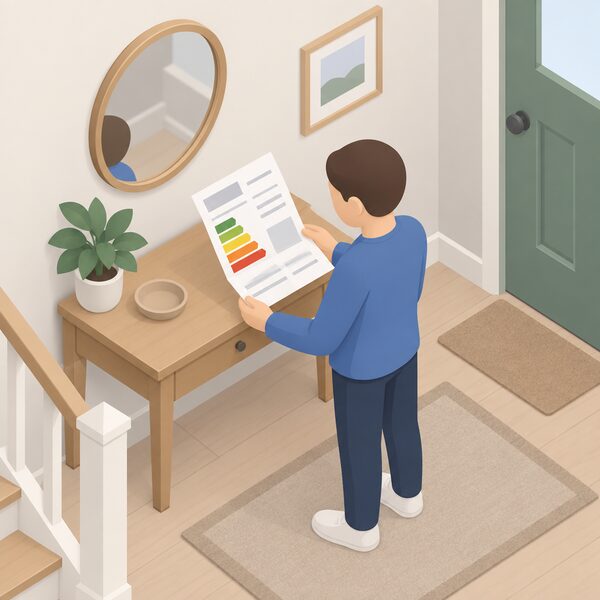
The Warm Homes: Local Grant provides grants for energy performance upgrades and low carbon heating to low-income households living in the worst quality privately owned homes4. It is open to all fuel types, including on-gas-grid households (those heated by mains gas), and off-gas-grid households4.
Eligibility turns on tenure and EPC rating. Owner occupied properties with an EPC rating of Band D, E, F, or G can qualify, and privately rented properties with an EPC rating of Band D or E can qualify8. Liverpool City Council states that households with an Energy Performance Certificate (EPC) rating of D to G can apply for a grant17. The Greater Manchester Combined Authority sets out the same tenure split8.
The application route is an online form on GOV.UK to check eligibility. The form may ask about benefits received, household income in one year, tax and deduction costs in one year, council tax costs in one year, and mortgage or rent costs in one year9. The scheme requires an Energy Performance Certificate (EPC) of D to G, or the equivalent for a park home9.
There is a separate stream for social housing. The Warm Homes: Social Housing Fund provides energy performance measures and low carbon heating to social housing residents in EPC band D-G homes in England18. That is administered separately from the Local Grant.
For private landlords with second and subsequent properties, the scheme offers 50% of the cost up to £7,500 for energy performance improvements8. That is a different contribution rate from the owner occupier route, and it reflects the split incentive problem in the private rented sector.
| Route | Tenure | EPC requirement | Contribution |
|---|---|---|---|
| Warm Homes: Local Grant | Owner occupied | Band D, E, F or G | Grant funded8 |
| Warm Homes: Local Grant | Privately rented | Band D or E | Grant funded8 |
| Warm Homes: Local Grant | Private landlord, second and subsequent properties | Not specified | 50% of cost up to £7,5008 |
| Warm Homes: Social Housing Fund | Social housing | Band D to G | Grant funded18 |
ECO4: insulation, heating and renewables funded by energy suppliers
ECO4 requires medium and large energy suppliers to support energy efficiency improvements for eligible households3. ECO funding pays for energy efficiency measures such as heating improvements and insulation to be installed19. The measures covered include insulation, boilers and central heating, and solar and renewable energy technologies3.
The scheme is enacted by the Electricity and Gas (Energy Company Obligation) Order 2022, as amended3. That gives it a statutory basis, which distinguishes it from discretionary grant schemes. Suppliers are obliged to deliver a certain level of improvement, and they meet that obligation by funding measures in qualifying homes.
The resident application route runs through advice organisations rather than directly to the supplier. If you think you may qualify for ECO Funding, please speak to an organisation who can offer you free and impartial energy and bill saving support and assess whether you might be eligible for funding19. That reflects the way the scheme is designed: suppliers work through installers and referral partners, and households are assessed for eligibility before work is commissioned.
One restriction matters where schemes overlap. ECO and WHD funding cannot be combined for any measures under industry initiatives3. That means a household cannot use the Warm Home Discount to part-fund a measure that is also being funded through ECO. The two schemes are kept separate.
The predecessor schemes show how the eligibility has narrowed over time. The Home Upgrade Grant and Local Authority Delivery scheme supported low energy efficiency (EPC of D or lower) low-income (household income below £30k) households across England10. The Home Upgrade Grant: Phase 2 was aimed at households in England that are low income, off the gas grid, and have an EPC between D and G12. Home Upgrade Grants were to focus on the worst-quality off-gas grid homes with low income households in England20.
For a household, ECO4 is the route to physical improvements rather than a bill rebate. It changes the fabric of the home, which affects consumption over years rather than a single winter. That is a different kind of help from the Warm Home Discount, and it is assessed differently.
Crisis and Resilience Fund: help through your local council
From April 2026, both the Household Support Fund and Discretionary Housing Payments (DHPs) in England will be replaced by a new Crisis and Resilience Fund6. The fund brings together existing provisions by replacing the household support fund5. It supports local councils to work with voluntary and community sector partners5.
The design puts councils at the centre of crisis support. That means the help available varies by area, because each council sets its own scheme within the national framework. Cornwall Council, for example, is working to create a support scheme to help the households most affected by the heating oil crisis, with a particular focus on low-income heating oil users21.
The shift from the Household Support Fund to the Crisis and Resilience Fund changes the administrative landscape. The Household Support Fund was a ring-fenced grant administered by councils; the new fund brings together existing provisions and is delivered through councils working with voluntary and community sector partners5. For a household in crisis, the first point of contact remains the local council.
The timing matters. The fund opens in April 2026, and the Household Support Fund and Discretionary Housing Payments are replaced at that point6. Anyone seeking crisis support in England should approach their council, which will operate the scheme in their area.
What the discount is worth in practice: net value and who is missed
The Warm Home Discount is worth £150 per household, applied to the electricity bill between October and April2. It is a one-off payment, not a recurring monthly credit22. The scheme reached around 6 million households in winter 2025-267.
The net value depends on circumstances. For a household on a prepayment meter, the credit appears on the meter. For a household on a credit meter, it appears on the bill. In both cases it reduces the amount owed rather than providing cash. The scheme costs £350 million per year and is funded through a levy on all domestic gas and electricity customers1.
Who is missed is a structural question. The scheme covers England, Scotland and Wales and does not run in Northern Ireland1. Within Great Britain, the core group is identified automatically, but the broader group depends on supplier criteria and on households making contact. Other low income or vulnerable households may also be eligible, which means the boundary is not fixed16.
The comparison with earlier schemes shows the direction of travel. The Energy Bills Support Scheme provided £400 payments to help households with winter energy bills, and the Alternative Fuel Payments scheme provided £200 to households using alternative fuels23. Those were universal or near-universal payments during the energy crisis. The Warm Home Discount is targeted and means-tested, which means it reaches fewer households but at a lower cost to bill-payers.
For a household, the practical calculation is that £150 offsets part of a winter bill. It does not cover the full cost of heating a home, and it does not address the underlying efficiency of the property. That is what the capital schemes are for, and they operate on a different timescale.
How the schemes are paid for and what it costs every bill-payer
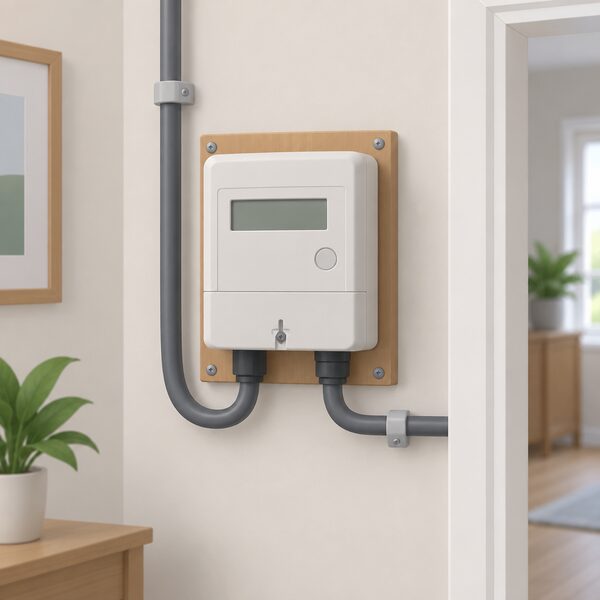
The Warm Home Discount is funded through a levy on all domestic gas and electricity customers1. It currently costs £350 million per year15. From April 2026 the recovery of Warm Home Discount costs shifts from the standing charge to the unit rate on household energy bills7.
That shift changes who pays what. A standing charge is a fixed daily amount, so recovering costs through it spreads the burden evenly across households regardless of consumption. A unit rate scales with usage, so recovering costs through it places more of the burden on higher-consumption households. The Department for Energy Security and Net Zero describes the change as shifting recovery from the standing charge to the unit rate from April 20267.
The capital schemes are funded differently. ECO4 is an obligation on suppliers, who pass the cost through to bills as part of their operating costs3. The Warm Homes: Local Grant is government-funded, with the Department for Energy Security and Net Zero publishing statistics on delivery4. The Crisis and Resilience Fund is funded through central government and administered by councils5.
The historical comparison is instructive. The Energy Bills Support Scheme provided £400 energy bills discount for all households in Great Britain, delivered through domestic electricity suppliers25. The Domestic electricity price reduction scheme for Great Britain involved reducing the amount that would otherwise be charged for GB domestic electricity supply by licensed electricity suppliers who are parties to the scheme, and making payments to those suppliers in respect of those reductions in charges25. Those were emergency measures with a broad reach.
The current landscape is more targeted. The Warm Home Discount reaches around 6 million households, and the capital schemes reach fewer still7. The cost falls on bill-payers through the levy and through supplier obligations. For a household that does not qualify, the schemes still affect the bill, because the levy is spread across all domestic customers.
Where to get one-to-one advice and local support
Local authorities and advice organisations provide the front door to most of this support. East Herts Home Energy Support Service offers information on grants and help with checking your eligibility, benefits support, supplier switching advice, energy saving advice, debt advice and referral to other organisations or contractors26. Cheshire West and Chester Council operates support schemes for residents27. Tameside Council provides energy saving grants and funding information16.
The Local Energy Advice Programme helps households check if they are on the cheapest tariff16. That is a practical service, because the tariff a household is on affects the bill as much as the efficiency of the home. HEAT provides 1-1 mentoring support and advocacy to vulnerable households in England and Wales19.
The advice route matters because the schemes are not self-executing. ECO4 requires a household to speak to an organisation who can offer free and impartial energy and bill saving support and assess whether they might be eligible for funding19. The Warm Homes: Local Grant requires an online eligibility check9. The Warm Home Discount requires contact with the supplier for the broader group16.
For a household, the practical sequence is to start with the council or an advice service, establish which schemes apply, and then work through the application or referral. The schemes have different gatekeepers, and a single conversation can identify which route fits.
What happens if you switch supplier or your supplier fails
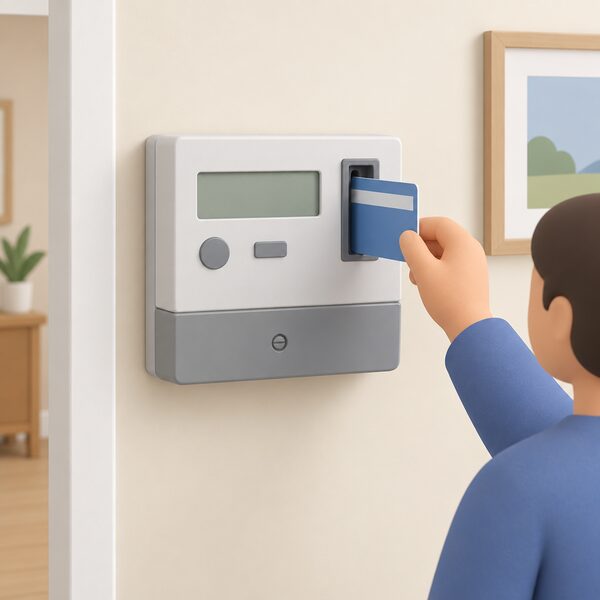
Switching supplier does not remove the Warm Home Discount entitlement, but it can affect the timing of payment. If you pay a supplier directly for the electricity or gas you use at home, you can choose to switch to a different supplier or tariff at any time28. The discount is applied by the supplier that holds the account during the scheme year.
If a supplier fails, the process is automatic. You do not need to do anything if your current supplier goes out of business. We'll automatically move you to a new supplier, and make sure your energy supply is not interrupted28. That protection is provided by the supplier of last resort process, administered by Ofgem.
There is a compensation provision for late switching. If they do not, your new supplier must pay you £4028. That applies where a switch is not completed within the required timescale.
For prepayment meter customers, there is a debt limit that affects switching. You have a prepayment meter and you owe your supplier up to £50028. That threshold determines whether a switch can proceed while a debt is outstanding.
The practical implication is that the Warm Home Discount follows the account, not the household's history with a particular supplier. A household that switches mid-year may receive the discount from the new supplier, or may need to confirm entitlement with them. The automatic protection on supplier failure means the supply continues, but the administration of the discount may transfer.
Sources28 cited
- Warm Home Discount, Ofgem, 2026-09-17
- Warm Home Discount statistics 2025 to 2026, Department for Energy Security and Net Zero, 2026-06-18
- ECO4 delivery guidance v3.2, Ofgem, 2025-12-08
- Warm Homes: Local Grant statistics October 2026, Department for Energy Security and Net Zero, 2026-09-07
- Crisis and Resilience Fund, Hansard, 2026-03-25
- Research briefing SN06163, House of Commons Library, 2026-02-26
- DESNZ annual report and accounts 2025 to 2026, Department for Energy Security and Net Zero, 2026-09-17
- Warm Homes: Local Grant, Greater Manchester Combined Authority, 2026-09-17
- Warmer Homes, Greater London Authority, 2026-09-17
- Green Homes Grant LAD and HUG statistics November 2025, Department for Energy Security and Net Zero, 2025-12-04
- Green Homes Grant LAD and HUG statistics March 2025, Department for Energy Security and Net Zero, 2025-03-27
- Home Upgrade Grant: Phase 2, Department for Energy Security and Net Zero, 2022-09-29
- 63,700 pensioners in Wales to automatically benefit from £140 winter bill discount, Department for Energy Security and Net Zero, 2020-10-15
- Warm Home Discount expanded to help 280,000 Scottish households, Department for Energy Security and Net Zero, 2022-05-09
- Environmental Audit Committee report, House of Commons Environmental Audit Committee, 2026-09-20
- Grants and funding, Tameside Council, 2026-09-17
- Apply for a Warm Homes Local Grant, Liverpool City Council, 2026-09-17
- Carbon Budget and Growth Delivery Plan: heat and buildings factsheet, Department for Energy Security and Net Zero, 2026-06-23
- Home energy efficiency, Bridgend County Borough Council, 2026-09-17
- Environmental Audit Committee report, House of Commons Environmental Audit Committee, 2021-03-22
- Cost of living support for rising energy costs, Cornwall Council, 2026-04-02
- Keeping your home warm in winter, Met Office, 2026-09-20
- Energy Prices Act 2022, legislation.gov.uk, 2022-10-25
- Warm Homes: Local Grant statistics February 2026, Department for Energy Security and Net Zero, 2026-02-26
- Energy Bills Support Scheme, UK Parliament, 2022-10-18
- Home and business grants, schemes and advice, East Herts Council, 2026-09-17
- Support schemes, Cheshire West and Chester Council, 2026-09-17
- Switch your home energy supplier, Ofgem, 2026
 The Full Grants and Schemes GuideWhich grants can you actually get right now, and how do you apply for them?
 Fuel Poverty in the UKWho counts as living in fuel poverty, and why does the number change depending on where in the UK you live?
 The Full Where to Start GuideWhich home improvements actually cut your bills, and which should you do first?
 Local Fuel Poverty StatisticsHow many households in your area struggle to afford their heating?
 The Full Your Type of Home GuideLiving in a flat, an old listed house or somewhere off the gas grid changes what energy help you can get and what you are allowed to install.
 Community Energy in EnglandCommunity energy lets neighbours own their own power together, often through solar panels, and share the money it makes.