

In this guide
Nest is the Welsh Government's demand-led fuel poverty scheme, delivered under the Warm Homes Programme banner. It has two halves: a free and impartial energy advice service open to every household in Wales, and a package of free home energy efficiency improvements for households that qualify on income or health grounds. The advice line is 0808 808 2244, open Monday to Friday from 9am to 6pm1.
The improvement side is where the money sits. Since 2011 the Welsh Government has invested more than £251 million in home energy efficiency through the Warm Homes Programme, and Nest has helped more than 82,000 lower income households by installing measures in their homes3. In the six months from 1 October 2024 to 31 March 2025 the scheme delivered improvement packages to 348 households, at a Welsh Government cost of £6.7m for that period4.
Nest is not the same as the UK-wide schemes. The Welsh Government states that its schemes are separate to ECO4 and the Great British Insulation Scheme, and that the Nest scheme is not identical to either5. For a household in Wales, that separation matters: the route into help, the eligibility test and the quality regime are all set in Cardiff, not Westminster.
What the Nest scheme is and who runs it
Nest is a Welsh Government scheme, administered by the Welsh Government itself rather than by an arm's-length body1. It sits inside the Warm Homes Programme, which the Welsh Government describes as consisting of the Nest and Arbed schemes9. Nest is the demand-led element: households come forward, are assessed, and either receive advice alone or a package of measures. Arbed was the area-based element, working street by street.
Delivery has been contracted out. British Gas managed the Welsh Government's Nest scheme for over three years as of 2015, and the Welsh Government's own consultation at the time described that model as successful10. The scheme relaunched during 2024-25 with a focus on deeper, more comprehensive home retrofits, which is a change of emphasis rather than a change of owner4.
The scheme's territorial extent is Wales, and it is designed to tackle fuel poverty there11. It provides all households in Wales with free, impartial advice to help reduce energy bills and maximise income, and eligible households can also get free energy advice and a suite of home energy efficiency improvements12.
For a household's energy independence, the structure is worth being clear about. Nest does not make a home self-sustaining and does not remove a gas connection or a supplier. What it does is reduce the amount of energy a home needs to buy, and in some cases change the heating system itself. The dependence that remains is on the grid, on a supplier, and on gas where a gas boiler is installed. The scheme's contribution is to lower the size of the bill attached to that dependence, and to improve the fabric so that less heat is lost.
What Nest funds: free advice and home energy upgrades
The advice service and the improvement package are separate offers with separate eligibility. Advice is universal; improvements are means-tested or health-tested.
Free, impartial energy advice is available to all households in Wales, and the scheme describes it as helping lower energy bills and improve health and wellbeing14. The advice covers saving energy, money management, fuel tariffs, benefit entitlement checks and referral to alternative schemes11. It is free and impartial, and the Welsh Government has described it as a service to support households in accessing the most appropriate scheme for their individual circumstances15.
The improvement package is a referral for eligible householders for a package of free home energy efficiency measures such as a new boiler, central heating system, loft or cavity wall insulation, or renewable technologies16. The Welsh Government's own guidance on unexpected costs lists replacement of a boiler or electric storage heaters to ensure a safe and reliable heating system among the funded measures8. A separate crisis route allows one-off boiler repairs or replacements for householders eligible for Nest who are in immediate crisis and without heating or hot water3.
"replacement of boiler or electric storage heaters to ensure you have a safe and reliable heating system"
The scheme also carries a wider remit than heating hardware. It provides advice on saving energy, money management, fuel tariffs, benefit entitlement checks and referral to alternative schemes to all householders in Wales11. That breadth is the point: a household that does not qualify for a boiler may still qualify for a benefit check that changes its income, or a tariff review that changes its bill.

Eligibility: who qualifies in Wales
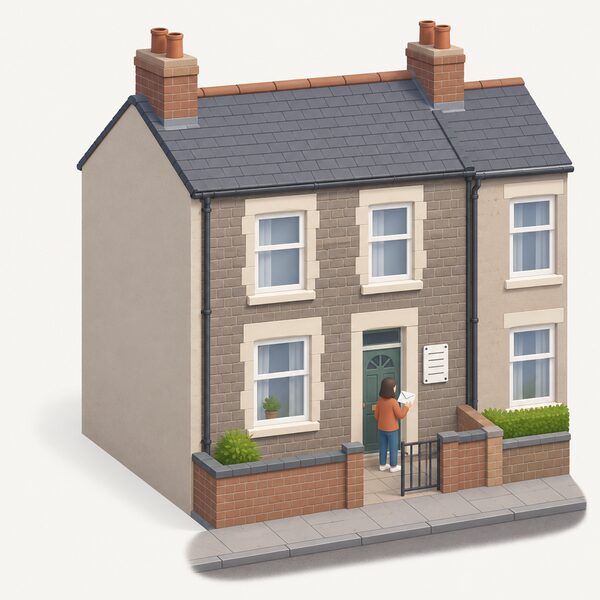
There are three conditions, and all three must be met. The household must own or privately rent its home, and must not be a local authority or housing association tenant7. It must be on a lower income and either receive a means tested benefit or live with a qualifying health condition17. And the property must be suitable for the measures on offer.
The health route is broader than many households assume. Eligible conditions include respiratory disease such as respiratory infections, broncho-constriction in asthma and chronic obstructive pulmonary disease; circulatory disease including cardio-vascular disease, strokes and heart attacks; mental health conditions including depression, anxiety, psychosis and bipolar disorders; dementia; and intellectual and development disorders7. Between April 2024 and March 2025, 2,341 households in Wales were assessed under the health route4.
Eligibility has been widened before. In 2015-16 the criteria for free Nest home energy improvements were widened to include E-rated properties, in addition to F and G rated properties10. That matters because it moved the scheme beyond the very worst stock and into the band where a large share of Welsh homes sit.
| Condition | Requirement | Source |
|---|---|---|
| Tenure | Own or privately rent; not council or housing association | 7 |
| Income or health | Means tested benefit, or a qualifying respiratory, circulatory or mental health condition | 17 |
| Landlord status | Private landlord must be registered with Rent Smart Wales | 18 |
| Property rating | E, F and G rated properties have been within scope since 2015-16 | 10 |
Private renters are a real part of the caseload rather than a theoretical one. In the six months to 31 March 2025, 13% of recipients were in private rented accommodation4. Nest works in partnership with Rent Smart Wales to ensure all private landlords are officially registered before being allowed access to support18. A private landlord who is not registered is a barrier to the work, not a detail.
Quality assurance and the installer network
The delivery model is deliberately local. A network of Wales-based installers provides the installation services under the management of the Nest team4. In 2022 to 2023, 100% of installations were completed by Wales-based installers, and all installations have been carried out by Wales-based small and medium sized enterprises18.
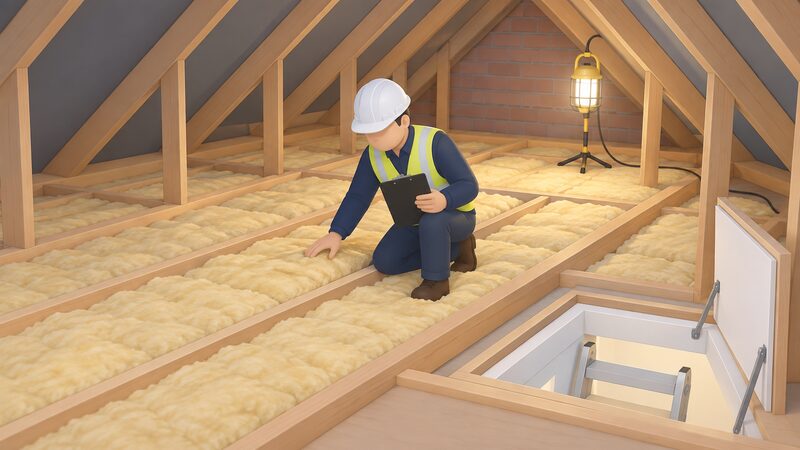
Quality is checked independently of the installer. Nest includes an independent quality assurance service: experts check the quality of scheme designs and visit installers' work, and any issues identified are corrected immediately, before the installer is paid for the work5. That payment condition is the mechanism that gives the check teeth.
The Welsh Government's own review of the next iteration of the Warm Homes Programme recommended that it should have a fit-for-purpose regime for post-installation checks by an independent third party9. The recommendation implies the current arrangement is not automatically assumed to carry forward unchanged into whatever replaces Nest.
There is a wider funding angle to the installer network. Nest leveraged an additional £4.2m of ECO funding into Wales as of September 2014, drawing UK obligation money into Welsh delivery11. That is a reminder that the Welsh scheme has historically worked alongside, not instead of, the GB-wide obligations.
How Nest fits into the wider Warm Homes Programme
The Warm Homes Programme is the umbrella, and Nest and Arbed were its two components9. The programme's scale is best read cumulatively. As at the end of March 2020, investment of more than £366m in the Warm Homes Programme, including European, UK and Welsh Government funding, had improved the energy efficiency of more than 61,400 homes in Wales through Nest and Arbed20.
Annual delivery has moved around. The Welsh Government reports total homes improved of 5,127 in 2021 to 2022, 4,364 in 2022 to 2023 and 4,816 in 2023 to 20243. Advice volumes are larger than installation volumes by an order of magnitude: 15,777 households received free energy savings advice in 2021 to 2022, 21,959 in 2022 to 2023 and 12,809 in 2023 to 20243. Since 2011, Nest has helped over 198,000 households through its advice and support services18.
Funding has been sustained. The Welsh Government invested £6.7m in delivering the Nest Scheme between October 2024 and March 20254, and stated in January 2025 that it was investing more than £30 million that year in the new Warm Homes Nest scheme21. The Welsh Government provided £19.5m for Nest in 2016/17, which gives a sense of how the annual figure has moved over a decade16.
Alongside Nest, the Optimised Retrofit Programme and the Warm Homes Nest scheme collectively provide more than £130 million a year for free energy efficiency improvements to low-income households in Wales22. That combined figure is the honest measure of Welsh public effort on domestic energy efficiency, and it is still small against the size of the Welsh housing stock.
For a household, the practical consequence is that Nest is one door among several. The advice service exists precisely to route people to the right one, and it signposts to other help such as the Welsh Government's Discretionary Assistance Fund and the Fuel Bank Foundation23.
Other help in Wales: Care & Repair Cymru and local schemes
Nest is not the only route, and for some households it is not the right one. Local authority pages across Wales carry the scheme alongside their own offers, and the pattern differs by council.
Carmarthenshire County Council directs residents to Nest for funding for home energy improvements and runs its own heating advice page24. Bridgend County Borough Council describes the Welsh Government Warm Homes Nest scheme as making Welsh homes warmer and more energy efficient places to live, and sets out the tenure condition in the same terms as the national guidance25. Swansea Council carries the same description and points residents to its energy costs pages26. Anglesey County Council lists Nest among its cost of living help and describes it as a scheme to make your home warmer and more energy efficient, with the freephone number for eligibility checks27.
Beyond energy specifically, the Welsh Government's Help to Stay Wales Scheme offers support for Welsh homeowners who are in or facing financial difficulty in paying their mortgage27. The Winter Fuel Support Scheme, run in earlier years, required one member of the household to be in receipt of certain welfare benefits28. These are income-side supports rather than fabric measures, and they sit alongside Nest rather than replacing it.
Care & Repair agencies are the other main presence in Welsh home improvement work, particularly for older households. Swansea Council's private sector housing policy describes signposting to partners such as Western Bay Care and Repair for applicants who are not eligible or not proceeding with a loan29. For households whose need is adaptation rather than heating, that is the more relevant door.

Where Nest falls short: who is left out and the 'worst first' criticism
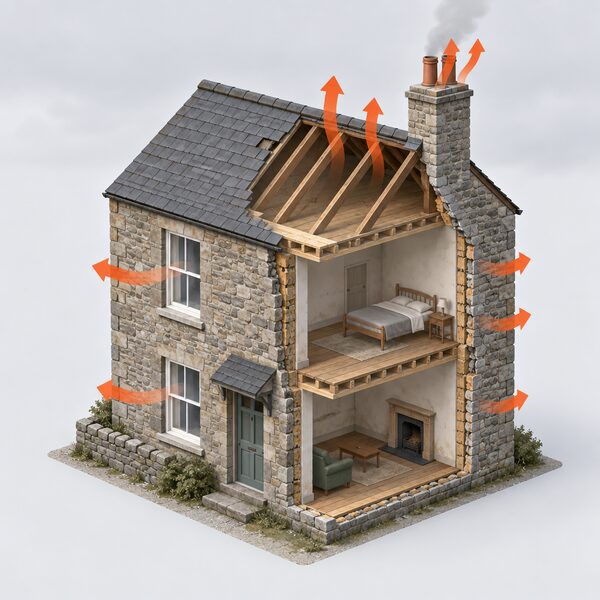
The exclusions are structural, not accidental. Social housing tenants are outside Nest entirely, on the basis that their landlord carries the obligation. Private landlords cannot currently apply to the Green Homes Wales scheme, which is a separate Welsh offer30. Households above the income threshold but living in a cold home have no route through Nest unless a qualifying health condition applies.
The bigger criticism is about targeting. The Welsh Government has said that the Minister intends the Nest replacement scheme to focus first on the "least thermally efficient low-income households"31. That is a statement about where the current scheme has not been concentrating its effort, and it comes from the Senedd's own research service rather than from an outside critic.
"The Minister intends the Nest replacement scheme to focus first on the 'least thermally efficient low-income households'"
Delivery volumes reinforce the point. Between October 2024 and March 2025 the scheme delivered improvements to 348 households32. Against more than 82,000 households helped since 2011, that is a sharp slowdown in installation activity, even allowing for the relaunch and its deeper retrofit focus3.
There is also a boundary problem with the UK schemes. The Welsh Government has stated that its schemes are separate to ECO4 and the Great British Insulation Scheme, and that the Nest scheme is not identical to ECO or GBIS5. A household that fails the Nest test may still qualify under a GB-wide obligation, and vice versa, but the two are not interchangeable and the eligibility rules do not line up.
Related schemes: Warm and Well Gwent and council loans
Where Nest does not reach, two other kinds of help operate in Wales: local advice partnerships and council loan schemes.
The Welsh Government's consultation on a future demand-led scheme described the shape of local provision as advice to households on ways to save on energy and water costs, alongside free energy efficiency measures and in-home advice for eligible households19. That is the model that local authority and third-sector partnerships follow, and it is why council pages so often carry both a national scheme and a local contact.
Council loan schemes are the other route, and Swansea Council's private sector housing renewal and disabled adaptations policy is a worked example of the terms. Loans are interest free29. Fees are charged for administration costs, and the fee charged to the loan recipient may be added to the loan29. Properties must be at least 10 years old, and empty properties must have been empty for a minimum of 6 months per the Council's Empty Property Register29. The loan to value ratio will not exceed 80%29.
Repayment terms are structured rather than open-ended. Loans are normally repaid as a full lump sum at the end of the loan term for terms of 3 years or less; for terms of 5 years or less, 25% is repaid as a lump sum after 3 years with the remainder at the end of term; for terms of more than 5 years, 50% is repaid after 3 years with the remainder at the end of term29. The loan is registered as a legal charge, must be first or second charge, and is repayable in full on sale or transfer of title, on moving into long term care or sheltered accommodation, or on the death of the loan recipient29.
Applicants must not have outstanding debt to the Council or adverse credit history including County Court Judgements, IVAs, Debt Relief Orders, bankruptcy within 6 years, or company insolvency liquidation29. Excluded properties include those not of a permanent nature such as houseboats and caravans, structures without Building Regulations approval, and buildings not suitable for conversion to habitable dwellings29. Capital funding for energy efficiency and fuel poverty reduction measures is expected to be made available through Welsh Government Warm Homes funding and schemes available through utility companies29.
For a household's independence, the distinction between a grant and a loan is the whole story. A Nest package is free and adds nothing to the property's charges. A council loan is interest free but secured, and it follows the property until it is repaid. Both reduce the energy a home needs to buy; only one of them leaves the household's balance sheet untouched.
Sources32 cited
- Get help to improve the energy efficiency of your home: Nest, Welsh Government
- Nest: Warm Homes Programme, Welsh Government
- Tackling fuel poverty: priority actions, Welsh Government
- Warm Homes Nest scheme annual report 2024 to 2025, Welsh Government
- Written statement: Housing Cabinet Secretary responds to UK Government action on GBIS and ECO4, Welsh Government
- Written statement: support for householders impacted by closure of the Energy Company Obligation scheme, Welsh Government
- Get free home energy efficiency improvements: Nest eligibility, Welsh Government
- Get help with unexpected costs such as food and heating, Welsh Government
- Next iteration of Warm Homes Programme: review and recommendations, Welsh Government
- Summary of responses to the Nest consultation, Welsh Government
- Evaluation of the Nest energy efficiency scheme: summary, Welsh Government
- Heating your home, Carmarthenshire County Council
- Your essential guide to heat pumps, Climate Action Wales
- Energy price cap explained, Climate Action Wales
- Written statement: fuel poverty, Welsh Government
- Warm Homes Nest report reveals benefits for homes and businesses, Welsh Government
- Nest: a scheme to make your home warmer and more energy efficient, Isle of Anglesey County Council
- Warm Homes Nest scheme annual report 2022 to 2023, Welsh Government
- A future demand-led fuel poverty scheme to succeed Warm Homes Nest, Welsh Government
- Outcome summary: tackling fuel poverty 2020 to 2035, Welsh Government
- Written statement: tackling fuel poverty, Welsh Government
- Thousands of Welsh households get help with oil and LPG heating costs, Welsh Government
- Written statement: rising energy costs response to conflict in the Middle East, Welsh Government
- Minimum energy efficiency standards, Carmarthenshire County Council
- Home energy efficiency, Bridgend County Borough Council
- Energy costs, Swansea Council
- Help with household costs, Isle of Anglesey County Council
- Winter fuel support doubled to help families with cost of living crisis, Welsh Government
- Private sector housing renewal and disabled adaptations, Swansea Council
- Green Homes Wales, Development Bank of Wales
- Decarbonising private housing: the net zero elephant in the energy inefficient room, Senedd Research
- Research briefing: fuel poverty, House of Commons Library
 Energy Policy in WalesWhat help can you get in Wales to make your home warmer and cheaper to run?
 Smart Meters in WalesCan you get a smart meter fitted free in Wales, and will it work if you live in a rural area or an older home?
 Fuel PovertyHow the Welsh Government defines and measures fuel poverty, the latest modelled estimate of 340,000 households (25%) as at October 2024, who is most affected, and how the Tackling Fuel Poverty Plan and the Warm Homes Nest scheme are meant to bring the figure down.
 Using an Installer in WalesExplains how installer registration, competent person schemes and building control notification apply in Wales and where Welsh rules diverge.
 Housing Stock Data for WalesHow energy efficient are Welsh homes, and how many have a rating?
 The Full Grants and Schemes GuideWhich grants can you actually get right now, and how do you apply for them?